 Lapsed, fee not paid24 drawings
Energy & Sustainability · US 8,734,984 B2
Bipolar battery manufacturing method, and bipolar battery
When a bipolar battery is manufactured, a bipolar electrode and a separator are prepared first.
US 8,734,987 B2 · Assignee: TDK Corporation · Inventors: Sano; Atsushi et al.
Sheet 1 of 6 from the published document. All sheets in the USPTO PDF
The method of manufacturing an active material in accordance with the first aspect of the invention yields an active material containing LiVOPO.sub.4 capable of improving the cycle characteristic of a battery. Methods of manufacturing active materials in accordance with the second, third, and fourth aspects of the present invention yield active materials containing LiVOPO.sub.4 capable of improving the discharge capacity of a battery.
1 of 6 drawing sheets so far from the published document, cropped to the drawing. Every sheet is in the USPTO PDF.
What the patent claimed, word for word. All of it is now free to use.
The present invention relates to an active material, an electrode containing the same, a lithium-ion secondary battery equipped with the electrode, and a method of manufacturing the active material.
2. Related Background Art
Laminar compounds such as LiCoO.sub.2 and LiNi.sub.1/3Mn.sub.1/3CO.sub.1/3O.sub.2 and spinel compounds such as LiMn.sub.2O.sub.4 have conventionally been used as positive electrode materials (positive electrode active materials) for lithium-ion secondary batteries. Attention has recently been focused on compounds of olivine-type structures such as LiFePO.sub.4. Positive electrode materials having olivine structures have been known to exhibit high thermal stability at high temperatures and achieve high safety. However, lithium-ion secondary batteries using LiFePO.sub.4 are disadvantageous in that their charge/discharge voltage is low, i.e., about 3.5 V, thus exhibiting low energy density. Therefore, LiCoPO.sub.4, LiNiPO.sub.4, and the like have been proposed as phosphate-based positive electrode active materials which can achieve high charge/discharge voltage. Nevertheless, the lithium-ion secondary batteries using these positive electrode materials have not yet attained sufficient capacity. Among the phosphate-based positive electrode materials, LiVOPO.sub.4 has been known as a compound which can achieve 4-V class charge/discharge voltage. However, even lithium-ion secondary batteries using LiVOPO.sub.4 have failed to attain sufficient reversible capacity, rate characteristic, and cycle characteristic. The above-mentioned positive electrode materials are disclosed in the following literatures, for example. In the following, the lithium-ion secondary battery will be referred to as "battery" as the case may be.
Japanese Patent Application Laid-Open No. 2003-68304
Japanese Patent Application Laid-Open No. 2004-303527
J. Solid State Chem., 95, 352
N. Dupre et al., Solid State Ionics, 140, pp. 209-221
N. Dupre et al., J. Power Sources, 97-98, pp. 532-534
J. Baker et al., J. Electrochem. Soc., 151, A796
Crystals expressed by the structural formula of LiVOPO.sub.4 have been known to reversibly insert and desorb lithium ions. The structures expressed by the structural formula of LiVOPO.sub.4 have been said to have different crystal structures such as those of .alpha. and .beta. types, the .alpha. type being a structure thermodynamically more stable than the .beta. type. Japanese Patent Application Laid-Open No. 2004-303527 discloses the making of LiVOPO.sub.4 having a .beta.-type crystal structure (orthorhombic crystal) and LiVOPO.sub.4 having an .alpha.-type crystal structure (triclinic crystal) by a solid-phase method employing V.sub.2O.sub.5 and their use as electrode active materials for nonaqueous electrolyte secondary batteries. Japanese Patent Application Laid-Open No. 2004-303527 also reports that the discharge capacity of a battery using LiVOPO.sub.4 having the .alpha.-type crystal structure (triclinic crystal) is lower than that of LiVOPO.sub.4 having the .beta.-type crystal structure (orthorhombic crystal).
J. Baker et al., J. Electrochem. Soc., 151, A796
discloses a method (carbothermal reduction (CTR) method) which heats VOPO.sub.4 and Li.sub.2CO.sub.3 in the presence of carbon, so that carbon reduces VOPO.sub.4, thereby producing LiVOPO.sub.4 having the .beta.-type crystal structure. J. Solid State Chem., 95, 352
discloses a method of making LiVOPO.sub.4 having the .beta.-type crystal structure by using tetravalent vanadium.
First Aspect of Invention
In view of the problems of the prior art mentioned above, it is an object of the first aspect of the present invention to provide a method of manufacturing an active material, an active material, and a lithium-ion secondary battery which can improve the cycle characteristic of a lithium-ion secondary battery.
For achieving the above-mentioned object, the method of manufacturing an active material in accordance with the first aspect of the present invention comprises a hydrothermal synthesis step of heating a mixed liquid containing a lithium source, a phosphate source, a vanadium source having pentavalent vanadium, water, and citric acid under pressure, wherein the mixed liquid has a citric acid concentration of 0.7 to 2.6 mol/L.
The method in accordance with the first aspect of the present invention can produce .alpha.-type crystals (triclinic crystals) of LiVOPO.sub.4 with a high yield. Lithium-ion secondary batteries containing thus obtained LiVOPO.sub.4 as a positive electrode active material achieve an excellent cycle characteristic.
Preferably, in the method in accordance with the first aspect of the present invention, the mixed liquid has a Raman spectrum with a peak at a Raman shift of 970 to 990 cm.sup.-1. In the mixed liquid having such a peak, pentavalent vanadium is reduced by citric acid, so as to produce tetravalent vanadium, whereby LiVOPO.sub.4 containing pentavalent vanadium as its constituent element is easier to occur.
The active material in accordance with the first aspect of the present invention comprises LiVOPO.sub.4, while LiVOPO.sub.4 has an .alpha.-type crystal phase content of at least 82 mol % with respect to the total amount of LiVOPO.sub.4. The lithium-ion secondary battery in accordance with the first aspect of the present invention comprises a positive electrode having a positive electrode current collector and a positive electrode active material layer disposed on the positive electrode current collector, wherein the positive electrode active material layer contains the active material in accordance with the first aspect of the present invention.
The active material in accordance with the first aspect of the present invention can be obtained by the method of manufacturing an active material in accordance with the first aspect of the present invention, for example. The lithium-ion secondary battery in accordance with the first aspect of the present invention achieves an excellent cycle characteristic.
The first aspect of the present invention can provide a method of manufacturing an active material, an active material, and a lithium-ion secondary battery which can improve the cycle characteristic of a lithium-ion secondary battery.
Second Aspect of Invention
In view of the problems of the prior art mentioned above, it is an object of the second aspect of the present invention to provide a method of manufacturing an active material, an active material, and a lithium-ion secondary battery which can improve the discharge capacity of a lithium-ion secondary battery.
For achieving the above-mentioned object, the method of manufacturing an active material in accordance with the second aspect of the present invention comprises a hydrothermal synthesis step of heating a mixed liquid containing a lithium source, a phosphate source, a vanadium source having pentavalent vanadium, water, and a reductant under pressure, wherein the mixed liquid has a reductant concentration of 0.005 to 0.4 mol/L.
The method in accordance with the second aspect of the present invention can produce nanoscale .beta.-type crystals (orthorhombic crystals) of LiVOPO.sub.4 with a high yield. Lithium-ion secondary batteries containing thus obtained LiVOPO.sub.4 as a positive electrode active material achieve high discharge capacity.
Preferably, in the method in accordance with the second aspect of the present invention, the reductant is tartaric acid. This increases the yield of .beta.-type crystals of LiVOPO.sub.4, thereby making it easier to improve the discharge capacity of batteries.
Preferably, in the method in accordance with the second aspect of the present invention, the mixed liquid has a Raman spectrum with a peak at a Raman shift of 970 to 990 cm.sup.-1. In the mixed liquid having such a peak, pentavalent vanadium is reduced by citric acid, so as to produce tetravalent vanadium, whereby LiVOPO.sub.4 containing pentavalent vanadium as its constituent element is easier to occur.
The active material in accordance with the second aspect of the present invention comprises a particle group of LiVOPO.sub.4, while LiVOPO.sub.4 has a .beta.-type crystal phase content of at least 71 mol % with respect to the total amount of LiVOPO.sub.4. The lithium-ion secondary battery in accordance with the second aspect of the present invention comprises a positive electrode having a positive electrode current collector and a positive electrode active material layer disposed on the positive electrode current collector, wherein the positive electrode active material layer contains the active material in accordance with the second aspect of the present invention.
The active material in accordance with the second aspect of the present invention can be obtained by the method of manufacturing an active material in accordance with the second aspect of the present invention, for example. The lithium-ion secondary battery in accordance with the second aspect of the present invention achieves high discharge capacity.
Preferably, as counted from the smaller primary particle side in a volume-based particle size distribution of the particle group determined by a laser scattering method, a primary particle size D50 at a cumulative volume ratio of 50% is 500 nm or less in the active material in accordance with the second aspect of the present invention. Batteries using LiVOPO.sub.4 having such a small particle size are easier to improve their discharge capacity.
The second aspect of the present invention can provide a method of manufacturing an active material, an active material, and a lithium-ion secondary battery which can improve the discharge capacity of a lithium-ion secondary battery.
Third Aspect of Invention
The active materials containing LiVOPO.sub.4 obtained by the methods disclosed in the above-mentioned literatures have failed to yield sufficient discharge capacity.
It is therefore an object of the third aspect of the present invention to provide an active material, an electrode containing the same, a lithium-ion secondary battery equipped with the electrode, and a method of manufacturing the active material which can attain sufficient discharge capacity.
The inventors conducted diligent studies and, as a result, have found that a hydrothermal synthesis using a mixture containing a lithium source, a pentavalent vanadium source, a phosphate source, water, and tartaric acid with a specific tartaric acid concentration and a specific ratio of the number of moles of tartaric acid to the number of moles of vanadium atoms contained in the pentavalent vanadium source can yield an active material having an average particle size and a crystallite size which are much smaller than those of the conventional active materials, so that the active material can attain sufficient discharge capacity even at 1 C.
Hence, the method of manufacturing an active material in accordance with the third aspect of the present invention comprises a step of preparing a mixture containing a lithium source, a pentavalent vanadium source, a phosphate source, water, and tartaric acid and a hydrothermal synthesis step of heating the mixture to 200.degree. C. or higher under pressure, so as to yield LiVOPO.sub.4, wherein the mixture has a tartaric acid concentration of 0.5 to 2.0 mol/L and wherein the ratio of the number of moles of tartaric acid to the number of moles of vanadium atoms contained in the pentavalent vanadium source is 10 to 150 mol %.
Preferably, in the mixture, the ratio of the number of moles of tartaric acid to the number of moles of vanadium atoms contained in the pentavalent vanadium source is 25 to 125 mol %. The active material in accordance with the third aspect of the present invention manufactured by using such a material mixture can attain higher discharge capacity.
Preferably, the mixture is a transparent solution in which the lithium source, pentavalent vanadium source, and phosphate source are dissolved in water. Using such a solution can reliably yield the active material in accordance with the third aspect of the present invention.
The active material in accordance with the third aspect of the present invention includes a particle containing LiVOPO.sub.4 as a main component and having an average particle size of 10 to 145 nm and a crystallite size of 1 to 70 nm.
The active material in accordance with the third aspect of the present invention is obtained by the above-mentioned method and yields sufficient discharge capacity. Though the reason is unclear, it seems that, since the average particle size and crystallite size are much smaller than those of the conventional active materials, lithium ions are more likely to diffuse into crystal lattices of LiVOPO.sub.4, thereby making it easier to insert and desorb lithium ions.
Preferably, in the active material in accordance with the third aspect of the present invention, the particle forms an aggregate, while the aggregate has an average size of 500 to 5000 nm. Sufficient discharge capacity can be obtained when the aggregate has an average size falling within the specific range mentioned above.
The electrode in accordance with the third aspect of the present invention comprises a current collector and an active material layer, disposed on the current collector, containing the above-mentioned active material. This yields an electrode having sufficient discharge capacity.
The lithium-ion secondary battery in accordance with the third aspect of the present invention comprises the above-mentioned electrode. This yields a lithium-ion secondary battery having sufficient discharge capacity.
The third aspect of the present invention can provide an active material, an electrode containing the same, a lithium-ion secondary battery equipped with the electrode, and a method of manufacturing the active material which can attain sufficient discharge capacity.
Fourth Aspect of Invention
The active materials containing LiVOPO.sub.4 having the .beta.-type crystal structure obtained by the methods disclosed in the above-mentioned literatures failed to yield sufficient discharge capacity.
It is therefore an object of the fourth aspect of the present invention to provide an active material, an electrode containing the same, a lithium-ion secondary battery equipped with the electrode, and a method of manufacturing the active material which can attain sufficient discharge capacity.
The inventors conducted diligent studies and, as a result, have found that heating a mixture containing a lithium source, a pentavalent vanadium source, a phosphate source, water, and citric acid to 200.degree. C. or higher under pressure can manufacture an active material in which the orientation of LiVOPO.sub.4 crystals is highly controlled, and that this active material yields sufficient discharge capacity.
Preferably, the method of manufacturing an active material in accordance with the fourth aspect of the present invention further comprises the step of heating LiVOPO.sub.4 having the .beta.-type crystal structure obtained by the hydrothermal synthesis step.
Preferably, the mixture is a suspension in which at least a part of the lithium source, pentavalent vanadium source, and phosphate source is undissolved in water. Using such a mixture can reliably yield the active material in accordance with the fourth aspect of the present invention.
The active material in accordance with the fourth aspect of the present invention contains LiVOPO.sub.4 of the .beta.-type crystal structure as a main component, wherein, according to X-ray diffractometry, the ratio of a peak intensity attributable to a
plane to a peak intensity attributable to a
plane is at least 0.6 but not more than 1.9, and the ratio of a peak intensity attributable to a
plane to the peak intensity attributable to the
plane is at least 1.8 but not more than 4.0, and wherein the active material has a polyhedral particle form.
The active material in accordance with the fourth aspect of the present invention yields sufficient discharge capacity. Though the reason is unclear, it seems that, since its orientations to the
and
planes are lower and higher than those in the conventional active materials, respectively, lithium ions are more likely to diffuse.
Preferably, in the active material in accordance with the fourth aspect of the present invention, the ratio of the peak intensity attributable to the
plane to the peak intensity attributable to the
plane is at least 0.6 but not more than 1.0, and the ratio of the peak intensity attributable to the
plane to the peak intensity attributable to the
plane is at least 1.8 but not more than 3.0. When the ratio of the peak intensity attributable to the
plane to the peak intensity attributable to the
plane and the ratio of the peak intensity attributable to the
plane to the peak intensity attributable to the
plane are values falling within the specific ranges mentioned above, particularly high discharge capacity can be obtained.
The electrode in accordance with the fourth aspect of the present invention comprises a current collector and an active material layer, disposed on the current collector, containing the above-mentioned active material. This yields an electrode having sufficient discharge capacity.
The lithium-ion secondary battery in accordance with the fourth aspect of the present invention comprises the above-mentioned electrode. This yields a lithium-ion secondary battery having sufficient discharge capacity.
The fourth aspect of the present invention can provide an active material, an electrode containing the same, a lithium-ion secondary battery equipped with the electrode, and a method of manufacturing the active material which can attain sufficient discharge capacity.
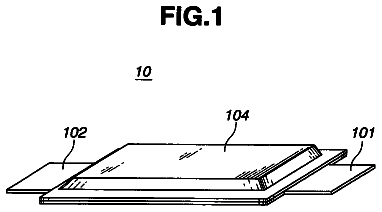
FIG. 1 is a schematic view of a lithium-ion secondary battery equipped with a positive electrode active material layer containing the active material in accordance with the first, second, third, or fourth aspect of the present invention.
FIG. 2 is a schematic view illustrating an example of the active material in accordance with an embodiment of the third aspect of the present invention.
FIG. 3 is an electron micrograph showing an example of the active material in accordance with an embodiment of the third aspect of the present invention.
FIG. 4 is an electron micrograph showing an example of an active material group assembled by a plurality of active materials in accordance with an embodiment of the fourth aspect of the present invention.
FIG. 5 is a perspective view schematically illustrating the active material in accordance with an embodiment of the fourth aspect of the present invention.
FIG. 6 is an X-ray diffraction chart of an active material group in accordance with an embodiment of the fourth aspect of the present invention.
Embodiment of First Aspect of Invention
In the following, an embodiment of the first aspect of the present invention (hereinafter referred to as "first embodiment") will be explained in detail with reference to the drawings. In the drawings, the same or equivalent parts will be referred to with the same signs while omitting their overlapping descriptions. Positional relationships such as upper, lower, left, and right will be based on those illustrated in the drawings unless otherwise specified. Ratios of dimensions and positional relationships in the drawings are not limited to those depicted.
Method of Manufacturing an Active Material
Hydrothermal Synthesis Step
The method of manufacturing an active material in accordance with the first embodiment comprises a hydrothermal synthesis step. First, in the hydrothermal synthesis step, a lithium source, a phosphate source, a vanadium source, water, and citric acid are fed into a reaction vessel having a function of heating and pressurizing the inside thereof (e.g., autoclave), so as to prepare a mixed liquid (aqueous solution) having them dispersed therein. Preferably, the lithium, phosphate, and vanadium sources are dissolved in the mixed liquid substantially completely and uniformly. That is, it is preferred for the mixed liquid to be translucent or transparent without being suspended. This makes it easier to synthesize LiVOPO.sub.4 having a high ratio of .alpha.-type crystal phase and an excellent cycle characteristic. When preparing the mixed liquid, a mixture of the phosphate source, vanadium source, water, and citric acid may be refluxed at first before adding the lithium source thereto, for example. The reflux can form a complex of the phosphate and vanadium sources.
The vanadium source contains vanadium whose valence is 5. Pentavalent vanadium is reduced by citric acid which is a reductant in the mixed liquid, so as to become tetravalent vanadium. The inventors consider that citric acid coordinates with vanadium reduced in the mixed liquid, so that the valence of vanadium stabilizes at 4. However, it is uncertain whether or not tetravalent vanadium is provided with citric acid as a ligand. In the mixed liquid, vanadium may exist as an ion such as V.sup.5+ or V.sup.4+ or a vanadate (vanadium oxide) ion having tetravalent or pentavalent vanadium.
If the valence of vanadium contained in the vanadium source is 4 or less, vanadium is reduced by citric acid in the mixed liquid, so as to attain a valence of 3 or less. LiVOPO.sub.4 includes tetravalent vanadium as its constituent element and thus is hard to synthesize in the mixed liquid containing vanadium whose valence is 3 or less. The vanadium source whose valence is 4 or less is also unfavorable in that it is more expensive than the vanadium source constituted by pentavalent vanadium and thus increases the manufacturing cost of LiVOPO.sub.4.
The citric acid concentration in the mixed liquid is 0.7 to 2.6 mol with respect to 1 L of the mixed liquid. The citric acid concentration in the mixed liquid is preferably 0.8 to 2.5 mol/L, more preferably 1.2 to 1.5 mol/L. This allows the vanadium source to dissolve sufficiently in the mixed liquid, whereby pentavalent vanadium is reliably reduced to tetravalent vanadium, so as to synthesize .alpha.-type LiVOPO.sub.4 which is excellent in the cycle characteristic. When the citric acid concentration is outside of the range of 0.7 to 2.6 mol, the ratio of .alpha.-type phase in thus obtained LiVOPO.sub.4 falls short of 82 mol %, thereby worsening the cycle characteristic of batteries.
Preferably, the Raman spectrum of the mixed liquid has a peak at a Raman shift of 970 to 990 cm.sup.-1. This peak indicates the existence of V.sup.4+ or a vanadate ion having tetravalent vanadium. That is, this peak implies that the vanadium source has been dissolved substantially completely by the action of citric acid in the mixed liquid, whereby pentavalent vanadium in the vanadium source has been reduced, so as to produce tetravalent vanadium. Thus, the hydrothermal synthesis using the mixed liquid having a peak in a region where the Raman shift is 970 to 990 cm.sup.-1 in the Raman spectrum makes it easier to yield LiVOPO.sub.4 which is excellent in the cycle characteristic. In other words, the hydrothermal synthesis using the mixed liquid in which the vanadium source is substantially completely dissolved makes it easier to yield LiVOPO.sub.4 which is excellent in the cycle characteristic. Here, the Raman spectrum is a spectrum representing the intensity of Raman scattered light corresponding to the difference (Raman shift) between the frequency of Raman scattered light and the frequency of incident light and can be measured by known Raman spectrometry.
For example, at least one kind selected from the group consisting of LiNO.sub.3, Li.sub.2CO.sub.3, LiOH, LiCl, Li.sub.2SO.sub.4, Li.sub.3PO.sub.3, and CH.sub.3COOLi may be used as the lithium source.
For example, at least one kind selected from the group consisting of H.sub.3PO.sub.4, NH.sub.4H.sub.2PO.sub.4, (NH.sub.4).sub.2HPO.sub.4, and Li.sub.3PO.sub.4 may be used as the phosphate source.
For example, at least one kind selected from the group consisting of V.sub.2O.sub.5 and NH.sub.4VO.sub.3 may be used as the vanadium source.
Two or more kinds of the lithium source, two or more kinds of the phosphate source, or two or more kinds of the vanadium source may be used together.
In the hydrothermal synthesis step, the ratio [P]/[V] of the number of moles of phosphorus element [P] contained in the mixed liquid before heating to the number of moles [V] of vanadium element contained in the mixed liquid may be adjusted to 0.9 to 1.2. [P]/[V] may be adjusted by the compounding ratio between the phosphate and vanadium sources. The effects of the first embodiment are achieved even when [P]/[V] is outside of the range mentioned above, however.
In the hydrothermal synthesis step, the ratio [Li]/[V] of the number of moles of lithium element [Li] contained in the mixed liquid before heating to [V] may be adjusted to 0.9 to 1.2. [Li]/[V] may be adjusted by the compounding ratio between the lithium and vanadium sources. The effects of the first embodiment are achieved even when [Li]/[V] is outside of the range mentioned above, however.
In the hydrothermal synthesis step, the mixed liquid within the closed reaction vessel is heated under pressure, so that a hydrothermal reaction proceeds in the mixed liquid. This hydrothermally synthesizes LiVOPO.sub.4 which is an active material.
In the hydrothermal synthesis step, the mixed liquid may be heated to 150 to 300.degree. C. under pressure. This inhibits LiVOPO.sub.4 from growing its crystals in excess and makes it easier to yield LiVOPO.sub.4 having a small particle size of nm-scale and high Li diffusibility. When the heating temperature of the mixed liquid is too low, the generation and crystal growth of LiVOPO.sub.4 may fail to proceed sufficiently. When the heating temperature of the mixed liquid is too high, the reaction vessel tends to require higher heat resistance, thereby increasing the manufacturing cost for the active material. The effects of the first embodiment are achieved even when the heating temperature of the mixed liquid is outside of the range mentioned above, however.
The pressure applied to the mixed liquid in the hydrothermal synthesis step may be 0.2 to 1 MPa. When the pressure applied to the mixed liquid is too low, finally obtained LiVOPO.sub.4 tends to lower its crystallinity, thereby decreasing its capacity density. When the pressure applied to the mixed liquid is too high, the reaction vessel tends to require higher heat resistance, thereby increasing the manufacturing cost for the active material. The effects of the first embodiment are achieved even when the pressure applied to the mixed liquid is outside of the range mentioned above, however.
Heat Treatment Step
The method of manufacturing an active material in accordance with the first embodiment may further comprise a heat treatment step of heating the mixed liquid after the hydrothermal synthesis step. The heat treatment step can advance the reaction of the part of lithium, phosphate, and vanadium sources that has not reacted in the hydrothermal synthesis step and promote the crystal growth of LiVOPO.sub.4 generated in the hydrothermal synthesis step. This improves the capacity density of LiVOPO.sub.4 and the discharge capacity, rate characteristic, and cycle characteristic of batteries using the same.
In the first embodiment, it becomes easier to form crystals of LiVOPO.sub.4 having a sufficient size by the hydrothermal synthesis step alone when the mixed liquid is heated in a high-temperature region of 200 to 300.degree. C. in the hydrothermal synthesis step. In the first embodiment, a desirable active material can be formed by the hydrothermal synthesis step alone even when the mixed liquid is heated in a low-temperature region of less than 200.degree. C. in the hydrothermal synthesis step. In the case where the mixed liquid is heated in the low-temperature region in the hydrothermal synthesis step, however, the heat treatment step performed subsequent to the hydrothermal synthesis step tends to promote the synthesis and crystal growth of LiVOPO.sub.4, thereby further improving the effects of the first embodiment.
When the heat treatment step is performed, the mixed liquid after the hydrothermal synthesis step may be heated at a heat treatment temperature of 400 to 700.degree. C. The heat treatment time for the mixed liquid may be 3 to 20 hr. The heat treatment atmosphere for the mixed liquid may be a nitrogen, argon, or air atmosphere.
The mixed liquid obtained by the hydrothermal synthesis step may be preheated at about 60 to 150.degree. C. for about 1 to 30 hr before being heated by the heat treatment step. The preheating removes excess moisture and organic solvents, thereby turning the mixed liquid into powder. This powder may be subjected to the heat treatment step. This can prevent LiVOPO.sub.4 from incorporating impurities therein and homogenize the particle form.
The Active Material and Lithium-Ion Secondary Battery
The active material in accordance with the first embodiment can be obtained by the above-mentioned method of manufacturing an active material in accordance with the first embodiment. The active material in accordance with the first embodiment contains LiVOPO.sub.4, while LiVOPO.sub.4 has an .alpha.-type crystal phase content of at least 82 mol % with respect to the total amount of LiVOPO.sub.4. The upper limit for the .alpha.-type crystal phase content is not limited in particular and may be 100 mol % or 98.5 mol %. The cycle characteristic of batteries deteriorates when the .alpha.-type crystal phase content is less than 82 mol %. Though not restricted in particular, the volume-average primary particle size of LiVOPO.sub.4 is on the order of 50 to 1000 nm.
As illustrated in FIG. 1, the lithium-ion secondary battery in accordance with the first embodiment is equipped with a power generating element 30 comprising sheet-like positive and negative electrodes 10, 20 opposing each other and a sheet-like separator 18 disposed between and adjacent to the positive and negative electrodes 10, 20; an electrolytic solution containing lithium ions; a case 50 accommodating them in a closed state; a negative electrode lead 60 having one end part electrically connected to the negative electrode 20 and the other end part projecting out of the case; and a positive electrode lead 62 having one end part electrically connected to the positive electrode 10 and the other end part projecting out of the case.
The negative electrode 20 has a sheet-like (film-like) negative electrode current collector 22 and a negative electrode active material layer 24 formed on the negative electrode current collector 22. The positive electrode 10 has a sheet-like (film-like) positive electrode current collector 12 and a positive electrode active material layer 14 formed on the positive electrode current collector 12. The separator 18 is placed between the negative electrode active material layer 24 and positive electrode active material layer 14.
The positive electrode active material layer 14 contains the active material in accordance with the first embodiment.
The positive electrode current collector 12 may be any conductive sheet material, examples of which include thin metal sheets made of foils of aluminum, copper, and nickel. The positive electrode active material layer 14 contains the active material in accordance with the first embodiment, a binder, and a necessary amount of a conductive material.
The binder binds particles of the active material to each other and the active material to the positive electrode current collector 12.
As the binder, any material can be used as long as it achieves the binding mentioned above, examples of which include fluororesins such as polyvinylidene fluoride (PVDF), polytetrafluoroethylene (PTFE), tetrafluoroethylene/hexafluoropropylene copolymers (FEP), tetrafluoroethylene/perfluoroalkylvinylether copolymers (PFA), ethylene/tetrafluoroethylene copolymers (ETFE), polychlorotrifluoroethylene (PCTFE), ethylene/chlorotrifluoroethylene copolymers (ECTFE), and polyvinyl fluoride (PVF).
Other examples of the binder include fluororubbers based on vinylidene fluoride such as vinylidene fluoride/hexafluoropropylene-based fluororubbers (VDF/HFP-based fluororubbers), vinylidene fluoride/hexafluoropropylene/tetrafluoroethylene-based fluororubbers (VDF/HFP/TFE-based fluororubbers), vinylidene fluoride/pentafluoropropylene-based fluororubbers (VDF/PFP-based fluororubbers), vinylidene fluoride/pentafluoropropylene/tetrafluoroethylene-based fluororubbers (VDF/PFP/TFE-based fluororubbers), vinylidene fluoride/perfluoromethylvinylether/tetrafluoroethylene-based fluororubbers (VDF/PFMVE/TFE-based fluororubbers), and vinylidene fluoride/chlorotrifluoroethylene-based fluororubbers (VDF/CTFE-based fluororubbers.
Still other examples of the binder include polyethylene, polypropylene, polyethylene terephthalate, aromatic polyamides, cellulose, styrene/butadiene rubber, isoprene rubber, butadiene rubber, and ethylene/propylene rubber. Also usable are thermoplastic elastomeric polymers such as styrene/butadiene/styrene block copolymers and their hydrogenated derivatives, styrene/ethylene/butadiene/styrene copolymers, and styrene/isoprene/styrene block copolymers and their hydrogenated derivatives. Further, syndiotactic 1,2-polybutadiene, ethylene/vinyl acetate copolymers, propylene-.alpha.-olefin copolymers (having a carbon number of 2 to 12), and the like may be used.
Electronically and ionically conductive polymers may also be used as the binder. An example of the electronically conductive polymer is polyacetylene. In this case, the binder also functions as a conductive material, thereby making it unnecessary to add the conductive material thereto.
As the ionically conductive polymer, one which conducts ions such as lithium ions can be used, for example. Its examples include those in which monomers of polymer compounds (polyether-based polymer compounds such as polyethylene oxide and polypropylene oxide, crosslinked polymers of polyether compounds, polyepichlorohydrin, polyphosphazene, polysiloxane, polyvinylpyrrolidone, polyvinylidene carbonate, polyacrylonitrile, and the like) are complexed with lithium salts or alkali metal salts mainly composed of lithium such as LiClO.sub.4, LiBF.sub.4, LiPF.sub.6, LiAsF.sub.6, LiCl, LiBr, Li(CF.sub.3SO.sub.2).sub.2N, and LiN(C.sub.2F.sub.5SO.sub.2).sub.2. Examples of polymerization initiators used for complexing include photopolymerization initiators and thermal polymerization initiators suitable for the monomers mentioned above.
Preferably, the binder content in the positive electrode active material layer 14 is 0.5 to 6 mass % based on the mass of the active material layer. When the binder content is less than 0.5 mass %, the amount of the binder tends to be too small to form a strong active material layer. When the binder content exceeds 6 mass %, by contrast, a greater amount of the binder tends to be kept from contributing to the electric capacity, thereby making it harder to yield sufficient volume energy density. In particular, when the binder has a low electronic conductivity in this case, the active material layer tends to increase its electric resistance, thereby failing to yield sufficient electric capacity.
Examples of the conductive material include carbon blacks, carbon materials, fine powders of metals such as copper, nickel, stainless, and iron, mixtures of the carbon materials and fine metal powders, and conductive oxides such as ITO.
As the negative electrode current collector 22, any conductive sheet material can be used, examples of which include thin metal sheets made of foils of aluminum, copper, and nickel. As the negative electrode active material, known negative electrode active materials for batteries can be used without any restrictions in particular. Examples of the negative electrode active material include carbon materials such as graphite, non-graphitizing carbon, graphitizable carbon, and low-temperature-friable carbon which can occlude and release (intercalate and deintercalate or be doped and undoped with) lithium ions; metals such as Al, Si, and Sn which are combinable with lithium; amorphous compounds mainly composed of oxides such as SiO.sub.2 and SnO.sub.2; and particles containing lithium titanate (Li.sub.4Ti.sub.5O.sub.12) and the like. The negative electrode can use a binder and a conductive material similar to those of the positive electrode.
A method of manufacturing the electrodes 10, 20 in accordance with the first embodiment will now be explained. The method of manufacturing the electrodes 10, 20 in accordance with the first embodiment comprises a step (which may hereinafter be referred to as "coating step") of applying coating materials which are materials for the electrode active material layers 14, 24 onto their corresponding current collectors and a step (which may hereinafter be referred to as "solvent removal step") of removing the solvents from the coating materials applied onto the current collectors.
The coating step of applying the coating materials to the current collectors 12, 22 will now be explained. The coating materials include their corresponding active materials mentioned above, the binder, and a solvent. The coating materials may further contain conductive materials for enhancing the conductivity of the active materials, for example, in addition to the components mentioned above. Examples of the solvent include N-methyl-2-pyrrolidone and N,N-dimethylformamide.
Methods and orders of mixing the components such as the active materials, binder, solvent, and conductive materials constituting the coating materials are not restricted in particular. For example, the active material, conductive material, and binder may be mixed together at first, and then N-methyl-2-pyrrolidone may be added thereto and mixed therewith, so as to prepare a coating material.
The above-mentioned coating materials are applied to the current collectors 12, 22, respectively. Any method employable for making electrodes in general can be used as a coating method without any restrictions in particular. Its examples include slit die coating and doctor blading.
Subsequently, the solvent removal step removes the solvent from the coating materials applied onto the current collectors 12, 22. The removal method is not restricted in particular. For example, the current collectors 12, 22 coated with the coating materials may be heated in an atmosphere at a temperature of 80 to 150.degree. C.
The electrodes thus formed with the active material layers 14, 24 may thereafter be pressed with a roll press, for example, if necessary. The linear pressure for the roll press may be 10 to 50 kgf/cm, for example.
The foregoing steps can make the electrodes in accordance with the first embodiment.
The other constituents of the lithium-ion secondary battery 100 using the electrodes made as mentioned above will now be explained.
The description continues in the full USPTO document.
About 5,852 words. The USPTO PDF has it with every drawing.
Fees are due 3.5, 7.5 and 11.5 years after grant. This patent expired on May 27, 2026, so the fee marked "not paid" was the one that went unpaid.
ACTIVE MATERIAL, ELECTRODE CONTAINING SAME, LITHIUM-ION SECONDARY BATTERY WITH THE ELECTRODE, AND METHOD OF MANUFACTURING ACTIVE MATERIAL
Filed Jun 2011 · published Dec 2011Active material, electrode containing same, lithium-ion secondary battery with the electrode, and method of manufacturing active material
Filed Jun 2011 · granted May 2014Earlier publications, parents and continuations. None of them can still be enforced, or this patent would not be listed.
Prior art cited by the examiner or applicant. Useful when you check your own idea for novelty.
Everything on this page comes from the documents linked above.


