 Lapsed, fee not paid45 drawings
Medical Devices · US 8,734,518 B2
Artificial intervertebral disc
The present invention is directed to the field of prosthetic devices.
US 8,734,851 B2 · Assignee: Wisconsin Alumni Research Foundation · Inventors: Lynn; David M. et al.
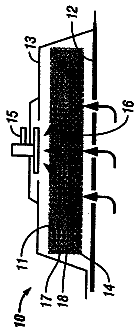
Sheet 1 of 6 from the published document. All sheets in the USPTO PDF
The present invention provides implantable medical devices coated with polyelectrolyte assemblies that are fabricated by layer-by-layer deposition of nucleic acid and polycation. Such devices facilitate the local delivery of a nucleic acid contained in the polyelectrolyte assembly into a cell or tissue at an implantation site. Also provided are methods of fabricating and using implantable medical devices according to the invention.
Thin films and coatings that sustain the release of DNA from surfaces are playing an important role in the development of localized approaches to gene therapy. For example, polymer-coated intravascular stents have been used to localize the delivery of DNA to the vascular wall and could lead to innovative gene-based treatments for vascular diseases or related conditions. Likewise, plasmid-eluting polymer matrices have been applied to the localized delivery of DNA to cells in the context of tissue engineering. The integration of design elements and new chemical functionalities that provide for the erosion of polyelectrolyte films under physiological conditions have been described for use in certain therapeutic areas. Several groups have reported the enzymatic degradation of multilayered films fabricated from naturally occurring polyelectrolytes such as chitosan/dextran sulfate, DNA, or hya
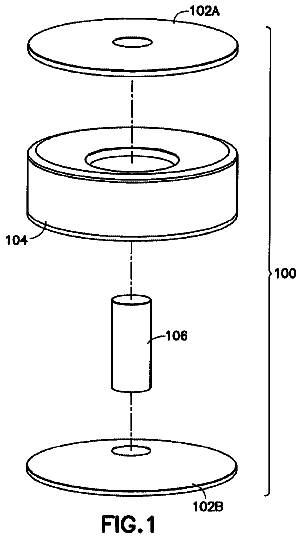
1 of 6 drawing sheets so far from the published document, cropped to the drawing. Every sheet is in the USPTO PDF.
What the patent claimed, word for word. All of it is now free to use.
This invention relates generally to the field of nucleic acid delivery into cells (i.e., transfection). More particularly, the present invention relates to the localized delivery of nucleic acids to cells using polyelectrolyte assemblies that are fabricated by layer-by-layer deposition of nucleic acid and polycation.
Thin films and coatings that sustain the release of DNA from surfaces are playing an important role in the development of localized approaches to gene therapy. For example, polymer-coated intravascular stents have been used to localize the delivery of DNA to the vascular wall and could lead to innovative gene-based treatments for vascular diseases or related conditions. Likewise, plasmid-eluting polymer matrices have been applied to the localized delivery of DNA to cells in the context of tissue engineering. The integration of design elements and new chemical functionalities that provide for the erosion of polyelectrolyte films under physiological conditions have been described for use in certain therapeutic areas. Several groups have reported the enzymatic degradation of multilayered films fabricated from naturally occurring polyelectrolytes such as chitosan/dextran sulfate, DNA, or hyaluronic acid and chitosan.
Intravascular stents have previously demonstrated potential as platforms for the localized delivery of DNA. This past work has focused largely on the encapsulation of plasmid DNA in thin films of degradable polymer (I. Fishbein, et al., Site specific gene delivery in the cardiovascular system. J Control Release 2005, 109, 37-48; B. D. Klugherz, et al., Gene delivery from a DNA controlled-release stent in porcine coronary arteries. Nat Biotechnol 2000, 18, 1181-4; I. Perlstein, et al., DNA delivery from an intravascular stent with a denatured collagen-polylactic-polyglycolic acid-controlled release coating: mechanisms of enhanced transfection. Gene Ther 2003, 10, 1420-8; A. Takahashi, et al., Transgene delivery of plasmid DNA to smooth muscle cells and macrophages from a biostable polymer-coated stent. Gene Ther 2003, 10, 1471-8; D. H. Walter, et al., Local gene transfer of phVEGF-2 plasmid by gene-eluting stents: an alternative strategy for inhibition of restenosis. Circulation 2004, 110, 36-45.) or the tethering of viruses to collagen-coated stents (B. D. Klugherz, et al., Gene delivery to pig coronary arteries from stents carrying antibody-tethered adenovirus. Hum Gene Ther 2002, 13, 443-54) or bare metal stents (I. Fishbein, et al., Bisphosphonate-mediated gene vector delivery from the metal surfaces of stents. Proc Natl Acad Sci USA 2006, 103, 159-164).
In the long term, methods for non-viral gene delivery have the potential to be safer than methods based on the use of viruses. However, past studies on stent-mediated delivery of plasmid DNA have made use of relatively thick (micrometer-scale) films using polymers that have been observed to lead to inflammatory responses in vivo. In addition, conventional methods for the bulk encapsulation of DNA involve the use of organic solvents, and these methods provide limited control over DNA loading and the spatial distribution of encapsulated DNA. The development of ultrathin films that combine the ability to localize DNA at a surface with the ability to control release profiles and promote subsequent internalization would constitute a significant advance and make possible new approaches to localized gene delivery.
Although various degradable polymer matrices have been described that are capable of sustaining the release of encapsulated DNA, general methods for the direct, localized, and sequential delivery of nucleic acid from thin films and surfaces do not yet exist. Such direct transfection materials and methods would be particularly advantageous in medical applications including, but not limited to, localized gene therapy, the growth or regeneration of complex tissues and other therapeutic uses such as inhibiting and/or ameliorating the inflammation that accompanies the implantation of medical devices such as vascular stents, prosthesis and the like.
In a first aspect, the invention provides an implantable medical device capable of localized delivery of nucleic acid to a cell. Such an implantable medical device includes a polyelectrolyte assembly coating a surface of the medical device. This polyelectrolyte assembly includes at least one nucleic acid/polycation bilayer fabricated by layer-by-layer deposition of nucleic acid and polycation.
A wide range of polycations, both degradable and non-degradable, are useful in fabricating a device according to the invention. Particularly useful polycations are hydrolytically or enzymatically degradable polycations including, but not limited to, poly(beta-amino ester)s, poly(4-hydroxy-L-proline ester), poly[alpha-(4-aminobutyl)-L-glycolic acid], and combinations thereof.
In certain embodiments, the polyelectrolyte assembly includes multiple nucleic acid/polycation bilayers, preferably more than two bilayers. In embodiments containing multiple bilayers, these bilayers may alternatively differ from each other in their specific composition of nucleic acid and/or polycation. Accordingly, respective bilayers may incorporate varied nucleic acids that differ by nucleic acid sequence and those nucleic acids may, in alternative embodiments, be incorporated into one or more expression vectors. Similarly, bilayers may differ from each other in their specific polycation makeup as in certain embodiments where differing degradable polycations are combined within a single bilayer, or, alternatively, contained within distinct bilayers, either with or without the presence of non-degradable polycations.
In some embodiments, the nucleic acid present in the bilayer encodes a polypeptide such as, for example, endostatin, angiostatin, an inhibitor of vasoactive endothelial growth factor (VEGF), an inhibitor of a signal protein in a signaling cascade of vascular endothelial growth factor, and inhibitor of basic fibroblast growth factor (bFGF), an inhibitor of a signal protein in a signaling cascade of bFGF, or combinations thereof.
A wide range of implantable devices are adaptable for use in the present invention including, but not limited to, a stent, a pacemaker, a defibrillator, an artificial joint, a prosthesis, a neurostimulator, a ventricular assist device, congestive heart failure device, an indwelling catheter, an insulin pump, an incontinence device, a cochlear device, or an embolic filter.
In a second aspect, the present invention encompasses a method of delivering a nucleic acid into a cell. Such a method includes steps of contacting a cell with a polyelectrolyte assembly that is fabricated by layer-by-layer deposition of nucleic acid and polycation such that the assembly includes a nucleic acid/polycation bilayer. The nucleic acid is locally-delivered into the cell by contact with the polyelectrolyte assembly.
Methods of localized delivery of nucleic acid according to the invention are carried out in the presence of cell culture medium or, alternatively and more preferably, in the context of a medical device implanted in a living tissue.
In certain embodiments, the polyelectrolyte assembly includes at least two nucleic acids that differ by nucleotide sequence. These respective nucleic acids reside in different bilayers and, in carrying out the method, are sequentially delivered into the cell.
In a third aspect, the invention is directed to a method of providing an implantable medical device capable of localized delivery of nucleic acid to a cell in contact with or located at an implantation site of the respective device. The method includes steps of layer-by-layer depositing nucleic acid and polycation on a surface of an implantable medical device to provide a polyelectrolyte assembly coating at least a portion of the implantable medical device. The polyelectrolyte assembly includes at least one nucleic acid/polycation bilayer.
The devices and methods of the present invention are advantageous in that they allow for the fabrication of an implantable medical device that is customized for the need of a subject. According to the present invention a device can be coated with a film comprising a nucleic acid sequence that locally transfects cells of a subject in situ providing for the production of therapeutic agents that facilitate a certain therapeutic activity including, for example, the acceptance of the device by the subject through the reduction of inflammation associated with implant placement.
Other objects, features and advantages of the present invention will become apparent after review of the specification, claims and drawings.
FIGS. 1A and B: FIG. 1A) Idealized scheme showing layer-by-layer fabrication of a multilayered film fabricated from alternating layers of degradable polymer 1 (dark shading) and a plasmid DNA encoding a fluorescent protein (pEGFP) (light shading). Incubation of this material under physiological conditions results in the gradual release of DNA. FIG. 1B) General scheme illustrating the direct and localized transfection of cells using a quartz slide coated with a polymer 1/DNA film. Coated quartz slides are placed manually on top of cells growing on the surface of a tissue culture dish.
FIG. 2: A set of 35 adjacent low magnification (4.times.) fluorescence microscopy images showing localized transfection in a 1.5 cm.sup.2 area of a confluent monolayer of COS-7 cells. Images were recorded 48 hours after exposure to a quartz substrate functionalized on both sides with erodible multilayered films fabricated from eight layers of polymer 1 and pEGFP. The solid white line (scale=0.5 cm) indicates the approximate location of the edge of the thin film on the quartz slide; portions of the quartz slide to the top and right of this line represent bare quartz used as a `handle` during fabrication (see FIG. 1B). The dotted lines are placed at the edges of the quartz slide as a guide to the eye.
FIGS. 3 A and B: Fluorescence microscopy images showing the expression of EGFP and the localization of transfection in COS-7 cells. Direct transfection was mediated using a quartz substrate functionalized on a single side with a thin multilayered film composed of eight layers of polymer 1 and pEGFP plasmid. These images were recorded after 48 hours of contact with the film-coated substrate. A) An image recorded through a 10.times. objective showing transfected cells. B) An image recorded through a 4.times. objective showing the extent to which transfection was localized to cells growing under the film-coated substrate. The dotted line in this image indicates the edge of the film-coated substrate.
FIGS. 4A and B: Tapping mode atomic force microscopy image showing a 10 .mu.m.times.10 .mu.m area of an eight bilayer polymer 1/plasmid film fabricated on silicon using acetate buffer for washing steps and imaged A) before and B) one hour after incubation in PBS buffer (scale in z direction is 200 nm). C) Confocal scanning laser microscopy image of a film fabricated from five bilayers of polymer 1 and Cy3-labeled plasmid deposited on a glass microscope slide. The white scale bar represents 25 .mu.m.
FIGS. 5 A-F are a scanning electron microscopy images of stainless steel intravascular stents coated with multilayed films fabricated from eight bilayers of polymer 1 and a plasmid DNA construct (pEGFP-N1) encoding enhanced green fluorescent protein. Stents were precoated with a thin multilayered SPS/LPEI film (ca. 20 nm thick) prior to the deposition of the DNA-containing films. Images correspond to different magnifications and perspectives of a coated stent imaged as-coated on a balloon assembly (A-C) and after balloon expansion (D-F).
FIGS. 6 A-D Scanning electron microscopy images of intravascular stents coated with multilayered films fabricated from eight bilayers of polymer 1 and a plasmid DNA. Stents were coated while mounted on a balloon assembly and then passed through a silicone septum and arterial inducer prior to imaging.
FIG. 7 Plot of solution absorbance at 260 nm v. time for two expanded stents coated with either eight (.box-solid.) or sixteen (.circle-solid.) bilayers of a polymer 1/DNA film incubated in phosphate buffered saline at 37.degree. C. Error bars are shown but are smaller than the symbols used to represent absorbance values.
FIGS. 8 A and B are scanning electron microscopy images of intravascular stents coated with eight bilayers of a multilayered polymer 1/DNA film and incubated in PBS buffer at 37.degree. C. for 1.5 hours prior to imaging.
FIGS. 9 A and B are fluorescence microscopy images, A) Fluorescence microscopy image (20.times.) showing expression of EGFP in COS-7 cells transfected with DNA released from a multilayered polymer 1/DNA film incubated in PBS at 37.degree. C. Transfection was conducted by combining released DNA with a commercially available cationic lipid. B) Series of eighty-eight adjacent low magnification (4.times.) fluorescence microscopy images showing expression of EGFP in a confluent population of COS-7 cells 48 hours after the introduction of a stent coated with eight bilayers of polymer 1 and DNA (total area shown is approximately 5.7 mm 2; a portion of the expanded stent is shown for comparison). This experiment was conducted without the use of additional transfection agents.
I. In General
Before the present materials and methods are described, it is understood that this invention is not limited to the particular methodology, protocols, materials, and reagents described, as these may vary. It is also to be understood that the terminology used herein is for the purpose of describing particular embodiments only, and is not intended to limit the scope of the present invention which will be limited only by the appended claims.
It must be noted that as used herein and in the appended claims, the singular forms "a", "an", and "the" include plural reference unless the context clearly dictates otherwise. As well, the terms "a" (or "an"), "one or more" and "at least one" can be used interchangeably herein. It is also to be noted that the terms "comprising", "including", and "having" can be used interchangeably.
Unless defined otherwise, all technical and scientific terms used herein have the same meanings as commonly understood by one of ordinary skill in the art to which this invention belongs. Although any methods and materials similar or equivalent to those described herein can be used in the practice or testing of the present invention, the preferred methods and materials are now described. All publications and patents specifically mentioned herein are incorporated by reference for all purposes including describing and disclosing the chemicals, cell lines, vectors, animals, instruments, statistical analysis and methodologies which are reported in the publications which might be used in connection with the invention. All references cited in this specification are to be taken as indicative of the level of skill in the art. Nothing herein is to be construed as an admission that the invention is not entitled to antedate such disclosure by virtue of prior invention.
The practice of the present invention will employ, unless otherwise indicated, conventional techniques of molecular biology, microbiology, recombinant DNA, and immunology, which are within the skill of the art. Such techniques are explained fully in the literature. See, for example, Molecular Cloning A Laboratory Manual, 2nd Ed., ed. by Sambrook, Fritsch and Maniatis (Cold Spring Harbor Laboratory Press: 1989); DNA Cloning, Volumes I and II (D. N. Glover ed., 1985); Oligonucleotide Synthesis (M. J. Gait ed., 1984); Mullis et al. U.S. Pat. No. 4,683,195; Nucleic Acid Hybridization (B. D. Hames & S. J. Higgins eds. 1984); Transcription And Translation (B. D. Hames & S. J. Higgins eds. 1984); Culture Of Animal Cells (R. I. Freshney, Alan R. Liss, Inc., 1987); Immobilized Cells And Enzymes (IRL Press, 1986); B. Perbal, A Practical Guide To Molecular Cloning (1984); the treatise, Methods In Enzymology (Academic Press, Inc., N.Y.); Gene Transfer Vectors For Mammalian Cells (J. H. Miller and M. P. Calos eds., 1987, Cold Spring Harbor Laboratory); Methods In Enzymology, Vols. 154 and 155 (Wu et al. eds.), Immunochemical Methods In Cell And Molecular Biology (Mayer and Walker, eds., Academic Press, London, 1987); and Handbook Of Experimental Immunology, Volumes I-IV (D. M. Weir and C. C. Blackwell, eds., 1986).
II. The Invention
The present invention is based on the inventors' discovery that particular polyelectrolyte assemblies fabricated by the sequential adsorption of nucleic acid and synthetic degradable cationic polymers can be used to directly and locally deliver functional nucleic acid from the surfaces of film-coated macroscopic objects. Importantly, these polyelectrolyte films introduce the requisite combination of different chemical functionalities needed to deliver nucleic acid into cells in a tissue culture environment and promote significant levels of surface-localized gene expression without the need for any exogenous transfection agents. These polyelectrolyte materials therefore present an advantageous structural framework for the local or non-invasive delivery of one or more nucleic acids from the surfaces of, for example, implantable materials and biomedical devices.
The layer-by-layer deposition of polyelectrolytes is a convenient and well-established method for the incorporation of natural and synthetic polyelectrolytes into thin nanostructured assemblies (C. S. Peyratout, L. Dahne, Tailor-made polyelectrolyte microcapsules: from multilayers to smart containers. Angew Chem Int Ed Engl 2004, 43, 3762-83). The technique takes advantage of electrostatic attractive forces between charged polymers and oppositely-charged surfaces, and film growth is typically achieved stepwise by the repetitive exposure of substrates to dilute polycation and polyanion solutions. Using this approach, it is possible to control film thickness on the nanometer scale simply by increasing the number of adsorbed polycation/polyanion layers, or to fabricate films possessing gradients of different polyelectrolyte components by manipulating the sequences in which multiple different polymer components are adsorbed. Multilayered films have been applied in numerous biological and therapeutic contexts (T. Groth, A. Lendlein, Layer-by-Layer Deposition of Polyelectrolytes--A Versatile Tool for the In Vivo Repair of Blood Vessels. Angew Chem Int Ed Engl 2004, 43, 926-928.), but the stability of these ionically crosslinked networks under physiological conditions has been an obstacle to the design of films that erode or disintegrate in a controlled manner in biological environments. Schuler et al., for example, demonstrated that herring sperm DNA could be released from polyelectrolyte assemblies fabricated from a low molecular weight polyamine upon changes in ionic strength (C. Schuler, F. Caruso, Decomposable hollow biopolymer-based capsules. Biomacromolecules 2001, 2, 921-926.), however disruption was reported to require changes in ionic strength that were significantly outside the physiological range.
The inventors have presently demonstrated that polycation and DNA-containing composites can be used to localize the release of DNA to cells from the surfaces of film-coated objects directly and self-sufficiently (i.e., without the aid of any additional transfection agents). These films are able to promote the localized transfection of cells in culture, and, while not adopting any one particular method of operation herein, these assemblies ultimately appear to present surface bound DNA in a nanoparticulate morphology that contributes to enhanced cell internalization. Thin films and conformal coatings that effectively combine the surface localization of DNA with polycationic transfection reagents are useful in various medical applications including, but not limited to, localized gene therapy and the growth or regeneration of complex tissues and ameliorating the pathophysiological effect of medical device implantation. As used herein, the terms "transformation" and "transfection" are intended to refer to techniques for introducing foreign nucleic acid (e.g., DNA) into a target or host cell.
Accordingly, the present invention provides a method of promoting delivery of a nucleic acid to a cell. Such method includes the step of contacting a cell with a polyelectrolyte assembly that is fabricated by layer-by-layer deposition of nucleic acid and polycation upon any suitable substrate, wherein the nucleic acid is directly and locally-delivered to the cell upon degradation or physical erosion of the polycation.
In general, polycations useful in the present invention are degradable or erodable polymers with cationic groups distributed along the polymer backbone. The cationic groups, which may include protonated amine, quaternary ammonium or phosphonium derived functions, may be disposed in side groups pendant from the backbone, may be attached to the backbone directly, or can be incorporated in the backbone itself.
Polycations suitable for use in the present invention include, but are not limited to, poly(beta-amino ester)s, polyethyleneimines or polyphosphoesters (Peterson, H. et al.,
Poly(ethyleneimine-co-L-lactamide-co-succinamide): A Biodegradable Polyethyleneimine Derivative with an Advantageous pH-Dependent Hydrolytic Degradation for Gene Delivery. Bioconjugate Chem., 13, 812-821; Wang, J., Mao, H., Leong, K. W.
A Novel Biodegradable Gene Carrier Based on Polyphosphoester. J. Am. Chem. Soc., 123, 9480-9481; Lim, Y.; et al.,
Development of a Safe Gene Delivery System Using Biodegradable Polymer, Poly[alpha-(4-aminobutyl)-L-glycolic acid]. J. Am. Chem. Soc., 122, 6524-6525; Lynn, D. M., Langer, R.
Degradable Poly(.beta.-Amino Esters): Synthesis, Characterization, and Self-Assembly with Plasmid DNA J. Am. Chem. Soc., 122, 10761-10768; Putnam, D., Langer, R.
Poly(4-hydroxy-1-proline ester): Low-Temperature Polycondensation and Plasmid DNA Complexation. Macromolecules, 32, 3658-3662.
Polycations belonging to the family of poly(beta-amino esters), of which, literally, thousands have been synthesized, are particularly useful in the present invention. The general structure and illustrative species of poly(beta-amino ester)s are described in U.S. Ser. No. 09/969,431, filed Oct. 2, 2001, entitled "Biodegradable poly(beta-amino esters) and uses thereof" and Lynn et al., J. Am. Chem. Soc. 122:10761-10768, 2000, the entire contents of both of which are incorporated herein by reference. Yet additional degradable polycations useful in the invention include, but are not limited to, the polycations disclosed in U.S. patent application Ser. No. 10/280,268, filed Oct. 24, 2002, entitled "Methods of making decomposable thin films of polyelectrolytes and uses thereof," which is incorporated herein by reference.
Illustrative poly(beta-amino ester)s are shown in FIG. 3. of U.S. patent application Ser. No. 10/280,268. Exemplary constituent groups present in the poly(beta-amino ester)s include hydrogen, branched and unbranched alkyl, branched and unbranched alkenyl, branched and unbranched alkynyl, aryl, halogen, hydroxyl, alkoxy, carbamoyl, carboxyl ester, carbonyldioxyl, amide, thiohydroxyl, alkylthioether, amino, alkylamino, dialkylamino, trialkylamino, cyano, ureido, a substituted alkanoyl group, cyclic, cyclic aromatic, heterocyclic, and aromatic heterocyclic groups, each of which may be substituted with at least one substituent selected from the group consisting of branched and unbranched alkyl, branched and unbranched alkenyl, branched and unbranched alkynyl, amino, alkylamino, dialkylamino, trialkylamino, aryl, ureido, heterocyclic, aromatic heterocyclic, cyclic, aromatic cyclic, halogen, hydroxyl, alkoxy, cyano, amide, carbamoyl, carboxylic acid, ester, carbonyl, carbonyldioxyl, alkylthioether, and thiol groups. As described in the references cited above, poly(beta-amino ester)s are commonly prepared from the conjugate addition of primary or secondary amines to diacrylates. Typically, poly(beta-amino ester)s have one or more tertiary amines in the backbone of the polymer, generally one or two per repeating backbone unit. The polymer may have between 5 and 10,000 repeat units.
In addition, a range of hydrolytically degradable amine containing polyesters bearing cationic side chains have recently been developed (Putnam et al. Macromolecules 32:3658-3662, 1999; Barrera et al. J. Am. Chem. Soc. 115:11010-11011, 1993; Kwon et al. Macromolecules 22:3250-3255, 1989; Lim et al. J. Am. Chem. Soc. 121:5633-5639, 1999; Zhou et al. Macromolecules 23:3399-3406, 1990; each of which is incorporated herein by reference). Examples of these polyesters include poly(L-lactide-co-L-lysine) (Barrera et al. J. Am. Chem. Soc. 115:11010-11011, 1993; incorporated herein by reference), poly(serine ester) (Zhou et al. Macromolecules 23:3399-3406, 1990; which is incorporated herein by reference), poly(4-hydroxy-L-proline ester) (Putnam et al. Macromolecules 32:3658-3662, 1999.; Lim et al. J. Am. Chem. Soc. 121:5633-5639, 1999; each of which is incorporated herein by reference), and more recently, poly[alpha-(4-aminobutyl)-L-glycolic acid].
Zwitterionic polyelectrolytes may also be incorporated into polyelectrolyte assemblies useful in the present invention. Such polyelectrolytes may have both anionic and cationic groups incorporated into the backbone or covalently attached to the backbone as part of a pendant group. Such polymers may be neutrally charged at one pH, positively charged at another pH, and negatively charged at a third pH. For example, a film may be deposited by layer-by-layer deposition using dip coating in solutions of a first pH at which one layer is anionic and a second layer is cationic. If the film is put into a solution having a second different pH, then the first layer may be rendered cationic while the second layer is rendered anionic, thereby changing the charges on those layers.
Certain methods according to the present invention utilize polyelectrolyte assemblies including dynamic charge state cationic polymers. Dynamic charge state cationic polymers are useful for delivery of anionic molecules and exemplary polymers and methods are disclosed in U.S. patent application Ser. No. 10/886,161, filed Jul. 7, 2004, entitled "Charge dynamic polymers and delivery of anionic compounds," which is incorporated by reference herein in its entirety. Dynamic charge state cationic polymers are designed to have cationic charge densities that decrease by removal of removable functional groups from the polymers.
Assemblies useful in the present invention are constructed on the surface of a substrate. A variety of materials can be used as substrates such as, but not limited to, metals, e.g., gold, silver, platinum, and aluminum; metal-coated materials; metal oxides; plastics; ceramics; silicon; glasses; mica; graphite; hydrogels; polymers and combinations thereof. A substrate of one material may be coated with a second material, or two materials may be combined to form a composite. Particularly useful substrates include, but are not limited to degradable or non-degradable biocompatible polymers and biocompatible metal alloys commonly used to manufacture or fabricate implantable medical devices and drug delivery implements. The size of the substrate is not limited and can be macroscopic or can have physical dimensions on the order of micrometers or nanometers. As would be apparent to one of ordinary skill in the art, the substrate surface can be pre-treated or modified in any number of suitable and desirable ways prior to the deposition of the polyelectrolyte assembly.
The preferred manufacturing method for the polyelectrolyte assemblies is set forth in the examples section below. In general, films may be fabricated from polycation and nucleic acid using any of the generally accepted methods known to those of skill in the art including, but not limited to, dip coating, spray coating, brush coating, roll coating, spin casting, or combinations thereof. In one particularly useful method, substrates or solid objects may be coated using a manual or automated dipping protocol similar to those reported previously for polycation/DNA systems (J. Zhang, L. S. Chua, D. M. Lynn, Multilayered Thin Films that Sustain the Release of Functional DNA Under Physiological Conditions. Langmuir 2004, 20, 8015-8021). Briefly: 1) A substrate is submerged in a solution of polycation for a length of time suitable to allow sufficient adsorption of polycation to the substrate, 2) the substrates is removed and immersed in one or several wash baths, the substrate is submerged in a solution of nucleic acid for a length of time suitable for the adsorption of nucleic acid, and 4) the substrate is again washed or rinsed in the manner described above for step 2. This cycle is generally repeated until the desired number of polymer and DNA layers have been deposited or the desired thickness of the deposited assembly has been reached.
The term "multilayered films", as used herein, shall refer to films having at least one "bilayer" of deposited material. The term "bilayer", as used herein, shall refer to the accumulated layers of material deposited on a surface as a result of having passed through at least one complete cycle of the general steps 1-4 identified above. Preferred embodiments utilize films having at least two bilayers of nucleic acid and polycation. More preferred embodiments utilize films having at least four bilayers of nucleic acid and polycation. In certain embodiments, at least two of the nucleic acid layers include nucleic acids characterized by differing nucleotide sequences. The sequential delivery of differing nucleic acids to a cell is therefore contemplated by the present invention. Layer-by-layer fabrication, also termed LBL fabrication, offers an opportunity to design films containing spatially segregated regions of polyelectrolyte confined to different regions of a film (i.e., in either the top or the bottom). It is therefore possible to use the layered nature of these materials to fabricate assemblies that release different concentrations of multiple plasmids or to control the kinetics with which two differing nucleic acids are released by incorporating intermediate polyelectrolyte layers that erode more slowly.
In certain embodiments, the composition of the nucleic acid and polycationic layers can be fine-tuned to adjust the degradation rate of each layer within the film. For example, the degradation rate of hydrolytically degradable polyelectrolyte layers can be decreased by associating hydrophobic polymers such as hydrocarbons and lipids with one or more of the layers. Alternatively, the polyelectrolyte layers may be rendered more hydrophilic to increase their hydrolytic degradation rate. In certain embodiments, the degradation rate of a given layer can be adjusted by including a mixture of polyelectrolytes that degrade at different rates or under different conditions. In other embodiments, the nucleic acid and/or polycationic layers may include a mixture of degradable and non-degradable polyelectrolytes. Any non-degradable polyelectrolyte can be used with the present invention. Exemplary non-degradable polyelectrolytes that could be used in thin films of the present invention include poly(styrene sulfonate) (SPS), poly(acrylic acid) (PAA), linear poly(ethylene imine) (LPEI), poly(diallyldimethyl ammonium chloride) (PDAC), and poly(allylamine hydrochloride) (PAH).
Alternatively or additionally, the degradation rate may be fine-tuned by associating or mixing non-biodegradable, yet biocompatible polymers (polyionic or non-polyionic) with one or more of the nucleic acid and/or polycationic layers. Suitable non-biodegradable, yet biocompatible polymers are well known in the art and include polystyrenes, certain polyesters, non-biodegradable polyurethanes, polyureas, poly(ethylene vinyl acetate), polypropylene, polymethacrylate, polyethylene, polycarbonates, and poly(ethylene oxide)s.
Furthermore, because the thin film is produced in a layer-by-layer fashion, the composition of individual layers may be varied to tailor the degradation rate of various portions of the film. For example, the upper layers of the film, closer to the surface, may be adjusted to degrade faster than the layers of the film closer to the substrate, or vice versa. Depending on the thickness of the film, the degradation rate within the film may be varied cyclically (e.g., for periodic release). Additionally or alternatively, the upper layers of the film, closer to the surface, may be adjusted to degrade under a first set of conditions (e.g., endosomal conditions) while the layers of the film that are closer to the substrate are adjusted to degrade under a second set of conditions (e.g., physiological conditions).
As noted above, polyelectrolytes may be associated or mixed with polymeric or non-polymeric moieties to regulate the degradation rate. In addition, neutral, zwitterionic, or charged biomolecules, small molecules, or bioactive agents may be associated or mixed with a polycation or nucleic acid and incorporated into a layer. For example, the charged atoms on a zwitterionic molecule may facilitate electrostatic interactions with both the nucleic acid and polycationic layers. A zwitterionic biomolecule, small molecule, or bioactive agent may be combined in solution with the polyelectrolytes for one of the layers or placed in a separate solution to form a "sandwich" between two layers. When the thin film degrades, the biomolecule, small molecule, or bioactive agent will be released. Alternatively, a biomolecule, small molecule, or bioactive agent may be associated with a polyelectrolyte under conditions which facilitate a strong interaction between the molecule and the polyelectrolyte, while the medium in which the biomolecule, small molecule, or bioactive agent is released is one which competes with the polyelectrolyte for the biomolecule, small molecule, or bioactive agent, thereby decreasing the strength of the interaction with the polyelectrolyte.
The composition of the various layers may be adjusted to release different entities in addition to the nucleic acid as the thin film degrades. For example, a thin film may be designed to release therapeutic agents such as chemotactic factors tailored to attract or inhibit the growth of cells at an implant site, followed by a nucleic acid to transfect and affect/alter gene expression related to a desired metabolic or proliferative activity in cells now at the implant site. For example, such therapeutic agents may include growth factors such as EGF, bFGF, their inhibitors, receptor agonists or receptor antagonists, neuropeptides and their agonists or antagonists and nucleic acids coding for such therapeutic agents.
It will be appreciated that in preparing a thin film that degrades with a desired rate and profile one may need to test various thin film compositions experimentally. The degradation rates and profiles of inventive thin films can, for example, be investigated using a variety of known techniques, including ellipsometry, dynamic light scattering (DLS), zeta-potential analysis, quartz crystal microbalance (QCM), and atomic force microscopy (AFM). The QCM method is particularly attractive since it can be used with rough films and allows continuous monitoring without removal of the thin films from the degradation milieu. AFM can be also used to monitor changes in the multi-layer surface morphology as a function of degradation.
Additionally or alternatively, one may choose to monitor the rate at which a non-degradable structural polymer, biomolecule, small molecule, nucleic acid or bioactive agent is released from the thin film. If the released entity absorbs or emits light in an un-crowded region of the ultraviolet or visible electromagnetic spectrum, one could measure the rate of release by UV-visible spectroscopy. It will be appreciated that a variety of synthetic and recombinant techniques exist that allow one to attach a light absorbing or emitting group, e.g., a fluorescent group or a dye to a polymer or small molecule that lacks such functionality. Alternatively, one could incorporate a model chromic compound, e.g., the commercially available photochromic polyanion PAZO, into a range of thin films for this purpose.
Nucleic acid delivered by a method according to the invention is preferably in the form of deoxyribonucleic acid (DNA), more preferably in the form of a DNA vector, most preferably an expression vector. Alternatively, the inventive method may convey ribonucleic acid or, in yet other alternative embodiments, a protein/nucleic acid (PNA) molecule or other mimetic understood by one of skill to be a nucleic acid equivalent. As used herein, the term "nucleic acid" generally refers to any polyribonucleotide or polydeoxribonucleotide, which may be unmodified RNA or DNA or modified RNA or DNA. "Nucleic acids" include, without limitation, single- and double-stranded DNA, DNA that is a mixture of single- and double-stranded regions or single-, double- and triple-stranded regions, single- and double-stranded RNA, and RNA that is mixture of single- and double-stranded regions, hybrid molecules comprising DNA and RNA that may be single-stranded or, more typically, double-stranded, or triple-stranded regions, or a mixture of single- and double-stranded regions.
In addition, "nucleic acid" as used herein refers to triple-stranded regions comprising RNA or DNA or both RNA and DNA. The strands in such regions may be from the same molecule or from different molecules. The regions may include all of one or more of the molecules, but more typically involve only a region of some of the molecules. One of the molecules of a triple-helical region often is an oligonucleotide. As used herein, the term "nucleic acid" also includes DNAs or RNAs as described above that contain one or more modified bases. Thus, DNAs or RNAs with backbones modified for stability or for other reasons are "nucleic acids" as that term is intended herein. Moreover, DNAs or RNAs comprising unusual bases, such as inosine, or modified bases, such as tritylated bases, to name just two examples, are nucleic acids as the term is used herein. It will be appreciated that a great variety of modifications have been made to DNA and RNA that serve many useful purposes known to those of skill in the art. The term "nucleic acid" as it is employed herein embraces such chemically, enzymatically or metabolically modified forms of nucleic acids, as well as the chemical forms of DNA and RNA characteristic of viruses and cells, including prokaryotic and eukaryotic cells. "Nucleic acid" also embraces short polynucleotides often referred to as oligonucleotide(s).
The description continues in the full USPTO document.
About 5,762 words. The USPTO PDF has it with every drawing.
Fees are due 3.5, 7.5 and 11.5 years after grant. This patent expired on May 27, 2026, so the fee marked "not paid" was the one that went unpaid.
Localized delivery of nucleic acid by polyelectrolyte assemblies
Filed May 2006 · published Nov 2006Localized delivery of nucleic acid by polyelectrolyte assemblies
Filed May 2006 · granted May 2014Earlier publications, parents and continuations. None of them can still be enforced, or this patent would not be listed.
Prior art cited by the examiner or applicant. Useful when you check your own idea for novelty.
Everything on this page comes from the documents linked above.