Background
In order to facilitate communication between computing devices, data may be transmitted between devices in a format that is comprehensible by both the sending and receiving devices. In this regard, protocols have been developed that enable communication between computing devices connected by way of a network or the Internet. These protocols provide a standardized format in which data may be sent over a network. Accordingly, data may be sent between computing devices on a network or over the Internet and be properly interpreted by the receiving computer. The most common set of protocols governing communication over or between networks is the Internet Protocol Suite (commonly referred to as TCP/IP).
The Internet Protocol Suite includes several layers that provide different functions at different levels of abstraction. These layers consist of the Application layer, the Transport layer, the Internet layer, and the Link layer. Within each of these layers, different protocols have been developed to facilitate communication between computing devices. For instance, within the Transport layer many protocols have been developed in order to format data for communication over a network such that the sending and receiving computer devices may properly direct the data to and from an appropriate application on each computer. These protocols may provide different features depending upon the nature and intended role of the protocol. For example, connection-oriented data stream support, reliability, flow-control, and error correction may be provided by protocols within the Transport layer. However, the feature set for each protocol may be different and may include or omit features to strike a balance between performance (e.g., data transfer rates) and reliability (e.g., data integrity at the receiving device). That is, a protocol tailored for high rates of data transfer generally includes fewer data reliability features, whereas protocols tailored for high reliability may include reliability features that may limit data transfer rates. Two popular and widely used transport layer protocols demonstrate this inherent balance between performance and reliability. These are the Transport Control Protocol (TCP) and the User Datagram Protocol (UDP).
TCP connections provide data transfers that help to ensure high data integrity at the receiving device, but generally provide slower data transfer speeds than speeds obtainable using a UDP connection. A TCP connection utilizes a positive acknowledgement with retransmission technique that requires an acknowledgment message to be exchanged between a receiving entity and a sending entity to confirm that each individual data packet sent from a sender to a receiver was in fact received at the receiver. If not received, the data packet is retransmitted until acknowledgement is received from the receiver. While this may help to ensure that the data being sent arrives in the correct order and may assist in ensuring data packet delivery, the high reliability of the TCP connection comes at a cost of speed. The acknowledgement messages exchanged between sender and receiver take time to transmit. In turn, these messages are exchanged during times that could otherwise be used for transferring data, thus limiting the overall transfer rate. For example, oftentimes delays in the order of seconds are required waiting for out of order messages or waiting for retransmission of a packet.
A UDP connection, on the other hand, provides high speed data exchange, yet may sacrifice features that help ensure the integrity of data received at a receiving entity. In this regard, data packets (i.e., datagrams) sent via a UDP connection are not subjected to acknowledgement or other integrity checks similar to those present in a TCP connection. Thus, the transfer rate of a UDP connection may be higher than that of a TCP connection. However, there may be no mechanism in a UDP connection to help ensure that the all data packets were received, that all data packets arrived in order, and that there was no corruption of data during the transfer. Rather, data is simply delivered to the Application layer in the form it was received. As such, UDP connections either rely on applications to perform integrity checks, or assume that such integrity is of lesser importance than the overall speed of data transport. In this regard UDP connections are valuable in certain applications such as Internet broadcasting, voice-over-IP (VoIP) transmissions, queries to the Domain Name System (DNS), streaming media applications such as IPTV, Trivial File Transfer Protocol (TFTP), online gaming, or other time sensitive communications where a loss in data integrity is preferable to a slow communication due to the time sensitive nature of the data.
In short, a UDP connection emphasizes speed at the cost of reliability, while a TCP connection emphasizes reliability at the cost of speed.
Other protocols been developed for data exchange that are tailored for particular applications. One example of such a tailored protocol is the BitTorrent protocol. BitTorrent allows for exchange of a relatively large amount of data without dominating the bandwidth of any one computing device participating in the data transfer. In this regard, a torrent file is obtained by a receiving computer that in turn uses the file to seek and download small portions of a target file from various locations in the network (often called seeds). In this regard, the torrent file directs the acquisition of data from a multitude of different sources. However, BitTorrent was developed in order to provide relatively low bandwidth usage which is spread across a large number of users in the network in order to transfer data. Additionally, transfers using the BitTorrent protocol may use existing transport protocols (e.g. TCP), and are thus subject to the limitations presented by such transport protocols. As such, the data transfer is often slow as the usage of any one user's bandwidth is relatively low.
Summary
A first aspect of the present invention includes a method of transferring data between computing devices operable to communicate over an electronic network. The method includes sending data from a source device to a destination device using at least one high speed connection. Also, the method includes communicating a descriptor regarding the data from the source device to the destination device using at least one high integrity connection. Additionally, data received at the destination device is correlated to the descriptor received at the destination device. The method further includes modifying the descriptor to identify data received at the destination device and informing the source device of the identity of data not received by the destination device using the at least one high integrity connection. The method also includes resending data not received by the destination device from the source device to the destination device using the at least one high speed connection.
A second aspect of the present invention includes a computing device that is operable to communicate with other computing devices to perform a parallel data transfer. The computing device includes a microprocessor, a memory in operative communication with the microprocessor that is operative to store one or more files, a network communication module in operative to communicate data packets to a remote device on a network using a high integrity connection and a high speed connection, and a parallel data transfer module in operative communication with the microprocessor and the network communication device. The parallel data transfer module is operable to receive a descriptor over the high integrity connection regarding blocks of data received over the high speed connection, update the descriptor file based on the blocks of data received over the high speed connection, and communicate the updated descriptor file over the high integrity connection using the network device.
A third aspect of the present invention includes a method for receiving data at a destination device from a source device. The method includes receiving data at the destination device from the source device over at least one high speed connection. Additionally, the method includes acquiring a descriptor at the destination device regarding the data from the source device over at least one high integrity connection. Data received from the source device is correlated at the destination device to the descriptor. The method also includes modifying the descriptor based on data received at the destination device over the high speed connection. In addition, the modified descriptor is sent to the source device and the destination device receives data that has been resent by the source device using the at least one high speed connection.
A fourth aspect of the present invention includes a method of sending data from a source device to a destination device. The method includes sending data from the source device to the destination device using at least one high speed connection. Additionally, the method includes transmitting a descriptor regarding the data from the source device to the destination device using at least one high integrity connection. Also, the method includes receiving, at the source device, a modified descriptor including the identity of data not received by the destination device using the at least one high integrity connection. The method includes resending, at the source device, data not received by the destination device to the destination device using the at least one high speed connection.
A number of feature refinements and additional features are applicable to any of the aspects presented herein. These feature refinements and additional features may be used individually or in any combination. As such, each of the following features that will be discussed may be, but are not required to be, used with any other feature or combination of features of the any of the aspects presented herein.
For instance, in one embodiment, the data may include a first portion of a file. The first portion may include a plurality of blocks. Additionally, the descriptor may include a file which contains a set of unique elements. Each unique element may correspond to a different one of the plurality of blocks. For example, the unique element may be a bit in the file. In an embodiment, the modifying may include toggling at least one bit in response to receipt of a corresponding block of the first portion at the destination device. In this regard, the informing may include transmitting the descriptor having toggled bits to the source device via the high integrity connection.
In another embodiment, the method may be repeated until each of the blocks in the first portion is received at the destination device. As such, the method may be repeated for a plurality of portions until all of the file is transferred.
In yet another embodiment, a plurality of parallel data transfer connections may be established. Each parallel data transfer connection may include a high speed connection and a high integrity connection, and each parallel transfer connection may be operable to perform a method to transfer a respective one of a plurality of portions of a file. Furthermore, a plurality of parallel data transfer connections may be established. Each parallel data transfer connection may include at least one high integrity connection and a plurality of high speed connections. The plurality of parallel high speed connection may be operable to perform a method as recited above in concert with the at least one high integrity connections to transfer a respective one of a plurality of portions of a file.
In another embodiment, the at least one high speed connection may employ a User Datagram Protocol (UDP). Additionally, the at least one high integrity connection may employ a Transmission Control Protocol (TCP). Also, the source device may be a server and the destination device may be a client device. The client device may a handheld computing device (e.g., a smartphone, PDA, tablet computer, or the like). In addition, the source device and the destination device may both be servers.
In still further embodiments, the method may be executed as an application directly controllable by a user. Commands may be received from a user by at least one of a command line interface and a graphical user interface. The method may also executed as a service controllable by an application. The service may be controllable by way of at least one of an application programming interface, a script, and a remote procedure call. The method may be initiated by the source device or may be initiated by the destination device.
Any of the embodiments, arrangements, or the like discussed herein may be used (either alone or in combination with other embodiments, arrangements, or the like) with any of the disclosed aspects. Any feature disclosed herein that is intended to be limited to a "singular" context or the like will be clearly set forth herein by terms such as "only," "single," "limited to," or the like. Merely introducing a feature in accordance with commonly accepted antecedent basis practice does not limit the corresponding feature to the singular (e.g., indicating that a data transfer protocol includes "the high speed connection" alone does not mean that the data transfer protocol includes only a single high speed connection). Moreover, any failure to use phrases such as "at least one" also does not limit the corresponding feature to the singular (e.g., indicating that data transfer protocol includes "a high speed connection" alone does not mean that the data transfer protocol includes only a single high speed connection). Use of the phrase "at least generally," "at least partially," or the like in relation to a particular feature encompasses the corresponding characteristic and insubstantial variations thereof. Finally, a reference of a feature in conjunction with the phrase "in one embodiment" does not limit the use of the feature to a single embodiment.
Brief description of the drawings
FIG. 1 is a flowchart of an embodiment of a protocol for parallel data transfer.
FIG. 2 is a schematic representation of an embodiment of a descriptor file and one corresponding block.
FIG. 3 is a graphical representation of a descriptor file being updated in response to receipt of blocks according to an embodiment of parallel data transfer.
FIGS. 4A-B depict a graphical representation of an embodiment of physical memory in a computing device.
FIG. 5 depicts a schematic view of an embodiment of a system of computing devices in operative communication.
FIG. 6 is a schematic view of an embodiment of a computing device capable of performing high speed parallel data transfers.
FIGS. 7-10 are screenshots of an embodiment of a graphical user interface for controlling a parallel data transfer module.
FIG. 11 is a graphical representation of an embodiment of the division of a file into superblocks, portions, and blocks.
FIGS. 12A-D are graphical representations of different embodiments of a parallel data transfer protocol having different numbers of connections.
Detailed description
While the invention is susceptible to various modifications and alternative forms, specific embodiments thereof have been shown by way of example in the drawings and are described in detail herein. It should be understood, however, that it is not intended to limit the invention to the particular form disclosed, but rather, the invention is to cover all modifications, equivalents, and alternatives falling within the scope of the invention as defined by the claims.
The present disclosure is generally directed to parallel data exchange between computing devices. The exchange involves establishing at least one pair of connections that include a high speed connection and a high integrity connection. As used herein, each one of the high speed and high integrity connections may be judged relative to the other. That is, the high speed connection may be capable of data transfer speeds at least greater than the high integrity connection, and the high integrity connection may provide at least greater data reliability than the high speed connection. In one particular embodiment, the high speed connection utilizes a UDP protocol and the high integrity connection utilizes a TCP protocol.
The high integrity connection may be a side channel that is used to communicate descriptor data regarding the status of data transferred over the high speed connection. As such, while the high integrity connection may provide slower data transfer rates than the high speed connection, the amount of data communicated over the high integrity connection may be small compared to the amount of data communicated over the high speed connection.
During a data transfer, the majority of the data exchanged between a sender and receiver may be exchanged over the high speed connection. The high integrity connection may be used to exchange information used to provide data integrity features typically not available using the high speed connection.
FIG. 1 depicts an embodiment of one such protocol 100 for parallel data transfer between a sender (i.e., a source device) and receiver (i.e., a destination device). The protocol 100 may include establishing
a high speed and a high integrity connection between the receiver and the sender. In one particular embodiment, the high speed connection may be a UDP connection and the high integrity connection may be a TCP connection.
The protocol 100 may further include the sender and receiver exchanging
information via the high integrity connection. This information may include information regarding a file name and a file size of a file to be transferred from the sender to the receiver. Additionally, the receiver may, based on the exchanged file information, allocate an appropriate amount of memory at the receiver device to accommodate the file as will be discussed further below. As this exchanged information may comprise only metadata regarding the information to be exchanged via the high speed connection, the amount of data exchanged via the high integrity connection may be small compared to the amount of data to be exchanged via the high speed connection.
With additional reference to FIG. 11, a graphical representation of the division of a file into small pieces is shown. A file 242 is represented as a line segment, wherein the length of the line segment is representative of the amount of data comprising the file 242. The file 242 may in turn be divided into a number of superblocks 244. Each of the superblocks may in turn be divided into portions 246. Each of the portions 246 may be divided into a number of blocks 248. Each of the blocks 248 may be transmitted over the high speed connection as a single data packet. Thus, each block 248 may be provided with header data corresponding to the protocol used for the high speed connection. Furthermore, each portion may have associated with it a descriptor file. The descriptor file may have a bit corresponding to each block 248 in a portion 246. The relationship between blocks 248 and descriptor files will be discussed further below. Additional data regarding the file such as the number of superblocks 244 to be exchanged, the number of portions 246 per superblock 244, and the number of blocks 248 per portion 246 may also be exchanged at step 104 of FIG. 1.
The protocol 100 may include the receiver and/or sender initiating
the transfer a portion of a superblock via the high integrity connection. For instance, in order to initiate
the data transfer, the receiver may request the first portion of the first superblock. In another embodiment, the sender may initiate a transfer of the first portion of the superblock. Thus, the initiation of a transfer of a portion may originate at the sender or receiver.
In any regard, the protocol may include sending
a descriptor file for the portion to be transferred via the high integrity connection. The descriptor file may include a number of unique elements. Each unique element may correspond to a different one of the blocks to be sent for the portion. In one embodiment, the descriptor file is a 32 bit word, such that the descriptor file corresponds to 32 blocks of data that comprise one portion of a superblock. In this regard, each bit is a unique element. Alternative embodiments may include that the unique element is a larger portion of the file, such as a byte or other portion of the file.
The sender may send
the blocks of the portion from the sender to the receiver via the high speed connection. It will be understood that because the blocks are sent via the high speed connection, there may few or no features to help ensure reliable data delivery provided by the high speed connection. For example, a data checksum may be provided (e.g., in a UDP header) to ensure the contents of each individual block are accurately received, however no mechanism may be provided to help ensure all blocks are received or to ensure the blocks are received in the correct order.
As such, the descriptor file may be updated
to reflect whether blocks send by the sender were received at the receiver. Updating the descriptor file may include toggling bits that correspond to blocks that are received at the receiver. Thus, the updated descriptor file may include bits indicating the files that have been received at the receiver and files that have yet to be received at the receiver.
As an example, for a portion comprising six blocks of data, a corresponding six bit descriptor file may be sent (108). As such, upon initial receipt of the descriptor file at the receiver (i.e., prior to receiving any blocks via the high speed connection) the descriptor file may be populated with zeros indicating no blocks have been received. Thus, the descriptor file may be represented as [000000]. After having received the first block (block 0), third block (block 2), and fourth block (block 3), the descriptor file may be updated
to reflect which of the blocks were received. Thus, the updated descriptor file may be represented as [101100]. When all blocks have been received, the descriptor file may be represented as [111111].
Returning to FIG. 1, the receiver may send
an updated descriptor file via the high integrity connection to the receiver. At 116, the updated descriptor file may be used to determine which blocks of the requested portion of the request superblock have been received. If not all blocks of the requested portion have been received the sender may resend
the blocks that were not received based on the updated descriptor file.
The process may then loop such that the descriptor file is updated
based on any newly received blocks, the non-received blocks are sent
via the high integrity connection to the sender, and it is determined
whether all blocks of the requested portion have been received. This loop may be repeated until all blocks of the requested portion have been received at the receiver or until the process times out (e.g., performs a predetermined number of loops without any blocks being received by the receiver or without receiving an updated descriptor file).
If all blocks of the requested portion have been received, the protocol 100 may proceed to determining
if the entire file transfer has been completed. If all portions of all superblocks (e.g., the entire file) have been received, the transfer may be ended. If there are remaining portions of superblocks to be received, the process may loop such that the transfer of the next portion of the superblock is initiated (106). Alternatively, the transfer of the first portion of the next superblock may be initiated (106). The protocol 100 may be repeated until all portions of all superblocks into which the file was divided have been transferred.
With additional reference to FIG. 2, a graphical representation of a descriptor file 120 and a block 122 is shown. For illustrative purposes, a 32 bit descriptor file 120 is depicted. Thus, in this particular embodiment, each superblock may be divided into portions having 32 blocks. However, a descriptor file with a different number of bits may be provided such that each portion of the superblock contains a corresponding number of bits (e.g., a 20 bit descriptor file would result in portions of 20 blocks, etc.). That is, the number of bits used for the descriptor file may determine the size of the portions into which each superblock is divided. Prior to being sent over the high speed connection, each block 122 may be appended with an identifier 124. The identifier 124 may be used to correlate the block 122 with the appropriate corresponding bit 126 for the descriptor file 120. As depicted, block 7 of the portion is shown corresponding to bit 7. Thus, the identifier 124 may be used to correlate block 7 with bit 7 when block 7 is received at the receiver. Bit 7 may be toggled (i.e., a 0 value changed to a 1 value) upon receipt of block 7 at the receiver. In this regard, the status of whether each block of the portion being transferred has been received may be tracked using the descriptor file 120. This is further illustrated with reference to FIG. 3.
FIG. 3 is a graphical representation of the status of a descriptor file 128 and corresponding blocks (132-146). Transfers between sender and receiver via a high integrity connection 148 are depicted in the left column, and transfers between sender and receiver via a high speed connection 150 are depicted in the right column. In the depicted embodiment, an eight bit descriptor file 128 is initially sent from the sender to the receiver over the high integrity connection 148. Each one of the eight bits of the descriptor file 128 is populated with a zero to indicate that none of the eight blocks (132-146) corresponding to the descriptor file 128 has been received at the receiver. Subsequently, block 0 132, block 2 136, block 3 138, block 5 142, and block 7 146 may be sent via the high speed connection 150 and received at the receiver. Each of the blocks (132-146) may include an identifier (130a-130h). The respective identifiers (130a-130h) may be used to correlate each of the blocks (132-146) to a corresponding one of the bits of the descriptor file 128.
It may be the case that all eight blocks (132-146) are sent via the high speed connection 150; however, due to network conditions or other factors, some blocks may not all be received at the receiver. In this regard, the descriptor file 128 may be updated with respect to the received blocks. This updated descriptor file is designated with a single prime (128'). The bits associated with block 0 132, block 2 136, block 3 138, block 5 142, and block 7 146 in the updated descriptor file 128' have been populated with ones to indicate in these blocks were in fact received. The updated descriptor 128' may then be transmitted via the high integrity connection 148 to the sender. Based on this received updated descriptor file 128', the sender may resend the non-received blocks (i.e., block 1 134, block 4 140, and block 6 144). Block 1 134, block 4 140, and block 6 144 may subsequently be received via the high speed connection 150. As such, the descriptor file 128' may again be updated. This updated descriptor file is designated with a double prime (128''). Thus, the updated descriptor file 128'' indicates all blocks have been received (i.e., all bits are set to one). The updated descriptor file 128'' may then be sent via the high integrity connection 148 to the receiver. Thus, the receiver is notified that all blocks have been received at the receiver and that the transfer of the portion corresponding to the descriptor file 128 is complete.
Thus, blocks of data corresponding to a bit in a descriptor file may be transferred between machines. Each group of blocks correlated to the same descriptor file may comprise a portion. Blocks may have a predetermined size. For example, in one embodiment, each block may have about 1440 bytes or less. Blocks may be sized such that the data of the block, the identifier correlating the block to a descriptor file, and any header information added to the block to facilitate communication via a protocol (e.g., a UDP header) does not render the block too large to transmit using the selected protocol. In one embodiment, each superblock may have associated with it 1000 blocks. As briefly discussed above, the number of portions of blocks within a superblock may be determined by the number of bits of the descriptor file. That is, a portion may comprise all the blocks correlated to a common descriptor file. For instance, in an embodiment, where a superblock has 1000 blocks, and a 20 bit descriptor file is utilized, the superblock may have 50 portions. For each of these portions, each bit of a 20 bit descriptor may have a corresponding block. Thus, during a transfer, each portion may be sent via the process described above with reference to FIGS. 1 and 3. The transfer of a complete file may entail dividing the file into superblocks, dividing the superblocks into portions, and correlating each block of a portion to a bit in a descriptor file to facilitate transfer.
Additionally, while the foregoing has generally discussed a single instance of a parallel transfer using a high speed connection and a high integrity connection, it is also contemplated that a plurality of parallel transfers using the method described above may be carried out simultaneously. In this regard, a plurality of pairs of high speed and high integrity connections may be established between a sender and receiver. For instance, in an embodiment utilizing a UDP protocol for the high speed connection and a TCP protocol for the high integrity connection, a unique port number may be used for each UDP and TCP connection comprising a high speed connection and high integrity connection pair. In one embodiment, TCP Port 10600 is used as a listening port for the sending device and TCP port 10601 is used as a listening port for a remote procedure call to the protocol, as will be described further below. UDP Ports 10610-10640 and 10650-10670 may be used for sending and receiving device pairs. In one embodiment, up to 16 parallel transfer connections may be established, each parallel transfer connection may include a high speed connection and a high integrity connection. More parallel transfer connections could be provided; however the available bandwidth of a device may preclude the effective use of more than 16 parallel connections.
The use of multiple parallel transport connections simultaneously may facilitate even higher data transfer rates as each parallel transfer connection may work to simultaneously transfer a portion of a superblock as described above. In this regard, each parallel transfer connection may be tasked with transferring one portion of the superblock. After completing the transfer of a portion of the superblock, each connection may be tasked with transfer of another portion of the superblock until all portions have been transferred. Once the superblock has been completely transferred, the parallel transfer connections may be tasked with transfer of another superblock.
For example, one embodiment may include three parallel transfer connections operative to transfer five portions of a superblock. In this regard, the superblock maybe divided into portions A, B, C, D, and E. The first parallel transfer connection may begin transferring portion A, the second parallel transfer connection may begin transferring portion B, and a third parallel transfer connection may begin to transfer portion C. The parallel transfer connection that first completes the transfer of a portion may begin transferring the next portion (portion D). The next parallel transfer connection that completes a transfer may be tasked with downloading portion E. In the event a parallel transfer connection completes the transfer of a portion and no remaining portions of the superblock are available, the parallel transfer connections may be idled until all portions of the superblock have been downloaded. Once all portions of the superblock have been downloaded, the process may proceed to a second superblock wherein the foregoing may be repeated. Thus, when a parallel transfer connection completes a transfer of a portion, the next portion to be transferred may be assigned to the available parallel transfer connection. However, once all portions have been transferred or are actively being transferred by another parallel transfer connection, any free parallel transfer connections may be idled upon completion of the transfer of the superblock.
In this regard, the transfer process may be implemented on a superblock-by-superblock basis such that each superblock is fully transferred prior to initiating the transfer of another superblock. Thus, each superblock of the file may be transferred in this manner until the entire file has been transferred.
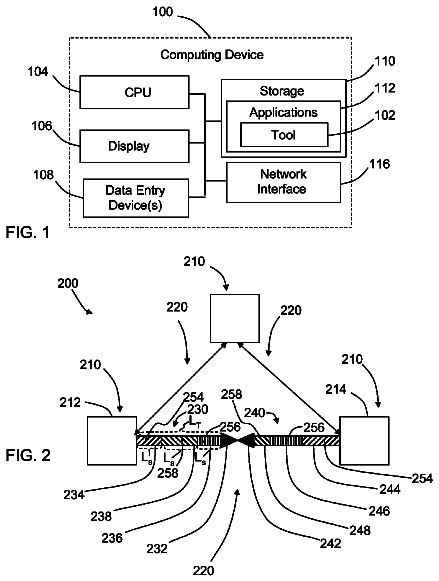
Additionally, while the foregoing has described a parallel transfer connection including a single high integrity connection and a single high speed connection, further embodiments may be provided where additional high speed or high integrity connections are established for each parallel transfer connection. For instance, a graphical representation of various embodiments of parallel transfer connections are shown in FIGS. 12A-D. In each of the embodiments depicted, a parallel transfer connection is established between a source device 250 and a destination device 254. As shown in FIG. 12A, a single high integrity connection 254 and a single high speed connection 256 is established. FIG. 12B shows a plurality of high integrity connections 254 and a single high speed connection 256. In this regard, multiple descriptors or portions of a single descriptor may be exchanged using the high integrity connections 254 to conduct a transfer as discussed above, while blocks are transferred over the single high speed connection 256.
Additionally, FIG. 12C depicts a parallel transfer connection wherein a single high integrity connection 254 is provided along with a plurality of high speed connections 256. The high integrity connection 254 may be operative to transmit descriptor data between the source device 250 and the destination device 256 regarding blocks that have been transmitted/received over the plurality of high speed connections 256. In addition, FIG. 12D depicts an embodiment of a parallel transfer connection wherein a plurality of high integrity connections 254 and a plurality of high speed connections 256 are provided. In this regard, a parallel transfer connection may include more than one high speed connection 256 and/or high integrity connection 254 that may be used to carry out the transfer as described above.
Parallel transfer connections may process non-adjacent portions of a file simultaneously. By non-adjacent portions of a file, it is meant that portions of the file may be transferred out of order. Thus, the presently contemplated process of data transfer may provide a mechanism of ordering a received file despite individual blocks of the file being received at the receiver out of order.
For instance, upon initiation of a file transfer, the file name and file size may be provided. Thus, the receiver may be aware of the size of the file. This, coupled with known information regarding the size and number of superblocks, portions, and blocks may be used to determine the appropriate location in memory of a given amount of received data. Accordingly, despite receiving blocks of a file out of order, a receiver may be able to write a block to an appropriate location in memory such that once all blocks have been received, the file is identically reproduced at the receiver.
For instance, a file having two or more portions may be transferred such that the two or more portions are transmitted simultaneously using two or more parallel transfer connections. Thus, blocks may be received simultaneously that belong to different portions of the file. Thus, the receiver may be operative to write the received block into memory at an appropriate location despite the receipt of the blocks out of order. For example, this may be accomplished by writing to an absolute position associated with the correct location of a particular block or may be accomplished by using a known offset from a known reference in the memory (e.g., the location in the memory associated with the beginning of the file)
A graphical representation of one embodiment writing non-adjacent data into a memory based on an offset is shown in FIGS. 4A-B. The receiver, upon initiation of the data transfer, may receive information regarding the total size of the file to be received and the size of each block and each portion. Thus, the receiver may allocate the appropriate amount of local memory 188 to store the file that is to be received. When receiving the file information, the receiver may determine if enough memory exists at the receiver. If insufficient memory is available to store the completed file, the receiver may report an error either locally or to the sender.
As shown in FIG. 4A, the receiver may have received information indicating the received file was to be 30 blocks in length. Furthermore, the receiver may receive information regarding the block size 154 and the portion size 152. With further reference to FIG. 4B, two simultaneous transfers may occur (e.g., using a first parallel data connection and a second parallel data connection). The blocks being received are shown in cross hatch. As shown, the first block of the first portion (portion 0, block 0) may be received at the same time as the first block of the third (portion 2, block 0). Rather than simply consecutively writing this data into memory as received, the receiver may determine the appropriate location of each portion based on identification information associated with the block. For instance, portion 0, block 0 may simply be written in the first allocated space in memory as it is the first block of data in the file. However, portion 2, block 0 may be written into memory at a location corresponding to an offset 158. In this case, the offset 158 is an amount of memory corresponding to 16 blocks, as 16 blocks of data appearing the in file before the appropriate location for portion 2, block 0. Thus, the receiver may begin writing portion 2, block 0 into memory according to the offset value 158, thus allowing the blocks coming before portion 2, block 0 to be written in each blocks corresponding location when received. Each block of data received by the receiver may be written into the appropriate location in memory in this fashion.
Additionally, data transfers using parallel transfer connections may support recovery mechanisms in the event that the transfer of a file fails due to any one of a number of failure conditions. For example, a recovery file may be generated to track information regarding the status of the transfer. The recovery file may be updated with information regarding the status of the transfer at regular intervals (e.g., every 1 second). As such, in the event of an interruption of the transfer, the recovery file may contain information that allows for recovery of the transfer from a known good portion of the transfer. In this regard, various types of transfer interruptions (e.g., network unavailability, lack of network reliability, system failures, power interruptions, etc.) may be successfully recovered from a known good portion of the transfer without completely restarting the transfer.
The description continues in the full USPTO document.
 Lapsed, fee not paid6 drawings