Background of the invention
1. Field of the invention
The present invention is directed to a method, device, and computer readable storage medium to provide for video games that allow for wagering.
2. Description of the related art
Slot machines are the most lucrative wagering games a casino can provide to its patrons due to their size, operator requirements, and mathematical house advantage. Traditional slot machines involve electromechanical reels rotatable around a common axis and a straightforward gameplay proposition. More modern slot machines expand upon the rotating reels with fully-electronic video implementations and additional bonus opportunities.
However, an entire generation of children raised on video and computer games is currently reaching legal gambling age, and the casinos have not fully taken advantage of the opportunity which computerized gaming presents. Furthermore, a more complete synthesis of slot machines and computer games would provide the player with a wagering entertainment experience far in excess of the typical win-or-lose decision of a slot machine alone.
Therefore, what is needed is a way to provide players with a way to bet on video games previously only played for entertainment purposes.
Summary of the invention
It is an aspect of the present invention to provide players an opportunity to place wagers on video games.
The above aspects can be obtained by a method that includes: (a) receiving a deposit representing a cash amount and converting the cash amount into credits; (b) allowing a player to play a video game which allows a player to move around in and interact in a 2-D or 3-D playing world; (c) debiting the player credits based on occurrences in the playing world; (d) awarding the player credits based on occurrences in the playing world; and (e) converting the credits to cash for disbursement to the player.
These together with other aspects and advantages which will be subsequently apparent, reside in the details of construction and operation as more fully hereinafter described and claimed, reference being had to the accompanying drawings forming a part hereof, wherein like numerals refer to like parts throughout.
Brief description of the drawings
Further features and advantages of the present invention, as well as the structure and operation of various embodiments of the present invention, will become apparent and more readily appreciated from the following description of the preferred embodiments, taken in conjunction with the accompanying drawings of which:
FIG. 1 is an exemplary output display of a video game, according to an embodiment;
FIG. 2 is an exemplary flowchart illustrating a method of implementing unlimited access to a game world, according to an embodiment;
FIG. 3 is an exemplary flowchart illustrating a method of earning awards, according to an embodiment;
FIG. 4 is an exemplary flowchart illustrating implementation of a failure refund, according to a pay as you go paradigm, according to an embodiment;
FIG. 5 is an exemplary flowchart illustrating picking up an item, according to an embodiment;
FIG. 6 is an exemplary flowchart illustrating equalizing a skill action, according to an embodiment;
FIG. 7 is an exemplary flowchart illustrating a continuous implementation, according to an embodiment;
FIG. 8A is an exemplary flowchart illustrating a method of issuing a low funds warning, according to an embodiment;
FIG. 8B is an exemplary flowchart illustrating a method of issuing an insufficient funds notice, according to an embodiment;
FIG. 9A is an exemplary flowchart illustrating a method of implementing team play, according to an embodiment;
FIG. 9B is an exemplary flowchart illustrating a method of implementing player against player attacks, according to an embodiment;
FIG. 10 is an exemplary output of a 3-dimensional driving game, according to an embodiment;
FIG. 11 is an exemplary output of a space shooter game, according to an embodiment;
FIG. 12 is an exemplary output of a brick destroy game, according to an embodiment;
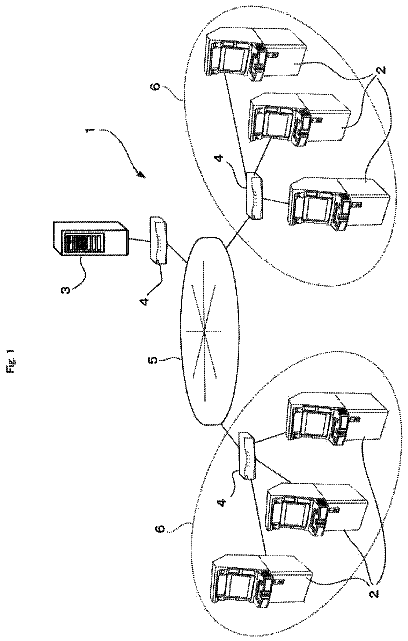
FIG. 13 is an exemplary block diagram illustrating a networked slot machine and server architecture, according to an embodiment;
FIG. 14 is an exemplary block diagram illustrating a multi-player architecture using a computer communications network, according to an embodiment;
FIG. 15 is an exemplary flowchart illustrating a method of purchasing a game incorporating cash awards, according to an embodiment; and
FIG. 16 is an exemplary block diagram illustrating a method of purchasing a game incorporating cash awards, according to an embodiment.
Description of the preferred embodiments
Reference will now be made in detail to the presently preferred embodiments of the invention, examples of which are illustrated in the accompanying drawings, wherein like reference numerals refer to like elements throughout.
The present general inventive concept relates to methods, apparatuses, and storages, which can be applied to any known genre of video games in order to allow the game to be wagered upon for real cash.
The general concept involves a player crediting a machine or home computer with real money. The player can then enjoy playing a video game, but will also be winning/losing credits which can ultimately converted to real money or prizes. The video game may involve a player manipulating objects on a screen in real time with an input device such as a joystick. When the player is done or the game is over, the player can then redeem credits for real cash or prizes and realize a win or loss of real money.
Allowing players to wager on video games introduces a number of challenges in the implementation. First, some gaming regulators may prohibit mechanical skill in a wagering environment. Additionally, some players may be intimidated if skill is a factor in wagering games since if the player isn't that skillful, he or she may lose money. If mechanical skill is permitted in a multi-player environment, then only the very best players will be interested in competing. Moreover, if mechanical skill is permitted, then the best players may obtain an advantage, either over the house or over other players in a multi-player environment.
The present general inventive concept provides for a number of embodiments that address the above issues. Note that these variations need not be wholly separate but can be combined. After description of the variations, examples will be presented of their application to known video game genres.
The first embodiment can be called "unlimited access." In this embodiment, a video game which can involve skill is presented to a player. A video game level is presented to the player which has predetermined awards. The player can play the game as he or she would normally, but can also earn credits redeemable for real cash. Credits can be earned for example, by opening treasure chests, killing monsters, passing checkpoints, killing aliens, etc. The player may or may not be allowed to get killed. If the player is killed, he can receive a new life for free. If the game is a racing game, the player may receive an unlimited amount of fuel (or game play). Thus, the player can play the game and redeem all the awards that are available to him or her. When the player redeems all of the awards, the game (or level) can then end. If the player does not wish to complete the level, the player may have the option of automatically completing the level and redeeming all prizes in the level (e.g. no skill).
Thus, the unlimited access embodiment allows the player to play a level of a game of skill and earn prizes. The equalizing feature of this embodiment is that the player will typically be permitted to earn all of the prizes allocated to him or her. The player may not be presented with a game-over condition without the player having redeemed all of the awards available to him or her. Skill may still be permitted in this embodiment, in the sense that it may enhance the player's gaming experience but skill should typically not affect the player's ultimate rewards earned. For example, in a first-person shooter type of game, the player's skill can affect the game-play in that the player can die and be returned to a starting point. However, the player can be given an unlimited number of lives and "power-ups" such that getting killed has no relevance as far as earning credits is concerned.
In the unlimited access embodiment, the player can pay one price per level. The level can then be generated, and the awards can be dispersed. Awards can be disbursed in treasure chests or associated with completing tasks, such as when a monster is killed. The awards can all be predetermined and fixed. Alternatively, a total final award can be generated and after the player performs an action which results in award, a random award (or pre-stored) can be determined, awarded, and deducted from the final award. When the player has earned all of the final award in this manner, the game can be considered over. The final award should be determined at a remote server, although some or all individual awards can be determined locally (or remotely as well) as long as they do not exceed the final award.
A further embodiment can be called "pay as you go." In this embodiment, instead of paying up front for an entire level as in the "unlimited access" embodiment, payment can be made on an event by event basis. Each time an award can be potentially awarded, an appropriate cost can be debited from a player's current credit meter. Then an appropriate award may be awarded to the player.
For example, consider a first person shooter in which a player can run around in a 3D-space and kill monsters and find treasures. Each time a monster is killed or a treasure chest is opened, a player's credit meter (or other type of meter) can be debited and then a potential random award can be awarded (although awards need not be random and can alternatively be pre-stored).
A player may be given the option to decide a "wager amount" which would be the cost to take an action, such as opening a treasure chest. Different actions (e.g. opening a treasure chest, killing a monster, etc.) can have different associated costs. Typically, the higher the wager amount, the greater the expected value of the award. With no house edge, the expected value of the award would equal the wager amount, although of course the house (or party offering the game) may wish to take out a portion for house commission.
In the "pay as you go" embodiment, as in the "unlimited access" embodiment, mechanical skill can be involved in the gameplay, but should not affect the player's win/loss. If a player is fighting a monster and gets killed due to lack of skill, then the player has not lost anything due to his or her lack of skill. If the player succeeds in killing the monster, then the player is debited and possibly credited if he wins an award.
Either of the two above embodiments ("unlimited access" and "pay as you go") can also possess a "continuous wagering" variation. In this variation, credits can be continuously debited and awarded based on a continuous quality, such as time played or distance traveled. The continuous wagering embodiment is better suited to be used with the pay as you go embodiment rather than the unlimited access embodiment (although it can be used with either/both). This is because the unlimited access embodiment can be used offline on a remote computer, but if it is supplemented with continuous wagering, then a real time connection is needed to a server to maintain integrity of the wagering results. The pay as you go embodiment typically needs a real time connection with a server which generates the wagering results anyway. Continuous wagering can be advantageous to the house in that it ensures the player is always placing a bet at all times.
As an example of continuous wagering, in a racing game (although this embodiment and all embodiment herein can be applied to all genres of games), every second (or other time unit) of the game has a corresponding amount of credits debited from the player's credit total. Alternatively, every unit of distance (e.g. 1/10.sup.th of a mile), a corresponding amount of credits can be debited from the player's credit total. In order to compensate for the continuous debiting of credits, at each unit the player has a chance to win an award as well. For example, if a player is debited at a rate of $0.01 per second, the player may have a 1/100 chance of winning $1 per second (assuming no house advantage). The award can be presented in any manner, either by automatically instantly increasing the player's credit meter with or without a visual award indicated on the display, such as for example running over a coin or cash instantly appearing. In this embodiment, the player will automatically run over the coin without any skill or action by the player. This type of awarding of credits is not limited to a single event, but multiple events can occur. For example, if a player is being continuously debited 0.01/second, the player may have a 1/200 chance of running over a barrel worth $1 and the player also may have a 1/100 chance of running over a mule worth $0.50 (assuming no house advantage). Events can also have the same appearance but different values (e.g. instead of the mule being worth $0.50 a barrel can also be worth $0.50).
Alternatively, awards awarded based on the continuous debiting can be awarded at a later time, such as a later-presented barrel the car being driven runs over. In this manner, the awarding of the proceeds based on the continuous debiting can be awarded at a later time in a manner more in line with the traditional non-wagering counterparts (e.g. presenting a barrel periodically with "power-ups" or awards). If the player is owed money in this manner and the player ends the game (or the game ends naturally) then the game should still award the amount due to the player at such time.
Continuous wagering can have a primary debit and possibly one or more secondary debits. For example, a primary debit can be made in time intervals as long as the player is playing (each debit a wager with a chance to win an award as described previously). A secondary debit can be made based on a user's action, for example the user moving. The secondary debit is also subject to awards as well. Other secondary debits can take place based on discrete player actions, as described herein. For example, each time the player swings at a monster this can be another debit.
In any of the embodiments presented herein, items can be presented that can have a cost associated with their use (but not their pick up). For example, in a dungeons and dragons type of game, an axe can cost 35 units while a sword can cost 50 units. The cost is debited from the player's credit meter when the item is used, e.g. when a user swings at a monster. In return for the higher cost, the player should typically get something in return, e.g. a higher expected award and/or a higher probability of killing the monster.
Further, items can be purchased upon their pickup as well. For example, a key to another section of a level (or to another level in itself) can be purchased with credits. In order to compensate the player for the purchase of the key, the game may optionally generate awards to be redeemed in the section of the game unlocked by the key.
FIG. 1 is an exemplary output display of a video game, according to an embodiment. Of course, the methods described herein can apply to all types of genres of games, not just the genre illustrated in FIG. 1. It is also noted that while the illustrating of FIG. 1 is in two-dimensions, the concepts described herein can be equally applied to a three-dimensional representation.
A player icon 102 represents actions taken by the player. The player can walk in a chosen direction and interact with other objects and characters on screen. A sword 104 and/or an axe 106 can be picked up by the player. A treasure chest 110 can be opened by the player, which may contain an award of credits, which can be converted to real cash later. A monster 108 can be attacked by the player, and if the player kills the monster 108 an award may be presented. The monster 108 may also kill the player. A door 112 can allow the player to enter another portion of level of the game.
The operation of the present general inventive concept will be described with respect to some of the embodiments described herein. It is noted however, that the embodiments described herein do not have to mutually exclusive, and features found in each embodiment can be mixed and matched with other features in other described embodiments or embodiments already known in the art.
The "unlimited access" implementation of a game of the genre illustrated in FIG. 1 will now be exemplified. A player can pay a fixed amount to enter the playing world, which is a computer-defined representation of an area of potential interaction by the player. Instead of paying a fixed amount, a bonus round of a slot machine game can be triggered to offer any of the embodiments described herein, which can be considered "paying" the entry fee to play the game as a bonus game.
Upon receipt of payment, a generation computer can generate or use a pregenerated world. The award generation should not be done a local computer wherein a player can have direct access and control over the algorithms. Award amounts can be allocated for each possible occurrence of an award. For example, in this game, awards are awarded when a player kills a monster or when a player opens a treasure chest. Thus, all monsters and treasure chests are assigned a monetary award. The award assigned is based upon the entry fee and how many awards are to be assigned. For example, if the player pays an entry fee of $100, and there are 100 award opportunities, with no house advantage, then each award opportunity is to have an expected value of $1. Different award opportunities can have different variances. Further, different award opportunities may have different initial costs. For example, if half of the award opportunities are treasure chests and half are killed monsters, the expected value of the killed monsters can be $75/50=$1.50, while the expected value of the treasure chests are $25/50=0.50. Thus, in this example, killing monsters will have a higher expected award. In this manner, killing a monster is more exciting to the player than opening a treasure chest in that the reward is expected to be more. The award amounts can be determined in a manner similar to how a slot machine determines their payouts, or by use of a probability histogram. The pregeneration computer can alternatively start with a final award amount (determined as discussed below) and distribute it randomly throughout the playing world (or level) until the entire amount is distributed.
Note that in the embodiment described above, the awards are all predetermined. Thus, if a player hacks into his or her computer and tries to adjust an amount to be redeemed, it will fail because on redemption (to be discussed in more detail later), the award redeemed must match what the remote pregeneration computer (or computer or server associated with the pregeneration computer) has on file.
As an alternative method to compute the awards for the award opportunities, a final total award amount can be computed by the generation computer. If the game is played on a local computer, the local computer may be able to locally determine each award amount (either initially or on an award-by-award basis), as long as the total amount awarded to the player does not exceed the final award amount. The final award amount can be determined based on an initial entry fee, and can be determined similarly to how a slot machine or other EGD (electronic gaming device) determines a result.
Thus, the player will have the illusion of earning awards while playing the game. In reality, the awards are predetermined, or alternatively, the total amount to be won is predetermined. When the player is finished with the level, the player will have collected all of the award opportunities. If the player has not collected all the award opportunities, but wishes to end the game, then the player can be allowed an option of collection all of the award opportunities without finishing the level. The game may also present the player with a hint screen (possibly upon request) to direct the player to any remaining award opportunities.
During a level, the player may have an opportunity to enter another level. This may be done upon completion of the current level. This may also be accomplished by awarding the player all of the remaining awards he or she still had to collect and then allowing the player to enter the next level. Entering another level can cost the player more money, which can be disbursed to the player by additional awards in that level, as described herein.
Thus, in FIG. 1, the player 102 can open the treasure chest 110 and be presented with a (seemingly) random award amount which can be added to the player's credit meter 112. The player 102 can pick up the sword 104 or the axe 106 at no cost. The sword can cost 1.0 credits to swing, while the axe can cost 8 credits to swing. although the sword may have more firepower the axe and thus may make it easier to accomplish award goals (such as killing monsters). The player 102 can kill the monster 108 and be presented with a (seemingly) random award amount. The player 102 can walk around the level or playing world in this fashion, enjoying a video game and earning awards as well.
The "pay as you go" implementation of the game described herein will now be exemplified. In this embodiment, the player may not need to pay a fixed entry fee into the world but can deposit an arbitrary amount of cash (convertible to credits) in order to interact in the world. Unlike the "unlimited access" paradigm (which may not require any more deposits), this embodiment typically requires further credits in order to take certain action.
For example, when the player 102 opens the chest 110, this can be associated with a cost which will be debited from the player's credit total, upon which an award is then generated. For example, the cost to open a chest can be $1.00, and the expected value of an associated award can be $1.00 (or 0.99 with a house advantage factored in).
When a player kills a monster, this also has both an associated cost and award. Swinging a weapon at the monster can be free, but the associated cost is debited from the player when the monster actually dies.
Alternatively, swinging a weapon at a monster can have a cost associated with it. The cost can be standard or variable on an item the player currently has, such as a weapon. For example, swinging the sword 104 may have a 0.25 cost associated with it with a moderate probability of hitting (or killing) the opponent. Swinging the axe may have a 0.35 cost associated with it which has a higher probability of hitting (or killing) the opponent. When the monster dies, a potential award is then presented (potential in that the award can still be zero just as a spin on a slot machine may result in a zero win).
In a further embodiment, killing a monster may not be a two state situation, but the monster may optionally have "hit points" associated with him. Hit points are a measure of the monster's fortitude. If the monster were to have 100 hit points, and the player swings a sword and takes 50 hit points from the monster, the player can win an award based on the 50 hit points (e.g. 50 credits or 1/2 A of 50=25 credits, etc.). The monster may also optionally swing at the player and take hit points from the player, in which the player can lose hit points or possibly credits as well. A player's hit points may optionally be maintained separately from his or her credits, and upon losing all of his or her hit points the player can be considered "dead" and the game may end or the player may have to restart from another point with a possible credit penalty for dying.
As a further example, it may cost the player $0.25 to swing a sword which has a moderate probability of hitting the opponent, and $0.35 to swing an axe which has a lower probability of hitting the opponent but a higher probability of killing him outright. If the player swings a sword and hits the opponent for 20 hit points, while the opponent fails to hit the player, the game may award $0.50. If the player swings an axe and kills the opponent, the game may award $5.00. If the player misses, the award may be zero. If the player is defeated by the enemy, the game may reset to a different location within a scene with no money awarded. It is further noted that the likelihood of a player hitting or missing can be calculated by random probability and may not be related to player skill.
In the "pay as you go" embodiment, standing still (or even walking) is typically free, and a cost is debited when a player takes a particular action (which typically allows the player to earn an award as well). It may also be possible for a player to purchase items in the level, such as a key, which have no direct award but can allow the player to access other parts of the world. Other items may similarly be bought which may provide the player additional advantages.
In the "pay as you go" embodiment, weapons, monsters, treasures, etc., can be "respawned" as there is no pre-payment for a finite award amounts as in the unlimited access embodiment.
The "pay as you go" implementation described above can also be used with continuous wagering. Without continuous wagering, when a player stands still, the player's credit meter is typically static, absent computer-generated events (e.g. a monster attacking the player without the player initiating the attack). Making the game continuous would also debit money from the player's credit meter as per unit of advancement in the game. A unit of advancement can be for example a unit of time, a measure of distance, etc. For example, for every second of the game player, the player's credit meter can be deducted a corresponding amount of credits (e.g. 1 credit per second). The player may also have the potential to earn an award for the debits per unit of time. For example, each credit per second debited has a 1 in 50 chance of winning $50 (or $49 with a house edge). Thus, while the player is playing, he or she is continuously gambling. Further, the awards generated in this manner may be presented to the player immediately, or later on in the game. For example, if the player wins the $49 award based on a credit debited per second of play, this $49 can appear (possibly tabulated with other awards) later on in an award, such as in a treasure chest or other "power up."
As a further example of this, a character can walk or stand which costs $0.05 per second. With a 10% probability, the player may find coins on the ground worth between $0.10 and $1.00, with an average worth of $0.50 (a house advantage of 10% for walking). The player may decide to make his or her character run. Running can cost $0.10 per second. The player will find coins only 5% of the time, but now has a 1% chance to catch a butterfly. Butterflies are worth between $1 and $25 with an average worth of $6.50. The house advantage for running is 9%.
In addition to time, units of distance can also be the advancement unit. For example, in a driving game, each meter advanced can have a debit and an award associated with it.
The underlying principle regarding the continuous debits/potential awards is to equalize a player's actions such that skill is not a factor. The debiting of these debits is automatic and typically requires no separate player input or authorization to do so. If a player takes a direct route to a destination or a long route should not matter, mathematically speaking. Of course, if there is a house edge on the continuous debits/awards, then taking a longer route would result in more "bets" placed which would result in a greater expected loss for the player. Alternatively, a shorter route may be more difficult to accomplish ones goal and/or can cost more per second (or meter). This can equalize the expected value of level completion with regard to the base debit rate.
FIG. 2 is an exemplary flowchart illustrating a method of implementing unlimited access to a game world, according to an embodiment.
The method starts with operation 200, which allows a player to purchase a level or a collection of levels (e.g. an entire game). The purchase can be done over the counter, at a gaming machine, online, etc.
The method can then proceed to operation 202, which pregenerates a level (or the entire game) with awards. This can be done by a computer that an end-user typically does not have access to, so that the end-user cannot hack into the generated awards. The awards can be determined as described herein. Results of the pre-generation can be stored remotely for verification when the player wishes to redeem any awarded credits.
The pre-generated awards can be determined in a number of ways. A level can have a predetermined number of award opportunities (e.g. treasure chests, monsters to kill which reveal an award, etc.). If the player pays a fixed cost for the level (e.g. $100), and there are 100 award opportunities, then each award opportunity can be considered to cost $1 each. Different types of awards can have different costs. Potential awards from each award opportunity can be determined from the award cost, for example a table of probability distributions and awards can be used for each type of award. The awards can then be associated with the award opportunities, which can have fixed predetermined locations, random locations, or a combination. A remote computer generating the levels should typically store data relating to award amounts for verification later, so that the player cannot hack into his or her local system and alter the awards.
Alternatively, a final award amount for a level can be determined based on the purchase cost. The local client can then generate awards on an as-needed basis, as long as the total number of awards does not exceed the final award amount. Once the total number of awards exceeds the final award amount, the final award can be truncated and the game or level can end (at least as far as earning additional awards goes). In this manner a fixed number of awards need not be predetermined, and a user cannot hack into the local system because the remote server can verify the final award amount.
The method continues to operation 204, which distributes the game to the player. This can be done in a variety of ways, such as selling the game in a store, downloading the game (or just the levels and/or a file with the respective awards) to the player, etc. Individual award amounts can be distributed with the software, or a final award amount can be distributed (as discussed herein).
From operation 204, the method can proceed to operation 206, which allows the player to play the game. If the user is playing the game at his or her home, the user's own computer can run the software locally which knows the predetermined awards or final award amount.
From operation 206, the method can proceed to operation 208, which allows the player unlimited gameplay. As described herein, the game may or may not involve player skill, however the player may have unlimited attempts (lives, fuel, etc.) to attain all of the awards in the level or world. Alternatively, the player may not have an unlimited number of attempts, and in this version player skill is relevant to an expected award(s) to the player. In this way, "cheats" are not needed or cannot be used by the player to increase his or her awards.
From operation 208, the method proceeds to operation 210, which allows the player to redeem the awards. If the player is playing at his or her home, the player can log onto a site operated by a company orchestrating the game (or an awards component of the game), which can then receive a code from the player's computer that the player has completed the level (this operation can be optional), and the company can then disburse the amount to the player (e.g. by check, EFT, etc.)
FIG. 3 is an exemplary flowchart illustrating a method of earning awards, according to an embodiment. This method can be used in the pay as you go embodiments. This method basically debits an amount when a player is about to potentially earn a reward. For example, when a player kills a monster, an amount is debited from the player's credit meter and an award is potentially generated. While the player is swinging at the monster, this may or may not cost the player anything until the monster is actually killed.
The method starts with operation 300, which activates an award item. This can be, for example, opening a treasure chest, killing a monster, running over a power-up, etc.
From operation 300, the method proceeds to operation 302, which debits an amount to activate the item. Each award item has an associated cost which is deducted from the player's current credits.
From operation 302, the method proceeds to operation 304, which generates a prize amount. Each award item can have a prize distribution. A difficult award item, such as killing a tough monster, may have a relatively higher expected value. Variances of different award items can differ also.
In a further embodiment, a task can be initiated which cost the player an activation fee, and upon success, may result in an award to the player, but on a failure can result in no loss for the player (a refund). For example, a gun can be fired at targets which costs the player an activation cost. If the player has successfully hit the target, the player can achieve an award. If the player has missed the target, then the player can receive a refund of the activation cost. In this way, the element of skill is removed. This can be considered a "failure refund." This is in contrast to a previous embodiment illustrated in FIG. 3 which makes a debit and award credit upon successful completion of the task.
FIG. 4 is an exemplary flowchart illustrating implementation of a failure refund, according to a pay as you go paradigm, according to an embodiment.
The method starts with operation 400, which activates an item. This can be associated with any task or object which can result in a result with a monetary award. For example, a gun can be fired.
From operation 400, the method proceeds to operation 402, which debits an activation amount from the player's credit meter. The activation amount is typically a fixed cost so the player knows ahead of time what to expect, but the activation amount can also be a variable amount as well. For example, a gun can have a fixed cost of 0.40 to fire, which is immediately debited from the player's account.
From operation 402, the method proceeds to operation 404, which determines whether the activation was successful. For example, if the bullet fired from the gun hit the target, then the activation was successful. Any task can be activated in this manner, e.g. slaying a monster, firing a weapon, running over a target, etc.
If the determination in operation 404 determines that the activation was not successful, then the activation cost is refunded to the player. For example, if the player fired the gun and misses, the player can be entitled to his 0.40 back.
If the determination in operation 404 determines that the activation was successful, then a respective award is generated and potentially awarded to the player.
In the manner exemplified in FIG. 4, a player can be immersed in a video game with no skill element. Skill can alternatively be introduced into the game by not refunding the player if the activation was not successful, or by refunding an amount less than the activation cost. On the other hand, a player that does not achieve a successful activation has not lost anything while a player that does achieve a successful activation has given up the house advantage on that wager, such that the more skilled player may actually fare worse. However, this embodiment may still be considered legal, as a player that (as one example) misses a target may be comparable to a player that sits idly by a slot machine without wagering.
As discussed earlier, items can be picked up in a game which can be free to pick up but have a cost associated with them to use.
FIG. 5 is an exemplary flowchart illustrating picking up an item, according to an embodiment.
The method can start with operation 500, wherein the player picks up a game-play item. In an embodiment, a last item of a type picked up will replace the previous item used. Alternatively, the player can accumulate items picked up and select from his or her inventory which item he or she wishes to currently use. Which item the player wishes to use can depend on subjective decisions by the player such as how much to wager, what type of variance, etc.
From operation 500, the method proceeds to operation 502, wherein the player uses the game-play item. The item can for example, be a weapon which the player can fire or swing.
From operation 502, the method can proceed to operation 504, which deducts the cost of the item from the player's credit meter. As discussed herein, each item can have an associated cost to use.
From operation 504, the method proceeds to operation 506, which computes an outcome and/or award based on the item. For example, if the player is using a more expensive weapon, then the average award amount of slaying a monster may be higher. An award amount may have a direct relationship with an item cost amount. For example, if a kill of a monster with a weapon that cost $1 results in an expected award of $1, then using a weapon that cost $2 can have an expected award of $2. This can be analogous to betting more on a slot machine.
In a further embodiment, to pick up an item may have a cost associated with it, but use of the item is subsequently free thereafter, either for a limited number of uses or an unlimited number of uses.
In some games, the use of skill may be inherent in the gameplay. For example, a first-person shooter type of game, the aim of the player involves skill. A number of methods presented herein address the equalization of the skill factor. Another manner in which skill can be equalized is to provide for a set percentage of task successes, regardless of the skill of the player. For example, if the player fires an arrow, he or she may have a 25% of killing the target, regardless of the skill of the player. If the player actually misses, there may be a 25% chance that the arrow will bounce off a tree and hit the target. If the player actually hit the target, then the arrow will have a 75% chance of actually striking a piece of armor on the target such that it does no damage. In this manner, a skilled and unskilled player can fire arrows at targets while having the results therein equalized.
The description continues in the full USPTO document.
 Lapsed, fee not paid10 drawings