Technical field
The disclosed embodiments relate generally to communication systems. More particularly, the disclosed embodiments relate to methods, systems, and user interfaces for transmitting, receiving, and rendering attachments in electronic messages such as hosted conversations.
Background
A variety of electronic communications systems, including electronic email ("email") systems and instant messaging (IM) system are well known. Such communication systems are frequently used for collaboration on documents or other electronic files. In such communication systems documents or other electronic files can typically be added as attachments. However, in such communication systems, the presence of attachments serves merely to provide access to the attachment to users. In order to display, modify or otherwise interact with the attachment, the users must download a local copy of the attachment. Moreover, any display, modification or other interaction with the attachment that is performed by a user is not known to other recipients of the email or other participants in the IM chat. In order to share modifications or interactions with attachment, the user must send the revised attachment to other users. This method of sharing modifications to attachments is inefficient, because it requires substantial user intervention and creates situations where multiple users have modified an attachment, resulting in multiple competing versions of the attachment. These shortfalls of conventional communication systems become increasingly problematic as the number of users collaborating on the attachment increases.
Summary
Thus, it would be advantageous to provide a system and method for improving the ability of users to collaborate on attachments in conversations by providing embedded applications and automated participants with access to attachments of conversations in a communication system. The problems with conventional communication systems described above are reduced or eliminated by the systems and methods described below.
Some embodiments provide a method performed at a client having one or more processors and memory storing one or more programs for execution by the one or more processors so as to perform the method. The method includes displaying a hosted conversation that is hosted at a conversation server, where the conversation has an attachment that is stored at the conversation server and the conversation includes application information enabling the client to run an embedded application. The embedded application originates from an application server that is distinct from the conversation sever system. The method further includes running the embedded application. The embedded application: accesses the attachment and processes the attachment to generate output data for display within the conversation, and the output data is displayed within the conversation.
Some embodiments provide a method performed at a conversation server having one or more processors and memory storing one or more programs for execution by the one or more processors so as to perform the method. The method includes storing a hosted conversation, where the conversation has an attachment that is stored at the conversation server; and the conversation includes application information enabling a client to request code for an embedded application. The embedded application originates from an application server that is distinct from the conversation server. The method further includes receiving, from the embedded application, a request for access to the attachment; and providing the embedded application access to the attachment, where the provided access enables the embedded application to processes the attachment so as to generate output data for display within the conversation.
Some embodiments provide, a method for, at a at a conversation server having one or more processors and memory storing one or more programs for execution by the one or more processors so as to perform the method, storing a hosted conversation, where the conversation has an attachment that is stored at the conversation server and the conversation has an automated participant, and the automated participant is a computer-implemented participant that operates in accordance with instructions stored on an automated participant server that is distinct from the conversation server. The method further includes providing the automated participant access to the attachment; receiving, from the automated participant, a request to modify the attachment; and in response to the request, modifying the attachment in accordance with the request.
Some embodiments provide, a method for, at a at a conversation server having one or more processors and memory storing one or more programs for execution by the one or more processors so as to perform the method, storing a hosted conversation, where the conversation has an automated participant, and the automated participant is a computer-implemented participant that operates in accordance with instructions stored on an automated participant server that is distinct from the conversation server. The method further includes providing the automated participant access to content of the conversation; and receiving, from the automated participant, an attachment generated based on at least a portion of the content of the conversation.
In accordance with some embodiments, a computer system (e.g., a client or a conversation server) includes one or more processors, memory, and one or more programs; the one or more programs are stored in the memory and configured to be executed by the one or more processors and the one or more programs include instructions for performing the operations of the method described above. In accordance with some embodiments, a computer readable storage medium has stored therein instructions which when executed by one or more processors, cause a computer system (e.g., a client or a conversation server) to perform the operations of the methods described above.
Brief description of the drawings
Various embodiments of the invention are disclosed in the following Description of Embodiments herein, in conjunction with the following drawings in which like reference numerals refer to corresponding parts throughout the figures.
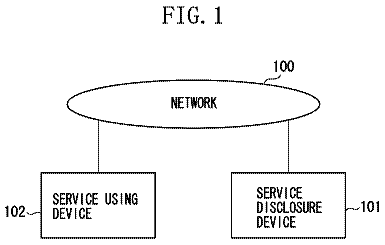
FIG. 1 is a block diagram illustrating an exemplary distributed computer system according to certain embodiments.
FIG. 2 is a block diagram of a distributed system including a conversation server and clients coupled by one or more communication networks, according to certain embodiments.
FIGS. 3A-3C are block diagrams of data structures for a conversation database, a participant list and a conversation log, respectively, according to certain embodiments.
FIG. 4 is a block diagram illustrating a data structure for a user database, according to certain embodiments.
FIGS. 5A-5E are flowcharts representing a method for hosting conversations at a conversation server, according to certain embodiments.
FIG. 6 is a block diagram of a plurality of linked conversation servers, with mechanisms for obtaining and distributing user online presence information, according to certain embodiments.
FIG. 7 is a block diagram of a conversation server for a conversation system, according to certain embodiments.
FIG. 8 is a block diagram of a client having a user who participates in one or more conversations in a conversation system, according to certain embodiments.
FIG. 9 is a block diagram of an automated participant server for a conversation system, according to certain embodiments.
FIG. 10 is a block diagram of an application server for a conversation system, according to certain embodiments.
FIGS. 11A-11D are flowcharts representing a method for providing embedded applications access to attachments of hosted conversations, according to certain embodiments.
FIGS. 12A-12C are flowcharts representing a method for providing automated participants access to attachments of hosted conversations, according to certain embodiments.
FIGS. 13A-13C are flowcharts representing a method for providing automated participants access to content of hosted conversations, according to certain embodiments.
Description of embodiments
Methods, systems, user interfaces, and other aspects of the invention are described. Reference will be made to certain embodiments of the invention, examples of which are illustrated in the accompanying drawings. While the invention will be described in conjunction with the embodiments, it will be understood that it is not intended to limit the scope of the invention to these particular embodiments. On the contrary, the invention is intended to cover alternatives, modifications and equivalents that are within the spirit and scope of the invention. The specification and drawings are, accordingly, to be regarded in an illustrative rather than a restrictive sense.
Moreover, in the following description, numerous specific details are set forth to provide a thorough understanding of the present invention. However, it will be apparent to one of ordinary skill in the art that the invention can be practiced without these particular details. In other instances, methods, procedures, components, and networks that are well known to those of ordinary skill in the art are not described in detail to avoid obscuring relevant aspects of the disclosed embodiments.
FIG. 1 is block diagram illustrating an exemplary distributed computer system 100 according to certain embodiments. Distributed computer system 100 includes a plurality of clients 110. Users of clients 110 (also herein called client devices, client systems or client computers) are participants 112 in conversations hosted by a set of conversation servers 130 (sometimes called a conversation server system). Sometimes these conversations (conversations hosted by a set of conversation servers) are called "hosted conversations." Clients 110 can be any of a number of computing devices (e.g., Internet kiosk, personal digital assistant, cell phone, gaming device, desktop computer, laptop computer, handheld computer, tablet computer, or combinations thereof) used to enable the activities described below. Each client 110 is coupled to a network 120, which can be any of a number of networks (e.g. Internet, intranet, local area network, wide area network, wireless network, wired network, optical network, or a combination of such networks). More generally, clients 110 and conversation servers 130 are coupled to each other via one or more communication networks 120.
Additionally, various other servers may be a part of the distributed computer system 100. In some embodiments, the distributed computer system 100 includes an automated participant server 118 that communicates with conversation server(s) 130 and clients 110 via communication network 120, so as to participate in conversations. In some embodiments, automated participant server 118 is a third-party server (e.g., a server which is owned, and/or operated by a party other than: the party that owns and/or operates conversation server 130 and the party that owns and/or operates client 110.) However, automated participant server 118 can also be a pseudo third-party server, which is owned and/or operated by the same party that owns and/or operates conversation server 130, but that is not integrated into the conversation system. For example, an operator of a conversation system could provide one or more automated participant servers that are available for third parties to host automated participant code so as to ensure that the code is readily available without substantively controlling the content of the automated participant code. It should be understood that in other embodiments, the content of the automated participant code is only constrained by a predefined set of guidelines (e.g., guidelines intended to prohibit malicious behavior) but is otherwise not controlled by the operator of the conversation system. In most implementations, however, automated participant server 118 is distinct from conversation server 130.
In some embodiments, the distributed computer system 100 includes an application server 119 that communicates with conversation server(s) 130 and clients 110 via communication network 120, so as to provide code enabling embedded applications to be inserted into conversations. In some embodiments, application server 119 is a third-party server, which is owned, and/or operated by a party other than: the party that owns and/or operates conversation server 130 and the party that owns/operates client 110. However, application server 119 can also be a pseudo third-party server, which is owned and/or operated by the same party that owns and/or operates conversation server 130, but that is not integrated into the conversation system. For example, an operator of a conversation system could provide one or more servers that are available for third parties to host embedded application code so as to ensure that the code is readily available without substantively controlling the content of the embedded applications. It should be understood that in other embodiments, the content of the embedded applications is only constrained by a predefined set of guidelines (e.g., guidelines intended to prohibit malicious behavior) but is otherwise not controlled by the operator of the conversation system. In most implementations, however, application server 119 is distinct from conversation server 130.
A respective client (e.g., 110-A) executes a client application 114 that facilitates access from client 110 to a respective conversation server (e.g., 130-A). Client application 114 may include a graphical user interface. For example, client application 114 may be a web browser or other browser application, such as Firefox (trademark of Mozilla Foundation), Internet Explorer (trademark of Microsoft Corporation), Safari (trademark of Apple Inc.), or Chrome (trademark of Google Inc.).
While a conversation system (e.g., a hosted conversation system with a shared communication protocol that enables different conversation servers to communicate with each other and users who have communications accounts with one conversation server to interact with users who have communications accounts with another conversation server) may have a single conversation server 130, in other embodiments the conversation system may have multiple conversation servers 130. For example, multiple conversation servers 130-A and 130-Y may be hosted by different service providers, such as providers 116-A and 116-Y respectively. In some embodiments, the providers are internet service providers (ISPs) providing a conversation service. Alternately, some or all of the providers may be dedicated conversation providers. When conversation system includes multiple conversation servers 130, conversation servers 130 may be coupled together directly, or by a local area network (LAN), or via network 120.
Conversation server(s) 130 host conversations that include contributions from one or more of participants 112. More specifically, each conversation server 130 hosts conversations on behalf of a set of users. At least some of those users are subscribers of the conversation system and thus have user communications accounts. However, as described in more detail below, some of the conversation participants need not be subscribers of the conversation system. When new content is added to a conversation by any participant, or any other changes are made to a conversation by any participant, the updates are sent to all the conversation servers 130 that host conversations for the participants in the conversation. Those host servers, in turn, send the updates to clients 110 being used by participants in the conversation. The conversation updates may be sent relatively instantaneously (e.g., within a second or two) to clients 110 of active participants in the conversation. Optionally, clients 110 of passive participants who are online and logged into the conversation system, but who are not currently viewing the conversation or are not current participating in the conversation, receive information that the conversation has been updated, without receiving the updates to the conversation. In at least some embodiments, when the participant "opens" the conversation (selects it for viewing), the updated conversation is downloaded to the participant's client 110 from conversation server 130 that hosts conversations for that participant.
Attention is now directed towards FIG. 2, which illustrates an exemplary embodiment of a respective conversation server 130-B and respective clients 110-B, 110-C and 110-D. As shown in FIG. 2, respective conversation server 130-B communicates with a plurality of clients 110 through a communication network 120. FIG. 2 illustrates two primary types of clients: subscriber clients (e.g., 110-B) and non-subscriber clients (e.g., 110-C and 110-D). A subscriber client is a client that is being used by a user who has subscribed to the conversation system (e.g., has a communications account with a username/userid and password) and is a participant in one or more conversations in the conversation system. Typically, the conversation system communicates with at least one subscriber client (e.g., 110-B). In some embodiments, a subscriber client includes an executable application, such as a browser 212, to facilitate participant interaction with a respective conversation server 130. In some embodiments, browser 212 includes (or controls) a virtual machine (e.g., a Java virtual machine) for executing software embedded in web pages and other documents rendered by browser 212. In some embodiments, browser 212 executes a conversation application 214 that is embedded, at least in part, in a web page. Typically, browser 212 is a web browser or other browser application, such as Firefox (trademark of Mozilla Foundation), Internet Explorer (trademark of Microsoft Corporation), Safari (trademark of Apple Inc.), or Chrome (trademark of Google Inc.). The web page (which may be called a "hosted conversation web page") is downloaded from a server, such as a conversation server 130-B, to client 110-B and includes executable instructions that are executed by the virtual machine of browser 212 in client 110-B. In some embodiments, browser 212 and conversation application 214 together form client application 114 of FIG. 1. Conversation application 214 facilitates participant interaction with conversation server system 130. In some other embodiments, conversation application 214 is a plug-in or extension of browser application 212.
Non-subscriber clients (e.g., 110-C and 110-D in FIG. 2) enable users who do not have communications accounts in the conversation system to participate, in at least a limited manner, in conversations hosted by conversation servers 130 in the conversation system. Participation in conversations by non-subscriber clients (e.g., 110-C and 110-D) may be limited in a number of ways. For example, the user of a non-subscriber client may be allowed to read the content of a conversation, allowed to contribute new content, but not allowed to use other features of the conversation system such as editing content already in the conversation, responding to specific portions of content previously contributed by other participants, and playing back a history of a conversation using a history log of changes to the conversation.
Non-subscriber clients (e.g., 110-C and 110-D) access conversation server 130 in a manner that is distinct from the manner used by subscriber clients (e.g., 110-B) whose users are subscribers of the conversation system (e.g., via an automated participant server 118, as illustrated in FIG. 1). In some embodiments, the functions of the automated participant server are integrated with a pre-existing component of the non-subscriber's communication system (e.g., email server 224 in FIG. 2 includes the required protocols and instructions for performing the role of an automated participant server 118). In some other embodiments, the non-subscriber's communication system sends information to a separate automated participant server, which enables the non-subscriber to participate in a conversation of the conversation system as an automated participant (e.g., weblog server 226 transmits/receives additions or changes to the conversation via a separate automated participant server 118-D which includes the required protocols and instructions for communicating with the conversation system).
An example of a non-subscriber client 110-C is an email server 224, having email clients 222. Content from host conversations can be sent to one or more email clients 222 of one or more email servers 224. In particular, when the user of an email client 222 is added as a participant to a conversation, content of the conversation (and content subsequently added to the conversation) is transmitted to email client 222 by the conversation server (e.g., 130-B in FIG. 2) that hosts the conversation via email server 224, which acts as an automated participant server. For example, a user of an email client 222 may participate in a hosted conversation by sending emails to conversation server 130-B via email server 224, and receive updates to the hosted conversation in the form of emails from conversation server 130-B. Thus, in some embodiments, the user of email client 222 is able to interact with the hosted conversation using a standard email interface.
Another example of a non-subscriber client 110-D is a weblog ("blog") server 226, having a weblog client 228. As described below, a hosted conversation can include a weblog 228 (also called a weblog client) as a participant in a hosted conversation, in which case content of the hosted conversation is published in the weblog. The published conversation is visible on weblog 228, which is hosted by weblog server 226. More specifically, when a weblog 228 is added as a participant to a conversation via an automated participant server 118-D, content of the conversation is transmitted from the conversation server 130-B that hosts the conversation to (also called "posted to") weblog 228 via automated participant server 118-D. After weblog 228 is added as a participant, new content added to the conversation is also transmitted from conversation server 130-B to weblog 228 via automated participant server 118-D. A user (e.g., a user of another client 110, FIG. 1) who views content of weblog 228 (e.g., by visiting a Uniform Resource Locator "URL" associated with weblog 228, hosted on weblog server 226) can view content of the conversation published on weblog 228.
Thus, weblog servers and email servers are examples of services which can interact with conversations as "automated participants," also sometimes called "robots," which communicate with conversation servers 130 in the conversation system via automated participant servers 118 (e.g., email servers 224 and weblog servers 226). As described above, these "automated participants" enable non-subscribing users to participate in a conversation without acquiring a user communications account for the conversation system. However, automated participants may also perform operations that are not directly tied to contributions of non-subscribing users, and interact with conversations in response to actions of other participants in the conversations and/or interact with conversations in response to external events. For example, services which interact with conversations as automated participants (e.g., via an automated participant server 118) may include: archival services, translation services, spell-check and/or grammar-check services, news or comment aggregation services, attachment modification services, that may be invoked to provide services to other participants (e.g., human participants) of a conversation.
In some implementations, automated participants (e.g., automated participants representing email clients 222 and weblog clients 228, etc.) can read but cannot provide content to a conversation, and thus are just observers. However, in some other implementations, authoring capabilities (the ability to provide content to a conversation) are provided to at least some automated participants (e.g., "email participants" that represent users of email clients and/or "weblog participants" that represent users of weblog clients, spell checking robots, etc.). In other words, in some implementations, at least a subset of the automated participants are treated by conversation servers 130 as full participants which have read/write/modify privileges that are substantially equal to the read/write/modify privileges of non-automated participants (e.g., human participants). It should be understood that the automated participants may interact with the conversation server using either: the same communication protocols as non-automated participants and operate as standard participants, or a special set of communication protocols that are provided specifically for special-purpose automated participants.
Automated participants with authoring capabilities may be used to provide structure for a conversation by generating structured content. Structured content can be broadly defined as content that is added, formatted or managed by an automated participant in accordance with a predefined set of logical instructions (e.g., a computer program stored in a computer readable storage medium). As one example of generating structured content, an automated participant may modify content (e.g., text, formatting, content contribution specific attachments etc.) added to a respective content contribution by non-automated participants. As another example of generating structured content, an automated participant may modify attachments of the conversation (e.g., converting image files attached to the conversation by a non-automated participant into a slideshow or displaying a video player application for displaying an attached video file). In yet another example of generating structured content, an automated participant determines relationships between numerical values in the conversation and generates a table, chart or graph and inserts the table, chart or graph into the conversation. Similarly, in some implementations, an automated participant adds new content contributions to a conversation that is structured (e.g., a table of contents or index for a conversation) without modifying content added to the conversation by a non-automated participant.
In some circumstances, a conversation will include both structured content (e.g., content that is automatically, without non-automated participant intervention, added, reformatted or otherwise managed by automated participants) and unstructured content (e.g., content added, reformatted or otherwise managed by non-automated participants). It should be understood that, as used herein, unstructured content refers to content that does not have structure generated by an automated participant. In other words, even when non-automated participants add content that is organized (e.g., charts, tables, outlines, etc.) this content is considered to be "unstructured content" because the structure is maintained by the non-automated participant(s) without intervention by automated participants. In some embodiments, a respective automated participant will only reformat content in certain portions of the conversation (e.g., structured content contributions/structured content units/structured blips), while other portions of the conversation (e.g., unstructured content contributions/unstructured content units/unstructured blips) are ignored by the respective automated participant and non-automated participants can add content to those portions of the conversation that will not be modified by the respective automated participant and thus will remain unstructured. It should be noted that even when one or more automated participants are ignoring one or more portions of a conversation, other automated participants may still modify the one or more ignored portions of the conversation (e.g., a spell-checker automated participant may check spelling of words in all content contributions of a conversation, even if a list-reformatting automated participant has been instructed to ignore one or more of the content contributions in the conversation).
In some implementations, a respective conversation includes both respective unstructured content added by a respective non-automated participant and respective structured content added by a respective automated participant where the respective structured content was generated by the respective automated participant based at least in part on additional unstructured content added by the respective non-automated participant. For example, a human participant has added a first content contribution describing a new product and a second content contribution including a development timeline for the new product, a product management automated participant converts the second content contribution including the development timeline by generating a "To Do" checklist based on the development timeline and replaces the development timeline with the "To Do" checklist, but leaves the first content contribution describing the new product without modifications. Thus, the exemplary conversation now includes both a modified second content contribution that includes structured content and an unmodified first content contribution that includes unstructured content. In another example, the product management automated participant generates and adds the "To Do" checklist to the conversation without replacing or otherwise modifying the development timeline in the second content contribution.
In some embodiments, a conversation server 130-B includes a front-end or conversation engine 246 for managing conversations and communications with clients 110. Conversation engine 246 manages communications between core components of the conversation server 130 and external components of the conversation system (e.g., other conversation servers 130, automated participant servers 118, application servers 119, etc.). In particular, in some embodiments, conversation engine 246 transmits requests/responses to and from update, access, search/query engine 260 and updates conversation database 262 (described in greater detail below with reference to FIGS. 3A-3C) and user database 270 (described in greater detail below with reference to FIG. 4) in accordance with requests/responses from other clients and/or conversation servers.
Front-end or conversation engine 246 utilizes (or, alternately includes) an update, access, search/query engine 260 to provide participant access to conversations, provide search functions in conversations, and provide search functions for server-specified searches (e.g., a search for conversations in a user's inbox or a search for a conversation associated with a particular webpage, as described in greater detail below with reference to method 1200). In some embodiments, one or more conversation indexes 264 are inverse indexes, mapping words, terms, tags, labels, participants to the conversations with which they are associated (e.g., the conversation that includes the respective word, term, tag, label, participant, etc.). The one or more conversation indexes 264 are used to find conversations in a conversation database 262 that match specified search queries. As content is added to conversations in conversation database 262 the one or more conversation indexes 264 are updated with that content so as to make the added content accessible by the execution of search queries. Conversation database 262 is described in more detail below with reference to FIG. 3.
Optionally, conversation server 130 includes an SMTP gateway 242 for facilitating email communication with one or more email servers 224. Conversation server 130-B also typically includes other modules such as one or more auxiliary services (modules, applications or servers) 250 for managing services related to conversations. In some embodiments, auxiliary services 250 include spell checking 252, language translation or localization 256, and/or managing attachments 258 to conversations. In some embodiments, conversation server 130-B also includes online presence services 248, enabling users to know the online status of other users (e.g., other subscribers of the conversation system), as described in greater detail below with reference to FIG. 6.
As described in more detail below with reference to FIG. 4, in some embodiments, conversation server 130 maintains a user database 270 that includes information indicating, for a respective user/subscriber, a list 414 (FIG. 4) of conversations in which the user/subscriber is a participant. Conversation server 130 updates the status (conversation state 438-1, FIG. 4) of each such conversation in the user's conversation list 414 when the state of the respective conversation changes. When (e.g., in response to a search/query from the user) conversation server 130 sends to the user a requested list of conversations (typically comprising a subset of the complete set of conversations in which the user is a participant), the list includes status information for the listed conversations. The status information in the returned list is generally a subset of the conversation state 438, as only a portion of the conversation state (e.g., whether there is any content in the conversation that has not yet been viewed by the user) is needed when displaying the list of conversations.
In the discussion below, a subscriber is a user for whom a conversation server 130 (e.g., any conversation server 130 in a set of conversation servers 130 that provide conversation services) maintains a user record or profile (see 402, FIG. 4, as described below).
FIG. 3A is a block diagram illustrating exemplary data structures for conversation database 262. While most conversations have a single set of participants that share all the content of the conversation, some conversations, herein called conversation containers, have a more complicated structure. In particular, a first conversation can result in any number of "side conversations" by various subsets of the participants in the first conversation, and can even include additional participants. For example, a conversation container can be used by two or more teams of participants (e.g., Team A and Team B) to negotiate an agreement, or to co-edit a document or presentation or the like. To accommodate the needs of all the participants, an initial conversation (sometimes called the primary conversation or master conversation) is started among all the participants, and then "private conversations" are spawned off of the initial conversation to enable participants in each of the teams to communicate privately with other participants of the team, while still having access to all of the content of the initial conversation. Typically, each private conversation has a set of participants that excludes at least one participant in the primary conversation. Optionally, a private conversation can include one or more additional participants (e.g., a consultant) who is not a participant in the primary conversation. Each participant only has access to the content of the conversations in which they are a participant. Typically, the participants on Team A have access to the content of both the Team A private conversation and the primary conversation, and the participants on Team B have access to the content of both the Team B private conversation and the primary conversation.
It should be understood that in the case where a conversation container includes a single conversation, all of the participants will have access to the content of the conversation. Thus, for simple conversation systems where side conversations are not necessary, conversation containers can be restricted to containing a single conversation. In other words, in some embodiments, conversation container records 302 can be combined with conversation records 310, because each conversation container record 302 includes at most a single conversation record 310.
FIG. 3A is a block diagram of exemplary data structures that support both simple conversations (i.e., single conversations with no related private conversations) as well as conversation containers that include multiple conversations (sometimes called a primary conversation and one or more sub-conversations).
Conversation database 262 includes a plurality of conversation container records 302-1 to 302-N, each containing the data for a conversation container (e.g., data associated with the conversation(s) from a conversation container). When a respective conversation container has only one conversation, the only information in the corresponding conversation container record 302 is for the single conversation, as represented by one conversation record 310. More generally, a conversation container record 302 includes one or more conversation records 310-1 to 310-R. Each conversation record 310 contains data for a respective conversation, including: conversation container identifier 329, which uniquely identifies the conversation container in the conversation system that corresponds to conversation container record 302 in which conversation record 310 is located; conversation identifier 330, which in combination with conversation container identifier 329 uniquely identifies the conversation in the conversation system that corresponds to conversation record 310 (i.e., a conversation can only be associated with a single conversation container); conversation metadata 322; conversation log 324 (sometimes called the history log), described in greater detail below with reference to FIG. 3C; and one or more content contributions 326-1 to 326-n; and a history log 360.
Conversation metadata 322 is metadata for the conversation corresponding to conversation record 310 and identified by conversation identifier 330. In some embodiments, conversation metadata 322 includes a conversation creation timestamp 331 (indicating the date and time the conversation was created), and a list of participants 332 (described in more detail below with reference to FIG. 3B) for the conversation. Metadata 322 optionally includes other metadata, such as parent ID/Insertion Position data 333 and metadata identifying tags 325 (e.g., system and/or user assigned labels that are "public," and thus available to all participants in the conversation) associated with the conversation, and other characteristics of the respective conversation associated with conversation record 310.
When a conversation container contains more than one conversation, the participant list 332 for the primary conversation of the conversation container will typically include all the participants in all the conversations in the conversation container. However, in some embodiments, private conversations (i.e., conversations other than the primary conversation) in the conversation container can have additional participants that are not participants of the primary conversation. Thus, each of the private conversations in a conversation container will typically have a participant list 332 that includes at least one of the participants in the primary conversation of the same conversation container, and optionally includes one or more participants who are not participants in the primary conversation of the same conversation container.
The description continues in the full USPTO document.
 Lapsed, fee not paid2 drawings