Field of the invention
The invention is related to the field of debit cards. In particular, the invention is directed to a system and a method of operating a debit card reward program that generates a reward for the cardholder based upon purchases made with the debit card. This reward amount may be applied to subsequent purchases made by the cardholder with the debit card. Additionally, all or a portion of the reward amount may be delivered to a sponsor, such as a charitable institution.
Background of the invention
Debit cards (also known as "check cards" or "deferred debit cards") are one of the fastest-growing methods of payments for consumers and small businesses, supplementing and replacing payments made via cash, check or credit card. Debit cards are issued by financial institutions in conjunction with a variety of deposit accounts offered by those financial institutions. These financial accounts include demand deposit accounts, checking accounts, savings accounts, share draft accounts, money market accounts, cash or investment management accounts, and the like. (For the purposes of this application, such accounts will be referred to herein generally as "financial accounts.") When the cardholder presents the debit card at a merchant to make a purchase, the amount is debited from the financial account either immediately, or within about 1-2 days (as opposed to a credit card, which is billed periodically to the cardholder). Like a credit card, however, the debit card may be employed to make payments at retail establishments, for periodic bills, for on-line, Internet or telephone purchases, etc. Further, the cardholder can use the debit card to perform a number of functions including: withdrawing cash from an Automated Teller Machine, or other electronic devices such as point of banking terminals, as an identification device when conducting a financial transaction at a bank, merchant or other location and to receive cash back as part of a point of sale purchase.
Debit card transactions can be administered in two ways: on-line processing or off-line processing. Off-line processing is similar to traditional credit card processing. Data concerning the transaction, including the identity of the financial institution (i.e., the card issuer), the cardholder identification information, merchant identification information, product information and value information, is transmitted over existing credit card clearance networks, such as MasterCard or Visa. However, unlike a credit card, the payment to the credit card clearinghouse is made relatively promptly (within a few days) by the financial institution.
Alternatively, the debit card transaction may be processed "on-line." Such on-line processing has historically been used for cash withdrawals from automatic teller machines. In the case of a debit card purchase, the merchant; using an automated terminal connected to an ATM "switch" confirms that there are sufficient funds in the financial account to cover the purchase. An on-line debit to the account is posted or a hold is placed on these funds. Unlike credit card purchases and other off-line purchases, no information regarding the purchase, other than the merchant identification and the purchase amount, is generally recorded.
The debit cards provide consumers with a more convenient and lower-cost method of purchasing goods and services. For consumers, information on purchases can be tracked on the financial account statement. For financial institutions, debit card transactions cost less to process than checks and provide information on the purchase transaction and the cardholder. Such information can be used in a variety of ways including: developing analytical and marketing programs about the cardholder, the purchases and the merchant. For merchants, debit card payments increase the range of payment options available to consumers, and can provide a lower cost and more secure method for accepting payments over cash, checks and in many instances, credit cards. Debit cards can also provide information about cardholder purchase behavior, and provide the ability to extend the financial institution's branding and marketing efforts through co-branding arrangements with various partners and sponsors.
Summary of the invention
One embodiment of the instant invention relates to a method and system for operating a loyalty/rewards program using a debit card. Debit cards are issued to customers (now "cardholders" or, "users") by a financial institution (either independently or in conjunction with one or more participating organizations). At the point of sale, information concerning the purchase made with the debit card is electronically captured. This information may include the identity of the merchant making the sale, the manufacturer of the goods sold, the type of goods sold, the amount of the sale, and the date and time of the sale. This information is then compared to predetermined criteria which has been stored in a computer. If the cardholder, merchant, manufacturer, type of goods, amount of sale, date and time of sale, or any combination thereof meet the criteria, a reward is accrued. The accrued reward is thereafter delivered, using various possible delivery mechanisms.
In one implementation of this embodiment of the invention, the cardholder is issued the debit card in conjunction with opening a financial account. This card may be used as a traditional debit card to make purchases, withdraw cash from an ATM, get cash back at point of sale, and so on. The debit card of the invention is used in conjunction with existing transaction networks that support on-line and off-line debit transactions and with all merchants who are capable of accepting payments from consumers using a debit card. A reward is accrued for every purchase conducted at any merchant made using the debit card. In particular, this reward is a percentage of every debit card purchase. An additional reward is accrued for purchases of selected goods at one or more selected merchant or for purchases that meet selected criteria. In particular, a higher percentage of the debit card purchases of these selected goods is accrued as the reward. The total rewards may be enjoyed by the cardholder by purchasing goods at a future visit to the selected merchant. In particular, when the cardholder makes a purchase, the financial account is debited for the full value of the purchase. A reward is then credited to the financial account (up to an amount equal to the value of the purchase but not exceeding the value of the debit card holder's accrued reward), effectively providing a rebate on the purchase.
In another implementation of this embodiment of the invention, the financial institution cooperates with a partner or "sponsor" to define and operate the reward program. The partner may be a merchant, a manufacturer of goods, a service provider, a charitable organization, or any other such institution that can derive benefit from a directed use of the debit card. The reward accrued by the cardholder may be based, at least in part, on activities that advance the interest of the partner. Additionally, the reward may be defined such that it is redeemable in a manner that advances the interest of the partner. For example, in the case of a merchant partner who desires to increase sales of a particular type of goods, an increased reward may be accrued for purchases of the selected goods at that merchant. The reward may be redeemable (as a rebate credited to the financial account) only by purchasing those selected goods at a future time. Consequently, the cardholder is encouraged to use the debit card to purchase the selected goods and accrue the reward. Further, the cardholder must use the debit card later to obtain the rebate.
The loyalty/rewards program may include additional functionality to encourage frequent use of the debit card. Additional partners may join the program, providing a reward for a broader spectrum of goods and services. A partner may define a theme that is consistent with that partner's business plan or mission, such as a "healthy lifestyle" theme for a health advocacy organization. Rewards may be accrued based upon the purchase of certain thematic goods and services, such as healthy foods, health club memberships and exercise equipment. These rewards may be delivered to the cardholder as a rebate on future purchases of such goods. Additionally, or in the alternative, the total or partial reward may be delivered to the partner. This may be particularly attractive when the partner is a charitable organization.
The invention may be implemented by means of computer software and hardware for capturing and processing the data on financial transactions performed using the debit card, calculating the reward accrued by using the debit card, maintaining data on transactions and rewards, delivering the reward to the cardholder based upon future purchases made with the debit card and providing information to the cardholder about the rewards he or she has accumulated and has redeemed.
It will be appreciated that various features may be included in the systems and methods of the instant invention, depending upon the goals of the particular application. For example, the debit card may be provided with the logo or name of a partner on its face, along with the name or logo of the financial institution. The issuer of the debit card, that is, the financial institution, and the issuer's partner or partners, that is, the preferred retailers and sponsors, may want to offer different kinds, levels and amounts of rewards/loyalty to cardholders. These can depend on a number of factors (or combination of these factors) including: at which merchant the transaction was conducted; the amount of the given transaction or total transactions done during a specified period; the time when the transaction was performed; the manner in which the transaction was conducted (on- or off-line); the balances kept in the cardholder's financial account at the financial institution or the number and kinds of accounts owned by the cardholder at the financial institution.
In accord with another aspect of the invention, a method is provided for operating a financial service by a financial institution for a cardholder. The cardholder opens a financial account with the financial institution and is provided a debit card. The debit card is associated with the financial account such that the cardholder may use the debit card to make purchases and an amount corresponding, at least in part, to the value of the purchase made using the debit card is debited to the financial account. Periods of time are defined. An account statement is provided to the cardholder at the end of each defined period identifying, at least in part, the purchases made with the debit card during the defined period. An entity is designated as a partner. A reward amount for the cardholder is calculated based, at least in part, on purchases made using the debit card during a period. The reward amount generated during the period is credited to a cardholder reward account. That cardholder reward amount is activated at the end of the period. In a subsequent period, the amount of the value of a subsequent purchase is debited from the financial account. The financial account is credited an amount up to the amount of the subsequent purchase in the subsequent period from the activated cardholder reward account for purchases made at the preferred retailer based upon one or more of the specified criteria.
Certain implementations of this aspect of the invention provide that: the debit card is issued by the financial institution and the financial account is held by the same financial institution; the debit card is issued by a first financial institution and the financial account is held by a second financial institution; the account statement at the end of the period includes a statement of the reward amount generated in periods prior to the period and not yet redeemed, the reward amount earned during the period, the reward amount redeemed during the period, and the total reward amount earned but not yet redeemed; the account statement further includes a statement of the total reward amount generated in all periods; the logo of the financial institution is displayed on the debit card; the logo of the partner is displayed on the debit card; the partner is, in fact, a plurality of retailers; the partner is the financial institution; the reward amount is calculated, at least in part, as a percentage of the value of purchases made at the partner by the cardholder using the debit card; the reward amount is calculated, at least in part, as the sum of a first percentage of the value of purchases made at the partner by the cardholder using the debit card up to a first level of purchases and as a second percentage of the value of purchases made at the partner by the cardholder using the debit card up to a second level of purchases; the reward amount is calculated, at least in part, as the sum of a first percentage of the value of all purchases made by the cardholder using the debit card and as a second percentage of the value of purchases made at the partner by the cardholder using the debit card; the reward amount is calculated, at least in part, as the sum of a first percentage of the value of all purchases made by the cardholder using the debit card up to a first level of purchases and as a second percentage of the value of purchases made at the partner by the cardholder using the debit card up to a second level of purchases; the reward amount is calculated, at least in part, based on purchases of the designated goods made at the partner using the debit card; the reward amount is calculated, at least in part, as the sum of a first percentage of the value of certain designated goods at the partner and as a second percentage of the value of other purchases at the partner; the reward amount is calculated, at least in part, as a fixed amount for the purchase of designated goods made at the partner using the debit card in the current and/or prior periods; the reward account includes an activated component and a dormant component, and the financial account is credited for amounts up to the amount of purchases made by the cardholder at the partner using the debit card from the activated component of the reward account up to the full amount of the active component; and the dormant component corresponds to amount earned in a current period and the dormant component is automatically activated at the end of the current period.
In accord with another aspect of the invention, a system of reward management and tracking for a debit card reward program for a partner in a current period is provided. A cardholder has a financial account with a financial institution and a debit card is issued to the cardholder. The debit card is associated with the financial account such that the financial account is debited for purchases made by the cardholder with the debit card. The system includes a computer memory means for storing data and a computer processor operably engaged to the computer memory means. The computer processor includes means for storing the identity of the cardholder, means for storing the reward earned by the cardholder prior to the current period, means for calculating the reward earned by the cardholder during the current period, means for activating the reward earned during the current period at the end of the current period, means for crediting the financial account an amount corresponding to a--purchase made during the current period from the partner, up to an amount equal to the reward earned by the cardholder prior to the current period, and means for reducing the amount of the reward earned by the cardholder prior to the current period by an amount corresponding to the amount that the financial account was credited.
Certain implementations of this aspect of the invention provide that: the debit card is issued by the financial institution and the financial account is administered by the same financial institution; the debit card is issued by a first financial institution and the financial account is administered by a second financial institution; a means is provided for generating a account statement at the end of the current period including a statement of the reward amount generated in periods prior to the current period and not yet redeemed, the reward amount earned during the current period, the reward amount redeemed during the current period, and the total reward amount earned but not yet redeemed; the account statement Rather includes a statement of the total reward amount generated in all periods; the logo of the financial institution is displayed on the debit card; the logo of the partner is displayed on the debit card; the partner comprises a plurality of retailers; the partner is the financial institution; means are provided for calculating the reward earned by the cardholder, at least in part, as a percentage of the value of purchases made at the partner by the cardholder using the debit card; means are provided for calculating the reward earned by the cardholder, at least in part, as the sum of a first percentage of the value of purchases made at the partner by the cardholder using the debit card up to a first level of purchases and as a second percentage of the value of purchases made at the partner by the cardholder using the debit card up to a second level of purchases; means are provided for calculating the reward earned by the cardholder, at least in part, as the sum of a first percentage of the value of all purchases made by the cardholder using the debit card and as a second percentage of the value of purchases made at the partner by the cardholder using the debit card; means are provided for calculating the reward earned by the cardholder, at least in part, as the sum of a first percentage of the value of all purchases made by the cardholder using the debit card up to a first level of purchases and as a second percentage of the value of purchases made at the partner by the cardholder using the debit card up to a second level of purchases; means are provided for calculating the reward earned by the cardholder, at least in part, based on purchases of the designated goods made at the partner using the debit card; means are provided for calculating the reward earned by the cardholder, at least in part, as the sum of a first percentage of the value of certain designated goods at the partner and as a second percentage of the value of other purchases at the partner; means are provided for calculating the reward earned by the cardholder, at least in part, as a fixed amount for the purchase of designated goods made at the partner using the debit card; the reward earned by the cardholder includes an activated component and a dormant component, and the financial account is credited for amounts up to the amount of purchases made by the cardholder from the partner using the debit card from the activated component of the reward earned by the cardholder up to the full amount of the active component; the dormant component corresponds to amount earned in a current period and the dormant component is automatically activated at the end of the current period.
In accord with yet another aspect of the invention, a method of operating a debit card reward program for a cardholder by a financial institution in cooperation with a sponsor is provided. A debit card is provided to the cardholder. The debit card is associated with a financial account such that the cardholder may use the debit card to make purchases, and an amount corresponding, at least in part, to the value of the purchase made using the debit card is debited to the financial account. Periods of time are defined. An account statement is provided to the cardholder at the end of each defined period identifying, at least in part, the amount of the purchases made with the debit card during the defined period. A reward amount for the cardholder is calculated based, at least in part, on purchases made using the debit card during a period. The reward amount generated during the period is credited to a cardholder reward account. The cardholder reward amount is activated at the end of the period. The cardholder, the financial institution or the sponsor elects whether to provide the cardholder reward amount to the sponsor or to the financial account. When provision of the reward amount to the sponsor has been elected, the reward amount is delivered to the sponsor. The amount of the value of a purchase in a subsequent period is debited from the financial account and the financial account is credited an amount up to the amount of the purchase in the subsequent period from the activated cardholder reward account for purchases made when provision of the reward amount to the user's financial account has been elected.
Certain implementations of this aspect of the invention provide that: the sponsor is a charitable, non-profit or not-for-profit institution; the sponsor has a theme and an increased reward is accrued for purchases from retailers who market goods or services consistent with the sponsor's theme; the financial account can only by accessed via non-branch channels; the amount credited to the reward amount is received, at least in part, from the financial institution; the amount credited to the reward amount is received, at least in part, from the retailers; the amount credited to the reward amount is received, at least in part, from the sponsor; the debit card bears the logo of the sponsor; an electronic link is provided between web sites of the sponsor and the financial institution; an electronic link is provided between web sites of the retailers and the financial institution; an electronic link is provided between web sites of the retailers and the sponsor; an electronic link is provided between web sites of the financial institution, the retailers and the sponsor; a discount price is provided for selected purchases made at the retailers by the cardholder using the debit card; a program is developed by the sponsor including discounts on selected goods by the cardholder using the debit card related to a theme consistent with the sponsor, and the theme is presented to the cardholder as part of a fund raising or membership campaign of the sponsor.
In accord with another aspect of the invention, a method is provided for operating a debit card reward program by a financial institution for a user in conjunction with a retailer. A debit card is provided to the user. The debit card is associated with a financial account such that the user may use the debit card to make purchases at a point of sale to purchase goods and an amount corresponding, at least in part, to the cost of the purchase made using the debit card is debited to the financial account. A reward-generating activity is defined in terms of selected characteristics of each purchase made by the user from the retailer using the debit card. Transaction data regarding each purchase made by the user using the debit card is captured including, at least in part, information concerning the selected characteristics. The transaction data includes transaction financial information and transaction purchase information. The transaction financial information relates, at least in part, to financial characteristics of each purchase made by the user from the retailer using the debit card. The transaction purchase information relates, at least in part, to particular goods sold at each purchase made by the user from the retailer using the debit card. The financial institution stores transaction financial information related to each purchase made by the user from the retailer using the debit card. The retailer stores transaction purchase information related to purchase made by the user from the retailer using the debit card. The transaction financial information and the transaction purchase information is compared to the selected characteristics. A reward is calculated based, at least in part, on the comparison. The reward then delivered.
In accord with another aspect of the invention, method is provided for operating a financial service by a financial institution for a user. A debit card is provided to the user. The debit card is associated with a financial account such that the user may use the debit card to make purchases and an amount corresponding, at least in part, to the cost of the purchase made using the debit card is debited to the financial account. Periods of time are defined. At least one retailer is defined as a preferred retailer. A reward amount for the user is calculated based, at least in part, on purchases made using the debit card during a current period. The reward amount generated during the current period is credited to a user reward account. The user reward amount is activated at the end of the current period. The amount of the cost of a purchase in a subsequent period is debited from the financial account and subsequently crediting the financial account an amount up to the amount of the purchase in the subsequent period from the activated user reward account for purchases made at the preferred retailer. A report is provided to the user at the end of each defined period identifying, at least in part, the reward amount.
Brief description of the drawings
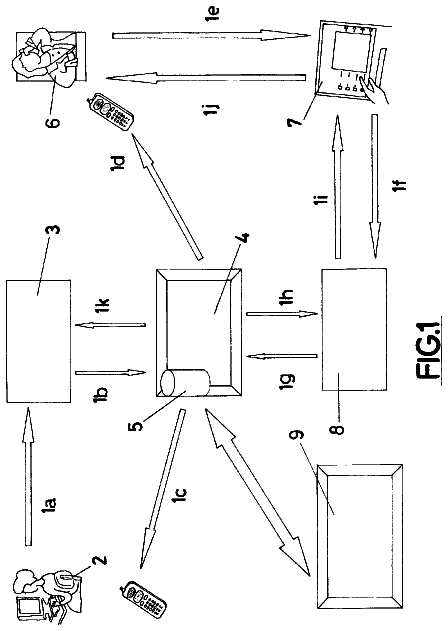
FIG. 1 is a flow chart depicting the opening of a new account.
FIG. 2 is a debit card for use in accordance with the instant invention.
FIG. 3 is a flow chart depicting process flows associated with an aspect of the invention.
FIG. 4 is a flow chart depicting cardholder transaction flow for the first period.
FIG. 5 is a flow chart depicting cardholder transaction flow after the first period.
FIG. 6 is a billing report.
FIGS. 7A and 7B are flow charts comparing on-line versus off-line processing.
Detailed description of the invention
The system of the instant invention is designed to enable financial institutions and retailers (also referred to as "merchants") to offer loyalty/rewards programs whether the debit card transaction is processed on-line or off-line. This program and system are also designed to enable the financial institution to track the transactions performed by the cardholder at different merchants and, based on pre-existing arrangements, offer cardholder different rewards for transactions done at different merchants.
Referring generally to the drawings, in accord with an embodiment of the invention, a debit card 300 (FIG. 2) will be issued to a cardholder when he or she opens a financial account at the financial institution. This debit card enables the cardholder to make purchases via either off-line debit card networks or on-line networks, as one skilled in the art would appreciate. An example of off-line debit card networks includes MasterDebit, the off-line debit card network of MasterCard. Of course, the VISA debit card network, or other such off-line debit card network can be employed and practice the invention. Examples of on-line debit card networks are Cirrus, Maestro, the MasterCard network, NYCE. Of course, other such on-line debit card networks can be employed and practice the invention. The debit cards may have multiple brands and multiple functionality, enabling them to be used by their holders to withdraw cash, check balances and perform other functions at ATMs as well as conduct purchases of goods and services either using the on-line networks or the off-line networks.
In a typical application, the invention is employed to operate the debit card 300 as part of a loyalty or reward program. The financial institution collaborates with an entity, such as a commercial entity (e.g., retailers, including gasoline companies, computer stores or clothing stores, service providers, including insurance companies, Internet service providers or airlines, manufacturers or other merchants) or a charitable or non-profit institution, that can benefit from the directed use of a debit card. As used herein, the term "retailer" shall be understood broadly, meaning any entity that provides goods or services that can be purchased with a debit card. Similarly, "goods" shall be understood to include any products or services. The entity collaborating with the financial institution is referred to as a "partner" or "sponsor." In this context, the "partner" may include several retailers or other entities, all partners of the financial institution. Further, the partner can be the financial institution itself, should it seek to encourage the cardholder to purchase financial services using the debit card. The partner may also be an institution having a theme-such as an insurance company wishing to encourage healthy lifestyles among its policy holders. The debit cardholder uses the debit card to make purchases, both at the partner and otherwise. As a reward for using the debit card, the cardholder generates a reward amount. This reward amount is funded by the financial institution, the partner, or a combination of both. This reward amount is printed on a monthly statement sent to the cardholder or on an interim statement accessible via devices such as the phone, ATM or Internet.
At the end of the period in which the reward was earned, it becomes "activated," that is, it is available for redemption by the cardholder. To obtain the reward, the cardholder makes a purchase from the partner. The purchase is debited from the financial account in the traditional fashion. Information regarding the purchase may be collected from the financial institution or from its processing agent who transfers it to the financial institution. The financial institution then credits the cardholder's financial account for an amount up to the amount of the purchase from the partner from the activated portion of the user's reward account. Of course, the amount credited is limited by the amount that the cardholder has activated in the reward account at the time of purchase.
In certain applications of the invention, a sponsor, such as a charitable institution, collaborates with the financial institution. Commercial partners may also be part of the program. The sponsor defines a theme and identifies debit card activity that is consistent with the theme. For, example, if the sponsor was an organization dedicated to citizen health issues, debit card purchases of healthy foods, exercise equipment and gym membership might be identified as "consistent." The cardholder earns rewards for using the debit card to make purchases of the theme-consistent goods and services. The reward earned by the cardholder can be delivered to the sponsor. Alternatively, a portion of the earned reward can be delivered to the sponsor while the remainder of the earned reward can be credited to the reward account, as discussed above. The program can be expanded to include a discount on products or services that are theme-consistent. Further, the retailers marketing such products or services may become partners, allowing the cardholder to earn additional rewards and obtain their reward by shopping at one of these partners. In the case where the sponsor is an insurance company, covered services, such as doctor visits can be paid for in Rill using the debit card with the insurance company reimbursement being made as a credit to the financial account or as a reward.
Referring now specifically to FIG. 1, which is a flow chart depicting the opening of a new account by a bank customer or "cardholder" or "user." At block 2, the cardholder opens a financial account with a financial institution. At block 3, the cardholder deposits initial funds into the financial account. The debit card 300 (sec FIG. 2) is then issued to the cardholder at block 4.
Preferably, the financial account is a demand deposit account. It will be appreciated that the financial account may include demand deposit accounts, checking accounts, savings accounts, share draft accounts, money market accounts, cash or investment management accounts, and the like, which are referred to herein collectively as "financial accounts."Currently, it is envisioned that the financial institution is a bank. However, it will be appreciated that other financial institutions or entities that provide processing to financial institutions may employ the systems and methods of the instant invention. In particular, the invention may be employed by savings and loan institutions, credit unions, brokerage firms, mutual fund companies, insurance companies and the like. Further, it will be appreciated that while it is preferred that a single financial institution issue the debit card and administer the reward program, these functions could be performed by two or more distinct entities and still practice the invention. For example, the financial institution can issue the debit card while an incentive company can administer the reward aspect of the invention. Further, the reward aspect of the program can be run by a partner of the financial institution, such as a preferred retailer or a program sponsor (discussed below).
Referring to FIG. 2, a typical debit card 300 is shown. The identity of the financial institution is preferably depicted on the face of the debit card by means of a logo 301. Since financial institutions desire to maximize the utility of debit cards, giving their cardholders the greatest amount of choice in how to conduct transactions, most financial institutions enable their cards to be used to conduct ATM withdrawals as well as to perform both on- and off-line transactions. In order to communicate to cardholders where the cards are accepted, the cards will contain the logos of those ATM, debit or credit networks where the cards can be used. In addition to the name of the issuing financial institution and networks where the cards can be used, such debit cards may also be co-branded with the names or logos 302 of participating merchants, i.e., partners. Of course, the logos of the financial institution, the sponsor and the preferred retailer can all be displayed on the card.
These co-branded merchant or merchants have several objectives in issuing such debit cards. These include: serving as a marketing vehicle to communicate the merchant's brand to the cardholder; utilizing the debit card as a payment vehicle, thereby being able to capture and track information on the cardholder's purchases at that merchant and at other merchants and using such information to provide incentives to the cardholder to make additional purchases at the merchant; and reducing the risk and cost associated with cash or credit transactions.
Referring to FIG. 3, which is a flow chart depicting the process flows associated with an embodiment of the invention, the customer uses the debit card at block 10. This use may be to make a purchase of goods at a retailer, to purchase services, to withdraw cash, or other transaction for which a debit card may be employed. As currently envisioned (and in accord with the current practice), the cardholder is issued a physical, plastic card having a magnetic stripe that includes certain identifying information. It will be appreciated that it is the identifying information that is useful in operating the system and method of the instant invention. Other means, beside the physical plastic card, may be employed to deliver this information and still practice the invention. For example, a data file on a user's computer may include the identifying information and therefore be a "debit card." This may be particularly useful for on-line purchases made over the Internet. Any means, technique or device that carries this identifying information is a "debit card" for the purpose of this invention.
Depending on the networks and capabilities authorized for the cardholder and indicated on the card, the cardholder may elect to use the card in one of two modes: on-line (block 30) or off-line (block 20). In those situations where the cardholder initiates the transaction him or herself by swiping the card through a terminal designed to read the information contained on the card, the cardholder may be presented by the terminal with a message and/or a button asking how the transaction should be processed. The cardholder is given two choices, each of which may be described in a number of different ways depending on the terminal operator. The choices can be called either "Credit" or "Debit," generally corresponding to off-line or on-line transaction processing. Depending on the terminal operator, transaction network and financial institution, the rules, costs to the cardholder, merchant or financial institution or methods of processing may differ for the different kinds of transactions. However, the basic purpose of the transaction is the same, resulting in a debit to the cardholder's account for the amount of the goods purchases plus any service charges.
The processes and cardholder interface for the off- and on-line networks are significantly different (discussed in more detail with respect to FIGS. 7A and 7B). On-line debit transactions at the point of sales leverage the existing ATM processing infrastructure (cards, network switches, gateways, processing software, etc.) to directly debit the cardholder's bank account as if a withdrawal had been made at an ATM. Transaction requests are routed to the issuer bank via a regional or national/international switch interchange. When a cardholder swipes the ATM/debit card at the point of sale, they are required to enter a personal identification number (PIN) which is authenticated by the financial institution (typically, an issuer bank), following the financial account or a linked credit account being verified as being in good standing and with sufficient funds. After the account and ATM/debit card are validated and authenticated, on-line authorization of the transaction begins. On-line authorization is performed in real time by the financial institution's own systems against current account balances and daily limits. Completed transactions are used to update directly the cardholder and financial account database.
The off-line debit card works like a credit card at the point of sale with approval and clearing taking place through the credit card association networks and requiring the cardholder's signature to complete the transaction. Instead of receiving a separate itemized bill, however, the amount of purchase is deducted from the cardholder's checking account and the details of the transaction are recorded on his monthly statement, as though a check has been written to the retailer. An off-line debit card is accepted at merchants wherever the equivalent credit card is; in fact, the retailer often cannot differentiate between them. The off-line transaction process mimics the credit card transaction process; that is, it involves two transaction messages--one for authorization and one for settlement. The settlement information takes two to three days to reach the issuer. The authorization for this type of transaction is generally obtained on-line, but the transaction itself is transmitted and processed via either the credit card system or the ACH, incurring a delay in posting of the completed transaction.
The description continues in the full USPTO document.
 Lapsed, fee not paid18 drawings