Patent Yard Sign in
Lapsed, fee not paid

Coherent optical orthogonal frequency division multiplexing (OFDM) reception using self optical carrier extraction

US 8,718,490 B2 · Assignee: NEC Laboratories America, Inc. · Inventors: Xu; Lei et al.

USPTO PDF

Overview

Sheet 1 of 2 from the published document. All sheets in the USPTO PDF

Abstract From the patent

A method includes producing interference between a received optical OFDM signal and an optical carrier extracted from the received optical OFDM signal to provide optical coherent detection of the received optical OFDM signal. Preferably, producing the interference includes optically splitting the received optical OFDM signal into a first part that is filtered to extract the carrier from the received optical OFDM signal and a second part similar to the received optical OFDM signal.

Why it's free to use

  • The USPTO Official Gazette of June 30, 2026 lists it as expired on May 6, 2026 for an unpaid maintenance fee.
  • It isn't on any reinstatement notice published since.
  • Its 1 US relative has also lapsed, expired or never issued.
  • We check US rights only. Check foreign counterparts before selling abroad.
FiledJuly 31, 2008
GrantedMay 6, 2014
Expired (fee)May 6, 2026
Application number12/183332
Classification (CPC)H04B10/63 +1 more
Length8 claims · 6 pages

Background From the patent

Orthogonal frequency division multiplexing (OFDM) is a popular digital modulation scheme in radio frequency (RF) wireless communications. In principle, OFDM uses multiple closely spaced orthogonal subcarriers, and each subcarrier is modulated at a relatively low symbol rate. In practice, OFDM be implemented using fast Fourier transform (FFT) algorithms, and signal processing technologies are further leveraged to improve the OFDM system performance. OFDM has been shown to have strong ability to cope with severe channel conditions (e.g. RF channels with large multi-path fading effect) and have high spectral efficiency. OFDM has been applied in WiMAX, wireless LAN, ADSL, digital radio and video broadcasting systems, and was chosen as a candidate technology in wireless 4G standards. Recently OFDM over optical fiber transmission has attracted a lot of attention. Optical OFDM systems have been

Drawings 2

1 of 2 drawing sheets so far from the published document, cropped to the drawing. Every sheet is in the USPTO PDF.

Figures as described

  • FIG. 1 is a diagram of a conventional approach for coherent optical frequency division multiplexing OFDM signal detection using a local oscillation laser
  • FIG. 2 is a block diagram of optical frequency division multiplexing OFDM using self optical carrier extraction in accordance with the invention
  • FIG. 3 is a schematic diagram of an exemplary coherent OFDM system with self optical carrier extraction optical system in accordance with the invention

Claims 8 total, 2 independent

What the patent claimed, word for word. All of it is now free to use.

  1. 1
    Independent claimA method comprising: receiving an incoming light beam containing an optical OFDM signal carrying an optical carrier component, wherein data is fed to an electro-optical (EO) modulator sourced by a laser and the EO modulated output is filtered, amplified and sent over an optical fiber, wherein the optical carrier component from the incoming signal uses zero padding in OFDM modulation; producing an interference light beam between a received optical OFDM signal and an optical carrier extracted from the received optical OFDM signal to provide optical coherent detection of the received optical OFDM signal, wherein the incoming light beam and the interference light beam have one polarization state and have one central wavelength for homodyne detection, and optically splitting the received optical OFDM signal into a first part that is filtered with an optical filter to extract the carrier from the received optical OFDM signal and a second part similar to the received optical OFDM signal; and determining an error vector magnitude (EVM) as: .times..times..times..times. ##EQU00002## where I.sub.j is the I component of the j-th symbol received, Q.sub.j is the Q component of the j-th symbol received, .sub.j is the ideal I component of the j-th symbol received, {tilde over (Q)}.sub.j is the ideal Q component of the j-th symbol received.
  2. 2
    The method of claim 1, wherein the optical filter comprises one of a fixed bandpass filter for a certain wavelength, a tunable bandpass filter for incoming signals at different wavelengths, and a periodic bandpass or comb filter for incoming signals at different wavelengths on a certain wavelength grids.
  3. 3
    Independent claimA method comprising the steps of: embedding an optical carrier component into a transmitted OFDM signal, wherein data is fed to an electro-optical (EO) modulator sourced by a laser and the EO modulated output is filtered, amplified and sent over an optical fiber; splitting an incoming light beam containing a received optical OFDM signal into a first part and a second part, each part having optical spectrum characteristics of the received optical OFDM signal; optically filtering the first part to extract an optical carrier from the received optical OFDM signal; and receiving the extracted optical carrier and the second part into a coherent receiver, generating an interference light beam, wherein the incoming light beam and the interference light beam have one polarization state and have one central wavelength for homodyne detection, and optically splitting the received optical OFDM signal into a first part that is filtered with an optical filter to extract the carrier from the received optical OFDM signal and a second part similar to the received optical OFDM signal using a radio frequency carrier or including zero padding in OFDM modulation; and determining an error vector magnitude (EVM) as: .times..times..times..times. ##EQU00003## where I.sub.j is the I component of the j-th symbol received, Q.sub.j is the Q component of the j-th symbol received, .sub.j is the ideal I component of the j-th symbol received, {tilde over (Q)}.sub.j is the ideal Q component of the j-th symbol received.
  4. 4
    The method of claim 3, wherein the step of receiving comprises producing an interference between the received optical OFDM signal and the extracted optical carrier.
  5. 5
    The method of claim 4, wherein the optical filtering comprises one of fixed bandpass filtering for a certain wavelength, tunable bandpass filtering for incoming signals at different wavelengths, and periodic bandpass filtering for incoming signals at different wavelengths on a certain wavelength grids.
  6. 6
    The method of claim 3, comprising splitting an incoming signal into a first branch at a coherent optical receiver as an incoming optical OFDM signal, and a second branch passing through a narrow band optical filter to extract an optical carrier component for interference at the coherent optical receiver for subsequent demodulation.
  7. 7
    The method of claim 3, comprising generating an optical OFDM signal with an optical carrier component by having a radio frequency carrier in a transmitter side.
  8. 8
    The method of claim 3, comprising providing tolerance to lasers with predetermined line width, wherein the optical OFDM signal does not degrade incoming signals with random phase changes or without carrier phase recovery.

Claim map

Independent claims stand on their own. The others add detail to the claim they name.

Claim 11 claim builds on it
Claim 35 claims build on it

Description

Background of the invention

Orthogonal frequency division multiplexing (OFDM) is a popular digital modulation scheme in radio frequency (RF) wireless communications. In principle, OFDM uses multiple closely spaced orthogonal subcarriers, and each subcarrier is modulated at a relatively low symbol rate. In practice, OFDM be implemented using fast Fourier transform (FFT) algorithms, and signal processing technologies are further leveraged to improve the OFDM system performance. OFDM has been shown to have strong ability to cope with severe channel conditions (e.g. RF channels with large multi-path fading effect) and have high spectral efficiency. OFDM has been applied in WiMAX, wireless LAN, ADSL, digital radio and video broadcasting systems, and was chosen as a candidate technology in wireless 4G standards.

Recently OFDM over optical fiber transmission has attracted a lot of attention. Optical OFDM systems have been shown to have superior tolerance to fiber CD and PMD. Compared with incoherent optical OFDM, coherent optical OFDM can have higher receiver sensitivity and better transmission performance. However, coherent optical OFDM receivers inherit the many issues facing a traditional coherent optical communication system, including the need of an extra local optical oscillator (laser), the phase noise and frequency drift of the local laser, and the random polarization rotations of the incoming signals. Although some signal processing algorithms have been proposed and demonstrated to effectively mitigate the phase noise and polarization rotation issues in the electrical domain, their demand on high-speed signal processing and computation power becomes increasingly high and makes it highly challenging to implement a real time system at high speed.

Also, system performance of optical OFDM signal transmission over fiber relies heavily on complex digital signal processing (DSP). When the system bit rate is beyond 40 Gb/s, the current DSP processing speed and computation power fall far behind what an optical OFDM system would require. Therefore, it is important to design new architectures of optical OFDM systems, simplify the system and reduce the requirements on DSP circuits.

The diagram 10 in FIG. 1 illustrates the conventional approach for coherent OFDM signal detection of a received signal 11 using a local oscillation (LO) laser 12. The light from LO laser 12 interferes with the incoming optical OFDM signal 11 at the coherent receives 13 and the signal is then demodulated 14. Since the two beating light beams come from two independent light sources, the phase noises of the LO laser and random phase fluctuations of the incoming signal can cause signal degradations.

Accordingly, there is need for a new coherent optical OFDM receiver using self optical carrier extraction.

Summary of the invention

A method includes receiving an incoming light beam containing an optical OFDM signal carrying an optical carrier component, wherein data is fed to an electro-optical (EO) modulator sourced by a laser and the EO modulated output is filtered, amplified and sent over an optical fiber, wherein the optical carrier component from the incoming signal uses zero padding in OFDM modulation; producing an interference light beam between a received optical OFDM signal and an optical carrier extracted from the received optical OFDM signal to provide optical coherent detection of the received optical OFDM signal, wherein the incoming light beam and the interference light beam have one polarization state and have one central wavelength for homodyne detection, and optically splitting the received optical OFDM signal into a first part that is filtered with an optical filter to extract the carrier from the received optical OFDM signal and a second part similar to the received optical OFDM signal; and

determining an error vector magnitude (EVM) as:

.times..times..times..times. ##EQU00001## where I.sub.j is the I component of the j-th symbol received, Q.sub.j is the Q component of the j-th symbol received, .sub.j is the ideal I component of the j-th symbol received, {tilde over (Q)}.sub.j is the ideal Q component of the j-th symbol received.

In accordance with the invention, a method includes producing interference between a received optical OFDM signal and an optical carrier extracted from the received optical OFDM signal to provide optical coherent detection of the received optical OFDM signal. Preferably, producing the interference includes optically splitting the received optical OFDM signal into a first part that is filtered to extract the carrier from the received optical OFDM signal and a second part similar to the received optical OFDM signal.

In another aspect of the invention, a method includes splitting a received optical OFDM signal into a first part and a second part, each part having optical spectrum characteristics of the received optical OFDM signal; optically filtering the first part to extract an optical carrier from the received optical OFDM signal; and receiving the extracted optical carrier and the second part into a coherent receiver. The optical filtering can be one of fixed bandpass filtering for a certain wavelength, tunable bandpass filtering for incoming signals at different wavelengths, and periodic bandpass filtering for incoming signals at different wavelengths on a certain wavelength grids.

Brief description of drawings

These and other advantages of the invention will be apparent to those of ordinary skill in the art by reference to the following detailed description and the accompanying drawings.

FIG. 1 is a diagram of a conventional approach for coherent optical frequency division multiplexing OFDM signal detection using a local oscillation laser.

FIG. 2 is a block diagram of optical frequency division multiplexing OFDM using self optical carrier extraction in accordance with the invention.

FIG. 3 is a schematic diagram of an exemplary coherent OFDM system with self optical carrier extraction optical system in accordance with the invention.

Detailed description

The invention is directed to a coherent optical OFDM receiver using self optical carrier extraction. The carrier component in optical OFDM signals is filtered out from the optical OFDM signal to interfere with the OFDM signal for coherent signal detection. Since the interference optical carrier is extracted from the incoming signal, the incoming light and the interference light can be kept at the same polarization state and have the same central wavelength for homodyne detection.

The diagram 20 of FIG. 2 illustrates the inventive self carrier extraction in an OFDM system. At the receiver side, the incoming signal 11 is split 21 into two branches: one goes directly to the coherent receiver 13 as incoming optical OFDM signal, and the other one passes through a narrow band optical filter 22 to have the optical carrier component extracted for interference at the coherent receiving device 13 for subsequent demodulation.

The inventive technique of extracting the optical carrier from the incoming optical OFDM signal and using the extracted carrier for further coherent detection of the received signal brings many system benefits. The received signal does not degrade with random phase changes of incoming signal even without carrier phase recovery. The system has much better tolerance to lasers with large line width than conventional approaches. Compared with coherent detection using a local laser, self carrier extraction scheme can lower the system cost by saving a laser.

The diagram 30 of FIG. 3 illustrates an exemplary optical OFDM system employing the inventive technique of extracting an optical carrier from a received signal and using the extracted carrier for coherent detection of the received signal. At the transmission side OFDM modulation 32 of data is fed to an electro-optical modulator 33 sourced by a laser 31. The EO modulated output is filtered 34, amplified 35 and sent over an optical fiber 36 and amplified 35' at a receiving end.

The generated optical OFDM signal has an optical carrier component. This can be generally done by having a radio frequency carrier in the transmitter side. The electro-optical (E/O) modulation 33 scheme can be phase modulation, intensity modulation, or carrier suppression modulation. The optical filter 34 at the transmitter side can be used to generate single-side band signals, and it is optional.

At the receiver side, a self carrier extraction 37 scheme includes an optical coupler 21, an optical filter 22 and a coherent receiver 13. The optical coupler splits the incoming optical signal into two parts. The optical filter 22 is used to extract the optical carrier component from the optical spectrum of the incoming signal. The coherent receiver 13 produces the interference between the extracted optical carrier and the incoming optical signal, and converts the optical signals to electrical ones.

The optical filter 22 can be a fixed bandpass filter for a certain wavelength, a tunable bandpass filter for incoming signals at different wavelengths, or a periodic bandpass (or comb) filter for incoming signals at different wavelengths on certain wavelength grids (e.g. ITU grids).

The device can be built with free-space optical components, (e.g. athermal free-space optics platforms), or fiber-based optical components.

From the above discussion it is clear that inventive aspect of extracting an optical carrier extracted from the incoming optical OFDM signal and using the extracted carrier for further coherent detection brings many benefits. The received signal does not degrade with random phase changes of incoming signal even without carrier phase recovery. The system has much better tolerance to lasers with large line width than conventional approaches. Compared with coherent detection using a local laser, the inventive self carrier extraction used for coherent detection can lower the system cost by saving a laser.

The present invention has been shown and described in what are considered to be the most practical and preferred embodiments. It is anticipated, however, that departures may be made therefrom and that obvious modifications will be implemented by those skilled in the art. It will be appreciated that those skilled in the art will be able to devise numerous arrangements and variations which, not explicitly shown or described herein, embody the principles of the invention and are within their spirit and scope.

Timeline & family

Timeline From USPTO dates

2008201020122014201620182020202220242026Earliest priority dateOct 3, 2007Application filedJuly 31, 2008Application publishedApril 9, 2009Patent grantedMay 6, 20143.5-year fee paidNov 6, 20177.5-year fee paidNov 6, 202111.5-year fee not paidNov 6, 2025Patent expiredMay 6, 2026

Maintenance fees

Fees are due 3.5, 7.5 and 11.5 years after grant. This patent expired on May 6, 2026, so the fee marked "not paid" was the one that went unpaid.

3.5-year feeDue November 6, 2017Paid
7.5-year feeDue November 6, 2021Paid
11.5-year feeDue November 6, 2025Not paid

US family 2 documents, by filing date

Published applicationUS 2009/0092393 A1

Coherent Optical Orthogonal Frequency Division Multiplexing (OFDM) Reception Using Self Optical Carrier Extraction

Filed Jul 2008 · published Apr 2009
Published application
This documentUS 8,718,490 B2

Coherent optical orthogonal frequency division multiplexing (OFDM) reception using self optical carrier extraction

Filed Jul 2008 · granted May 2014
Lapsed, fee not paid

Earlier publications, parents and continuations. None of them can still be enforced, or this patent would not be listed.

US patents it cites 11

Prior art cited by the examiner or applicant. Useful when you check your own idea for novelty.

Sources & verification

Verification

  • The USPTO Official Gazette of June 30, 2026 lists it as expired on May 6, 2026 for an unpaid maintenance fee.
  • It isn't on any reinstatement notice published since.
  • Its 1 US relative has also lapsed, expired or never issued.
  • Rechecked against USPTO records every day.
  • We check US rights only. Check foreign counterparts before selling abroad.

Confirm it yourself

  1. Open the file history on Patent Center.
  2. The status should read "Patent Expired Due to NonPayment of Maintenance Fees Under 37 CFR 1.362".
  3. Check the documents for any later petition to revive or reinstate.

Everything on this page comes from the documents linked above.

More in Hardware & Electronics

All Hardware & Electronics
Drawing from US 8,718,487 B2Lapsed, fee not paid9 drawings
Hardware & Electronics · US 8,718,487 B2

Optical transmitter

An optical transmitter for converting an input data series into an optical multi-level signal and for outputting the same, includes an LUT in which data for executing optical multi-level modulation is stored and from…

Filed2010
LapsedMay 2026
OwnerMitsubishi Electric Corporation
Drawing from US 8,718,488 B2Lapsed, fee not paid27 drawings
Hardware & Electronics · US 8,718,488 B2

Driver and optical transmission apparatus

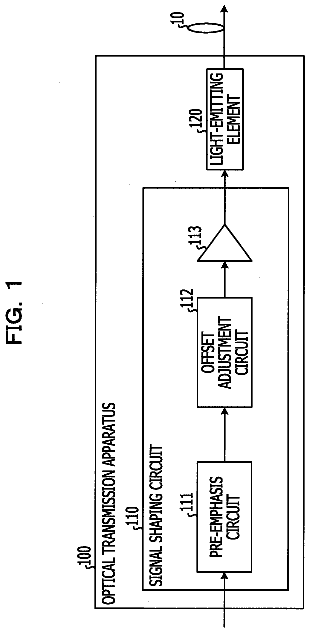
A driver for shaping a drive signal includes a pre-emphasis circuit, an offset adjustment circuit, and an amplifier.

Filed2011
LapsedMay 2026
OwnerFujitsu Limited
Drawing from US 8,718,492 B2Lapsed, fee not paid4 drawings
Hardware & Electronics · US 8,718,492 B2

Adaptive power efficient receiver architecture

Systems and methods for processing an optical signal are disclosed.

Filed2010
LapsedMay 2026
OwnerInternational Business Machines Corporation
Drawing from US 8,718,544 B2Lapsed, fee not paid39 drawings
Hardware & Electronics · US 8,718,544 B2

Signal transmission device, electronic device, and signal transmission method

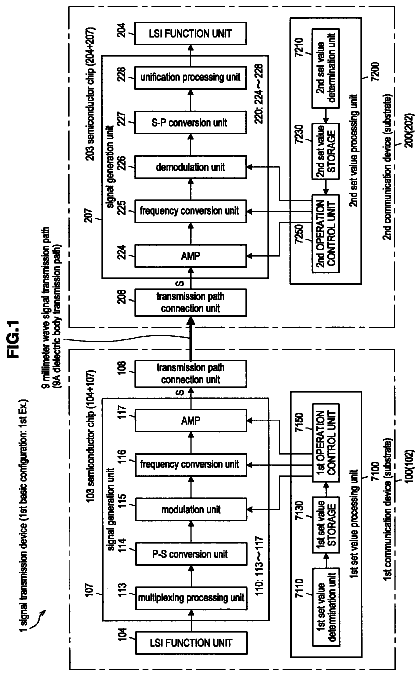
A signal generation unit 107 and a first set value processing unit 7100 are included in a preceding stage of a transmission path connection unit 108 at a transmission side, and a signal generation unit 207 and a second…

Filed2010
LapsedMay 2026
OwnerSony Corporation