 Lapsed, fee not paid6 drawings
Telecom & Networks · US 8,711,996 B2
Methods and apparatus for determining a phase error in signals
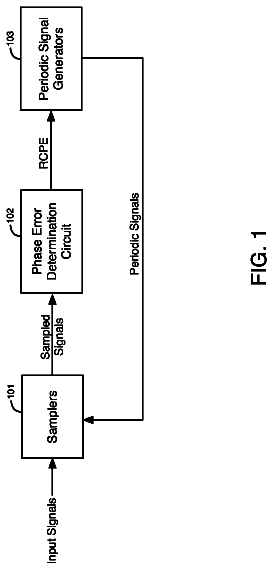
An integrated circuit includes samplers, a phase error determination circuit, and periodic signal generators.
US 8,712,044 B2 · Assignee: Dark Matter Labs Inc. · Inventors: MacMillan; Jeffrey Earl et al.
Sheet 1 of 13 from the published document. All sheets in the USPTO PDF
Embodiments are directed towards enabling cryptographic key management without disrupting cryptographic operations. Embodiments may be employed to generate cryptographic keys based on at least one key parameter that may be provided by an administrator. The administrator may generate key managers and key request users that may be linked to particular cryptographic keys. The cryptographic keys may be stored on key exchange servers separate from the key management server. Responsive to a request for a cryptographic key, the key exchange servers may authenticate the key request user associated with the request. The key request may be validated based on at least one key parameter and a portion of the key request. The key exchange server may generate the requested cryptographic keys providing them to the key request user over the network.
The growth of computer based applications that collect, generate or distribute sensitive data has resulted in the electronic distribution and storage of sensitive information. It is important the sensitive data stored and/or exchanged between computing systems be kept secure from unauthorized access. In many computing environments data encryption may be used to secure sensitive data and/or hide sensitive communications. Also, in some cases, encryption and decryption of data transmitted between authorized users may use encryption methods that use cryptographic keys. One practice that may help maintain improved data security is to frequently change, or rotate, the cryptographic keys. However, safely and securely storing cryptographic keys in a cloud-based computing may be difficult. Thus, it is with respect to these considerations and others that the present invention has been made.
1 of 13 drawing sheets so far from the published document, cropped to the drawing. Every sheet is in the USPTO PDF.
What the patent claimed, word for word. All of it is now free to use.
The present invention relates generally to computer automated cryptography for non-volatile and volatile data and more particularly, but not exclusively to the management of cryptographic keys in a cloud-based computing environment.
The growth of computer based applications that collect, generate or distribute sensitive data has resulted in the electronic distribution and storage of sensitive information. It is important the sensitive data stored and/or exchanged between computing systems be kept secure from unauthorized access. In many computing environments data encryption may be used to secure sensitive data and/or hide sensitive communications. Also, in some cases, encryption and decryption of data transmitted between authorized users may use encryption methods that use cryptographic keys. One practice that may help maintain improved data security is to frequently change, or rotate, the cryptographic keys. However, safely and securely storing cryptographic keys in a cloud-based computing may be difficult. Thus, it is with respect to these considerations and others that the present invention has been made.
Non-limiting and non-exhaustive embodiments are described with reference to the following drawings. In the drawings, like reference numerals refer to like parts throughout the various figures unless otherwise specified. For a better understanding of the present invention, reference will be made to the following Description of the Various Embodiments, which is to be read in association with the accompanying drawings, wherein:
FIG. 1 is a system diagram of an environment in which at least one of the various embodiments may be practiced;
FIG. 2 shows a client device in which at least one of the various embodiments may be practiced;
FIG. 3 shows a client device in which at least one of the various embodiments may be practiced;
FIG. 4 shows a logical schematic of a cryptographic device and cryptographic application in accordance with at least one of the various embodiments;
FIG. 5 shows a logical schematic of cryptographic keys in accordance with at least one of the various embodiments;
FIG. 6 shows a flowchart for a process that may be used for rotating cryptographic keys in accordance with at least one of the various embodiments;
FIG. 7 shows a flowchart for a process that may be used for decrypting encrypted data packets in accordance with at least one of the various embodiments;
FIG. 8 shows a flowchart for a process that may be used for decrypting data with rotated cryptographic keys in accordance with at least one of the various embodiments;
FIG. 9 shows a flowchart for a process that may be used for bulk activation of cryptographic keys in accordance with at least one of the various embodiments;
FIG. 10 shows a flowchart for a process that may be used for processing search query values in accordance with at least one of the various embodiments;
FIG. 11 shows a system for providing key manager services in a cloud-based environment, in accordance with at least one of the various embodiments;
FIG. 12 shows a flowchart for a process for managing keys in a cloud based environment in accordance with at least one of the various embodiments; and
FIG. 13 shows a flowchart for a process for handling key requests in accordance with at least one of the various embodiments.
Various embodiments now will be described more fully hereinafter with reference to the accompanying drawings, which form a part hereof, and which show, by way of illustration, specific exemplary embodiments by which the invention may be practiced. The embodiments may, however, be embodied in many different forms and should not be construed as limited to the embodiments set forth herein; rather, these embodiments are provided so that this disclosure will be thorough and complete, and will fully convey the scope of the embodiments to those skilled in the art. Among other things, the various embodiments may be methods, systems, media or devices. Accordingly, the various embodiments may take the form of an entirely hardware embodiment, an entirely software embodiment or an embodiment combining software and hardware aspects. The following detailed description is, therefore, not to be taken in a limiting sense.
Throughout the specification and claims, the following terms take the meanings explicitly associated herein, unless the context clearly dictates otherwise. The phrase "in one embodiment" as used herein does not necessarily refer to the same embodiment, though it may. Furthermore, the phrase "in another embodiment" as used herein does not necessarily refer to a different embodiment, although it may. Thus, as described below, various embodiments may be readily combined, without departing from the scope or spirit of the invention.
In addition, as used herein, the term "or" is an inclusive "or" operator, and is equivalent to the term "and/or," unless the context clearly dictates otherwise. The term "based on" is not exclusive and allows for being based on additional factors not described, unless the context clearly dictates otherwise. In addition, throughout the specification, the meaning of "a," "an," and "the" include plural references. The meaning of "in" includes "in" and "on."
The term "keying data" as used herein refers to seeding and/or entropy data. At least a portion of the keying data may be used by the cryptographic application if generating keys. In at least one of the various embodiments, multiple sets of keying data may be employed to generate a single cryptographic key. In at least one of the various embodiments, the keying data may be the same length as a key.
The term "key holder" as used herein refers to a user associated with a cryptographic key. In at least one of the various embodiments, key holders may be selected to provide keying data for a key name they have been associated with by a key manager.
The terms "encryption key", "cryptographic key", and "key" as used herein refer to cryptographic keys that may be used to do encryption and decryption operations. In at least one of the various embodiments, a key may be generated by XORing at least a portion of the keying data provided by one or more key holders.
The term "key name" as used herein refers to an identifier that may be associated with one or more cryptographic keys. In at least one of the various embodiments, key names may be associated with key parameters, access rules, or the like. Key names may enable users to utilize cryptographic services from a cryptographic application without having to directly reference the underlying cryptographic keys that may be employed.
The term "key manager" as used herein refers to a user enabled and authorized to perform and/or initiate administrative cryptographic actions, such as, generating key names, generating key parameters, selecting key holders, triggering the cryptographic key rotation process, or the like.
The term "key manager" as used herein refers to a user enabled and authorized to perform and/or initiate administrative cryptographic actions, such as, generating key names, generating key parameters, selecting key holders, triggering the cryptographic key rotation process, or the like.
The term "administrative user" as used herein refers to a user that may be enabled to create and administer cryptographic keys, key request or key manager users, key exchange server accounts, or the like, In at least one of the various embodiments, administrative users may be enabled to perform some or all of the actions of key managers. Likewise, in at least one of the various embodiments, key managers may be enabled to perform some or all of the actions of administrative users.
The term "key parameters" as used herein refers to cryptographic parameters associated with a key name and/or cryptographic keys. In at least one of the various embodiments, key parameters may be the parameters and options employed if configuring an encryption algorithm, such as, key name, number of key holders, mode, padding, bit-size, or the like.
The terms "activation password", and "password" as used herein refers to passwords and/or pass-phrases used by a key holder to protect their keying data for a cryptographic key.
The term "system key" as used herein refers to a hard coded key compiled into a cryptographic application and/or embedded in a cryptographic device. The system key may be used for temporary encryption of stored key data.
The term "key array" as used herein refers to a data structure employed to collect and manage cryptographic keys, key parameters, keying data, checksums, or the like, that may be associated with a key name. The data structure may be implemented using well-known techniques such as, arrays, lists, hashes, dictionaries, buckets, lookup tables, or the like.
The terms "current cryptographic key" and "current key" as used herein refers to a cryptographic key that is associated with a key name and is available for use in current cryptographic operations. In at least one of the various embodiments, current cryptographic keys have been activated but not rotated. A cryptographic application may be enabled to provide one or more current cryptographic keys where each key name may correspond to one current cryptographic key. In at least one of the various embodiments, current cryptographic keys may be stored in volatile memory of a cryptographic device.
The terms "transitional cryptographic key" and "transitional key" as used herein refer to cryptographic keys that have been encrypted with a system key. Transitional keys are often current keys that are in the process of being rotated. Generally, transitional keys are unavailable for use in cryptographic operations while in the transitional state.
The following briefly describes the embodiments of the invention in order to provide a basic understanding of some aspects of the invention. This brief description is not intended as an extensive overview. It is not intended to identify key or critical elements, or to delineate or otherwise narrow the scope. Its purpose is merely to present some concepts in a simplified form as a prelude to the more detailed description that is presented later.
Briefly stated, various embodiments are directed towards secure cryptographic key rotation that enables cryptographic keys to be rotated without disrupting cryptographic operations. In at least one of the various embodiments, if cryptographic key rotation is initiated, a cryptographic application may generate a transitional cryptographic key by encrypting the current cryptographic key with a built-in system cryptographic key. In at least one of the various embodiments, the transitional cryptographic key may be temporarily stored in non-volatile storage (e.g., disk drives) during the key rotation process.
In at least one of the various embodiments, the cryptographic application may generate a new cryptographic key based on one or more determined key parameters. Such key parameters may include encryption strength, algorithm type, key length, key holders, key name, or the like. Next, in at least one of the various embodiments, the cryptographic application may enable the new cryptographic key to be activated by one or more key holders. In at least one of the various embodiments, key holders may provide keying data and activation passwords may be employed as part of the cryptographic key activation process.
In at least one of the various embodiments, if the new cryptographic key is activated, the cryptographic application may designate it as the new current cryptographic key. In at least one of the various embodiments, the new current cryptographic key may be employed to encrypt the stored transitional cryptographic key (the previous current cryptographic key). In at least one of the various embodiments, after the transitional cryptographic key is encrypted by the new current cryptographic key it may be stored in a key array. In at least one of the various embodiments, as additional key rotation occurs each rotated cryptographic key may be stored in the key array if it is encrypted by the designated current cryptographic key.
In at least one of the various embodiments, the current cryptographic key may be kept in volatile memory of a cryptography device rather than stored in non-volatile storage such as a disk drive. Thus, if the cryptography device loses power, or is reset, the current cryptographic key will be unavailable until it is re-activated. In at least one of the various embodiments, the current cryptographic key may be restored by executing the cryptographic key activation process using the key holders secret keying data and activation passwords. In at least one of the various embodiments, after a cryptography device reboots, key holder activation passwords may be provided/entered and used with the previously provided secret keying data to re-active the current cryptographic key. In at least one of the various embodiments, if a cryptography device is reset and/or reformatted (e.g., upon factory reset, or the like) new key holder secret keying data may be provided to re-create and/or re-activate the current key.
In at least one of the various embodiments, the cryptographic application may enable one or more key names to be generated by a key manager. In at least one of the various embodiments, each cryptographic key in the cryptographic application may be associated with a key name. In at least one of the various embodiments, key names enable a level of abstraction between the cryptographic keys and the users making requests for cryptographic operations. In at least one of the various embodiments, the key name may be a plain text string that the cryptographic application associates with one or more cryptographic keys. For example, in at least one of the various embodiments, a user may submit data for encryption designating which key name to use for encryption (e.g., encrypt `ABCDEFG1234` using key name `CREDITCARD`). The user may direct the cryptographic application to encrypt the passed in data using cryptographic keys that may be associated with the provided key name.
In at least one of the various embodiments, key managers may also specify the key parameters and any additional options that may be associated with the key name. In at least one of the various embodiments, parameters may include, designating users as key holders for the key name, key rotation options, lifetime of cryptographic keys, or the like. In at least one of the various embodiments, key managers may also configure one or more properties related to the use and/or administration of the key name and its associated keys including, IP filtering, user limits, or the like.
In at least one of the various embodiments, if generating a new key name, a key manager may enable the key name to support key rotation. In at least one of the various embodiments, key names that support key rotation may be assigned hashing and/or checksum algorithms to be used to generate checksums for the data that may be encrypted using the cryptographic keys associated with a particular key name.
In at least one of the various embodiments, these checksums may be employed by the cryptographic application to confirm/identify which cryptographic key was used to encrypt the data in the first place.
In at least one of the various embodiments, if a key name is generated, each key holder associated with the key name may enter or generate keying data for the key. In at least one of the various embodiments, as part of generating the keying data, the key holder may create an activation password that may be associated with the keying data for the key name. In at least one of the various embodiments, the keying data may be generated randomly rather than being entered by the key holder.
In at least one of the various embodiments, if each key holder associated with a key name enters their keying data and a corresponding activation password, the cryptographic key may be ready to be activated.
In at least one of the various embodiments, keying data may be stored in non-volatile memory (physical media) after being encrypted using an activation password supplied by a key holder.
In at least one of the various embodiments, if a key holder enters their keying data, the key holder may activate or deactivate the keying data they supplied by entering the corresponding activation password. In at least one of the various embodiments, if the keying data for each key holder is activated, the cryptographic key may be considered to be activated and available for use in cryptographic operations. In at least one of the various embodiments, a key manager may be enabled to rotate the activated cryptographic keys that may be associated with the key name.
In at least one of the various embodiments, a key manger may generate a new key name and/or cryptographic key by selecting an "Add Key" option on a user-interface of the cryptographic application (e.g., using a Graphical User Interface form, web page, command line interface, or the like). In at least one of the various embodiments, the cryptographic application may display a user-interface page and/or form that may enable the key manager to generate and configure a key name.
In at least one of the various embodiments, configuring the key name may include, the key manager providing one or more key parameters and a list of one or more key holders, or the like. In at least one of the various embodiments, the key manager may designate the key name as supporting key rotation. In at least one of the various embodiments, a checksum algorithm may be selected for use in key rotation.
In at least one of the various embodiments, the checksums may be employed by the cryptographic application as part of a process to verify that the correct cryptographic key is used to decrypt data that may have been encrypted using rotated cryptographic keys.
In at least one of the various embodiments, if the key parameters have been selected, the key manager selects "Save" on the "Add Key" page causing the cryptographic application to save the new key into a key array data structure. In at least one of the various embodiments, this data structure may be saved to non-volatile storage (e.g., disk storage). In at least one of the various embodiments, if the cryptographic device may be configured as a controller node, the new key information may be forwarded to authorized high availability backup nodes.
In at least one of the various embodiments, each key holder associated with the key provides an activation password and their keying data. In at least one of the various embodiments, each key holder may navigate a user-interface to provide their activation password to validate the keying data. In some of the various embodiments, the cryptographic application may notify key holders that one or more cryptographic keys may need to be activated. In at least one of the various embodiments, key holders may be notified using email, user interface alerts, short message service (SMS) messages, social networking messaging, or the like.
In at least one of the various embodiments, if the keying data and the activation password have been entered by the key holder, the key holder may select save, at which time the cryptographic application may calculate a checksum of the activation password prior to encrypting the keying data with the activation password. In at least one of the various embodiments, the cryptographic application may calculate a checksum that corresponds to the activation password. In at least one of the various embodiments, this checksum may be an eight byte unsigned integer. In other embodiments, different length checksums may be employed. In at least one of the various embodiments, the calculated checksum may be included in the key array data structure and saved to non-volatile memory.
In at least one of the various embodiments, one or more checksums based on the keying data used to generate the cryptographic key may be generated (e.g., using well-known checksum algorithms) and associated with its corresponding cryptographic key. Also, in at least one of the various embodiments, checksums may be generated based on the cryptographic keys. For example, in at least one of the various embodiments, if a key is rotated, the cryptographic application may discard some or all of the keying data associated with the cryptographic key being rotated. Thus, embodiments may generate another checksum from the cryptographic key itself, or the checksum may be based on a different set of keying data (e.g., including key parameters).
In at least one of the various embodiments, each checksum based on keying information may be associated with its corresponding cryptographic key. In at least one of the various embodiments, these checksums may be stored in a key array structure along with the cryptographic keys. Further, in at least one of the various embodiments, these checksums may be stored separate from the cryptographic keys.
In at least one of the various embodiments, during cryptographic operations, a cryptographic application may generate a checksum value for the cryptographic key being used and compare it to the previously generated checksum that is associated with that key. If the two checksums have the same value, the corresponding cryptographic key may be considered to be valid/non-corrupt. Otherwise, if the checksums have different values, the corresponding cryptographic key may be considered to be invalid and/or otherwise unusable (e.g., corrupted).
In at least one of the various embodiments, if corrupt and/or invalid cryptographic keys may be detected, the cryptographic application may be enabled to perform additional actions, such as, canceling the effected cryptographic operation, quarantining the invalid/corrupt cryptographic key(s), generating error notifications, or the like. In at least one of the various embodiments, the actions performed if invalid/corrupt cryptographic keys are detected may be determined based on configuration values set by a user.
In at least one of the various embodiments, the cryptographic application may encrypt the keying data using the activation password. In at least one of the various embodiments, a built-in key referred to as the "external key" and/or a system key may be XOR'd with other cryptographic keys before encrypting. Also, in at least one of the various embodiments, the activation password may be converted to a key using the NIST SP800-132 Special Publication.
In at least one of the various embodiments, the activation password checksum may be used to determine if the key holder has provided the correct activation password if activating or deactivating the keying data. If the checksum of the activation password provided by a key holder matches the activation password checksum that was generated during key creation, the cryptographic application may confirm that the activation password corresponds to the keying data. In at least one of the various embodiments, if key holders attempt to activate keying data, they may provide their activation password to the cryptographic application. In at least one of the various embodiments, the cryptographic application may decrypt the keying data using the activation password provided by the user.
In at least one of the various embodiments, the encrypted keying data and the activation password checksum may be included in the key array structure and saved to non-volatile memory.
In at least one of the various embodiments, if the cryptographic device may be configured as a controller node, the new key information may be forwarded to authorized high availability child/backup nodes. Further, in at least one of the various embodiments, if checksums corresponding to the cryptographic keys are available, they may be forwarded to the child/backup nodes along with their corresponding cryptographic keys/cryptographic key information. For example, in at least one of the various embodiments, the key array structure may include checksum values that correspond to each included cryptographic key.
In at least one of the various embodiments, the cryptographic device may use predefined cryptographic keys and key parameters to encrypt the key array data structure before writing it to non-volatile memory and before transmitting the key array to any high availability child/backup devices/nodes.
In at least one of the various embodiments, if cryptographic keys and checksums corresponding to the cryptographic keys are received by a child node, the cryptographic application on the child node may generate checksums for the received cryptographic keys and compare them with the received checksums to validate the corresponding received cryptographic keys.
In at least one of the various embodiments, if corrupt and/or invalid cryptographic keys may be detected by the cryptographic application on a child node, further action, such as, canceling effected cryptographic operations, quarantining the invalid/corrupt cryptographic key(s), generating error notifications, requesting the controller to resend the cryptographic key and key information, or the like.
In least one of the various embodiments, if each key holder for a cryptographic key has provided and validated keying data, key creation may be complete. In at least one of the various embodiments, however, the generated cryptographic key may be un-usable until each key holder has activated and/or validated its keying data using the appropriate activation password.
In at least one of the various embodiments, if the key manager has configured the cryptographic key name to include a checksum, the key may be eligible to be rotated by the key manager if it has been activated by all the key holders associated with the key.
Illustrative Key Rotation Procedure
In at least one of the various embodiments, if the key holders associated with a cryptographic key have activated their keying data, a key manager may be enabled to rotate the cryptographic key. In at least one of the various embodiments, key rotation enables changing cryptographic keys, as required by most data-security regulations, while also allowing the key manager to modify the key name's configuration parameters, including the key holders, checksum algorithm(s), or the like. In at least one of the various embodiments, the cryptographic application may be arranged to prevent the key manager from changing the `name` of the key name during rotation.
In at least one of the various embodiments, if key rotation is initiated, the current cryptographic key may be encrypted using the system key and stored in non-volatile physical media. In at least one of the various embodiments, the key holder keying data associated with current cryptographic key may be deleted. In at least one of the various embodiments, if a checksum generated based on the keying data is available, this checksum may be discarded and replaced by one or more other checksums generated based on the cryptographic key (for cryptographic key validation/corruption detection).
In at least one of the various embodiments, the system key may be obtained by XORing a cryptographic device initialization password (e.g., using NIST SP800-132 to convert it to a key) with a predefined key provided by the cryptographic application and/or the cryptographic device. In at least one of the various embodiments, an empty/skeleton cryptographic key may be created with blank keying data. Then each key holder then generates and activates their keying data for the new cryptographic key. If activated, the new cryptographic key may be linked to the cryptographic key that is being rotated (i.e., the new cryptographic key may be linked to the previous cryptographic key).
In at least one of the various embodiments, if the rotated cryptographic key has been generated and activated by all associated key holders, the previously rotated cryptographic key may be decrypted using the system key and encrypted using the new cryptographic key (the new current cryptographic key for the key name) and included in the key array. In at least one of the various embodiments, decryption of the older cryptographic key may be enabled if each key holder has activated their keying data for the new current cryptographic key.
In at least one of the various embodiments, one or more checksums based on the keying data, that may include, key holder supplied keying data, key parameters, activation password(s), or the like (including various combinations thereof), may be generated and associated with the new cryptographic key. Also, in at least one of the various embodiments, one or more checksums based on the older cryptographic key value may be generated and associated with the older (rotated) cryptographic key.
In at least one of the various embodiments, the high availability backup cryptographic devices/nodes may use the older cryptographic keys until the activation of the new cryptographic key may be completed. In at least one of the various embodiments, this may prevent the previous password from being passed in an insecure manner. In at least one of the various embodiments, it may also allow the previous cryptographic key to continue to function on the high availability backup cryptographic devices/nodes until the new cryptographic key has been fully activated.
In at least one of the various embodiments, a date and time may be associated with a rotated cryptographic key to enable cryptographic application to begin using the cryptographic key for cryptographic operations at a defined future time.
In at least one of the various embodiments, the cryptographic key being rotated may be held in volatile memory until the new cryptographic key may be activated. In at least one of the various embodiments, this method may avoid the reduced security that may result from using a predefined system key to encrypt the rotated cryptographic keys and storing them in non-volatile memory until the new cryptographic key is activated and ready to use.
In at least one of the various embodiments, the cryptographic application may be enabled to operate in an administrator mode configuration which may be employed to provide system wide parameters and configurations that may be used for one or more cryptographic keys, such as, establishing a minimum number of key holders per cryptographic key.
In at least one of the various embodiments, if a new cryptographic key for a key name is activated, the cryptographic device and/or cryptographic application may process future incoming encryption requests using the new cryptographic key. In at least one of the various embodiments, this new cryptographic key may be the current cryptographic key for the key name. In at least one of the various embodiments, the current cryptographic key may also be sent to all the high availability backup cryptographic devices/nodes.
In at least one of the various embodiments, in response to a decryption request, a cryptographic application may first attempt to use a key name's current cryptographic key to decrypt the data. In at least one of the various embodiments, the cryptographic application may generate a local checksum from the decrypted data using the checksum method associated with the key name. In at least one of the various embodiments, if the checksum retrieved from the decrypted data does not match the locally generated checksum, the cryptographic application may determine that the current cryptographic key was not used to encrypt the data. Accordingly, the cryptographic application may check for an available rotated cryptographic key.
In at least one of the various embodiments, if a rotated cryptographic key may be available, the cryptographic application may attempt to decrypt the received data with the rotated cryptographic key, again comparing the checksum included with the received decrypted data with the locally generated checksum. In at least one of the various embodiments, if the checksum that was included in the received data again does not match the locally generated checksum, the cryptographic application may attempt to locate a previously rotated cryptographic key. In at least one of the various embodiments, if an eligible rotated cryptographic key may be located and retrieved, the decryption and validation process may be repeated until either the data is decrypted by the correct cryptographic key or all (or at least a portion) of the available cryptographic keys are exhausted.
In at least one of the various embodiments, the cryptographic application receives data for encryption and may generate an encrypted data packet that includes a checksum generated from the received data. In at least one of the various embodiments, the cryptographic application may be configured to generate an encrypted data packet that includes the checksum generated from the received data in a `header` section of the packet. In at least one of the various embodiments, the checksum may be stored anywhere within the packet.
For example, in at least one of the various embodiments, the cryptographic application may append the checksum to the data before it is encrypted. Then the cryptographic application may encrypt the packet that includes the checksum and the received data using the current cryptographic key.
In at least one of the various embodiments, if data may be received for decrypting, the cryptographic application may perform actions such as, decrypting the data with a cryptographic key, parsing the checksum value out of the decrypted packet. A local checksum value may be generated from the decrypted data. The local checksum may be compared to the checksum that was received with (parsed out of) the encrypted data to determine if the data has been decrypted successfully. Otherwise, if the locally generated checksum and the received checksum have different values another cryptographic key may need to be tried.
In at least one of the various embodiments, the cryptographic application may employ previously generated cryptographic keys without using a different key name because multiple generations of rotated cryptographic keys may be associated with the same key name. In at least one of the various embodiments, this enables users to use the same key name that has a new cryptographic key without requiring an update to the records and/or systems that rely on older (rotated) cryptographic keys.
For example, in at least one of the various embodiments, by storing previous (rotated) cryptographic keys, the cryptographic application may enable decryption of older data rather than making users decrypt and re-encrypt their data to be compatible with the new rotated cryptographic key(s). In at least one of the various embodiments, if an older/rotated cryptographic key for a key name was used to encrypt the data, the key rotation process may enable decryption of the data by employing an eligible older (rotated) cryptographic key.
In at least one of the various embodiments, the cryptographic application may employ checksums associated with an operative cryptographic key to confirm that the cryptographic key is valid (e.g., not corrupt). In at least one of the various embodiments, the cryptographic application may be enabled to generate a checksum value for a cryptographic key and compare it to the previously generated checksum that is associated with the cryptographic key. In at least one of the various embodiments, if the two checksum values are different, a corrupted or otherwise invalid cryptographic key may be indicated.
In at least one of the various embodiments, embodiments may comprise key management server that may be arranged for registering at least one administrator user that may be authorized to create a plurality of cryptographic keys. In at least one of the various embodiments, the key manager server may be employed to generate at least one cryptographic key based on at least one key parameter that may be provided by the at least one administrator user. Also, in at least one of the various embodiments, the administrator user may generate at least one key manager and at least one key request user. And the administrator user may link the one or more key managers and the one or more key request users to the particular cryptographic keys. In at least one of the various embodiments, the key manager server may store generated cryptographic keys on one or more key exchange servers that may be separate from the key management server.
In at least one of the various embodiments, responsive to a request for a cryptographic key the key exchanger servers may authenticate the key request user that may be associated with the request based on at least a portion of the key request and at least a portion of a security profile associated with the requested cryptographic key. Furthermore, in at least one of the various embodiments, the key request may be validated based on the at least one key parameter at least a portion of the key request with invalid key requests being rejected. In at least one of the various embodiments, the key exchange server may generate the requested cryptographic key and provide it to the key request user over the network.
Illustrative Operating Environment
FIG. 1 shows components of one embodiment of an environment in which the invention may be practiced. Not all the components may be required to practice various embodiments, and variations in the arrangement and type of the components may be made. As shown, system 100 of FIG. 1 includes local area networks ("LANs")/wide area networks ("WANs")-(network) 111, wireless network 110, client devices 101-104, server devices 1-N 107-109, and cryptographic device 113.
Generally, client devices 102-104 may include virtually any portable computing device capable of receiving and sending a message over a network, such as network 111, wireless network 110, or the like. Client devices 102-104 may also be described generally as client devices that are configured to be portable. Thus, client devices 102-104 may include virtually any portable computing device capable of connecting to another computing device and receiving information. Such devices include portable devices such as, cellular telephones, smart phones, display pagers, radio frequency (RF) devices, infrared (IR) devices, Personal Digital Assistants (PDA's), handheld computers, laptop computers, wearable computers, tablet computers, integrated devices combining one or more of the preceding devices, or the like. As such, client devices 102-104 typically range widely in terms of capabilities and features. For example, a cell phone may have a numeric keypad and a few lines of monochrome Liquid Crystal Display (LCD) on which only text may be displayed. In another example, a web-enabled mobile device may have a touch sensitive screen, a stylus, and several lines of color LCD in which both text and graphics may be displayed.
Client device 101 may include virtually any computing device capable of communicating over a network to send and receive information, including messaging, performing various online actions, or the like. The set of such devices may include devices that typically connect using a wired or wireless communications medium such as personal computers, multiprocessor systems, microprocessor-based or programmable consumer electronics, network Personal Computers (PCs), or the like. In one embodiment, at least some of client devices 102-104 may operate over wired and/or wireless network. Today, many of these devices include a capability to access and/or otherwise communicate over a network such as network 111 and/or even wireless network 110. Moreover, client devices 102-104 may access various computing applications, including a browser, or other web-based application.
The description continues in the full USPTO document.
About 6,339 words. The USPTO PDF has it with every drawing.
Fees are due 3.5, 7.5 and 11.5 years after grant. This patent expired on April 29, 2026, so the fee marked "not paid" was the one that went unpaid.
KEY MANAGEMENT SYSTEM
Filed Mar 2013 · published Jan 2014Key management system
Filed Mar 2013 · granted Apr 2014Earlier publications, parents and continuations. None of them can still be enforced, or this patent would not be listed.
Prior art cited by the examiner or applicant. Useful when you check your own idea for novelty.
Everything on this page comes from the documents linked above.