 Lapsed, fee not paid4 drawings
Hardware & Electronics · US 8,699,681 B2
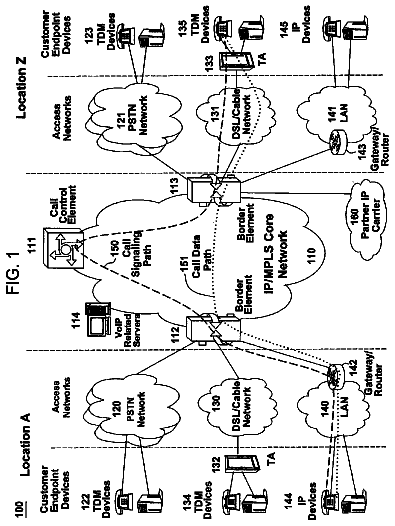
Method and apparatus for monitoring blocked calls in a communication network
Method and apparatus for monitoring a communication network is described.
US 8,699,719 B2 · Assignee: Bose Corporation · Inventors: Johnson, Jr.; Edwin C. et al.
Sheet 1 of 11 from the published document. All sheets in the USPTO PDF
Apparatus and method for determining an operating state of an earpiece of a personal acoustic device and/or the entirety of the personal acoustic device through tests to determine the current operating state, wherein the tests differ depending on a current power mode of the personal acoustic device, and wherein at least one lower power test is employed during at least one lower power mode.
It has become commonplace for those who either listen to electronically provided audio (e.g., audio from a CD player, a radio or a MP3 player), those who simply seek to be acoustically isolated from unwanted or possibly harmful sounds in a given environment, and those engaging in two-way communications to employ personal acoustic devices (i.e., devices structured to be positioned in the vicinity of at least one of a user's ears) to perform these functions. For those who employ headphones or headset forms of personal acoustic devices to listen to electronically provided audio, it has become commonplace for that audio to be provided with at least two audio channels (e.g., stereo audio with left and right channels) to be separately acoustically output with separate earpieces to each ear. Further, recent developments in digital signal processing (DSP) technology have enabled such provision o
1 of 11 drawing sheets so far from the published document, cropped to the drawing. Every sheet is in the USPTO PDF.
What the patent claimed, word for word. All of it is now free to use.
This disclosure relates to the determination of the positioning of at least one earpiece of a personal acoustic device relative to an ear of a user to acoustically output a sound to that ear and/or to alter an environmental sound reaching that ear.
It has become commonplace for those who either listen to electronically provided audio (e.g., audio from a CD player, a radio or a MP3 player), those who simply seek to be acoustically isolated from unwanted or possibly harmful sounds in a given environment, and those engaging in two-way communications to employ personal acoustic devices (i.e., devices structured to be positioned in the vicinity of at least one of a user's ears) to perform these functions. For those who employ headphones or headset forms of personal acoustic devices to listen to electronically provided audio, it has become commonplace for that audio to be provided with at least two audio channels (e.g., stereo audio with left and right channels) to be separately acoustically output with separate earpieces to each ear. Further, recent developments in digital signal processing (DSP) technology have enabled such provision of audio with various forms of surround sound involving multiple audio channels. For those simply seeking to be acoustically isolated from unwanted or possibly harmful sounds, it has become commonplace for acoustic isolation to be achieved through the use of active noise reduction (ANR) techniques based on the acoustic output of anti-noise sounds in addition to passive noise reduction (PNR) techniques based on sound absorbing and/or reflecting materials. Further, it has become commonplace to combine ANR with other audio functions in headphones, headsets, earphones, earbuds, and wireless headsets (also known as "earsets").
Yet, despite these many advances, issues of user safety and ease of use of many personal acoustic devices remain unresolved. More specifically, controls mounted upon or otherwise connected to a personal acoustic device that are normally operated by a user upon either positioning the personal acoustic device in the vicinity of one or both ears or removing it therefrom (e.g., a power switch) are often undesirably cumbersome to use. The cumbersome nature of controls of a personal acoustic device often arises from the need to minimize the size and weight of such personal acoustic devices by minimizing the physical size of such controls. Also, controls of other devices with which a personal acoustic device interacts are often inconveniently located relative to the personal acoustic device and/or a user. Further, regardless of whether such controls are in some way carried by the personal acoustic device, itself, or by another device with which the personal acoustic device interacts, it is commonplace for users to forget to operate such controls when they do position the acoustic device in the vicinity of one or both ears or remove it therefrom.
Various enhancements in safety and/or ease of use may be realized through the provision of an automated ability to determine the positioning of a personal acoustic device relative to one or both of the user's ears.
Apparatus and method for determining an operating state of an earpiece of a personal acoustic device and/or the entirety of the personal acoustic device through tests to determine the current operating state, wherein the tests differ depending on a current power mode of the personal acoustic device, and wherein at least one lower power test is employed during at least one lower power mode.
In one aspect, a method entails analyzing an inner signal output by an inner microphone disposed within a cavity of a casing of an earpiece of a personal acoustic device and an outer signal output by an outer microphone disposed on the personal acoustic device so as to be acoustically coupled to an environment external to the casing of the earpiece, and determining an operating state of the earpiece based on the analyzing of the inner and outer signals.
Implementations may include, and are not limited to, one or more of the following features. Determining the operating state of the earpiece may entail determining whether the earpiece is in an operating state of being positioned in the vicinity of an ear of a user such that the cavity is acoustically coupled to an ear canal, or is in an operating state of not being positioned in the vicinity of an ear of the user such that the cavity is acoustically coupled to the environment external to the casing. Analyzing the inner and outer signals may entail comparing a signal level of the inner signal within a selected range of frequencies to a signal level of the outer signal within the selected range of frequencies, and determining the operating state of the earpiece may entail determining that the earpiece is in the operating state of being positioned in the vicinity of an ear at least partly in response to detecting that the difference between the signal levels of the inner signal and the outer signal within the selected range of frequencies is within a maximum degree of difference specified by a difference threshold setting. The method may further entail imposing a transfer function on the outer signal that modifies a sound represented by the outer signal in a manner substantially similar to the manner in which a sound propagating from the environment external to the casing to the cavity is modified at a time when the earpiece is in the operating state of being positioned in the vicinity of an ear, and the transfer function may be based at least partly on the manner in which ANR provided by the personal acoustic device modifies a sound propagating from the environment external to the casing to the cavity.
Analyzing the inner and outer signals may entail analyzing a difference between a first transfer function representing the manner in which a sound emanating from an acoustic noise source in the environment external to the casing changes as it propagates from the noise source to the inner microphone within the cavity and a second transfer function representing the manner in which the sound changes as it propagates from the noise source to the outer microphone by deriving a third transfer function that is at least indicative of the difference between the first and second transfer functions. Determining the operating state of the earpiece may entail either determining that the difference between the third transfer function and one of a first stored transfer function corresponding to the operating state of being positioned in the vicinity of an ear and a second stored transfer function corresponding to the operating state of not being positioned in the vicinity of an ear is within a maximum degree of difference specified by a difference threshold setting, or may entail determining that at least one characteristic of the third transfer function is closer to a corresponding characteristic of one of a first stored transfer function corresponding to the operating state of being positioned in the vicinity of an ear and a second stored transfer function corresponding to the operating state of not being positioned in the vicinity of an ear than to the other. The method may further entail acoustically outputting electronically provided audio into the cavity through an acoustic driver at least partly disposed within the cavity, monitoring a signal level of the outer signal, deriving a fourth transfer function representing the manner in which the electronically provided audio acoustically output by the acoustic driver changes as it propagates from the acoustic driver to the inner microphone, and determining the operating state of the earpiece based, at least in part, on analyzing a characteristic of the fourth transfer function. Further, determining the operating state of the earpiece may be based on either analyzing a difference between the inner signal and outer signal or analyzing a characteristic of the fourth transfer function, depending on at least one of whether the signal level of the outer signal at least meets a minimum level setting and whether electronically provided audio is currently being acoustically output into the cavity.
The method may further entail determining that a change in operating state of the earpiece has occurred and determining that the entirety of the personal acoustic device has changed operating states among at least an operating state of being positioned on or about the user's head and an operating state of not being positioned on or about the user's head. The method may further entail determining that a change in operating state of the earpiece has occurred, and taking an action in response to determining that a change in operating state of the earpiece has occurred. Further, the taken action may be one of altering provision of power to a portion of the personal acoustic device; altering provision of ANR by the personal acoustic device; signaling another device with which the personal acoustic device is in communication with an indication of the current operating state of at least the earpiece of the personal acoustic device; muting a communications microphone of the personal acoustic device; and rerouting audio to be acoustically output by an acoustic driver of the earpiece to being acoustically output by another acoustic driver of another earpiece of the personal acoustic device.
In one aspect, a personal acoustic device comprises a first earpiece having a first casing; a first inner microphone disposed within a first cavity of the first casing and outputting a first inner signal representative of sounds detected by the first inner microphone; a first outer microphone disposed on the personal acoustic device so as to be acoustically coupled to an environment external to the first casing and outputting a first outer signal representative of sounds detected by the first outer microphone; and a control circuit coupled to the first inner microphone and to the first outer microphone to receive the first inner signal and the first outer signal, to analyze a difference between the first inner signal and the first outer signal, and to determine an operating state of the first earpiece based, at least in part, on analyzing the difference between the first inner signal and the first outer signal.
Implementations may include, and are not limited to, one or more of the following features. The control circuit may determine the operating state of the earpiece by at least determining whether the earpiece is in an operating state of being positioned in the vicinity of an ear of a user such that the first cavity is acoustically coupled to an ear canal, or in an operating state of not being positioned in the vicinity of an ear of the user such that the first cavity is acoustically coupled to the environment external to the first casing. The first earpiece may be in the form of an in-ear earphone, an on-ear earcup, an over-the-ear earcup, or an earset. The personal acoustic device may be listening headphones, noise reduction headphones, a two-way communications headset, earphones, earbuds, a two-way communications earset, ear protectors, a hat incorporating earpieces, and a helmet incorporating earpieces. The personal acoustic device may incorporate a communications microphone disposed on the personal acoustic device so as to detect speech sounds of the user, or the first outer microphone may be a communications microphone.
The personal acoustic device may further incorporate a second earpiece having a second casing and a second inner microphone disposed within a second cavity of the second casing and outputting a second inner signal representative of sounds detected by the second inner microphone. Also, the personal acoustic device may further incorporate a second outer microphone disposed on the personal acoustic device so as to be acoustically coupled to an environment external to the second casing and outputting a second outer signal representative of sounds detected by the second outer microphone. Further, the control circuit may be further coupled to the second inner microphone and to the second outer microphone to receive the second inner signal and the second outer signal, to analyze a difference between the second inner signal and the second outer signal, and to determine an operating state of the second earpiece based, at least in part, on analyzing the difference between the second inner signal and the second outer signal. Alternatively, the control circuit is further coupled to the second inner microphone to receive the second inner signal, to analyze a difference between the second inner signal and the first outer signal, and to determine the state of the second earpiece between the state of being positioned in the vicinity of the other ear of the user such that the second cavity is acoustically coupled to an ear canal and the state of not being positioned in the vicinity of the other ear of the user such that the second cavity is acoustically coupled to the environment external to the second casing based, at least in part, on the analyzing of a difference between the second inner signal and the first outer signal.
The personal acoustic device may further incorporate a power source providing power to a component of the personal acoustic device and coupled to the control circuit, wherein the control circuit signals the power source to alter its provision of power to the component in response to the control circuit determining that a change in operating state of at least the first earpiece has occurred. The personal acoustic device may further incorporate an ANR circuit enabling the personal acoustic device to provide ANR and coupled to the control circuit, wherein the control circuit signals the ANR circuit to alter its provision of ANR in response to the control circuit determining that a change in operating state of at least the first earpiece has occurred. The personal acoustic device may further incorporate an interface enabling the personal acoustic device to communicate with another device and coupled to the control circuit, wherein the control circuit operates the interface to signal the other device with an indication that a change in operating state of at least the first earpiece has occurred in response to the control circuit determining that a change in operating state of at least the first earpiece has occurred. The personal acoustic device may further incorporate an audio controller coupled to the control circuit, wherein the control circuit, in response to determining that a change in operating state of at least the first earpiece has occurred, operates the audio controller to take an action selected from the group of actions consisting of muting audio detected by a communications microphone of the personal acoustic device, and rerouting audio to be acoustically output by a first acoustic driver of the first earpiece to being acoustically output by a second acoustic driver of a second earpiece of the personal acoustic device.
In one aspect, an apparatus comprises a first microphone disposed within a cavity of a casing of an earpiece of a personal acoustic device to detect an acoustic signal and to output a first signal representing the acoustic signal as detected by the first microphone; a second microphone disposed on the personal acoustic device so as to be acoustically coupled to the environment external to the casing of the earpiece to detect the acoustic signal and to output a second signal representing the acoustic signal as detected by the second microphone; an adaptive filter to filter one of the first and second signals, wherein the adaptive filter adapts filter coefficients according to an adaptation algorithm selected to reduce signal power of an error signal; a differential summer to subtract the one of the first and second signals from the other of the first and second signals to derive the error signal; a storage in which is stored predetermined adaptive filter parameters representative of a known operating state of the personal acoustic device; and a controller for comparing adaptive filter parameters derived by the adaptive filter through the adaptation algorithm to the predetermined adaptive filter parameters stored in the storage.
Implementations may include, and are not limited to, one or more of the following features. The adaptive filter parameters derived by the adaptive filter may be the filter coefficients adapted by the adaptive filter, or may represent a frequency response of the adaptive filter corresponding to the filter coefficients adapted by the adaptive filter.
In another aspect, a method of controlling a personal acoustic device includes performing a first test of whether at least a first earpiece of the personal acoustic device is in position adjacent an ear of a user while in a normal power mode; performing a second test of whether at least the first earpiece is in position adjacent an ear of the user while in a deeper low power mode; awaiting at least an interval of time between instances of performing the second test while in the deeper low power mode; entering the normal power mode in response to an indication from the second test that at least the first earpiece is in position adjacent an ear of the user; and entering the deeper low power mode in response to a lack of indication that at least the first earpiece is in position adjacent an ear of the user from plural instances of performing the first test over a first period of time.
Implementations may include, and are not limited to, one or more of the following features. The first earpiece may include a casing defining a cavity structured to be acoustically coupled to an ear canal of an ear of a user when the first earpiece is in position adjacent an ear of the user; an outer microphone disposed on the casing so as to be acoustically coupled to an environment external to the casing; and a inner microphone positioned within the cavity. The first test may include operating the outer microphone to detect sounds in the environment external to the casing; operating the inner microphone to detect sounds within the cavity; and comparing the sounds detected in the environment external to the casing to the sounds detected within the cavity within a first range of frequencies of sound to determine whether or not the cavity is acoustically coupled to an ear canal of an ear of the user as an indication of whether at least the first earpiece is in position adjacent an ear of the user. The first earpiece further may include an acoustic driver positioned to acoustically output sounds into the cavity; and the second test may include operating the acoustic driver to acoustically output a test sound, operating the inner microphone to detect the test sound, and comparing the test sound as acoustically output by the acoustic driver to the test sound as detected by the inner microphone to determine whether or not the cavity is acoustically coupled to the environment external to the casing as an indication of whether at least the first earpiece is in position adjacent an ear of the user.
The second test may include operating the outer microphone to detect sounds in the environment external to the casing; operating the inner microphone to detect sounds within the cavity; and comparing the sounds detected in the environment external to the casing to the sounds detected within the cavity within a second range of frequencies of sound to determine whether or not the cavity is acoustically coupled to an ear canal of an ear of the user as an indication of whether at least the first earpiece is in position adjacent an ear of the user. The second range of frequencies of sound may be a narrower range of frequencies of sound than the first range of frequencies of sound. The personal acoustic device may include an adaptive filter having a plurality of taps to compare the sounds detected in the environment external to the casing to the sounds detected within the cavity; the first test may include operating the adaptive filter using a first quantity of the taps and at a first sampling rate; and the second test may include operating the adaptive filter using a second quantity of the taps and at a second sampling rate. The second quantity of taps may be less than the first quantity of taps, and/or the second sampling rate may be lower than the first sampling rate.
The first earpiece may include a casing defining a cavity structured to be acoustically coupled to an ear canal of an ear of a user when the first earpiece is in position adjacent an ear of the user; an acoustic driver positioned to acoustically output sounds into the cavity; and a inner microphone positioned within the cavity. The first test may include operating the acoustic driver to acoustically output a first test sound; operating the inner microphone to detect the first test sound; and comparing the first test sound as acoustically output by the acoustic driver to the first test sound as detected by the inner microphone to determine whether or not the cavity is acoustically coupled to the environment external to the casing as an indication of whether at least the first earpiece is in position adjacent an ear of the user. The method may further include operating the inner microphone to detect noise sounds in the cavity, including the first test sound; employing the noise sounds as a feedback reference sound to derive feedback anti-noise sounds, wherein the feedback anti-noise sounds include the first test sound; and operating the acoustic driver to acoustically output the feedback anti-noise sounds into the cavity, including the first test sound. The frequency of the first test sound may be an infrasonic frequency. The second test may include operating the acoustic driver to acoustically output a second test sound; operating the inner microphone to detect the second test sound; and comparing the test sound as acoustically output by the acoustic driver to the second test sound as detected by the inner microphone to determine whether or not the cavity is acoustically coupled to the environment external to the casing as an indication of whether at least the first earpiece is in position adjacent an ear of the user. The frequency of the second test sound may be selected to require less energy to be acoustically output than other frequencies including the frequency of the first test sound.
The personal acoustic device may include a motion sensor, and the second test may include monitoring the motion sensor to determine whether or not a portion of the personal acoustic device has been moved as an indication of whether at least the first earpiece is in position adjacent an ear of the user. The method may further include performing a function while in the normal power mode, the function being selected from a group consisting of: providing feedforward-based ANR, providing feedback-based ANR, acoustically outputting electronically provided audio into the cavity, signaling another device that the personal acoustic device is in position such that at least the first earpiece is adjacent an ear of the user, and transmitting audio detected by a communications microphone of the personal acoustic device to another device. The method may further include ceasing to perform the function while in the deeper low power mode. The method may further include performing the first test while in a lighter low power mode; entering the normal power mode in response to an indication from the first test that at least the first earpiece is in position adjacent an ear of the user; and entering the lighter low power mode in response to a lack of indication that at least the first earpiece is in position adjacent an ear of the user from an instance of performing the first test while in the normal power mode. The method may further include altering the manner in which a function is performed during normal power mode upon entering the lighter low power mode, the function being selected from a group consisting of: providing feedforward-based ANR, providing feedback-based ANR, acoustically outputting electronically provided audio into the cavity, signaling another device that the personal acoustic device is in position such that at least the first earpiece is adjacent an ear of the user, and transmitting audio detected by a communications microphone of the personal acoustic device to another device.
In another aspect, a personal acoustic device includes a first earpiece comprising a casing defining a cavity structured to be acoustically coupled to an ear canal of an ear of a user of the personal acoustic device an inner microphone positioned within the cavity; and a control circuit coupled to the inner microphone. The control circuit is structured to perform a first test of whether at least the first earpiece is in position adjacent an ear of a user while in a normal power mode; perform a second test of whether at least the first earpiece is in position adjacent an ear of the user while in a deeper low power mode; await at least an interval of time between instances of performing the second test while in the deeper low power mode; put the personal acoustic device in the normal power mode in response to an indication from the second test that at least the first earpiece is in position adjacent an ear of the user; and put the personal acoustic device in the deeper low power mode in response to a lack of indication that at least the first earpiece is in position adjacent an ear of the user from plural instances of performing the first test over a first period of time.
Implementations may include, and are not limited to, one or more of the following features. The first earpiece may further include an outer microphone coupled to the control circuit and disposed on the casing so as to be acoustically coupled to an environment external to the casing; and to perform the first test, the control circuit may be structured to operate the outer microphone to detect sounds in the environment external to the casing, operate the inner microphone to detect sounds within the cavity, and compare the sounds detected in the environment external to the casing to the sounds detected within the cavity within a first range of frequencies of sound to determine whether or not the cavity is acoustically coupled to an ear canal of an ear of the user as an indication of whether at least the first earpiece is in position adjacent an ear of the user. The first earpiece may further include an acoustic driver coupled to the control circuit and positioned to acoustically output sounds into the cavity; and to perform the second test, the control circuit may be structured to operate the acoustic driver to acoustically output a test sound, operate the inner microphone to detect the test sound, and compare the test sound as acoustically output by the acoustic driver to the test sound as detected by the inner microphone to determine whether or not the cavity is acoustically coupled to the environment external to the casing as an indication of whether at least the first earpiece is in position adjacent an ear of the user.
Alternatively, to perform the second test, the control circuit may be structured to operate the outer microphone to detect sounds in the environment external to the casing; operate the inner microphone to detect sounds within the cavity; and compare the sounds detected in the environment external to the casing to the sounds detected within the cavity within a second range of frequencies of sound to determine whether or not the cavity is acoustically coupled to an ear canal of an ear of the user as an indication of whether at least the first earpiece is in position adjacent an ear of the user. The second range of frequencies of sound may be a narrower range of frequencies of sound than the first range of frequencies of sound. The control circuit may include an adaptive filter coupled to the inner microphone and the outer microphone, and having a plurality of taps to compare sounds detected by the inner microphone to sounds detected by the outer microphone; to perform the first test, the adaptive filter may be structured to use a first quantity of the taps and operate at a first sampling rate; and to perform the second test, the adaptive filter may be structured to use a second quantity of the taps and operate at a second sampling rate. The second quantity of taps may be less than the first quantity of taps, and/or the second sampling rate may be lower than the first sampling rate.
The first earpiece may further include an acoustic driver coupled to the control circuit and positioned to acoustically output sounds into the cavity; and to perform the first test, the control circuit is structured to operate the acoustic driver to acoustically output a first test sound, operate the inner microphone to detect the first test sound, and compare the first test sound as acoustically output by the acoustic driver to the first test sound as detected by the inner microphone to determine whether or not the cavity is acoustically coupled to the environment external to the casing as an indication of whether at least the first earpiece is in position adjacent an ear of the user. The control circuit may be further structured to operate the inner microphone to detect noise sounds in the cavity, including the first test sound; employ the noise sounds as a feedback reference sound to derive feedback anti-noise sounds, wherein the feedback anti-noise sounds include the first test sound; and operate the acoustic driver to acoustically output the feedback anti-noise sounds into the cavity, including the first test sound. The frequency of the first test sound may be an infrasonic frequency; and to perform the second test, the control circuit may be structured to operate the acoustic driver to acoustically output a second test sound; operate the inner microphone to detect the second test sound, and compare the test sound as acoustically output by the acoustic driver to the second test sound as detected by the inner microphone to determine whether or not the cavity is acoustically coupled to the environment external to the casing as an indication of whether at least the first earpiece is in position adjacent an ear of the user. The frequency of the second test sound may be selected to require less energy to be acoustically output than other frequencies including the frequency of the first test sound.
The personal acoustic device may further include a motion sensor coupled to the control circuit and disposed on a portion of the personal acoustic device; and to perform the second test, the control circuit may be structured to monitor the motion sensor to determine whether or not at least the portion of the personal acoustic device has been moved as an indication of whether at least the first earpiece is in position adjacent an ear of the user. The personal acoustic device may be structured to perform a function while in the normal power mode, the function being selected from a group consisting of: providing feedforward-based ANR, providing feedback-based ANR, acoustically outputting electronically provided audio into the cavity, signaling another device that the personal acoustic device is in position such that at least the first earpiece is adjacent an ear of the user, and transmitting audio detected by a communications microphone of the personal acoustic device to another device. The control circuit may cause the personal acoustic device to cease to perform the function while in the deeper low power mode. The control circuit may be structured to perform the first test while in a lighter low power mode, put the personal acoustic device into the normal power mode in response to an indication from the first test that at least the first earpiece is in position adjacent an ear of the user, and put the personal acoustic device into the lighter low power mode in response to a lack of indication that at least the first earpiece is in position adjacent an ear of the user from an instance of performing the first test while in the normal power mode. The control circuit may be further structured to alter the manner in which the personal acoustic device performs a function during the normal power mode upon putting the personal acoustic device into the lighter low power mode, the function being selected from a group consisting of: providing feedforward-based ANR, providing feedback-based ANR, acoustically outputting electronically provided audio into the cavity, signaling another device that the personal acoustic device is in position such that at least the first earpiece is adjacent an ear of the user, and transmitting audio detected by a communications microphone of the personal acoustic device to another device.
Other features and advantages of the invention will be apparent from the description and claims that follow.
FIGS. 1a and 1b are block diagrams of portions of possible implementations of personal acoustic devices.
FIGS. 2a through 2d depict possible physical configurations of personal acoustic devices having either one or two earpieces.
FIGS. 3a through 3f depict portions of possible electrical architectures of personal acoustic devices in which comparisons are made between signals provided by an inner microphone and an outer microphone.
FIG. 4 is a flow chart of a state machine of possible implementations of a personal acoustic device.
What is disclosed and what is claimed herein is intended to be applicable to a wide variety of personal acoustic devices, i.e., devices that are structured to be used in a manner in which at least a portion of the devices is positioned in the vicinity of at least one of the user's ears, and that either acoustically output sound to that at least one ear or manipulate an environmental sound reaching that at least one ear. It should be noted that although various specific implementations of personal acoustic devices, such as listening headphones, noise reduction headphones, two-way communications headsets, earphones, earbuds, wireless headsets (also known as "earsets") and ear protectors are presented with some degree of detail, such presentations of specific implementations are intended to facilitate understanding through examples, and should not be taken as limiting either the scope of disclosure or the scope of claim coverage.
It is intended that what is disclosed and what is claimed herein is applicable to personal acoustic devices that provide active noise reduction (ANR), passive noise reduction (PNR), or a combination of both. It is intended that what is disclosed and what is claimed herein is applicable to personal acoustic devices that provide two-way communications, provide only acoustic output of electronically provided audio (including so-called "one-way communications"), or no output of audio, at all, be it communications audio or otherwise. It is intended that what is disclosed and what is claimed herein is applicable to personal acoustic devices that are wirelessly connected to other devices, that are connected to other devices through electrically and/or optically conductive cabling, or that are not connected to any other device, at all. It is intended that what is disclosed and what is claimed herein is applicable to personal acoustic devices having physical configurations structured to be worn in the vicinity of either one or both ears of a user, including and not limited to, headphones with either one or two earpieces, over-the-head headphones, behind-the-neck headphones, headsets with communications microphones (e.g., boom microphones), wireless headsets (earsets), single earphones or pairs of earphones, as well as hats or helmets incorporating earpieces to enable audio communication and/or to enable ear protection. Still other implementations of personal acoustic devices to which what is disclosed and what is claimed herein is applicable will be apparent to those skilled in the art.
FIGS. 1a and 1b provide block diagrams of at least a portion of two possible implementations of personal acoustic devices 1000a and 1000b, respectively. As will be explained in greater detail, recurring analyses are made of sounds detected by different microphones to determine the current operating state of one or more earpieces a personal acoustic device (such as either of the personal acoustic devices 1000a or 1000b), where the possible operating states of each earpiece are: 1) being positioned in the vicinity of an ear, and 2) not being positioned in the vicinity of an ear. Through such recurring analyses of the current operating state of one or more earpieces, further determinations of whether or not a change in operating state of one or more earpieces has occurred. Through determining the current operating state and/or through determining whether there has been a change in operating state of one or more earpieces, the current operating state and/or whether there has been a change in operating state of the entirety of a personal acoustic device are is determined, where the possible operating states of a personal acoustic drive are: 1) being fully positioned on or about a user's head, 2) being partially positioned on or about the user's head, and 3) not being in position on or about the user's head, at all. These analyses rely on the presence of environmental noise sounds that are detectable by the different microphones, including and not limited to, the sound of the wind, rustling leaves, air blowing through vents, footsteps, breathing, clothes rubbing against skin, running water, structural creaking, animal vocalizations, etc. For purposes of the discussion to follow, the acoustic noise source 9900 depicted in FIGS. 1a and 1b represents a source of environmental noise sounds.
As will also be explained in greater detail, each of the personal acoustic devices 1000a and 1000b may have any of a number of physical configurations. FIGS. 2a through 2d depict possible physical configurations that may be employed by either of the personal acoustic devices 1000a and 1000b. Some of these depicted physical configurations incorporate a single earpiece 100 to engage only one of the user's ears, and others incorporate a pair of earpieces 100 to engage both of the user's ears. However, it should be noted that for the sake of simplicity of discussion, only a single earpiece 100 is depicted and described in relation to each of FIGS. 1a and 1b. Each of the personal acoustic devices 1000a and 1000b incorporates at least one control circuit 2000 that compares sounds detected by different microphones, and that takes any of a variety of possible actions in response to determining that an earpiece 100 and/or the entirety of the personal acoustic device 1000a or 1000b is in a particular operating state, and/or in response to determining that a particular change in operating state has occurred. FIGS. 3a through 3f depict possible electrical architectures that may be adopted by the control circuit 2000.
The description continues in the full USPTO document.
About 6,431 words. The USPTO PDF has it with every drawing.
Fees are due 3.5, 7.5 and 11.5 years after grant. This patent expired on April 15, 2026, so the fee marked "not paid" was the one that went unpaid.
Personal Acoustic Device Position Determination
Filed Mar 2010 · published Sep 2010Personal acoustic device position determination
Filed Mar 2010 · granted Apr 2014Earlier publications, parents and continuations. None of them can still be enforced, or this patent would not be listed.
Prior art cited by the examiner or applicant. Useful when you check your own idea for novelty.
Everything on this page comes from the documents linked above.


