 Lapsed, fee not paid21 drawings
Biotech & Lab · US 8,691,960 B2
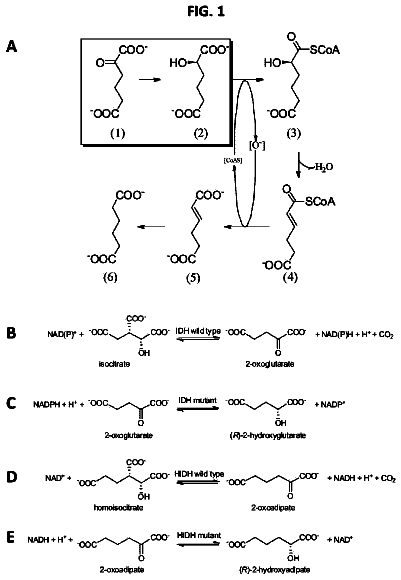
Oxidoreductases for enantioselective reactions
Described herein are compositions and methods for generating oxidoreductases for enantioselective reactions.
US 8,691,977 B2 · Assignee: Neupharma, Inc. · Inventors: Qian; Xiangping et al.
Claude can sketch it from the patent text.
Chemical entities which are triterpenoid derivatives, pharmaceutical compositions and methods of treatment of inflammatory, neurodegenerative, neoplastic and autoimmune diseases are described.
Ask Claude for concept sketches based only on the patent's text. They are not part of the patent.
What the patent claimed, word for word. All of it is now free to use.
Provided are certain chemical entities, pharmaceutical compositions and methods for the treatment of inflammatory, neurodegenerative, neoplastic and autoimmune diseases.
Numerous molecular and cellular events are associated with inflammatory disease processes. Such events may be defensive in the control or suppression of such processes, or may enhance inflammation to the detriment of the organism. Inflammation is a defense reaction against diverse insults, designed to remove noxious agents and to inhibit their detrimental effects. It consists of a dazzling array of molecular and cellular mechanisms and an intricate network of controls to keep them in check. The promotion of defensive mechanisms and the suppression of pro-inflammatory stimuli is the basis of therapy in the treatment of inflammatory, neurodegenerative, and neoplastic diseases.
In neurodegenerative diseases, inflammation may be triggered by the accumulation of proteins with abnormal conformations or by signals emanating from injured neurons. The pathogenesis of Alzheimer's disease is associated with: activation of microglia and the production of TNF-.alpha., IL-.beta., and superoxide. Also expressed is an inducible isoform of NO synthase which releases high levels of NO. In the presence of superoxide, NO forms peroxynitrite which damages neurons and other cell types.
A substantial body of evidence supports the conclusion that chronic inflammation can predispose an individual to cancer, as demonstrated by the association between chronic inflammatory bowel diseases and the increased risk of colon carcinoma. Chronic inflammation is caused by a variety of factors, including bacterial, viral, and parasitic infections, chemical irritants, and nondigestible particles. The longer the inflammation persists, the higher the risk of associated carcinogenesis.
In some diseases, however, the body's defense system (immune system) inappropriately triggers an inflammatory response when there are no foreign substances to fight off. In these diseases, called autoimmune diseases, the body's normally protective immune system causes damage to its own tissues. The body responds as if normal tissues are infected or somehow abnormal. Some, but not all, types of arthritis are the result of misdirected inflammation. Arthritis is a general term that describes inflammation in joints. Some types of arthritis associated with inflammation include: Rheumatoid arthritis, Shoulder tendinitis or bursitis, Gouty arthritis and Polymyalgia rheumatica.
Celastrol or tripterine is a red pigment isolated from the roots of both T. wilfordii and Celastrus scandens, as disclosed by Schechter et al, J. Am. Chem. Soc., vol. 64
at 182-183, incorporated herein as reference.
Celastrol is a member of a group of triterpene-type compounds called quinone-methides. Closely related compounds, tingenone and pristimerin, have been isolated from Maytenus chuchuhuasca Raymond Hamet, a plant which has been used in Ecuador for skin cancer treatment (P. Martinod, A. Paredes, F. D. Monache and G. B. Marini-Bettolo, Phytochemistry, Vol. 15 (1976), 562-563).
The isolation and characterization of some related quinone-methides, including pristimerin, has been reported by Monache et al. (J. Chem. Soc. Perkin I
at 3127-3131). Some of these compounds also have anti-neoplastic effect.
Celastrol inhibits microglial activation, the production of TNF-.alpha., IL-1.beta., and the expression of inducible NO synthase. Celastrol does not inhibit constitutive NO synthases which is required to maintain neuronal function and vascular perfusion (A C Allison, R Cacabelos, V R M Lombardi, X A Alvarez and C Vigo, CNS Drug Reviews 6: 45 (2000)). Celastrol has also been shown to be a potent inhibitor of both NF-KB activation and nitric oxide production at IC50's of 0.27 and 0.23 uM respectively. This activity is considerably more potent than that of the standard, aminoguanidine with an IC50 of 16 uM (H Z Jin, B Y Hwang, H S Kim, J H Lee, Y H Kim and J J Lee, J Nat Prod 65: 89 (2002)).
The in vivo anti-inflammatory effects of celastrol have been demonstrated in animal models of collagen-induced arthritis, systemic lupus erythematosus, and various tumors. Celastrol is also known to inhibit the proliferation of a variety of tumor cells, including those from leukemia, gliomas, and prostate cancer. The ability of celastrol to modulate the expression of proinflammatory cytokines, MHC-II antigen, inducible nitric oxide (NO) synthase (iNOS), adhesion molecules in endothelial cells, proteasome activity, topoisomerase II, potassium channels, and heat shock response has been reported. Celastrol was found to inhibit cancer cell proliferation and induce leukemic cell death.
Celastrol has the potential to become a better therapeutic drugs for treating inflammatory, neurodegenerative, neoplastic and autoimmune diseases. However, celastrol has shown serious cellular toxicity and undesirable pharmacokinetic characteristics which has stifled development as useful drugs. With the belief that such toxicity and pharmacokinetic characteristics can be decreased and useful activities enhanced by structural modifications, we have explored such modifications by designing and synthesizing compounds related to celastrol that incorporate structural variations anticipated to provide a drug-like profile.
Provided is at least one chemical entity chosen from compounds of Formula I:
##STR00001## and pharmaceutically acceptable salts thereof, wherein
R.sub.1 is chosen from hydrogen, optionally substituted alkyl, optionally substituted acyl, optionally substituted aminocarbonyl, optionally substituted alkoxycarbonyl, --P(.dbd.O)(OR.sup.a)(OR.sup.b), and --C(R.sup.c)(R.sup.d)OP(.dbd.O)(OR.sup.a)(OR.sup.b), where R.sup.a, R.sup.b, R.sup.c, and R.sup.d are independently chosen from hydrogen, optionally substituted alkyl, optionally substituted cycloalkyl, optionally substituted heterocycloalkyl, optionally substituted aryl, and optionally substituted heteroaryl;
X is chose from --OR.sub.2 and --NR.sub.3R.sub.4;
R.sub.2 is chosen from hydrogen, optionally substituted alkyl, optionally substituted aryl, optionally substituted cycloalkyl, optionally substituted heteroaryl, optionally substituted heteroclycloalkyl, optionally substituted acyl, optionally substituted aminocarbonyl, and optionally substituted alkoxycarbonyl;
R.sub.3 is chosen from hydrogen, optionally substituted alkyl, optionally substituted aryl, optionally substituted cycloalkyl, optionally substituted heteroaryl, optionally substituted heteroclycloalkyl, optionally substituted acyl, optionally substituted aminocarbonyl, optionally substituted alkoxycarbonyl, and optionally substituted sulfonyl; and
R.sub.4 is chosen from hydrogen, optionally substituted alkyl, optionally substituted aryl, optionally substituted cycloalkyl, optionally substituted heteroaryl, optionally substituted heteroclycloalkyl, optionally substituted alkoxy, optionally substituted cycloalkyloxy, and optionally substituted heterocycloalkyloxy;
or R.sub.3 and R.sub.4 may optionally be joined together with any intervening atoms to form an optionally substituted heterocycloalkyl ring,
provided that the compound of Formula I is not (6bS,8aS,11R,12aR,12bS,14aR)-3-hydroxy-11-(hydroxymethyl)-4,6b,8a,11,12b,- 14a-hexamethyl-7,8,8a,9,10,11,12,12a,12b,13,14,14a-dodecahydropicen-2(6bH)- -one.
The chemical entities described herein may be used in treating a variety of inflammatory, neurodegenerative, neoplastic and autoimmune diseases including cancer, inflammatory diseases of the bowel; Crohn's disease; ulcerative colitis; cancer; cancers including: Alzheimer's disease; Parkinson's disease; Huntington's disease; autoimmune diseases including nephritis, rheumatoid arthritis, systemic lupus erythematosus, autoimmune diabetes mellitus and multiple sclerosis; organ and cellular transplant rejection; graft-versus-host disease; septic and traumatic shock; and in protecting selected tissues from damage due to irradiation of adjacent tissues.
Accordingly, also provided are methods of treating the conditions set forth in the preceding paragraph, by administering to a subject a therapeutically effective amount of at least one chemical entity described herein.
These and other objects and features of the invention will become more fully apparent when the following detailed description of the invention is read
As used herein, the following words and phrases are generally intended to have the meanings as set forth below, except to the extent that the context in which they are used indicates otherwise.
A compound that is "substantially pure" refers to a compound having a purity of greater than 95% on a weight basis with respect to impurities stemming from synthesis of the compound or isolation of the compound from a natural (e.g. plant) source.
"Method of treating inflammatory, neurodegenerative, neoplastic and autoimmune diseases" encompasses treatment of a mammalian subject, particularly a human subject, and includes (i) arresting the development of clinical symptoms of the diseases, (ii) bringing about a regression in the clinical symptoms of the diseases, and/or (iii) prophylactic treatment for preventing the onset of the diseases.
The term "mammal" is intended to have its standard meaning, and encompasses humans, dogs, cats, sheep, and cows, for example.
As used herein, "cancer" refers to all types of cancer or neoplasm or malignant tumors found in mammals, including carcinomas and sarcomas. Examples of cancer are cancer of the brain, breast, cervix, colon, head & neck, kidney, lung, non-small cell lung, melanoma, mesothelioma, ovary, sarcoma, stomach, uterus and Medulloblastoma.
The following abbreviations and terms have the indicated meanings throughout:
c-=cyclo
Et=ethyl
EtOAc=ethyl acetate
EtOH=ethanol
g=gram
h or hr=hour
HPLC=high pressure liquid chromatography
i-=iso
kg or Kg=kilogram
L or l=liter
LC/MS=LCMS=liquid chromatography-mass spectrometry
LRMS=low resolution mass spectrometry
m/z=mass-to-charge ratio
Me=methyl
MeOH=methanol
min=minute
mL=milliliter
n-=normal
Ph=phenyl
quant.=quantitative
RP-HPLC=reverse phase-high pressure liquid chromatography
rt or RT=room temperature
s-=sec-=secondary
t-=tert-=tertiary
THF=tetrahydrofuran
As used herein, when any variable occurs more than one time in a chemical formula, its definition on each occurrence is independent of its definition at every other occurrence.
As used herein, a dash ("-") that is not between two letters or symbols is used to indicate a point of attachment for a substituent. For example, --CONH.sub.2 is attached through the carbon atom.
As used herein, "optional" or "optionally" is meant that the subsequently described event or circumstance may or may not occur, and that the description includes instances wherein the event or circumstance occurs and instances in which it does not. For example, "optionally substituted alkyl" encompasses both "alkyl" and "substituted alkyl" as defined below. It will be understood by those skilled in the art, with respect to any group containing one or more substituents, that such groups are not intended to introduce any substitution or substitution patterns that are sterically impractical, synthetically non-feasible and/or inherently unstable.
As used herein, "alkyl" refers to straight chain and branched chain having the indicated number of carbon atoms, usually from 1 to 20 carbon atoms, for example 1 to 8 carbon atoms, such as 1 to 6 carbon atoms. For example C.sub.1-C.sub.6 alkyl encompasses both straight and branched chain alkyl of from 1 to 6 carbon atoms. When an alkyl residue having a specific number of carbons is named, all branched and straight chain versions having that number of carbons are intended to be encompassed; thus, for example, "butyl" is meant to include n-butyl, sec-butyl, isobutyl and t-butyl; "propyl" includes n-propyl and isopropyl. "Lower alkyl" refers to alkyl groups having one to six carbons. Examples of alkyl groups include methyl, ethyl, propyl, isopropyl, n-butyl, sec-butyl, tert-butyl, pentyl, 2-pentyl, isopentyl, neopentyl, hexyl, 2-hexyl, 3-hexyl, 3-methylpentyl, and the like. Alkylene is a subset of alkyl, referring to the same residues as alkyl, but having two points of attachment. Alkylene groups will usually have from 2 to 20 carbon atoms, for example 2 to 8 carbon atoms, such as from 2 to 6 carbon atoms. For example, C.sub.0 alkylene indicates a covalent bond and C.sub.1 alkylene is a methylene group.
As used herein, "alkenyl" refers to an unsaturated branched or straight-chain alkyl group having at least one carbon-carbon double bond derived by the removal of one molecule of hydrogen from adjacent carbon atoms of the parent alkyl. The group may be in either the cis or trans configuration about the double bond(s). Typical alkenyl groups include, but are not limited to, ethenyl; propenyls such as prop-1-en-1-yl, prop-1-en-2-yl, prop-2-en-1-yl (allyl), prop-2-en-2-yl; butenyls such as but-1-en-1-yl, but-1-en-2-yl, 2-methyl-prop-1-en-1-yl, but-2-en-1-yl, but-2-en-1-yl, but-2-en-2-yl, buta-1,3-dien-1-yl, buta-1,3-dien-2-yl; and the like. In certain embodiments, an alkenyl group has from 2 to 20 carbon atoms and in other embodiments, from 2 to 6 carbon atoms. "Lower alkenyl" refers to alkenyl groups having two to six carbons.
As used herein, "alkynyl" refers to an unsaturated branched or straight-chain alkyl group having at least one carbon-carbon triple bond derived by the removal of two molecules of hydrogen from adjacent carbon atoms of the parent alkyl. Typical alkynyl groups include, but are not limited to, ethynyl; propynyls such as prop-1-yn-1-yl, prop-2-yn-1-yl; butynyls such as but-1-yn-1-yl, but-1-yn-3-yl, but-3-yn-1-yl; and the like. In certain embodiments, an alkynyl group has from 2 to 20 carbon atoms and in other embodiments, from 3 to 6 carbon atoms. "Lower alkynyl" refers to alkynyl groups having two to six carbons.
As used herein, "cycloalkyl" refers to a non-aromatic carbocyclic ring, usually having from 3 to 7 ring carbon atoms. The ring may be saturated or have one or more carbon-carbon double bonds. Examples of cycloalkyl groups include cyclopropyl, cyclobutyl, cyclopentyl, cyclopentenyl, cyclohexyl, and cyclohexenyl, as well as bridged and caged ring groups such as norbornane.
As used herein, "alkoxy" refers to an alkyl group of the indicated number of carbon atoms attached through an oxygen bridge such as, for example, methoxy, ethoxy, propoxy, isopropoxy, n-butoxy, sec-butoxy, tert-butoxy, pentyloxy, 2-pentyloxy, isopentyloxy, neopentyloxy, hexyloxy, 2-hexyloxy, 3-hexyloxy, 3-methylpentyloxy, and the like. Alkoxy groups will usually have from 1 to 7 carbon atoms attached through the oxygen bridge. "Lower alkoxy" refers to alkoxy groups having one to six carbons.
As used herein, "mono- and di-alkylcarboxamide" refers to a group of the formula --(C.dbd.O)NR.sub.aR.sub.b wherein R.sub.a and R.sub.b are independently chosen from hydrogen and alkyl groups of the indicated number of carbon atoms, provided that R.sub.a and R.sub.b are not both hydrogen.
As used herein, "acyl" refers to the groups H--C(O)--; (alkyl)-C(O)--; (cycloalkyl)-C(O)--; (aryl)-C(O)--; (heteroaryl)-C(O)--; and (heterocycloalkyl)-C(O)--, wherein the group is attached to the parent structure through the carbonyl functionality and wherein alkyl, cycloalkyl, aryl, heteroaryl, and heterocycloalkyl are as described herein. Acyl groups have the indicated number of carbon atoms, with the carbon of the keto group being included in the numbered carbon atoms. For example a C.sub.2 acyl group is an acetyl group having the formula CH.sub.3(C.dbd.O)--.
As used herein, "formyl" refers to the group --C(O)H.
As used herein, "carboxy" and/or "carboxyl" refer to the group --C(O)OH.
As used herein, "alkoxycarbonyl" refers to a group of the formula (alkoxy)(C.dbd.O)-- attached through the carbonyl carbon wherein the alkoxy group has the indicated number of carbon atoms. Thus a C.sub.1-C.sub.6 alkoxycarbonyl group is an alkoxy group having from 1 to 6 carbon atoms attached through its oxygen to a carbonyl linker.
As used herein, "acyloxy" refers to (acyl)-O--.
As used herein, "alkoxycarbonyloxy" refers to (alkoxycarbonyl)-O--.
As used herein, "azido" refers to the group --N.sub.3.
As used herein, "amino" refers to the group --NH.sub.2.
As used herein, "mono- and di-(alkyl)amino" refers to secondary and tertiary alkyl amino groups, wherein the alkyl groups are as defined above and have the indicated number of carbon atoms. The point of attachment of the alkylamino group is on the nitrogen. Examples of mono- and di-alkylamino groups include ethylamino, dimethylamino, and methyl-propyl-amino.
As used herein, "aminocarbonyl" refers to the group --CONR.sup.bR.sup.c, where
R.sup.b is chosen from H, optionally substituted C.sub.1-C.sub.6 alkyl, optionally substituted cycloalkyl, optionally substituted heterocycloalkyl, optionally substituted aryl, and optionally substituted heteroaryl, optionally substituted alkoxy; and
R.sup.c is chosen from hydrogen and optionally substituted C.sub.1-C.sub.4 alkyl; or
R.sup.b and R.sup.c taken together with the nitrogen to which they are bound, form an optionally substituted 5- to 7-membered nitrogen-containing heterocycloalkyl which optionally includes 1 or 2 additional heteroatoms chosen from O, N, and S in the heterocycloalkyl ring;
where each substituted group is independently substituted with one or more substituents independently chosen from C.sub.1-C.sub.4 alkyl, aryl, heteroaryl, aryl-C.sub.1-C.sub.4 alkyl-, heteroaryl-C.sub.1-C.sub.4 alkyl-, C.sub.1-C.sub.4 haloalkyl, --OC.sub.1-C.sub.4 alkyl, --OC.sub.1-C.sub.4 alkylphenyl, --C.sub.1-C.sub.4 alkyl-OH, --OC.sub.1-C.sub.4 haloalkyl, halo, --OH, --NH.sub.2, --C.sub.1-C.sub.4 alkyl-NH.sub.2, --N(C.sub.1-C.sub.4 alkyl)(C.sub.1-C.sub.4 alkyl), --NH(C.sub.1-C.sub.4 alkyl), --N(C.sub.1-C.sub.4 alkyl)(C.sub.1-C.sub.4 alkylphenyl), --NH(C.sub.1-C.sub.4 alkylphenyl), cyano, nitro, oxo (as a substituent for cycloalkyl, heterocycloalkyl, or heteroaryl), --CO.sub.2H, --C(O)OC.sub.1-C.sub.4 alkyl, --CON(C.sub.1-C.sub.4 alkyl)(C.sub.1-C.sub.4 alkyl), --CONH(C.sub.1-C.sub.4 alkyl), --CONH.sub.2, --NHC(O)(C.sub.1-C.sub.4 alkyl), --NHC(O)(phenyl), --N(C.sub.1-C.sub.4 alkyl)C(O)(C.sub.1-C.sub.4 alkyl), --N(C.sub.1-C.sub.4 alkyl)C(O)(phenyl), --C(O)C.sub.1-C.sub.4 alkyl, --C(O)C.sub.1-C.sub.4 alkylphenyl, --C(O)C.sub.1-C.sub.4 haloalkyl, --OC(O)C.sub.1-C.sub.4 alkyl, --SO.sub.2(C.sub.1-C.sub.4 alkyl), --SO.sub.2(phenyl), --SO.sub.2(C.sub.1-C.sub.4 haloalkyl), --SO.sub.2NH.sub.2, --SO.sub.2NH(C.sub.1-C.sub.4 alkyl), --SO.sub.2NH(phenyl), --NHSO.sub.2(C.sub.1-C.sub.4 alkyl), --NHSO.sub.2 (phenyl), and --NHSO.sub.2(C.sub.1-C.sub.4 haloalkyl).
As used herein, "aryl" refers to: 6-membered carbocyclic aromatic rings, for example, benzene; bicyclic ring systems wherein at least one ring is carbocyclic and aromatic, for example, naphthalene, indane, and tetralin; and tricyclic ring systems wherein at least one ring is carbocyclic and aromatic, for example, fluorene.
For example, aryl includes 6-membered carbocyclic aromatic rings fused to a 5- to 7-membered heterocycloalkyl ring containing 1 or more heteroatoms chosen from N, O, and S. For such fused, bicyclic ring systems wherein only one of the rings is a carbocyclic aromatic ring, the point of attachment may be at the carbocyclic aromatic ring or the heterocycloalkyl ring. Bivalent radicals formed from substituted benzene derivatives and having the free valences at ring atoms are named as substituted phenylene radicals. Bivalent radicals derived from univalent polycyclic hydrocarbon radicals whose names end in "-yl" by removal of one hydrogen atom from the carbon atom with the free valence are named by adding "-idene" to the name of the corresponding univalent radical, e.g. a naphthyl group with two points of attachment is termed naphthylidene. Aryl, however, does not encompass or overlap in any way with heteroaryl, separately defined below. Hence, if one or more carbocyclic aromatic rings is fused with a heterocycloalkyl aromatic ring, the resulting ring system is heteroaryl, not aryl, as defined herein.
As used herein, "aryloxy" refers to the group --O-aryl.
As used herein, "aralkyl" refers to the group -alkyl-aryl.
As used herein, "carbamimidoyl" refers to the group --C(.dbd.NH)--NH.sub.2.
As used herein, "substituted carbamimidoyl" refers to the group --C(.dbd.NR.sup.e)--NR.sup.fR.sup.g where
R.sup.e is chosen from hydrogen, cyano, optionally substituted alkyl, optionally substituted cycloalkyl, optionally substituted aryl, optionally substituted heteroaryl, and optionally substituted heterocycloalkyl; and
R.sup.f and R.sup.g are independently chosen from hydrogen optionally substituted alkyl, optionally substituted cycloalkyl, optionally substituted aryl, optionally substituted heteroaryl, and optionally substituted heterocycloalkyl,
provided that at least one of R.sup.e, R.sup.f, and R.sup.g is not hydrogen and wherein substituted alkyl, cycloalkyl, aryl, heterocycloalkyl, and heteroaryl refer respectively to alkyl, cycloalkyl, aryl, heterocycloalkyl, and heteroaryl wherein one or more (such as up to 5, for example, up to 3) hydrogen atoms are replaced by a substituent independently chosen from
--R.sup.a, --OR.sup.b, optionally substituted amino (including --NR.sup.cCOR.sup.b, --NR.sup.cCO.sub.2R.sup.a, --NR.sup.cCONR.sup.bR.sup.c, --NR.sup.bC(NR.sup.c)NR.sup.bR.sup.c, --NR.sup.bC(NCN)NR.sup.bR.sup.c, and --NR.sup.cSO.sub.2R.sup.a), halo, cyano, nitro, oxo (as a substituent for cycloalkyl, heterocycloalkyl, and heteroaryl), optionally substituted acyl (such as --COR.sup.b), optionally substituted alkoxycarbonyl (such as --CO.sub.2R.sup.b), aminocarbonyl (such as --CONR.sup.bR.sup.c), --OCOR.sup.b, --OCO.sub.2R.sup.a, --OCONR.sup.bR.sup.c, --OP(O)(OR.sup.b)OR.sup.c, sulfanyl (such as SR.sup.b), sulfinyl (such as --SOR.sup.a), and sulfonyl (such as --SO.sub.2R.sup.a and --SO.sub.2NR.sup.bR.sup.c),
where R.sup.a is chosen from optionally substituted C1-C6 alkyl, optionally substituted aryl, and optionally substituted heteroaryl;
R.sup.b is chosen from H, optionally substituted C1-C6 alkyl, optionally substituted aryl, and optionally substituted heteroaryl; and
R.sup.c is chosen from hydrogen and optionally substituted C1-C4 alkyl; or
R.sup.b and R.sup.c, and the nitrogen to which they are attached, form an optionally substituted heterocycloalkyl group; and
where each optionally substituted group is unsubstituted or independently substituted with one or more, such as one, two, or three, substituents independently chosen from C.sub.1-C.sub.4 alkyl, aryl, heteroaryl, aryl-C.sub.1-C.sub.4 alkyl-, heteroaryl-C.sub.1-C.sub.4 alkyl-, C.sub.1-C.sub.4 haloalkyl, --OC.sub.1-C.sub.4 alkyl, --OC.sub.1-C.sub.4 alkylphenyl, --C.sub.1-C.sub.4 alkyl-OH, --OC.sub.1-C.sub.4 haloalkyl, halo, --OH, --NH.sub.2, --C.sub.1-C.sub.4 alkyl-NH.sub.2, --N(C.sub.1-C.sub.4 alkyl)(C.sub.1-C.sub.4 alkyl), --NH(C.sub.1-C.sub.4 alkyl), --N(C.sub.1-C.sub.4 alkyl)(C.sub.1-C.sub.4 alkylphenyl), --NH(C.sub.1-C.sub.4 alkylphenyl), cyano, nitro, oxo (as a substituent for cycloalkyl, heterocycloalkyl, or heteroaryl), --CO.sub.2H, --C(O)OC.sub.1-C.sub.4 alkyl, --CON(C.sub.1-C.sub.4 alkyl)(C.sub.1-C.sub.4 alkyl), --CONH(C.sub.1-C.sub.4 alkyl), --CONH.sub.2, --NHC(O)(C.sub.1-C.sub.4 alkyl), --NHC(O)(phenyl), --N(C.sub.1-C.sub.4 alkyl)C(O)(C.sub.1-C.sub.4 alkyl), --N(C.sub.1-C.sub.4 alkyl)C(O)(phenyl), --C(O)C.sub.1-C.sub.4 alkyl, --C(O)C.sub.1-C.sub.4 phenyl, --C(O)C.sub.1-C.sub.4 haloalkyl, --OC(O)C.sub.1-C.sub.4 alkyl, --SO2(C.sub.1-C.sub.4 alkyl), --SO.sub.2(phenyl), --SO.sub.2(C.sub.1-C.sub.4 haloalkyl), --SO.sub.2NH.sub.2, --SO.sub.2NH(C.sub.1-C.sub.4 alkyl), --SO.sub.2NH(phenyl), --NHSO.sub.2(C.sub.1-C.sub.4 alkyl), --NHSO.sub.2(phenyl), and --NHSO.sub.2(C.sub.1-C.sub.4 haloalkyl).
As used herein, "halo" refers to fluoro, chloro, bromo, and iodo, and the term "halogen" includes fluorine, chlorine, bromine, and iodine.
As used herein, "haloalkyl" refers to alkyl as defined above having the specified number of carbon atoms, substituted with 1 or more halogen atoms, up to the maximum allowable number of halogen atoms. Examples of haloalkyl include, but are not limited to, trifluoromethyl, difluoromethyl, 2-fluoroethyl, and penta-fluoroethyl.
As used herein, "heteroaryl" refers to:
5- to 7-membered aromatic, monocyclic rings containing one or more, for example, from 1 to 4, or in certain embodiments, from 1 to 3, heteroatoms chosen from N, O, and S, with the remaining ring atoms being carbon;
bicyclic heterocycloalkyl rings containing one or more, for example, from 1 to 4, or in certain embodiments, from 1 to 3, heteroatoms chosen from N, O, and S, with the remaining ring atoms being carbon and wherein at least one heteroatom is present in an aromatic ring; and
tricyclic heterocycloalkyl rings containing one or more, for example, from 1 to 5, or in certain embodiments, from 1 to 4, heteroatoms chosen from N, O, and S, with the remaining ring atoms being carbon and wherein at least one heteroatom is present in an aromatic ring.
For example, heteroaryl includes a 5- to 7-membered heterocycloalkyl, aromatic ring fused to a 5- to 7-membered cycloalkyl or heterocycloalkyl ring. For such fused, bicyclic heteroaryl ring systems wherein only one of the rings contains one or more heteroatoms, the point of attachment may be at either ring. When the total number of S and O atoms in the heteroaryl group exceeds 1, those heteroatoms are not adjacent to one another. In certain embodiments, the total number of S and O atoms in the heteroaryl group is not more than 2. In certain embodiments, the total number of S and O atoms in the aromatic heterocycle is not more than 1. Examples of heteroaryl groups include, but are not limited to, (as numbered from the linkage position assigned priority 1), 2-pyridyl, 3-pyridyl, 4-pyridyl, 2,3-pyrazinyl, 3,4-pyrazinyl, 2,4-pyrimidinyl, 3,5-pyrimidinyl, 2,3-pyrazolinyl, 2,4-imidazolinyl, isoxazolinyl, oxazolinyl, thiazolinyl, thiadiazolinyl, tetrazolyl, thienyl, benzothiophenyl, furanyl, benzofuranyl, benzoimidazolinyl, indolinyl, pyridazinyl, triazolyl, quinolinyl, pyrazolyl, and 5,6,7,8-tetrahydroisoquinolinyl. Bivalent radicals derived from univalent heteroaryl radicals whose names end in "-yl" by removal of one hydrogen atom from the atom with the free valence are named by adding "-idene" to the name of the corresponding univalent radical, e.g. a pyridyl group with two points of attachment is a pyridylidene. Heteroaryl does not encompass or overlap with aryl, cycloalkyl, or heterocycloalkyl, as defined herein
Substituted heteroaryl also includes ring systems substituted with one or more oxide (--O.sup.-) substituents, such as pyridinyl N-oxides.
As used herein, "heterocycloalkyl" refers to a single, non-aromatic ring, usually with 3 to 7 ring atoms, containing at least 2 carbon atoms in addition to 1-3 heteroatoms independently chosen from oxygen, sulfur, and nitrogen, as well as combinations comprising at least one of the foregoing heteroatoms. The ring may be saturated or have one or more carbon-carbon double bonds. Suitable heterocycloalkyl groups include, for example (as numbered from the linkage position assigned priority 1), 2-pyrrolidinyl, 2,4-imidazolidinyl, 2,3-pyrazolidinyl, 2-piperidyl, 3-piperidyl, 4-piperidyl, and 2,5-piperizinyl. Morpholinyl groups are also contemplated, including 2-morpholinyl and 3-morpholinyl (numbered wherein the oxygen is assigned priority 1). Substituted heterocycloalkyl also includes ring systems substituted with one or more oxo (.dbd.O) or oxide (--O.sup.-) substituents, such as piperidinyl N-oxide, morpholinyl-N-oxide, 1-oxo-1-thiomorpholinyl and 1,1-dioxo-1-thiomorpholinyl.
"Heterocycloalkyl" also includes bicyclic ring systems wherein one non-aromatic ring, usually with 3 to 7 ring atoms, contains at least 2 carbon atoms in addition to 1-3 heteroatoms independently chosen from oxygen, sulfur, and nitrogen, as well as combinations comprising at least one of the foregoing heteroatoms; and the other ring, usually with 3 to 7 ring atoms, optionally contains 1-3 heteratoms independently chosen from oxygen, sulfur, and nitrogen and is not aromatic.
As used herein, "sulfanyl" refers to the groups: --S-(optionally substituted (C.sub.1-C.sub.6)alkyl), --S-(optionally substituted aryl), --S-(optionally substituted heteroaryl), and --S-(optionally substituted heterocycloalkyl). Hence, sulfanyl includes the group C.sub.1-C.sub.6 alkylsulfanyl.
As used herein, "sulfinyl" refers to the groups: --S(O)-(optionally substituted (C.sub.1-C.sub.6)alkyl), --S(O)-optionally substituted aryl), --S(O)-optionally substituted heteroaryl), --S(O)-(optionally substituted heterocycloalkyl); and --S(O)-(optionally substituted amino).
As used herein, "sulfonyl" refers to the groups: --S(O.sub.2)-(optionally substituted (C.sub.1-C.sub.6)alkyl), --S(O.sub.2)-optionally substituted aryl), --S(O.sub.2)-optionally substituted heteroaryl), --S(O.sub.2)-(optionally substituted heterocycloalkyl), and --S(O.sub.2)-(optionally substituted amino).
As used herein, "substituted" refers to any one or more hydrogens on the designated atom or group is replaced with a selection from the indicated group, provided that the designated atom's normal valence is not exceeded. When a substituent is oxo (i.e. .dbd.O) then 2 hydrogens on the atom are replaced. Combinations of substituents and/or variables are permissible only if such combinations result in stable compounds or useful synthetic intermediates. A stable compound or stable structure is meant to imply a compound that is sufficiently robust to survive isolation from a reaction mixture, and subsequent formulation as an agent having at least practical utility. Unless otherwise specified, substituents are named into the core structure. For example, it is to be understood that when (cycloalkyl)alkyl is listed as a possible substituent, the point of attachment of this substituent to the core structure is in the alkyl portion.
As used herein, the terms "substituted" alkyl, cycloalkyl, aryl, heterocycloalkyl, and heteroaryl, unless otherwise expressly defined, refer respectively to alkyl, cycloalkyl, aryl, heterocycloalkyl, and heteroaryl wherein one or more (such as up to 5, for example, up to 3) hydrogen atoms are replaced by a substituent independently chosen from
--R.sup.a, --OR.sup.b, optionally substituted amino (including --NR.sup.cCOR.sup.b, --NR.sup.cCO.sub.2R.sup.a, --NR.sup.cCONR.sup.bR.sup.c, --NR.sup.bC(NR.sup.c)NR.sup.bR.sup.c, --NR.sup.bC(NCN)NR.sup.bR.sup.c, and --NR.sup.cSO.sub.2R.sup.a), halo, cyano, azido, nitro, oxo (as a substituent for cycloalkyl or heterocycloalkyl), optionally substituted acyl (such as --COR.sup.b), optionally substituted alkoxycarbonyl (such as --CO.sub.2R.sup.b), aminocarbonyl (such as --CONR.sup.bR.sup.c), --OCOR.sup.b, --OCO.sub.2R.sup.a, --OCONR.sup.bR.sup.c, --OP(O)(OR.sup.b)OR.sup.c, sulfanyl (such as SR.sup.b), sulfinyl (such as --SOR.sup.a), and sulfonyl (such as --SO.sub.2R.sup.a and --SO.sub.2NR.sup.bR.sup.c), where
R.sup.a is chosen from optionally substituted C.sub.1-C.sub.6 alkyl, optionally substituted cycloalkyl, optionally substituted heterocycloalkyl, optionally substituted alkenyl, optionally substituted alkynyl, optionally substituted aryl, and optionally substituted heteroaryl; R.sup.b is chosen from hydrogen, optionally substituted C.sub.1-C.sub.6 alkyl, optionally substituted cycloalkyl, optionally substituted heterocycloalkyl, optionally substituted aryl, and optionally substituted heteroaryl; and
R.sup.c is chosen from hydrogen and optionally substituted C.sub.1-C.sub.4 alkyl; or
R.sup.b and R.sup.c, and the nitrogen to which they are attached, form an optionally substituted heterocycloalkyl group; and
where each optionally substituted group is unsubstituted or independently substituted with one or more, such as one, two, or three, substituents independently chosen from C.sub.1-C.sub.4 alkyl, aryl, heteroaryl, aryl-C.sub.1-C.sub.4 alkyl-, hetero aryl-C.sub.1-C.sub.4 alkyl-, C.sub.1-C.sub.4 haloalkyl, --OC.sub.1-C.sub.4 alkyl, --OC.sub.1-C.sub.4 alkylphenyl, --C.sub.1-C.sub.4 alkyl-OH, --OC.sub.1-C.sub.4 haloalkyl, halo, --OH, --NH.sub.2, --C.sub.1-C.sub.4 alkyl-NH.sub.2, --N(C.sub.1-C.sub.4 alkyl)(C.sub.1-C.sub.4 alkyl), --NH(C.sub.1-C.sub.4 alkyl), --N(C.sub.1-C.sub.4 alkyl)(C.sub.1-C.sub.4 alkylphenyl), --NH(C.sub.1-C.sub.4 alkylphenyl), cyano, nitro, oxo (as a substituent for cycloalkyl or heterocycloalkyl), --CO.sub.2H, --C(O)OC.sub.1-C.sub.4 alkyl, --CON(C.sub.1-C.sub.4 alkyl)(C.sub.1-C.sub.4 alkyl), --CONH(C.sub.1-C.sub.4 alkyl), --CONH.sub.2, --NHC(O)(C.sub.1-C.sub.4 alkyl), --NHC(O)(phenyl), --N(C.sub.1-C.sub.4 alkyl)C(O)(C.sub.1-C.sub.4 alkyl), --N(C.sub.1-C.sub.4 alkyl)C(O)(phenyl), --C(O)C.sub.1-C.sub.4 alkyl, --C(O)C.sub.1-C.sub.4 alkylphenyl, --C(O)C.sub.1-C.sub.4 haloalkyl, --OC(O)C.sub.1-C.sub.4 alkyl, --SO.sub.2(C.sub.1-C.sub.4 alkyl), --SO.sub.2 (phenyl), --SO.sub.2(C.sub.1-C.sub.4 haloalkyl), --SO.sub.2NH.sub.2, --SO.sub.2NH(C.sub.1-C.sub.4 alkyl), --SO.sub.2NH(phenyl), --NHSO.sub.2(C.sub.1-C.sub.4 alkyl), --NHSO.sub.2 (phenyl), and --NHSO.sub.2(C.sub.1-C.sub.4 haloalkyl).
As used herein, "substituted acyl" refers to the groups (substituted alkyl)-C(O)--; (substituted cycloalkyl)-C(O)--; (substituted aryl)-C(O)--; (substituted heteroaryl)-C(O)--; and (substituted heterocycloalkyl)-C(O)--, wherein the group is attached to the parent structure through the carbonyl functionality and wherein substituted alkyl, cycloalkyl, aryl, heteroaryl, and heterocycloalkyl, refer respectively to alkyl, cycloalkyl, aryl, heteroaryl, and heterocycloalkyl wherein one or more (such as up to 5, for example, up to 3) hydrogen atoms are replaced by a substituent independently chosen from
--R.sup.a, --OR.sup.b, optionally substituted amino (including --NR.sup.cCOR.sup.b, --NR.sup.cCO.sub.2R.sup.a, --NR.sup.cCONR.sup.bR.sup.c, --NR.sup.bC(NR.sup.c)NR.sup.bR.sup.c, --NR.sup.bC(NCN)NR.sup.bR.sup.c, and --NR.sup.cSO.sub.2R.sup.a), halo, cyano, nitro, oxo (as a substituent for cycloalkyl or heterocycloalkyl), optionally substituted acyl (such as --COR.sup.b), optionally substituted alkoxycarbonyl (such as --CO.sub.2R.sup.b), aminocarbonyl (such as --CONR.sup.bR.sup.c), --OCOR.sup.b, --OCO.sub.2R.sup.a, --OCONR.sup.bR.sup.c, --OP(O)(OR.sup.b)OR.sup.c, sulfanyl (such as SR.sup.b), sulfinyl (such as --SOR.sup.a), and sulfonyl (such as --SO.sub.2R.sup.a and --SO.sub.2NR.sup.bR.sup.c),
where R.sup.a is chosen from optionally substituted C.sub.1-C.sub.6 alkyl, optionally substituted alkenyl, optionally substituted alkynyl, optionally substituted aryl, and optionally substituted heteroaryl;
R.sup.b is chosen from H, optionally substituted C.sub.1-C.sub.6 alkyl, optionally substituted cycloalkyl, optionally substituted heterocycloalkyl, optionally substituted aryl, and optionally substituted heteroaryl; and
R.sup.c is chosen from hydrogen and optionally substituted C.sub.1-C.sub.4 alkyl; or
R.sup.b and R.sup.c, and the nitrogen to which they are attached, form an optionally substituted heterocycloalkyl group; and
where each optionally substituted group is unsubstituted or independently substituted with one or more, such as one, two, or three, substituents independently chosen from C.sub.1-C.sub.4 alkyl, aryl, heteroaryl, aryl-C.sub.1-C.sub.4 alkyl-, heteroaryl-C.sub.1-C.sub.4 alkyl-, C.sub.1-C.sub.4 haloalkyl, --OC.sub.1-C.sub.4 alkyl, --OC.sub.1-C.sub.4 alkylphenyl, --C.sub.1-C.sub.4 alkyl-OH, --OC.sub.1-C.sub.4 haloalkyl, halo, --OH, --NH.sub.2, --C.sub.1-C.sub.4 alkyl-NH.sub.2, --N(C.sub.1-C.sub.4 alkyl)(C.sub.1-C.sub.4 alkyl), --NH(C.sub.1-C.sub.4 alkyl), --N(C.sub.1-C.sub.4 alkyl)(C.sub.1-C.sub.4 alkylphenyl), --NH(C.sub.1-C.sub.4 alkylphenyl), cyano, nitro, oxo (as a substituent for cycloalkyl or heterocycloalkyl), --CO.sub.2H, --C(O)OC.sub.1-C.sub.4 alkyl, --CON(C.sub.1-C.sub.4 alkyl)(C.sub.1-C.sub.4 alkyl), --CONH(C.sub.1-C.sub.4 alkyl), --CONH.sub.2, --NHC(O)(C.sub.1-C.sub.4 alkyl), --NHC(O)(phenyl), --N(C.sub.1-C.sub.4 alkyl)C(O)(C.sub.1-C.sub.4 alkyl), --N(C.sub.1-C.sub.4 alkyl)C(O)(phenyl), --C(O)C.sub.1-C.sub.4 alkyl, --C(O)C.sub.1-C.sub.4 alkylphenyl, --C(O)C.sub.1-C.sub.4 haloalkyl, --OC(O)C.sub.1-C.sub.4 alkyl, --SO.sub.2(C.sub.1-C.sub.4 alkyl), --SO.sub.2(phenyl), --SO.sub.2(C.sub.1-C.sub.4 haloalkyl), --SO.sub.2NH.sub.2, --SO.sub.2NH(C.sub.1-C.sub.4 alkyl), --SO.sub.2NH(phenyl), --NHSO.sub.2 (C.sub.1-C.sub.4 alkyl), --NHSO.sub.2(phenyl), and --NHSO.sub.2(C.sub.1-C.sub.4 haloalkyl).
As used herein, "substituted alkoxy" refers to alkoxy wherein the alkyl constituent is substituted (i.e. --O-(substituted alkyl)) wherein "substituted alkyl" refers to alkyl wherein one or more (such as up to 5, for example, up to 3) hydrogen atoms are replaced by a substituent independently chosen from
--R.sup.a, --OR.sup.b, optionally substituted amino (including --NR.sup.cCOR.sup.b, --NR.sup.cCO.sub.2R.sup.a, --NR.sup.cCONR.sup.bR.sup.c, --NR.sup.bC(NR.sup.c)NR.sup.bR.sup.c, --NR.sup.bC(NCN)NR.sup.bR.sup.c, and --NR.sup.cSO.sub.2R.sup.a), halo, cyano, nitro, oxo (as a substituent for cycloalkyl or heterocycloalkyl), optionally substituted acyl (such as --COR.sup.b), optionally substituted alkoxycarbonyl (such as --CO.sub.2R.sup.b), aminocarbonyl (such as --CONR.sup.bR.sup.c), --OCOR.sup.b, --OCO.sub.2R.sup.a, --OCONR.sup.bR.sup.c, --OP(O)(OR.sup.b)OR.sup.c, sulfanyl (such as SR.sup.b), sulfinyl (such as --SOR.sup.a), and sulfonyl (such as --SO.sub.2R.sup.a and --SO.sub.2NR.sup.bR.sup.c),
where R.sup.a is chosen from optionally substituted C.sub.1-C.sub.6 alkyl, optionally substituted alkenyl, optionally substituted alkynyl, optionally substituted aryl, and optionally substituted heteroaryl;
R.sup.b is chosen from H, optionally substituted C.sub.1-C.sub.6 alkyl, optionally substituted cycloalkyl, optionally substituted heterocycloalkyl, optionally substituted aryl, and optionally substituted heteroaryl; and
R.sup.c is chosen from hydrogen and optionally substituted C.sub.1-C.sub.4 alkyl; or
R.sup.b and R.sup.c, and the nitrogen to which they are attached, form an optionally substituted heterocycloalkyl group; and
where each optionally substituted group is unsubstituted or independently substituted with one or more, such as one, two, or three, substituents independently chosen from C.sub.1-C.sub.4 alkyl, aryl, heteroaryl, aryl-C.sub.1-C.sub.4 alkyl-, heteroaryl-C.sub.1-C.sub.4 alkyl-, C.sub.1-C.sub.4 haloalkyl, --OC.sub.1-C.sub.4 alkyl, --OC.sub.1-C.sub.4 alkylphenyl, --C.sub.1-C.sub.4 alkyl-OH, --OC.sub.1-C.sub.4 haloalkyl, halo, --OH, --NH.sub.2, --C.sub.1-C.sub.4 alkyl-NH.sub.2, --N(C.sub.1-C.sub.4 alkyl)(C.sub.1-C.sub.4 alkyl), --NH(C.sub.1-C.sub.4 alkyl), --N(C.sub.1-C.sub.4 alkyl)(C.sub.1-C.sub.4 alkylphenyl), --NH(C.sub.1-C.sub.4 alkylphenyl), cyano, nitro, oxo (as a substituent for cycloalkyl or heterocycloalkyl), --CO.sub.2H, --C(O)OC.sub.1-C.sub.4 alkyl, --CON(C.sub.1-C.sub.4 alkyl)(C.sub.1-C.sub.4 alkyl), --CONH(C.sub.1-C.sub.4 alkyl), --CONH.sub.2, --NHC(O)(C.sub.1-C.sub.4 alkyl), --NHC(O)(phenyl), --N(C.sub.1-C.sub.4 alkyl)C(O)(C.sub.1-C.sub.4 alkyl), --N(C.sub.1-C.sub.4 alkyl)C(O)(phenyl), --C(O)C.sub.1-C.sub.4 alkyl, --C(O)C.sub.1-C.sub.4 alkylphenyl, --C(O)C.sub.1-C.sub.4 haloalkyl, --OC(O)C.sub.1-C.sub.4 alkyl, --SO.sub.2(C.sub.1-C.sub.4 alkyl), --SO.sub.2(phenyl), --SO.sub.2(C.sub.1-C.sub.4 haloalkyl), --SO.sub.2NH.sub.2, --SO.sub.2NH(C.sub.1-C.sub.4 alkyl), --SO.sub.2NH(phenyl), --NHSO.sub.2(C.sub.1-C.sub.4 alkyl), --NHSO.sub.2 (phenyl), and --NHSO.sub.2(C.sub.1-C.sub.4 haloalkyl).
The description continues in the full USPTO document.
About 4,873 words. The USPTO PDF has it with every drawing.
Fees are due 3.5, 7.5 and 11.5 years after grant. This patent expired on April 8, 2026, so the fee marked "not paid" was the one that went unpaid.
CERTAIN CHEMICAL ENTITIES, COMPOSITIONS, AND METHODS
Filed Aug 2011 · published Mar 2012Certain chemical entities, compositions, and methods
Filed Aug 2011 · granted Apr 2014Earlier publications, parents and continuations. None of them can still be enforced, or this patent would not be listed.
Prior art cited by the examiner or applicant. Useful when you check your own idea for novelty.
Everything on this page comes from the documents linked above.