 Lapsed, fee not paid5 drawings
Industrial Equipment · US 8,691,341 B2
Method of controlling the height of encapsulant on an inkjet printhead
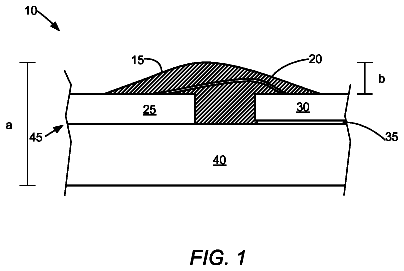
A method of controlling a height of an encapsulant material on an inkjet printhead is provided.
US 8,691,373 B2 · Assignee: The Yokohama Rubber Co., Ltd. · Inventors: Soeda; Yoshihiro et al.
Claude can sketch it from the patent text.
A laminate (C) of a thermoplastic polymer composition comprising: a thermoplastic resin composition (A) having an permeation coefficient of 10.times.10.sup.-12 cccm/cm.sup.2seccmHg or less, laminated with a thermoplastic polymer composition (B) having a melt viscosity of 500-2000 Pas and a Young's modulus at a room temperature of 1-400 MPa, wherein the thickness of a layer of the thermoplastic resin composition (A) is 0.05-10 .mu.m and the air permeation coefficient of the laminate (C) of 20.times.10.sup.-12 cccm/cm.sup.2seccmHg or less, and a pneumatic tire using the above laminate (C) as an inner liner.
Reduction of fuel consumption is one of the biggest technical themes in automobiles. As part of this, there have been increasingly strong demands made for the reduction of the weight of pneumatic tires. The inner surface of a pneumatic tire typically has an inner liner comprising a low gas permeation rubber such as a butyl rubber or a halogenated butyl rubber so as to maintain a constant tire air pressure. A halogenated butyl rubber, however, has a large hysteresis loss, and therefore, when rippling occurs in the inner surface rubber of the carcass layer and the inner liner at the intervals between carcass cords after vulcanization of the tire, the inner liner rubber layer will deform along with the deformation of the carcass layer, and therefore, there will be the problem of an increase of the rolling resistance. Accordingly, in general, a rubber sheet called a tie rubber with a small h
Ask Claude for concept sketches based only on the patent's text. They are not part of the patent.
What the patent claimed, word for word. All of it is now free to use.
This application is a national phase of PCT/US2006/000588, filed Jan. 10, 2006, the entire contents of which is hereby incorporated by reference.
The present invention relates to a low air permeable laminate of a thermoplastic polymer composition and a production process thereof as well as a pneumatic tire using the above laminate as an inner liner.
Reduction of fuel consumption is one of the biggest technical themes in automobiles. As part of this, there have been increasingly strong demands made for the reduction of the weight of pneumatic tires.
The inner surface of a pneumatic tire typically has an inner liner comprising a low gas permeation rubber such as a butyl rubber or a halogenated butyl rubber so as to maintain a constant tire air pressure. A halogenated butyl rubber, however, has a large hysteresis loss, and therefore, when rippling occurs in the inner surface rubber of the carcass layer and the inner liner at the intervals between carcass cords after vulcanization of the tire, the inner liner rubber layer will deform along with the deformation of the carcass layer, and therefore, there will be the problem of an increase of the rolling resistance. Accordingly, in general, a rubber sheet called a tie rubber with a small hysteresis loss is interposed between the inner liner (typically halogenated butyl rubber) and inner surface rubber of the carcass layer to adhere the two. Therefore, in addition to the thickness of the inner liner of the halogenated butyl rubber, the thickness of the tie rubber is added and the thickness of the layers as a whole exceeds 1 mm (i.e., 1000 .mu.m) which in the end causes an increase in the weight of the product.
Techniques have been proposed for using various materials, instead of a low gas permeation rubber such as a butyl rubber, as the inner liner of the pneumatic tire. For example, Japanese Examined Patent Publication (Kokoku) No. 47-31761 discloses coating the inner surface of a vulcanized tire with a solution or dispersion of synthetic resins such as polyvinylidene chloride, saturated polyester resin, polyamide resin having an air permeation coefficient (cm.sup.3 (standard state)/cmsecmmHg) of not more than 10.times.10.sup.-13 at 30.degree. C. and not more than 50.times.10.sup.-13 at 70.degree. C., at a thickness of 0.1 mm or less.
The technique disclosed in Japanese Examined Patent Publication (Kokoku) No. 47-31761 describes providing a covering layer of a synthetic resin having a specific air permeation coefficient on the inner circumferential surface of the carcass or the inner circumferential surface of the inner liner of the vulcanized tire and keeping the thickness of the synthetic resin covering layer to 0.1 mm or less, but the pneumatic tire described in this publication has problems in the adhesiveness of the rubber and synthetic resin. Further, there is the defect that the inner liner layer is inferior in moisture resistance (or water resistance).
Japanese Unexamined Patent Publication (Kokai) No. 5-330307 discloses halogenation of the inner surface of the tire (using a conventionally known chlorination solution, bromine solution, or iodine solution) and then forming a polymer film (thickness of 10 to 200 .mu.m) of methoxymethylated nylon, copolymerized nylon, a blend of polyurethane and polyvinylidene chloride, or a blend of polyurethane and polyvinylidene fluoride over the inner surface.
Further, Japanese Unexamined Patent Publication (Kokai) No. 5-318618 discloses a pneumatic tire having a thin film of methoxymethylated nylon as an inner liner. According to this technique, the inner surface of the green tire is sprayed or coated with a solution or emulsion of methoxymethylated nylon and the tire then vulcanized or the inner surface of the tire after vulcanization is sprayed or coated with a solution or emulsion of methoxymethylated nylon to produce a pneumatic tire. In these publications as well, in addition to the defect of the poor water resistance of the thin films, there is the defect of a difficulty in maintaining uniformity of the film thickness.
Further, Japanese Unexamined Patent Publication (Kokai) No. 6-40207 has an example of use of a multilayer film having a low air permeation layer comprising a polyvinylidene chloride film or an ethylene-vinyl alcohol copolymer film and an adhesive layer composed of a polyolefin film, an aliphatic polyamide film, or a polyurethane film as the air permeation preventive layer of the tire. In this system, however, the low air permeation layer lacks flexibility and the film cannot track expansion or contraction of the material when the tire is in use, and thus the tire splits.
Further, Japanese Unexamined Patent Publication (Kokai) No. 5-508435 proposes the use, as a tire inner liner composition, of a composition comprised of a halogen-containing copolymer of C.sub.4 to C.sub.7 isomonoolefin and p-alkylstyrene containing carbon black, a plasticizer oil, and a vulcanization agent for the tire inner liner, but the inner liner has an insufficient air permeation coefficient and is not suitable for reducing the weight of the tire further.
Thus, the material for forming the gas barrier layer used for the inner liner of a pneumatic tire etc. is required to have flexibility and a gas barrier property, but no material has yet been presented which has both of these properties.
Generally speaking, a thermoplastic elastomer composition which is composed of a thermoplastic resin component as a continuous phase and an elastomer component as a dispersed phase and in which at least part of the elastomer component is cross-linked (vulcanized) has the rubber elasticity performance derived from the elastomer component which has generally been cross-linked in the past, and, due to the thermoplastic resin component forming the continuous phase, can be thermoplastically molded at a high temperature where it melts and becomes fluid. Consequently, a thermoplastic elastomer composition having this dispersed structure has the characteristic of enabling formation by processing techniques similar to those of plastics while maintaining the properties of a vulcanized rubber.
Therefore, a thermoplastic elastomer composition has the following basic advantages when compared with vulcanized rubber:
a separate vulcanization process is not required.
recycling of the products and the scrap produced during the processing are possible.
lightening of the weight is possible.
Among these, in particular, a thermoplastic elastomer composition (where a part or all of the elastomer component forming the dispersed phase is cross-linked (vulcanized) during mixing with the thermoplastic resin which forms the continuous phase and is dynamically cross-linked (vulcanized)), can in particular give a product superior in the mechanical physical properties of a rubber elastomer, resistance to compression set, and resistance to oil and can be used, instead of conventional rubber, for auto parts, building materials, medical equipments, general industrial materials, etc.
Relating to this thermoplastic elastomer composition, the present inventors previously proposed and filed an application (Japanese Patent Application No. 7-150353) (i.e., Japanese Unexamined Patent Publication No. 8-259741), for a polymer composition for a tire having an air permeation coefficient of not more than 25.times.10.sup.-12 cccm/cm.sup.2 seccmHg and a Young's modulus of 1 to 500 MPa which is superior in the balance of the air permeation preventive property and the flexibility as a polymer composition for a tire, which can be used to reduce the weight of the tire, and which is composed of a blend of a specific amount of a thermoplastic resin having an air permeation coefficient of not more than 25.times.10.sup.-12 cccm/cm.sup.2 seccmHg and a Young's modulus of more than 500 MPa and a specific amount of an elastomer component having an air permeation coefficient of more than 25.times.10.sup.12 cccm/cm.sup.2seccmHg and a Young's modulus of not more than 500 MPa.
This proposed composition had a superior function as a polymer composition for a tire, but when used as the inner liner or other air permeation preventive layer of a pneumatic tire had the problem that the adhesiveness with the rubber layer was not sufficient with the thermoplastic elastomer composition alone.
Further, the present inventors engaged in research to make the air permeation preventive property in the above polymer composition for a tire even more effective and proposed and filed an application (Japanese Patent Application No. 7-55929) (i.e., Japanese Unexamined Patent Publication No. 8-244402), for a thermoplastic resin composition for a tire forming an integral air permeation preventive layer by extruding a blend of at least two types of incompatible thermoplastic resins in the process of which one thermoplastic resin component among the thermoplastic resin components is not finally dispersed but is dispersed oriented in a flat form due to the shear stress at the time of extrusion as it is incompatible.
When this thermoplastic resin composition is used as the air permeation preventive layer of a pneumatic tire, since it is a thermoplastic resin composition, a sufficient air permeation preventive property can be obtained, but this was not sufficient to sufficiently control the flexibility and durability with respect to flexural fatigue and also there was the problem of an insufficient adhesiveness with the rubber layer with the thermoplastic resin composition alone.
Thus, as explained above, there is known a thermoplastic elastomer composition, having a thermoplastic resin component as a continuous phase and an elastomer component as a dispersed phase, which has rubber elasticity, is flexible, can be processed thermoplastically, and enables control of the air barrier property or gas barrier property. Further, there is known a thermoplastic resin composition which enables a layer having a gas permeation preventive property to be formed integrally inside the layers. A thermoplastic elastomer composition which has rubbery elasticity and can be thermoplastically processed and which enables the formation of a layer having bondability and other necessary functions integrally at the outside of the layers is not yet developed.
Other references of interest include: WO 2004/081107, WO 2004/081106, WO 2004/081108, WO 2004/081116, and WO 2004/081099.
An object of the present invention is to provide a laminate of a thermoplastic polymer composition having an air permeation coefficient of 20.times.10.sup.-12 cccm/cm.sup.2seccmHg or less and capable of use as an inner liner of a pneumatic tire, thus addressing the above-mentioned disadvantages of the prior art.
In accordance with the present invention, there is provided a laminate (C) of at least one thermoplastic polymer composition comprising: a thermoplastic resin composition (A) having an air permeation coefficient of 10.times.10.sup.-12 cccm/cm.sup.2seccmHg or less, laminated with a thermoplastic polymer composition (B) having a melt viscosity of 500-2000 Pas and a Young's modulus at a room temperature of 1-400 MPa, wherein the thickness of a layer of the thermoplastic resin composition (A) is 0.5-10 .mu.m and the air permeation coefficient of the laminate (C) is 20.times.10.sup.-12 cccm/cm.sup.2seccmHg or less.
In this description and in the claims which follow, the singular forms "a", "an" and "the" include plural referents unless the context clearly dictates otherwise.
As used herein all molecular weights are weight average molecular weight unless otherwise noted.
Throughout the entire description, including the claims, the word "comprise" and variations of the word, such as "comprising" and "comprises," as well as "have," "having," "includes," "include" and "including," and variations thereof, means that the named steps, elements or materials to which it refers are essential, but other steps, elements or materials may be added and still form a construct with the scope of the claim or disclosure. When recited in describing the invention and in a claim, it means that the invention and what is claimed is considered to what follows and potentially more. These terms, particularly when applied to claims, are inclusive or open-ended and do not exclude additional, unrecited elements or methods steps.
In the present context, "consisting essentially of" is meant to exclude any element or combination of elements, as well as any amount of any element or combination of elements, that would alter the basic and novel characteristics of the invention.
For purposes of the present invention, unless otherwise defined with respect to a specific property, characteristic or variable, the term "substantially" as applied to any criteria, such as a property, characteristic or variable, means to meet the stated criteria in such measure such that one skilled in the art would understand that the benefit to be achieved, or the condition or property value desired is met. The term "substantially" also serves reasonably to describe the subject matter so that its scope would be understood by persons in the field of the invention, and to distinguish the claimed subject matter from the prior art.
Polymer may be used to refer to homopolymers, copolymers, interpolymers, terpolymers, etc. Likewise, a copolymer may refer to a polymer comprising at least two monomers, optionally with other monomers.
When a polymer is referred to as comprising a monomer, the monomer is present in the polymer in the polymerized form of the monomer or in the derivative form of the monomer. However, for ease of reference the phrase "comprising the (respective) monomer" or the like is used as shorthand. Likewise, when catalyst components are described as comprising neutral stable forms of the components, it is well understood by one skilled in the art, that the active form of the component is the form that reacts with the monomers to produce polymers.
Isoolefin refers to any olefin monomer having two substitutions on the same carbon.
Multiolefin refers to any monomer having two or more double bonds. In a preferred embodiment, the multiolefin is any monomer comprising two double bonds, preferably two conjugated double bonds such as a conjugated diene like isoprene.
Elastomer or elastomers as used herein, refers to any polymer or composition of polymers consistent with the ASTM D1566 definition. The terms may be used interchangeably with the term "rubber(s)."
Alkyl refers to a paraffinic hydrocarbon group which may be derived from an alkane by dropping one or more hydrogens from the formula, such as, for example, a methyl group (CH.sub.3), or an ethyl group (CH.sub.3CH.sub.2), etc.
Aryl refers to a hydrocarbon group that forms a ring structure characteristic of aromatic compounds such as, for example, benzene, naphthalene, phenanthrene, anthracene, etc., and typically possess alternate double bonding ("unsaturation") within its structure. An aryl group is thus a group derived from an aromatic compound by dropping one or more hydrogens from the formula such as, for example, phenyl, or C.sub.6H.sub.5.
Substituted refers to at least one hydrogen group by at least one substituent selected from, for example, halogen (chlorine, bromine, fluorine, or iodine), amino, nitro, sulfoxy (sulfonate or alkyl sulfonate), thiol, alkylthiol, and hydroxy; alkyl, straight or branched chain having 1 to 20 carbon atoms which includes methyl, ethyl, propyl, tert-butyl, isopropyl, isobutyl, etc.; alkoxy, straight or branched chain alkoxy having 1 to 20 carbon atoms, and includes, for example, methoxy, ethoxy, propoxy, isopropoxy, butoxy, isobutoxy, secondary butoxy, tertiary butoxy, pentyloxy, isopentyloxy, hexyloxy, heptyloxy, octyloxy, nonyloxy, and decyloxy; haloalkyl, which means straight or branched chain alkyl having 1 to carbon atoms which contains at least one halogen, and includes, for example, chloromethyl, bromomethyl, fluoromethyl, iodomethyl, 2-chloroethyl, 2-bromoethyl, 2-fluoroethyl, 3-chloropropyl, 3-bromopropyl, 3-fluoropropyl, 4-chlorobutyl, 4-fluorobutyl, dichloromethyl, dibromomethyl, difluoromethyl, diiodomethyl, 2,2-dichloroethyl, 2,2-dibromomethyl, 2,2-difluoroethyl, 3,3-dichloropropyl, 3,3-difluoropropyl, 4,4-dichlorobutyl, 4,4-difluorobutyl, trichloromethyl, 4,4-difluorobutyl, trichloromethyl, trifluoromethyl, 2,2,2-trifluoroethyl, 2,3,3-trifluoropropyl, 1,1,2,2-tetrafluoroethyl, and 2,2,3,3-tetrafluoropropyl. Thus, for example, a "substituted styrenic unit" includes p-methylstyrene, p-ethylstyrene, etc.
As a material superior in gas barrier property, a polyamide thermoplastic resin (hereinafter referred to as a polyamide resin) has been known. Also, as a material superior in a flexibility, butyl rubber has been known. Instead of using a butyl rubber, we found that a laminate (C) of specified thermoplastic materials (A) and (B) could realize a material having a gas barrier property and flexibility in a good balance.
The thermoplastic resin composition used as the component (A) in the laminate (C) according to the present invention may be any thermoplastic resin composition having a low air permeation coefficient, preferably 25.times.10.sup.-12 cccm/cm.sup.2seccmHg or less, more preferably 10.times.10.sup.-12 cccm/cm.sup.2seccmHg or less, more preferably 1.times.10.sup.-12 cccm/cm.sup.2seccmHg or less, more preferably from 0.1.times.10.sup.-12 to 10.times.10.sup.-12 cccm/cm.sup.2seccmHg. If the air permeation coefficient of the thermoplastic resin is too large, the desired balance of the gas barrier property and the flexibility cannot be obtained.
Typical examples of the thermoplastic resin (A) are ethylene-vinyl alcohol copolymers, polyamide resins, polyvinylidene chloride and copolymers thereof, acrylonitrile copolymers, polyvinylidene fluoride, polychlorotrifluoroethylene, polyethylene terephthalate, polyester resins, etc. The EVOH resins usable in the present invention as thermoplastic resin (A) include thermoplastic and crystalline ethylene-vinyl alcohol copolymers with at least 35 mol % of vinyl alcohol.
The polyamide resins usable in the present invention as thermoplastic resin (A) include thermoplastic polyamides (nylons) comprising crystalline or resinous, high molecular weight solid polymers including copolymers and terpolymers having recurring amide units within the polymer chain. Polyamides may be prepared by polymerization of one or more .epsilon.-lactams such as caprolactam, pyrrolidione, lauryllactam and aminoundecanoic lactam, or amino acid, or by condensation of dibasic acids and diamines. Both fiber-forming and molding grade nylons are suitable for use as thermoplastic resin (A). Examples of such polyamides are polycaprolactam (Nylon 6), polylauryllactam (Nylon 12), polyhexamethyleneadipamide (Nylon 66), polyhexamethyleneazelamide (Nylon 69), polyhexamethylenesebacamide (Nylon 610), polyhexamethyleneisophthalamide (Nylon 6IP), Nylon 46, Nylon MXD6, Nylon 6/66 and the condensation product of 11-aminoundecanoic acid (Nylon 11). Nylon 6 (N6), Nylon 11 (N11), Nylon 12 (N12), a Nylon 6/66 copolymer (N6/66), Nylon 610 (N610), Nylon 46, Nylon MXD6, Nylon 69 and Nylon 612 (N612) may also be used. The copolymers thereof any blends thereof may also be used. Additional examples of satisfactory polyamides (especially those having a softening point below 275.degree. C.) are described in Kirk-Othmer, Encyclopedia of Chemical Technology, v. 10, page 919, and Encyclopedia of Polymer Science and Technology, Vol. 10, pages 392-414. Commercially available thermoplastic polyamides may be advantageously used in the practice of this invention as thermoplastic resins (A), with linear crystalline polyamides having a softening point or melting point between 160.degree. C.-230.degree. C. being preferred.
The thermoplastic polymer composition usable as the component (B) in the laminate (C) according to the present invention are those having a melt viscosity of 500 to 2000 Pas, preferably 700 to 1500 Pas and a Young's modulus at a room temperature of 1 to 400 MPa, preferably 1 to 200 MPa. If the melt viscosity of the thermoplastic polymer (B) is too small or too large, the desired cylindrical molding (extrusion) becomes difficult and thus the film production becomes difficult. In addition, if the Young's modulus of the thermoplastic polymer (B) is too large, the film cannot follow the deformation and therefore cracks or fissures may occur.
Typical examples of the thermoplastic composition usable as the component (B) according to the present invention are those composed of modified polymers (E) dispersed in a matrix of a thermoplastic resin composition (D). Although there are no specific limitations to the ratio of the modified polymer (E) to the matrix (D), the preferable ratio is, for example, (D):(E) is 60:40 to 30:70 (by weight). Typical examples of the modified polymer (E) are brominated isobutyrene-p-methylstyrene copolymers, maleic anhydride-modified ethylene-.alpha.-olefin copolymers, ethylene-glycidylmethacrylate (EGMA), maleic anhydride modified 7-ethylene-ethylacrylate (Mal-EEA), etc. Examples of the matrix (D) are polyamide resins such as Nylon 11, Nylon 12, Nylon 666, Nylon 610, Nylon 612, Nylon 6, Nylon 66.
The components (A), (B), (D) and (E) according to the present invention may contain, in addition to the above-mentioned essential constituents, conventional additives generally used therein, such as a vulcanization or cross-linking agent, a vulcanization or cross-linking accelerator, various types of oils, an antioxidant, reinforcing agent, plasticizer, softening agent, in an amount generally added in the past, so long as they do not adversely affect the objects of the present invention.
The laminates (C) of the present invention are composed of the thermoplastic resin composition layer (A) having a thickness of 0.05 to 10 .mu.m, preferably 0.05 to 3 .mu.m, which is laminated with a layer or layers of the thermoplastic polymer composition (B). Preferably, the laminate (C) is sandwiched with the same or different layers of the thermoplastic polymer compositions (B). The thermoplastic polymer composition (B) may be composed of the modified polymer composition (E) dispersed in the matrix (D) of thermoplastic polymer composition, as mentioned above.
The laminate (C) has an air permeation coefficient of 20.times.10.sup.-12 cccm/cm.sup.2seccmHg or less, preferably 10.times.10.sup.-12 cccm/cm.sup.2seccmHg or less.
The laminate (C) of the present invention can be in any form by using any known lamination technique. For example, the laminate (C) in the form of a sheet may be produced by multi-layer coextrusion, multi-layer inflation molding, etc. Alternatively, the laminate (C) in a cylindrical form may be produced by multi-layer extrusion molding, which is well-known in the art, of the thermoplastic resin composition (A) and the thermoplastic polymer composition (B).
The laminate (C) of the present invention may be advantageously used as an inner liner of a pneumatic tire, because the laminate (C) has a superior gas barrier property and an excellent flexibility in a good balance.
The laminate (C) with adhesive (F) of the present invention can be in any form by using any known lamination technique. For example, the laminate (C) with adhesive (F) in the form of a sheet may be produced by multi-layer coextrusion, multi-layer inflation molding, etc. Alternatively, the laminate (C) with adhesive (F) in a cylindrical form may be produced by multi-layer extrusion molding, which is well-known in the art, of the thermoplastic resin composition (A), the thermoplastic polymer composition (B) and the adhesive composition (F).
The laminate (C) with adhesive (F) of the present invention may be advantageously used as an inner liner of a pneumatic tire, because the laminate (C) with adhesive (F) has a superior gas barrier property and an excellent flexibility in a good balance.
The adhesive (F) have been proposed for using various formulations instead of Table V such as usual adhesives. For example, European Patent No. 0774340 discloses the difference of the critical surface tension with the rubber component of the tire member and the polymer component of the surface layer of the thermoplastic film.
Preferred modified polymer compositions useful as the dispersed phase of the thermoplastic polymer composition (B) include functionalized polymer(s) (having one or more functional groups). By "functionalized polymer(s)" is meant that the polymer is contacted with a functional group, and, optionally, a catalyst, heat, initiator, and/or free radical source, to cause all or part of the functional group to incorporate, graft, bond to, physically attach to, and/or chemically attach to the polymer. Accordingly, in one aspect, the functionalized polymer useful in the present invention comprises the contact product of a polymer, a functional group, and a functionalization catalyst (such as a catalyst, heat, initiator or free radical source). Such functionalization is also referred to herein as grafting. Likewise, a functional group is also referred to herein as a grafting monomer. Further, "functionalized polymer" is also defined to include polymer directly polymerized from monomers comprising olefin monomers and a monomer containing a functional group, (or using initiators having a functional group) to produce a polymer having a functional group.
By "maleated" polymer is meant a polymer which has been contacted with maleic acid or maleic anhydride, and, optionally, a catalyst, heat, initiator, and/or free radical source, to cause all or part of the maleic acid or maleic anhydride to incorporate, graft, bond to, physically attach to, and/or chemically attach to the polymer
By "functional group" is meant any compound with a weight average molecular weight of 1000 g/mol or less that contains a heteroatom and or an unsaturation. Preferred functional groups include any compound with a weight average molecular weight of 750 or less, that contain one or more a hetero atoms and or one or more sites of unsaturation. Preferably the functional group is a compound containing a heteroatom and an unsaturation, such as maleic anhydride or maleic acid. Preferred functional groups include organic acids and salts thereof, organic amides, organic imides, organic amines, organic esters, organic anhydrides, organic alcohols, organic acid halides (such as acid chlorides, acid bromides, etc.) organic peroxides, organic silanes, and the like.
Examples of preferred functional groups include compounds comprising a carbonyl bond such as carboxylic acids, esters of carboxylic acids, acid anhydrides, di-esters, salts, amides, and imides. Aromatic vinyl compounds, hydrolyzable unsaturated silane compounds, saturated halogenated hydrocarbons, and unsaturated halogenated hydrocarbons may also be used.
Examples of particularly preferred functional groups include, but are not limited, to maleic anhydride, citraconic anhydride, 2-methyl maleic anhydride, 2-chloromaleic anhydride, 2,3-dimethylmaleic anhydride, bicyclo[2,2,1]-5-heptene-2,3-dicarboxylic anhydride, and 4-methyl-4-cyclohexene-1,2-dicarboxylic anhydride, acrylic acid, methacrylic acid, maleic acid, fumaric acid, itaconic acid, citraconic acid, mesaconic acid, crotonic acid, bicyclo(2.2.2)oct-5-ene-2,3-dicarboxylic acid anhydride, 1,2,3,4,5,8,9,10-octahydronaphthalene-2,3-dicarboxylic acid anhydride, 2-oxa-1,3-diketospiro(4.4)non-7-ene, bicyclo(2.2.1)hept-5-ene-2,3-dicarboxylic acid anhydride, maleopimaric acid, tetrahydrophtalic anhydride, norborn-5-ene-2,3-dicarboxylic acid anhydride, nadic anhydride, methyl nadic anhydride, himic anhydride, methyl himic anhydride, and x-methyl-bicyclo(2.2.1)hept-5-ene-2,3-dicarboxylic acid anhydride (XMNA).
In a preferred embodiment, the polymer is grafted with maleic anhydride so the maleic anhydride covalently bonded to the backbone polymer chain of the polymer. The anhydride functionality grafted onto the polymer may remain as an anhydride, may be oxidized into acid functional groups, and/or may be further reacted by processes known in the art to induce other functional groups such as amides, amines, alcohols, and the like.
Multiple methods exist in the art that may be used for functionalizing polymers. These include, but are not limited to, selective oxidation, free radical grafting, ozonolysis, epoxidation, and the like. The functionalized polymer may be produced in a solution or a slurry process (i.e., with a solvent), or in a melt process (i.e., without a solvent). The functionalized polymer may also be prepared in a high shear mixer, a fluidized bed reactor, and/or the like.
Typically, the polymer is combined with a free radical initiator and a grafting monomer at a temperature, and for period of time sufficient to cause grafting of the monomer with the polymer to produce the functionalized polymer. In such an embodiment, the functionalized polymer may be obtained by heating the polymer and a radical polymerizable functional group (e.g., maleic anhydride) in the presence of a radical initiator catalyst such as an organic peroxide. The combination is preferably heated at, near, or above the decomposition temperature of the radical initiator catalyst.
Useful radical initiator catalysts include: diacyl peroxides, peroxy esters, peroxy ketals, dialkyl peroxides, and the like. Specific examples include benzoyl peroxide, methyl ethyl ketone peroxide, tert-butyl peroxy benzoate, tert-butylperoxy acetate, tert-butyl-O-(2-ethylhexyl)monoperoxy carbonate, n-butyl 4,4-di-(tert-butyl peroxy)valerate, 1,1-bis(tert-butylperoxy)cyclohexane, 1,1-bis(tert-butylperoxy)-3,3,5-trimethylcyclohexane, 2,2-bis(tert-butylperoxy)butane, dicumylperoxide, tert-butylcumylperoxide, a,a'-bis(tert-butylperoxy-isopropyl)benzene, di-tert-butylperoxide (DTBP), 2,5-dimethyl-2,5-di(tert-butylperoxy)-hexane, 2,5-dimethyl-2,5-di(tert-butylperoxy)-hexane, cyclohexanone peroxide, t-butylperoxyisopropyl carbonate, di-ti-butyl perphthalate, 2,5-dimethyl-2,5-di(t-butylperoxy)hexene, 2,5-dimethyl-2,5-di(t-butylperoxy)hexene-3, di-t-butyl peroxide, cumene hydroperoxide, t-butyl hydroperoxide, hydroperoxides, dilauryl peroxide, dicumyl peroxide, and the like. In a preferred embodiment the functionalization is conducted at a temperature above the melting point of the polymer, but below the decomposition temperature of the initiator. Useful temperature ranges include from 35.degree. C. to 350.degree. C., preferably from 40.degree. C. to 250.degree. C., preferably from 45.degree. C. to 200.degree. C.
The radical initiator catalyst is preferably used in a ratio of from 0.00001 to 100% by weight, more preferably from 0.1 to 10% by weight, based on the weight of the functional group. The heating temperature depends upon whether or not the reaction is carried out in the presence of a solvent, but it is usually from about 50.degree. C. to 350.degree. C.
In the solvent based process, the reaction may be carried out using the polymer in the form of a solution (or a slurry having a concentration of from 0.1 to 50% by weight in the presence of a halogenated hydrocarbon compound having 2 to 20 carbon atoms, an aromatic compound, a halogenated aromatic compound, an alkyl substituted aromatic hydrocarbon, a cyclic hydrocarbon, and/or a hydrocarbon compound having 6 to 20 carbon atoms, which is stable to the radicals. Preferred solvents include hexane and cyclohexane.
Various techniques may be used to characterize the functionalized polymers, some of which are described in "Structure Characterization" The Science and Technology of Elastomers, F. Eirich, editor, Academic Press 1978, Chapter 3 by G. Ver Strate which is incorporated by reference.
Preferably, the functionalized polymer comprises maleic anhydride at less than about 50% by weight, preferably less than about 45% by weight, preferably less than about 40% by weight, preferably less than about 35% by weight, preferably less than about 30% by weight, preferably less than about 25% by weight, preferably less than about 20% by weight, preferably less than about 15% by weight, preferably less than about 10% by weight, preferably less than about 9% by weight, preferably less than about 8% by weight, preferably less than about 7% by weight, preferably less than about 6% by weight, preferably less than about 5% by weight, preferably less than about 4% by weight, preferably less than about 3% by weight, preferably less than about 2% by weight maleic anhydride. Also preferably the level of maleic anhydride in the polymer-g-MA may be greater than about 0.1% by weight, preferably greater than about 0.5% by weight, alternately greater than about 1% by weight maleic anhydride. In a preferred embodiment, the functionalized polymer may comprise 0.1 to about 10% by weight of the maleic anhydride, more preferably 0.25 to about 5% by weight more preferably 0.5 to 4,% by weight, more preferably 0.75 to 3.5% by weight, more preferably 1.5 to 2.5% by weight of the maleic anhydride.
The functional group content of the grafted polymer may be determined by Fourier Transformed Infrared spectroscopy based on a calibration with standards whose absolute functional group content has been determined. Specifically, the maleic anhydride content of the grafted polymer may be determined by Fourier Transformed Infrared spectroscopy based on a calibration with standards whose absolute maleic anhydride content has been determined according to the procedure described by M. Sclavons et al. (M. Sclavons, P. Franquinet, V. Carlier, G. Verfaillie, I. Fallais, R. Legras, M. Laurent, and F. C. Thyrion, Polymer, 41, 1989 (2000)) wherein a sample of functionalized polymer (polymer-g-MA) is first purified from residual monomer by complete solubilization in xylene followed by re-precipitation in acetone. This precipitated polymer is then dried. Approximately 0.5 g of the re-precipitated polymer is dissolved in 150 ml of toluene at boiling temperature. A potentiometric titration with TBAOH (tetra-butylammonium hydroxide) using bromothymol blue as the color indicator is performed on the heated solution in which the polymers do not precipitate during titration. The polymers are preferably pre-heated to 200.degree. C. for 1 hour prior to dissolution in order to make sure that all diacid resulting from hydrolysis of maleic anhydride with ambient moisture has been converted back to the anhydride.
Polymers useful to make functionalized polymers herein include ethylene polymers and propylene polymers. Particularly preferred polymers include polymers of ethylene copolymerized with one or more of propylene, butene, pentene, hexane, heptene, octane, nonene-decene, undecene, dodecene, methyl acrylate, ethyl acrylate, butyl acrylate, pentyl acrylate, hexyl acrylate, octyl acrylate, acrylic acid, methacrylic acid, ethacrylic acid, but acrylic acid, or vinyl acetate. Preferably such ethylene polymers are modified with maleic acid or maleic anhydride. Another class of particularly preferred polymers include polymers of propylene copolymerized with one or more of ethylene, butene, pentene, hexane, heptene, octane, nonene-decene, undecene, dodecene, methyl acrylate, ethyl acrylate, butyl acrylate, pentyl acrylate, hexyl acrylate, octyl acrylate, acrylic acid, methacrylic acid, ethacrylic acid, but acrylic acid, or vinyl acetate. Preferably such propylene polymers are modified with maleic acid or maleic anhydride.
Another class of particularly preferred modified, polymers include polymers of a C.sub.4 to C.sub.7 isoolefin (such as isobutylene) copolymerized with one or more of isoprene, isobutylene modified with maleic acid or maleic anhydride. Particularly preferred functionalized polymer include maleated copolymers of isobutylene and isoprene, maleated copolymers of isobutylene and paramethylstyrne, maleated halobutyl type copolymers, maleated SBB type copolymers and maleated BIMS type copolymers.
In another embodiment, maleic anhydride grafted rubbers useful herein as modified polymers (E) could be maleic anhydride modified or grafted ABS (acrylonitrile-butadiene-styrene), EPDM (ethylene-propylene-diene), SEBS (styrene-ethylene/butadiene-styrene) and others. Other maleated ethylene copolymer rubbers useful as modified polymers (E) include maleated ethylene-propylene, maleated ethylene-butene, maleated ethylene-hexene, maleated ethylene-octene, maleated ethylene-decacene, maleated ethylene-propylene-diene, maleated ethylene-vinyl acetate, maleated ethylene-methyl acrylate, maleated ethylene-ethyl acrylate, maleated ethylene-acylic acid and others. Useful maleated copolymer rubbers also include copolymers of maleic anhydride or its derivatives with one or more comonomers such as ethylene, methacrylate, butyl acrylate, and the like.
Preferred modified polymer compositions useful as the dispersed phase of the thermoplastic polymer composition (B) include functionalized polymer(s) such as halogenated isobutylene based rubbers including halogenated butyl rubber. Halogenated butyl rubber is produced by the halogenation of the butyl rubber. Halogenation can be carried out by any means, and the invention is not herein limited by the halogenation process. Methods of halogenating polymers such as butyl polymers are disclosed in U.S. Pat. Nos. 2,631,984, 3,099,644, 4,288,575, 4,554,326, 4,632,963, 4,681,921, 4,650,831, 4,384,072, 4,513,116 and 5,681,901. In one embodiment, the butyl rubber is halogenated in hexane diluent at from 4 to 60.degree. C. using bromine (Br.sub.2) or chlorine (Cl.sub.2) as the halogenation agent. Post-treated halogenated butyl rubber can also be used, as disclosed in U.S. Pat. No. 4,288,575. Useful halogenated butyl rubber typically has a Mooney Viscosity of about 20 to about 70 (ML 1+8 at 125.degree. C.); for example, and about 25 to about 55 in another embodiment. The preferred halogen content is typically about 0.1 to 10% by weight based on the weight of the halogenated rubber; for example, about 0.5 to 5% by weight; alternatively, about 0.8 to about 2.5% by weight; for example, about 1 to about 2% by weight. A particularly preferred form of halogenated butyl rubber contains a high content of the following halogenated structure (preferably 60 to 95% as measured by NMR), where X represents the halogen and, in a particularly preferred embodiment, the halogen is bromine; alternatively the halogen is chlorine:
A commercial embodiment of a halogenated butyl rubber useful in the present invention is Bromobutyl 2222 (ExxonMobil Chemical Company). Its Mooney Viscosity is typically about 27 to 37 (ML.sub.1+8 at 125.degree. C., ASTM 1646, modified), and its bromine content is about 1.8 to 2.2% by weight relative to the Bromobutyl 2222. Furthermore, the cure characteristics of Bromobutyl 2222 as provided by the manufacturer are as follows: MH about 28 to 40 dN m, ML is about 7 to 18 dN m (ASTM D2084). Another commercial embodiment of the halogenated butyl rubber useful in the present invention is Bromobutyl 2255 (ExxonMobil Chemical Company). Its Mooney Viscosity is about 41 to 51 (ML.sub.1+8 at 125.degree. C., ASTM D1646), and its bromine content is about 1.8 to 2.2% by weight. Furthermore, its cure characteristics as disclosed by the manufacturer are as follows: MH is from 34 to 48 dN m, ML is from 11 to 21 dN m (ASTM D2084). Commercial isobutylene polymers are described in detail by R. N. Webb, T. D. Shaffer and A. H. Tsou, "Commercial Isobutylene Polymers," Encyclopedia of Polymer Science and Technology, 2002, John Wiley & Sons, incorporated herein by reference.
The description continues in the full USPTO document.
About 5,766 words. The USPTO PDF has it with every drawing.
Fees are due 3.5, 7.5 and 11.5 years after grant. This patent expired on April 8, 2026, so the fee marked "not paid" was the one that went unpaid.
LAMINATE OR THERMOPLASTIC POLYMER COMPOSITION HAVING LOW AIR PERMEABILITY AND PNEUMATIC TIRE USING SAME AS INNER LINER
Filed Jan 2006 · published Feb 2009Laminate or thermoplastic polymer composition having low air permeability and pneumatic tire using same as inner liner
Filed Jan 2006 · granted Apr 2014Earlier publications, parents and continuations. None of them can still be enforced, or this patent would not be listed.
Prior art cited by the examiner or applicant. Useful when you check your own idea for novelty.
Everything on this page comes from the documents linked above.