Copyright & trademark notices
A portion of the disclosure of this patent document may contain material that is subject to copyright protection. The copyright owner has no objection to the facsimile reproduction by any one of the patent document or the patent disclosure, as it appears in the files or records of any patent office in which the disclosure is filed, e.g., the U.S. Patent and Trademark Office, but otherwise reserves all copyrights whatsoever.
Certain marks referenced herein may be trademarks or registered trademarks of third parties. Use of these marks is solely for providing an enabling disclosure by way of example and is not to be construed as limiting the scope of this invention to material associated with such trademarks.
Field of the invention
The present disclosure relates generally to printing, i.e., creating printed material using one or more colorants such as inks on a substrate such as paper, foil, cardboard, and other substrates, including subsequent finishing and converting operations, and in particular to planning inspection of printed material and the automatic inspection of printed material.
Background
Printing is becoming more and more automated. However, the inspection of the final printed results of printing, that is, of the marks made by printing on printed paper, labels, packaging, and so forth, is still mostly manual.
Many different printing workflows are known. Some include making printing plates that are then used in a printing press to place colorant(s) onto a substrate to produce an instance of printed material. Examples of technologies that use printing plates include flexography and offset printing. Other printing processes such as gravure printing use engraved cylinders instead of plates. Some printing workflows print directly from electronic data. Examples include laser printers and inkjet printers.
Many printing workflows include finishing or converting operations following the application of the marks on the substrate. Examples of finishing include the application of a varnish or lacquer, hot or cold metal foil application and embossing. Examples of converting include trimming and die cutting. Unless otherwise indicated or clear from the context, such finishing and converting operations are included within the scope of the terms "printing" and "printing workflow."
Printing workflows typically include a prepress workflow and a printing stage. The prepress workflow is more and more computerized, and uses, for example, a page description language (PDL), such as PDF by Adobe Systems of San Jose, Calif. USA, or Open XML Paper Specification (also referred to as OpenXPS), an open specification for a PDL and a fixed-document format originally developed by Microsoft Corporation, of Redmond, Wash. as XML Paper Specification (XPS), later standardized by ECMA International as international standard ECMA-388, XML, and many other PDLs useful for describing printed pages.
As defined herein, a printing job may include what herein is called process data: information that defines the production setup and workflow, in terms of the actions (process steps) and software or equipment settings (process parameters) required to produce the printed material. Process data may include one or more files in a job description language, e.g., Job Definition Format (JDF). JDF is a technical standard being developed by the graphic arts industry to facilitate cross-vendor workflow implementation to define process data. A job description language is also called a process language herein.
Note that in general, the approaches described in this BACKGROUND section are approaches that could be pursued, but not necessarily approaches that have been previously conceived or pursued. Therefore, unless otherwise indicated, it should not be assumed that any of the approaches described in this section qualify as prior art merely by virtue of their inclusion in this section. Similarly, issues identified with respect to one or more approaches should not assume to have been recognized in any prior art on the basis of this section, unless otherwise indicated.
Brief description of the drawings
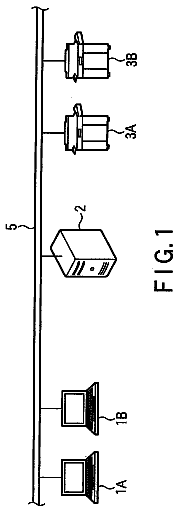
FIG. 1 shows one environment that includes elements of an example printing workflow according to an embodiment of the present invention.
FIG. 2A shows one example of a processing system that carries out one method embodiment of the present invention of creating at least part of an inspection script of the present invention.
FIG. 2B shows one example of an inspection processing system coupled to or included in an inspection system that carries out one embodiment of the present invention of inspecting printed material according to an inspection script.
FIG. 3 illustrates a dataflow for embodiments of the invention that include producing an inspection script and that include an inspection processing system executing the inspection script to carry out one or more inspection tasks.
FIG. 4 shows one example embodiment of an inspection processing system according to an embodiment of the present invention.
FIG. 5 shows the elements of an inspection instruction according to one embodiment of the invention that includes a plurality of specifiers for a plurality of categories.
FIG. 6 shows one embodiment of a process of generating an inspection script.
FIG. 7 is an illustration of one placement of inspection sensors of an inspection system in an automated system according to an embodiment of the present invention.
FIG. 8 shows one example of the processing steps of an inspection workflow according to an embodiment of the present invention.
FIG. 9 shows a simplified flowchart of an embodiment of a method of planning inspection, according to aspects of the present invention.
FIG. 10 shows a simplified flowchart of an embodiment of a method of carrying out inspection using an inspection script of machine-executable instructions generated by a method of planning, according to aspects of the present invention.
FIG. 11 shows in a diagrammatic form the concepts used in embodiments of the present invention, and their relationship.
Description of example embodiments
Reference will now be made in detail to several embodiments, examples of which are illustrated in the accompanying figures. It is noted that wherever practicable similar or like reference numbers may be used in the figures and may indicate similar or like functionality. The figures depict embodiments of the disclosed system (or method) for purposes of illustration only. One skilled in the art will readily recognize from the following description that alternative embodiments of the structures and methods illustrated herein may be used without departing from the principles described herein.
Overview
Embodiments of the present invention include a method, an apparatus, a system, and logic encoded in one or more computer-readable tangible media to carry out a method. The method in some versions forms a script that is usable by an inspection system for inspecting printed material produced according to a printing workflow. The method in some versions inspects printed material produced according to a printing workflow, the inspecting including executing a script.
By a printing workflow is meant a set of elements including, in a non-limiting way, humans, machines, including one or more processing systems, tasks, and executable instructions (software) in tangible computer-readable media that when executed by one or more processing systems, cause carrying out steps of methods, such set of elements used to design and manufacture the printed material. In some embodiments, a printing workflow includes a prepress workflow that includes one or more prepress stages.
Particular embodiments include a machine-implemented method of planning inspection of printed material produced according to a printing workflow. The method comprises: automatically or semi-automatically generating inspection instructions using data used or produced during one or more stages of the printing workflow; and combining the generated inspection instructions to form an inspection script related to the printed material produced according to the printing workflow. The inspection script when the instructions are executed to causes for inspecting instances of the printed material produced according to the printing workflow. Each instance comprises a single or repeated printed pattern that includes content and layout. The inspection script comprises machine-executable instructions that when executed in a processing system coupled to or included in an inspection system for inspecting printed material produced according to the printing workflow, causes the inspection system to carry out one or more inspection tasks on instances of the printed material. The inspection system comprises one or more sensors, each sensor operative to perform one or more measurements on at least one section of instances of the printed material.
In some versions, the generating the script comprises generating inspection instructions that cause, when executed, carrying out certification, including producing a certificate that attests to how the printed material produced by a printing job according to the printing workflow conforms to one or more inspection requirements prescribed in the inspection script.
Particular embodiments include a machine-implemented method of inspecting printed material produced according to a printing workflow. The method comprises accepting in an inspection processing system an inspection script comprises machine-executable inspection instructions, the inspection processing system coupled to or in an inspection system. The method further includes executing the accepted instructions of the inspection script to cause the inspection system to carry out one or more inspection tasks on instances of the printed material produced according to the printing workflow, the tasks including performing measurements on at least one section of instances of the printed material to produce observed data, and using the observed data for inspecting the instances.
In some versions, the inspection system includes one or more sensors operative to perform one or more of the measurements on at least one section of instances of the printed material.
Particular embodiments include an inspection system for inspecting printed material produced according to a printing workflow. The inspection system comprises: an inspection processing system, including one or more processors and a storage subsystem, and one or more sensors coupled to the inspection processing system. The one or more sensors are operative to perform measurements on at least one section of the printed material, the measurements generating observed data from the printed material. The inspection processing system is operative to accept a script comprising machine-executable inspection instructions and to carry out the instructions in the script to cause the inspection system to carry out one or more inspection tasks on the printed material according to the observed data of the printed material.
In some versions, the one or more sensors include an illuminator and an image capture device.
In some versions the one or more sensors include at least one of: a sensor to measure densitometric information, a sensor to measure photometric information, and a sensor to measure colorimetric information.
Particular embodiments may provide all, some, or none of these aspects, features, or advantages. Particular embodiments may provide one or more other aspects, features, or advantages, one or more of which may be readily apparent to a person skilled in the art from the figures, descriptions, and claims herein.
Example Embodiments
Particular embodiments of the invention include a method of planning for inspection of printed material created according to a printing workflow. Particular embodiments of the invention further include a method of carrying out inspection tasks on printed material created according to a printing workflow, the inspection tasks defined by a script. Particular embodiments of the invention further include a method of creating an inspection script comprising inspection instructions that define inspection of printed material created according to a printing workflow. Particular embodiments of the invention further include a storage medium configured with instructions that when executed by one or more processors of a processing system, cause carrying out a method of planning for inspection of printed material created according to a printing workflow. Particular embodiments of the invention further include a storage medium configured with instructions that when executed by one or more processors of a processing system, cause carrying out inspection tasks on printed material created according to a printing workflow, the inspection tasks defined by a script. Particular embodiments of the invention further include a storage medium configured with instructions that when executed by one or more processors of a processing system, cause carrying out a method of creating an inspection script comprising inspection instructions that define inspection of printed material created according to a printing workflow.
FIG. 1 shows one environment that includes a printing workflow, and that includes an embodiment of the present invention. The printing workflow 120 is shown within the broken line. A printing workflow includes a set of elements including, in a non-limiting way, humans, machines, including one or more processing systems, tasks, and executable instructions (software) in tangible computer-readable media that when executed by one or more processing systems, cause carrying out steps of methods, such set of elements used to design and manufacture the printed material. If there are at least one human in the printing workflow, such one or more humans may be, without limitation, a purchaser, a graphic designer, a prepress operator, a printing technician, a press operator, and so forth. In the example printing workflow 120, a human operator, e.g., a graphic designer, prepress operator, or several designers operate a processing system 131, which can be a workstation, or a network of computers, or several computers at different points of time generating the desired output. This processing system 131 is called the "design system and controller" 131 herein, and carries out a design process to generate imaging data 121 according to a prepress workflow for printing according to the printing workflow 120. The prepress workflow includes prepress stages, and is part of the printing workflow. In some embodiments the imaging data 121 produced by the prepress workflow is usable directly by an imaging device that directly outputs printed material 147. Such imaging devices may use inkjet or lasers and toners, as is known to those skilled in the art. In the workflow shown in FIG. 1, the imaging data 121 is used by an imager 133 to produce, in some versions, a complete plate, in other versions, plate elements that are used by a plate making and mounting process 141 to generate a plate 109 ready for use in printing. In some workflows, the design process carried out on the design system and controller 131 according to the prepress workflow has access to process data 128, specifying reproduction characteristics inherent to the imaging process of an imager 133, a printing device 147 or any additional imaging process step included in a printing workflow 120; based on such process data 128 the design system and controller 131 modifies elements of the imaging data 121 or parameters of such elements to account or to compensate for such reproduction characteristics. In some workflows, the design process carried out on the design system and controller 131 according to the prepress workflow includes generating one or more of mounting data 122, marking data 125, and cutting data 123 to be used in the plate making and mounting process. In the example embodiment shown in FIG. 1, the plate 109 ready for use in printing and is used by a printing press 143 to produce printed material 147 according to the printing workflow 120. Some embodiments further include finishing and/or converting machinery 145.
One aspect of the invention is that at least some of the inspection instructions are generated by interactions with one or more participants in the printing workflow. A participant may be a human in the printing workflow, e.g., a purchaser, a graphic designer, a prepress operator, a printing technician, a press operator, or another human participant. A participant also may be a software agent--e.g., by instructions being executed by processor(s) of a processing system--in the printing workflow, e.g., in the prepress workflow and/or press processes. In one example embodiment, there are a number of software agents in the form of software agent instructions (agent software) in a tangible storage medium that are executed on a processor, each agent when executed having a with specific role or roles related to the printing workflow 120, with each software agent when executing using data used in and/or generated by a stage of the printing workflow. In one embodiment, planning the inspection includes placing software agents at one or more stages in the prepress workflow or printing plate manufacture process or processes. Such a software agent may be arranged, programmed, or otherwise configured to execute at any time in the printing process until the material is printed. Such an agent when executing provides inspection instructions that relate to its particular task in the printing workflow 120, and records such inspection instructions incrementally into an inspection script 151. Thus, in some embodiments, at least some of the inspection instructions are generated by interactions with one or more participants included in the printing workflow, the one or more participants including at least one software agent in the form of a set of software agent instructions that when executed carry out specific role or roles related to the printing workflow using data used in or generated by a stage of the printing workflow, and, if included, at least one human participant. Typically, but not necessarily, the inspection instructions are generated sequentially, in several stages of the prepress workflow. Thus, according to planning inspection embodiment of the present invention, an inspection script 151 related to a particular printing workflow 120 is produced.
Printing according to the printing workflow 120 produces printed material 147. After printing according to the printing workflow 120, the produced printed material 147 is inspected by an inspection system 155. An inspection system 155 includes a set of one or more inspection machines, and devices, e.g., one or more sensors 157 that perform measurements, e.g., observations on the printed material 147, including in some embodiments, optical observations. Thus, a typical inspection system 155 includes one or more sensors 157. One aspect of the invention is the inspection system 155 interpreting the inspection script 151, and performing the inspections tasks prescribed by inspection instructions in the inspections script 151. In some embodiment, the inspection system 155 reports the results of the inspection carried out by the inspection system 155 as an inspection report 159.
In some versions, the inspection system includes one or more sensors operative to perform one or more of the measurements on at least one section of instances of the printed material.
In one embodiment, the design system and controller 131 also determines printing control data 127 used to drive the printing press 143.
In some embodiments, the design system and controller 131 also determines finishing/converting control data 124 used to drive the finishing and/or converting machinery 145, e.g., tool-making machinery and the finishing and/or converting presses.
Some embodiments include variable printing according to variable data, e.g., a stream of variable data. The variable data stream may be generated algorithmically, e.g., using sequence numbers, and/or may be received from a data processing system as a result of data processing, and/or may be generated by one or more generating applications. In embodiments that include variable printing in the printing workflow 120, there is also content data 129 that includes or forms variable content that varies in the printed material 147 from instance to instance of the printed material 147. In some embodiments that include variable printing, some parameters of inspection tasks defined by inspection instructions are generated dynamically to cause the different instances of the printed material 147 to be inspected according to different criteria.
In some embodiments, the inspection system 155 includes or is coupled to an inspection processing system 153 that interprets the inspections script 151.
Thus, one embodiment of the invention includes a machine implemented method of planning inspection by producing an inspection script 151 that can be executed by an inspection processing system 153 coupled to or that is part of the inspection system 155, that, when executed, causes carrying out inspection according to the inspection script 151. This method typically, but not necessarily is carried out during the prepress workflow part of the printing workflow. FIG. 9 shows a simplified flowchart of an embodiment of such a method of planning. The method comprises, in 903, accepting data used or produced during one or more stages of the printing workflow, in 905, automatically or semi-automatically generating inspection instructions using the data used or produced during one or more stages of the printing workflow 120, typically during one or more stages of the prepress workflow. The accepting and generating in one embodiment occurs incrementally as more and more stages of the prepress workflow are carried out. The method includes, in 907, combining the generated inspection instructions to form an inspection script related to the printed material 147 produced according to the printing workflow 120. The inspection script when the instructions are executed to causes for inspecting instances of the printed material produced according to the printing workflow. Each instance comprises a single or repeated printed pattern that includes content and layout. The inspection script comprises machine-executable instructions that when executed in a processing system coupled to or included in an inspection system for inspecting printed material produced according to the printing workflow, causes the inspection system to carry out one or more inspection tasks on instances of the printed material. The inspection system comprises one or more sensors, each sensor operative to perform one or more measurements on at least one section of instances of the printed material.
Another embodiment of the invention includes carrying out inspection according to an inspection script, e.g., carrying out the inspection according to the script 151. The inspection script 151 comprises inspection instructions, and provides a mechanism to define an inspection job that includes one or more inspections tasks. One aspect of the invention is that the one or more inspection tasks can include a large number of a large variety of inspection tasks. FIG. 10 shows a simplified flowchart of an embodiment of such a method 1000 of inspecting. The method comprises, in 1003 accepting in an inspection processing system an inspection script comprises machine-executable inspection instructions, the inspection processing system coupled to or in an inspection system. The inspection script, for example, is produced according to the method described in the flowchart of FIG. 9. The method further includes, in 1005, executing the accepted instructions of the inspection script to cause the inspection system to carry out one or more inspection tasks on instances of the printed material produced according to the printing workflow, the tasks including performing measurements on at least one section of instances of the printed material to produce observed data, and using the observed data for inspecting the instances. In some embodiments the inspection tasks include producing an inspection report.
Referring again to the environment of FIG. 1, some embodiments of the environment include a communication link between one or more computer-based devices in the environment and able to communicate with at least one of the participants, in order to support or perform the conversion of a particular participant's inspection requirements into an inspection script extension consistent with the existing script.
Some embodiments of the environment include a communication link to an information processing system of a printing workshop, in order to coordinate data exchanges in the various stages of a printing job using the printing workflow, including one or more of: generation of the script, execution of inspection by the inspection system, and collection of results.
In some embodiments, one or more parts of the inspection script 151 are embedded within or associated with process data, e.g., one or more computer files that describe the corresponding printing job according to the printing workflow. In one embodiment, the computer files a description language such as a page description language or a job description language. In some embodiments, inspection results are associated with the process data, e.g., the one or more computer files that describe a printing job according to the printing workflow.
It should be clear to one skilled in the art that other workflows include more or fewer of the elements of workflow 120 shown in FIG. 1, and that embodiments of the present invention work with such other printing workflows.
By a machine is meant a processing system. The methods described herein are carried out by a processing system comprising one or more processors and a storage subsystem. The storage subsystem includes memory and may include one or more other forms of storage. The storage subsystem forms a tangible storage medium, and has stored therein instructions that when executed by one or more of the processors of the processing system, cause carrying out of embodiments of the methods described herein.
FIG. 2A shows one example of a processing system 200 that can be used as a part of the design system and controller 131 of FIG. 1 that carries out the prepress workflow and that generates the inspection script 151. In the example embodiment, this is part of the processing system 131 that generates at least part of the document data. The processing system includes one or more processors 203. Each processor may include one or more of a CPU or similar element, a graphics processing unit (GPU), and/or a programmable DSP unit. The processing system further includes a storage subsystem 207 with at least one storage medium, which may include memory embedded in a semiconductor device, or a separate memory subsystem including main RAM and/or static RAM, and/or ROM, and also cache memory. The storage subsystem may further include one or more other storage devices, such as magnetic and/or optical and/or further solid state storage devices. A bus subsystem 205 may be included for communicating between the components. Although typically complex, the bus subsystem is shown in FIG. 2A as a single bus. The processing system 250 further may be a distributed processing system with processors coupled by a network, e.g., via network interface 217 or wireless network interface 219. The processing system that creates (at least part of the script) may therefore comprise a plurality of processing systems, e.g., interconnected by a network, or even separate processing systems that may operate at different points in time in the printing workflow, and that include agents that create at least part of the inspection script 151.
In one version, the processing system 200 includes a user interface 209 that in one embodiment includes a display screen 231, a keyboard 233, and a pointing device (not shown). In one embodiment, the user interface includes buttons 235, either in hardware form, as a so-called soft buttons that are displayed on the display screen and can be interacted with by a user. The display screen may be, e.g., a liquid crystal display (LCD), organic light emitting display (OLED), or a cathode ray tube (CRT) display. The term storage device, storage subsystem, or memory unit as used herein, if clear from the context and unless explicitly stated otherwise, also encompasses a storage system such as a disk drive unit.
The storage subsystem thus includes a tangible computer-readable medium that is configured with, e.g., encoded with instructions, e.g., logic, e.g., software programs 211 that when executed by one or more of the processors, causes carrying out one of more of the method steps of method embodiments described herein. The software may reside in the hard disk, or may also reside, completely or at least partially, within the RAM and/or within the processor during execution thereof by the computer system. Thus, the memory and the storage elements with the processor also constitute computer-readable medium on which are encoded instructions.
The system 200 in one embodiment is coupled via an interface 213 to the printing press 143. While in some embodiments, the interfacing to the printing press 143 is via the network interface 217, a separate interface 213 is shown in FIG. 1. Furthermore, in some embodiments there is no direct connection to the printing press.
The system 200 in one embodiment is coupled via an interface 215 to the inspection system 155, e.g., to the inspection processing system 153 coupled to or in the inspection system 155. While in some embodiments, the interfacing to the inspection system is via the network interface 217, a separate interface 215 is shown in FIG. 1. Furthermore, in some embodiments there is no direct connection to the inspection system. The inspection script, may, for example be stored in a movable storage medium and transferred at some later time to the inspection processing system 153.
Storage system 207 is shown including at least some of imaging data 121, cutting data 123, marking data 125, mounting data 122, the generated inspection script 151, and the software programs 211 which include instructions to carry out at least some of the methods described herein. In one embodiment, one or more agents are implemented as part of the software programs 211.
FIG. 2B shows one example of a processing system 250 that can be used as the inspection processing system 153 of FIG. 1 that is coupled to or included in the inspection system 155. The processing system includes one or more processors 253. Each processor may include one or more of a CPU or similar element, a graphics processing unit (GPU), and/or a programmable DSP unit. The processing system further includes a storage subsystem 257 with at least one storage medium, which may include memory embedded in a semiconductor device, or a separate memory subsystem including main RAM and/or static RAM, and/or ROM, and also cache memory. The storage subsystem may further include one or more other storage devices, such as magnetic and/or optical and/or further solid state storage devices. A bus subsystem 255 may be included for communicating between the components. Although typically complex, the bus subsystem is shown in FIG. 2B as a single bus. The processing system further may be a distributed processing system with processors coupled by a network, e.g., via network interface 267 or wireless network interface 269. The processing system includes a user interface 259.
The storage subsystem 257 thus includes a tangible computer-readable medium that is configured with, e.g., encoded with instructions, e.g., logic, e.g., software programs 261 that when executed by one or more of the processors, causes carrying out one of more of the method steps described herein. The software may reside in the hard disk, or may also reside, completely or at least partially, within the RAM and/or within the processor during execution thereof by the computer system. Thus, the memory and the storage elements with the processor also constitute computer-readable medium on which are encoded instructions.
The processing system 250 in some embodiments further includes an interfaces 265 to a design processing system, e.g., processing system 200. The processing system 250 in some embodiments further includes one or more interfaces 263 to elements in the inspection system 155. While interfaces 263 and 265 can be the network interface or interfaces 267, separate interfaces are shown in FIG. 2B. Furthermore, as discussed above in the description of FIG. 1, the transmission of the inspection script 151 need not be by direct or network connection, but can be by transfer of the script 151 via a storage medium.
Also shown in the storage subsystem 257 is the inspection script 151 that when executed by one or more of the processors cause an inspection system to carry out inspection tasks.
Note that while any of the diagrams may only show a single processor and a single storage subsystem, e.g., a single memory that stores the logic including instructions, those skilled in the art will understand that many of the components described above are included, but not explicitly shown or described in order not to obscure the inventive aspect. For example, while only a single machine is illustrated, the term "machine" shall also be taken to include any collection of machines that individually or jointly execute a set (or multiple sets) of instructions to perform any one or more of the methodologies discussed herein.
Data Flow
The inspection script 151 can be considered as a program that when executing operates on input data to produce output data. FIG. 3 illustrates a dataflow 300 for embodiments of the invention that include producing the inspection script 151 and that include the inspection processing system 153 executing the inspection script 151 to carry out inspection tasks using observed data.
The inspection script 151 describes the inspection of instances of the printed material 147, e.g., of a single or repeated printed pattern, e.g. a page, of known intended content and layout, produced in the course of a printing job that follows the printing workflow.
Reference data 303 represents the characteristics that any instance of the printed material 147 has to comply with. These data are assembled from various data repositories used throughout the workflow. Machine-executable inspection instructions included within the inspection script reflect and depend on characteristics of one or more image reproduction processes defined or that occur during the printing workflow.
In some embodiments, the reference data 303 includes one or more of: Document data 311 including data elements used to eventually drive the printing press 143. Such data includes the design data, e.g., the document features, such as layout, text, graphics, font, pictures, and so forth. In the embodiment shown in FIG. 1, document data includes the design files that are used to produce imaging data 121 used by an imager 133 to produce a plate or plate element(s). Process data 313, as used by the machinery that handles the material before, during and after printing. In the embodiment shown in FIG. 1, this includes any cutting data 123, marking data 125 and mounting data 122 used in the plate making and mounting process to produce a plate 109 ready for use in printing from the plate or plate elements. In one embodiment, the process data further include printing control data 127 used to drive a printing press 143. In embodiments that include finishing and/or converting operations in the printing workflow, process data 313 may include finishing/converting control data 124 used in such printing workflows to control the finishing and/or converting machinery 145. Content data 129, which describes special parts of the document, not necessarily described in the document data. An example is variable content, such as identification marks or text that varies from instance to instance of the printed material 147. This is also shown as content data 129 in FIG. 1. Sampled data 315, comprising one or more instances of observed data 305, or derivatives thereof, acquired during or after previous production runs based on the printed material 147 resulting from such production runs according to an identical, similar or entirely different printing workflow. This is applicable to inspection methods based in part or as a whole on sampling a "golden master." For example, in one version, sampled data 315 includes measurements made on or characteristics of a predefined "perfect" product, called the golden master.
Note that the reference data 303 used by the inspection method may be a subset of all data involved in the printing workflow 120. Note further that inspection data may contain additional information that is not directly relevant to the printing workflow.
FIG. 4 shows one example embodiment of the inspection system 155 including the inspection processing system 153 and the one or more inspection sensors 157. In one embodiment, the one or more sensors include an image capture device 405, e.g., a line scan camera capturing data line-by-line, and/or an image camera capturing a two-dimensional image of at least one section of some or all instances of the printed material. One embodiment includes an illuminator to illuminate the printed material 147 being inspected to provide a sufficiently illuminated view to the camera 405. In one embodiment, the one or more sensors include color measuring instrument, such as at least one of a densitometer, colorimeter, and spectrophotometer, which enables color measurement on the printed material 147 being inspected. FIG. 4 shows a spectrophotometer, and embodiments of the invention are not limited to spectrometric color measurement. Furthermore, other sensors can be considered as well, such as one or more dimensional sensors (not shown in FIG. 4).
Note that in some embodiments, the instructions provide for the case that not all instances of the printed material are inspected.
Some embodiments of the inspection system further include a calibration module that is operative to calibrate at least one of the one or more sensors, e.g., operative to carry out at least one of densitometric calibration, photometric calibration, and colorimetric calibration of one or more sensors respectively used to measure densitometric information, photometric calibration, and colorimetric calibration, respectively. The calibration module comprises non-transitory medium with instructions that cause the inspection processing system 153 to carry out measurements and calibration. Thus, one embodiment is a machine implemented method that includes calibrating at least one of the one or more sensors.
By observed data 305 is meant data elements retrieved from one or more instances of the printed material 147 produced through the one or more sensors 157 of the inspection system 155. In one embodiment, the inspection system 155 includes the image capture 405 device that reports a digital image of the printed material 147, in one version as an array of pixels. This is shown in FIG. 3 as image data 317. In some embodiments, observed data includes physical data 319, in which case the inspection system includes a sensor that performs measurements of one or more physical characteristics on at least one section of instances of the printed material.
The description continues in the full USPTO document.
 Lapsed, fee not paid10 drawings