 Lapsed, fee not paid8 drawings
Biotech & Lab · US 8,673,239 B2
Sample collector and test device
A sample collector and test device is disclosed.
US 8,673,303 B2 · Assignee: Biogen Idec MA Inc. · Inventors: Sanicola-Nadel; Michele et al.
Sheet 1 of 3 from the published document. All sheets in the USPTO PDF
The invention provides Cripto blocking antibodies, or biologically functional fragments thereof, and uses thereof. Antibodies which bind Cripto and modulate Cripto signaling are provided. Antibodies which bind Cripto and block the interaction between Cripto and ALK4 are provided. Antibodies which bind Cripto and modulate tumor growth are also provided. Antibodies which bind Cripto, modulate signaling, and modulate tumor growth are also provided. Antibodies which bind Cripto, block the interaction between Cripto and ALK4 and modulate tumor growth are provided. The invention also provides methods of using these antibodies in therapeutic, diagnostic, and research applications.
U.S. Pat. No. 5,256,643 and two divisional applications related thereto (U.S. Pat. Nos. 5,654,140 and 5,792,616), disclose a human Cripto gene, Cripto protein, and antibodies to Cripto. U.S. Pat. No. 5,264,557 and three divisional applications related thereto (U.S. Pat. Nos. 5,620,866, 5,650,285, and 5,854,399), disclose a human Cripto-related gene and protein. Also disclosed are antibodies which bind to the Cripto-related protein but do not cross react by binding to the Cripto protein itself. Cripto protein overexpression is associated with many tumor types (including but not limited to breast, testicular, colon, lung, ovary, bladder, uterine, cervical, pancreatic, and stomach), as demonstrated by immunostaining of human tissue with rabbit polyclonal antibodies raised against small cripto peptides. Panico et al., 1996, Int. J. Cancer, 65: 51-56; Byrne et al., 1998, J Pathology, 185:108-
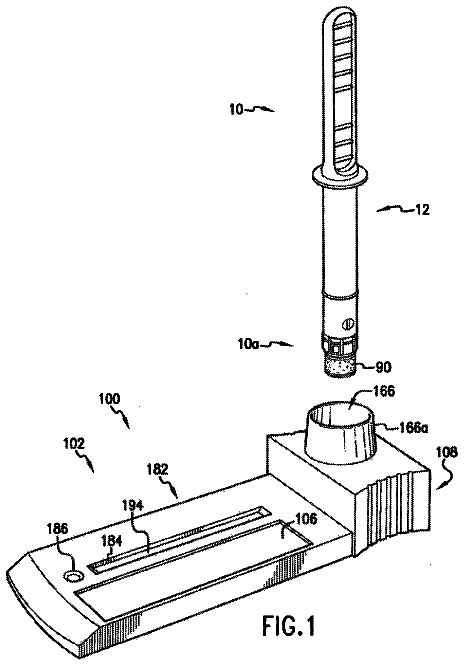
1 of 3 drawing sheets so far from the published document, cropped to the drawing. Every sheet is in the USPTO PDF.
What the patent claimed, word for word. All of it is now free to use.
This application includes a Sequence Listing submitted electronically via EFS-Web (sequence.listing.ascii.txt; 4 kilobytes; and created on Aug. 19, 2011), which is hereby incorporated by reference in its entirety.
The present invention relates generally to the fields of genetics and cellular and molecular biology. More particularly, the invention relates to antibodies which bind to and modulate the signaling of Cripto, kits comprising such antibodies, and methods which use the antibodies.
Cripto is a cell surface protein of 188 amino acid residues serendipitously isolated in a cDNA screen of a human embryonic carcinoma library (Ciccodicola et al., 1989, EMBO J., vol. 8, no. 7, pp. 1987-1991). The Cripto protein has at least two notable domains: a cysteine-rich domain, and a domain first characterized as similar to the domain found in the epidermal growth factor (EGF) family. Cripto was originally classified as a member of the EGF family (Ciccodicola et al., supra); however, subsequent analysis showed that Cripto did not bind any of the known EGF receptors and its EGF-like domain was actually divergent from the EGF family (Bianco et al., 1999, J. Biol. Chem., 274:8624-8629).
The Cripto signaling pathway has remained elusive despite continued investigation, with the literature supporting activation of several different pathways, including a MAP kinase pathway (DeSantis et al., 1997, Cell Growth Differ., 8:1257-1266; Kannan et al., 1997, J. Biol. Chem., 272:3330-3335), the TGF-.beta. pathway (Gritsman et al., 1999, Development, 127:921-932; Schier et al., 2000, Nature, 403:385-389), possible interactions with the Wnt pathway (Salomon et al., Endocr Relat Cancer. 2000 December; 7(4):199-226; and cross talk with the EGF pathway (Bianco et al., 1999, J. Biol. Chem., 274:8624-8629).
U.S. Pat. No. 5,256,643 and two divisional applications related thereto (U.S. Pat. Nos. 5,654,140 and 5,792,616), disclose a human Cripto gene, Cripto protein, and antibodies to Cripto.
U.S. Pat. No. 5,264,557 and three divisional applications related thereto (U.S. Pat. Nos. 5,620,866, 5,650,285, and 5,854,399), disclose a human Cripto-related gene and protein. Also disclosed are antibodies which bind to the Cripto-related protein but do not cross react by binding to the Cripto protein itself.
Cripto protein overexpression is associated with many tumor types (including but not limited to breast, testicular, colon, lung, ovary, bladder, uterine, cervical, pancreatic, and stomach), as demonstrated by immunostaining of human tissue with rabbit polyclonal antibodies raised against small cripto peptides. Panico et al., 1996, Int. J. Cancer, 65: 51-56; Byrne et al., 1998, J Pathology, 185:108-111; De Angelis et al., 1999, Int J Oncology, 14:437-440. The art is therefore in need of means of controlling, restricting, and/or preventing such overexpression, modulating Cripto signaling, and modulating the consequences of Cripto expression (i.e., promotion and/or maintenance of cell transformation).
FIG. 1 shows the response of the NCCIT, human testicular carcinoma cell line, to anti-CFC blocking Cripto mAb ASG3.5.
FIG. 2 shows the response of the NCCIT, human testicular carcinoma cell line, to anti-EGF blocking Cripto mAb A27F6.1.
FIG. 3 depicts the results of the FACS analysis showing 293/ALK4 cells binding CR-Fc.
The present invention provides novel antibodies which specifically bind to Cripto, and methods of making and using such antibodies. The invention also provides antibodies which bind to Cripto, and modulate Cripto signaling or protein interaction, e.g., an antibody which binds to Cripto such that the signal resulting from a protein interaction with Cripto is modulated downward. The invention also provides antibodies which bind to Cripto and block the interaction between Cripto and ALK4. The invention also provides antibodies which bind to Cripto and modulate tumor growth. The invention also provides antibodies which bind to Cripto, modulate Cripto signaling and modulate tumor growth. The invention also provides antibodies which bind to Cripto, block the interaction between Cripto and ALK4 and modulate tumor growth.
In one aspect of the invention, the antibody of the present invention specifically binds to an epitope selected from the group of epitopes to which antibodies A6C12.11, A6F8.6 (ATCC ACCESSION NO. PTA-3318), A7H1.19, A8F1.30, A8G3.5 (ATCC ACCESSION NO. PTA-3317), A8H3.1 (ATCC ACCESSION NO. PTA-3315), A8H3.2, A19A10.30, A10B2.18 (ATCC ACCESSION NO. PTA-3311), A27F6.1 (ATCC ACCESSION NO. PTA-3310), A40G12.8 (ATCC ACCESSION NO. PTA-3316), A2D3.23, A7A10.29, A9G9.9, A15C12.10, A15E4.14, A17A2.16, A17C12.28, A17G12.1 (ATCC ACCESSION NO. PTA-3314), A17H6.1, A18B3.11 (ATCC ACCESSION NO. PTA-3312), A19E2.7, B3F6.17 (ATCC ACCESSION NO. PTA-3319), B6G7.10 (ATCC ACCESSION NO. PTA-3313), B11H8.4 bind.
In another aspect of the invention, the antibody of the present invention specifically binds to an epitope in the ligand/receptor binding domain of Cripto. Cripto can be selected from CR-1 (SEQ ID NO:1) or CR-3 (SEQ ID NO:2). In a more particular embodiment, antibodies that specifically binds to the epitope in the ligand/receptor binding domain include for example A6C12.11, A6F8.6 (ATCC ACCESSION NO. PTA-3318), A8G3.5 (ATCC ACCESSION NO. PTA-3317), A19A10.30, A8H3.1 (ATCC ACCESSION NO. PTA-3315), A27F6.1 (ATCC ACCESSION NO. PTA-3310), A40G12.8 (ATCC ACCESSION NO. PTA-3316), A17G12.1 (ATCC ACCESSION NO. PTA-3314), A18B3.11 (ATCC ACCESSION NO. PTA-3312) and B6G7.10 (ATCC ACCESSION NO. PTA-3313).
In one embodiment the epitope to which the antibodies of the present invention bind is in an EGF-like domain. Antibodies that specifically bind to the epitope in the EGF-like domain include but are not limited to A40G12.8 (ATCC ACCESSION NO. PTA-3316), A8H3.1 (ATCC ACCESSION NO. PTA-3315), A27F6.1 (ATCC ACCESSION NO. PTA-3310), B6G7.10 (ATCC ACCESSION NO. PTA-3313), A17G12.1 (ATCC ACCESSION NO. PTA-3314) and A18B3.11 (ATCC ACCESSION NO. PTA-3312).
In another embodiment the epitope to which the antibodies of the present invention bind is in a cys-rich domain. Antibodies that specifically bind to the epitope in the cys-rich domain include but are not limited to A19A10.30, A8G3.5 (ATCC ACCESSION NO. PTA-3317), A6F8.6 (ATCC ACCESSION NO. PTA-3318) and A6C12.11.
In another embodiment the epitope to which the antibodies of the present invention bind is in the domain spanning amino acid residues 46-62 of Cripto. Antibodies that specifically bind to the epitope in the domain spanning amino acid residues 46-62 of Cripto include but are not limited to A10B2.18 (ATCC ACCESSION NO. PTA-3311), B3F6.17 (ATCC ACCESSION NO. PTA-3319) and A17A2.16.
The present inventions also comtemplate antibodies which binds specifically to Cripto and are capable of modulating Cripto signaling. Antibodies that bind specifically to Cripto and are capable of modulating Cripto signaling, include but are not limited to, A40G12.8 (ATCC ACCESSION NO. PTA-3316), A8H3.1 (ATCC ACCESSION NO. PTA-3315), A27F6.1 (ATCC ACCESSION NO. PTA-3310), and A6C12.11. In one embodiment the antibodies of the present invention which binds specifically to Cripto and are capable of modulating Cripto signaling bind to an epitope in an EGF-like domain or a cys-rich domain of Cripto.
The present inventions also comtemplate antibodies which binds specifically to Cripto and blocks the interaction between Cripto and ALK4. Antibodies that bind specifically to Cripto and are capable of blocking the interaction between Cripto and ALK4, include but are not limited to, A8G3.5 (ATCC ACCESSION NO. PTA-3317), A6F8.6 (ATCC ACCESSION NO. PTA-3318) and A6C12.11. In one embodiment the antibodies of the present invention which binds specifically to Cripto and are capable of blocking the interaction between Cripto and ALK4 bind to an epitope in an EGF-like domain or a cys-rich domain of Cripto.
In another aspect, the present invention comtemplates antibodies which bind specifically to Cripto and are capable of modulating tumor growth. Antibodies that specifically bind to Cripto and are capable of modulating tumor growth include but are not limited to, A27F6.1 (ATCC ACCESSION NO. PTA-3310), B6G7.10 (ATCC ACCESSION NO. PTA-3313) and A8G3.5 (ATCC ACCESSION NO. PTA-3317).
In one embodiment the antibodies of the present invention which bind specifically to Cripto and are capable of modulating tumor growth bind to an epitope in an EGF-like domain or a cys-rich domain of Cripto.
In yet another aspect, the present invention comtemplates antibodies which bind specifically to Cripto, which are capable of modulating Cripto signaling, and which are capable of modulating tumor growth. Antibodies that specifically bind to Cripto, which are capable of modulating Cripto signaling, and which are capable of modulating tumor growth, include but are not limited to A27F6.1 (ATCC ACCESSION NO. PTA-3310).
In one embodiment the antibodies of the present invention which bind specifically to Cripto, which are capable of modulating Cripto signaling, and which are capable of modulating tumor growth bind to an epitope in an EGF-like domain or a cys-rich domain of Cripto.
In yet another aspect, the present invention comtemplates antibodies which bind specifically to Cripto, which are capable of blocking the interaction between Cripto and ALK4, and which are capable of modulating tumor growth. Antibodies that specifically bind to Cripto, which are capable of blocking the interaction between Cripto and ALK4, and which are capable of modulating tumor growth, include but are not limited to A8G3.5 (ATCC ACCESSION NO. PTA-3317).
The hybridoma cells A27F6.1, A10B2.18, A18B3.11, B6G7.10, A17G12.1, A8H3.1, A40G12.8, A8G3.5, A6F8.6, and B3F6.17 were deposited with the American Type Culture Collection at 10801 University Blvd., Manassas, Va. 20110-2209 under the terms of the Budapest Treaty on Jan. 19, 2001 as ATCC Accession No. PTA-3310 (A27F6.1), ATCC Accession No. PTA-3311 (A10B2.18), ATCC Accession No. PTA-3312 (A18B3.11), ATCC Accession No. PTA-3313 (B6G7.10), ATCC Accession No. PTA-3314 (A17G12.1), ATCC Accession No. PTA-3315 (A8H3.1), ATCC Accession No. PTA-3316 (A40G12.8), ATCC Accession No. PTA-3317 (A8G3.5), ATCC Accession No. PTA-3318 (A6F8.6), and ATCC Accession No. PTA-3319 (B3F6.17).
In another embodiment, the present invention provides an antibody produced by a hybridoma selected from the group consisting of A6F8.6 (ATCC Accession No. PTA-3318), A8G3.5 (ATCC Accession No. PTA-3317), A8H3.1 (ATCC Accession No. PTA-3315), A10B2.18 (ATCC Accession No. PTA-3311), A27F6.1 (ATCC Accession No. PTA-3310), A40G12.8 (ATCC Accession No. PTA-3316), A17G12.1 (ATCC Accession No. PTA-3314), A18B3.11 (ATCC Accession No. PTA-3312), B3F6.17 (ATCC Accession No. PTA-3319), and B6G7.10 (ATCC Accession No. PTA-3313).
The antibodies of the present invention include but are not limited to monoclonal, polyclonal, humanized, chimeric and human antibodies.
The present invention also provides for a composition for administration to a subject having a tumor that expresses Cripto comprising at least one of the antibodies described above. In a more particular embodiment the subject is human. The composition may include a pharmaceutically acceptable excipient. The antibodies described above can be conjugated to a chemotherapeutic agent or be provided in combination with a nonconjugated chemotherapeutic.
Contemplated in another aspect of the invention are methods of modulating growth of tumor cells in vitro in a sample comprising the step of adding to the sample the compositions described above.
Also comtemplated are methods of modulating growth of tumor cells in vivo in a subject comprising the step of administering to the subject an effective amount of the compositions described above. In a particular embodiment the subject is human.
Another aspect of the invention are methods of treating subjects having a tumor that over-expresses Cripto comprising administering to the subject the compositions described above in an effective amount. Compositions for administration may include pharmaceutically acceptable excipients, antibodies conjugated to chemotherapeutic agents and antibodies administered in combination with nonconjugated chemotherapeutic agents
The methods of the present invention are particularly useful in modulating growth of tumor cells and/or treating a subject (i.e. a human) having a tumor where the tumor cell is selected from breast, testicular, colon, lung, ovary, bladder, uterine, cervical, pancreatic, and stomach tumor cells.
In yet another embodiment, the present invention contemplates methods of determining whether a tissue expresses Cripto, comprising the step of analyzing tissue from the subject in an immunoassay using any of the antibodies described above. Also contemplated are methods of determining whether a cell line overexpresses Cripto, comprising the step of analyzing the cell line in an immunoassay using any of the antibodies described above.
These and other aspects of the invention are set forth in greater detail below in the Detailed Description of the Invention.
Antibodies that specifically bind to Cripto and their uses for modulating Cripto signaling or protein interaction, and/or block the interaction between Cripto and ALK4, and/or modulate the growth of tumor cells have been discovered. Various classes of antibodies that specifically bind to Cripto have been discovered, including, for example, antibodies that specifically bind to an epitope in the ligand/receptor binding domain of either a native Cripto protein or a denatured form of Cripto; antibodies that bind an EGF-like domain, a cys-rich domain, or a peptide (e.g., from about 3 to about 20 amino acids) from the region comprising amino acid residues 46 to 150; antibodies that bind Cripto and modulate Cripto signalling; antibodies that bind Cripto and modulate tumor cell growth; and antibodies that bind to Cripto, modulate Cripto signaling, and modulate tumor cell growth. These antibodies are selected using conventional in vitro assays for selecting antibodies which bind the ligand/receptor binding domain, modulate Cripto signaling, or modulate tumor cell growth.
The methods of this invention are useful in the therapy of malignant or benign tumors of mammals where the growth rate of the tumor (which is an abnormal rate for the normal tissue) is at least partially dependent upon Cripto. Abnormal growth rate is a rate of growth which is in excess of that required for normal homeostasis and is in excess of that for normal tissues of the same origin.
Definitions
Various definitions are made throughout this document. Most words have the meaning that would be attributed to those words by one skilled in the art. Words specifically defined either below or elsewhere in this document have the meaning provided in the context of the present invention as a whole and as are typically understood by those skilled in the art.
As used herein, the term "region" means a physically contiguous portion of the primary structure of a biomolecule. In the case of proteins, a region is defined by a contiguous portion of the amino acid sequence of that protein.
As used herein, the term "domain" refers to a structural part of a biomolecule that contributes to a known or suspected function of the biomolecule. Domains may be co-extensive with regions or portions thereof; domains may also incorporate a portion of a biomolecule that is distinct from a particular region, in addition to all or part of that region. Examples of protein domains include, but are not limited to the extracellular domain (spans from about residue 31 to about residue 188 of Cripto, including Cripto, CR-1 (SEQ ID NO: 1) and CR-3 (SEQ ID NO:2)) and transmembrane domain (spans from about residue 169 to about residue 188 of Cripto, including Cripto, CR-1 (SEQ ID NO: 1) and CR-3 (SEQ ID NO:2)). A ligand/receptor binding domain of the Cripto protein spans from about residue 75 to about residue 150 of Cripto, including Cripto, CR-1 (SEQ ID NO: 1) and CR-3 (SEQ ID NO:2) and includes the EGF-like domain of Cripto, which spans, for example, from about residue 75 to about residue 112 of Cripto, including Cripto, CR-1 (SEQ ID NO: 1) and CR-3 (SEQ ID NO:2) and the cysteine-rich domain of Cripto, which spans, for example, from about residue 114 to about residue 150 of Cripto, including Cripto, CR-1 (SEQ ID NO: 1) and CR-3 (SEQ ID NO:2). For example, many monoclonal antibodies of the present invention have been identified as binding to the EGF-like or cys-rich domains. Additionally monoclonal antibody A10B2.18 (ATCC ACCESSION NO. PTA-3311), B3F6.17 (ATCC ACCESSION NO. PTA-3319) and A17A2.16 have been identified as binding to an epitope formed in a domain in the region spanning amino acid residues 46-62, upstream of the EGF-like domain. See Example 3 below. An epitope in the ligand/receptor binding domain is an epitope, whether formed in the conformational native Cripto protein, or the denatured Cripto protein, to which antibodies may bind.
As used herein, the term "antibody" is meant to refer to complete, intact antibodies, and Fab, Fab', F(ab)2, and other fragments thereof. Complete, intact antibodies include, but are not limited to, monoclonal antibodies such as murine monoclonal antibodies, polyclonal antibodies, chimeric antibodies, human antibodies, and humanized antibodies. Various forms of antibodies may be produced using standard recombinant DNA techniques (Winter and Milstein, Nature 349: 293-99, 1991). For example, "chimeric" antibodies may be constructed, in which the antigen binding domain from an animal antibody is linked to a human constant domain (an antibody derived initially from a nonhuman mammal in which recombinant DNA technology has been used to replace all or part of the hinge and constant regions of the heavy chain and/or the constant region of the light chain, with corresponding regions from a human immunoglobulin light chain or heavy chain) (see, e.g., Cabilly et al., U.S. Pat. No. 4,816,567; Morrison et al., Proc. Natl. Acad. Sci. 81: 6851-55, 1984). Chimeric antibodies reduce the immunogenic responses elicited by animal antibodies when used in human clinical treatments.
In addition, recombinant "humanized" antibodies may be synthesized. Humanized antibodies are antibodies initially derived from a nonhuman mammal in which recombinant DNA technology has been used to substitute some or all of the amino acids not required for antigen binding with amino acids from corresponding regions of a human immunoglobulin light or heavy chain. That is, they are chimeras comprising mostly human immunoglobulin sequences into which the regions responsible for specific antigen-binding have been inserted (see, e.g., PCT patent application WO 94/04679). Animals are immunized with the desired antigen, the corresponding antibodies are isolated and the portion of the variable region sequences responsible for specific antigen binding are removed. The animal-derived antigen binding regions are then cloned into the appropriate position of the human antibody genes in which the antigen binding regions have been deleted. Humanized antibodies minimize the use of heterologous (inter-species) sequences in antibodies for use in human therapies, and are less likely to elicit unwanted immune responses. Primatized antibodies can be produced similarly.
Another embodiment of the invention includes the use of human antibodies, which can be produced in nonhuman animals, such as transgenic animals harboring one or more human immunoglobulin transgenes. Such animals may be used as a source for splenocytes for producing hybridomas, as is described in U.S. Pat. No. 5,569,825.
Antibody fragments and univalent antibodies may also be used in the methods and compositions of this invention. Univalent antibodies comprise a heavy chain/light chain dimer bound to the Fc (or stem) region of a second heavy chain. "Fab region" refers to those portions of the chains which are roughly equivalent, or analogous, to the sequences which comprise the Y branch portions of the heavy chain and to the light chain in its entirety, and which collectively (in aggregates) have been shown to exhibit antibody activity. A Fab protein includes aggregates of one heavy and one light chain (commonly known as Fab'), as well as tetramers which correspond to the two branch segments of the antibody Y, (commonly known as F(ab)2), whether any of the above are covalently or non-covalently aggregated, so long as the aggregation is capable of specifically reacting with a particular antigen or antigen family.
Any of the antibodies of the invention may optionally be conjugated to a chemotherapeutic, as defined below.
As used herein, the term "binding" means the physical or chemical interaction between two proteins or compounds or associated proteins or compounds or combinations thereof, including the interaction between an antibody and a protein. Binding includes ionic, non-ionic, hydrogen bonds, Van der Waals, hydrophobic interactions, etc. The physical interaction, the binding, can be either direct or indirect, indirect being through or due to the effects of another protein or compound. Direct binding refers to interactions that do not take place through or due to the effect of another protein or compound but instead are without other substantial chemical intermediates. Binding may be detected in many different manners. Methods of detecting binding are well-known to those of skill in the art.
As used herein, "an antibody capable of internalizing Cripto" means an antibody which enters the cell while removing Cripto from the cell surface. One can screen for Cripto antibodies which are capable of internalizing Cripto by using fluorescent labeled Cripto monoclonal antibodies. In order to determine which antibodies internalize into the Cripto positive cells one can assay for the uptake of the fluorescent signal of the antibodies into the cells by viewing the cells under a fluorescent and/or confocal microscope. Those antibodies that get internalized will be seen as fluorescent signals in the cytoplasmic and or cellular vesicles. Non-limiting examples of Cripto antibodies capable of internalizing Cripto include A27F6.1 and B3F6.17.
As used herein, the term "compound" means any identifiable chemical or molecule, including, but not limited to, ion, atom, small molecule, peptide, protein, sugar, nucleotide, or nucleic acid, and such compound can be natural or synthetic.
As used herein, the terms "modulates" or "modifies" means an increase or decrease in the amount, quality, or effect of a particular activity or protein.
As used herein, the term "modulate Cripto signaling" means an increase or decrease in the amount, quality, or effect of Cripto activity, by about 5%, preferably 10%, more preferably 20%, more preferably 30%, more preferably 40%, more preferably 50%, more preferably 60%, more preferably 70%, more preferably 80%, more preferably 90%, and most preferably 100%. Activity may be measured by assays known in the art, such as the null cell assay shown in Example 3. In another embodiment, protein interaction between Cripto and another protein is similarly modulated downward via binding of the antibodies of the invention.
As used herein, the term "blocking the interaction between Cripto and ALK 4"means an increase or decrease in the interaction, i.e. binding, between Cripto and ALK4, by about 5%, preferably 10%, more preferably 20%, more preferably 30%, more preferably 40%, more preferably 50%, more preferably 60%, more preferably 70%, more preferably 80%, more preferably 90%, and most preferably 100%. Activity may be measured by assays known in the art, such as the binding assay shown in Example 8.
As used herein, the term "modulate growth of tumor cells in vitro" means an increase or decrease in the number of tumor cells, in vitro, by about 5%, preferably 10%, more preferably 20%, more preferably 30%, more preferably 40%, more preferably 50%, more preferably 60%, more preferably 70%, more preferably 80%, more preferably 90%, and most preferably 100%. In vitro modulation of tumor cell growth may be measured by assays known in the art, such as the GEO cell soft agar assay shown in Example 4.
As used herein, the term "modulate growth of tumor cells in vivo" means an increase or decrease in the number of tumor cells, in vivo, by about 5%, preferably 10%, more preferably 20%, more preferably 30%, more preferably 40%, more preferably 50%, more preferably 60%, more preferably 70%, more preferably 80%, more preferably 90%, and most preferably 100%. In vivo modulation of tumor cell growth may be measured by assays known in the art, such as the one shown in Example 5.
The term "preventing" refers to decreasing the probability that an organism contracts or develops an abnormal condition.
The term "treating" refers to having a therapeutic effect and at least partially alleviating or abrogating an abnormal condition in the organism. Treating includes maintenance of inhibited tumor growth, and induction of remission.
The term "therapeutic effect" refers to the inhibition of an abnormal condition. A therapeutic effect relieves to some extent one or more of the symptoms of the abnormal condition. In reference to the treatment of abnormal conditions, a therapeutic effect can refer to one or more of the following: (a) an increase or decrease in the proliferation, growth, and/or differentiation of cells; (b) inhibition (i.e., slowing or stopping) or promotion of cell death; (c) inhibition of degeneration; (d) relieving to some extent one or more of the symptoms associated with the abnormal condition; and (e) enhancing the function of a population of cells. Compounds demonstrating efficacy against abnormal conditions can be identified as described herein.
The term "administering" relates to a method of incorporating a compound into cells or tissues of an organism. The abnormal condition can be prevented or treated when the cells or tissues of the organism exist within the organism or outside of the organism. Cells existing outside the organism can be maintained or grown in cell culture dishes, or in another organism. For cells harbored within the organism, many techniques exist in the art to administer compounds, including (but not limited to) oral, parenteral, dermal, injection, and aerosol applications. For cells outside of the organism, multiple techniques exist in the art to administer the compounds, including (but not limited to) cell microinjection techniques, transformation techniques and carrier techniques. Administration may be accomplished by the many modes known in the art, e.g., oral, intravenous, intraperitoneal, intramuscular, and the like. When used in in vivo therapy, the antibodies of the subject invention are administered to a patient in effective amounts. As used herein an "effective amount" is an amount sufficient to effect beneficial or desired clinical results (i.e., amounts that eliminate or reduce the patient's tumor burden). An effective amount can be administered in one or more administrations. For purposes of this invention, an effective amount of the antibodies of the present invention is an amount of the antibodies that is sufficient to ameliorate, stabilize, or delay the development of the Cripto-associated disease state, particularly Cripto-associated tumors. Detection and measurement of these indicators of efficacy are discussed below. An example of a typical treatment regime includes administering by intravenous infusion to the subject antibodies of the invention on a weekly schedule, at a dose of about 2-5 mg/kg. The antibodies are administered in an outpatient chemoinfusion unit, unless the patient requires hospitalization. Other administration regimes known in the art are also contemplated.
The abnormal condition can also be prevented or treated by administering an antibody of the invention to a group of cells having an aberration in a signal transduction pathway to an organism. The effect of administering a compound on organism function can then be monitored. The organism is preferably a human.
"Cripto overexpression" is intended to mean the expression of Cripto by a tissue which expression is greater than the Cripto expression of adjacent normal tissue in a statistically significant amount.
"Chemotherapeutics" refers to any agents identified in the art as having therapeutic effect on the inhibition of tumor growth, maintenance of inhibited tumor growth, and/or induction of remission, such as natural compounds, synthetic compounds, proteins, modified proteins, and radioactive compounds. Chemotherapeutic agents contemplated herewith include agents that can be conjugated to the antibodies of the present invention or alternatively agents that can be used in combination with the antibodies of the present invention without being conjugated to the antibody. Exemplary chemotherapeutics that can be conjugated to the antibodies of the present invention include, but are not limited to radioconjugates (90Y, 131I, 99 mTc, 111In, 186Rh, et al.), tumor-activated prodrugs (maytansinoids, CC-1065 analogs, clicheamicin derivatives, anthracyclines, vinca alkaloids, et al.), ricin, diptheria toxin, pseudomonas exotoxin.
Chemotherapeutic agents may be used in combination with the antibodies of the invention, rather than being conjugated thereto (i.e. nonconjugated chemotherapeutics), include, but are not limited to the following: platinums (i.e. cis platinum), anthracyclines, nucleoside analogs (purine and pyrimidine), taxanes, camptothecins, epipodophyllotoxins, DNA alkylating agents, folate antagonists, vinca alkaloids, ribonucleotide reductase inhibitors, estrogen inhibitors, progesterone inhibitors, androgen inhibitors, aromatase inhibitors, interferons, interleukins, monoclonal antibodies, taxol, camptosar, adriamycin (dox), 5-FU and gemcitabine. Such chemotherapeutics may be employed in the practice of the invention in combination with the antibodies of the invention by coadministration of the antibody and the nonconjugated chemotherapeutic.
"Pharmaceutically acceptable carrier or excipient" refers to biologically inert compounds known in the art and employed in the administration of the antibodies of the invention. Acceptable carriers are well known in the art and are described, for example, in Remington's Pharmaceutical Sciences, Gennaro, ed., Mack Publishing Co., 1990. Acceptable carriers can include biocompatible, inert or bioabsorbable salts, buffering agents, oligo- or polysaccharides, polymers, viscoelastic compound such as hyaluronic acid, viscosity-improving agents, preservatives, and the like.
A "subject" refers to vertebrates, particularly members of a mammalian species, and includes but is not limited to domestic animals, sports animals, and primates, including humans.
Antibodies of the Invention
The antibodies of the invention specifically bind to Cripto: As used herein, Cripto includes the CR-1 Cripto protein, the CR-3 Cripto protein, and fragments thereof. Such fragments may be entire domains, such as the extracellular or intracellular domains, the EGF-like domain, the cys-rich domain, the receptor binding domain, and the like. Such fragments may also include contiguous and noncontiguous epitopes in any domain of the Cripto protein.
TABLE-US-00001 The 188 amino acid sequence for CR-1 is as follows [SEQ ID NO: 1]: MDCRKMARFSYSVIWIMAISKVFELGLVAGLGHQEFARPSRGYLAFRDDS IWPQEEPAIRPRSSQRVPPMGIQHSKELNRTCCLNGGTCMLGSFCACPPS FYGRNCEHDVRKENCGSVPHDTWLPKKCSLCKCWHGQLRCFPQAFLPGCD GLVMDEHLVASRTPELPPSARTTTFMLVGICLSIQSYY The 188 amino acid sequence for CR-3 is as follows [SEQ ID NO: 2]: MDCRKMVRFSYSVIWIMAISKAFELGLVAGLGHQEFARPSRGDLAFRDDS IWPQEEPAIRPRSSQRVLPMGIQHSKELNRTCCLNGGTCMLESFCACPPS FYGRNCEHDVRKENCGSVPHDTWLPKKCSLCKCWHGQLRCFPQAFLPGCD GLVMDEHLVASRTPELPPSARTTTFMLAGICLSIQSYY
In a one embodiment, the antibodies of the invention bind to an epitope in the EGF-like domain of Cripto. The EGF-like domain spans from about amino acid residue 75 to about amino acid residue 112 of the mature Cripto protein. Epitopes in the EGF-like domain may comprise linear or nonlinear spans of amino acid residues. Example of linear epitopes contemplated include but are not limited to about residues 75-85, 80-90, 85-95, 90-100, 95-105, 100-110, or 105-112. In one embodiment, the epitope in the EGF domain is an epitope formed in the conformational native Cripto protein versus a denatured Cripto protein.
In another embodiment, the antibodies of the invention bind to an epitope in the cys-rich domain of Cripto. The cys-rich domain spans from about amino acid residue 114 to about amino acid residue 150 of the mature Cripto protein. Epitopes in the cys-rich domain may comprise linear or nonlinear spans of amino acid residues. Example of linear epitopes contemplated include but are not limited to about residues 114-125, 120-130, 125-135, 130-140, 135-145, or 140-150. In one embodiment, the epitope in the cys-rich domain is an epitope formed in the conformational native Cripto protein versus a denatured Cripto protein
Once antibodies are generated, binding of the antibodies to Cripto may be assayed using standard techniques known in the art, such as ELISA, while the presence of Cripto on a cell surface may be assayed using flow cytometry (FACS), as shown in Example 2. Any other techniques of measuring such binding may alternatively be used.
The present invention provides antibodies (e.g., monoclonal and polyclonal antibodies, single chain antibodies, chimeric antibodies, bifunctional/bispecific antibodies, humanized antibodies, human antibodies, and complementary determining region (CDR)-grafted antibodies, including compounds which include CDR sequences which specifically recognize a polypeptide of the invention) specific for Cripto or fragments thereof. Antibody fragments, including Fab, Fab', F(ab).sub.2, and F.sub.v, are also provided by the invention. The terms "specific" and "selective," when used to describe binding of the antibodies of the invention, indicates that the variable regions of the antibodies of the invention recognize and bind Cripto polypeptides. It will be understood that specific antibodies of the invention may also interact with other proteins (for example, S. aureus protein A or other antibodies in ELISA techniques) through interactions with sequences outside the variable region of the antibodies, and, in particular, in the constant region of the molecule. Screening assays to determine binding specificity of an antibody of the invention (i.e. antibodies that specifically bind to an epitope the ligand/receptor binding domain and the domain spanning amino acid residues 46-62) are well known and routinely practiced in the art. For a comprehensive discussion of such assays, see Harlow et al. (Eds.), Antibodies A Laboratory Manual; Cold Spring Harbor Laboratory; Cold Spring Harbor, N.Y. (1988), Chapter 6. Antibodies that recognize and bind fragments of Cripto protein are also contemplated, provided that the antibodies are specific for Cripto polypeptides. Antibodies of the invention can be produced using any method well known and routinely practiced in the art.
In one embodiment, the invention provides an antibody that specifically binds to an epitope in the ligand/receptor binding domain of Cripto. Antibody specificity is described in greater detail below. However, it should be emphasized that antibodies that can be generated from other polypeptides that have previously been described in the literature and that are capable of fortuitously cross-reacting with Cripto (e.g., due to the fortuitous existence of a similar epitope in both polypeptides) are considered "cross-reactive"antibodies. Such cross-reactive antibodies are not antibodies that are "specific"for Cripto. The determination of whether an antibody specifically binds to an epitope of Cripto is made using any of several assays, such as Western blotting assays, that are well known in the art. For identifying cells that express Cripto and also for modulating Cripto ligand/receptor binding activity, antibodies that specifically bind to an extracellular epitope of the Cripto protein (i.e., portions of the Cripto protein found outside the cell) are particularly useful.
In one embodiment, the invention provides a cell-free composition comprising polyclonal antibodies, wherein at least one of the antibodies is an antibody of the invention specific for Cripto. Antisera isolated from an animal is an exemplary composition, as is a composition comprising an antibody fraction of an antisera that has been resuspended in water or in another diluent, excipient, or carrier.
In another embodiment, the invention provides monoclonal antibodies. Monoclonal antibodies are highly specific, being directed against a single antigenic site. Further in contrast to polyclonal preparations which typically include different antibodies directed against different epitopes, each monoclonal antibody is directed against a single determinant on the antigen. Monoclonal antibodies are useful to improve selectivity and specificity of diagnostic and analytical assay methods using antigen-antibody binding. Another advantage of monoclonal antibodies is that they are synthesized by a hybridoma culture, uncontaminated by other immunoglobulins. Hybridomas that produce such antibodies are also intended as aspects of the invention.
In still another related embodiment, the invention provides an anti-idiotypic antibody specific for an antibody that is specific for Cripto. For a more detailed discussion of anti-idiotypic antibodies, see, e.g., U.S. Pat. Nos. 6,063,379 and 5,780,029.
It is well known that antibodies contain relatively small antigen binding domains that can be isolated chemically or by recombinant techniques. Such domains are useful Cripto binding molecules themselves, and also may be reintroduced into human antibodies, or fused to a chemotherapeutic or polypeptide. Thus, in still another embodiment, the invention provides a polypeptide comprising a fragment of a Cripto-specific antibody, wherein the fragment and associated molecule, if any, bind to the Cripto. By way of non-limiting example, the invention provides polypeptides that are single chain antibodies and CDR-grafted antibodies. For a more detailed discussion of CDR-grafted antibodies, see, e.g., U.S. Pat. No. 5,859,205.
The description continues in the full USPTO document.
About 5,727 words. The USPTO PDF has it with every drawing.
Fees are due 3.5, 7.5 and 11.5 years after grant. This patent expired on March 18, 2026, so the fee marked "not paid" was the one that went unpaid.
Cripto blocking antibodies and uses thereof
Filed Oct 2003 · published Jul 2004Cripto blocking antibodies and uses thereof
Filed Oct 2003 · granted May 2009Cripto blocking antibodies and uses thereof
Filed Apr 2007 · published Jul 2008Cripto blocking antibodies and uses thereof
Filed Apr 2007 · granted Mar 2010Cripto blocking antibodies and uses thereof
Filed Dec 2008 · published Aug 2010Cripto blocking antibodies and uses thereof
Filed Dec 2008 · granted Aug 2011Cripto Blocking Antibodies and Uses Thereof
Filed Jan 2009 · published Nov 2009Cripto Blocking Antibodies And Uses Thereof
Filed Mar 2009 · published Nov 2009Cripto blocking antibodies and uses thereof
Filed Mar 2009 · granted Feb 2011Cripto Blocking Antibodies and Uses Thereof
Filed Aug 2011 · published Aug 2012Cripto blocking antibodies and uses thereof
Filed Aug 2011 · granted Mar 2014Earlier publications, parents and continuations. None of them can still be enforced, or this patent would not be listed.
Prior art cited by the examiner or applicant. Useful when you check your own idea for novelty.
Everything on this page comes from the documents linked above.

