Background of the invention
This invention relates generally to throttling calls to a service application through an open application programming interface (API) and, more particularly, to network-based methods and systems for throttling calls to a service application stored within a service provider computer system through an open API architecture.
There are service provider companies that provide a variety of services to numerous consumers. These service provider companies utilize computer systems to provide these services. For example, in the financial industry, companies such as large banks, interchange networks and payment networks provide certain financial services to consumers, companies and other banks. Oftentimes, these service provider companies provide services that include receiving, processing and storing financial data in computer systems managed by the service provider companies. In many cases, access to this financial data is restricted to certain approved users. Restricting access to such financial data provides at least some protection for the data. However, it also limits the potential uses of the data.
Software developers around the world are able to develop computer programs, sometimes called applications, that are configured to utilize data such as the data stored within computer systems used by certain service provider companies. Of course, in order for these computer programs to use such data, the developer programs must be able to access the data. One way to access the data stored by these service provider companies is through an open application programming interface (API).
By allowing software developers to access data stored within computer system used by these service provider companies, the service provider companies are able to leverage these developer applications as well as increase their transaction volume. Thus, by providing this data access to developers, these service provider companies are able to provide additional services to both existing and new customers, which in turn improves the profitability of these companies. However, the providing of such data access also creates certain risks and challenges for the service provider companies.
In addition to the challenges of providing access to such data, there are also challenges in controlling the amount of access granted to the data stored within the service provider computer system. The amount of access is sometimes referred to as the throttling amount and throttling time period. The throttling amount refers to a number of calls (e.g., messages sent) that a developer application can make to the data stored within the service provider computer system. The throttling time period refers to the time period for measuring the throttling amount.
Accordingly, it would be desirable to provide a computer system having an open API that could be used by certain service provider companies, such as financial and non-financial transaction companies, that is configured to: (i) provide secure access to data and logic stored within the service provider computer systems; (ii) control access to said data and logic including managing the throttling amount and throttling time period; and (iii) manage the billing associated with providing said access.
Brief description of the invention
In one embodiment, a computer-based method for throttling a volume of request messages to a service application stored within a service provider (SP) computer system through an open application programming interface (API) platform is provided. The SP computer system is in communication with a memory device. The method includes storing a throttling profile for a developer application within the memory device wherein the throttling profile includes at least a throttling amount threshold and a throttling time period, receiving at the API platform a request message initiated by the developer application wherein the request message is included within a volume of request messages initiated by the developer application, identifying the request message as being associated with the developer application, retrieving the throttling profile for the developer application, and validating the volume of request messages as complying with the throttling profile.
In another embodiment, a computer system for throttling a volume of request messages to a service application stored within a service owner (SO) computer device is provided. The SO computer device is associated with a SO. The computer system includes a memory device for storing data, and a service provider (SP) computer system. The SP computer system includes a processor and an open application programming interface (API) platform. The SP computer system is in communication with the memory device and the SO computer device. The SP computer system is programmed to store a throttling profile for a developer application within the memory device wherein the throttling profile includes at least a throttling amount threshold and a throttling time period, receive a request message initiated by the developer application wherein the request message is included within a volume of request messages initiated by the developer application, identify the request message as being associated with the developer application, retrieve the throttling profile for the developer application wherein the API platform retrieves the throttling profile from the memory device, and validate the volume of request messages as complying with the throttling profile.
In another embodiment, one or more computer-readable non-transitory media comprising a computer-executable program is provided. The program instructs at least one processor to throttle a volume of request messages to a service application stored within a service provider computer system through an open application programming interface (API) platform. The computer-executable program includes at least one code segment that instructs the at least one processor to store a throttling profile for a developer application within a memory device wherein the throttling profile includes at least a throttling amount threshold and a throttling time period, receive a request message initiated by the developer application wherein the request message is included within a volume of request messages initiated by the developer application, identify the request message as being associated with the developer application, retrieve the throttling profile for the developer application wherein the API platform retrieves the throttling profile from the memory device, and validate the volume of request messages as complying with the throttling profile.
Brief description of the drawings
FIGS. 1-9 show exemplary embodiments of the methods and systems described herein.
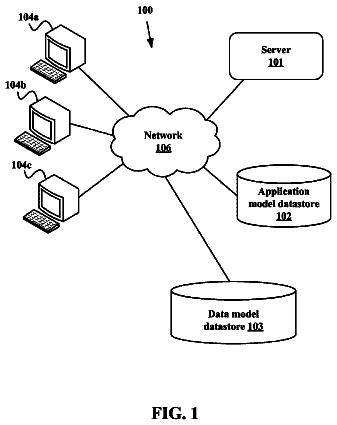
FIG. 1 is a simplified block diagram of an exemplary service system including a plurality of computer devices in accordance with one embodiment of the present invention.
FIG. 2 is an expanded block diagram of an exemplary embodiment of a server architecture of the service system including the plurality of computer devices in accordance with one embodiment of the present invention.
FIG. 3 is a block diagram of an exemplary embodiment of a user computer device as shown in FIGS. 1 and 2.
FIG. 4 is a block diagram of an exemplary embodiment of a server computer device as shown in FIGS. 1 and 2.
FIG. 5 is a more detailed block diagram of an exemplary configuration of the service provider computer system in communication with other computer devices as shown in FIGS. 1 and 2.
FIGS. 6A and 6B are data flow charts showing an exemplary process of providing premium access to the service provider computer system shown in FIG. 5 using an open API.
FIG. 7 is an exemplary production key request user interface for requesting premium access to the service provider computer system shown in FIG. 5.
FIG. 8 is an exemplary premium service request approval user interface for approving a premium access request by a service owner computer device shown in FIG. 5.
FIG. 9 is a data flow chart showing an exemplary process of validating a throttling profile for a developer application accessing the service provider computer system shown in FIG. 5.
Detailed description of the invention
Embodiments of the methods and systems described herein enable a service provider company associated with a service provider computer system, which includes service applications stored therein, to (i) offer at least one of general and premium access to the service applications for use by developers of computer software applications, (ii) assign a throttling profile to each developer application and/or developer identity based on the type of access; and (iii) count each request message received from a developer application during a predetermined period of time and validate the request message by comparing the count to the assigned throttling profile. The developers access the service applications stored within the service provider (SP) computer system through a developer portal and an application programming interface (API) platform. The service applications are stored within service owner (SO) computer devices, which are included with the SP computer system. The developers use data from the service applications in response to executing a developer application.
More specifically, the systems and methods described herein facilitate throttling (e.g., controlling, regulating or managing) a volume (e.g., a group or a set of messages) of request messages directed to a service application stored within a SP computer system through an open API platform. A throttling profile associated with a developer application is stored within a memory device. The throttling profile includes at least a throttling amount threshold and a throttling time period. The API platform is configured to receive a request message initiated by a developer application wherein the request message is part of a volume of request messages initiated by the developer application within a throttling time period. The system retrieves the throttling profile for the developer application, and validates the volume of request messages that includes the received request message as complying with the throttling profile. In the example embodiment, the request message being validated is typically the most recently received request message of the volume of request messages initiated by the developer application.
In the example embodiment, the service provider computer system is a financial service computer system that provides financial transaction services to developers, consumers, merchants, acquirers and/or issuers. The services may include providing data representing financial transactions, processing payment card transactions, locating banks or ATMs, providing information such as discounts and offers, etc. In another embodiment, the service provider computer system is a non-financial service computer system that provides non-financial transaction services to users, developers, consumers, merchants, acquirers and/or issuers.
In the case of requesting premium access, a developer uses a developer computer system to send a request for premium access to a selected service application stored within the SP computer system by accessing the developer portal, and the API platform receives and forwards the developer request for premium access to the SO of the selected service application, who in turn approves or denies the developer request. Each SO being an owner of a particular service or set of services included within the overall SP computer system.
After the SO approves the developer request for premium access, the SO sets a throttling amount threshold and throttling time period, and gets a client ID (which is assigned by the API platform) to the developer application to be passed in messages for service enforcement. The throttling amount threshold and throttling time period defines, at least in part, a throttling profile for the developer. After being notified of the granting of premium access, the developer executes the developer application at the developer computer device which sends a request message to the API platform. The API platform validates the authenticity of the developer application message, counts the request message, and validates the throttling of the request message by comparing the count to the assigned throttling profile before forwarding the developer application message to the proper service application. The service application applies rules--premium access rules in the case of premium access and general access rules in the case of general access--to the developer application message, returns a number of records in response to the applied rules, and sends a service response to the API platform for forwarding to the developer computer device. The developer application receives the service response, and displays or uses the results. In the case of premium access rules, the premium access rules are based on the premium access granted to the developer application, which means the rules maybe applied to additional data, with increased speed, with an improved priority, to additional services, and may include individualized or customized billing programs as compared to general access to the service application.
In the example embodiment, the developer application can also be executed by a computer system associated with at least one of a consumer, a merchant, an acquirer, a processor and an issuer (collectively used herein as a "user"). In other words, in some cases, a user can download the developer application from the developer computer system for execution by the user computer device. In this embodiment, the user computer sends a developer application message to the API platform. The API platform validates the authenticity of the developer application message, counts the request message, and validates the throttling of the request message by comparing the count to the assigned throttling profile before forwarding the developer application message to the proper service application. The service application applies rules to the developer application message, returns a number of records in response to the applied rules, and sends a service response to the API platform for forwarding to the user computer device. The developer application receives the service response, and displays the results or uses the results at the user computer system.
As described herein "premium access" refers to access granted to a developer or a developer application for accessing service applications stored on SO computer devices within the SP computer system. Premium access can be granted on a developer basis or on a developer application basis. Premium access is improved or superior access to data and logic stored within the SO computer devices as compared to general access to the SO computer devices. Premium access, as used herein, is defined to include access to additional data, additional bandwidth (i.e., data provided faster), improved data receiving priority, additional services, and individualized billing programs for the services provides as compared to general access to the SO computer devices.
In the case of requesting general access, a developer uses a developer computer system to send a request for general access to a selected service application stored within the SP computer system by accessing the developer portal, and the API platform receives the developer request. The API platform verifies that general access is requested and available, retrieves from a memory device the predefined throttling profile (i.e., the general access throttling profile) for the selected service application, and assigns the general access throttling profile to the developer application. Thus, in the case of general access, the SO predefines the throttling profile for each service application associated with the SO. Those predefined throttling profiles include the throttling amount threshold and throttling time period for general access to the service.
After being granted general access, the developer executes the developer application at the developer computer device which sends a request message to the API platform. The API platform validates the authenticity of the developer application message, counts the request message, and validates the throttling of the request message by comparing the count to the assigned throttling profile, which in this case is the predefined general access throttling profile, before forwarding the developer application message to the proper service application. The service application applies rules to the developer application message, returns a number of records in response to the applied rules, and sends a service response to the API platform for forwarding to the developer computer device. The developer application receives the service response, and displays or uses the results. As explained above, the developer application can also be executed by a user using a user computer system.
In the example embodiment, the API platform enables an SO to offer both general access and premium access to developers. SOs desire the ability to offer a controlled access or "premium access" of their services to developers and business partners, in addition to the general access or open access. Premium and general access may be service-specific. For example, a developer may have an application with general access to Service A, and premium access to Service B.
In the methods and systems described herein, general access and premium access for each service may be optional. For example, it is possible that at least some services may have general access, and some may have premium access as well. Services with general access will provide that access to all developers and will provide standard data throughput and access to all non-restricted data, resources, and functions. Premium access is defined as greater data throughput, access to restricted data, access to restricted resources and restricted functions. Throughput is defined as one or both of the following: (a) number of requests (calls) allowed in a given time frame, and (b) number of records returned for a given request.
In the example embodiment, the SO will have the ability to define general access for their respective services, and will have the ability to define premium access for their respective services. The SO will also be able to define a premium access fee structure for their respective services. In the example embodiment, the SO may negotiate premium access online with a developer or may negotiate premium access to services through more traditional channels.
In the methods and systems described herein the API platform is configured to provide developer usage data to the SP/SO to support invoicing and fee collection for premium/general access. The API platform is also configured to enable the SO to grant and revoke premium/general access at any time.
The following detailed description illustrates embodiments of the invention by way of example and not by way of limitation. It is contemplated that the invention has general application to processing financial transaction data by a third party in industrial, commercial, and residential applications.
As used herein, an element or step recited in the singular and proceeded with the word "a" or "an" should be understood as not excluding plural elements or steps, unless such exclusion is explicitly recited. Furthermore, references to "one embodiment" of the present invention are not intended to be interpreted as excluding the existence of additional embodiments that also incorporate the recited features.
The methods and systems described herein may be implemented using computer programming or engineering techniques including computer software, firmware, hardware or any combination or subset thereof, wherein the technical effects may include at least one of: a) an SO predefines a throttling profile for general access of each service application offering general access including a throttling amount threshold and throttling time period, and stores the general access throttling profile within a service provider (SP) computer system; (b) a developer requests a production key with premium or general access to a service application stored within the SP computer system, wherein the developer submits the request from a developer computer system through a developer portal to the SP computer system; c) an API platform receives the developer request for premium or general access, signs the production key granting general access to any requested service application with general access; (d) in the case of premium access, the API platform sends an email to an SO associated with the requested service application requesting premium access to the requested service application for the developer, the SO logs into the SO application requested by the developer either approving or denying the developer request for premium access, the SO is prompted to select a throttling profile for the developer application after approving the premium access request, and the API platform updates the production key to include access to the approved premium service; e) in the case of general access, the API platform automatically assigns a general access throttling profile for the requested service application wherein a plurality of general access throttling profiles are stored within a memory device in communication with the API platform; f) the throttling profile assigned to the developer application is stored in the memory device; g) the developer or a user executes the developer application having premium or general access such that the developer application sends a message to the API platform, wherein the developer application message includes the client ID and the production key; h) the API platform validates the developer application message by verifying the client ID and production key, and, after validation, counts the request message (i.e., increasing a counter by one for each received request message for this developer application) and validates the request message by comparing the count to the assigned throttling profile; i) the API platform then forwards the developer application request message through an API services wrapper or directly to the corresponding service application at the SO computer system if throttling is validated; j) the corresponding service application applies rules to the developer application message, returns a number of records in response to the applied rules, and sends a service response having a bill code to the API platform; k) the API platform stores a message history of the service response with the bill code, removes the bill code from the service response, and sends the response to the developer computer device (if the developer sent the developer application message) or to the user computer device (if a consumer, merchant, acquirer and/or issuer sent the developer application message); and l) the developer application receives the service response, and displays or uses the results.
In the financial service system described herein the bill code enables the SO to create a billing report for the developer. The SO requests a billing report from the API platform for a specific time period, and the API platform builds the report based on the bill code. The API platform stores the billing report in the database in a location designated by the SO. The SO is then able to bill the developer for using the SO service application. In the example embodiment, the SO and the developer are able to negotiate and enter into a customized or individualized billing program for providing premium access to the service application. These billing programs are typically based at least in part on a number of application request messages submitted to the service application by the developer application during a predefined period of time.
FIG. 1 is a simplified block diagram of an exemplary service system 100 including a plurality of computer devices in accordance with one embodiment of the present invention. System 100 includes a service provider system (e.g., financial services provider or non-financial services provider) that allows developers of computer applications to access a variety of service applications hosted by the service provider (SP) computer system such that the developer applications can utilize data stored within the SP computer system. The developer applications can be utilized by the developer via a developer computer system or can be offered to a consumer, a merchant, an acquirer or an issuer (collectively a "user") for use by the users via user computer systems.
More specifically, in the example embodiment, system 100 includes a server system 112, which is a type of computer system, and a plurality of client sub-systems (also referred to as client systems 114 and 115) connected to server system 112. In one embodiment, client systems 114, 115 are computers including a web browser, such that server system 112 is accessible to client systems 114, 115 using the Internet. Client systems 114, 115 are interconnected to the Internet through many interfaces including a network, such as a local area network (LAN) or a wide area network (WAN), dial-in-connections, cable modems, and special high-speed ISDN lines. Client systems 114, 115 could be any device capable of interconnecting to the Internet including a web-based phone, personal digital assistant (PDA), or other web-based connectable equipment.
System 100 also includes point-of-sale (POS) terminals 118, which may be connected to client systems 114, 115 and may be connected to server system 112. POS terminals 118 are interconnected to the Internet through many interfaces including a network, such as a local area network (LAN) or a wide area network (WAN), dial-in-connections, cable modems, wireless modems, and special high-speed ISDN lines. POS terminals 118 could be any device capable of interconnecting to the Internet and including an input device capable of reading information from a consumer's financial transaction card.
A database server 116 is connected to database 120, which contains information on a variety of matters, as described below in greater detail. In one embodiment, centralized database 120 is stored on server system 112 and can be accessed by potential users at one of client systems 114, 115 by logging onto server system 112 through one of client systems 114, 115. In an alternative embodiment, database 120 is stored remotely from server system 112 and may be non-centralized.
Database 120 may store transaction data generated as part of sales activities conducted over the services network including data relating to merchants, account holders or customers, developers, issuers, acquirers, purchases made, and services provided by system 100. Database 120 may also store account data including at least one of a cardholder name, a cardholder address, an account number, and other account identifier. Database 120 may also store merchant data including a merchant identifier that identifies each merchant registered to use the network, and instructions for settling transactions including merchant bank account information. Database 120 may also store purchase data associated with items being purchased by a cardholder from a merchant, and authorization request data.
In the example embodiment, client system 114 may be associated with a developer of computer applications and may be referred to as a developer computer device, and client system 115 may be associated with a consumer, an acquirer or an issuer and may be referred to as a user computer device. Developer computer device 114 stores developer applications that a user may access and utilize via user computer device 115. Server system 112 may be associated with a service provider (SP) and maybe referred to as a SP computer device. In the example embodiment, an SP may include a payment network provider, an interchange network provider, or any other provider of financial or non-financial services.
In the embodiment where the SP is an interchange network provider, system 100 includes POS terminals 118, which may be associated with a merchant. In this embodiment, system 100 may be part of a multi-party payment card industry system for enabling ordinary payment-by-card transactions such as a credit card payment system using the MasterCard.RTM. interchange. The MasterCard.RTM. interchange is a proprietary communications standard promulgated by MasterCard International Incorporated.RTM. for the exchange of financial transaction data between financial institutions that are members of MasterCard International Incorporated.RTM.. (MasterCard is a registered trademark of MasterCard International Incorporated located in Purchase, N.Y.).
For example, in a typical payment card system, a financial institution called the "issuer" issues a payment card, such as a credit card, to a consumer, who uses the payment card to tender payment for a purchase from a merchant. To accept payment with the payment card, the merchant must normally establish an account with a financial institution that is part of the financial payment system. This financial institution is usually called the "merchant bank" or the "acquiring bank" or "acquirer bank." When a consumer tenders payment for a purchase with a payment card (also known as a financial transaction card), the merchant requests authorization from the merchant bank for the amount of the purchase. The request may be performed over the telephone, but is usually performed through the use of a point-of-sale terminal, which reads the consumer's account information from the magnetic stripe on the payment card and communicates electronically with the transaction processing computers of the merchant bank. Alternatively, a merchant bank may authorize a third party to perform transaction processing on its behalf. In this case, the point-of-sale terminal will be configured to communicate with the third party. Such a third party is usually called a "merchant processor" or an "acquiring processor."
Using the interchange network, the computers of the merchant bank or the merchant processor will communicate with the computers of the issuer bank to determine whether the consumer's account is in good standing and whether the purchase is covered by the consumer's available credit line. Based on these determinations, the request for authorization will be declined or accepted. If the request is accepted, an authorization code is issued to the merchant.
When a request for authorization is accepted, the available credit line of consumer's account is decreased. Normally, a charge is not posted immediately to a consumer's account because bankcard associations, such as MasterCard International Incorporated.RTM., have promulgated rules that do not allow a merchant to charge, or "capture," a transaction until goods are shipped or services are delivered. When a merchant ships or delivers the goods or services, the merchant captures the transaction by, for example, appropriate data entry procedures on the point-of-sale terminal. If a consumer cancels a transaction before it is captured, a "void" is generated. If a consumer returns goods after the transaction has been captured, a "credit" is generated.
For debit card transactions, when a request for a PIN authorization is approved by the issuer, the consumer's account is decreased. Normally, a charge is posted immediately to a consumer's account. The bankcard association then transmits the approval to the acquiring processor for distribution of goods/services, or information or cash in the case of an ATM.
After a transaction is captured, the transaction is settled between the merchant, the merchant bank, and the issuer. Settlement refers to the transfer of financial data or funds between the merchant's account, the merchant bank, and the issuer related to the transaction. Usually, transactions are captured and accumulated into a "batch," which is settled as a group.
The financial transaction cards or payment cards discussed herein may include credit cards, debit cards, a charge card, a membership card, a promotional card, prepaid cards, and gift cards. These cards can all be used as a method of payment for performing a transaction. As described herein, the term "financial transaction card" or "payment card" includes cards such as credit cards, debit cards, and prepaid cards, but also includes any other devices that may hold payment account information, such as mobile phones, personal digital assistants (PDAs), and key fobs.
Although the SP has been described herein as an interchange network provider, it does not have to be so limited. As indicated above, the SP may also be a payment network provider or any other provider of financial services. In these embodiments, a transaction card, a payment or even a purchase are not necessarily needed to utilize the services provided by the SP.
FIG. 2 is an expanded block diagram of an exemplary embodiment of a server architecture of a service system 122 including other computer devices in accordance with one embodiment of the present invention. Components in system 122, identical to components of system 100 (shown in FIG. 1), are identified in FIG. 2 using the same reference numerals as used in FIG. 1. System 122 includes server system 112, client systems 114 and 115, and POS terminals 118. Server system 112 further includes database server 116, a transaction server 124, a web server 126, a fax server 128, a directory server 130, and a mail server 132. A storage device 134 is coupled to database server 116 and directory server 130. Servers 116, 124, 126, 128, 130, and 132 are coupled in a local area network (LAN) 136. In addition, a system administrator's workstation 138, a user workstation 140, and a supervisor's workstation 142 are coupled to LAN 136. Alternatively, workstations 138, 140, and 142 are coupled to LAN 136 using an Internet link or are connected through an Intranet.
Each workstation, 138, 140, and 142 is a personal computer having a web browser. Although the functions performed at the workstations typically are illustrated as being performed at respective workstations 138, 140, and 142, such functions can be performed at one of many personal computers coupled to LAN 136. Workstations 138, 140, and 142 are illustrated as being associated with separate functions only to facilitate an understanding of the different types of functions that can be performed by individuals having access to LAN 136.
Server system 112 is configured to be communicatively coupled to various individuals, including employees 144 and to third parties, e.g., account holders, customers, auditors, developers, consumers, merchants, acquirers, issuers, etc., 146 using an ISP Internet connection 148. The communication in the exemplary embodiment is illustrated as being performed using the Internet, however, any other wide area network (WAN) type communication can be utilized in other embodiments, i.e., the systems and processes are not limited to being practiced using the Internet. In addition, and rather than WAN 150, local area network 136 could be used in place of WAN 150.
In the exemplary embodiment, any authorized individual having a workstation 154 can access system 122. At least one of the client systems includes a manager workstation 156 located at a remote location. Workstations 154 and 156 are personal computers having a web browser. Also, workstations 154 and 156 are configured to communicate with server system 112. Furthermore, fax server 128 communicates with remotely located client systems, including a client system 156 using a telephone link. Fax server 128 is configured to communicate with other client systems 138, 140, and 142 as well.
FIG. 3 illustrates an exemplary configuration of a user computer device 202 operated by a user 201. User computer device 202 may include, but is not limited to, client systems 114, 115, 138, 140, and 142, 146, POS terminal 118, workstation 154, and manager workstation 156 (shown in FIG. 2).
User computer device 202 includes a processor 205 for executing instructions. In some embodiments, executable instructions are stored in a memory area 210. Processor 205 may include one or more processing units (e.g., in a multi-core configuration). Memory area 210 is any device allowing information such as executable instructions and/or other data to be stored and retrieved. Memory area 210 may include one or more computer readable media.
User computer device 202 also includes at least one media output component 215 for presenting information to user 201. Media output component 215 is any component capable of conveying information to user 201. In some embodiments, media output component 215 includes an output adapter such as a video adapter and/or an audio adapter. An output adapter is operatively coupled to processor 205 and operatively couplable to an output device such as a display device (e.g., a liquid crystal display (LCD), organic light emitting diode (OLED) display, cathode ray tube (CRT), or "electronic ink" display) or an audio output device (e.g., a speaker or headphones).
In some embodiments, user computer device 202 includes an input device 220 for receiving input from user 201. Input device 220 may include, for example, a keyboard, a pointing device, a mouse, a stylus, a touch sensitive panel (e.g., a touch pad or a touch screen), a gyroscope, an accelerometer, a position detector, or an audio input device. A single component such as a touch screen may function as both an output device of media output component 215 and input device 220.
User computer device 202 may also include a communication interface 225, which is communicatively couplable to a remote device such as server system 112. Communication interface 225 may include, for example, a wired or wireless network adapter or a wireless data transceiver for use with a mobile phone network (e.g., Global System for Mobile communications (GSM), 3G, 4G or Bluetooth) or other mobile data network (e.g., Worldwide Interoperability for Microwave Access (WIMAX)).
Stored in memory area 210 are, for example, computer readable instructions for providing a user interface to user 201 via media output component 215 and, optionally, receiving and processing input from input device 220. A user interface may include, among other possibilities, a web browser and client application. Web browsers enable users, such as user 201, to display and interact with media and other information typically embedded on a web page or a website from server system 112. A client application allows user 201 to interact with a server application from server system 112.
FIG. 4 illustrates an exemplary configuration of a server computer device 301 such as server system 112 (shown in FIGS. 1 and 2). Server computer device 301 may include, but is not limited to, database server 116, transaction server 124, web server 126, fax server 128, directory server 130, and mail server 132.
Server computer device 301 includes a processor 305 for executing instructions. Instructions may be stored in a memory area 310, for example. Processor 305 may include one or more processing units (e.g., in a multi-core configuration).
Processor 305 is operatively coupled to a communication interface 315 such that server computer device 301 is capable of communicating with a remote device such as user computer device 202 or another server computer device 301. For example, communication interface 315 may receive requests from user computer device 114, 115 via the Internet, as illustrated in FIGS. 1 and 2.
The description continues in the full USPTO document.
 Lapsed, fee not paid12 drawings