Lapsed, fee not paid3 drawings
Biotech & Lab · US 8,663,717 B2
Methods and delivery vehicles for providing throat relief
A troche for providing throat relief.
US 8,663,913 B2 · Inventors: Hayes; Sidney
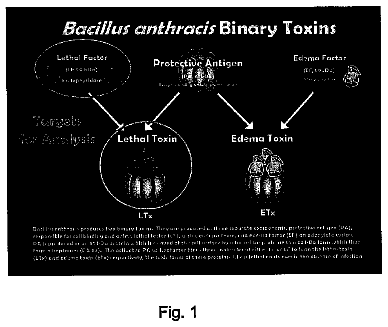
Sheet 1 of 2 from the published document. All sheets in the USPTO PDF
Bacteriophages in general and lambda phage in particular are powerful, flexible reagents who have yet to be exploited to their full potential. As discussed herein, the lambda phage head and/or genome comprises an easy to use and highly efficient delivery vehicle for delivering the expression products of a gene of interest systemically or to a particular tissue.
Phages are bacterial viruses. For example, lambda phage encapsulates a 48.5 kD duplex DNA in a capsid head of about 55 nm diameter. The genetics of lambda phage are well established and well understood. For example, the lambda D protein is a small protein (11.4 kDa) that acts to stabilize the lambda phage head or capsid but is dispensable for heads packaged with a DNA duplex less than 82% of the wild type lambda genome. As is well known to those of skill in the art, versions of lambda can be used as insertion or replacement vectors for cloning foreign DNA up to about 24 kilobase pairs (kbp). Phages (in general), when administered to an animal rapidly circulate throughout the tissues of the animal and are removed from the circulation by the spleen, liver and filtering organs of the reticuloendothelial system (Geier et al., 1973, Nature 246: 221-223; Inchley, Clin Exp Immunol 5: 173-187; K
All 2 drawing sheets from the published document, cropped to the drawing.
What the patent claimed, word for word. All of it is now free to use.
Phages are bacterial viruses. For example, lambda phage encapsulates a 48.5 kD duplex DNA in a capsid head of about 55 nm diameter. The genetics of lambda phage are well established and well understood. For example, the lambda D protein is a small protein (11.4 kDa) that acts to stabilize the lambda phage head or capsid but is dispensable for heads packaged with a DNA duplex less than 82% of the wild type lambda genome. As is well known to those of skill in the art, versions of lambda can be used as insertion or replacement vectors for cloning foreign DNA up to about 24 kilobase pairs (kbp).
Phages (in general), when administered to an animal rapidly circulate throughout the tissues of the animal and are removed from the circulation by the spleen, liver and filtering organs of the reticuloendothelial system (Geier et al., 1973, Nature 246: 221-223; Inchley, Clin Exp Immunol 5: 173-187; Keller and Engley, 1958, Proc Soc Exp Biol Med 98: 577-580). Phages have maintained viability for up to 2-3 weeks in spleen cells, indicating that they were neither neutralized by antibody nor engulfed by macrophages, but rather passively entrapped (sequestered). Viable phages have been detected in the circulation within 5 minutes of gastric delivery in mice, suggesting that significant numbers of phages can enter the circulation by diffusion, rather than via the lymphatic system (Keller and Engley, 1958). Phages delivered orally to rabbits were found in the blood plasma and most organs up to 4 days after administration, and persisted in the blood plasma and most organs up to 4 days after administration, and persisted in the spleen up to 12 days (Reynaud et al., 1992, Vet Microbiol 30: 203-212).
According to an aspect of the invention, there is provided a nucleic acid molecule encoding lambdaphage D gene having a nucleotide sequence as set forth in SEQ ID No. 1.
According to a further aspect of the invention, there is provided an expression system comprising a nucleic acid molecule comprising lambda pR promoter having a nucleotide sequence as set forth in SEQ ID No. 2 operably linked to a nucleic acid molecule encoding lambdaphage D gene having a nucleotide sequence as set forth in SEQ ID No. 1.
According to a further aspect of the invention, there is provided a method of preparing a recombinant lambda phage particle comprising:
providing a permissive host bacterial cell comprising an expression system comprising a nucleic acid molecule comprising lambda pR promoter having a nucleotide sequence as set forth in SEQ ID No. 2 operably linked to a nucleic acid molecule encoding lambdaphage D gene having a nucleotide sequence as set forth in SEQ ID No. 1, said lambdaphage D gene sequence having inserted in frame with the lambdaphage D gene a nucleic acid molecule encoding a gene of interest, said permissive host bacterial cell being suitable for vegetative growth of lambdaphage and further comprising the cl.sup.TS857 repressor;
growing a plurality of cultures of said permissive host bacterial cell, each respective culture being grown at a temperature between 34-44.degree. C.; and
determining the number of phage particles produced in each respective culture, thereby determining the optimal temperature for phage assembly of a recombinant lambda phage particle expressing the gene of interest.
According to a further aspect of the invention, there is provided a method of preparing a recombinant lambda phage particle comprising:
providing a permissive host bacterial cell comprising: an expression system comprising a nucleic acid molecule comprising lambda pR promoter having a nucleotide sequence as set forth in SEQ ID No. 2 operably linked to a nucleic acid molecule encoding lambdaphage D gene having a nucleotide sequence as set forth in SEQ ID No. 1, said lambdaphage D gene sequence having inserted in frame with the lambdaphage D gene a nucleic acid molecule encoding a first gene of interest; and lambdaphage genomic DNA comprising a eukaryotic promoter operably linked to a second gene of interest;
growing a culture of said permissive host bacterial cell under conditions suitable for vegetative growth of lambda bacteriophage, thereby producing a recombinant lambdaphage particle having a particle comprising the gene product of the first gene of interest on an exterior of the particle and a DNA molecule arranged to express the second gene of interest.
According to another aspect of the invention, there is provided a method of preparing a recombinant lambda phage particle library comprising:
providing a permissive host bacterial cell comprising: an expression system comprising a nucleic acid molecule comprising lambda pR promoter having a nucleotide sequence as set forth in SEQ ID No. 2 operably linked to a nucleic acid molecule encoding lambdaphage D gene having a nucleotide sequence as set forth in SEQ ID No. 1; cl.sup.TS857 repressor; and a lysogenic lambdaphage inserted within the genomic DNA of the permissive host bacterial cell;
incubating a culture of the permissive host bacterial cell at 42.degree. C. for a period of time suitable to induce expression of exo-bet-gam;
incubating the culture at 30.degree. C.;
transforming the culture with a plurality of single stranded nucleic acid molecules comprising 15 to 54 random nucleotides having at either end sufficient DNA homologous to the expression system to initiate a crossover event between the single-stranded nucleic acid molecule and the nucleic acid molecule encoding the expression system such that the random nucleotides are inserted into the region of the lambdaphage D-gene encoding the N-terminal region of the gene product;
allowing crossover events to occur;
shifting the culture to a temperature between 34-42.degree. C., thereby inducing the lambdaphage; and
recovering the lambdaphage particles from the culture.
According to a further aspect of the invention, there is provided an expression system comprising a nucleic acid molecule comprising lambda pR promoter having a nucleotide sequence as set forth in SEQ ID No. 2 operably linked to a nucleic acid molecule encoding a Shine-Delgarno sequence as set forth in SEQ ID No. 4.
FIG. 1. Sequence of codon-optimized D gene (SEQ ID No. 1).
FIG. 2. Lambda pR promoter/operator sequence (SEQ ID No. 2).
FIG. 3. Sequence of four fused synthetic epitopes of porcine circovirus 2 capsid protein (SEQ ID No. 3).
FIG. 4. Modified Shine-Delgarno sequence (SEQ ID No. 4)
FIG. 5. Modified Lambda pR/Shine Delgarno sequence (SEQ ID No. 5) (upper frame). Wild type sequence is shown in lower frame (SEQ ID No. 6).
FIG. 6. Modified Lambda timm termination signal (SEQ ID NO. 7).
Unless defined otherwise, all technical and scientific terms used herein have the same meaning as commonly understood by one of ordinary skill in the art to which the invention belongs. Although any methods and materials similar or equivalent to those described herein can be used in the practice or testing of the present invention, the preferred methods and materials are now described. All publications mentioned hereunder are incorporated herein by reference.
Bacteriophages in general and lambda phage in particular are powerful, flexible reagents who have yet to be exploited to their full potential. As discussed herein, the lambda phage head comprises an easy to use and highly efficient delivery vehicle for delivering the expression products of a gene of interest systemically or to a particular tissue.
Described herein is a system for phage display wherein the expression products of gene(s) of interest are delivered using a lambda phage particle. Also described are methods for preparing these reagents and components of the system used to exploit this invention.
Specifically, as described herein, there is provided a nucleic acid molecule encoding lambdaphage D gene having a nucleotide sequence as set forth in SEQ ID No. 1.
In another embodiment of the invention, there is provided an expression system comprising a nucleic acid molecule comprising lambda pR promoter having a nucleotide sequence as set forth in SEQ ID No. 2 operably linked to a nucleic acid molecule encoding lambdaphage D gene having a nucleotide sequence as set forth in SEQ ID No. 1. As will be apparent to one of skill in the art, `operably linked` refers to the fact that under proper conditions, expression of the modified D gene is driven by the lambda promoter, as discussed below.
In another aspect of the invention, there is provided a method of preparing a lambda phage particle comprising: providing a permissive host bacterial cell comprising an expression system comprising a nucleic acid molecule comprising lambda pR promoter having a nucleotide sequence as set forth in SEQ ID No. 2, operably linked to a nucleic acid molecule encoding a Shine-Delgarno sequence as set forth in SEQ ID No. 4, operably linked to a nucleic acid molecule encoding lambdaphage D gene having a nucleotide sequence as set forth in SEQ ID No. 1, said lambdaphage D gene sequence having inserted in frame with the lambdaphage D gene a nucleic acid molecule encoding a gene of interest, said permissive host bacterial cell being suitable for vegetative growth of lambdaphage and further comprising the cl.sup.TS857 repressor; growing a plurality of cultures of said permissive host bacterial cell, each respective culture being grown at a temperature between 25-44.degree. C.; and determining the number of phage particles produced in each respective culture, thereby determining the optimal temperature for phage assembly of a recombinant lambda phage particle displaying the gene of interest. In this manner, display phage particle assembly can be quickly and easily optimized regardless of the size and/or nature of the fusion insert simply by varying temperature and determining the temperature that produces the best yield size using any of a variety of means known in the art.
In other embodiments, there is provided a method of preparing a lambda phage particle comprising: providing a permissive host bacterial cell comprising: an expression system comprising a nucleic acid molecule comprising lambda pR promoter having a nucleotide sequence as set forth in SEQ ID No. 2 operably linked to a nucleic acid molecule encoding lambdaphage D gene having a nucleotide sequence as set forth in SEQ ID No. 1, said lambdaphage D gene sequence having inserted in frame with the lambdaphage D gene a nucleic acid molecule encoding a first gene of interest; and lambdaphage genomic DNA comprising a eukaryotic promoter operably linked to a second gene of interest; growing a culture of said permissive host bacterial cell under conditions suitable for vegetative growth of lambda bacteriophage, thereby producing a recombinant lambdaphage particle having a particle comprising the gene product of the first gene of interest on an exterior of the particle and a DNA molecule arranged to express the second gene of interest. In this manner, lambda display-DNA particles having a particle displaying the first gene of interest on the surface of the particle and a second gene of interest suitable for expression in a eukaryotic cell within the genome of the packaged lambda DNA can be produced, as discussed below.
In other aspects of the invention, there are provided methods of preparing a recombinant lambda phage particle library comprising: providing a permissive host bacterial cell comprising: an expression system comprising a nucleic acid molecule comprising lambda pR promoter having a nucleotide sequence as set forth in SEQ ID No. 2 operably linked to a nucleic acid molecule encoding lambdaphage D gene having a nucleotide sequence as set forth in SEQ ID No. 1; cl.sup.TS857 repressor; and a lysogenic lambdaphage inserted within the genomic DNA of the permissive host bacterial cell; incubating a culture of the permissive host bacterial cell at 42.degree. C. for a period of time suitable to induce expression of exo-bet-gam; incubating the culture at 30.degree. C.; transforming the culture with a plurality of single stranded nucleic acid molecules comprising 15 to 54 random nucleotides having at either end sufficient DNA homologous to the expression system to initiate a crossover event between the single-stranded nucleic acid molecule and the nucleic acid molecule encoding the expression system such that the random nucleotides are inserted into the region of the lambdaphage D-gene encoding the N-terminal region of the gene product; allowing crossover events to occur; shifting the culture to a temperature between 34-42.degree. C., thereby inducing the lambdaphage; and recovering the lambdaphage particles from the culture.
According to another aspect of the invention, there is provided a method of preparing a composition comprising: growing a suitable host bacterial cell comprising an inducible heteroimmune lambdoid phage that is defective for cell lysis and phage burst to a suitable culture density; inducing the prophage such that mature phage particles are produced within the bacterial cell; concentrating the cells; and treating the cells with killed vaccine preparation agents, thereby producing a composition. As will be appreciated by one of skill in the art, such a composition may be used to induce or elicit an immune response from a patient.
According to a further aspect of the invention, there is provided a method of preparing bacteriophage comprising: growing a suitable host bacterial cell comprising an inducible heteroimmune lambdoid phage that has a cannot bind or attach to the host bacterial cell and is unable to lyse the host bacterial cell to a suitable culture density; inducing the prophage such that mature phage particles are produced within the bacterial cell; lysing the cells; and recovering the unbound phage particles from the culture. As discussed below, this method can be used to produce higher titers of bacteriophage in a much more efficient manner.
In another aspect of the invention, there is provided a method of preparing a lambda phage particles comprising: providing a permissive host bacterial cell comprising an expression system comprising a nucleic acid molecule comprising lambda pR promoter having a nucleotide sequence as set forth in SEQ ID No. 2 operably linked to a nucleic acid molecule as set forth in SEQ ID No. 4, operably linked to a functional lambda phage gene, said permissive host bacterial cell being suitable for vegetative growth of lambdaphage and further comprising the cl.sup.TS857 repressor with the proviso that the lambdaphage gene is deleted from the phage genome; subjecting the host bacterial cell to conditions such that bacteriophage particle assembly is initiated; and recovering the bacteriophage particles from the culture, thereby providing a recombinant lambdaphage particle but said particles lacking a functioning copy of the essential lambdaphage gene.
In another aspect of the invention, there is provided an cl857[Ts]-pR-GOI-timm expression system operably linked to the lambdaphage cl857[Ts] repressor gene and comprising a nucleic acid molecule as set forth in SEQ ID No. 5 comprising lambda pR promoter having a nucleotide sequence as set forth in SEQ ID No. 2 operably linked to a nucleic acid molecule encoding a Shine-Delgarno sequence as set forth in SEQ ID No. 4, operably linked to a nucleic acid molecule encoding a gene of interest, operably linked to a modified Rho-independent mRNA termination signal timm set forth in SEQ ID No. 7. The expression system comprises, in order, a nucleic acid molecule comprising lambda pR promoter having a nucleotide sequence as set forth in SEQ ID No. 2 operably linked to a nucleic acid molecule encoding a Shine-Delgarno sequence as set forth in SEQ ID No. 4, operably linked to a nucleic acid molecule encoding a gene of interest, operably linked to a modified Rho-independent mRNA termination signal timm set forth in SEQ ID No. 7. Thus, transcription of the gene of interest is driven by the pR promoter and is controlled by the cl857[Ts] (temperature-sensitive) repressor. This transcription is terminated by the timm termination sequence as discussed herein. In addition, the gene of interest is fused downstream of the modified Shine-Delgarno sequence, meaning that high levels of transcription of the gene of interest can be easily induced and the transcripts will be efficiently translated, as discussed herein.
As will be appreciated by one of skill in the art, and as discussed herein, SEQ ID No. 5 and FIG. 5 comprises the modified pR promoter shown in SEQ ID No. 2 and FIG. 2 fused to the Shine-Delgano sequence shown in SEQ ID No. 4 and shown in FIG. 4. As such, it is to be understood that in some embodiments of the invention, the nucleotide sequence as set forth in SEQ ID No. 5 may be substituted for nucleotide sequences comprising both SEQ ID No. 2 and SEQ ID No. 4.
As discussed below, the strategy of phage lambda display is distinct from phage therapy in that phage lambda display reagents can be fully incapacitated (genetically and/or mechanically) to prevent phage growth following infection of a host. Described herein are a number of reagents for use within a phage lambda particle preparation process system, including suitable host cells, phage assembly vectors and the like.
There are multiple potential applications for phage display agents. Exemplary examples include but are by no means limited to: alternatives (substitutes) for antibiotics; as display vehicles in targeted gene delivery; as medical diagnostic aids; for the isolation of tissue-specific peptides; for use as tissue imaging agents both within and outside an animal; for cell targeting; for studying the specificities of immune responses of patients with various diseases; for cancer therapy; for use in autoimmune disorders and age-related conditions; for use as vaccines and antisera; for use as biodetectors for a variety of biological threat agents (viruses, bacteria, spores, toxins); for use in drug and vaccine delivery to specific cells; and for use in applications involving surface display vehicles functioning as biocatalysts or for bioadsorption.
A particle preparation process was developed for making lambda display particles (LDP) lambda DNA particles (LDNAP) (DNA vaccines delivered in phage particle) and lambda display-DNA particles ((L2DP) DNA vaccines delivered in surface-display phage particle with cell targeting property) with utility as surface display agents and vaccines, which include features contributing to environmental safety and limiting reverse engineering. As discussed below, in these constructs, many of the genes of interest are expressed as a fusion with a codon optimized D-gene (SEQ ID No. 1).
Lambda display particle are surface display vehicles, lambda DNA particles have primary use as DNA vaccines delivered in a phage particle and are not coated with a fusion protein, and the lambda display-DNA particles are DNA particle vaccines with independent surface display permitting targeted vaccine delivery to particular cells. In one embodiment, a lambda display particle vaccine displaying four immunorelevant epitopes of the porcine circovirus 2 capsid protein has been prepared and is described below. The 110 amino acids derived from codon optimized D protein are followed by spacer sequence and then the synthetic cap sequence (codon optimized for E. coli) epitopes representing amino acids 65-87, 113-146, 158-183, and 194-207 (each segment separated by spacer sequences). The sequence is shown in FIG. 3 (SEQ ID No. 3).
The lambda display particle, lambda DNA particles, lambda display-DNA particles reagents differ from conventional phage therapy reagents in that they are not designed to infect and then lyse/kill targeted bacterial cells. Nevertheless, they can be used as antimicrobial agents because of engineered properties for i) targeting and killing bacterial pathogens (omitting infection and cell lysis); ii) bioadsorption of elaborated toxin(s) or iii) for targeting macrophages (or other target eukaryotic cells) for uptake and internal eukaryotic expression of phage-vector-encoded antibacterial/antimetabolic substance(s).
Lambda display particle are surface display vehicles with potential use as i) vaccines, ii) antibody substitutes, e.g. as antidotes, antitoxins and antisera, iii) as anti-microbial agents, and iv) and in combination with phage particle DNA vaccines (lambda DNA particles) to make lambda display-DNA particles.
Some examples of potential utility of the lambda display particle and lambda display-DNA particles surface display vehicles include but are by no means limited to i) for therapeutic vaccine peptide display (as vaccines); ii) antidotes (antibody/antisera substitutes: e.g., as antitoxins); iii) targeted gene/cell delivery: of therapeutic anti-metabolites (e.g. delivery of an expression system that expresses an inhibitor RNA blocking some aspect of cell metabolism); isolation of tissue-specific peptides/proteins; tissue imaging agents (in vitro and in vivo); studying the specificities of immune responses of patients with various diseases; cancer therapy, autoimmune and age-related disorders/conditions; diagnostic assays; as biodetectors for a variety of threat agents (viruses, bacteria, spores, toxins); as biocatalysts or for bioadsorption; and iv) anti-microbial agents for drug/vaccine/targeting agent delivery to specific cells.
As discussed herein, a lambda display particle can be prepared by either: a) expression of D-fusion gene construct on plasmid or b) expression of genes placed in the E. coli chromosome within cryptic defective prophage and regulated by cl[Ts]857 repressor.
To make a lambda display particle, infect E. coli cells capable of expressing D-GOI fusion protein with genetically modified lambda phage. For example, to make D-CAP coated lambda display particle, infect any one of the following cells E. coli[p27789646], E. coli[pclpR-D-CAP-timm] or E. coli::D-CAP fusion cell, with lambda variant. As will be apparent to one of skill in the art, other suitable strains may be used within the invention and the examples provided herein are for illustrative purposes only.
For example, 22 plasmid constructs and chromosomally engineered E. coli cells described below (i.e., cells with any of the 22 pclpR-based plasmids, and the D-cells, D-gene-of-interest-fusion cells, and gene-of-interest fusion cells) were custom designed and constructed for the purpose of preparing lambda display particles that do not genetically encode the information being displayed. These potential vaccines/reagents cannot be reverse engineered. In designing this process, two model system processes were developed involving: a) synthetic preparation of fused epitopes of a porcine circovirus 2 (PCV2) capsid gene; and b) development of a chromosomally engineered D-fusion cell and variations.
Specifically, the exemplary plasmids for the process are:
1) p27789648=pR-D-CAP-timm, which was used for initial lambda display particle PCV2 vaccine;
2) p27789646-clpR, which is used for making N-terminal D-fusions;
3) pR.lamda.cl857-I/II-D-CAP=timm, which is used for making N-terminal D-fusions;
4) pclpR;
5) pclpR-D-CAP-timm which is used for controlling display concentration of fusion protein on lambda display particles, as described herein;
6) pclpR-D-SPA-timm--SPA is a dual, cleavable, protein affinity tag, used for identification and characterization of the cellular interactions of designed gene fusion proteins;
7) pclpR-D-GOI-timm, which is used for making vaccine/reagent displaying any fused gene of interest on lambda display particles;
8) pclpR-D-GOI-SPA-timm (two versions);
9) pclpR-GOI-timm;
10) pclpR-GOI-SPA-timm;
11) pclpR-D-CAP-timm-Kan;
12) pclpR-D-SPA-timm-Kan;
13) pclpR-D-GOI-timm-Kan;
14) pclpR-D-GOI-SPA-timm-Kan;
15) pclpR-GOI-timm-Kan; and
16) pclpR-GOI-SPA-timm-Kan.
17) pclpR-D-CAP-timm-Kan-ninA;
18) pclpR-D-SPA-timm-Kan-ninA;
19) pclpR-D-GOI-timm-Kan-ninA;
20) pclpR-D-GOI-SPA-timm-Kan-ninA;
21) pclpR-GOI-timm-Kan-ninA; and
22) pclpR-GOI-SPA-timm-Kan-ninA.
The exemplary cells for the process are:
1) D-cell;
2) D-CAP-fusion cell;
3) D-GOI-fusion cell;
4) D-SPA-fusion cell;
5) D-GOI-SPA-fusion cell;
6) GOI-fusion cell; and
7) GOI-SPA-fusion cell.
8) LDP-LDNAP-L2DP-cells
9) LDP-LDNAP-L2DP-exclusion cells
Lambda DNA particles are primarily used as DNA vaccines delivered in phage particle. The lambda DNA particles are not coated with D-fusion protein. Lambda DNA particles are simply grown in permissive E. coli cells.
As per above, 6 exemplary plasmids are described below, and were custom designed and constructed for the purpose of preparing lambda DNA particles for the purpose of placing a eukaryotic expression cassette for a vaccine gene into a bacteriophage lambda DNA cloning vector that was optimized for safety (discussed below). In designing this process, a model system process was developed that includes: a) incorporation of porcine circovirus 2 capsid gene into mammalian expression cassette, which was in turn cloned into lambda cloning vector, modified by our design.
The five plasmids pSJH-A through pSJH-E represent versions of a designer plasmid constructed for use in preparing lambda DNA particles. All current versions (A-E) of these plasmids include a eukaryotic promoter [CMV] and polyadenylation signal [BGHPA or SV40PA] cloned within designer plasmid pSJH, containing synthetically incorporated special features. As will be apparent to one of skill in the art, the eukaryotic cytomegalovirus promoter is one of many possible choices that work well in most eukaryotic cells. Other examples that could be substituted for the CMV promoter include an RSV promoter or SV40 promoter which have equally strong activity in a broad variety of eukaryotic cells.
In each version of pSJH, the gene (or gene fragment) of interest is cloned between the eukaryotic-promoter-intron sequence [INT] and the polyadenylation signal. Some of the plasmids include chromosomal insulator [INS] sequences placed before the promoter and after the polyadenylation sequence, as discussed below. These plasmids each have specially designed multiple cloning sites (MAC) and have been engineered to eliminate any prokaryotic promoters within the eukaryotic expression unit. The eukaryotic expression unit was designed to be directly removed from a pSJH[version] and directly cloned into specially modified (for safety) bacteriophage lambda DNA, and PFU are selected as lambda DNA particles on special bacterial cells. The lambda DNA particles include safety features designed to prevent multiplication of the phage within the natural environment, and the lambda DNA particles are devoid of antibiotic resistance markers and do not use commercially available plasmids or phages.
The exemplary plasmids described above for the lambda DNA particles process are:
pSJH-A: INS-CMV-INT-MCS-BGHPA-INS;
pSJH-B: INS-CMV-INT-MCS-SV40PA;
pSJH-C: CMV-INT-MCS-BGHPA-INS;
pSJH-D: CMV-INT-MCS-SV40PA;
pSJH-D': CMV-INT-MCS-SV40DNA;
pSJH-E: CMV-INT-MCS-SV40PA-.phi.fi-SV40ori; and
pSJH-[version]-GOI, for example: pSJH-D'-PCV2CAP, which is the developmental lambda DNA particle model system used to express Orf2 CAP protein for PCV2 virus from phage lambda variant.
In the above-described plasmids, the MCS was designed as AscI-XhoI-NotI-ClaI, where AscI and NotI have rare 8 bp target sites, and the ClaI site adjacent to SV40PA does not have an adjacent "C", so that there is no GATC Dam methylation to inhibit ClaI restriction endonuclease. In addition the restriction sites straddling the eukaryotic cassette are, for example: EcoRI-SstI-KpnI-BgIII--[eukaryotic cassette]--BsiWI-XbaI, although other suitable restriction enzymes and arrangements may be used as will be appreciated by one of skill in the art.
Plasmid pSJH-[version]-Gene-Of-Interest is prepared by cloning a PCR amplification of the gene of interest into the MCS of one of the pSJH versions. One of the advantages of the pSJH plasmids is that they encode unique restriction sites engineered into the outer boundaries of the eukaryotic expression cassette that enable it to be removed and directly cloned into the lambda cloning vector, as discussed below.
The plasmids versions A-E of pSJH can be used to clone the gene of interest. The genetic material encoding the gene of interest is preferably codon optimized and is first moved into a specially designed MCS in one of the designer plasmids described above, e.g., pSJH-D', downstream of powerful eukaryotic promoter-intron combination and upstream of eukaryotic polyadenylation signal to make pSJH-D'-gene of interest. For example, plasmid pSJH-D' includes selected parts but not the entire expression region of the mammalian expression vector pCI-neo. This vector has been shown to give high expression when transformed into eukaryotic cells. In version pSJH-E, the SV40 origin is incorporated so that the segment is able to replicate within a eukaryotic cell. In some embodiments, pSJH-E may be used to make a more powerful, but less controllable lambda DNA particles.
Plasmid versions B, D and E of pSJH encode the SV40-PA (polyadenylation signal), whereas versions A and C have the BGH-PA (bovine growth hormone polyadenylation signal). The BGH-PA sequence does not include a MfeI restriction target site, which is present in SV40-PA, and necessitated the EcoRI end (rather than Mfe-ends) for the eukaryotic expression cassette in versions B, D and E. In plasmid pSJH-A the eukaryotic expression cassette is straddled by "insulator" (INS) sequences, while plasmid pSJH-C has a eukaryotic insulator sequence downstream of the BGH-PA sequence. An insulator is a sequence that prevents an activating or inactivating effect passing from one site to the other. The plasmids pSJH-A, pSJH-B and pSJH-C have eukaryotic expression cassettes that were derived from plasmid pMZS3F, which itself is derived from pCI-neo. All of the plasmids include an intron (INT) derived from plasmid pCI-neo, that is positioned between the CMV promoter and the MCS. The intron was included because studies have shown that if introns are deleted from a gene, its RNA product is exported much more slowly to the cytoplasm. This suggests that the intron may provide a signal for attachment of the export apparatus.
It is of note that in all of the pSJH plasmids, the bacterial T7 and T3 promoters present in pCI-neo and pMZS3F were genetically removed so that they would not interfere in eukaryotic cells with gene expression downstream from the eukaryotic promoter, or when a given plasmid is grown in E. coli.
Lambda display-DNA particles are DNA particle vaccines with independent surface display permitting targeted vaccine delivery to particular cells. Potential uses of these DNA particle-surface display vehicles include use as vaccines that are targeted to bind and be taken up by specific cells, and as cell targeting particles that deliver an interfering gene(s) into target cells to direct/interfere with cell metabolism or cell division/growth.
As will be known to those of skill in the art, lambda phage assembly will also tolerate the insertion of foreign DNA within its genome. This fact allows for the construction of powerful therapeutics, as discussed herein. For example, a system can be constructed wherein a peptide(s)/protein(s) that is not displayed from the lambda capsid can be expressed from the lambda display-DNA particles phage genome. In this instance a cloned eukaryotic expression cassette is inserted within the genome of the phage DNA packaged in the phage particle. When the particle is taken up by a eukaryotic cell the promoter on the eukaryotic expression cassette is recognized and the downstream peptide(s)/protein(s) of interest are expressed in the cell taking up the particle. As an example, ten or more different immunorelevant 22 amino acid domains of different influenza variants (avian, swine, human, etc) of a target protein can be expressed from one particle. In another example, the displayed peptide of interest could be an antibiotic such that the phage particles present an initial `dose` of the antibiotic while a secondary `dose` is provided by the expression cassette. Thus, in preferred embodiments, the lambda display-DNA particles comprise a first gene of interest which is expressed as a fusion with the lambda D gene such that the first gene of interest is presented on the capsid of the phage particle which is functionally related to a second gene of interest which is encoded within the lambda phage genomic DNA packaged inside the lambda phage particle. That is, the L2DP particle is coated by a first gene of interest fused with the lambda D gene. A second gene of interest is inserted on a eukaryotic expression cassette and is encoded within the phage genome. As discussed herein, the first gene of interest and the second gene of interest may be functionally related in that they encode the same or a functionally similar peptide (for example but by no means limited to an antibiotic or an antigenic epitope) or the first gene of interest may encode a targeting peptide to direct the particle to a specific location while the second gene of interest encodes an agent which will have a beneficial or therapeutic effect at that location. In other embodiments, the displayed D-fusion may be unrelated to the peptide expressed by the expression cassette, for example, the `D-fusion` may be a targeting molecule, for example a receptor binding protein or other ligand which targets the transgenic particle to a particular tissue or cell type for subsequent expression of the peptide encoded in the expression cassette. In some embodiments, this peptide may induce or interfere with cell metabolism, cell division and/or cell growth, or the DNA sequence encoding the "peptide" would be replaced with a gene encoding an interfering RNA (iRNA).
In other embodiments, the gene to be expressed is operably linked to a suitable eukaryotic promoter and the expression cassette is inserted into the lambda genome. The lambda phage particle containing the expression cassette is then assembled through the use of helper phage genes as known in the art and the recombinant phage particles comprising the expression cassette are recovered and purified. As will be appreciated by one of skill in the art, there are numerous potential uses for particles such as these depending on the nature of the gene-of-interest within the expression cassette. For example, the gene-of-interest may encode an antigen or epitope for use in vaccination or may comprise a therapeutic peptide. In some embodiments, the promoter may comprise a strong, constitutive promoter (so that expression is `on`), an inducible promoter (so that expression occurs when certain conditions are met) or a cell-specific promoter (so that expression occurs only in a specific location or subset of locations (tissues)). The expression cassette may further include for example a polyadenylation signal, an enhancer sequence, a eukaryotic origin of replication as well as other elements known in the art for promoting eukaryotic gene expression. Preferably, in these embodiments, the vaccine comprises a natural lambda particle that neither encodes nor displays fusion proteins.
The methods for preparing lambda display-DNA particles are similar for lambda display particles by either: a) expression of D-fusion gene construct on plasmid, or b) expression of genes placed in the E. coli chromosome within cryptic defective prophage and regulated by cl[Ts]857 repressor.
To make lambda display-DNA particles, infect E. coli cells capable of expressing D-GOI fusion protein with lambda DNA particle phage. For example, to make D-CAP coated lambda display-DNA particles, infect any one of the following cells E. coli[p27789646], E. coli[pclpR-D-CAP-timm] or E. coli::D-CAP fusion cell, with lambda DNA particle variant.
Phage Production and Safety Engineering Considerations:
LAMBDA DISPLAY PARTICLE--general preparations: In theory, any lambda phage or phage DNA hybrid that employs the decoration protein D encoded by lambda gene D (or a similar decoration protein from another lambdoid phage) can be used to prepare lambda display particles. All that is required is that the phage is able to grow vegetatively (produce a good burst) in cells expressing the D-gene-of-interest gene fusion from a plasmid or in a cell in which the D-gene-of-interest gene fusion is placed within the bacterial chromosome. The D-gene-of-interest fusion protein will compete with normal D protein for placement on the lambda head (capsid). The advantages of this method over cloning the D-gene-of-interest gene fusion within the phage genome include: a) prevents reverse engineering of the lambda display particle; b) the LPD particle is safe because release of the LPD particles within the environment does not reproduce the D-gene-of-interest gene fusion. Infection of naturally occurring E. coli cells produces normal lambda virus particles, which exist naturally within the environment; and c) both the plasmids expressing D-gene-of-interest and the D-gene-of-interest-fusion cells do not share any DNA homology to regions on the phage that straddle gene D. Therefore, the possibility of recombining the D-gene-of-interest into the infecting phage producing a phage genome that now encodes the D-GOI within the phage genome is essentially nill. This increases safety from both the reverse engineering and from the environmental release standpoint.
The system developed for making a lambda DNA particle vaccine for PCV2 expression in pigs is as follows. The phage vector was derived from a non-commercial vector, lambda .DELTA.b189 .DELTA.KH54 BW1 .DELTA.nin5 QSR80. This vector forms large plaques, gives high titers with LB medium into 10.sup.11 pfu per ml, carries no antibiotic resistance marker(s), is deleted for most all of the immunity region (cl-rex) and thus cannot lysogenize infected cells, is deleted for the nin5 region so that it does not have recombination genes that are involved in the `kleptomania` phenotype (steals genes from host: Genetics 170:1485-1499), has gene gam, so that it protects linear concatemeric-packagable-DNA formed via rolling circle replication, has a substitution of the lambda bor gene, will be deleted for lambda lom gene and int-xis-exo genes when used as a replacement vector (so it lacks both general recombination and site specific recombination genes and won't recombine into host chromosome), carries no bacterial genes, can be used as a insertion vector (accepting from 0 to about 4000 bp), can be used as a replacement vector (accepting from "0" to about 8000 bp). Optional features built into versions of this vector incapacitate it for either replication or capsid formation, neither being suppressible (except by growth on specially engineered cells) or revertable. In one embodiment of this phage vector, a promoter-green-fluorescent-protein (GFP) gene is cloned between the single EcoRI and single BsiWI sites. The eukaryotic expression cassette with EcoRI and BsiWI ends replaces the promoter-GFP gene segment and recombinant phage carrying the eukaryotic expression vector are selected that have lost promoter-GFP by examining for phage plaques that do not fluoresce under ultraviolet light.
The CMV-gene-of-interest-PA eukaryotic expression cassette is removed from pSJH-D-gene of interest by restriction digestion (depending upon internal gene of interest sequence). Typically, this is expected to be by cutting at EcoRI and at BsiWI or at Xba I sites, as shown in one version below:
EcoRI-SstI-KpnI-BgIII--[eukaryotic cassette]--BsiWI--XbaI sequence
The description continues in the full USPTO document.
About 6,075 words. The USPTO PDF has it with every drawing.
Fees are due 3.5, 7.5 and 11.5 years after grant. This patent expired on March 4, 2026, so the fee marked "not paid" was the one that went unpaid.
PHAGE LAMBDA DISPLAY CONSTRUCTS
Filed May 2009 · published Apr 2011Phage lambda display constructs
Filed May 2009 · granted Mar 2014Earlier publications, parents and continuations. None of them can still be enforced, or this patent would not be listed.
No US citations on record.
Everything on this page comes from the documents linked above.