 Lapsed, fee not paid22 drawings
Medical Devices · US 8,663,463 B2
Extracorporeal fluid circuit and related components
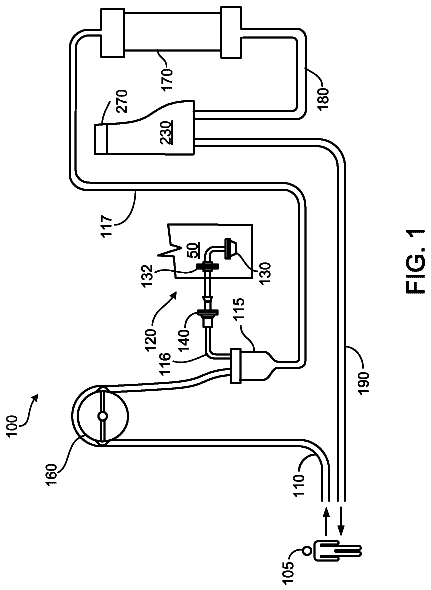
A vent assembly is described for use in an extracorporeal fluid unit.
US 8,663,553 B2 · Inventors: Elrod; Scott
Sheet 1 of 17 from the published document. All sheets in the USPTO PDF
The present invention provides a method and apparatus for controlling a concentration of descenting particles within a temporary structure. The temporary structure comprises a plurality of sidewalls and a roof interconnecting the sidewalls. A plurality of selectively openable and closeable upper windows and lower vents are disposed in the sidewalls. The lower vents are disposed at a location below the upper windows. An ozone generator is disposed within and coupled to the temporary structure to produce descenting particles that are controlled within a hunting zone of the temporary structure to be between about 0.04 and 0.1 ppm.
The prior art discloses a variety of devices and methods that purportedly reduce or masking detectable scents. Examples of such devices and methods are disclosed in U.S. Pat. Nos. 4,309,388; 4,867,052; 4,941,270; 5,087,426; 5,433,919; 5,468,454; 5,484,472; 5,514,345; 5,539,930; 5,547,476; 5,667,564; 5,681,355; 5,762,648; 5,766,560; 5,789,368; 5,790,987; 5,911,957; 5,931,014; 6,007,770; 6,009,559; 6,134,806; 6,134,718; 6,149,038; 6,156,268; 6,163,098; 6,284,204; 6,312,507; 6,355,216; 6,379,435; 6,503,547; 6,564,591; 6,565,805; and 6,576,190, and published U.S. patent application 2003/0044308--all of which are incorporated fully herein by this reference. Hunters in particular have an interest in masking or eliminating their scent that could potentially alert game being hunted to their presence in the field. Game animals, such as deer and bear rely heavily on their sense of smell to react w
1 of 17 drawing sheets so far from the published document, cropped to the drawing. Every sheet is in the USPTO PDF.
What the patent claimed, word for word. All of it is now free to use.
The present invention is related generally to systems and methods for reducing perceptible odors, and more specifically to a system and method for using an ozone generator or similar device to prevent foreign scents from being detected by animals being hunted.
The prior art discloses a variety of devices and methods that purportedly reduce or masking detectable scents. Examples of such devices and methods are disclosed in U.S. Pat. Nos. 4,309,388; 4,867,052; 4,941,270; 5,087,426; 5,433,919; 5,468,454; 5,484,472; 5,514,345; 5,539,930; 5,547,476; 5,667,564; 5,681,355; 5,762,648; 5,766,560; 5,789,368; 5,790,987; 5,911,957; 5,931,014; 6,007,770; 6,009,559; 6,134,806; 6,134,718; 6,149,038; 6,156,268; 6,163,098; 6,284,204; 6,312,507; 6,355,216; 6,379,435; 6,503,547; 6,564,591; 6,565,805; and 6,576,190, and published U.S. patent application 2003/0044308--all of which are incorporated fully herein by this reference.
Hunters in particular have an interest in masking or eliminating their scent that could potentially alert game being hunted to their presence in the field. Game animals, such as deer and bear rely heavily on their sense of smell to react with their surrounding environment, including sensing danger, interacting with other animals and finding food. Scents that are not a natural part of the environment or that are associated with a food source will often function as a warning to such animals and often results in deterring the game animal from approaching a particular area when the foreign scent is detected.
According to Bernier et al. in Analytical Chemistry, 2000, volume 72, issue 4, pages 747-756 and references cited therein which are incorporated fully herein by reference, as many as 346 discernible compounds were identified in human skin emanations. The majority of these were carboxylic acids, alcohols and esters, but aldehydes, aromatics, heterocyclics, ketones, sulfides and thio compounds were also identified. Work cited in Bernier has identified over 100 compounds from human breath. Work cited in Bernier identified foot odor as another source of odor. Some of these compounds are the result of bacteria reacting with body emanations, while other compounds directly emanate from humans. Other compounds emanating from humans can include pheromones, deodorants and perfumes as well as the detergents, perfumes, scents, and additives left on human clothing. While it is not known which specific compound or blends of compounds emanating from humans are identified by an animal as human, there is currently no effective way to safely eliminate or reduce odors from humans and from clothing and equipment enough to reduce the odors to inhibit detection by game animals when a hunter or hunters are situated inside a hunting blind or other temporary structure employed to conceal visibility from animals.
Persons interested in preventing detection by animals of human odors or interested in attracting animals often use masks, attractants, or cover scents to prevent alerting and spooking the animal. Some commonly used masks are carbon sprays which, in addition to being dangerous to inhale and which can irritate skin, become ineffective once dry. Many attractants contain animal urine or estrous, which besides being offensive to the human user, have limited shelf life and are generally ineffective since, especially the estrous-based attractants, tend to occur naturally only in certain seasons. Cover scents, such as fruit extracts or fragrances, last for only a short time since they have a half-life in which the amount of cover scent diminishes over time if not reapplied. In addition, they are often so over-powering that the animal easily identifies the smell as unnatural. The use of descenting soaps and shampoos is messy, time-consuming, often skin irritating, often ineffective and does not address breath odor. Breath descenting using herbs is generally distasteful, and facemasks containing carbons or sieves are extremely uncomfortable.
More recently, the use of clothing containing activated carbons and/or clothing containing bacteria killing metals such as silver has gained some popularity. However, activated carbon has a very low capacity for odorants and requires temperatures preferably above 400.degree. C. and more preferably above 600.degree. C. to regenerate the carbon. These temperatures are well beyond temperature (100 C to 120 C) that a conventional gas or electric clothes dryer is capable of achieving. Placement of clothing in ovens capable of achieving 400 C plus temperatures needed to regenerate the carbon can damage the fabric of a garment. Silver or other metal-containing clothing requires direct contact of the metal with the bacteria to be effective, which is almost never the case since the clothing would then be so restricting as to be uncomfortable. These types of clothing are also expensive and do not address human odors such as those in human breath, nor do they address any of the odors emanating from the foot or any exposed part of the skin like the head and hands.
It has been discovered that gaseous ozone effectively kills bacteria and reduces or eliminates odors emanating from humans as well as odors contained in clothing worn by hunters. The advantages of ozone over other known masking and descenting methods include the facts that: ozone is a gas that eliminates odors emanating from a person (e.g., a hunter) and from personal equipment and can eliminate odors in a space between a person and an animal; and ozone is completely natural to the environment and leaves behind a very pleasant clean smell that wildlife and humans readily recognize, e.g. after a lightning storm. Known ozone generators include, but are not limited to, electrical discharge, UV light, radio wave and combinations thereof. The generator may be battery operated, operated with a car adaptor, and/or may be operated with AC current. The AC current may be supplied directly from an electrical outlet, or may be supplied using a portable generator.
Ozone has been described to treat odorous air, microorganisms, bacteria, mold, smoke, aromatic hydrocarbons, and volatile organic compounds (see for example U.S. Pat. Nos. 1,961,878; 2,203,188; 3,421,836; 3,750,556; 3,937,967; 3,949,056; 4,045,316; 4,863,687; 4,904,289; 4,990,311; 5,087,426; 5,835,840; 5,983,834; 6,094,549; 6,613,277; 6,632,407; 20020030022; 20060096331; and references cited therein, which are incorporated fully herein by this reference); and foreign references EP 261987; WO 200151096; WO 2003089017; WO 2005021135. WO 2005077425 and references cited therein, which are incorporated fully herein by this reference. In examples where clothing or personal effects are placed in a container, a portable enclosure, or a special descenting closet or room located, e.g., in a lodge or cabin in which the hunter is staying, as soon as the hunter leaves the building and enters a vehicle, or passes a moving vehicle, or begins to sweat, any prior descenting is of little value.
Animals have an acute sense of smell and are capable of recognizing a human scent or any other scent that is not advantageous in that environment at long distances. Moreover, game animals have an innate ability to detect individual scents when multiple scents are blended together that may not be detectable by humans. To avoid scent recognition and detection, a hunter will attempt to stay down wind of the animal being hunted. Certain known methods used by hunters to trick animals are to mask the human odor utilizing a carbon spray, cover spray scent or an animal scent. Unfortunately the animal scents which are utilized, are obnoxious and linger on the clothing for long periods of time and often do not mask out human scents. Some of the scents utilized include animal urine. A hunter who is camping overnight does not desire the animal scents to be carried over to bedtime, home, car, etc.
There are other drawbacks in utilizing animal scents or any other scents. The scent may attract a predator that the hunter may not be prepared to encounter. Containers containing food, beverages, or any other substance emit scents readily recognizable to animals that may not be masked by animal scents or may not be natural to a given environment. Female hunters can emit a readily recognizable scent to animals from menstruation that may not be masked by animal scents. Also, the weapon used by the hunter has an odor recognizable by some animals that cannot be disguised with a scent.
In the past, hunters have prepared their clothing before hand by washing to remove prior scents and/or human odor. The soaps used in washing clothing may, however, leave a detectable odor. Moreover, out in the field, the hunter will sweat and permeate the clothing with a human scent, making any prior washing ineffective.
U.S. Pat. No. 5,833,740 to Brais discloses an apparatus for sterilizing bottles utilizing ozone, the entirety of which is incorporated by this reference. The reference recognizes that ozone in large quantities can be harmful or irritating. Ozone is a powerful oxidizing agent. Ozone has 150% of the oxidizing potential of chlorine and twice the oxidizing potential of bromine. Ozone has been shown to be much more effective than chlorine with a reaction time up to 10 times faster. Ozone also readily self-destructs into simple diatomic oxygen due to its inherent instability. Ozone oxidizes biological products and kills bacteria. Catalytic ionization of air using ultraviolet light is known to produce a mixture of ozone-containing hydroxyl and hydroperoxide ions. Ionization devices that are used to eliminate smoke and odors, e.g. those used in automobiles, are known in the art to produce hydroxyl and hydroperoxide ions. Other oxidizing agents are also known in the art.
For safety reasons, government regulations have recommended, and sometimes regulated, the amount of ozone to which a human is to be exposed. For example, OSHA requires that employee permissible exposure limit (PEL) as an eight-hour time-weighted average value of 0.1 ppm ozone in air or a two-hour time-weighted average value of 0.2 ppm ozone in air. The OSHA short term exposure limit (STEL) is 0.3 ppm over a 15 minute period, not to be repeated more than two times in an eight hour period. Prolonged exposure of humans has produced no apparent ill effects at 0.2 ppm.
Consequently, it is desirable to provide a system and method for effectively removing or masking human scent while ensuring that a concentration of ozone within an at least partially enclosed structure is controlled to at or below acceptable levels.
A principal of the invention is to provide a system and method for effectively removing and/or masking human scent when a person is disposed within a temporary and partially enclosed structure, such as a hunting blind, in a safe manner. The present invention is directed to systems and methods for reducing or eliminating the various odors of one or more persons in a temporary structure, such as a hunting blind, through the use of ozone generating products to reduce or eliminate human odors that are detectable by animals. The invention relates to a system and method of significantly reducing or eliminating foreign scents that emanate from clothing, equipment and persons that are contained within and emanate from a temporary structure such as a hunting blind. This is accomplished by utilizing a device that generates ozone and/or a combination of hydroxyl and hydroperoxide ions within the temporary structure in a controlled manner to control the level of oxidant within the temporary structure to effectively eliminate foreign scents emanating from the temporary structure. This is systematically achieved by considering wind conditions, venting of the temporary structure and placement of the oxidant generator within the temporary structure. As such, regardless of the position of the temporary structure relative to the game animal being hunted, scent from the temporary structure can be effectively and safely controlled. The foreign scents may include, but are not limited to, any scent in a space between a human and an animal, such as scents emitting from human breath, human bodies, and from clothing and equipment, that are not native to the environment and/or that may disadvantageously cause an animal being hunted to avoid the area around the temporary structure.
The present invention, in certain aspects, is directed to systems and methods which use and oxidant, such as gaseous ozone, to kill bacteria and/or the odor produced from the breakdown of bacteria and reduce or eliminate odors emanating from humans, e.g. in breath or from skin, as well as odors in clothing worn by a person or equipment that are volatilized into the air space between the human and the wildlife to prevent wildlife from detecting the presence of humans and/or to enhance encounters with and the attraction of wildlife. One particular embodiment of the invention is directed to utilizing a portable ozone generator within a temporary structure, such as a tent or hunting blind erected in an open environment for concealing one or more persons and equipment situated within the structure. The ozone generator is employed to generate gaseous ozone within the temporary structure to reduce or eliminate odors that would otherwise discourage the attraction of game animals for hunters or other forms of wildlife for wildlife enthusiasts and photographers.
In another aspect of the invention, a system and method is provided for deodorizing the air emanating from a temporary structure within which is housed the hunter, equipment and apparatuses of the hunter in an open environment and to descent the surrounding air emanating from the temporary structure. More particularly, there are provided systems and methods for masking, reducing or eliminating human scent or any other foreign scent emanating from clothing, equipment, supplies, the temporary structure itself that is volatized in the air within the temporary structure and that surrounds the temporary structure used by hunters during a hunt--through the use of ozone or hydroxyl and hydroperoxide ions produced by ionization in a manner that will not cause irritation or injury to the user or equipment within the temporary structure by controlling the amount of ionized particles within the temporary structure.
Yet another aspect of the invention is to provide a system and method for military personnel to escape detection by other humans or by scent animals (e.g., scent dogs). In certain particular aspects, the present invention provides systems and methods for reducing or eliminating human or any other foreign scent emanating from items, e.g. from clothing and equipment, used by military personnel positioned within a temporary enclosure desiring to evade detection or capture and from human odors in the surrounding air that result from body (e.g., perspiration and breathing), clothing or equipment emanating odors. This is accomplished through the use of ozone or ozone with hydroxyl and hydroperoxide ions produced by ionization in a manner that would not cause irritation or injury to the user or equipment by controlling the amount of ionized particles within the temporary structure.
In the various embodiments of the present invention, a human being is exposed to ozone generated by an ozone generator. In such embodiments, the human being may be exposed for a relatively short period of time (e.g., about 2 hours or less) to ozone in a time weighted average concentration of about 0.2 parts per million or less. In situations where a person is exposed to ozone for a longer period of time of up to about 8 hours or less, the ozone time weighted average concentration is limited to an average of about 0.1 parts per million or less. Thus, according to the present invention, an acceptable and effective level of ozone on a time weighted average to which the person or persons are exposed is maintained within the temporary structure at an ozone concentration level of 0.2 ppm or less for exposures that are about 2 hours or less and 0.1 ppm for longer exposures up to about 8 hours or less.
In certain embodiments according to the present invention, the temporary structure is pre-treated with ozone so that ozone is retained on the structure, e.g. for several hours and, in certain aspects, for up to 24 hours, and in other embodiments for more than 24 hours. Ozone retained on the temporary structure continues to provide a descenting effect for an extended period of time while a sufficient quantity of ozone is retained within the fabric of the temporary structure. A variety of fabric materials, including, but not limited to knits, cotton, cotton blends, other fibrous fabrics and coarse materials are capable of retaining ozone for a period of time. In addition, by forming the temporary structure from a permeable or semi-permeable fabric material, ozone generated within the temporary structure continue to provide descenting of the temporary structure as the ozone particles become entrapped within and/or pass through the fabric of the temporary structure.
The present invention thus, in one embodiment, provides a method and apparatus for controlling a concentration of ozone within a temporary structure. The method includes providing a substantially enclosed temporary structure. The temporary structure comprises a plurality of sidewalls and a roof that may be formed of fabric or from other flexible or more rigid materials known in the art of temporary structures. For certain temporary structures formed of fabric, a frame may be coupled to the plurality of sidewalls and the roof for supporting the sidewalls and the roof above a ground surface. A plurality of selectively openable and closeable upper windows is disposed in the sidewalls. A plurality of selectively openable and closeable lower vents is disposed in the sidewalls. The lower vents are disposed at a location proximate a floor of the temporary structure. An ozone generator is disposed within and coupled to the temporary structure. At least one of the plurality of upper windows in the sidewall facing a hunting direction is opened to allow the hunter to view the hunting area outside of the temporary structure. At least one vent in a sidewall opposite the open upper window is open to cause a flow of air within the temporary structure to be between the open upper window and the open lower vent. The ozone generator is activated to produce ozone particles within the temporary structure to intermix with odors present within the temporary structure and to descent the odors as the odors emanate from the temporary structure so as to be substantially non-detectable by animals present outside of the temporary structure. The ozone particles continue to intermix with the air emanating from the temporary structure to continue to eliminate odors as the air flows back into the surrounding environment. The upper windows and lower vents are open a sufficient amount to cause air to be blown by wind through the temporary structure to maintain a time weighted average concentration of ozone of between about 0.04 to 0.2 ppm with a time weighted average of between about 0.04 and 0.1 ppm for longer exposure times and a more ideal time weighted average of between about 0.05 and 0.09 ppm within the temporary structure in order to provide an effective amount of ozone within the blind to bind to and/or mask scent molecules, but that is at an acceptable level for the occupant of the temporary structure. In order to provide an effective and acceptable level of ozone within the temporary structure, the systems and methods of the present invention are directed to provide a time weighted average of about 0.08 ppm within the zone in which the head of the hunter is most commonly located for a period of eight hours or less.
In another embodiment, the plurality of vents each have a top edge that is below a bottom edge of the plurality of upper windows to prevent silhouetting through the temporary structure.
In yet another embodiment, the temporary structure forms a hunting blind where the sidewalls and the roof are formed from a camouflage fabric.
In another embodiment, each vent has an opening area that is less than an opening area of the at least one window in the opposite sidewall.
In still another embodiment, the ozone generator is orienting to emanate ozone in a direction of wind blowing outside of the temporary structure.
In yet another embodiment, the ozone generator is positioned above a hunter zone within the temporary structure.
In still another embodiment, the ozone generator is sized to be capable of maintaining a time weighted average ozone concentration within the temporary structure of between about 0.04 to 0.2 ppm with an average of between about 0.04 and 0.1 ppm and a more ideal time weighted average concentration of between about 0.05 and 0.09 ppm within the temporary structure.
In another embodiment, all other vents other than those directly opposite the open upper windows are closed.
In yet another embodiment, all other upper windows are closed except for windows directly opposite the open vents.
If the external wind speed is below about 5 mph, additional lower vents can be opened or the size of the opening of the open lower vent increased to decrease the ozone concentration within the temporary structure. Likewise, if the external wind speed is above about 5 mph, the open vent can be partially closed to increase the time weighted average ozone concentration within the temporary structure to between about 0.02 to 0.2 ppm with an average of between about 0.04 and 0.1 ppm and a more ideal concentration of between about 0.05 and 0.09 ppm.
The advantages and characterizing features will become apparent from the following description of certain illustrative embodiments of the invention. The features and advantages of the present invention are set forth or will become more fully apparent in the detailed description that follows. Furthermore, the features and advantages of the present invention may be learned by the practice of the invention and will become apparent to one skilled in the art upon review of the description, as set forth hereinafter.
The following drawings illustrate exemplary embodiments for carrying out the invention. Like reference numerals refer to like parts in different views or embodiments of the present invention in the drawings. Those of ordinary skill in the art will realize that the following description of the present invention is illustrative only and not in any way limiting. Other embodiments of the invention will readily suggest themselves to such skilled persons.
FIG. 1 is a perspective side view of temporary structure in accordance with the principles of the present invention.
FIGS. 2A, 2B and 2C are front, side and perspective views of a selectably openable and closable window for a temporary structure in accordance with the principles of the present invention.
FIG. 3 is a side view of a temporary structure containing a descenting particle generator in accordance with the principles of the present invention.
FIG. 4 is a side view of an inside of a temporary structure with a plurality of descenting particle generators positioned in a temporary structure in accordance with the principles of the present invention.
FIG. 5 is a side view of an inside of a hunting blind with a plurality of descenting particle generators positioned in a temporary structure in accordance with the principles of the present invention.
FIG. 6 is a side perspective view of a hunting blind with a hunter and ozone generator positioned within the hunting blind in accordance with the principles of the present invention.
FIG. 7A is a side perspective view of a hunting blind with a hunter and ozone generator positioned within the hunting blind in accordance with the principles of the present invention.
FIG. 7B is a side perspective view of a hunting blind with a hunter and ozone generator positioned within the hunting blind in accordance with the principles of the present invention.
FIG. 8 is a side perspective view of a hunting blind with a hunter and ozone generator positioned within the hunting blind in accordance with the principles of the present invention.
FIG. 9 is a side perspective view of a hunting blind with a hunter and ozone generator positioned within the hunting blind in accordance with the principles of the present invention.
FIG. 10 is a perspective side view of a temporary structure with a descenting particle generator positioned therein in accordance with the principles of the present invention.
FIG. 11 is a perspective side view of a temporary structure with a descenting particle generator positioned therein in accordance with the principles of the present invention.
FIG. 12 is a perspective side view of a temporary structure with a descenting particle generator positioned therein in accordance with the principles of the present invention.
FIG. 13A is a top view of a temporary structure in relation to wind direction in accordance with the principles of the present invention.
FIG. 13B is a side view of the temporary structure shown in FIG. 13A.
FIG. 14A is a top view of a temporary structure in relation to wind direction in accordance with the principles of the present invention.
FIG. 14B is a side view of the temporary structure shown in FIG. 14A.
FIG. 15A is a perspective side view of a temporary structure in relation to a first wind direction in accordance with the principles of the present invention.
FIG. 15B is a side view of the temporary structure shown in FIG. 15A in relation to a second wind direction.
Referring now to FIG. 1, there is illustrated a temporary structure in the form of a hunting blind, generally indicated at 10, in accordance with the principles of the present invention. "Temporary structure" as used herein includes any man-made place of observing, hiding and/or protecting a person including, but not limited to, a tent, blind, shack, tree stand, or other partially or fully enclosed structure for protection from natural elements or concealment, and combinations thereof, whether formed primarily of fabric or other flexible or rigid materials that can be assembled, disassemble and reassembled by one or more users. "Person" as used herein includes, but is not limited to, a "hunter" where a "hunter" is defined as including hunters of wild game and other animals and also includes nature enthusiasts, trappers, military personnel, military personnel seeking to evade others and/or avoid capture, hikers, fishermen and fisherwomen, backpackers, and photographers; and "hunt" or "hunting" is defined as including the hunting of wild game and other animals for the purposes of encountering, attracting, avoiding, escaping from, photographing, avoiding detection by, capturing, killing and/or observing them. "Animal" as used herein includes, but is not limited to, any small or large game animal including deer, elk, sheep, pig, moose, caribou, bird, rabbit, elephant, mountain lions, bear and fish, and combinations thereof and, in certain aspects, "animal" includes human beings. For example, a human may desire to prevent the detection of human body odors or odors resulting from the human consumption of various foods and/or spices (e.g., pepper or curry) and/or beverages by the human himself or herself or by another human. "Hunter zone" as used herein defines the area within a temporary structure according to the present invention in which the head and/or upper torso or body of the hunter is typically positioned. This will most often be at a location within the temporary structure above the lower edge of the viewing window(s) or at or near chest level of the hunter and generally near the central interior area of the temporary structure, typically a space defined by a volume that is one to two feet from the outer walls of the temporary structure.
The hunting blind 10 is generally formed from a plurality of sidewalls 12, 14, 16 and 18 and a roof 20. The walls 12, 14, 16 and 18 and roof 20 are formed from a plurality of panels, which in the case of fabric panels may be sewn together. Of course, the side walls and/or roof panels may be formed from other materials known in the art of temporary structures, such as wood, plastic, polymer, composite materials and the like. The bottom sides of each wall 12, 14, 16 and 18 are provided with laterally extendable ground flaps 13, 15, 17 and 19, respectively, that can be secured to the ground with stakes (not shown) to limit air flow between the bottom of the blind 10 and the ground on which it is resting. Internal support structures, such as poles 22 and 24 provide a frame to support the walls 12, 14, 16 and 18 and roof 20 to form the hunting blind 10. The walls 12, 14, 16 and 18 of the hunting blind 10 are provided with a plurality of selectively openable and closeable windows, such as windows 26 and 28 and vents 30 and 32. The windows 26 and 28 are principally provided to allow a hunter positioned within the blind 10 to aim at and shoot a game animal from the window without being detected by the animal. "Hunt" or "hunting" is the searching of wild game and other animals for the purposes of encountering, attracting, avoiding, escaping from, photographing, avoiding detection by, capturing, killing and/or observing such wild game and other animals.
A secondary purpose for the windows 26 and 28 is to direct airflow through the blind 10 in a manner prescribed according to the principles of the present invention.
In order to eliminate or significantly reduce human or other foreign scents emanating from and being present around the hunting blind 10, an oxidizing gas generator 40 is situated inside the blind 10. "Descenting particle generators" include generators that produce an oxidizing particle that is capable of descenting human scents. The descenting particles include, but are not limited to, all applicable oxidants, such as ozone, hydroxyl radicals and hydroperoxides, and other known descenting particles that may be emitted from the generator with or without an operating integrated fan. Descenting particle generators of all sizes, weights, power sources and types are widely available from many sources. Optionally, the descenting particle generator may contain an additional ion generator source for negative ionization of the air. These types of units are also commercially available. Optionally, the descenting particle generator can include the simultaneous or intermittent generation of other known oxidizing agents, bacteria and odor removing substances such as chlorine, zinc ricinoleate and/or cyclodextrine. For hunting purposes it may be desirable that the unit be lightweight, portable, and battery and/or solar power operated and/or with a hand crank generator. When hunting from within a temporary structure according to the present invention, such as blind or tent, if a portable generator or source of AC electric power is available, then descenting particle generators having this power receiving capability are also desirable. When hunting from a temporary structure according to the present invention, such as blind or a tent, it is still desirable to use low weight generators since the generator may be suspended from the roof of the temporary structure, but generators weighing up to about 8 lbs. and more may also be used. In general, light weight ozone generators produce lower levels of ozone and generate ozone for a shorter period of time, especially when small batteries such as size A, AA, AAA, C, D and 9 volt batteries are used. However, many battery-operated portable ozone generators last eight hours and more on one battery charge. The ozone generation source can be of any type including a UV lamp, electrical discharge, or combination of both. Certain portable, battery-operated and solar-operated ozone generators have UV lamps as the ozone generator source due mainly to the lower voltage required for UV lamps. Larger ozone generators capable of operating on AC current can be UV lamp, electrical discharge or a combination of both. Electrical discharge ozone generators can be capable of generating larger amounts of ozone in a smaller size container, but adding blowers, fans and transformers (which is within the scope of the present invention) can result in some generators being heavier than ozone generators having UV lamps. Small, portable battery and solar operated ozone generators are available which have small fans, though many have no fan at all. One advantage of including at least a small fan is that the ozone can be dispersed over a larger area more readily, but it is not necessary that a fan be included in the ozone generator. For ozonating a larger area within a blind, especially when two or more hunters are occupying the blind, an ozone generator having a fan or fan blower may be used, but not required. If a fan or fan blower is used, a fan can be used which makes minimum noise, especially beyond about a ten foot radius of fan operation so as not to alert a game animal to the presence of the blind or the hunters.
Certain ozone generators are capable of producing 1 mg and up to 5,000 mg/hr of ozone and more. For safety considerations, in certain embodiments of the present invention a person is exposed to a time weighted average concentration of 0.1 ppm ozone or less over an 8 hour time period or less; but exposures to larger concentrations up to about 0.2 ppm ozone and more over short periods of time (e.g. less than about 2 hours) is an acceptable exposure to humans. One desired ozone generator is one that can maintain a time weighted average concentration of about 0.1 ppm or less within a temporary structure within which one or more humans are positioned. In certain aspects the present invention provides systems and methods for reducing foreign scent emanating from an at least partially enclosed space and between a human being and an animal, the system and methods including generating descenting material with a generator, introducing the descenting material into the at least partially enclosed space and the space between a human being and an animal, the space containing foreign scent, and reducing or masking the foreign scent in the space with the descenting material. In certain embodiments, the descenting material is ozone and the method further includes: exposing the human being to a time-weighted average value of approximately 0.1 ppm ozone or less (e.g., 0.1 to 0.04 ppm) in air over a time period of eight hours or less within a temporary structure within which the human being is situated. In other aspects, the present invention provides a system and method for reducing and/or masking foreign scent in a space between a human being and an animal, the system and method including producing descenting material with a generator located within a temporary structure within which the human being is also situated, regulating and/or controlling the amount of ozone present within the temporary structure and reducing the foreign scent emanating from the temporary structure with the descenting material. Various factors will affect the amount of ozone required to be produced over time in order to provide effective foreign scent control. These factors include, but may not be limited to, the size of the temporary structure, the configuration of the temporary structure, the number of humans disposed within the temporary structure, external wind conditions, internal temperature within the structure, external temperature outside the structure, the ozone production capacity of the ozone generator and the position of the ozone generator within the temporary structure. Another factor that affects the amount of ozone required over time in order to provide effective foreign scent control is the resonance time of the ozone particles within the temporary structure. That is, the longer the resonance time within the temporary structure, the more time the ozone has to interact with odor producing particles before they exit the temporary structure. As such, in an enclosed or partially enclosed environment, an ozone generator that has a smaller ozone producing capability may be employed as compared to the ozone producing capability of an ozone generated that may be required in an open air environment. Thus, depending on the configuration of a particular temporary structure and ambient conditions, various models of ozone generators may be employed. For example, battery operated ozone generators like the OZONICS HR-200 or HR-150 ozone generators may be employed in accordance with the principles of the present invention. Likewise, other larger or smaller ozone generators known in the art could be employed, whether battery operated or powered by an external electrical source, such as 110 volt AC power.
The use of ozone can quickly reduce, mask or eliminate foreign scents emanating from a person or his or her clothing and equipment and in the space between the person and an animal. The ozone is cleanly reduced to oxygen. The many uses of ozone that are known to kill bacteria, eliminate smoke and react with alcohols, esters, saturated organics, acyclics, aromatic, heterocyclics and more to purify the air for healthier human consumption are used in certain systems and methods according to this invention not to purify the air for human breathing, e.g. for a hunter and his or her equipment normally in a very clean outdoor environment, but to react or otherwise interact with odors emitted by humans and their equipment so that these volatiles are not detected by an animal, e.g. a bear. Since ozone has a half-life of 20 minutes or more, airborne unreacted ozone still continues to interact with bacteria, byproducts of bacteria, odors and/or clothing. In addition, any gear that emits a foreign scent that is exposed to a sufficient concentration of ozone will cease to produce a detectable foreign scent. Without being bound by any theory, it is believed that in one aspect, ozone in the air kills bacteria and/or interacts with odor producing byproducts of bacteria in certain body areas, including, but not limited to, in the underarm and groin areas that are responsible for producing many of the odor-causing volatiles emitted by humans; and in another aspect, any volatile odors that are produced and emitted directly by humans via the skin or by breathing are oxidized by the ozone into compounds that are much less volatile and therefore far less detectable to animals, e.g. bear. In another aspect, it is believed that any volatile odors that are produced and emitted directly by humans via the feet and escape through the shoe or socks are oxidized by the ozone into compounds that are much less volatile and therefore far less detectable to animals. In yet another aspect, it is believed that the more powerful (but much shorter life-time) hydroxyl and/or hydroperoxide radical oxidants that are produced by ozone reacting with ultraviolet rays of the sun and/or the UV lamp of an ozone generator and/or moisture in the air contribute to odor elimination.
The description continues in the full USPTO document.
About 6,355 words. The USPTO PDF has it with every drawing.
Fees are due 3.5, 7.5 and 11.5 years after grant. This patent expired on March 4, 2026, so the fee marked "not paid" was the one that went unpaid.
SYSTEM AND METHOD FOR REDUCING ODORS IN A BLIND
Filed Nov 2011 · published Mar 2012System and method for reducing odors in a blind
Filed Nov 2011 · granted Sep 2012SYSTEM AND METHOD FOR REDUCING ODORS IN A BLIND
Filed Sep 2012 · published Jul 2013System and method for reducing odors in a blind
Filed Sep 2012 · granted Mar 2014Earlier publications, parents and continuations. None of them can still be enforced, or this patent would not be listed.
Prior art cited by the examiner or applicant. Useful when you check your own idea for novelty.
Everything on this page comes from the documents linked above.