 Lapsed, fee not paid21 drawings
Consumer Products · US 8,662,713 B2
Lens and lighting device including the same
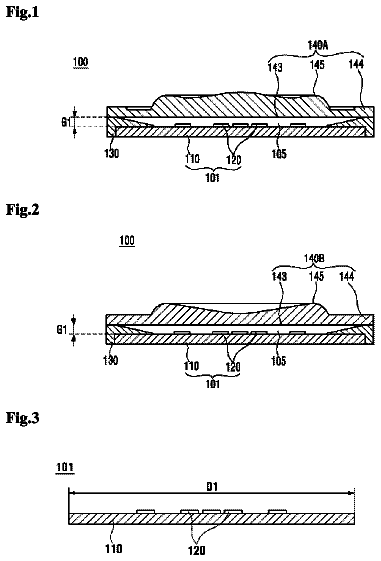
Disclosed is a lens including a light emitting surface.
US 8,662,893 B2 · Assignee: NuCoat, Inc. · Inventors: Schwendimann; Jodi A. et al.
Sheet 1 of 18 from the published document. All sheets in the USPTO PDF
The present invention relates to thermochromatic inks. The present invention provides a toy, wherein the toy includes at least one thermochromatic ink. The present invention provides a pre-printed item, wherein when the temperature of the pre-printed item is changed to particular temperatures, the color of a marking, the color of a drawing, or both, change. The present invention provides an interactive item, wherein the visual appearance of the item is changed by changing the color of at least one of a first or second inks. The present invention provides a drawing device, wherein the position of a substrate and a temperature element are such that a thermochromatic ink does not change color unless sufficient pressure is applied to the substrate effective to deflect the surface of the substrate and bring it temporarily sufficiently more proximate to the temperature element. The present invention provides a smart wand for drawing on a substrate that includes thermochromatic ink. The present invention provides a backlight system. The present invention provides a light box.
Thermochromatic inks are inks that change color in reaction to temperatures. They can be formulated such that they change from any color to any color, including turning from opaque or translucent colors, or turning to opaque or translucent colors, in reaction to a wide variety of temperatures. They can be formulated such that they change colors at a variety of temperatures, such that a particular formulation can have several different temperature transition points, each with a particular color change from one particular color to another. They can be mixed with non-thermochromatic inks, such that blending of the constant color of the non-thermochromatic ink with the temperature-dependent color of the thermochromatic ink occurs. Thermochromatic inks are formulated using chemical compounds that have thermochromatic properties. These thermochromatic compounds generally come in two forms. The
1 of 18 drawing sheets so far from the published document, cropped to the drawing. Every sheet is in the USPTO PDF.
What the patent claimed, word for word. All of it is now free to use.
Thermochromatic inks are inks that change color in reaction to temperatures. They can be formulated such that they change from any color to any color, including turning from opaque or translucent colors, or turning to opaque or translucent colors, in reaction to a wide variety of temperatures. They can be formulated such that they change colors at a variety of temperatures, such that a particular formulation can have several different temperature transition points, each with a particular color change from one particular color to another. They can be mixed with non-thermochromatic inks, such that blending of the constant color of the non-thermochromatic ink with the temperature-dependent color of the thermochromatic ink occurs.
Thermochromatic inks are formulated using chemical compounds that have thermochromatic properties. These thermochromatic compounds generally come in two forms. The first common form is thermochromatic liquid crystals. The color change of these substances is dependent on selective reflection of certain wavelengths by the crystal structure of the material. As the temperature changes, the crystal structure can change between a low-temperature crystal structure, an anisotropic chiral or twisted nematic crystal structure, and a high-temperature isotropic liquid phase. These compounds find application in thermochromatic inks in which color change occurs at a specific temperature, and can sometimes be found in, for example, thermometers for room, refrigerator, aquarium, and medical use, and also in indicators that show the level of propane in pressurized tanks.
The second common form of thermochromatic compounds are leuco dyes. These substances work by having more than one molecular form, which can change via protonation. The different forms have different pi-bond chromophores, thus they exhibit different colors. By making the protonation of the substance dependent on a desired temperature, for example by placing the substance with a weak acid in a solvent that melts at that desired temperature, the color of the substance can be dependent on temperature as well. Leuco dyes change color at a less narrow and less predictable temperature than liquid crystals. Leuco dues have found application in clothing that changes color depending on the heat of the wearer. Both liquid crystals and leuco dyes are usually found in the form of microcapsules both in inks and in other applications.
Some thermochromatic compounds are formulated such that they can reversibly change color, such that they change to a particular color after crossing a particular temperature, and then can change back to the original color when crossing back over that particular temperature. Other thermochromatic compounds are formulated such that they retain a coloration change once the coloration change has occurred.
Some of the applications for thermochromatic compounds include mood rings, measuring the temperature of a liquid in a coffee cup, and indicating when to take a bottle of syrup out of the microwave by the color of a temperature-sensitive label. Other uses include taking someone's temperature with a piece of paper on the forehead, labels for boxes of perishable foods, and battery level monitors.
Toys benefit people in both the educational process and in providing amusement. This is particularly so in the case of children, because they need stimulation to develop their minds and to expend their energy. Toys that have interesting colors or other properties can be fun or educational. For example, devices that allow one to make and show drawn images are useful as toys, as drawing tools for people of any age, and for commercial applications such as showing the day's menu in a restaurant setting. Having such a device that is backlit can enhance the visual appeal of the drawing.
Backlit image display devices are valuable means of displaying images. Such devices can enhance the visual appearance of an image, an effect that can be even more pronounced in dimly lit settings. When shown by such a device, an image with colored or translucent or clear markings or background can be enhanced such that the backlight shows at least partially through and illuminates the markings or background. Simply placing incandescent or florescent light bulbs behind an image is one way to accomplish this effect. Energy- and space-efficient means of illuminating an image from the back are needed.
Coloring and drawing is a creative and satisfying activity for both adults and children. Items for coloring and drawing with pre-printed markings such as coloring books or dot-to-dots are interesting and satisfying ways for people to experience coloring and drawing. After these items are used, they cannot generally be used again. Also, the pre-printed markings in these items that help guide the user can remain visible after the user is finished, which can detract from the visual aesthetics of the resulting colored or drawn design.
The present invention relates to thermochromatic inks. The invention provides a toy. Also, the toy includes at least one thermochromatic ink. Additionally, the thermochromatic ink can change from a first color to a second color when the temperature of the ink reaches a first temperature. Also, the thermochromatic ink can reversibly change color. Also, the thermochromatic ink can return to the first color when cooled below a second temperature.
The present invention provides a pre-printed item. The pre-printed item includes a substrate. The substrate includes a pre-made marking. The substrate is configured such that a drawing can be made on the substrate by a user. Additionally, when the temperature of the pre-printed item is changed to particular temperatures, the color of the marking, the color of the drawing, or both, change. At least one of the marking or the drawing includes a thermochromatic ink.
The present invention provides an interactive item. The interactive item includes a first marking that includes a first ink. Also, the interactive item includes a second marking that includes a second ink. Also, the second marking at least partially covers the second marking. Also, at least one of the first or second ink includes a thermochromatic ink. Additionally, changing the temperature of at least part of the interactive item alters the visual appearance of the item. The visual appearance of the item is changed by changing the color of at least one of the first or second inks.
The present invention provides a drawing device. The drawing device includes a heating element. Additionally, the drawing device includes a source of illumination. Also, the drawing device includes a sheet of substrate that includes at least one thermochromatic ink. The position of the substrate and the heating element is such that the thermochromatic ink does not change color unless sufficient pressure is applied to the substrate effective to deflect at least part of the surface of the substrate and bring it temporarily sufficiently more proximate to the heating element.
The present invention provides a backlight system. The backlight system includes a plastic sheet. The backlight system also includes a source of light. The plastic sheet includes at least two major faces. The two major faces are disposed opposite to one another. The plastic sheet also includes at least one edge. The source of light is alight with at least one edge of the sheet. The plastic sheet acts as a light pipe, such that at least one major face of the backlight system is illuminated.
The present invention provides a smart wand. The smart wand includes a wand. The wand is includes a length for grasping by a user. The wand also includes a tip for drawing on a substrate. The substrate includes at least one thermochromatic ink. Drawing on the substrate includes changing the temperature of at least one thermochromatic ink. The temperature change of the at least one thermochromatic ink is sufficient to elicit a color change of the at least one thermochromatic ink. The tip of the wand includes either a removable tip, or a nonremovable permanent tip.
The present invention provides a light box. The light box includes a flat work surface. The flat work surface is configured to hold a substrate. The substrate includes markings that include thermochromatic ink. The light box also includes a lighting system. The lighting system provides light to the work surface.
The present invention provides certain advantages over other known applications and compositions of thermochromatic inks. The present invention provides compositions, toys, items, and devices that include or manipulate thermochromatic inks that are fun or educational for children or adults to use. Embodiments of the present invention can exhibit unmasking or combinations of colors at various temperatures, enabling an artistic or educational experience for the user. Some embodiments of the present invention can be reset and reused, providing multiple educational or artistic experiences for the user, and saving the user the costs of constantly replacing materials. Some embodiments can provide a different artistic or educational experience each time for the user. In some embodiments, multiple colors are made available to the user depending on the temperature change induced, providing an artistically more varied and richer experience to the user. Some embodiments of the present invention can provide an illuminated artistic or educational experience with temperature-induced color change. Embodiments of the present invention can allow for creative play by a child with reduced risk of mess or of permanent coloring marks on furniture, walls, or other consequences of using standard coloring inks or paints to have an artistic experience. In some embodiments, a smart wand or pen with heated or cooled tips can induce simple or complex color changes and pattern formation with one or more thermochromatic inks. In some embodiments, a smart wand or pen with heated or cooled tips can return to a safe temperature sufficiently quickly to be safe to be used by children.
The drawings illustrate generally, by way of example, but not by way of limitation, various embodiments discussed in the present document.
FIG. 1 illustrates a drawing device, in accordance with at least one embodiment of the present invention.
FIG. 2 illustrates a drawing device, in accordance with at least one embodiment of the present invention.
FIG. 3 illustrates a drawing device, in accordance with at least one embodiment of the present invention.
FIG. 4 illustrates an ink-free stamp, in accordance with at least one embodiment of the present invention.
FIG. 5 illustrates a drawing device, in accordance with at least one embodiment of the present invention.
FIG. 6 illustrates a light box, in accordance with at least one embodiment of the present invention.
FIG. 7 illustrates a light box, in accordance with at least one embodiment of the present invention.
FIG. 8 illustrates a light box, in accordance with at least one embodiment of the present invention.
FIG. 9 illustrates a light box, in accordance with at least one embodiment of the present invention.
FIG. 10 illustrates a light box, in accordance with at least one embodiment of the present invention.
FIG. 11 illustrates a light box, in accordance with at least one embodiment of the present invention.
FIG. 12 illustrates a light box, in accordance with at least one embodiment of the present invention.
FIG. 13 illustrates a light box, in accordance with at least one embodiment of the present invention.
FIG. 14 illustrates a light box, in accordance with at least one embodiment of the present invention.
FIG. 15 illustrates a light box, in accordance with at least one embodiment of the present invention.
FIG. 16 illustrates a light box, in accordance with at least one embodiment of the present invention.
FIG. 17 illustrates a wand, in accordance with at least one embodiment of the present invention.
FIG. 18 illustrates a wand, in accordance with at least one embodiment of the present invention.
FIG. 19 illustrates a wand, in accordance with at least one embodiment of the present invention.
FIG. 20 illustrates a wand, in accordance with at least one embodiment of the present invention.
FIG. 21 illustrates a wand, in accordance with at least one embodiment of the present invention.
FIG. 22 illustrates a wand, in accordance with at least one embodiment of the present invention.
FIG. 23 illustrates a wand, in accordance with at least one embodiment of the present invention.
FIG. 24 illustrates a wand, in accordance with at least one embodiment of the present invention.
FIG. 25 illustrates a wand, in accordance with at least one embodiment of the present invention.
FIG. 26 illustrates a wand, in accordance with at least one embodiment of the present invention.
FIG. 27 illustrates a wand, in accordance with at least one embodiment of the present invention.
FIG. 28 illustrates a wand, in accordance with at least one embodiment of the present invention.
FIG. 29 illustrates a wand, in accordance with at least one embodiment of the present invention.
Reference will now be made in detail to certain claims of the disclosed subject matter, examples of which are illustrated in the accompanying drawings. While the disclosed subject matter will be described in conjunction with the enumerated claims, it will be understood that they are not intended to limit the disclosed subject matter to those claims. On the contrary, the disclosed subject matter is intended to cover all alternatives, modifications, and equivalents, which can be included within the scope of the presently disclosed subject matter as defined by the claims.
References in the specification to "one embodiment", "an embodiment", "an example embodiment", etc., indicate that the embodiment described can include a particular feature, structure, or characteristic, but every embodiment may not necessarily include the particular feature, structure, or characteristic. Moreover, such phrases are not necessarily referring to the same embodiment. Further, when a particular feature, structure, or characteristic is described in connection with an embodiment, it is submitted that it is within the knowledge of one skilled in the art to affect such feature, structure, or characteristic in connection with other embodiments whether or not explicitly described.
In this document, the terms "a" or "an" are used to include one or more than one and the term "or" is used to refer to a nonexclusive "or" unless otherwise indicated. In addition, it is to be understood that the phraseology or terminology employed herein, and not otherwise defined, is for the purpose of description only and not of limitation. Furthermore, all publications, patents, and patent documents referred to in this document are incorporated by reference herein in their entirety, as though individually incorporated by reference. In the event of inconsistent usages between this document and those documents so incorporated by reference, the usage in the incorporated reference should be considered supplementary to that of this document; for irreconcilable inconsistencies, the usage in this document controls.
In the methods of manufacturing described herein, the steps can be carried out in any order without departing from the principles of the invention, except when a temporal or operational sequence is explicitly recited. Recitation in a claim to the effect that first a step is performed, then several other steps are subsequently performed, shall be taken to mean that the first step is performed before any of the other steps, but the other steps can be performed in any suitable sequence, unless a sequence is further recited within the other steps. For example, claim elements that recite "Step A, Step B, Step C, Step D, and Step E" shall be construed to mean step A is carried out first, step E is carried out last, and steps B, C, and D can be carried out in any sequence between steps A and E, and that the sequence still falls within the literal scope of the claimed process. A given step or sub-set of steps can also be repeated, or carried out simultaneously with other steps.
Furthermore, specified steps can be carried out concurrently unless explicit claim language recites that they be carried out separately. For example, a claimed step of doing X and a claimed step of doing Y can be conducted simultaneously within a single operation, and the resulting process will fall within the literal scope of the claimed process.
As used herein, "change color" refers to changing from one color to another, where the first or second color can be white, colored, transparent, translucent, opaque, or any combination thereof.
As used herein, "draw" or "drawing" refers to making marks on paper or some other suitable surface using any suitable marking device including pencils, paints, pens, and fingers. The marks made can connect dots, form any type of image, including by filling shapes with colors.
As used herein, "freezer" refers to a device that brings an object's temperature to below approximately 4.4 degrees C.
As used herein, "marking" or "mark" refers to any image, design, line, dot, picture, or combination thereof.
As used herein, "substrate" refers to any material on which markings or drawing can be made, including but not limited to paper, plastic, films, canvas, cloth, and other suitable materials.
As used herein, "toy" refers to an item designed to be played with, including for fun or as an educational device.
To better illustrate the present thermochromatic inks, printing methods and kits, a non-limiting list of examples is provided here:
In Example 1, one or more thermochromatic inks are used in a coloring set.
In Example 2, the coloring set of Example 1 is a dot-to-dot.
In Example 3, the one or more thermochromatic inks of Example 1 are printed on a substrate.
In Example 4, the one or more thermochromatic inks of Example 1 are optionally configured such that they form an image.
In Example 5, the substrate of Example 3 is a piece of paper, and is configured to be highly porous.
In Example 5a, the substrate of Example 3 is a piece of polymer-based film.
In Example 6, the one or more thermochromatic inks of Example 1 form an image that can disappear on a piece of paper, when heated.
In Example 7, the one or more thermochromatic inks of Example 6 are configured to reappear through a cooling process.
In Example 8, a process of coating one or more thermochromatic inks onto a piece of paper is performed.
In Example 9, one or more thermochromatic inks are used to form a mess-free scratch off product.
In Example 10, the one or more thermochromatic inks of Example 9 are coated over an image and can be erased to show the image.
In Example 11, one or more additional thermochromatic inks are coated over the one or more inks of Example 10.
In Example 12, the one or more additional thermochromatic inks of Example 11 can be heated to show a second image below the first image.
In Example 13, a process of creating a mess-free scratch off product is performed.
In Example 14, a piece of paper for coloring is configured to be reusable.
In Example 15, the piece of paper of Example 14 is configured to be cooled to eliminate any coloring on it.
In Example 16, the piece of paper of Example 14 is configured to be heated to eliminate any coloring on it.
In Example 17, a kit includes one or more thermochromatic inks, a piece of paper, and a writing utensil.
In Example 18, the one or more thermochromatic inks of Example 17 are printed on the piece of paper.
In Example 19, the one or more thermochromatic inks of Example 17 are configured to be mess-free scratch off.
In Example 20, the kit of Example 17 includes a variety of papers and writing utensils specifically formulated to work with the variety of papers.
In Example 21, the kit of Example 17 contains one type of paper and a writing utensil specifically formulated for the type of paper.
In Example 22, a kit includes one or more thermochromatic inks, a toy, and a writing utensil, where the writing utensil is specifically formulated for the use on toys.
In Example 23, any one or any combination of Examples 1-22 is optionally configured such that all elements or options recited are available to use or select from.
The present invention relates to thermochromatic inks. In some embodiments, thermochromatic inks are incorporated into toys, games, or educational items for children. One example includes a substrate such as paper with numbered dots printed thereon such that a child can connect the dots to form an image, wherein the dots include thermochromatic ink. The substrate can then be heated or cooled causing the dots to disappear, leaving only the image created by the child on the paper. Heating or cooling can then be used to make the dots reappear, if desired. The temperature at which the ink changes color when cooled can be different than the temperature at which the ink changes color when heated.
Another embodiment includes preprinted images on a substrate in the style of a coloring book, such as outlines, that can be filled in by the child. The outlines include thermochromatic ink. Once filled in, the substrate can then be heated or cooled to cause the outlines to disappear, leaving only the filled-in image. In some embodiments, the outlines include standard inks while the filled-in images are thermochromatic inks. By heating or cooling the substrate, the user's filled-in ink images can be rendered invisible. In some embodiments, by rendering the images invisible, the substrate can then be reused, allowing a user to fill-in images again.
Other embodiments can take advantage of a property of some thermochromatic inks, in which the inks do not become transparent but rather turn to white (or other suitable opaque color), which is the typical color of paper. The heat source to turn the ink opaque can simply be the friction of an eraser or such item as designed to produce the heat through friction. When cooled, the inks can return to their original color but potentially not at the same intensity. One embodiment of the present invention can be a mess-free coloring system, wherein the user can make markings disappear by heating with friction, caused by rubbing or by other suitable means, such as with a heated implement or with body heat. In another embodiment, a mess-free coloring system is provided by making markings with either thermochromatic inks or standard inks and then covering such prints with thermochromatic inks that can be changed either by heat or by the friction of an erasing stroke, vibrating contact point, or another heat-generating method. Embodiments of the mess-free coloring system can include a material that produces heat through friction that generates less detritus than a standard pencil eraser.
In another embodiment, a mess-free scratch-off item is provided. The item includes an image or marking that is at least partially covered and masked by thermochromatic ink that is originally opaque but that turns transparent upon heating. The image or marking can be revealed by heating the thermochromatic ink, for example by rubbing the item with an eraser or similar implement, by using body heat, or by using another suitable heating method.
In another embodiment, an educational item is provided. In one example, the item includes an educational question written in normal ink. For example, the question could be a math problem, a reading problem, a visual problem, or any suitable educational problem. The item also includes an educational answer that is masked by thermochromatic ink. When the user wants to check the answer, the user changes the color of the thermochromatic ink to a transparent or translucent color by any suitable means, revealing the answer. For example, the color of the thermochromatic ink can be changed using body heat, a heated or cooled implement, or by other suitable means. When finished, the user can change the color of the thermochromatic ink back to its original opaque color, remasking the answer, and allowing for reuse of the item. For example, the color of the thermochromatic ink can be changed back by placing the educational item in the freezer or refrigerator.
The thermochromatic inks of the present invention can be any suitable thermochromatic ink, including inks that include liquid crystals and leuco dyes, and can have any suitable transition point temperature, and the transition point can occur across any suitable range of temperatures. For example, the transition point can be 25, 30, 35, 40, 45, 50, 55, 60, 65, 70, 75, 80, 85, 90, 95, 100, 105, 110, 115, 120, 125, 130, 135, 140, 145, 150, 155, 160, 165, 170, 175, 180, 185, 190, 195, or 200.degree. F. The temperature range of the transition point can be, for example, 0.5, 1.0, 2, 3, 4, 5, 10, 15, 20, 25, 30, 35, or 40.degree. F. One formulation, for example, can have a transition point of about 62.degree. F. to about 87.degree. F. and another can have a transition point of about 120.degree. F. to about 140.degree. F. In some examples, the one or more ink formulations used are those available from Pilot Corporation or Sawgrass Corporation. There are a variety of methods by which the thermochromatic inks can be applied, including, for example, gravure printing, flexo-coating or other suitable methods of coating and printing.
In some embodiments, more than one thermochromatic ink is used in a single ink formulation, with one or more temperature transition points and one or more colors or color combinations. In various examples, each of the ink formulations can have different thermal qualities with varying transition points. One of the benefits of using such inks in a combination is that multiple stages of heating can be used to reveal different layers of images, colors, or other types of prints.
The method of heating can be a device in the form of a pen or a wand of suitable shape wherein one end is heated to a desired temperature. In some examples, as the heat is applied to the inks using the pen or wand, drawings can be created on top of the printed images, colors or images can be revealed, or markings or images can be masked. In other examples, the pen or wand can have one end that is cooled to a desired temperature. The application of the cooled end of the pen or wand can create colors or drawings or can reveal or mask images on substrates that include thermochromatic inks.
Another aspect of the present invention is drawing device. In some examples, the drawing device includes a temperature element. A temperature element can be a heating element or a cooling element. In some embodiments, the device can have a heating element that is located below an opening slot for the printed film or other substrate that contains both images or colors and one or more thermochromatic pigment. In one embodiment, the heating element can include a patterned grid that has raised bumps on it that can be made of any number of heat resistant materials. The grid and these bumps can be placed in any sort of pattern. These bumps may have different heights and sizes depending on the effects desired. The substrate can be pressed into contact with the temperature element by a finger, a stylus, a stamp pad, or any other utensil that allows for putting pressure on the sheet. In some embodiments, as the substrate is inserted into the device, there is a covering sheet that prevents direct human contact with the heating or cooling element, for safety. In some examples, the protective cover can also serve as a guide to insertion of the material onto the device.
FIG. 1 illustrates one embodiment of the present invention, a drawing device 100. The device includes a heating element 10, a heat grid. The device includes a source of illumination 20. The device has a sheet of substrate 30 that includes at least one thermochromatic ink. The substrate is sufficiently far away from the heating element that the thermochromatic ink does not change color unless sufficient pressure is applied to the substrate effective to deflect the surface of the substrate and bring it temporarily sufficiently more proximate to the heating element. The device also includes a flexible encasement element 40, which can help to protect the user from the heating element 10. The device includes a roll of substrate 50, and a cutting device 60 for cutting the substrate into sheets. The device also includes a sensor 70 that detects is substrate 30 is present before allowing the heating element 10 to engage, as a safety feature.
FIG. 2 illustrates one embodiment of the present invention, a side view of the device 100. The device includes a heating element 10, a heat grid. The device includes a source of illumination 20. The device has a sheet of substrate 30 that includes at least one thermochromatic ink 31. The thermochromatic ink 31 is on the side of the substrate facing the heating element. The substrate also includes a backing material 32 that supports the thermochromatic ink 31. In some examples, the backing material can also be referred to as the substrate. The substrate is sufficiently far away from the heating element that the thermochromatic ink does not change color unless sufficient pressure is applied to the substrate effective to deflect the surface of the substrate and bring it temporarily sufficiently more proximate to the heating element. The device also includes a flexible encasement element 40, which can help to protect the user from the heating element 10. The device includes a roll of substrate 50. The device includes bumps 15 to keep the substrate sufficiently far away from the heating element.
FIG. 3 illustrates one embodiment of the present invention, a side closeup view of the device 100. The closeup shows the heating grid 10 with bumps 15 disposed between the heating grid 10 and the substrate 30. The bumps 15 keep the substrate 30 sufficiently far away from the heating element such that the thermochromatic ink 31 does not change color without the application of pressure from the user. The substrate also includes a backing material 32 that supports the thermochromatic ink 31. In some examples, the backing material can also be referred to as the substrate. The closeup shows the flexible encasement element 40, which can help to protect the user from the heating element 10. The closeup shows the finger 90 of the user applying pressure to the device. The pressure from the finger 90, causes flexing of the encasement element 40, which causes flexing of the substrate 30, including the backing material 32 and the thermochromatic ink 31, which causes the thermochromatic ink 31 to be sufficiently proximate to the heating element 10 such that the thermochromatic ink 31 is heated and changes color in response to the pressure applied to the device from the user.
FIG. 4 illustrates one embodiment of the present invention, a ink-free stamp 150. The ink-free stamp includes a gripping region 95 and a pattern region 96. A user can grasp the ink-free stamp at the gripping region 95 and press the pattern region 96 into a device, such as device 100 discussed above, causing a pattern that corresponds to the pattern region 96 to appear on the substrate.
FIG. 5 illustrates one embodiment of the present invention, a drawing device 200. The device 200 is a variation of the device 100. Device 200 includes a heating element 10. The device includes a source of illumination 27, LED lights. The LED lights 27 fit into holes 26 in an acrylic sheet 25 that is disposed between the heating element 10 and a substrate 30. The acrylic sheet 25 acts as a light pipe, and distributes the light from the LED lights 27 across the sheet, providing a backlight. The substrate 30 that includes at least one thermochromatic ink. The substrate is sufficiently far away from the heating element 10 and acrylic sheet 25 that the thermochromatic ink does not change color unless sufficient pressure is applied to the substrate effective to deflect the surface of the substrate and bring it temporarily sufficiently more proximate to the heating element. The device also includes a flexible encasement element 40, which can help to protect the user from the heating element 10. The device includes a roll of substrate 50.
In another embodiment, rather than using raised bumps to keep the substrate at a sufficient distance from the heating or cooling element, other means are used to keep the substrate sufficiently far away from the element such that the thermochromatic inks on the substrate do not change color unless pressure is applied. Examples of ways to keep the substrate sufficiently far away from the element are keeping the substrate under tension, putting a foam-like pressure resistant and/or heat resistant material between the substrate and the heating element, using wires or strings under tension to suspend the substrate above the heating element, or other suitable means.
In another embodiment, the device can have a heating or cooling element that is designed to heat or cool the entire substrate without any pressure being applied thereon. The heating or cooling of the substrate by the heating or cooling element can reset the substrate to its original form after it has been used, allowing it to be reused. For example, the substrate can begin with an opaque or solid appearance, and can include one or more types of thermochromatic inks. Application of cold or hot temperature to parts of the substrate can allow a user to generate drawings or patterns on the substrate. Heating or cooling the substrate to a particular temperature can return the substrate to its original appearance, thereby resetting it and preparing it for reuse. The heating or cooling element of such a device is only turned on when the user desires to reset the substrate to its original form. In some embodiments, the heating or cooling element can become hot or cold quickly, allowing for a fast reset of the substrate. In some embodiments, the heating or cooling element can reach the desired temperature in 1, 5, 10, 20, or seconds, or 1, 2, 3, or 5 minutes. After the substrate is reset, the heating or cooling element can return to a normal temperature quickly, allowing the user to quickly reuse the substrate. In some embodiments, the heating or cooling element can return to a normal temperature in 1, 5, 10, 20, or 30 seconds, or 1, 2, 3, or 5 minutes.
In some embodiments, the device can include a means of illuminating the substrate from the back or side. In some examples, the light source can be a light bulb. The source of light penetrating the substrate may be a multi-colored LED, which can be programmably controlled by a microprocessor. This can enable the lighting to be of any color, change between colors, have lighting patterns, and fully controlled light sequencing that would make the use of the device attractive. In some embodiments, the lighting source can be a plastic sheet that feeds light from the edge of the material thus acting as a light pipe. The plastic can be at least one of acrylic, polycarbonate, or any other suitable plastic. This light-pipe sheet can be capable of reaching temperatures of up to 140.degree. F., and this sheet can be a sufficient thermal conductor to enable the heating element to transfer heat into the plastic sheet which contacts the thermochromatic pigment. In some embodiments, the heating or cooling element is located under the light pipe sheet. In some examples, the heating or cooling element is in contact with the light pipe sheet.
In embodiments that include a backlight, changing the color of a thermochromatic ink on the substrate to a transparent or translucent color can have a dramatic visual effect. The change to a transparent color can allow large amounts of the backlight to shine through the transparent areas. In embodiments with a backlight that can change colors, the various colors of the light shining through the transparent or translucent areas can be highly visible to the viewer, enabling a satisfying artistic experience and a satisfying viewing experience. In some examples, this can give the backlit image a similar appearance to the backlit blackboards that are often used in restaurants, bars, and offices.
In some embodiments, the substrate that is inserted into the heating device can be a transparent or translucent material that can be in one or more layers and that can include one or more layers of thermochromatic inks and one or more layers of non-thermochromatic inks. In embodiments that include a backlight, clear or translucent substrate may provide a desirable backlight experience for the user or the viewer. In some embodiments, the substrate can be a paper or other material that is not necessarily clear or translucent. In some cases, it can be preferable to have the printed image on a white or other color background, rather than a clear background. With the application of cooling or heating, the thermochromatic inks can turn transparent or translucent to reveal images or colors, or the thermochromatic inks can turn different colors. With combinations of multiple thermochromatic inks, combinations of transition points, transparency, and different colors can create a wide variety of different patterns as a result of the heating or cooling treatment of the substrate. By combining inks with different transitional temperatures, different temperatures of heating and cooling can produce different colors. In some embodiments, the ink can be printed on the downward facing portion of the substrate. In some examples, the substrate can be a roll of material. In some examples, the roll of material can be mounted on the device. The device can have a cutting blade or other suitable cutting means that allow for the separation of the roll. Alternatively, the roll can be perforated into sheets that can be separated as desired. A variety of suitable separation devices can be used in conjunction with a roll.
In embodiments that include a configuration that allows changing the temperature of the substrate with a heated or cooled wand or pen, the embodiments do not include a configuration that allows deflection of the substrate towards a heating or cooling element. Likewise, in embodiments that include a configuration that allows changing the temperature of the substrate with a heating or cooling element by deflection of the substrate towards the heating or cooling element, the embodiments do not include a configuration that enables the changing of the temperature of the substrate with a heated or cooled wand or pen. Some embodiments include both a configuration that allows changing the temperature of the substrate with a heated or cooled wand or pen and a configuration that allows deflection of the substrate towards a heating or cooling element.
In certain embodiments of the present invention, the wand or pen could be a smart pen. The smart pen can have a variety of characteristics that enable it to be used to draw on a substrate that comprises a thermochromatic ink. In some embodiments, these can include the ability to principally heat or cool the tip when sufficiently proximate to a substrate for writing, the ability to change the temperature of the tip depending on a specific color transformation the user desires of a thermochromatic ink, or rapid heating and cooling of the tip. In some examples, the smart pen can include smart heating abilities, such that it can apply heat to the tip that is momentarily hotter than the final desired temperature of the tip in order to make the tip heat very quickly; once the tip reaches the desired temperature, the smart pen can then cool back to the desired temperature, such that the tip does not exceed the desired temperature.
The description continues in the full USPTO document.
About 6,565 words. The USPTO PDF has it with every drawing.
Fees are due 3.5, 7.5 and 11.5 years after grant. This patent expired on March 4, 2026, so the fee marked "not paid" was the one that went unpaid.
THERMOCHROMATIC INKS, PRINTING METHODS AND KITS
Filed Feb 2011 · published Sep 2011Thermochromatic inks, printing methods and kits
Filed Feb 2011 · granted Mar 2014Earlier publications, parents and continuations. None of them can still be enforced, or this patent would not be listed.
Prior art cited by the examiner or applicant. Useful when you check your own idea for novelty.
Everything on this page comes from the documents linked above.