 Lapsed, fee not paid22 drawings
Software & Apps · US 8,656,296 B1
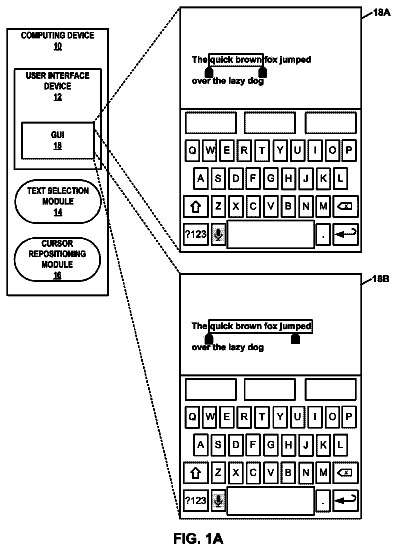
Selection of characters in a string of characters
A graphical user interface (GUI) displayed at a user interface device includes a character string that includes a substring.
US 8,656,308 B2 · Inventors: Shimkin; Beth
Sheet 1 of 10 from the published document. All sheets in the USPTO PDF
A method of managing electronic items is provided. User-owned images of items are received and stored to a plurality of virtual closets. Each of the plurality of virtual closets are associated with a specific position in a stack. The stack has a plurality of positions. Retailer-owned images of items are stored in the plurality of virtual closets. An image is displayed in each of the positions of the stack. Each displayed image is selected from a virtual closet of the plurality of virtual closets corresponding with the positions in the stack. A user is allowed to change the displayed image in each of the positions in the stack.
The increasing popularity of fashion has resulted in a plethora of wardrobe items in the brick and mortar closets of shoppers today. Unfortunately, an extensive wardrobe requires extensive and often inconvenient management to remain abreast of the utility of the contents of the wardrobe, to determine which items in the wardrobe fit, to determine which items in the wardrobe are potential coordinates with other items, to determine the desirability of two or more items in a combined outfit and to view the entire wardrobe. Further, developing an extensive wardrobe often results in numerous hours spent browsing items at or purchasing items from brick and mortar retailer sites or virtual retailer sites. Finally, a shopper is often unable to determine whether an item in a brick and mortar retail site will coordinate with a currently-owned item or whether the shopper has a currently-owned item t
8 of 10 drawing sheets so far from the published document, cropped to the drawing. Every sheet is in the USPTO PDF.
What the patent claimed, word for word. All of it is now free to use.
The present invention relates generally to item management systems and methods and, more particularly, to a system and method for electronic item management.
The increasing popularity of fashion has resulted in a plethora of wardrobe items in the brick and mortar closets of shoppers today. Unfortunately, an extensive wardrobe requires extensive and often inconvenient management to remain abreast of the utility of the contents of the wardrobe, to determine which items in the wardrobe fit, to determine which items in the wardrobe are potential coordinates with other items, to determine the desirability of two or more items in a combined outfit and to view the entire wardrobe.
Further, developing an extensive wardrobe often results in numerous hours spent browsing items at or purchasing items from brick and mortar retailer sites or virtual retailer sites.
Finally, a shopper is often unable to determine whether an item in a brick and mortar retail site will coordinate with a currently-owned item or whether the shopper has a currently-owned item that would be duplicated by a purchase at the brick and mortar retailer site. Additionally, a shopper may desire to conveniently search her wardrobe and empty her brick and mortar closet of wardrobe items that are no longer desirable.
Shoppers are confronted with similar issues when selecting furniture or other items for purchase. Accordingly, systems and methods for electronic item management are desirable to address one or more of these or other item-related problems. Such electronic item management systems and methods include wardrobe and furniture management systems and methods.
A method of managing electronic items is provided. User-owned images of items are received and the user-owned images of items are stored in a plurality of virtual closets. Each of the plurality of virtual closets are associated with a specific position in a stack. The stack has a plurality of positions. Retailer-owned images of items are stored in the plurality of virtual closets. An image is displayed in each of the positions of the stack. Each displayed image is selected from a virtual closet of the plurality of virtual closets corresponding with the positions in the stack. A user is allowed to change the displayed image in each of the positions in the stack.
In an exemplary embodiment of the present invention, a user is allowed to select user-selected images for display in a subset of the positions in the stack. System-selected images are selected randomly for display in a remaining subset of the positions in the stack.
In an exemplary embodiment of the present invention, a user is allowed to select user-selected images for display in a subset of the positions in the stack. System-selected images are selected for display in a remaining subset of the positions in the stack by determining which of the system-selected images match with the user-selected images in the stack.
In an exemplary embodiment of the present invention, determining which of the system-selected images match with the user-selected images in the stack comprises comparing colors, shades, patterns, shapes, and stack position of system-selected images with colors, shades, patterns, shapes, and positions of the user-selected images.
In an exemplary embodiment of the present invention, the stack is a vertical stack.
In an exemplary embodiment of the present invention, the stack is a horizontal stack.
In an exemplary embodiment of the present invention, a user is allowed to change a layout of the stack to a vertical layout, a horizontal layout, or another layout arrangement.
In an exemplary embodiment of the present invention, the electronic items are images of wardrobe, furniture, apparel, accessory, room decor, or other physical items.
In an exemplary embodiment of the present invention, tags in association with the displayed images are displayed. The tags contain information about the items in the images.
In an exemplary embodiment of the present invention, the electronic items are wardrobe items, and each of the plurality of virtual closets are also associated with a type of clothing or accessory, or a color, shade, pattern, shape, price, style time period, material type, specific seasonal time period of year, size, or dress code category.
In an exemplary embodiment of the present invention, each of the plurality of virtual closets may be sorted by a color, shade, pattern, shape, price, style time period, material type, specific seasonal time period of year, size, dress code category, or another defining item characteristic.
An electronic item management system is provided having a processor and a memory operably coupled to the processor. The memory has program instructions stored therein. The processor is operable to execute the program instructions. The program instructions include instructions for receiving user-owned images of items and storing the user-owned images of items in a plurality of virtual closets, each of the plurality of virtual closets being associated with a specific position in a stack, the stack having a plurality of positions; instructions for storing retailer-owned images of items in the plurality of virtual closets; instructions for displaying an image in each of the positions of the stack, each displayed image being selected from a virtual closet of the plurality of virtual closets corresponding with the positions in the stack; and instructions for allowing a user to change the displayed image in each of the positions in the stack.
In an exemplary embodiment of the present invention, the program instructions further include instructions for allowing a user to select user-selected images for display in a subset of the positions in the stack; and instructions for selecting system-selected images randomly for display in a remaining subset of the positions in the stack.
In an exemplary embodiment of the present invention, the program instructions further include instructions for allowing a user to select user-selected images for display in a subset of the positions in the stack; and instructions for selecting system-selected images for display in a remaining subset of the positions in the stack by determining which of the system-selected images match with the user-selected images in the stack.
In an exemplary embodiment of the present invention, the instructions for determining which of the system-selected images match with the user-selected images in the stack includes instructions for comparing colors, shades, patterns, shapes, and stack position of system-selected images with colors, shades, patterns, shapes, and positions of the user-selected images.
In an exemplary embodiment of the present invention, the program instructions further include instructions for allowing a user to change a layout of the stack to a vertical layout, a horizontal layout, or another layout arrangement.
In an exemplary embodiment of the present invention, the program instructions further include instructions for displaying tags in association with the displayed images, the tags containing information about the items in the images.
In an exemplary embodiment of the present invention, the electronic items are wardrobe items, and each of the plurality of virtual closets are also associated with a type of clothing or accessory, or a color, shade, pattern, shape, price, style time period, material type, specific seasonal time period of year, size, or dress code category.
In an exemplary embodiment of the present invention, the program instructions further include instructions for sorting each of the plurality of virtual closets by color, shade, pattern, shape, price, style time period, material type, specific seasonal time period of year, size, dress code category, or another defining item characteristic.
A system and a method of managing electronic items is provided. Images of items are received. The images of items are stored in a plurality of virtual closets. Each of the plurality of virtual closets is associated with a specific position in a stack. The stack has a plurality of positions. An image is displayed in each of the positions of the stack. Each displayed image is selected from a virtual closet of the plurality of virtual closets corresponding with the positions in the stack. A user is allowed to change the displayed image in each of the positions in the stack.
FIG. 1 is a schematic block diagram of an electronic user wardrobe management system according to an embodiment of the invention.
FIG. 1A is a schematic view of a screenshot of a communication device displaying three horizontally stacked images.
FIG. 1B is a schematic view of a screenshot of a communication device displaying four vertically stacked images.
FIG. 1C is a schematic view of a screenshot of a communication device displaying two horizontally stacked virtual closets.
FIG. 1D is a schematic view of a screenshot of a communication device displaying four vertically stacked virtual closets.
FIG. 1E is a schematic view of a screenshot of a communication device displaying five images stacked in a star configuration.
FIG. 1F is a schematic view of a screenshot of a communication device displaying eight images stacked in a circle configuration.
FIGS. 1G, 1H and 1I are schematic views of screenshots showing scrolling of images in virtual closets.
FIG. 1J is a schematic view of a screenshot showing tags for associating information with an image according to an embodiment of the invention.
FIG. 1K is a schematic view of a screenshot showing enlargement of two images.
FIG. 2 is a schematic block diagram of a communication device of the electronic user wardrobe management system according to one embodiment of the invention.
FIG. 3 is a schematic block diagram of a wardrobe manager according to an embodiment of the present invention.
FIG. 4 is a schematic block diagram of a wardrobe manager of the user wardrobe management system of FIG. 1 according to another embodiment of the invention.
Embodiments of the invention are described below with reference to drawings. These drawings illustrate certain details of specific embodiments that implement the systems, methods and computer program products of the present invention. However, describing the invention with drawings should not be construed as imposing on the invention any limitations that may be present in the drawings. The present invention contemplates methods, systems and program products on any machine-readable media for accomplishing its operations. The embodiments of the present invention may be implemented using an existing processor, or by a special purpose processor incorporated for this or another purpose or by a hardwired system.
The present invention is directed to systems and methods for electronic item management. Electronic item management includes electronic furniture management, electronic accessory management, electronic user wardrobe management, and in general, electronic management of any user-related items. The present invention is described specifically with respect to electronic user wardrobe management systems and methods, but the concepts and ideas of the electronic user wardrobe management systems and methods are applicable generally to electronic item management systems and methods.
FIG. 1 is a schematic block diagram of an electronic item management system according to an embodiment of the invention. In this embodiment, the electronic item management system ("the system") includes a communication device 100, a item manager 110 and a network 120. In some embodiments, the system also includes a retailer site 130. In some embodiments, the communication device is located in close geographical proximity to the item manager. In some embodiments, the communication device is located on the item manager. In some embodiments, the functionality of the communication device and the item manager are combined and function as a single entity.
In some embodiments, the communication device is accessible by a user for performing electronic user wardrobe management functions. As used herein, "electronic user wardrobe management" means one or more of the following: creation of one or more virtual closets for storage of images indicative of wardrobe items that are currently-owned or not currently-owned by the user, storing images of wardrobe items to or removing images of wardrobe items from one or more virtual closets, associating information with one or more of the images of wardrobe items, creating one or more outfits from one or more images of wardrobe items, storing outfits in virtual closets, stacking one or more virtual closets or images, scrolling through the contents of one or more virtual closets, on-screen display of virtual closets or images of wardrobe items, facilitation of on-line purchase of one or more wardrobe items, facilitation of purchase of one or more wardrobe items at a brick and mortar retail store, facilitation of enlarged display of an image placed on an on-screen grid, facilitation of enlarged display of an image generally, transmitting to one or more users images corresponding to wardrobe items or outfits that include multiple wardrobe items, provisioning of a private user webpage, a public user webpage and/or one or more system webpages, which are associated with a webpage for an electronic user wardrobe management system. A wardrobe item may include, but is not limited to, apparel, accessories such as jewelry and hats, literature related to fashion such as fashion magazines, furniture items, room decor and accessories. The communication device is accessible by a user for performing one or more functions concurrently. By way of example, the user may perform scrolling, stacking and searching functions concurrently.
As used herein, the term "stack" means to arrange in a particular configuration. The configuration may include any number of virtual closets or images. Stacked virtual closets or stacked images may be displayed on the communication device. Accordingly, a user controlling the communication device can dynamically control the arrangement of virtual closets (or images).
As used herein, the term "scroll" means to move or move a viewing position relative to one or more graphics or text up or down, right or left or in some other direction, including, but not limited to, a diagonal direction. In various embodiments, the graphics or text may be moved according to any other type of movement as is well-known to those skilled in the art. The information that may be scrolled may include, but is not limited to, one or more virtual closets and the contents thereof or one or more images not stored in a virtual closet. Scrolling may be performed to more than one virtual closet or image concurrently. Alternately, scrolling may be performed on a first virtual closet while not being performed on a second virtual closet notwithstanding both the first virtual closet and the second virtual closet may be displayed on the communication device.
In various embodiments, scrolling through images includes at least one of displaying one or more images associated with a webpage that were not displayed on the webpage before the user request to scroll through the images, displaying one or more images associated with a webpage that were displayed on the webpage before the user request to scroll through the images or displaying one or more images associated with a webpage that were not displayed on the webpage before the user request to scroll through the images and displaying one or more images associated with a webpage that were displayed on the webpage before the user request to scroll through the images.
As used herein, the term "private user webpage" means a webpage associated with the private data of a user. Private data may include, but is not limited to, the user's virtual closets and images that the user has stored in the virtual closets or outfits that the user has created.
As used herein, the term "public user webpage" means a webpage associated with and capable of displaying public data which the user desires to make public to at least one of all internet users or electronic user wardrobe management system members. The public user webpage may be a user's online boutique. Public data may include, but is not limited to, outfits that the user has created, a chat area, images of items that the user is offering for sale, information about items that the user is offering for sale, images of items (or images of outfits) that the user selects for display, personal statistics, wish lists or favorite designers. Accordingly, public data may include private data.
As used herein, the term "system webpage" means a webpage associated with and capable of displaying data of the electronic user wardrobe management system webpage. The data may include, but is not limited to, information representing functionality for accessing one or more retailer sites, information representing functionality for accessing a private user webpage or a public user webpage or one or more coupons offered by the system or by a retailer site. In some embodiments, the system webpage may be a webpage of a retailer site that is a virtual store.
In various embodiments, the images may be of any size, resolution or type and may have any content. In some embodiments, the images are color thumbnail images of wardrobe items. The wardrobe items may be any items, including, but not limited to, pants, fashion magazines, hats, jewelry, scarves, shoes, outerwear, furniture items, room decor and accessories. In some embodiments, the image is an image of the user or of a form such as that of a human.
In some embodiments, the communication device is any device capable of controlling a display device to display graphics or text. In some embodiments, the communication device is any device capable of receiving information for displaying a webpage and displaying the webpage on the communication device. In some embodiments, the communication device is configured to operate according to any number of web-related protocols including, but not limited to, Hyper Text Transfer Protocol (HTTP) and Wireless Application Protocol (WAP). In some embodiments, the communication device is configured to control an email client for composing an email. The email may include one or more images associated with the system. The communication device may be, but is not limited to, a personal computer, a mobile telephone or a personal digital assistant (PDA). Accordingly, the communication device may be mobile, fixed, wireless or wired.
The wardrobe manager includes logic for performing one or more electronic user wardrobe management functions. The wardrobe manager may perform one or more functions concurrently. By way of example, the wardrobe manager may perform scrolling, stacking and searching functions concurrently. The logic may be software-based, hardware-based or a combination of hardware and software.
In some embodiments, the wardrobe manager includes logic for performing one or more functions associated with that of a web server. In other embodiments, the wardrobe manager is a web server.
In some embodiments, the wardrobe manager includes logic for communicating with a retailer site. In some embodiments, the wardrobe manager also includes functionality for transmitting to the communication device information related to user wardrobe management including, but not limited to, images of, pricing for, availability of, or sizes of one or more wardrobe items. In some embodiments, the information transmitted to the communication device is stored on the wardrobe manager. In various embodiments, the information transmitted to the communication device is previously stored, recently retrieved from a retailer site or other location, stored before transmission to the communication device, or not stored before transmission to the communication device.
The retailer site may be a virtual store or a brick and mortar store having one or more wardrobe items featured at the store. The retailer site may be configured to communicate with the wardrobe manager. The retailer site may transmit to the wardrobe manager information related to user wardrobe management including, but not limited to, images of, pricing for, availability of or sizes of one or more of its items. In some embodiments, the retailer site transmits information to the wardrobe manager after receiving a request for the information from the wardrobe manager.
In some embodiments, the network is the Internet. The communication device and the wardrobe manager may each connect to the network by any suitable technology. By way of example, but not limitation, the connection to the network may be wireless transmission media, cable technology or any other transmission media that support data communication protocols such as Internet Protocol (IP), Asynchronous Transfer Mode (ATM), or the like. A person skilled in the art will appreciate that one or more of the communication device, the wardrobe manager, or the retailer site may also be interconnected to one another over private networks such as private local area networks or the like.
The system is configured to perform one or more functions of electronic user wardrobe management. The system may perform one or more functions concurrently. By way of example, the system may perform scrolling, stacking, and searching functions concurrently.
By way of another example, the system may perform transmitting to one or more users images corresponding to wardrobe items or outfits that include multiple wardrobe items. The images may be transmitted by any number of methods, including, but not limited to, transmission as part of electronic mail ("email") over the network. In various embodiments, an email including one or more images associated with the system, and including the image as part of its body or as an attachment, may be sent from a first user associated with the system to a second user or a first location. The second user may be a member of the system or anyone able to access email. The first location may be a website repository, a message board or any other location having the ability to receive and/or to display images. In some embodiments, a user can initiate the transmission of an image from the communication device.
The electronic user wardrobe management functions may be accomplished with standard programming techniques or circuitry using rule based logic and/or other logic.
FIG. 1A is a schematic view of a screenshot of a communication device displaying three horizontally stacked images. FIG. 1B is a schematic view of a screenshot of a communication device displaying three vertically stacked images. FIG. 1C is a schematic view of a screenshot of a communication device displaying two horizontally stacked virtual closets, the first virtual closet having two images stored in the closet and the second virtual closet having three images stored in the closet.
FIG. 1D is a schematic view of a screenshot of a communication device displaying three vertically stacked virtual closets. The topmost closet includes two images (corresponding to two wardrobe items), the closet immediately below the topmost closet includes two images (corresponding to two wardrobe items), the bottommost closet includes two images (corresponding to two wardrobe items) and the closet immediately above the bottommost closet includes three images (corresponding to three wardrobe items). FIG. 1E is a schematic view of a screenshot of a communication device displaying five images stacked in a star configuration. FIG. 1F is a schematic view of a screenshot of a communication device displaying eight images stacked in a circle configuration.
FIGS. 1G-1I are schematic views of screenshots showing scrolling of images in virtual closets. In FIGS. 1G-1I, two vertically stacked virtual closets having associated images are displayed. As shown in FIGS. 1G-1I, a first virtual closet 140 is not scrolled while a second virtual closet 145 is scrolled left to right. Accordingly, a user can determine whether items coordinate.
In one embodiment of the system of FIG. 1, a user is located at communication device 100 and the wardrobe manager 110 executes software allowing it to perform the functions that the system is capable of performing. The user has stored one or more images corresponding to wardrobe items at a location on the network accessible by the wardrobe manager 110. The images include images of wardrobe items that are currently-owned by the user and images of wardrobe items that are not currently owned by the user.
The user previously photographed various wardrobe items and saved corresponding images of the items electronically. The user has browsed virtual retailer sites that the user accessed through a link at the system webpage. While browsing the virtual retailer sites, the user has selected various images corresponding to desirable wardrobe items that are not currently-owned by the user.
The user sends a request to the wardrobe manager to store in one of two virtual closets that the user has created, one or more images selected by the user from either the user's personal wardrobe or from a retailer site. The user also sends a request to categorize the virtual closets by the type of clothing depicted by the image that the user stores in each of the virtual closets.
The wardrobe manager receives the request and stores each of the selected images in the selected virtual closets. The wardrobe manager sends to the communication device operated by the user an updated private user webpage configured to display the virtual closet and the images associated with the virtual closet substantially inside the on-screen boundaries of the virtual closet.
The user sends a request to the wardrobe manager to stack the virtual closets horizontally. The wardrobe manager stacks the images by updating a webpage for on-screen display of the virtual closets substantially horizontally aligned such as that shown in FIG. 1C. The wardrobe manager then sends the updated webpage file to the communication device. The communication device displays the webpage illustrating the horizontally stacked virtual closets.
The user sends a request to the wardrobe manager to scroll the images in only one of the virtual closets. The wardrobe manager updates one or more webpages for on-screen display of the images in the virtual closets substantially scrolled from a first position to a second position while maintaining the images of the other virtual closet in a same position. The communication device receives the webpages and displays on-screen scrolling in a manner such as that shown in FIGS. 1G, 1H and 1I.
The user sends a request to the wardrobe manager to concurrently stack the virtual closets horizontally and scroll the images in one of the virtual closets from left to right across the screen of the communication device.
The wardrobe manager stacks the images by updating one or more webpages for on-screen display of the virtual closets substantially horizontally aligned and displaying on-screen scrolling of images in one virtual closet such as that shown in FIGS. 1G, 1H and 1I. The wardrobe manager then sends the updated webpage files to the communication device. The communication device displays the webpage illustrating the horizontally stacked virtual closets with scrolling of one of the images in the virtual closets.
One embodiment of a method of the system configured to perform electronic user wardrobe management is as follows. The communication device receives information indicative of a user request for electronic user wardrobe management. The network transmits the information indicative of the user request from the communication device to the wardrobe manager. The wardrobe manager receives the information indicative of the user request and performs the function associated with the user request. In some embodiments, the wardrobe manager transmits to the communication device information after performing the function.
In various embodiments, the user request may include, but is not limited to, a request for creation of multiple virtual closets, categorization of virtual closets, tagging of images corresponding to wardrobe items, stacking virtual closets or images, or scrolling through one or more virtual closets or images.
The information transmitted from the wardrobe manager to the communication device may be a confirmation that the user request was received, a confirmation that the function was performed, information indicative of the contents of a webpage resulting from the performed function, information requested by the user such as the price of a potential wardrobe item, or any other wardrobe-related information.
FIG. 2 is a schematic block diagram of a communication device 200 of the electronic user wardrobe management system according to one embodiment of the invention.
In some embodiments, the communication device 200 includes a processor 240, an input device 210, a display device 220, and memory 230. In other embodiments, the communication device 200 merely includes a processor 240, an input device 210, and memory 230 as the communication device 200 is only for performing electronic user wardrobe management but not for viewing any results of electronic user wardrobe management. Yet, in other embodiments, the communication device 200 merely includes a processor 240, a display device 220, and memory 230 as the communication device is only for viewing electronic user wardrobe management but not for performing any further electronic user wardrobe management.
In some embodiments, the processor 240 includes logic for processing input received from the user and for controlling the communication device according to the processed input. In some embodiments, the processor 240 includes logic for processing information received from the wardrobe manager. In some embodiments, the processor 240 includes first interface logic configured to provide a user interface accessible by the wardrobe manager. In some embodiments, the processor 240 includes second interface logic configured to provide a user interface for allowing a user to access a database on the system. The user may be able to store the user's personal images on the database.
In some embodiments, the processor 240 includes logic for processing information indicative of the contents of the private user webpage, the public user webpage or the system webpage. The processor 240 may cause the display of the webpage. The processor 240 may also include logic for interacting with the memory to execute an electronic user wardrobe management system computer program product.
The processor 240 may also include logic for interacting with the memory 230 to retrieve information stored on the memory 230. The information may include, but is not limited to, images of one or more wardrobe items. Each of the wardrobe items may be an item that the user currently owns or an item that the user does not currently own.
The processor 240 may be software-based, hardware-based or a combination of software and hardware. The input device 210 is electrically coupled to the communication device 200. The input device 210 may be wired or wireless. The input device 210 may be, but is not limited to, a mouse, a touchscreen, a keyboard, a keypad or an audio-controlled device. In some embodiments, input is provided through input devices by a user dragging and dropping, providing alphanumeric input or voice commands, selecting an item of a menu, depressing radio buttons or any other method. Other methods of providing input are well-known to those skilled in the art and all such methods are envisaged herein.
The input device 210 is configured to receive inputs from the user. Inputs may include, but are not limited to, user requests for functions related to electronic user wardrobe management or user requests to upload or download one or more images currently-owned by the user or not currently-owned by the user. Users may download modules containing virtual closets of items not currently-owned by the user in order to make comparisons between other items, such other items being items that may be owned or not owned by the user. The modules may be downloaded from retail websites or downloaded from the system website if the modules were uploaded or located on the system website by the retail sites.
The user may be located at the communication device 200 or at a location remote from the communication device 200.
The memory 230 is configured to store information to be used for electronic user wardrobe management. The information may include, but is not limited to, images of one or more wardrobe items, or a computer program product accessible by the processor for performing the functions of the processor. The memory 230 may be any number of suitable types of memory, and may include, but is not limited to, read only memory (ROM) or random access memory (RAM).
The display device 220 is electrically coupled to the communication device 200. The display device 220 may be configured to display graphics that may include, but are not limited to, thumbnail images of wardrobe items, webpage icons or animation such as scrolling of virtual closets or image. In some embodiments, the display device 220 is configured to display the private user webpage, the public user webpage or the system webpage associated with the user wardrobe management system. In one embodiment, the display device 220 is configured as a web browser for displaying the private user webpage, the public user webpage, or the system webpage.
In some embodiments, the communication device 200 is configured to transmit information to and receive information from the wardrobe manager. The communication device 200 may be configured to send a query for information to the wardrobe manager. The query may include information indicative of a user request related to electronic user wardrobe management. The user request may include a request for performing one or more functions related to electronic user wardrobe management.
In some embodiments, the communication device 200 is configured to receive input from a user and function in a manner indicative of the input. The communication device 200 may also be configured to transmit a user request requesting a webpage related to electronic wardrobe management. The user request may be transmitted to the wardrobe manager.
In some embodiments, the user request is to stack one or more virtual closets. The request may be to stack the virtual closets horizontally, vertically, or in some other configuration. The user may make such a request by providing input at the communication device 200 to stack the virtual closets. In one embodiment, the user stacks displayed virtual closets by dragging and dropping one or more virtual closets displayed on the display device 220 into a particular position on the display device 220.
In some embodiments, the user request is to display one or more virtual closets in a stacked configuration. The request may be to display a webpage with one or more virtual closets in a stacked configuration.
In some embodiments, the user request is to stack one or more images associated with one or more virtual closets. The stacking may be dynamically changeable. The request may be to stack the images horizontally, vertically or in some other configuration. The user may make such a request by providing input at the communication device to stack the one or more images. In one embodiment, the user stacks displayed images by dragging and dropping one or more images into a position on the display device.
In some embodiments, the user request is for the system to display one or more images in a stacked configuration. The request may be to display a webpage with one or more images in a stacked configuration.
In another exemplary embodiment, the user request is for the system to display a plurality of images randomly in a stacked configuration, with the images chosen randomly from a virtual closet associated with a certain stack position. For example, if a stack contains first and second vertically stacked virtual closets, the system will randomly choose an image from the first virtual closet to be displayed above a randomly chosen image from the second virtual closet.
In some embodiments, the user request is to scroll through one or more images associated with one or more virtual closets. The user can control the number of images through which scrolling occurs and the direction of scrolling. The request may be to scroll through the images from right to left or left to right if images are stacked horizontally. The request may be to scroll through the images up to down or down to up if images are stacked vertically.
The user request may be to scroll through images associated with a virtual closet. The user request may be to concurrently scroll through images in more than one virtual closet.
In some embodiments, the user request is to associate one or more images with a virtual closet. In some embodiments, the user associates an image with a virtual closet by causing the image to be stored in the storage space allocated to the virtual closet. In some embodiments, the user associates an image with a virtual closet by providing input that causes the virtual closet to be electronically associated with a file that includes the image. In some embodiments, an image is associated with a virtual closet when the virtual closet is configured to display the image when the virtual closet is displayed or when a user scrolls through images of a virtual closet.
In some embodiments, the user request is to create one or more virtual closets. In some embodiments, the user request is to define a category of a virtual closet. By way of example, but not limitation, the user may define a category of a virtual closet to be one or more of pants, shirts, skirts, hats, jewelry, fashion magazines, shoes, or outerwear. By way of another example, but not limitation, the user may intend the content of the virtual closet to be one or more of wardrobe items appropriate for wear during the summer season, wardrobe items appropriate for wear during the fall season, wardrobe items appropriate for wear during the winter season, or wardrobe items appropriate for wear during the spring season. By way of another example, but not by limitation, the user may define categories of closets as apparel (e.g., dresses, pants, children's clothing), fashion-related products (e.g., fashion magazines), beauty products (e.g., cleansers, lipsticks, makeup brushes), or household goods (e.g., microwave ovens, portable radios).
In some embodiments, the user request is to associate information about the status of an item corresponding to an image. The image may be stored in a virtual closet or merely displayed as part of the webpage. By way of example, but not limitation, a user may associate a size, season, whether an image is for a wardrobe item that the user may be able to fit if the user is over the user's ideal weight, whether an image is for a wardrobe item that the user may be able to fit if the user is under the user's ideal weight, the date and location of purchase or whether the item is purchased or merely of interest to the user.
FIG. 1J is a schematic view of a screenshot showing tags for associating information with an image according to an embodiment of the invention. In the embodiment shown, tags 150, 160 are for associating information with images 170, 180, respectively. In some embodiments, the image may be stored in a virtual closet or merely displayed as part of the webpage or in a workspace on the webpage. In some embodiments, the information is associated with an image by the retailer site or by the wardrobe manager.
The description continues in the full USPTO document.
About 6,380 words. The USPTO PDF has it with every drawing.
Fees are due 3.5, 7.5 and 11.5 years after grant. This patent expired on February 18, 2026, so the fee marked "not paid" was the one that went unpaid.
SYSTEM AND METHOD FOR ELECTRONIC ITEM MANAGEMENT
Filed Jan 2008 · published Aug 2008System and method for electronic item management
Filed Jan 2008 · granted Feb 2014Earlier publications, parents and continuations. None of them can still be enforced, or this patent would not be listed.
Prior art cited by the examiner or applicant. Useful when you check your own idea for novelty.
Everything on this page comes from the documents linked above.


