Technical field
The present invention relates to an exhaust emission control apparatus for an internal combustion engine.
Background art
In order to obtain a high purification rate with an exhaust gas purification catalyst (three-way catalyst) of an internal combustion engine, it is necessary for the air/fuel ratio of the exhaust gas to be in the vicinity (purification window) of a stoichiometric air/fuel ratio. Therefore, the air/fuel ratio of the exhaust gas is detected by an air/fuel ratio sensor that is installed on an upstream side of the exhaust gas purification catalyst, and air/fuel ratio feedback control is performed that corrects a fuel injection quantity so that the air/fuel ratio becomes the stoichiometric air/fuel ratio.
A technique is also being widely used in which a sub-exhaust gas sensor that is constituted by an oxygen sensor or the like is further provided on a downstream side of an exhaust gas purification catalyst, and sub-feedback control for supplementing the air/fuel ratio feedback control (main feedback control) is performed based on an output of the sub-exhaust gas sensor. Since the effect of a shift in the output of the air/fuel ratio sensor can be corrected by performing sub-feedback control, the air/fuel ratio of the internal combustion engine can be controlled so as to equal the stoichiometric air/fuel ratio with a high degree of accuracy.
However, at a time of engine start-up, since the air/fuel ratio sensor and the sub-exhaust gas sensor are not activated, air/fuel ratio feedback control and sub-feedback control can not be performed until the air/fuel ratio sensor and the sub-exhaust gas sensor are warmed up and activated. Because the sub-exhaust gas sensor is on the downstream side of the air/fuel ratio sensor, it takes time for the sub-exhaust gas sensor to warm up, and consequently the sub-exhaust gas sensor is activated later than the air/fuel ratio sensor. Therefore, the air/fuel ratio feedback control is performed based on only the output of the air/fuel ratio sensor during a period from activation of the air/fuel ratio sensor until activation of the sub-exhaust gas sensor.
Japanese Patent Laid-Open No. 2009-114992 discloses a technique that determines fuel properties by utilizing a fact that the characteristics of a shift (cold chute) in an output generated at an early stage after warming up of an air/fuel ratio sensor starts differ according to the fuel properties (alcohol concentration and the like). The term "cold chute" refers to a phenomenon that is thought to occur as a result of organic substances in unburned gas that remains inside an exhaust gas passage when the engine is stopped adhering to a sensor element, and then reacting at a time of engine start-up. When warming up of the air/fuel ratio sensor is completed, the cold chute phenomenon ends.
Citation list
Patent Literature
Patent Literature 1: Japanese Patent Laid-Open No. 2009-114992
Patent Literature 2: Japanese Patent Laid-Open No. 05-1574
Summary of invention
Technical Problem
Even after warming up (activation) of an air/fuel ratio sensor is finished and air/fuel ratio feedback control has started, a component included in an exhaust gas may cause a shift to occur in the output of the air/fuel ratio sensor. The effect of such an output shift can be corrected by performing sub-feedback control. However, sub-feedback control can not be performed during a period until the sub-exhaust gas sensor is activated. Consequently, if a shift occurs in the output of the air/fuel ratio sensor in that period, the air/fuel ratio of the internal combustion engine will deviate from a purification window (vicinity of the stoichiometric air/fuel ratio) of the exhaust gas purification catalyst, which will in turn lead to a decline in the purification rate.
According to the findings of the present inventors, in an internal combustion engine that uses an alcohol-containing fuel, a purification rate at an exhaust gas purification catalyst is liable to decrease during a period from the start of air/fuel ratio feedback control until the start of sub-feedback control. This phenomenon is considered to be due to the air/fuel ratio of the internal combustion engine deviating from the purification window of the exhaust gas purification catalyst as the result of a shift occurring in an output of the air/fuel ratio sensor that is caused by characteristic components that are generated in an exhaust gas when an alcohol-containing fuel is used.
The present invention has been made in consideration of the above circumstances, and an object of the invention is to provide an exhaust emission control apparatus for an internal combustion engine that can precisely control an air/fuel ratio and improve an exhaust gas purification rate even in an internal combustion engine that uses an alcohol-containing fuel.
Solution to Problem
A first invention for achieving the above object is an exhaust emission control apparatus for an internal combustion engine, comprising: an exhaust gas purification catalyst that is arranged in an exhaust gas passage of the internal combustion engine and that purifies an exhaust gas; an air/fuel ratio sensor that is arranged on an upstream side of the exhaust gas purification catalyst and that detects an air/fuel ratio of an exhaust gas that is discharged from the internal combustion engine; air/fuel ratio feedback control means that performs feedback control of the air/fuel ratio of the internal combustion engine based on an output of the air/fuel ratio sensor; and sensor output correcting means that corrects a shift in the output of the air/fuel ratio sensor that is caused by a component included in the exhaust gas; wherein the sensor output correcting means is configured so as to correct a shift in the output of the air/fuel ratio sensor using a lean shift amount of the output of the air/fuel ratio sensor in accordance with a quantity and/or a proportion of an aldehyde included in the exhaust gas.
A second invention is in accordance with the first invention, wherein the sensor output correcting means includes estimating means that estimates an aldehyde concentration in an exhaust gas that is discharged from the internal combustion engine or a ratio between an aldehyde concentration and a hydrogen concentration in the exhaust gas, and corrects a shift in the output of the air/fuel ratio sensor based on an estimation result of the estimating means.
A third invention is in accordance with the second invention, further comprising: alcohol concentration acquiring means that detects or estimates an alcohol concentration of a fuel; and engine temperature detecting means that detects a representative temperature of the internal combustion engine; wherein the estimating means performs the estimation by referring to at least an alcohol concentration that is acquired by the alcohol concentration acquiring means and a representative temperature that is detected by the engine temperature detecting means.
A fourth invention is in accordance with the first invention, further comprising: combustion state variable means that can change a combustion state of the internal combustion engine so that at least an aldehyde concentration is changed among components included in an exhaust gas that is discharged from the internal combustion engine; exhaust gas component ratio control means that, at a predetermined timing after engine startup, starts an exhaust gas component ratio control that controls the combustion state variable means so that a ratio between an aldehyde concentration and a hydrogen concentration in the exhaust gas that is discharged from the internal combustion engine is close to a target ratio; and storing means that stores an output shift correction value for correcting a shift in an output of the air/fuel ratio sensor; wherein the sensor output correcting means corrects the shift in the output of the air/fuel ratio sensor using an output shift correction value that is stored in the storing means.
A fifth invention is in accordance with the fourth invention, wherein the predetermined timing is related with a timing at which the feedback control starts or a timing at which the exhaust gas purification catalyst is activated.
A sixth invention is in accordance with the fourth or the fifth invention, wherein the storing means stores a relationship between an alcohol concentration of a fuel and the output shift correction value; the exhaust emission control apparatus further comprising: alcohol concentration acquiring means that detects or estimates an alcohol concentration of a fuel; and output shift correction value calculating means that calculates the output shift correction value based on an alcohol concentration that is acquired by the alcohol concentration acquiring means and the relationship.
A seventh invention is in accordance with any one of the fourth to the sixth inventions, wherein the output shift correction value is a value that is determined so as to correct a shift in an output of the air/fuel ratio sensor that occurs in a case where an aldehyde and hydrogen are included at the target ratio in an exhaust gas.
An eighth invention is in accordance with any one of the fourth to the seventh inventions, further comprising: a variable valve apparatus that varies a valve-opening characteristic of one or both of an intake valve and an exhaust valve of the internal combustion engine; wherein the combustion state variable means changes a combustion state by changing a valve-opening characteristic of one or both of the intake valve and the exhaust valve by means of the variable valve apparatus.
A ninth invention is in accordance with any one of the fourth to the eighth inventions, further comprising: a sub-exhaust gas sensor that is installed on a downstream side of the exhaust gas purification catalyst; and sub-feedback control means that performs sub-feedback control for supplementing the feedback control, based on an output of the sub-exhaust gas sensor; wherein the exhaust gas component ratio control means ends the exhaust gas component ratio control accompanying a start of the sub-feedback control.
A tenth invention is in accordance with any one of the fourth to the ninth inventions, wherein the exhaust gas component ratio control means controls the combustion state variable means so that an aldehyde concentration in an exhaust gas that is discharged from the internal combustion engine after the exhaust gas component ratio control starts becomes lower than an aldehyde concentration in an exhaust gas that is discharged from the internal combustion engine before the exhaust gas component ratio control starts.
A eleventh invention is in accordance with any one of the fourth to the tenth inventions, wherein the exhaust gas component ratio control means controls the combustion state variable means so that an unburned alcohol concentration in an exhaust gas that is discharged from the internal combustion engine after the exhaust gas component ratio control starts becomes higher than an unburned alcohol concentration in an exhaust gas that is discharged from the internal combustion engine before the exhaust gas component ratio control starts.
A twelfth invention is in accordance with any one of the first to the eleventh inventions, wherein the sensor output correcting means is configured so as to correct a shift in an output of the air/fuel ratio sensor by taking into account a fact that unburned alcohol included in an exhaust gas shifts an output of the air/fuel ratio sensor to a lean side.
Advantageous Effects of Invention
According to the first invention, a shift in an air/fuel ratio sensor output can be corrected using a lean shift amount of the air/fuel ratio sensor output in accordance with a quantity and/or a proportion of an aldehyde included in an exhaust gas. When alcohol-containing fuel is used, an aldehyde that is an intermediate in an alcohol combustion reaction process is included in an exhaust gas that is discharged from the internal combustion engine, and the aldehyde has an action that shifts the output of the air/fuel ratio sensor to a lean side. According to the first invention, since a shift in an output of the air/fuel ratio sensor that is caused by an aldehyde can be appropriately corrected, precise feedback control can be performed with respect to the air/fuel ratio. Thus, the purification rate of the exhaust gas purification catalyst can be improved.
According to the second invention, a shift in the output of the air/fuel ratio sensor caused by an aldehyde can be appropriately corrected by means of a simple configuration.
According to the third invention, an aldehyde concentration or a ratio between an aldehyde concentration and a hydrogen concentration in an exhaust gas that is discharged from an internal combustion engine can be exactly estimated by a simple method.
According to the fourth invention, by performing exhaust gas component ratio control, a ratio between an aldehyde concentration and a hydrogen concentration in an exhaust gas that is discharged from an internal combustion engine can be controlled so as to be close to a target ratio. An aldehyde has an action that shifts an air/fuel ratio sensor output to a lean side and hydrogen has an action that shifts an air/fuel ratio sensor output to a rich side, and a shift in the air/fuel ratio sensor output is determined by a balance (ratio) between the aldehyde and the hydrogen. A ratio between an aldehyde concentration and a hydrogen concentration in an exhaust gas discharged from an internal combustion engine at a predetermined timing after engine start-up normally differs depending on the engine temperature when the engine is started. In this respect, according to the fourth invention, by performing exhaust gas component ratio control, irrespective of the engine temperature at the time of engine start-up, the ratio between an aldehyde concentration and a hydrogen concentration can be controlled so as to be close to a predetermined target ratio. Consequently, irrespective of the engine temperature at the time of engine start-up, a shift in an air/fuel ratio sensor output can be appropriately corrected using the same output shift correction value. Thus, the control is simple, and the control accuracy can also be enhanced.
According to the fifth invention, exhaust gas component ratio control can be performed in association with a timing at which feedback control of the air/fuel ratio starts or at a timing at which an exhaust gas purification catalyst is activated. Consequently, exhaust gas component ratio control can be executed at an appropriate timing.
According to the sixth invention, an appropriate output shift correction value can be set in accordance with an alcohol concentration of a fuel. Therefore, even when fuels with various alcohol concentrations are used, a shift in an air/fuel ratio sensor output can be corrected with greater accuracy.
According to the seventh invention, an output shift correction value is used that is determined so as to correct a shift in an output of an air/fuel ratio sensor that occurs when an aldehyde and hydrogen are included in an exhaust gas at a target ratio. By performing exhaust gas component ratio control, a ratio between an aldehyde concentration and a hydrogen concentration is controlled so as to be close to the target ratio. Therefore, by using an output shift correction value as described above, a shift in an air/fuel ratio sensor output can be appropriately corrected.
According to the eighth invention, by using a variable valve apparatus as combustion state variable means, exhaust gas component ratio control can be performed simply and with a high degree of accuracy.
According to the ninth invention, since exhaust gas component ratio control ends accompanying the start of sub-feedback control, a timing of the end of the exhaust gas component ratio control can be appropriately controlled.
According to the tenth invention, an aldehyde concentration in an exhaust gas discharged from an internal combustion engine after exhaust gas component ratio control starts is controlled so as to be lower than an aldehyde concentration in the exhaust gas discharged from the internal combustion engine before exhaust gas component ratio control starts. Therefore, since the aldehyde concentration after exhaust gas component ratio control starts can be lowered, a shift in an air/fuel ratio sensor output that is caused by an aldehyde can be reduced. Thus, a shift in the air/fuel ratio sensor output can be corrected with greater precision.
According to the eleventh invention, an unburned alcohol concentration in an exhaust gas discharged from an internal combustion engine after exhaust gas component ratio control starts is controlled so as to be higher than an unburned alcohol concentration in the exhaust gas discharged from the internal combustion engine before exhaust gas component ratio control starts. After exhaust gas component ratio control starts, since unburned alcohol can be favorably purified by an exhaust gas purification catalyst, even if a concentration of unburned alcohol in the exhaust gas discharged from the internal combustion engine is high, a problem does not arise. In contrast, before exhaust gas component ratio control starts, since unburned alcohol can not be favorably purified by an exhaust gas purification catalyst, it is desirable that a concentration of unburned alcohol in the exhaust gas discharged from the internal combustion engine is as low as possible. According to the eleventh invention, since a concentration of unburned alcohol in the exhaust gas discharged from the internal combustion engine can be lowered before exhaust gas component ratio control starts, it is possible to suppress emissions that are generated before exhaust gas component ratio control starts.
According to the twelfth invention, a shift in the output of the air/fuel ratio sensor can be corrected by taking into account a fact that unburned alcohol included in an exhaust gas shifts an output of the air/fuel ratio sensor to a lean side. Consequently, even when a large amount of unburned alcohol is included in an exhaust gas, a shift in the output of the air/fuel ratio sensor that is caused by the unburned alcohol can be appropriately corrected, and thus precise feedback control can be performed with respect to the air/fuel ratio. Hence, the purification rate of an exhaust gas purification catalyst can be improved.
Brief description of drawings
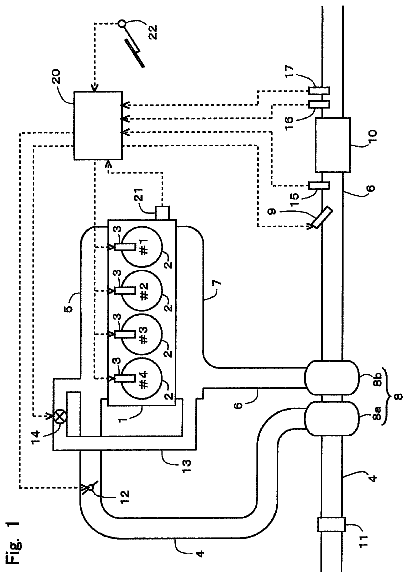
FIG. 1 is a view for describing a system configuration of Embodiment 1 of the present embodiment.
FIG. 2 is a view that illustrates an example of a valve opening period of an intake valve and an exhaust valve during execution of an engine output gas reduction control.
FIG. 3 is a view that illustrates the relationship between respective concentrations of hydrogen, aldehyde and unburned alcohol in engine output gas during an initial feedback period and a water temperature at engine start-up.
FIG. 4 is a view that illustrates an example of a valve opening period of an intake valve and an exhaust valve during execution of an exhaust gas component ratio control.
FIG. 5 is a view that illustrates the relationship between respective concentrations of hydrogen, aldehyde and unburned alcohol in engine output gas during an initial feedback period and a water temperature at engine start-up.
FIG. 6 is a flowchart illustrating a routine that is executed by Embodiment 3 of the present invention.
FIG. 7 is a map that illustrates the relationship between an intake valve opening timing (IVO) and intake valve closing timing (IVC) during the engine output gas reduction control and an alcohol concentration of a fuel.
FIG. 8 is a graph that illustrates changes over time in an unburned alcohol concentration and aldehyde concentration in engine output gas as well as in a working angle of the intake valve in a case where control is executed according to the routine shown in FIG. 6.
Description of embodiments
Embodiment 1
FIG. 1 is a view for describing a system configuration of Embodiment 1 of the present embodiment. As shown in FIG. 1, a system according to the present embodiment includes an internal combustion engine 10. The internal combustion engine 10 of the present invention can operate using gasoline as a fuel, and can also operate using a fuel in which an alcohol such as ethanol or methanol and gasoline are mixed (hereunder, also referred to as "alcohol-containing fuel"). In this case, a fuel in which a concentration of an alcohol component (proportion of an alcohol component) is from a low concentration (for example, about several %) to a high concentration (for example, 80% or more) can be used as an alcohol-containing fuel.
Each cylinder of the internal combustion engine 10 includes a piston 11, an intake valve 12, an exhaust valve 14, a spark plug 16, an intake port 18 and an exhaust port 20 that communicate inside the cylinder, and a fuel injector 22 that injects a fuel into the intake port 18. According to the present invention, a fuel injector may be provided so as to directly inject fuel into a cylinder, or a fuel injector may be provided so as to inject fuel into both an intake port and a cylinder.
An air intake passage 30 is connected to the intake port 18 of each cylinder. An air cleaner 32 is provided at an upstream end of the air intake passage 30. Air passes through the air cleaner 32 and is taken into the air intake passage 30. An air flow meter 33 that detects an intake air flow is arranged on a downstream side of the air cleaner 32. A surge tank 34 is provided at a branching portion at which the air intake passage 30 branches into the cylinder intake port 18 of each cylinder. A throttle valve 36 is arranged on an upstream side of the surge tank 34. A throttle position sensor 37 for detecting a degree of opening of the throttle valve 36 is attached to the throttle valve 36.
An exhaust gas passage 40 is connected to the exhaust port 20 of each cylinder. An exhaust gas purification catalyst 42 for purifying an exhaust gas is provided in the exhaust gas passage 40. The exhaust gas purification catalyst 42 has a function as a three-way catalyst. The exhaust gas purification catalyst 42 can purify harmful components most efficiently when an air/fuel ratio of an exhaust gas that flows into the exhaust gas purification catalyst 42 is in a purification window that is close to a stoichiometric air/fuel ratio.
An air/fuel ratio sensor (main exhaust gas sensor) 44 that detects an air/fuel ratio of an exhaust gas is arranged on an upstream side of the exhaust gas purification catalyst 42. An air/fuel ratio that the air/fuel ratio sensor 44 detects is an air/fuel ratio of an exhaust gas before the exhaust gas flows into the exhaust gas purification catalyst 42. More specifically, an air/fuel ratio that the air/fuel ratio sensor 44 detects is an air/fuel ratio of an exhaust gas (hereunder, referred to as "engine output gas") that is in the same state as when the exhaust gas is discharged from the internal combustion engine 10. For example, a wide-area air/fuel ratio sensor that emits an approximately linear output with respect to an air/fuel ratio of an exhaust gas can be preferably used as the air/fuel ratio sensor 44.
A sub-exhaust gas sensor 46 is arranged on a downstream side of the exhaust gas purification catalyst 42. An air/fuel ratio that the sub-exhaust gas sensor 46 detects is an air/fuel ratio of an exhaust gas after the exhaust gas has passed through the exhaust gas purification catalyst 42. For example, an oxygen sensor that emits an output that changes rapidly in accordance with whether an air/fuel ratio of an exhaust gas is rich or lean with respect to a stoichiometric air/fuel ratio can be preferably used as the sub-exhaust gas sensor 46. In this connection, according to the present invention, another exhaust gas purification catalyst may be further arranged on a downstream side of the exhaust gas purification catalyst 42.
A crank angle sensor 47 that detects a rotational position (crank angle) of a crankshaft 45 of the internal combustion engine 10 is provided in the vicinity of the crankshaft 45. A water temperature sensor 48 that detects a cooling water temperature is also arranged in the internal combustion engine 10.
The internal combustion engine 10 includes an intake variable valve apparatus 52 that can vary valve opening characteristics (opening time, closing time, working angle, lift amount and the like) of the intake valve 12. The internal combustion engine 10 may further include an exhaust variable valve apparatus 54 that can vary valve opening characteristics (opening time, closing time, working angle, lift amount and the like) of the exhaust valve 14. Since various known mechanisms can be used as the intake variable valve apparatus 52 or the exhaust variable valve apparatus 54, a description of a specific mechanism is omitted here.
As described above, the internal combustion engine 10 of the present embodiment can operate by using an alcohol-containing fuel. The system of the present embodiment includes a fuel property sensor 60 that can detect an alcohol concentration of a fuel. For example, a device that detects an alcohol concentration by measuring a dielectric constant or a refractive index or the like of a fuel can be used as the fuel property sensor 60. The fuel property sensor 60 can be installed, for example, in a fuel tank (not shown) or in the middle of a fuel supply channel from the fuel tank to the fuel injector 22. Further, according to the present invention, a method that detects an alcohol concentration of a fuel is not limited to a method that uses the fuel property sensor 60 and, for example, a configuration may be adopted in which an alcohol concentration of a fuel is detected (estimated) based on a learned value in air/fuel ratio feedback control. Since a value of a stoichiometric air/fuel ratio differs with respect to gasoline and alcohol, a value of a stoichiometric air/fuel ratio of an alcohol-containing fuel will differ according to the alcohol concentration thereof. Therefore, an alcohol concentration of a fuel can be detected (estimated) based on a value of a stoichiometric air/fuel ratio of the fuel that can be learned by means of air/fuel ratio feedback control or sub-feedback control as described later.
The system of the present embodiment includes an ECU (Electronic Control Unit) 50. The above described various sensors and actuators are electrically connected to the ECU 50. The ECU 50 can control an operating state of the internal combustion engine 10 by controlling the operation of the respective actuators based on the outputs of the respective sensors.
[Engine Output Gas Reduction Control]
At engine start-up, the exhaust gas purification catalyst 42, the air/fuel ratio sensor 44, and the sub-exhaust gas sensor 46 are at a low temperature and are not activated. Consequently, harmful components can not be purified by the exhaust gas purification catalyst 42. Accordingly, during a period immediately after engine start-up, it is important to reduce the amount of harmful components in the engine output gas in order to reduce emissions. Therefore, according to the present embodiment, after engine start-up, engine output gas reduction control for reducing the amount of harmful components in the engine output gas is executed.
The engine output gas reduction control according to the present embodiment is control for suppressing the discharge of unburned alcohol in particular. When alcohol-containing fuel is being used, unburned alcohol is included in the engine output gas. Unburned alcohol is a component that arises when alcohol in a fuel fails to evaporate. More specifically, unburned alcohol in the engine output gas is alcohol which did not contribute to combustion and which is discharged as it is from a combustion chamber. Gasoline is made up of multiple components and includes components that have a low boiling point. Hence, gasoline exhibits excellent vaporization characteristics even at a low temperature. In contrast, the boiling point of an alcohol is fixed since an alcohol is a single-component substance, and the boiling point thereof is also high (approximately 78.degree. C. in the case of ethanol). Consequently, when the temperature of the internal combustion engine 10 is low, such as at engine start-up, it is difficult for an alcohol in the fuel to evaporate and the unburned alcohol concentration in the engine output gas is liable to increase. It is therefore necessary to reduce the unburned alcohol concentration.
According to the present embodiment, control that retards the intake valve opening timing and control that advances the intake valve closing timing is performed by the intake variable valve apparatus 52 as engine output gas reduction control. FIG. 2 is a view that illustrates an example of a valve opening period of the intake valve 12 and the exhaust valve 14 during execution of the engine output gas reduction control. As shown in FIG. 2, during the engine output gas reduction control, the intake valve opening timing is retarded so that the intake valve 12 opens at a point after the top dead centre. Since the inside of the cylinder becomes a negative pressure if the top dead centre is exceeded while the intake valve 12 remains in a closed state, when the intake valve 12 is opened thereafter, air of the intake port 18 is vigorously drawn into the cylinder. More specifically, the speed of an intake airflow into the cylinder increases. As a result of the increase in the intake airflow speed, the inside of the cylinder is agitated and atomization of a fuel spray is promoted. As a result, vaporization of alcohol accelerates and the proportion of alcohol that is combusted rises, and hence the amount of unburned alcohol in the engine output gas can be reduced. Further, during the engine output gas reduction control, by advancing the intake valve closing timing, the intake valve 12 is closed near to the bottom dead center. Since the actual compression ratio increases as the intake valve closing timing approaches the bottom dead center, the temperature inside the cylinder rises. Consequently, vaporization of alcohol is promoted and the proportion of alcohol that is burned increases, and thus the amount of unburned alcohol in the engine output gas can be reduced.
[Air/Fuel Ratio Feedback Control]
According to the system of the present embodiment, feedback control (hereunder, referred to as "main feedback control") can be performed that controls an air/fuel ratio by correcting a fuel injection quantity based on an output of the air/fuel ratio sensor 44. Further, according to the system of the present embodiment, sub-feedback control that supplements the main feedback control can also be performed based on the output of the sub-exhaust gas sensor 46.
The following processing is executed when the main feedback control and the sub-feedback control are performed. First, the ECU 50 calculates a corrected air/fuel ratio sensor output that is expressed by the following equation based on an output of the air/fuel ratio sensor 44 (hereunder, also referred to as "air/fuel ratio sensor output") and an output of the sub-exhaust gas sensor 46: corrected air/fuel ratio sensor output=air/fuel ratio sensor output+sub-feedback correction value
The ECU 50 executes processing that controls the fuel injection quantity of the fuel injector 22 so that the above described corrected air/fuel ratio sensor output is a value that corresponds to the target air/fuel ratio. More specifically, the ECU 50 executes processing that converts the corrected air/fuel ratio sensor output into an air/fuel ratio, processing that calculates a deviation .DELTA.A/F between the air/fuel ratio that is obtained as a result of the aforementioned processing and a target air/fuel ratio, and processing that reflects the deviation .DELTA.A/F in correction of the fuel injection quantity with a predetermined gain.
When the air/fuel ratio sensor 44 exhibits ideal characteristics, the air/fuel ratio sensor output and the air/fuel ratio of the engine output gas exhibit a unique relationship. In this case, if main feedback control is executed so that the air/fuel ratio sensor output is a value that corresponds to the stoichiometric air/fuel ratio, an exhaust gas that flows into the exhaust gas purification catalyst 42 is an exhaust gas that has an air/fuel ratio (air/fuel ratio in a purification window) that is close to a stoichiometric air/fuel ratio, and thus only purified exhaust gas flows out to the downstream side of the exhaust gas purification catalyst 42.
However, in reality, the air/fuel ratio sensor 44 does not necessarily exert ideal output characteristics at all times. This is due to factors such as individual differences and aged deterioration of the air/fuel ratio sensor 44 and the signal transmission system, or changes in the operating state of the internal combustion engine 10.
In contrast, the sub-exhaust gas sensor 46 can detect a stoichiometric air/fuel ratio with a high degree of accuracy. Therefore, by utilizing the sub-exhaust gas sensor 46 it is possible to precisely detect whether the air/fuel ratio of an exhaust gas downstream of the exhaust gas purification catalyst 42 is richer or leaner than the stoichiometric air/fuel ratio.
When the sub-exhaust gas sensor 46 detects that the air/fuel ratio of an exhaust gas that is downstream of the exhaust gas purification catalyst 42 is rich, it can be determined that the overall air/fuel ratio of the engine output gas is shifted to the rich side. In such a case, it is possible to bring the air/fuel ratio of the engine output gas close to the stoichiometric air/fuel ratio by correcting the air/fuel ratio sensor output so that a quantity calculated with respect to the fuel injection quantity is less than in the current state. Conversely, when the sub-exhaust gas sensor 46 detects that the air/fuel ratio of an exhaust gas downstream of the exhaust gas purification catalyst 42 is lean, it can be determined that the overall air/fuel ratio of the engine output gas is shifted to the lean side. In such a case, it is possible to bring the air/fuel ratio of the engine output gas close to the stoichiometric air/fuel ratio by correcting the air/fuel ratio sensor output so that a quantity calculated with respect to the fuel injection quantity is more than in the current state. The above described sub-feedback correction value is a correction value for implementing the functions as described above. The sub-feedback control fulfills out a function of supplementing the main feedback control in the manner described above.
The sub-feedback correction value is, for example, calculated as follows. The ECU 50 calculates the sub-feedback correction value by performing a predetermined operation with respect to a deviation between the output of the sub-exhaust gas sensor 46 and a reference output (output that corresponds to a stoichiometric air/fuel ratio). When calculating the sub-feedback correction value by means of PID control, the sub-feedback correction value is calculated as a total of a proportional term, an integral term, and a derivative term based on the aforementioned deviation.
After engine start-up, when the exhaust gas purification catalyst 42 is activated the air/fuel ratio feedback control as described above is performed and a high exhaust gas purification rate can be obtained by controlling the air/fuel ratio of the engine output gas so as to fall within a purification window that is close to the stoichiometric air/fuel ratio. However, in order for the air/fuel ratio sensor 44 and the sub-exhaust gas sensor 46 to function, it is necessary that the respective sensor elements thereof are heated to a temperature that is equal to or greater than a temperature at which catalysts thereof are activated. Since the air/fuel ratio sensor 44 and the sub-exhaust gas sensor 46 are at a low temperature immediately after engine start-up, a certain time is required until activation thereof. Further, in comparison to the air/fuel ratio sensor 44, because the sub-exhaust gas sensor 46 is on a downstream side of the exhaust gas passage 40, the amount of heat that the sub-exhaust gas sensor 46 receives from the exhaust gas is small. Consequently, a timing at which the sub-exhaust gas sensor 46 is activated is later than a timing at which the air/fuel ratio sensor 44 is activated. For the foregoing reasons, according to the present embodiment, after engine start-up, the main feedback control is started after both the air/fuel ratio sensor 44 and the exhaust gas purification catalyst 42 are activated. Thereafter, after waiting until the sub-exhaust gas sensor 46 is activated, the sub-feedback control starts. More specifically, during a period from after start of the main feedback control until the sub-exhaust gas sensor 46 is activated, the main feedback control is executed without being accompanied by the sub-feedback control.
In order to exert the maximum purification capability of the exhaust gas purification catalyst 42, it is important to control the air/fuel ratio of the engine output gas as accurately as possible so that the air/fuel ratio falls within a purification window that is close to the stoichiometric air/fuel ratio. Since precise feedback of the air/fuel ratio is necessary for that purpose, it is important to detect the air/fuel ratio of the exhaust gas as accurately as possible.
As described in the foregoing, the sub-exhaust gas sensor 46 is capable of detecting the stoichiometric air/fuel ratio with a high degree of accuracy. Therefore, after the start of the sub-feedback control, even if the output of the air/fuel ratio sensor 44 is shifted to some extent, the effect of such a shift can be corrected by sub-feedback control using the sub-exhaust gas sensor 46. It is therefore possible to precisely control the air/fuel ratio of the engine output gas and maintain the air/fuel ratio within a catalyst window that is close to the stoichiometric air/fuel ratio.
In contrast, correction by means of the sub-feedback control is not performed during a period from the start of the main feedback control until the start of the sub-feedback control (hereunder, referred to as "initial feedback period"). Consequently, in order to control the air/fuel ratio of the engine output gas as accurately as possible to approach the stoichiometric air/fuel ratio in the initial feedback period, it is necessary to detect the air/fuel ratio of the engine output gas as exactly as possible based on only the output of the air/fuel ratio sensor 44.
However, in some cases a shift (a deviation from an appropriate output or an ideal output) that is caused by a specific component in an exhaust gas arises with respect to the output of the air/fuel ratio sensor 44. For example, hydrogen as an intermediate (that is, a partially combusted component) that is generated in the process of a combustion reaction of a fuel is generated in an exhaust gas (engine output gas). Hydrogen in an exhaust gas has an action that shifts an air/fuel ratio sensor output to a rich side. More specifically, in some cases the air/fuel ratio sensor output shifts more to the rich side than the actual air/fuel ratio due to the influence of hydrogen in the exhaust gas.
The description continues in the full USPTO document.
 Lapsed, fee not paid6 drawings