Lapsed, fee not paid9 drawings
Software & Apps · US 8,646,070 B1
Verifying authenticity in data storage management systems
A storage area network management application operates using agents for management of resources.
US 8,646,096 B2 · Assignee: Microsoft Corporation · Inventors: Alkove; James M. et al.
Sheet 1 of 16 from the published document. All sheets in the USPTO PDF
Various embodiments utilize hardware-enforced boundaries to provide various aspects of digital rights management or DRM in an open computing environment. Against the backdrop of these hardware-enforced boundaries, DRM provisioning techniques are employed to provision such things as keys and DRM software code in a secure and robust way. Further, at least some embodiments utilize secure time provisioning techniques to provision time to the computing environment, as well as techniques that provide for robustly secure storage.
Digital rights management or DRM refers to technologies that are used to control access to or usage of digital data or hardware that processes digital data. In a computing environment, such as a personal computing environment, DRM protection schemes are typically implemented by a DRM software layer that works in concert with a device's operating system and applications to implement a particular protection scheme. One of the challenges of implementing DRM in many computing environments flows from the open nature of these computing environments. Specifically, many computing devices are open in the sense that a user and others can freely add software and/or hardware to the device. This "openness" can, by its very nature, be susceptible to various threat models which are not present in systems that are considered closed--such as set top boxes or other sealed hardware devices. Another of the
1 of 16 drawing sheets so far from the published document, cropped to the drawing. Every sheet is in the USPTO PDF.
What the patent claimed, word for word. All of it is now free to use.
Digital rights management or DRM refers to technologies that are used to control access to or usage of digital data or hardware that processes digital data. In a computing environment, such as a personal computing environment, DRM protection schemes are typically implemented by a DRM software layer that works in concert with a device's operating system and applications to implement a particular protection scheme. One of the challenges of implementing DRM in many computing environments flows from the open nature of these computing environments. Specifically, many computing devices are open in the sense that a user and others can freely add software and/or hardware to the device. This "openness" can, by its very nature, be susceptible to various threat models which are not present in systems that are considered closed--such as set top boxes or other sealed hardware devices.
Another of the challenges with implementing DRM in various computing environments, particularly open environments, flows from the nature of how protections are implemented. Specifically, in many systems, various DRM protection schemes rely on software enforced boundaries to protect content. That is, all of the executable software that can touch protected content (such as audio/visual content) has to operate within a defined boundary where trust is specified, and it has to perform in a prescribed and specified way. Yet, hostile threat models can be employed by nefarious individuals to try to modify the behavior inside the trust boundary to circumvent DRM protection. Specifically, software code can be injected at various levels within a system's software stack, e.g. at the operating system level, DRM infrastructure level and/or application level, to attempt to modify the behavior of the stack and thus try to change DRM properties.
This Summary is provided to introduce a selection of concepts in a simplified form that are further described below in the Detailed Description. This Summary is not intended to identify key features or essential features of the claimed subject matter, nor is it intended to be used to limit the scope of the claimed subject matter.
Various embodiments utilize hardware-enforced boundaries to provide various aspects of digital rights management or DRM in an open computing environment. Against the backdrop of these hardware-enforced boundaries, DRM provisioning techniques are employed to provision such things as keys and DRM software code in a secure and robust way. Further, at least some embodiments utilize secure time provisioning techniques to provision time to the computing environment, as well as techniques that provide for tamper-resistant storage.
The same numbers are used throughout the drawings to reference like features.
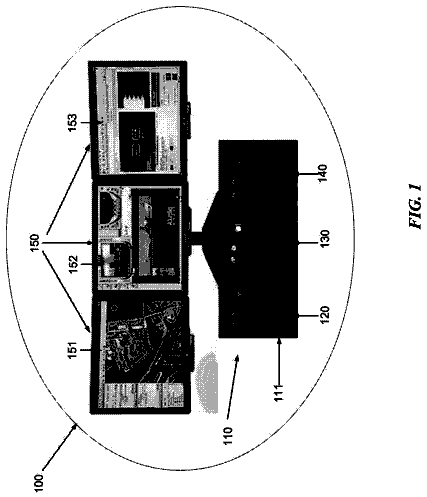
FIG. 1 illustrates an example operating environment in accordance with one or more embodiments.
FIG. 2 illustrates an example computing device in accordance with one or more embodiments.
FIG. 3 illustrates the FIG. 2 computing device in accordance with one or more embodiments.
FIG. 4 is a flow diagram that describes steps in a method in accordance with one or more embodiments.
FIG. 5 is a flow diagram that describes steps in a method in accordance with one or more embodiments.
FIG. 6 illustrates the FIG. 2 computing device in accordance with one or more embodiments.
FIG. 7 illustrates the FIG. 6 computing device in accordance with one or more embodiments.
FIG. 8 is a flow diagram that describes steps in a method in accordance with one or more embodiments.
FIG. 9 is a flow diagram that describes steps in a method in accordance with one or more embodiments.
FIG. 10 illustrates aspects of a system in accordance with one or more embodiments.
FIG. 10A is a flow diagram that describes steps in a method in accordance with one or more embodiments.
FIG. 11 illustrates aspects of a system in accordance with one or more embodiments.
FIG. 11A is a flow diagram that describes steps in a method in accordance with one or more embodiments.
FIG. 12 illustrates aspects of a system in accordance with one or more embodiments.
FIG. 12A is a flow diagram that describes steps in a method in accordance with one or more embodiments.
FIG. 13 is a flow diagram that describes steps in a method in accordance with one or more embodiments.
FIG. 14 is a flow diagram that describes steps in a method in accordance with one or more embodiments.
FIG. 15 illustrates an example system that can be used to implement a computing device, such as the FIG. 1 computing device.
Overview
Various embodiments utilize hardware-enforced boundaries to provide various aspects of digital rights management or DRM in an open computing environment. Against the backdrop of these hardware-enforced boundaries, DRM provisioning techniques are employed to provision such things as keys and DRM software code in a secure and robust way. Further, at least some embodiments utilize secure time provisioning techniques to provision time to the computing environment, as well as techniques that provide for tamper-resistant storage.
In the discussion that follows, a section entitled "Operating Environment" is provided and describes one example operating environment in which one or more embodiments can be employed. Following this, a section entitled "Implementation Example" describes an implementation example in which various inventive principles can be employed. Next, a section entitled "Provisioning DRM--Example" is provided and describes how DRM software can be provisioned in accordance with one or more embodiments. A section entitled "Secure Time Source Operations" follows and describes example embodiments in which secure time source operations can take place. Following this section, a section entitled "Secure Storage" describes how secure storage functionality can be provided in accordance with one or more embodiments. Finally, a section entitled "Example System" describes but one example computing system that can be utilized to implement various embodiments described in this document.
Operating Environment
FIG. 1 illustrates an operating environment in accordance with one or more embodiments, generally at 100. Environment 100 includes a computing device 102 having one or more processors 104, one or more computer-readable media 106 and one or more applications 108 that reside on the computer-readable media and which are executable by the processor(s). The applications can include those that are configured to process or otherwise consume content that is protected by digital rights management (DRM) techniques described in this document. Such applications can include, by way of example and not limitation, various media playing applications and the like.
The computer-readable media can include, by way of example and not limitation, all forms of volatile and non-volatile memory and/or storage media that are typically associated with a computing device. Such media can include ROM, RAM, flash memory, hard disk, removable media and the like. One specific example of a computing device is shown and described below in FIG. 15.
In addition, computing device 102 includes a digital rights management platform 110 that is configured to implement digital rights management techniques, including the provisioning techniques described herein. In one or more embodiments, the platform includes both hardware and software components 110a, 110b respectively, as will become apparent below. In one or more embodiments, hardware aspects of the platform are secure and tamper-resistant. Any suitable type of secure hardware can be used to implement the embodiments described herein. Characteristics of secure hardware can include, by way of example and not limitation, having certain functionality, such as that described below, that executes in accordance with the specification of the hardware. And, while the secure hardware may, in itself contain software, software executing outside of the secure hardware cannot cause the functionality of the secure hardware, or the software executing in the secure hardware, to change in an undesirable way. Examples of commonly available secure hardware include, by way of example and not limitation, Trusted Platform Modules (TPMs), secure microcontrollers, and special-purpose application-specific integrated circuits (ASICs), to name just a few. TPMs can be embodied, as will be appreciated by the skilled artisan, as a module on a computing device's motherboard and can perform such functions as cryptographic functions, creating protecting and managing cryptographic keys, performing digital signature operations, and anchoring chains of trust for keys, digital certificates, and other credentials.
Computing device 102 can be embodied as any suitable computing device such as, by way of example and not limitation, a desktop computer, a portable computer, a handheld computer such as personal digital assistants (PDA), cell phone, and the like. In addition, the techniques described herein find particular utility in the context of computing devices that include software platforms that are open, in the sense that the platform is an open programmable platform and/or one that includes a distributed set of removable hardware components that can be physically distributed across a motherboard.
In addition, environment 100 includes a network 112, such as the Internet or some other suitable network that allows computing device 102 to communicate with a variety of entities that are involved in some way with one or more of distribution or protection of digital content. The example provided just below is intended to provide the reader with a basic overview of example entities and/or functionality that can exist within operating environment 100. The description is not intended to limit application of the claimed subject matter to one particular operating environment or type of operating environment.
Accordingly, in this particular example, such entities or functionality can include, by way of example and not limitation, various server entities such as those shown generally at 114, and various service entities, such as those shown generally at 116.
In this particular example, server entities include, by way of example and not limitation, a domain controller 118, a license server 120 and a content server 122.
Domain controller 118 is configured to create free movement of content among various authorized devices. It does this by setting up and managing a shared identity between these devices. With a shared identity, content can be licensed to that identity and hence distributed among the devices that share the identity.
License server 120 is configured to serve DRM licenses to various computing devices. The DRM licenses typically describe and define the terms of use of a particular piece of content.
Content server 122 is configured to serve content that is governed by one or more licenses that can be distributed by the license server 120.
In this particular example, service entities or functionality can include, by way of example and not limitation, an individualization service 124, a secure time service 126, a back up/restore service 128 and a certificate authority 130.
In one or more embodiments, individualization service 124 is a trusted service and is configured to perform a number of functions among which include provisioning and renewability.
With regard to provisioning, the individualization service is configured to provide a generally unique version of a trusted environment to each computing device or client. In the example below, this trusted environment is embodied, at least in part, by DRM software that is securely, remotely provisioned to the computing device. The DRM software is embodied, in the specific example, as a DRM partition that is isolated from other functional partitions on the computing device. It is to be appreciated and understood, however, that other types of DRM software can be used without departing from the spirit and scope of the claimed subject matter. From the provisioning standpoint, both keys and DRM software code are provisioned by the individualization service, as will become apparent below.
With regard to renewability, the individualization service is configured to, in the presence of a code compromise, fix or upgrade and cause a download of a fixed or newer version of code that has been compromised. Code can be compromised for any number of reasons. For example, license server 120 or content server 122 may indicate to the individualization service that a particular version of code that is being used on computing device 102 is no longer trusted. In this instance, the individualization service can see to it that new trusted code gets provisioned to the device as described below.
In one or more embodiments, secure time service 126 works in conjunction with various licensing models that determine how long particular content can be played. This service is configured to send out digitally signed time stamps that provide a secure and accurate representation of time to ensure that the proper time is used by digital rights management platform 110.
In one or more embodiments, back up/restore service 128 provides functionality that allows a user to migrate licenses from one device to another.
In one or more embodiments, certificate authority 130 includes two functions. First, a forward-looking enrollment service provides certificates for license servers such as license server 120. Second, a backend infrastructure creates certificates that are distributed to individual computing devices, such as device 102.
Having discussed an example operating environment, consider now an implementation example in which provisioning and other operations can take place. While the example just below utilizes the operating environment of FIG. 1, it is to be appreciated and understood that other operating environments, different from the one described above, can be utilized without departing from the spirit and scope of the claimed subject matter.
Implementation Example
FIG. 2 illustrates a system in accordance with one embodiment generally at 200. System 200 includes the computing device 102 of FIG. 1. In the discussion that follows, certain of the components of the FIG. 1 computing device have not been repeated here for the sake of brevity. In addition, the discussion first proceeds with a general overview of the FIG. 2 system. Following this, a discussion of how DRM software is provisioned in accordance with one or more embodiments is provided.
In this particular example, system 200 comprises a plurality of partitions including an operating system partition 202, a format partition 204 and a DRM partition 206. Each of the partitions is implemented, in this example, in software and managed by a so-called hypervisor 208 discussed below in more detail. It is to be appreciated and understood, that the described hypervisor constitutes but one way of creating and enforcing the described partitions. Other techniques can, of course, be used. For example, the described partitions can be managed by secure hardware that comprises part of the system. In this example, DRM partition 206 corresponds to DRM software 110b in FIG. 1. In addition, in this example, system 200 includes hardware (corresponding to hardware 110a in FIG. 1) in the form of hardware key storage 210, tamper-resistant time source 212, tamper-resistant storage 214 and a hardware unique ID 216 which includes a unique ID that is associated with and uniquely identifies the computing device with which it is associated. Each of these hardware components is discussed below in more detail. In addition, system 200 includes local storage 218 which is utilized to implement tamper-resistant storage functionality as will become apparent below.
In one or more embodiments, hypervisor 208 provides virtualization technology and comprises a thin layer of software that resides between hardware, such as hardware 210-216 and software such as partitions 202, 204 and 206. The hypervisor allows multiple instances of the same or different operating systems to run, unmodified, on a host computer at the same time. The hypervisor provides for partitioning functionality, as indicated above, and is responsible for maintaining strong isolation between partitions. In at least some embodiments, the hypervisor architecture provides a very small attack surface, as it does not contain any third party device drivers.
In operation, hypervisor-based functionality enables a parent partition--here operating system partition 202--which is responsible for creating and managing one or more child partitions--here, format partition 204 and DRM partition 206. Specifically, the parent partition can, but need not, manage memory for child partitions and virtualize devices for child partitions. Each partition is a virtual machine and has one or more virtual processors, as will be appreciated by the skilled artisan. Partitions can own or share hardware resources.
In one or more embodiments, hypervisor 208 performs a number of functions including, by way of example and not limitation, enforcing memory access rules, enforcing policy for CPU usage, enforcing ownership of other devices, providing inter-partition messaging, and exposing a programmatic interface called hypercalls.
Within the operating system partition 202 is a virtualization stack that comprises a collection of components that run in the parent partition for virtual machine management. This collection of components includes, by way of example and not limitation, operating system kernel components which provide kernel mode functionality, operating system core components which provide user mode functionality, DRM infrastructure components which work with and communicate with DRM partition 206, format infrastructure components which work with and communicate with format partition 204, and one or more applications which can interact with or otherwise consume DRM-protected content to provide a user experience.
Within format partition 204 are components that provide functionality including, by way of example and not limitation, audio/visual processing including decoding, file format manipulations, resizing, decrypted data operations, transitions and the like. Typically, any type of formatting functionality or processing is performed by components that run inside the format partition.
Within DRM partition 206 resides the DRM software code that performs DRM operations. Any suitable DRM functionality can be performed by the DRM software code such as acquisition, management and enforcement of licenses that pertain to DRM-protected content. Preliminarily, however, when DRM partition 206 is created, it is essentially a shell that does not include the DRM software that it will eventually utilize to implement its functionality. This DRM software is provided to the DRM partition through a provisioning process that is described just below.
Provisioning DRM
Example
In one or more embodiments, prior to being provisioned, DRM partition 206 has not yet been created. Therefore, in at least some embodiments, the DRM partition is first created. In one or more embodiments, the DRM partition is created via a call from the DRM infrastructure in the operating system partition 202 as shown in FIG. 3, where like numerals from FIG. 1 are used to depict like components.
When the DRM partition is created, it executes as an empty host or operating environment that does not include the DRM functionality or software that it will eventually use to perform its function. As created, the DRM partition has an identity (ID) which, in this example, is essentially a hash of the binary code that was loaded to provide the host. Any suitable identity can be used. This identity, along with other information, becomes part of an attestation communication that takes place between DRM partition 206 and individualization service 124 to initiate the provisioning process.
Specifically, in one or more embodiments, in order to be provisioned with DRM software, DRM partition 206 generates an attestation request that includes the ID of the DRM partition, along with an identification of computing device 102, an identification of a version of the operating system running on the device and an identification of the hypervisor that is executing on the device. The attestation request is sent to and processed by the individualization service 124.
When the individualization service 124 receives the attestation request, it can use the information in the attestation request to make a trust decision as to whether it should provision DRM functionality to the requesting entity. Specifically, the individualization service 124 can confirm, using the information contained in the request, whether the request came from a legitimate, functional device and hypervisor. If, for some reason, the information in the attestation request does not confirm this legitimacy, then a decision can be made by the individualization service to not provide DRM content and software to the device.
If, however, the attestation request checks out as legitimate, then the individualization service can begin its provisioning process. Specifically, in one or more embodiments, the individualization service first provisions a private key to the DRM partition 206. In the past, keys such as this were physically embedded inside the software that provides DRM functionality. Here, however, an encrypted version of a private key (Pvk) is distributed by the individualization service. Specifically, a public key associated with hardware key storage 210 is used to encrypt a private key of a public/private key pair. This encrypted private key is sent to DRM partition 206 and stored in key storage 210. When the key is stored in hardware key storage 210, it is only accessible to DRM partition 206. That is, in one or more embodiments, hypervisor 208 gates access to the private key so that only the specifically identified version of the DRM partition that was used in the attestation can make use of the key. Accordingly, requests to the hypervisor from other entities will be refused. This effectively seals or isolates the key to the DRM partition 206. Accordingly, at this point, one or more keys have been securely provisioned to the DRM partition.
In one or more embodiments, now that a private key has been provisioned to the DRM partition 206, DRM software can now be provisioned. The DRM software can be any suitable software that can be used to implement DRM functionality. By way of example and not limitation, such functionality can include license management, decryption functionality, transfer of content between devices, output protection and the like.
In one or more embodiments, DRM software can be provisioned to DRM partition 206 in encrypted and signed form. Specifically, in one or more embodiments, the DRM software is encrypted with, for example, an intermediate symmetric key that is delivered by means of being encrypted by the public key of the DRM partition, and delivered to the DRM partition. Once delivered to the DRM partition, the encrypted DRM software can be stored in storage 218 until it is needed by the DRM partition. Specifically, when the DRM software is needed, the encrypted software can be loaded in the DRM partition and then decrypted using the DRM partition's private key. Recall that use of the DRM partition's private key is gated by the hypervisor 208. As such, only the correct version of DRM partition 206 can use the private key. Accordingly, in one or more embodiments, the DRM software will only decrypt and run in DRM partition 206. As will be appreciated by the skilled artisan, this can obviate the need to use obfuscation techniques to protect the DRM code.
Consider now that at this point in the process, a private key as well as DRM software has been provisioned to a particular arrangement of hardware executing on a particular identified computing device. In one or more embodiments, the key and software can be used by or will run inside of the uniquely identified DRM partition on a particular instance of device hardware. In this manner, a very robust system is provided that not only securely provisions DRM functionality, but enforces separation between the various partitions, e.g. between the format partition 204 and the DRM partition 206.
FIG. 4 is a flow diagram that describes steps in a method in accordance with one or more embodiments. The method can be implemented in connection with any suitable hardware, software, firmware or combination thereof. In at least some embodiments, the method can be implemented by a system, such as the one described above. It is to be appreciated and understood that other systems can be utilized without departing from the spirit and scope of the claimed subject matter.
Step 400 contacts a remote provisioning service. This step can be performed in any suitable way. For example, the remote provisioning service can be contacted via a suitably configured network, such as the Internet. Step 402 receives one or more encrypted keys from the provisioning service. The key(s) can be used for any suitable purpose. In at least some embodiments, the key(s) comprise a private key that is to be used in implementing a DRM process. Step 404 securely stores the key(s). In at least some embodiments, the key(s) can be stored in a tamper-resistant hardware store. Step 406 receives, from the provisioning service, encrypted DRM software and step 408 stores the encrypted DRM software. The DRM software can be encrypted using any suitable techniques examples of which are provided above.
FIG. 5 is a flow diagram that describes steps in a method in accordance with one or more embodiments. The method can be implemented in connection with any suitable hardware, software, firmware or combination thereof. In at least some embodiments, the method can be implemented by a system, such as the one described above. In this particular example, various methodical steps are listed under the heading "DRM Partition" and various other methodical steps are listed under the heading "Individualization Service". This is done to identify the entities that perform the various steps in accordance with one or more embodiments. It is to be appreciated and understood that other systems can be utilized without departing from the spirit and scope of the claimed subject matter.
Step 500 prepares an attestation request and sends the attestation request to an individualization service. Any suitable attestation request can be used and it can contain any suitable information or type of information. In one or more embodiments, the attestation request includes information that identifies the DRM partition, the computing device on which the DRM partition is executing and operating system associated with the computing device. Step 502 receives the attestation request and step 504 checks the legitimacy of the requesting entity. This step can be performed in any suitable way. For example, the individualization service may have a revocation list that describes DRM partitions or computing devices that have been compromised. If a particular DRM partition or system on which it is executing has been compromised, then the method can terminate. Assume, however, for the sake of the ongoing discussion, that there have been no compromises. In this case, step 506 can return an encrypted private key to the DRM partition.
Step 508 receives the encrypted private key and stores the private key in hardware key storage. In one or more embodiments, the hardware key storage is tamper-resistant such that unauthorized entities are not able to gain access to the content that resides in the storage. But one way of implementing tamper-resistant storage is to have an entity gate access to the contents of the storage. One way of gating access to the storage is through the use of a hypervisor, an example of which is described above. It is to be appreciated and understood, however, that other systems can be utilized without departing from the spirit and scope of the claimed subject matter.
Step 510 returns encrypted DRM software to the DRM partition. Step 512 receives the encrypted DRM software and stores the software. These steps can be implemented in any suitable way examples of which are provided above. In addition, the encrypted DRM software can be stored in any suitable fashion. For example, in one or more embodiments, the DRM software is stored, in encrypted form, in local storage on the local device on which the DRM partition executes. Then, when the DRM partition wishes to use the DRM software, it can be loaded in the DRM partition and decrypted for use. After use, the DRM software can be re-encrypted and stored in the local storage until such a time when it is needed again.
The above-described system can robustly and securely provision a computing system with DRM functionality in an open computing environment in a manner in which the attack surface of the DRM functionality is greatly reduced. In addition, various embodiments utilize hardware enforced boundaries that remove, to a large extent, software vulnerabilities that previously existed in other systems.
Having now discussed how an example system can be provisioned in accordance with one or more embodiments, consider now how such a system can be utilized to provide for secure time source operations.
Secure Time Source Operations
In computing systems that are considered as "open" in the sense that the systems are programmable and reconfigurable by users, it can be very desirable to have and utilize time values that are secure and remain that way. Specifically, many DRM systems utilize a time source to enable time-based decisions to be made with regard to DRM-protected content that is consumed on a particular device. For example, some DRM licenses may specify that a piece of content may only be consumed for a set period of time, or a subscription model may specify that a particular license for subscribed content expires after a set period of time. Whatever the case may be, it is desirable to have a time source that provides a generally protected and secure measure of time. Various advertising models can also utilize accurate time measurements in the administration of a particular advertising scheme, as will be appreciated by the skilled artisan.
In one or more embodiments, a remote secure time service serves as a source for secure time values. A communication protocol between the secure time service and a hardware-implemented, tamper resistant time source on board a computing device enables the time service to provide the secure time values--typically in the form of a date/time stamp--to the time source. The time source uses the date/time stamp and typically includes an oscillator that securely measures time and serves as a source of time values for a policy enforcement module that makes DRM time-based decisions. In one or more embodiments, the time source can have one or more attributes which include, by way of example and not limitation, having a valid and an invalid state, being settable from a trusted time service, providing a real time clock that includes the date and time, and/or being battery backed in the event of a power failure.
FIG. 6 illustrates an example system in accordance with one or more embodiments. Like numerals from the FIG. 2 embodiment are utilized to depict like components. In this example, a policy enforcement module 400 comprises part of the DRM software that was previously provisioned as described above. In this particular example, the policy enforcement module resides inside the DRM partition 206. It is to be appreciated and understood that the partitioning scheme described above and below constitutes but one way of implementing the described techniques. As such, other systems can be utilized without departing from the spirit and scope of the claimed subject matter.
In the FIG. 6 system, assume that time source 212 has not been initially provisioned with a secure time value from secure time service 126. To receive a first or initial time value, time source 212 generates a request that it, or a component within device 102, sends to the secure time service. In one or more embodiments, the request includes a value that can be used by the time source to verify that the response it receives is from the entity to which it sent the request. One example of such a value is a nonce or a "number used once". Accordingly, the time source's request is sent to the secure time service 126. The secure time service receives the request and builds an authenticable package that includes a time value in the form of a date/time stamp and the nonce. Any suitable authentication scheme can be used to build the package. For example, in some embodiments, the secure time service can use a message authentication code or MAC to provide an authenticable package. In this case, time resistant source 212 (or a component acting on its behalf) and secure time service 126 have negotiated a secret session key. The secret session key and, in this case, the package containing the date/time stamp and the nonce, are input into a MAC algorithm that produces a MAC. The package and the MAC are then sent to the time source 212 which can then use the same MAC algorithm, secret session key and package to both authenticate that the package came from the secure time source and to verify the integrity of the package's data.
In yet other embodiments, the secure time service can digitally sign the package to provide an authenticable package. In this case, the secure time service 126 has a private key and time source 212 has an associated public key. When secure time service 126 builds the package that contains the date/time stamp and the nonce, it can calculate a hash of the package using a hash algorithm, and then encrypt the hash with its private key thus creating a digital signature. The secure time service can then send the package along with the signature to the time source 212. When the time source receives the signed package, it can calculate a hash of the package using the same hash algorithm, decrypt the signature of the secure time service using the time service's associated public key, and verify that the hashes match.
At this point, time source 212 has received and stored a secure time value and can use this time value to provide DRM partition 206 with an accurate measure of time whenever the DRM partition requests it.
In one or more embodiments, time values can be delivered to the DRM partition 206 and its associated policy enforcement module 400 in substantially the same way as the initial time value was delivered from the time service 126 to the time source 212. Specifically, as shown in FIG. 7, a request from the DRM module 206 is sent to the time source 212 to request a time value. The request can, like the request above, include a nonce. The time source receives the request and responds with a response that includes a date/time stamp and the nonce. The response can be digitally signed using a private key associated with time source 212. Alternately, the time source can use a MAC as in the above example.
Once the DRM partition receives the response with the date/time stamp, it can then provide the date/time stamp to the policy enforcement module 400 so that the policy enforcement module can use it for making its time-based decisions.
FIG. 8 is a flow diagram that describes steps in a secure time provisioning method in accordance with one or more embodiments. The method can be implemented in connection with any suitable hardware, software, firmware or combination thereof. In at least some embodiments, the method can be implemented by a system, such as the one described above. It is to be appreciated and understood that other systems can be utilized without departing from the spirit and scope of the claimed subject matter.
Step 800 generates a request for a secure time value. This step can be performed in any suitable way and by any suitable entity. In the above-example, the request is generated by a tamper-resistant time source that is located on a computing device, such as computing device 102. In the above example, the request includes a nonce as a means to verify that the response that is received was sent by the entity to which the request was sent. Step 802 sends the requests to a remote secure time service. Step 804 receives a secure time value from the remote secure time service. In one or more embodiments, this step can be performed by receiving an authenticable package that can be authenticated using any suitable techniques, examples of which are provided above.
Step 806 stores the secure time value. This step can be performed by storing the time value in a hardware-implemented, tamper-resistant time source, such as the one shown and described above. Step 808 uses the secure time value to provide a measure of time over time. This step can be performed by using the initially received time value as a seed to provide a time measure over time.
FIG. 9 is a flow diagram that describes steps in a method in accordance with one or more embodiments. The method can be implemented in connection with any suitable hardware, software, firmware or combination thereof. In at least some embodiments, the method can be implemented by a system, such as the one described above. In this particular example, various methodical steps are listed under the heading "Policy Enforcement Module" and various other methodical steps are listed under the heading "Tamper-resistant time source". This is done to identify the entities that perform the various steps in accordance with one or more embodiments. It is to be appreciated and understood that other systems can be utilized without departing from the spirit and scope of the claimed subject matter.
Step 900 generates a request for a secure time value. Examples of how this can be done are provided above. This step can be performed, for example, when the policy enforcement module wishes to make a time-based DRM decision. Step 902 receives the request and step 904 prepares an authenticable package with a time value. Examples of how this can be done are provided above. Step 906 returns the authenticable package to the policy enforcement module.
Step 908 receives the authenticable package and step 910 uses the time value to make a time-based DRM decision. Examples of how this can be done are provided above.
In addition to provisioning secure time values to and throughout computing device 102, one or more other embodiments can also provide cross checks periodically to ensure that the secure time values are not drifting over time. Cross checks can be performed in any suitable way. For example, cross checks can be conducted using a CPU clock, a system clock or some other internal clock such as an audio rendering clock. Alternately or additionally, the secure time values that are stored in time source 212 can be reset periodically over time to mitigate time drift concerns. Alternately or additionally, the system can, if on line, do periodic checks with the secure time service to ensure that the secure time values stored in time source 212 are not drifting.
Further, in at least some embodiments so-called grace periods can be provided to enable a user to enjoy their DRM-protected content even though there may have been a system malfunction. For example, if the time source is battery-backed and for some reason the battery gets removed, other system components can keep track of the elapsed time so that if the elapsed time is less than a certain pre-determined threshold, the user can continue to consume their content.
Having discussed secure time source operations, consider now a discussion of how secure storage can be implemented in one or more embodiments.
Secure Storage
The description continues in the full USPTO document.
About 6,386 words. The USPTO PDF has it with every drawing.
Fees are due 3.5, 7.5 and 11.5 years after grant. This patent expired on February 4, 2026, so the fee marked "not paid" was the one that went unpaid.
Secure time source operations for digital rights management
Filed Jun 2007 · published Jan 2009Secure time source operations for digital rights management
Filed Jun 2007 · granted Feb 2014Earlier publications, parents and continuations. None of them can still be enforced, or this patent would not be listed.
Prior art cited by the examiner or applicant. Useful when you check your own idea for novelty.
Everything on this page comes from the documents linked above.