Lapsed, fee not paid3 drawings
Biotech & Lab · US 8,637,698 B2
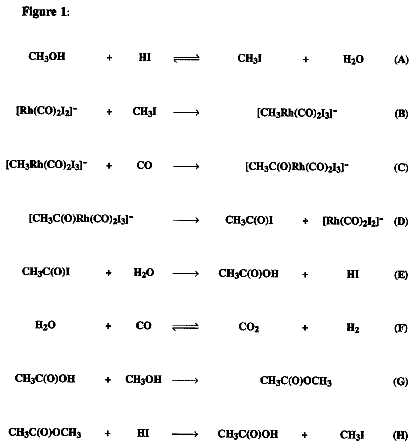
Production of acetic acid with an increased production rate
A method for producing acetic acid at increased production rates.
US 8,637,702 B2 · Assignee: Italfarmaco S.p.A. · Inventors: Dinarello; Charles et al.
Claude can sketch it from the patent text.
Compound selected from 4-(2(S)-benzoylamino-3-naphthalen-2-yl-propionylamino)-N-hydroxy-benzamid- e and benzo[1,3]dioxole-5-carboxylic acid [1(S)-(4-hydroxycarbamoyl-phenylcarbamoyl)-2-naphthalen-2-yl-ethyl]-amide- , for use in the treatment of a HIV infection. The compound is administered in combination and/or in temporal proximity with at least one anti-retroviral agent.
Since the introduction of the highly active antiretroviral therapy (HAART) more than a decade ago, the HIV-1 infection may be efficiently controlled, maintaining the HIV-1 viremia below the detectable values. However, the elimination of HIV-1 infection through extended HAART therapy is not yet possible. Upon interruption of the HAART, there occurs the viremia rebound, typically after two weeks [Imamichi H. et al. J. Infect. Dis. 183, 36 (2001)]. The source of viral rebound is a long-term cell pool, most probably the memory T-cells reservoir which are infected more slowly, which hosts the HIV-1 integrated proviral DNA. Consolidated techniques for quantifying the latent cell pool are available and it is calculated that one memory cell out of a million of an HIV-1 positive patient carries a replication-competent integrated provirus. The mechanisms that maintain the proviral DNA transcriptio
Ask Claude for concept sketches based only on the patent's text. They are not part of the patent.
What the patent claimed, word for word. All of it is now free to use.
This application is the U.S. national phase of International Application No. PCT/IB2010/054139 filed 14 Sep. 2010 which designated the U.S. and claims priority to Italian Application No. MI2009A001837 filed 23 Oct. 2009, the entire contents of each of which are hereby incorporated by reference.
The present invention relates to the use of N-hydroxy-benzamide-based histone deacetylase inhibitors for treating humans infected by human immunodeficiency virus (HIV). In particular for the treatment of patients with infection of T CD4.sup.+ cells due to persistent, latent HIV, in combination with a highly active antiretroviral therapy (HAART), with the aim of eliminating the HIV infection.
Since the introduction of the highly active antiretroviral therapy (HAART) more than a decade ago, the HIV-1 infection may be efficiently controlled, maintaining the HIV-1 viremia below the detectable values. However, the elimination of HIV-1 infection through extended HAART therapy is not yet possible. Upon interruption of the HAART, there occurs the viremia rebound, typically after two weeks [Imamichi H. et al. J. Infect. Dis. 183, 36 (2001)].
The source of viral rebound is a long-term cell pool, most probably the memory T-cells reservoir which are infected more slowly, which hosts the HIV-1 integrated proviral DNA. Consolidated techniques for quantifying the latent cell pool are available and it is calculated that one memory cell out of a million of an HIV-1 positive patient carries a replication-competent integrated provirus.
The mechanisms that maintain the proviral DNA transcriptionally inactive in quiescent cells are known. However, it has been long believed that the mechanism includes a chromatin-associated regulation [Quivy V. et al. Subcell Biochem. 41, 371 (2007)]. In the latent cell, the integrated proviral DNA is densely organised in nucleosomes. The long terminal repeat (LTR) 5' of HIV-1, containing the promoter and enhancer elements, is the target of the binding of numerous transcription factors and it is organized into two nucleosomes (nuc-0 and nuc-1). The NF.kappa.B p50 homodimer, as well as AP-4, YY1 and LSF1, recruits the histone deacetylase/s (HDAC) to LTR, which in turn results in the deacetylation of local histones, in the compaction of chromatin, and in the prevention of the binding of RNA-polymerase II.
The HDAC inhibitors (HDACi), a new class of synthetic compounds, may invalidate the enzymatic activity of HDACs and the relative repression of the HIV-1 gene expression. Furthermore, contrary to the NF.kappa.B cell activators, like IL-2, OKT3 or TNF.alpha., HDACi may facilitate gene expression without the general activation of the T-cells.
Histone deacetylases (HDACs) are enzymes capable of removing the acetyl group bound to the lysine residues in the N-terminal portion of the histones or in other proteins.
HDACs may be divided into four classes, according to structural homologies. Class I HDACs (HDAC 1, 2, 3 and 8) are similar to the RPD3 yeast protein and they are found in the cell nucleus. Class II HDACs (HDAC 4, 5, 6, 7, 9 and 10) are similar to the HDA1 yeast protein and they are found both in the nucleus and in the cytoplasm. Class III HDACs are a structurally distinct form of NAD-dependent enzymes correlated to the SIR2 yeast protein. Class IV (HDAC 11) currently consists of a single enzyme having particular structural characteristics. Classes I, II and IV HDACs are enzymes containing zinc and they may be inhibited by various molecular classes: hydroxamic acid derivatives, cyclic tetrapeptides, short chain fatty acids, aminobenzamides, electrophilic ketone derivatives, and the like. Class III HDACs are not inhibited by hydroxamic acids, and the inhibitors thereof have structural characteristics different from those of the other classes.
For the purposes of the present invention, the expression "histone deacetylase inhibitor" it is meant to indicate any molecule of natural origin, recombinant or synthetic, capable of inhibiting the activity of at least one of the enzymes classified as class I, II or IV histone deacetylase.
Histone deacetylase inhibitors are a class of molecules having an anti-neoplastic and anti-inflammatory activity.
In tumour cells, the histone deacetylase inhibitors inhibit the cellular proliferation and induce cellular death and differentiation [Gaofeng Bi and Guosheng Jiang in Cellular & Molecular Immunology 3, 285-290 (2006)].
Histone deacetylase inhibitors are also capable of modulating the production of cytokines and other pro-inflammatory factors by the immunocompetent cells and they have proven, in vivo, anti-inflammatory properties [Frederic Blanchard and Celine Chipoy in Drug Discovery Today 10, 197-204 (2005); I M Adcock in British Journal of Pharmacology 150, 829-831 (2007)].
Numerous clinical studies that use various inhibitors, both for tumour diseases and for inflammatory diseases, are currently in progress, and they are at different stages of progress [Marielle Paris et al. in Journal of Medicinal Chemistry 51, 1505-1529 (2008)].
Diethyl-[6-(4-hydroxycarbamoyl-phenylcarbamoyloxymethyl)-naphtalen-2-yl-m- ethyl]ammonium chloride, which is described in WO 97/43251 (anhydrous form) and in WO 2004/065355 (monohydrate crystal form), both incorporated herein by reference, is a HDACs inhibitor with good anti-inflammatory activity; the monohydrate crystal form of such an active ingredient is also known as ITF2357 and/or Givinostat.
Other 4-Amino-N-hydroxy-hydroxybenzamide derivatives, capable of inhibiting HDAC enzymes, are disclosed in WO 2004/063146 and WO 2006/003068, both incorporated herein by reference.
Various HDAC inhibitors were proven capable of inducing the HIV-1 gene expression from a latently infected cell line; however, concerns about possible toxic effect of the inhibitors, at the concentration required for performing the induction, have been raised [Shehu-Xhilaga, M. et al. AIDS 23, 2047 (2009)]; regarding this, is it has been recently proposed [Archin, N M et al. AIDS 23, 1799 (2009)] that selective Class I HDAC inhibitors could be potent inducers of HIV with lower cytotoxicity.
Valproic acid (VPA), a carboxylic acid HDACi, prescribed for convulsive and mental disorders, was combined with HAART in some clinical studies but without leading to any considerable diminution of the latent reservoir [Lehrman G et al. Lancet 366 (9485), 549 (2005)]. Thus, these studies with VPA did not resolve the potential of HDACi to eliminate the virus.
WO 2008/097654 discloses the use of SAHA for the treatment of HIV infection; SAHA is a HDACi, not having a N-hydroxy-benzamide structure, which is available in the market as Vorinostat or Zolinza. In WO 2008/097654 (example 2 and FIG. 1) SAHA is indicated to induce the HIV-1 gene expression in the ACH-2 cell line, with an EC.sub.50 of 0.632 .mu.M.
The Zolinza package leaflet indicates that a possibly effective circulating concentration of SAHA for treating patients affected by Cutaneous T-Cell Lymphoma may be obtained with a dosage of 400 mg/day. However, at this dosage SAHA may cause numerous, serious adverse effects such as diarrhoea, tiredness, nausea, thrombocytopenia, anorexia and dysgeusia. Furthermore, according to the information on the Zolinza package leaflet, SAHA is mutagenic in vitro in the bacterial back-mutation assays (Ames test), it causes chromosome aberrations in vitro in Chinese Hamster Ovary (CHO) cells and it increases the incidence of micronucleated erythrocytes when administered to mice (Mouse Micronucleus Assay).
It is thus clear that there arises the need for new HIV-1 expression induction agents, possibly HDAC inhibitors, which are more active and less toxic, preferably both more active and less toxic, than the HDAC inhibitors which are already known to be effective at inducing the HIV-1 gene expression.
It has now been discovered, and this constitutes an aspect of the present invention, that diethyl-[6-(4-hydroxycarbamoyl-phenylcarbamoyloxymethyl)-naphtalen-2-yl-m- ethyl]-ammonium chloride, preferably in monohydrate form, more preferably in monohydrate crystal form (ITF2357, Givinostat), is capable of inducing the HIV-1 gene expression, in the ACH-2 cell line, at a concentration preferably between 125 and 250 nM.
ITF2357 revealed to be non-mutagenic [Monzani, V M et al. presented at EUROTOX 2007, 44.sup.th Congress of toxicology, poster G33]; therapeutic circulating concentrations between 125 and 250 nM may be easily obtained, in the clinical treatment, by administering 50-200 mg of ITF2357. The dosages within this range were used in numerous clinical studies and the detected toxic effects were extremely low; an equivalent dose of 1.5 mg/kg/day was administered to children with systemic onset juvenile idiopathic arthritis (SOJIA) with encouraging results and without detection of any toxic effect [Vojinovic, J. et al. presented at The 72.sup.nd annual meeting of the American College of Rheumatology, San Francisco, Calif., 29 Oct. 2008].
It was thus found, and this is a second aspect of the invention, that some HDAC inhibitors which are 4-amino-N-hydroxy-benzamide derivatives (which include ITF2357) may be extremely effective at inducing the HIV gene expression at concentrations that do not reveal any considerable toxicity; this seems to be in contrast with the previous opinions [Shehu-Xhilaga, M. et al. AIDS 23, 2047 (2009)] which suggest that the two effects, HIV gene induction and toxicity, may depend on the same structural and/or mechanistic reasons.
It has also been found, and this is a third aspect of the invention, that some of such 4-amino-N-hydroxy-benzamide derivatives, capable of inhibiting HDAC enzymes, are even more potent than ITF2357 at inducing the HIV-1 gene expression, in the ACH-2 cell line, at a concentration between 125 and 250 nM. Purely by way of example, 4-(2(S)-benzoylamino-3-naphtalen-2-yl-propionylamino)-N-hydroxy-benzamide (compound g) and benzo[1,3]dioxole-5-carboxylic acid [1(S)-(4-hydroxycarbamoyl-phenylcarbamoyl)-2-naphtalen-2-yl-ethy]-amide (compound t), both described in example 2 of the aforementioned WO 2006/003068, induce, in ACH-2 cells, at 250 nM, an increase of the HIV expression 30 times higher with respect to the 15 times higher increase obtained with the same concentration of ITF2357.
The chemical structures of: diethyl-[6-(4-hydroxycarbamoyl-phenylcarbamoyloxymethyl)-naphtalen-2-yl-m- ethyl]-ammonium chloride; 4-(2-(S)-benzoylamino-3-naphtalen-2-yl-propionylamino)-N-hydroxy-benzamid- e (compound g); and benzo[1,3]dioxole-5-carboxylic acid [1(S)-(4-hydroxycarbamoyl-phenylcarbamoyl)-2-naphtalen-2-yl-ethyl]-amide (compound t); are shown hereinafter.
Diethyl-[6-(4-hydroxycarbamoyl-phenylcarbamoyloxymethyl)-naphtalen-2-yl-m- ethyl]-ammonium chloride
Compound g
Compound t
Thus, the object of the present invention is represented by a compound of general formula I for use in the treatment of HIV infections, preferably HIV-1 infections,
##STR00004## wherein: X is O, CH or it is absent; Ar is aryl or saturated, unsaturated or partially unsaturated mono-, di-, tricyclic carbocyclic residue, or a saturated, unsaturated or partially unsaturated mono-, di-, tricyclic heterocyclic residue comprising one or more heteroatoms selected from among N, S and O; said carbocyclic or heterocyclic aryl residue being optionally substituted with one or more identical or different halogens, C.sub.1-C.sub.4 alkyl, C.sub.1-C.sub.4 alkoxyl, C.sub.1-C.sub.4 haloalkyl, alkylsulfonyl, cycloalkyl, (cycloalkyl)alkyl, alkanoyl, amino, (C.sub.1-C.sub.4) mono- or dialkylamino, (C.sub.1-C.sub.4) aminoalkyl mono- or disubstituted with C.sub.1-C.sub.4 alkyl, carboxy, C.sub.1-C.sub.4 alkoxylcarbonyl, mercaptoalkoxy, mercaptophenoxy, nitro, cyano, oxo, perfluoroalkoxy, perfluoroalkyl, phenyl, phenoxy, phenylalkoxy, benzoyloxy, phenylalkyl, benzoyl, phenylsulfonyl and hydroxy; R is absent or it is an R.sup.1--CO--NH-residue; wherein R.sup.1 is aryl, arylalkyl, linear or branched C.sub.1-C.sub.4 alkyl, or saturated, unsaturated or partially unsaturated mono-, di-, tricyclic carbocyclic residue, or a saturated, unsaturated or partially unsaturated mono-, di-, tricyclic heterocyclic residue comprising one or more heteroatoms selected from among N, S and O; said aryl, arylalkyl, linear or branched C.sub.1-C.sub.4 alkyl, carbocyclic or heterocyclic residue optionally being selected, with one or more residues, mutually identical or different, from among: halogen, C.sub.1-C.sub.4 alkyl, C.sub.1-C.sub.4 alkoxyl, C.sub.1-C.sub.4 haloalkyl, alkylsulfonyl, cycloalkyl, (cycloalkyl)alkyl, alkanoyl, amino, (C.sub.1-C.sub.4) mono- or dialkylamino, (C.sub.1-C.sub.4) aminoalkyl mono- or disubstituted with C.sub.1-C.sub.4 alkyl, carboxy, C.sub.1-C.sub.4 alkoxylcarbonyl, mercaptoalkoxy, mercaptophenoxy, nitro, cyano, oxo, perfluoroalkoxy, perfluoroalkyl, phenyl, phenoxy, phenylalkoxy, benzoyloxy, phenylalkyl, benzoyl, phenylsulfonyl and hydroxy.
According to a preferred embodiment of the invention,
X is O or CH, and
Ar is 6-diethylaminomethyl-naphtalen-2-yl or naphtalen-2-yl.
The most preferred compounds being: Diethyl-[6-(4-hydroxycarbamoyl-phenyl-carbamoyloxymethyl)-naphtalen-2-yl-- methyl]-ammonium chloride, preferably in monohydrate form, more preferably in monohydrate crystal form; 4-(2-(S)-benzoylamino-3-naphtalen-2-yl-propionylamino)-N-hydroxy-benzamid- e; and/or benzo[1,3]dioxole-5-carboxylic acid [1(S)-(4-hydroxycarbamoyl-phenylcarbamoyl)-2-naphtalen-2-yl-ethyl]-amide.
The compound of formula I is mainly intended for administration to a human, preferably to obtain a blood concentration between 125 and 250 nM; preferably, such compound is administered at a dosage ranging from 50 to 200 mg/day, more preferably from 100 to 200 mg/day.
According to an embodiment it is administered at a dosage ranging from 50 mg twice a day to 200 mg once a day.
According to another embodiment, it is administered in combination and/or in temporal proximity with at least one anti-retroviral agent; preferred anti-retroviral agents include nucleoside reverse transcriptase inhibitors, non-nucleoside reverse transcriptase inhibitors, protease inhibitors, fusion inhibitors, entry inhibitors, integrase inhibitors, co-receptor antagonists, viral adsorption inhibitors, viral specific transcription inhibitors and/or cyclin dependent kinase inhibitors; the most preferred anti-retroviral agents being efavirenz, indinavir sulfate and/or raltegravir potassium.
Induction of the HIV-1 Expression in the ACH-2 Cell Line
ACH2 cells were obtained through AIDS Research and Reference Reagent Program, Division of AIDS, National Institute of Allergy and Infectious Diseases, National Institutes of Health, Bethesda, Md. The cells were cultured in flasks, washed in RPMI and resuspended in RPMI/10% FCS at a concentration of 2.times.10.sup.6 cells/mL. 250 .mu.L of cells, 200 .mu.L of media and 50 .mu.L of HDAC inhibitors solution at various concentrations (from 0 to 250 nM), containing 0.01% DMSO, were divided into aliquotes in a 48-wells polystyrene tissue culture plate (Falcon, Lincoln Park, N.J.). After 24 hours of incubation at 37.degree. C./5% CO.sub.2, 50 .mu.L of supernatant were removed for the cytotoxicity assay of the lactate dehydrogenase (LDH) and Triton-X-100 (0.5% vol/vol final concentration) were added to each culture. The p24 assays of the lysates were performed immediately.
The cellular death as determined by the LDH activity after 24 hours was not considerably different in the cells exposed to HDAC inhibitors with respect to the non-treated cells.
p24 was measured using specific antibodies immobilized on magnetic beads as previously described [Nold M. F. et al. J. Immunol. 181, 557 (2008)]. The levels of p24 for each experiment without HDAC inhibitors were fixed at 1.0 and the increase values by the number of times for each experiment and each analogous were calculated. The results are shown in the table below.
TABLE-US-00001 TABLE 1 increase of the number of times in the level of p24 expressed in the presence of inhibitors with respect to the level obtained in the control Conc (nM) ITF2357 Compound g Compound t 31 1 2 1 63 1 3 2 125 2 10 10 250 15 27 33
Inhibition of Histone Deacetylase Isoforms
Recombinant human enzymes were acquired from BPS Biosciences (CA, USA). Isoforms of Class I HDAC1, 2, 3; HDAC6, 10 of Class IIb and Class IV HDAC11 were tested using the Fluor-de-Lys fluorogenic synthetic substrate (Enzo Life Sciences, Plymouth Meeting, Pa.). Isoforms of Class IIa HDAC4, 7, 9 were tested using the Boc-L-Lys(Tfa)-MCA (TFAL) derivative, described as a specific substrate for these enzymes [Jones P. et al. Bioorg Med Chem Lett. 18, 3456 (2008)]. The recombinant human HDAC8 assay was performed using HDAC8 Fluorimetric Drug Discovery Kit (Enzo) according to the manufacturer instructions. Each inhibitor was dissolved in DMSO and then further diluted in an assay buffer. Concentrations of DMSO lower than 0.5% do not affect the activity of the assay. The assays were performed by pre-incubating each enzyme with the inhibitors for 15 minutes at 37.degree. C. The reaction was started by adding the substrate at 37.degree. C. and allowed to proceed for 60 minutes. The fluorescent signal was generated by adding 50 .mu.L of a twice concentrated developer solution 2 (Enzo) containing trichostatin A 4 .mu.M. The generated fluorescence was detected at 355 nm (excitation) and 460 nm (emission) wavelengths.
The results, expressed as IC.sub.50 (concentration required to reduce the enzymatic activity by 50%), are shown in the table below (the SAHA values were also measured and they are shown in the table).
TABLE-US-00002 TABLE 2 values of IC.sub.50 (nM) for the inhibition of each HDAC isoform ITF hHD1 hHD2 hHD3 hHD4 hHD6 hHD7 hHD8 hHD9 hHD10 hHD11 ITF2357 116.7 119.3 124.0 724 411.0 612.8 940.0 518.0 351.0 307.0 Compound g 54.7 12.0 245.8 3,107 3,622 2,021 491.9 4,153 132.1 441.4 Compound t 71.5 29.5 107.2 >10,000 618.2 8,621 161.6 >10,000 275.8 3- 36.3 SAHA 77.9 287.4 166.9 >10,000 471.0 >10,000 1,676 >10,000 152.0 1- 87.8
About 2,583 words. The USPTO PDF has it with every drawing.
Fees are due 3.5, 7.5 and 11.5 years after grant. This patent expired on January 28, 2026, so the fee marked "not paid" was the one that went unpaid.
DERIVATIVES OF N-HYDROXYBENZAMIDE FOR TREATING HIV INFECTIONS
Filed Sep 2010 · published Aug 2012Derivatives of N-hydroxybenzamide for treating HIV infections
Filed Sep 2010 · granted Jan 2014Earlier publications, parents and continuations. None of them can still be enforced, or this patent would not be listed.
Prior art cited by the examiner or applicant. Useful when you check your own idea for novelty.
Everything on this page comes from the documents linked above.