Field of the invention
The invention relates to mosaic puzzles and, particularly, but not solely, to a personalized mosaic jigsaw puzzle set (or aggregate) of a predetermined number of source tiles (pieces), all of which are assembled to form a recognizable semblance of any user selected target picture. The invention includes the set per se and a method, apparatus and system for assembling such puzzles and for billing a user.
Background of the invention
Commercial jigsaw puzzle sets are designed to reproduce only a single target picture of non-abstract subject matter. Although a user can pre-order a set with a user selected target picture, assembly is still restricted to only that single target picture, which limits the user's potential enjoyment and satisfaction. Such jigsaw puzzles are frequently only assembled once and then framed in their assembled state or discarded.
Notwithstanding, it has been proposed, for example in U.S. Pat. No. 6,137,498 to Silvers to arrange together many small photographs from an apparently unlimited store, as source images, to form a recognizable semblance of a large target image, by similarly comparing, automatically, brightness and color of disjoint sub-areas/sub-regions of each small tile image with corresponding sub-areas/sub-regions into which the larger target picture is partitioned. However, as almost one hundred photographs are required as source images, each of which is divided into more than two hundred sub-regions for a 1:1 comparison with corresponding sub-regions of the target image, a relatively long processing time is required to obtain a satisfactory match.
Such approach may, therefore, be inherently unsuited to a commercial situation where a large numbers of users are simultaneously uploading user selected target picture images on line, for example, even pictures taken on their cell phones, and are impatiently, waiting for a mosaic copy, even while still on line.
In addition, only the one picture can be made with the limited number of images that have been selected and matched to that picture. The set of images selected for that one picture cannot be re-used to make a recognizable semblance of another picture. It would be necessary to select/substitute other source pictures from the apparently unlimited store.
Furthermore, the prior patent is not suggestive of any user intervention to assemble the source images even when matched to the target picture, the source images being merely presented as unlimited stored digital images, not as a predetermined limited number of mechanical tiles/pieces, as required with a mosaic or jigsaw puzzle set sold to a user and, does not provide any instructions or adaptation for any such user assembly.
Summary of the invention
According to aspects of the invention, at least some of the above-mentioned disadvantages are obviated or ameliorated by a contrasting approach which includes, for example, one or more of: computing only a limited number of appearance characteristics, (three for grey-scale and five for color images), for each comparison of a source tile image with a target region image; providing identification codes for each puzzle piece and outputting correlated assembly instructions, such as a piece arrangement chart; comparing sums of mismatches of pairs of source tiles/pieces with pairs of target regions and exchanging the positions of the source tiles for each other if such sum of mismatch values would be reduced by the exchange and progressively storing the mismatch values to avoid a need for measurements of any tile in an identical position at a later stage of computing.
According to one aspect, the invention provides a personalized set of mosaic puzzle source tiles for assembly in their entirety into a recognizable semblance of almost any user selected target picture such as a person's face by following directions based on an automated analysis of the selected face in terms of appearance characteristics of the source tiles and supplied to the user on, for example, a source tile arrangement chart, comprising:
a predetermined, limited number of puzzle source tiles of identical size and shape having front, image forming faces bounded by respective edge portions and which are rotationally symmetrical, enabling assembly together in at least two different rotational positions with image forming faces in edge-to-edge abutment;
the image forming faces having respectively different patterning which varies progressively and smoothly across image faces reaching extremes at predetermined designated edges of individual source tiles providing respectively different brightness characteristics distributed over a brightness range; and
wherein at least one of a respective front face and a respective rear face of all respective source tiles is marked with indicia providing respectively different tile identification codes providing directional characteristics enabling the source tiles to be assembled together in correct rotational positions to form a recognizable semblance of the target picture by following the directions provided by correctly positioned indicia on the source tile arrangement chart.
Preferably, the indicia are marked on the front, image forming faces and have surfaces having one of a different reflection rate, gloss and roughness from the patterning on the image forming faces of the pieces so that the identification codes can be seen when viewed from one of an oblique angle and in a direct light, so that the puzzle mosaic can be advantageously assembled from the front while the assembler is viewing the image being formed during tile assembly, but so that the indicia from the identification codes become so indistinct as not to significantly detract from the recognizable likeness of the assembled mosaic image to the target image when the assembled mosaic image is viewed from one of the front and in indirect light, respectively. As a practical matter, the indicia may have a surface of clear varnish and the set includes a container of a similar varnish.
For color images, the patterning may be in three primary colors, for example: red, green and blue.
The set may comprise a set of instructions with at least one of a remote/web site address and access code for uploading the user selected image to the site and downloading the assembly directions.
In addition, the set may comprise a piece-supporting and aligning placement tray, marked with a tile placement grid with orthogonal axis coordinates supporting individual source tiles, during their assembly of the target picture in accordance with the arrangement chart.
In practice, the set purchaser can capture a target image such as a friend's face using a cell phone camera and the target image data uploaded to a web site or PC having a database storing respective image characteristics of respective pieces and software which partitions the image into the same number of regional image data (300, 315 etc) as the predetermined number of pieces, performs the requisite image matching process to match the source pieces having image faces with the most similar (least different) design/indicia/shading to the respective regional image data and outputs an arrangement chart which can be displayed on the web site, same cell phone screen or printed out on a (user's) PC. The source tiles may be assembled on the arrangement chart (possibly supported by the tray), or on the tray while following the chart displayed on the screen).
It is usually preferred, that the source tiles of the set are in a humped population distribution with more puzzle source tiles in middle divisions of average brightness than at extremes of average brightness and average darkness. As explained below, this can enable fine details of the target picture to be more visible.
Preferably, the brightness characteristics of the source image forming faces comprise respectively different, predetermined, combinations of three brightness appearance characteristics comprising average brightness, direction of a brightness gradient and magnitude of a brightness gradient. Thus, only three comparison values of appearance need be matched for grey-scale. Specifically, directions of brightness gradients of all source tiles are all in a same rotational sector, for more efficient processing. Furthermore, each brightness gradient is formed by a brightness plane of constant inclination sloping in two transverse directions, with the directions of the brightness gradients of all source tiles spanning (being distributed across) the entire rotational sector.
Respective edges of source tiles may form one of all triangles, all elongate rectangles, all squares and all hexagons and form interlocking protrusions and recesses for interlocking with complementary recesses and protrusions of abutting source tiles.
The puzzle source tiles are divisional areas of a single predetermined picture.
According to another aspect, the invention provides a personalized set of mosaic puzzle source tiles for assembly in their entirety into a recognizable semblance of almost any user selected target picture such as a person's face by following directions based on an automated analysis of the selected face in terms of appearance characteristics of the source tiles and supplied to the user on, for example, a source tile arrangement chart, comprising:
a predetermined, limited number of source tiles of identical size and shape having front, image forming faces bounded by respective edge portions and which are rotationally symmetrical, enabling assembly together in at least two different rotational positions with image forming faces in edge-to-edge abutment;
the image forming faces of all the puzzle tiles being divisional areas of a single, predetermined recognizable source picture and having patterning providing, respectively, sufficiently different brightness characteristics enabling all the tiles to be assembled to form a recognizable semblance of any user selected target picture such as a person's face.
The puzzle tiles may be virtual, being images displayed on a screen for assembly according to a virtual arrangement chart.
According to a further aspect, the invention provides a system for providing, automatically, user instructions for assembling a mosaic tile copy which is a recognizable semblance of almost any target picture selected personally by a user comprising:
a personalized mosaic tile puzzle set according to any one of the preceding claims;
a data store retaining mathematical values of size, shape and brightness appearance characteristics of all source tiles of the set;
means for receiving any user selected target picture;
means for automatically dividing the received target picture into a set of a same number of target picture areas of identical value of size and shape to source tiles; measuring/calculating corresponding mathematical values of brightness appearance characteristics for all target picture areas; comparing the measured/calculated values for respective picture areas with the stored values for respective source tiles; and
means for assigning respective source tiles images to locations of respective target picture areas on the basis of respective least different values of brightness appearance characteristics between an assigned tile image and a target picture area at the location;
means for outputting/displaying the assigned locations of the tile assignments as a tile arrangement chart with the assigned source tiles being identified by one of their identification codes and their images showing the assembled mosaic copy.
According to an additional aspect, the invention provides a system for one of assembling, automatically, a recognizable mosaic copy of almost any target picture selected personally by a user and providing, automatically, user instructions for assembling such mosaic copy, comprising:
optionally, one of a data store retaining mathematical values representing a set of a predetermined number of source image tiles, comprising values of size, shape and respectively different combinations of brightness appearance characteristics of all source tiles of the set, and means for receiving a source image and dividing the source image into a set of a predetermined number of source image tiles of equal size and shape, measuring mathematical values of respectively different combinations of brightness appearance characteristics;
means for receiving any user selected target picture and for dividing the target picture into a set of a same number of target picture areas of equal size and shape to all source image tiles;
means for assigning respective source tiles images to locations of respective target picture areas on the basis of respective least different values of brightness appearance characteristics between an assigned tile image and a target picture area at the location;
means for outputting/displaying the assigned locations of the source tiles images assignments as a source tile arrangement chart with the assigned source tiles being identified by one of respective identification codes and their images showing the assembled mosaic copy.
Preferably, the assigning means initially assigns arbitrarily source tiles images to target picture areas and iteratively, for all target picture areas, provisionally assigns source tiles images to respective different target picture areas and calculates, mathematically, respective mismatch values between respective combinations of values of respective individual source tiles images and values of respective individual target picture areas to which those source tiles images are provisionally assigned and calculates prospective corresponding mismatch values if the provisionally assigned source tiles images are exchanged for each other;
exchanging the source tiles images for each other when the sum of said mismatch values would be reduced by the exchange; and
when exchanges would no longer reduce the sum of said mismatch values, providing one of a display of all the source tile images in their respective assigned positions forming the recognizable mosaic copy of the user selected target image and user instructions for assembling the mosaic copy of the user selected target picture.
Preferably, the source image tiles are rotationally symmetrical and such that each source image tile can be positioned in a plurality of alternative rotational positions, respectively, with all tiles images in edge-to-edge abutment
The source image can be a recognized iconic picture.
It is further preferred that the source image and the target picture are in color, and that the assigning means determines average brightness as the average of each of individually measured mathematical values of a first, second and third individual primary color, respectively, and determines the magnitude and direction values of the brightness gradient based on the three individual brightness values of each primary color, thereby providing five mathematical values of comparison.
For change across a tile, brightness of primaries collectively is sufficient, as human perception is very significantly more sensitive to brightness changes than to spectral changes.
Thus, the impractically massive computation and user unfriendly processing time which would otherwise be needed for processing the many recognizable colors is obviated. Utilizing only a single brightness gradient based on the brightness of the three primary colors instead of three gradients, one for each color, reduces the computation very significantly by more than 50% of the computation which would otherwise be required if based on three gradients.
The importance of this saving in processing time can be vitally significant when puzzle users snap and upload their selected target picture using a cell phone and expect to obtain the assembly direction resulting from the processed image almost immediately, (even while still on line).
Furthermore, for practical reasons, five values are much more easily managed than nine values when construction the very many (possibly multiples) more tiles that will typically be required for color.
Thus, characterization of areas is minimal, and equally applicable to tiles as specially-formed swatches, or pieces of other cut-up pictures, or small pictorial, schematic, or artistic images.
As mentioned, suitable characterization of tiles and areas, for grayscale case are average brightness plus additional values defining a best-fitting mathematical plane of brightness through the tile or area; for color, the five values are three values for the averages of the three color components throughout the region, plus two defining the best-fitting mathematical plane of brightness throughout the region, where brightness may be taken to be the sum of the three components at any point (pixel).
The 3 or 5 parameters are readily adjustable by coefficients, one for each of the area/region-characterizing values, which coefficients may be established for the entire process, for example, mismatch in overall brightness may be exaggerated or diminished in importance relative to local variation in brightness; for another example, mismatch may be exaggerated in the central area of a picture, resulting in the mechanism's tendency to better satisfy the central area with a substitute tile.
A picture to be re-rendered as a mosaic may be first altered by histogram-adjustment of brightness for gray scale, or component values for color, to match the statistics of the source tiles of representation, and furthermore its local contrast may be adjusted to match the statistics of brightness change within source tiles.
The user may purchase an additional identical puzzle set or three additional identical puzzle sets, thereby providing a double number of available tiles or a quadruple number of available tiles so that the tiles of all sets can be assembled together to form a correspondingly larger mosaic semblance of a same target picture than the tiles of a single set. For one additional set, the tiles of each set number 315 and can combined for assembly in a 21.times.30 mosaic tile array which has a same aspect ratio as a mosaic of 15.times.21 being assembled from tiles of a single set; for three additional sets, one can make a picture 30.times.42. Four sets of 300 each
are needed for the same aspect ratio as a single 300 piece set (15.times.20). According to another aspect, the invention provides a method for one of assembling, automatically, a recognizable mosaic copy of any target picture selected personally by a user and providing, automatically, user instructions, for assembling such mosaic copy, comprising the steps of:
one of providing a predetermined set of a number of source image tiles having predetermined respectively different combinations of three mathematical values of appearance characteristics, comprising average brightness, direction of a brightness gradient and magnitude of a brightness gradient and dividing the source image into a set of a number of source image tiles and measuring respective tiles images' respective combinations of three mathematical values of appearance characteristics, comprising average brightness, direction of a brightness gradient and magnitude of a brightness gradient;
dividing/partitioning the target picture into a set of a same number of target picture areas, all source image tiles being of equal size and shape both to each other and to all target picture areas, and being rotationally symmetrical such that each source image tile can be positioned in a plurality of alternative rotational positions, respectively, with all tiles images in edge-to-edge abutment; and,
assigning respective source tiles images to locations of respective target picture areas by initially assigning arbitrarily source tiles images to target picture areas and iteratively, for all target picture areas, provisionally assigning source tiles images to respective different target picture areas and calculating, mathematically, the respective mismatch values between respective combinations of values of respective individual source tiles images and values of respective individual target picture areas to which those source tiles images are provisionally assigned and calculating prospective corresponding mismatch values of pairs of tiles when the provisionally assigned source tiles images were exchanged for each other;
exchanging the source tiles images for each other when the sum of said mismatch values would be reduced by the exchange; and
when exchanges would no longer reduce the sum of said mismatch values, providing one of a display of all the source tile images in their respective assigned locations forming the recognizable mosaic copy of the user select target image and user instructions for assembling the mosaic copy of the user selected target picture.
Preferably, prior to assigning respective source tiles to respective target picture areas, the method includes the further step of mathematically adjusting values of the respective directions of the brightness gradients of respective source tiles images and the respective brightness gradients of respective target image areas so that the directions of the brightness gradients of the source tiles images and the brightness gradients of the target image areas are effectively rotated to all lie in a same rotational sector and, when tile assigning is completed, reversing the mathematical adjustments of the respective directions of the brightness gradients of the source tiles images and of the target picture areas by adding mathematical values required for the reversal to the respective corresponding values of the directions of brightness gradient of the respectively assigned source tile images and of the target picture areas, thereby effectively rotating the source tiles images and the picture image areas back to the original rotational positions of the respective picture image areas in the assigned locations.
This pre-rotation avoids a need for comparison of the source tiles with the target regions in all rotational positions throughout entire comparison procedure for all tiles, saving considerable processing time. Preferably, the method includes the further step of progressively storing calculated values of all initial mismatches and updating stored values only when exchanges are performed. thereby obviating need to recalculate a previously calculated mismatch and further reducing the processing.
According to another aspect, the invention provides a mosaic puzzle piece/tile arrangement calculation system comprising
a piece aggregate or set wherein multiple pieces on which multiple types of designs and characters have been pre-printed are arranged to collectively form a desired finished image and
an arrangement calculation unit for outputting the piece aggregate arrangement results,
wherein designs and characters, each type of which is at least either a different hue, saturation, or brightness, are printed and different identification codes for each type of piece or for each piece are marked on the image surface of each piece
such that the user can arrange each piece in accordance with an identification code arrangement table output by the arrangement calculation unit, or can arrange each piece on the basis of a finished output by the arrangement calculation unit and confirm correct interpretation by the identification code arrangement table,
said piece arrangement calculation system characterized in that
the arrangement calculation unit comprises:
a piece image database for storing images of designs and characters printed on each piece as piece image data;
original image data input means for inputting original image data that become the basis of the finished image;
original image data partition means for partitioning the original image data into regional image data of regions that correspond to each piece when the pieces are arranged;
image comparison means for comparing the regional image data and piece image data of each piece using specific comparative values;
piece arrangement determination means for inputting the comparative values relating to all of the pieces and determining the optimal arrangement of each piece by a specific operation formula; and
arrangement results output means for outputting the arrangement results by at least outputting the determined arrangement as arrangement table data using the identification codes or outputting the finished image that is in accordance with the determined arrangement.
Preferably, by means of the image comparison means, one or more measured points on each regional image of the regional image data and a measured point at the same position on the image surface of each piece are compared and the difference in the value relating to at least either hue, saturation, or brightness at each point is calculated as the comparative value.
It is also preferred that, by means of the image comparison means, the direction of change in either the hue, saturation, or brightness of the image is as uniform as possible under the restriction that the regional image and the image surface of each piece is rotated in succession by increments of angles of rotation by which they can be arranged,
the comparative value is calculated in this state,
and when the arrangement results output means output the arrangement table, the information on the angle of rotation when the pieces are rotated is printed and output in the arrangement table as the pieces are arranged.
It is further preferred that, by means of the piece arrangement calculation system, the original image data input means of the arrangement calculation unit receives the original image data transmitted from the user terminal through the network circuit, and the arrangement results output means transmit at least either the arrangement table data or the finished image to the user terminal via the network circuit.
The invention also provides an arrangement calculation unit for outputting arrangement results of a mosaic tile/piece aggregate, wherein multiple pieces on which multiple types of designs and characters have been pre-printed are arranged to collectively form a desired finished image which is a recognizable semblance of a target picture, said arrangement calculation unit characterized in comprising:
a piece image database for storing images of designs and characters printed on each piece as piece image data; original image data input means for inputting original image data that become the basis of the finished image; original image data partition means for partitioning the original image data into regional image data of regions that correspond to each piece when the pieces are arranged; image comparison means for comparing the regional image data and piece image data of each piece using specific comparative values; piece arrangement determination means for inputting the comparative values relating to all of the pieces and determining the optimal arrangement of each piece by a specific operation formula; and
arrangement results output means for outputting the arrangement results by at least outputting the determined arrangement as arrangement table data using the identification codes or outputting the finished image that is in accordance with the determined arrangement.
In addition, the invention provides a mosaic tile/piece arrangement calculation billing system comprising
a piece aggregate wherein multiple pieces on which multiple types of designs and characters have been pre-printed are arranged to collectively form a desired finished image which is a recognizable semblance of a target picture and
an arrangement calculation billing unit for calculating the fee for an order for an arrangement table placed by the user and outputting the piece aggregate arrangement results,
wherein designs and characters, each type of which is at least either a different hue, saturation, or brightness, are printed and different identification codes for each type of piece or for each piece are marked on the image surface of each piece
such that the user can arrange each piece in accordance with an identification code arrangement table output by the arrangement calculation unit, or can arrange each piece on the basis of a finished image output by the arrangement calculation unit and confirm correct interpretation by the identification code arrangement table,
said piece arrangement calculation billing system characterized in that the arrangement calculation billing unit comprises:
a piece image database for storing images of designs and characters printed on each piece as piece image data;
original image data input means for receiving the original image data that become the basis of the finished image transmitted from the user terminal through a network circuit;
original image data partition means for partitioning the original image data into regional image data of regions that correspond to each piece when the pieces are arranged;
image comparison means for comparing the regional image data and piece image data of each piece using specific comparative values;
piece arrangement determination means for inputting the comparative values relating to all of the pieces and determining the optimal arrangement of each piece by a specific operation formula; and
arrangement results output means for transmitting the arrangement results by at least either transmitting, to the user terminal via the network circuit, the determined arrangement as arrangement table data using the identification codes, or by transmitting the finished image that is in accordance with the determined arrangement, and
billing recording means for recording the user information of the user terminal and the billing information of the arrangement results in the billing database.
Thus, as indicated above the current method exhibits a novel measure of match of a piece with a picture area, design of a fixed set of pieces suitable for representing a great variety of alternative pictures, and means of providing an overall plan stating which piece to place where, in which orientation. All three of these methods are precisely specified, and implemented by computer programming.
A fixed set of pieces is designed, accordingly, to span rather uniformly various degrees of brightness, and rates of change horizontally and vertically. For example, when the number of, interlocking pieces for a jigsaw puzzle be 315 (15 columns of 21 rows), the set is designed to cover 15 brightness levels and, for each, 3 basic directions and, for each of those, 7 rates of brightness change (with basically square pieces, shaped for re-orientation in 90 degree increments, this allows for 12 directions of increasing brightness).
Providing an optimum plan--which pieces to place where, in which orientation--is computed in a novel way, enhance by efficient computing. Pieces are at first assigned to places arbitrarily; then hundreds of add an element of surprise thousands of pairwise measures of appropriateness are made, asking whether or not to exchange the locations of the pair. After as little time as one second or less, the assignments settle down such that an exchange of no pair of pieces would decrease the totality of mismatches.
As the mosaic image assembled from the source images does not provide an exact reproduction of the target image, the user cannot predict or anticipate the completed image, which adds an element of surprise and enjoyment for the user and provides an incentive to disassemble and reassemble the pieces into many different target images, increasing the commercial success. The assembled mosaic image also has a style which enhances the artistic appeal.
Significant advantages of the method of the present invention are that all measures of tile match (brightness average, brightness gradient direction, magnitude) are kept in play; a large tile-area difference in any one of them can influence, even dominate, at any stage of the process. Furthermore, large mismatches (in one or all measures) create early improvements; no early decisions prevent or delay readjustments.
There is no presumption of the distribution of characteristics, and no lists are made or used with regard to areas or tiles. Values of average mismatches can be made, stored and updated, during the process, and these stored values can be used throughout during further processing to adjust the matching of a particular target picture region to source tile set by adjusting coefficients in the basic mismatch function (or it may be asserted that, for a particular set of pictures that averages are more important than local slopes, or vice versa).
According to another embodiment, the tiles also have rear, image forming faces bounded by the respective edge portions and having respectively different patterning both from each other and from the front faces which patterning varies progressively and smoothly across the rear image faces, reaching extremes at predetermined designated edges of individual source tiles, providing respectively different brightness characteristics distributed over the brightness range; both a respective front and rear of all respective source tiles are marked with indicia providing respectively different tile face identification codes providing directional characteristics; said tiles being self-similar in said at least two rotation positions when turned over to expose an opposite face enabling the source tiles to be assembled together in correct rotational and facing positions with any tile exposing a front or a rear face to form the recognizable semblance of the target picture by following the directions provided by correctly positioned indicia on the source tile arrangement chart.
As there are twice as many available image faces to display as there are individual tiles/pieces, in any assembled puzzle of a given size, with proper pairing of front and back patternings, large dark or large light areas can be better depicted, up to an entire picture being dark, or light. Conversely, when a larger number of tiles might be difficult to manage, for example, by a young child, the number of tiles can be reduced by one half without the same degree of loss of reproduction as with a set of tiles each of which have only a single image face.
Preferable, for all tiles, the average brightness characteristics of the respective front and rear faces of each tile differ by a same percentage/proportion of the total brightness range of the set.
This maximizes the potential range or scope of accuracy of brightness reproduction.
The difference in the average brightness characteristics may be one half of the brightness range.
This provides user program selectable groups of different tile brightness ranges available at one time to more accurately reproduce target pictures or, individual tile sets attachable together to form divisional areas of larger composite semblances of the target picture, which are for example, of overall/average relative brightness, of overall medium brightness and overall low brightness (dark). Such selection and matching also renders less visible or effectively masks, join lines which link the adjacent tile sets forming the composite picture together in the assembled composite picture apparently rendering the composite picture seam-free.
The predetermined edges at which the patterning reaches extremes are common to the front and rear faces of each tile.
The tile edge portions form interlocking protrusions and recesses for interlocking with complementary recesses and protrusions of abutting source tiles with one set of opposite edge portions of respective tiles being identical in shape and another set of opposite edge portions, orthogonal to the one set, also being identical and of complementary shape to the opposite edge portions of the one set, enabling the tiles to be linked to adjacent tiles when flipped/turned over about either of two orthogonal axes.
Each symbol may be defined by an outline, darker than the average brightness of the background face and bordered on an inside for a majority of its length by a band darker than the average darkness of the face and bordered on an outside for a majority of its length by a band brighter than the average brightness of the face so that the symbol becomes less visible in the context of the semblance of the target picture as the distance of a spectator from the picture increases, in accordance with the `Cornsweet illusion`.
The identifying indicia on respective opposite faces of each piece are identical and differently oriented according to the shape of the piece enabling the piece to be easily found obviating a need to turn pieces over to reveal the symbol, if they were different.
The assigning means and method may compare only average brightness of each piece and the picture areas in an initial part of the mismatch search, and only when the number of mismatches so found falls to a predetermined level, compare also the brightness gradient directions and magnitude.
This approach results in a significant reduction of computations saving computer power and time
Brief description of the drawings
Embodiments of the invention will now be describe by way of example only and with reference to the accompanying drawings in which:
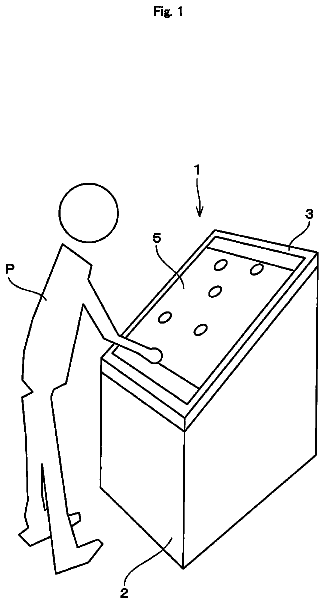
FIG. 1 is a schematic view of the general system of the present invention;
FIG. 2 is a flow chart of processing steps of the present invention;
FIGS. 3 (a)-(d) are schematic plan views of respective image faces of different pieces of the jigsaw puzzle set according to present invention.
FIG. 4 is a schematic plan view of four interlocked puzzle pieces;
FIGS. 5 (a)-(d) are schematic plan views of an image face of a single puzzle piece in successive rotational positions;
FIGS. 6 (a) and (b) are schematic plan views of target (original) image region or area and a puzzle piece (source tile) image, respectively, showing their relationship;
FIGS. 7 (a), (b) and (c) are similar view of image faces of respective pieces with respectively different directions of brightness gradient;
FIG. 8 is a plan view of the image faces of a piece aggregate or set of pieces linked together to form a sheet;
FIG. 9 is a flow chart showing processing steps for image comparison;
FIGS. 10 (a) and (b) are plan views of four original (target) region image tiles in different rotational arrangements;
FIGS. 11 (a) and (b) are plan views showing image faces of overlying source tiles and target region tiles in different relative rotational positions;
FIGS. 12 (a)-(e) are views of front image faces and rear faces, variously, showing different indicia forming identification codes marked thereon;
FIG. 13 shows an example of a finished image obtained as the output of the arrangement calculation unit of the present invention;
FIG. 14 is a chart of the billing system of the present invention;
FIG. 15 is a flow chart of the billing processing method of the billing system of the present invention;
FIGS. 16a and 16b are, respectively, plan and oblique perspective schematic views of an image face of source piece, illustrating the reduction in visibility of a directional identification code (airplane) marked thereon when viewed from the plan or front position by comparison with an oblique, piece assembling viewing position;
FIG. 17 is a diagram illustrating the calculation of values underlying the characterization of a target image region/area to be represented by a puzzle piece;
FIG. 18 shows a piece arrangement chart or table with inherently directional piece identification codes;
FIG. 19 is a diagram illustrating the larger number of different brightness gradients available adjacent middle values of average brightness than at more extreme average values of very bright and very dark;
FIGS. 20a and 20b show Einstein' face assembled from ideal target tiles to which histogram leveling and histogram humping have been applied, respectively;
FIG. 21 shows an iconic source picture of Times Square;
The description continues in the full USPTO document.
 Lapsed, fee not paid24 drawings