Lapsed, fee not paid7 drawings
Medical Devices · US 8,622,939 B2
Apparatus for manipulating joints of a limb
An apparatus for applying movement to the joints of a human patient is provided.
US 8,622,954 B2 · Assignee: Medtronic MiniMed, Inc. · Inventors: Shahmirian; Varaz et al.
Sheet 1 of 20 from the published document. All sheets in the USPTO PDF
A relay device transfers information between a sensor system, which measures a physiological characteristic level of a user, and a fluid delivery system, which infuses a fluid into a user. The relay device includes a sensor system receiver for receiving communications from the sensor system in a sensor system format. The relay device also includes a processor for processing the communications from the sensor system and converting the communications for transmission in a delivery system format. The relay device further includes a delivery system transmitter for transmitting the converted communications in the delivery system format to the fluid delivery system. The sensor system and delivery system formats may utilize different frequencies and/or different communication protocols for communications transmitted between the sensor system and the fluid delivery system through the relay device.
Ambulatory pumps and hospital-based fluid delivery systems are used to deliver fluids into the bodies of patients. For some therapies, sensor measurements of a patient's physiological characteristics are used to calculate fluid dosage requirements. Typically, a sensor monitor is used to collect sensor data from a sensor, calibrate the sensor data to generate sensor measurements, and display the sensor measurements. Next, the patient or a caregiver manually calculates the required fluid dosage based on the displayed sensor measurements. Finally, the patient or caregiver programs the pump or fluid delivery system to adjust the fluid dosage. For example, patients with Type 1 diabetes and some patients with Type 2 diabetes use insulin to control their blood glucose (BG) level. Typically, if a patient's BG level is too high, the patient can inject a "bolus" (dose) of insulin to lower his/her
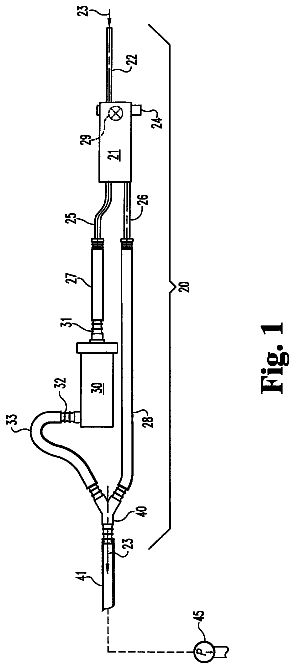
1 of 20 drawing sheets so far from the published document, cropped to the drawing. Every sheet is in the USPTO PDF.
What the patent claimed, word for word. All of it is now free to use.
Ambulatory pumps and hospital-based fluid delivery systems are used to deliver fluids into the bodies of patients. For some therapies, sensor measurements of a patient's physiological characteristics are used to calculate fluid dosage requirements. Typically, a sensor monitor is used to collect sensor data from a sensor, calibrate the sensor data to generate sensor measurements, and display the sensor measurements. Next, the patient or a caregiver manually calculates the required fluid dosage based on the displayed sensor measurements. Finally, the patient or caregiver programs the pump or fluid delivery system to adjust the fluid dosage.
For example, patients with Type 1 diabetes and some patients with Type 2 diabetes use insulin to control their blood glucose (BG) level. Typically, if a patient's BG level is too high, the patient can inject a "bolus" (dose) of insulin to lower his/her BG level from its present level to a desired target level. Furthermore, the patient may inject a bolus of insulin in anticipation of ingesting carbohydrates, thus heading off a sharp rise in his/her BG level. Presently, a patient or caregiver must measure the patient's blood glucose using a BG monitoring system, such as a continuous glucose measurement system, a test strip meter, a hospital-based measurement system, or an automated intermittent blood glucose measurement system. When the BG monitoring system has generated a BG measurement, the BG measurement is displayed on the BG monitoring system. Next, the patient or caregiver must visually read and then utilize the BG measurement to manually calculate a required insulin bolus (i.e., the amount of insulin to inject). Finally, once the required insulin bolus is calculated, the patient or caregiver must utilize an insulin delivery device (e.g., infusion pump, injection pen, IV meter, or the like) to deliver the insulin bolus into the patient's body.
Unfortunately, this process requires the patient or caregiver to handle several pieces of equipment, including the BG monitoring system and the insulin delivery device, which may discourage the patient or caregiver from using the BG measurements to adjust the insulin dosage, and thus, decrease the efficacy of the insulin delivery device. Additionally, if the BG monitoring system and the insulin delivery device are not developed in conjunction with one another, they typically communicate using different frequencies and/or modes of communication, and as a result, cannot communicate directly with one another. Thus, the patient or caregiver must manually calculate the required insulin bolus and program the insulin delivery device accordingly, which requires effort by the patient or caregiver and is subject to calculation errors. Alternatively, the patient or caregiver must manually enter the BG measurement into an electronic computing device with bolus estimation software for calculating the required insulin bolus (e.g., a computer, the Internet, a personal digital assistant (PDA), or an insulin delivery device, such as an infusion pump, injection pen, IV meter, or the like), which also requires effort by the patient or caregiver and is subject to transcription errors. For example, the patient or caregiver may not accurately enter the BG measurement that is displayed on the BG measurement device into the electronic computing device, and thus, the resulting bolus estimate calculation may not be accurate.
It is an object of an embodiment of the present invention to provide an improved infusion system including a relay device for transferring information between a sensor system and a fluid delivery system, which obviates for practical purposes, the above mentioned limitations.
According to an embodiment of the invention, an infusion system for infusing a fluid into a user includes a sensor system, a relay device, and a delivery system. The sensor system includes a sensor system housing, a sensor coupled to the sensor system housing for producing a signal indicative of a physiological characteristic level of the user, a sensor system processor contained in the sensor system housing for processing the signal indicative of the physiological characteristic level of the user, and a sensor system transmitter contained in the sensor system housing and coupled to the sensor system processor for transmitting one or more communications in a sensor system format. The relay device includes a relay device receiver for receiving the communications from the sensor system in the sensor system format, a relay device processor for processing the communications from the sensor system and converting the communications for transmission in a delivery system format, and a relay device transmitter for transmitting the converted communications in the delivery system format. The fluid delivery system includes a delivery system housing, a delivery system receiver contained in the delivery system housing for receiving the communications from the relay device in the delivery system format, and a delivery system processor contained in the delivery system housing and coupled to the delivery system receiver for processing the communications from the relay device in the delivery system format and controlling an amount of the fluid infused into the user. Further, the amount of the fluid infused into the user is determined based upon data indicative of the physiological characteristic level of the user.
In particular embodiments, at least one of the communications transmitted from the sensor system through the relay device and received by the fluid delivery system include data indicative of the physiological characteristic level of the user. Additionally, the communications including the data indicative of the physiological characteristic level of the user may be automatically transmitted from the sensor system through the relay device and received by the fluid delivery system. Further, the fluid delivery system may also include a display device contained in the delivery system housing and coupled to the delivery system processor for automatically displaying to the user the data indicative of the physiological characteristic level of the user. Alternatively, the fluid delivery system may further include a display device contained in the delivery system housing and coupled to the delivery system processor for displaying data to the user, and a user interface contained in the housing and coupled to the delivery system processor for accepting one or more inputs from the user. At least one of the inputs may cause the display device to display the data indicative of the physiological characteristic level of the user received by the fluid delivery system. Also, the user interface may be dedicated for interfacing with the data indicative of the physiological characteristic level of the user received by the fluid delivery system.
In other particular embodiments, the fluid delivery system includes a memory contained in the delivery system housing for storing the data indicative of the physiological characteristic level of the user received by the fluid delivery system. Also, the fluid delivery system may include a display device contained in the housing and coupled to the delivery system processor for displaying to the user a historical trend or graph using the stored data indicative of the physiological characteristic level of the user received by the fluid delivery system.
In still other particular embodiments, the fluid delivery system may include a display device contained in the delivery system housing and coupled to the delivery system processor for displaying data to the user, and a user interface contained in the delivery system housing and coupled to the delivery system processor for accepting one or more inputs from the user. At least one of the inputs may cause the display device to display the most recent data indicative of the physiological characteristic level of the user received by the fluid delivery system. Also, at least a portion of the user interface may be dedicated for interfacing with the data indicative of the physiological characteristic level of the user received by the fluid delivery system.
In yet other particular embodiments, the fluid delivery system includes a display device contained in the delivery system housing and coupled to the delivery system processor for displaying data to the user, and a user interface contained in the delivery system housing and coupled to the delivery system processor for accepting one or more inputs from the user. At least one of the inputs causes the display device to display the data indicative of the physiological characteristic level of the user received by the fluid delivery system. Further, at least a portion of the user interface may be dedicated for interfacing with the data indicative of the physiological characteristic level of the user received by the fluid delivery system.
In still other embodiments, the fluid delivery system includes a user interface for accepting one or more inputs from the user, and the user interface is contained in the delivery system housing and coupled to the delivery system processor. At least one of the inputs programs the amount of the fluid infused into the user based upon the data indicative of the physiological characteristic level of the user received by the fluid delivery system. In yet other embodiments, the fluid delivery system includes a bolus estimator used in conjunction with the delivery system processor for estimating the amount of the fluid to be infused into the user based upon the data indicative of the physiological characteristic level of the user received by the fluid delivery system, an indication device coupled to the bolus estimator for indicating the estimated amount of fluid to be infused into the user, and a user interface for accepting one or more inputs from the user. At least one of the inputs accepts or modifies the estimated amount of the fluid to be infused into the user. In additional embodiments, the fluid delivery system includes a closed loop algorithm executed by the delivery system processor for automatically determining the amount of the fluid to be infused into the user based upon the data indicative of the physiological characteristic level of the user received by the fluid delivery system and causing the fluid delivery system to infuse the determined amount of the fluid into the user. In further embodiments, the fluid delivery system includes an indication device for indicating when the data indicative of the physiological characteristic level of the user received by the fluid delivery system is above or below a target characteristic value.
In still additional embodiments, the fluid delivery system includes a delivery system transmitter contained in the delivery system housing and coupled to the delivery system processor for transmitting one or more communications in the delivery system format. The relay device receiver further receives the communications from the fluid delivery system in the delivery system format, the relay device processor processes the communications from the fluid delivery system and converts the communications for transmission in the sensor system format, and the relay device transmitter transmits the converted communications in the sensor system format. Also, the sensor system further includes a sensor system receiver coupled to the sensor system processor for receiving the communications from the relay device in the sensor system format.
In still further embodiments, the fluid delivery system includes a display device contained in the delivery system housing and coupled to the delivery system processor for displaying data to the user, and a user interface contained in the delivery system housing and coupled to the delivery system processor for accepting one or more inputs from the user. At least one of the inputs generates a request for the data indicative of the physiological characteristic level of the user from the sensor system, at least one of the communications transmitted from the fluid delivery system through the relay device to the sensor system includes the request, and at least one of the communications including the data indicative of the physiological characteristic level of the user is transmitted from the sensor system through the relay device and received by the delivery system in response to the request. The display device then displays the data indicative of the physiological characteristic level of the user received by the fluid delivery system. Additionally, the user interface may be dedicated for interfacing from the fluid delivery system with the sensor system through the relay device. Also, the requested data is the most recent data indicative of the physiological characteristic level of the user received by the fluid delivery system.
In yet other embodiments, the data indicative of the physiological characteristic level of the user received by the fluid delivery system is uncalibrated data. The fluid delivery system includes a calibration algorithm executed by the delivery system processor for calibrating the uncalibrated data to generate one or more measurements indicative of the physiological characteristic level of the user.
In alternative embodiments, the data indicative of the physiological characteristic level of the user received by the fluid delivery system includes one or more calibrated measurements indicative of the physiological characteristic level of the user. In particular alternative embodiments, the sensor system includes a calibration algorithm executed by the sensor system processor for calibrating the signal indicative of the physiological characteristic level of the user to generate the one or more measurements indicative of the physiological characteristic level of the user, and the communications transmitted from the sensor system through the relay device and received by the fluid delivery system include the one or more measurements indicative of the physiological characteristic level of the user. In other particular alternative embodiments, the data indicative of the physiological characteristic level of the user received from the sensor system by the relay device is uncalibrated data. The relay device includes a calibration algorithm executed by the relay device processor for calibrating the uncalibrated data to generate one or more measurements indicative of the physiological characteristic level of the user, and the communications transmitted from the relay device and received by the fluid delivery system include the one or more measurements indicative of the physiological characteristic level of the user.
In additional alternative embodiments, at least one of the communications transmitted from the sensor system through the relay device and received by the delivery system includes one or more commands for programming the amount of the fluid infused into the user based upon the data indicative of the physiological characteristic level of the user. In some embodiments, the sensor system includes a display device coupled to the sensor system processor for displaying data to the user, and a user interface coupled to the sensor system processor for accepting one or more inputs from the user. At least one of the inputs causes the display device to display the data indicative of the physiological characteristic level of the user obtained by the sensor system. Also, at least another one of the inputs generates the one or more commands for programming the amount of the fluid infused into the user based upon the data indicative of the physiological characteristic level of the user obtained by the sensor system. In other embodiments, the sensor system includes a closed loop algorithm executed by the sensor system processor for automatically generating the one or more commands for programming the amount of the fluid to be infused into the user based upon the data indicative of the physiological characteristic level of the user obtained by the sensor system.
In further alternative embodiments, at least one of the communications transmitted from the sensor system to the relay device includes the data indicative of the physiological characteristic level of the user, and at least one of the communications transmitted from the relay device and received by the fluid delivery system includes one or more commands for programming the amount of the fluid infused into the user based upon the data indicative of the physiological characteristic level of the user. In particular embodiments, the relay device includes a display device coupled to the relay device processor for displaying data to the user, and a user interface coupled to the relay device processor for accepting one or more inputs from the user. At least one of the inputs causes the display device to display the data indicative of the physiological characteristic level of the user obtained by the sensor system. Also, at least another one of the inputs generates the one or more commands for programming the amount of the fluid infused into the user based upon the data indicative of the physiological characteristic level of the user obtained by the sensor system. In other particular embodiments, the relay device further includes a closed loop algorithm executed by the relay device processor for automatically generating the one or more commands for programming the amount of the fluid to be infused into the user based upon the data indicative of the physiological characteristic level of the user obtained by the sensor system.
In yet additional embodiments, the sensor system format and the delivery system format utilize different frequencies for communications transmitted from the sensor system through the relay device and received by the fluid delivery system. In some embodiments, the sensor system format and the delivery system format utilize different communication protocols for communications transmitted from the sensor system through the relay device and received by the fluid delivery system. The communication protocols may utilize different carrier media and/or information packaging for communications transmitted from the sensor system through the relay device and received by the fluid delivery system.
In particular embodiments, the delivery system processor has a unique identification code, and the sensor system processor has the capability to learn the unique identification code of the delivery system processor. Further, the communications transmitted from the sensor system through the relay device and received by the fluid delivery system include the unique identification code of the delivery system processor to substantially avoid interference with other devices. In other particular embodiments, the sensor system processor has a unique identification code, and the delivery system processor has the capability to learn the unique identification code of the sensor system processor. Further, the communications transmitted from the sensor system through the relay device and received by the fluid delivery system include the unique identification code of the sensor system processor to substantially avoid interference with other devices. In still other particular embodiments, the relay device processor has a unique identification code, and the sensor system processor has the capability to learn the unique identification code of the relay device processor. Also, the communications transmitted from the sensor system to the relay device include the unique identification code of the relay device processor to substantially avoid interference with other devices. In yet other particular embodiments, the relay device processor has a unique identification code, and the delivery system processor has the capability to learn the unique identification code of the relay device processor. Also, the communications transmitted from the relay device and received by the fluid delivery system include the unique identification code of the relay device processor to substantially avoid interference with other devices.
In additional embodiments, the relay device is coupled to the delivery system housing. In other embodiments, the relay device is contained in the delivery system housing. In still other embodiments, the relay device is coupled to the sensor system housing. In further embodiments, the sensor system is a glucose monitoring system, and the fluid delivery system is an insulin infusion device.
In another embodiment of the present invention, a relay device transfers information between a sensor system and a fluid delivery system. The sensor system measures a physiological characteristic level of a user, and the fluid delivery system infuses a fluid into the user. The relay device includes a sensor system receiver for receiving one or more communications from the sensor system in a sensor system format, a processor for processing the communications from the sensor system and converting the communications for transmission in a delivery system format, and a delivery system transmitter for transmitting the converted communications in the delivery system format to the fluid delivery system.
In some embodiments, the relay device includes a delivery system receiver for receiving one or more communications from the fluid delivery system in the delivery system format. The processor further processes the communications from the fluid delivery system and converts the communications for transmission in the sensor system format. The relay device also includes a sensor system transmitter for transmitting the converted communications in the sensor system format to the sensor system. In other embodiments, at least one of the communications transmitted from the sensor system through the relay device and received by the fluid delivery system include data indicative of the physiological characteristic level of the user. In yet other embodiments, at least one of the communications transmitted from the sensor system through the relay device and received by the fluid delivery system include one or more commands for programming an amount of the fluid to be infused into the user based upon data indicative of the physiological characteristic level of the user obtained by the sensor system.
In further embodiments, at least one of the communications transmitted from the sensor system to the relay device include data indicative of the physiological characteristic level of the user, and at least one of the communications transmitted from the relay device and received by the fluid delivery system include one or more commands for programming an amount of the fluid to be infused into the user based upon the data indicative of the physiological characteristic level of the user. Additionally, the relay device may include a display device coupled to the processor for displaying data to the user, and a user interface coupled to the processor for accepting one or more inputs from the user. At least one of the inputs causes the display device to display the data indicative of the physiological characteristic level of the user. Also, at least another one of the inputs generates the one or more commands for programming the amount of the fluid to be infused into the user based upon the data indicative of the physiological characteristic level of the user.
In still other embodiments, the sensor system format and the delivery system format utilize different frequencies for communications transmitted from the sensor system through the relay device to the fluid delivery system. In yet other embodiments, the sensor system format and the delivery system format utilize different communication protocols for communications transmitted from the sensor system through the relay device to the fluid delivery system. The communication protocols may utilize different carrier media and/or information packaging for communications transmitted from the sensor system through the relay device to the fluid delivery system.
In yet another embodiment of the present invention, a relay device transfers information between a sensor system and a fluid delivery system. The sensor system measures a physiological characteristic level of a user, and the fluid delivery system infuses a fluid into the user. The relay device includes a sensor system transceiver for transmitting and receiving one or more communications to and from the sensor system. The communications are transmitted and received in a sensor system format. The relay device also includes a delivery system transceiver for transmitting and receiving one or more communications to and from the fluid delivery system. The communications are transmitted and received in a delivery system format. The relay device further includes a processor for processing the communications from the sensor system and the fluid delivery system. The processor converts the communications received from the sensor system in the sensor system format for transmission in the delivery system format to the fluid delivery system, and further converts the communications received from the fluid delivery system in the delivery system format for transmission in the sensor system format to the sensor system.
In particular embodiments, at least one of the communications transmitted from the sensor system through the relay device and received by the fluid delivery system include data indicative of the physiological characteristic level of the user. In other particular embodiments, at least one of the communications transmitted from the sensor system through the relay device and received by the fluid delivery system include one or more commands for programming an amount of the fluid to be infused into the user based upon data indicative of the physiological characteristic level of the user obtained by the sensor system.
In additional embodiments, at least one of the communications transmitted from the sensor system to the relay device include data indicative of the physiological characteristic level of the user, and at least one of the communications transmitted from the relay device and received by the fluid delivery system include one or more commands for programming an amount of the fluid to be infused into the user based upon the data indicative of the physiological characteristic level of the user. Also, the relay device may include a display device coupled to the processor for displaying data to the user, and a user interface coupled to the processor for accepting one or more inputs from the user. At least one of the inputs causes the display device to display the data indicative of the physiological characteristic level of the user. Additionally, at least another one of the inputs generates the one or more commands for programming the amount of the fluid to be infused into the user based upon the data indicative of the physiological characteristic level of the user.
In further embodiments, the sensor system format and the delivery system format utilize different frequencies for communications transmitted between the sensor system and the fluid delivery system through the relay device. In additional embodiments, the sensor system format and the delivery system format utilize different communication protocols for communications transmitted between the sensor system and the fluid delivery system through the relay device. The communication protocols may utilize different carrier media and/or information packaging for communications transmitted between the sensor system and the fluid delivery system through the relay device.
In still another embodiment of the present invention, an infusion system for infusing a fluid into a user includes a sensor system and a fluid delivery system. The sensor system includes a sensor for producing a signal indicative of a physiological characteristic level of the user, a sensor system processor coupled to the sensor for processing the signal indicative of the physiological characteristic level of the user, and a sensor system transmitter coupled to the sensor system processor for transmitting one or more communications in a sensor system format. The fluid delivery system includes a delivery system housing, a relay device contained in the delivery system housing, a delivery system receiver, and a delivery system processor. The relay device includes a relay device receiver for receiving the communications from the sensor system in the sensor system format, a relay device processor for processing the communications from the sensor system and converting the communications for transmission in a delivery system format, and a relay device transmitter for transmitting the converted communications in the delivery system format. The delivery system receiver is contained in the delivery system housing and receives the communications from the relay device in the delivery system format. The delivery system processor is also contained in the delivery system housing and is coupled to the delivery system receiver, and processes the communications from the relay device in the delivery system format and controls an amount of the fluid infused into the user. The amount of the fluid infused into the user is determined based upon data indicative of the physiological characteristic level of the user obtained by the sensor system.
In particular embodiments, at least one of the communications transmitted from the sensor system through the relay device and received by the fluid delivery system include data indicative of the physiological characteristic level of the user. Additionally, the communications including the data indicative of the physiological characteristic level of the user may be automatically transmitted from the sensor system through the relay device and received by the fluid delivery system. Further, the fluid delivery system may also include a display device contained in the delivery system housing and coupled to the delivery system processor for automatically displaying to the user the data indicative of the physiological characteristic level of the user.
In other particular embodiments, the fluid delivery system includes a display device contained in the delivery system housing and coupled to the delivery system processor for displaying data to the user, and a user interface contained in the delivery system housing and coupled to the delivery system processor for accepting one or more inputs from the user. At least one of the inputs causes the display device to display the data indicative of the physiological characteristic level of the user received by the fluid delivery system.
In still other embodiments, the fluid delivery system includes a memory contained in the delivery system housing for storing the data indicative of the physiological characteristic level of the user received by the fluid delivery system. Additionally, the fluid delivery system may include a display device contained in the delivery system housing and coupled to the delivery system processor for displaying to the user a historical trend or graph using the stored data indicative of the physiological characteristic level of the user received by the fluid delivery system. Alternatively, the fluid delivery system may include a display device contained in the delivery system housing and coupled to the delivery system processor for displaying data to the user, and a user interface contained in the delivery system housing and coupled to the delivery system processor for accepting one or more inputs from the user. At least one of the inputs causes the display device to display the most recent data indicative of the physiological characteristic level of the user received by the fluid delivery system.
In additional embodiments, the fluid delivery system includes a display device contained in the delivery system housing and coupled to the delivery system processor for displaying data to the user, and a user interface contained in the delivery system housing and coupled to the delivery system processor for accepting one or more inputs from the user. At least one of the inputs causes the display device to display the data indicative of the physiological characteristic level of the user received by the fluid delivery system. In further embodiments, the fluid delivery system includes a user interface contained in the delivery system housing and coupled to the delivery system processor for accepting one or more inputs from the user. At least one of the inputs programs the amount of the fluid infused into the user based upon the data indicative of the physiological characteristic level of the user received by the fluid delivery system.
In yet other embodiments, the fluid delivery system includes a bolus estimator used in conjunction with the delivery system processor for estimating the amount of the fluid to be infused into the user based upon the data indicative of the physiological characteristic level of the user received by the fluid delivery system, an indication device coupled to the bolus estimator for indicating the estimated amount of fluid to be infused into the user, and a user interface for accepting one or more inputs from the user. At least one of the inputs accepts or modifies the estimated amount of the fluid to be infused into the user. In still further embodiments, the fluid delivery system includes a closed loop algorithm executed by the delivery system processor for automatically determining the amount of the fluid to be infused into the user based upon the data indicative of the physiological characteristic level of the user received by the fluid delivery system and causing the fluid delivery system to infuse the determined amount of the fluid into the user. In still additional embodiments, the fluid delivery system includes an indication device for indicating when the data indicative of the physiological characteristic level of the user received by the fluid delivery system is above or below a target characteristic value. In even additional embodiments, the data indicative of the physiological characteristic level of the user received by the fluid delivery system is uncalibrated data, and the fluid delivery system further includes a calibration algorithm executed by the delivery system processor for calibrating the uncalibrated data to generate one or more measurements indicative of the physiological characteristic level of the user.
In some embodiments, the sensor system format and the delivery system format utilize different frequencies for communications transmitted from the sensor system through the relay device and received by the fluid delivery system. In other embodiments, the sensor system format and the delivery system format utilize different communication protocols for communications transmitted from the sensor system through the relay device and received by the fluid delivery system. The different communication protocols may utilize different carrier media and/or information packaging for communications transmitted from the sensor system through the relay device and received by the fluid delivery system.
In yet further embodiments, the delivery system processor has a unique identification code, and the sensor system processor has the capability to learn the unique identification code of the delivery system processor. The communications transmitted from the sensor system through the relay device and received by the fluid delivery system include the unique identification code of the delivery system processor to substantially avoid interference with other devices. In yet additional embodiments, the sensor system processor has a unique identification code, and the delivery system processor has the capability to learn the unique identification code of the sensor system processor. The communications transmitted from the sensor system through the relay device and received by the fluid delivery system include the unique identification code of the sensor system processor to substantially avoid interference with other devices. Other features and advantages of the invention will become apparent from the following detailed description, taken in conjunction with the accompanying drawings which illustrate, by way of example, various features of embodiments of the invention.
A detailed description of embodiments of the invention will be made with reference to the accompanying drawings, wherein like numerals designate corresponding parts in the several figures.
FIG. 1 is a block diagram of a system for transferring information between a blood glucose monitoring system and an infusion pump through a relay device in accordance with an embodiment of the present invention.
FIG. 2(a)-2(c) are perspective views of a blood glucose monitoring system in accordance with embodiments of the present invention.
FIG. 3(a) is a perspective view of an external infusion pump in accordance with an embodiment of the present invention.
FIG. 3(b) is a simplified block diagram of an external infusion pump in accordance with an embodiment of the present invention.
FIGS. 4(a)-5(f) are block diagrams of a system for transferring information between a blood glucose monitoring system and an infusion pump through a relay device in accordance with embodiments of the present invention.
FIGS. 6(a)-6(d) are perspective views of a relay device in accordance with embodiments of the present invention.
FIGS. 7(a)-7(c) are perspective views of a relay device placed on a body of a user in accordance with embodiments of the present invention.
FIGS. 8(a)-8(c) are perspective views of a relay device placed on an infusion pump in accordance with embodiments of the present invention.
FIG. 8(d) is a cut-away perspective view of an infusion pump with a relay device included in the infusion pump in accordance with another embodiment of the present invention.
FIGS. 9(a)-9(e) are block diagrams of a relay device in accordance with embodiments of the present invention.
FIG. 10 is a block diagram of a system for transferring information between a blood glucose monitoring system and an infusion pump using a relay device incorporated into the infusion pump in accordance with another embodiment of the present invention.
FIG. 11 is a block diagram of a system for transferring information between a blood glucose monitoring system and an infusion pump using a relay device incorporated into the infusion pump in accordance with yet another embodiment of the present invention.
FIG. 12 is a block diagram of a system for transferring information between a blood glucose monitoring system and an infusion pump using a relay device incorporated into the infusion pump in accordance with still another embodiment of the present invention.
The description continues in the full USPTO document.
About 6,000 words. The USPTO PDF has it with every drawing.
Fees are due 3.5, 7.5 and 11.5 years after grant. This patent expired on January 7, 2026, so the fee marked "not paid" was the one that went unpaid.
Relay device for transferring information between a sensor system and a fluid delivery system
Filed Dec 2002 · published Jun 2004Replay device for transferring information between a sensor system and a fluid delivery system
Filed Apr 2010 · published Nov 2010Relay device for transferring information between a sensor system and a fluid delivery system
Filed Apr 2010 · granted Jan 2014Earlier publications, parents and continuations. None of them can still be enforced, or this patent would not be listed.
Prior art cited by the examiner or applicant. Useful when you check your own idea for novelty.
Everything on this page comes from the documents linked above.