Lapsed, fee not paid4 drawings
Telecom & Networks · US 8,620,217 B2
Short range wireless communication apparatus
A short range wireless communication apparatus is disclosed.
US 8,620,308 B2 · Assignee: AT&T Mobility II LLC · Inventors: Maria; Arturo
Sheet 1 of 17 from the published document. All sheets in the USPTO PDF
A system and methodology that can facilitate communication between home and roaming radio access networks by employing IP-based messaging is provided. The system employs a Distributed Roaming Master (DRM) that facilitates authentication and/or authorization of roaming UEs (user equipment) by employing information, which can be downloaded from a home carrier-DRM over an IP network, in advance or in real time. Further, the DRM can utilize the downloaded information to route data packets between authorized roaming UEs and end-destinations, over the IP network. Furthermore, the system can implement Distributed Roaming Servers (DRS), which can be distributed at strategic points in the radio access networks and can perform a subset of functions performed by the DRM. Additionally, the system can include a Distributed Roaming Configuration Server (DRCS) that facilitates management and configuration of the DRM and/or DRSs based on one or more records stored in a Distributed Roaming Security Catalog (DRSC).
Technological advances have provided global communication systems that can connect users all around the world. Universal Mobile Telecommunications System (UMTS) offers a consistent set of services to mobile, computer and/or phone users, no matter where they are located in the world. In this regard, UMTS is a real global system, comprising both terrestrial and satellite components. Typically, UMTS can utilize a Virtual Home Environment (VHE), which can enable a roaming user to employ the same services at home, in the office, or in the field through a combination of transparent terrestrial and satellite connections. Further, UMTS networks can ensure that a user can experience a consistent set of services thus "feeling" on his home network, independent of the location or access mode (satellite or terrestrial) even when the user roams from his network to other UMTS operators. Conventionally,
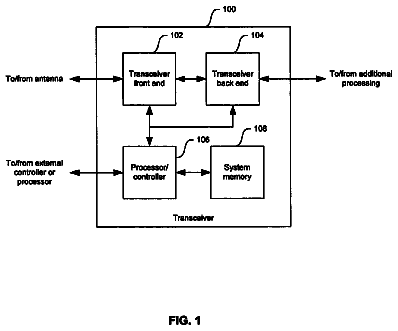
1 of 17 drawing sheets so far from the published document, cropped to the drawing. Every sheet is in the USPTO PDF.
What the patent claimed, word for word. All of it is now free to use.
The subject innovation relates to wireless communications and, more particularly, to employing a Distributed Roaming Technology Architecture for roaming user(s) in wireless data network(s).
Technological advances have provided global communication systems that can connect users all around the world. Universal Mobile Telecommunications System (UMTS) offers a consistent set of services to mobile, computer and/or phone users, no matter where they are located in the world. In this regard, UMTS is a real global system, comprising both terrestrial and satellite components. Typically, UMTS can utilize a Virtual Home Environment (VHE), which can enable a roaming user to employ the same services at home, in the office, or in the field through a combination of transparent terrestrial and satellite connections. Further, UMTS networks can ensure that a user can experience a consistent set of services thus "feeling" on his home network, independent of the location or access mode (satellite or terrestrial) even when the user roams from his network to other UMTS operators.
Conventionally, UMTS users roaming in areas, serviced by carriers that are not their home-based contracted carrier, rely on the 3GPP roaming architecture standards in order to roam. The 3GPP architecture defines how services can be obtained and how data packets can be routed to and/or from the home carrier core mobility network. Typically, the process starts with a user attaching to a roaming network's radio access network via a roaming Service GPRS Support Node (SGSN). Moreover, the SGSN signals an Home Location Register (HLR) associated with the user's home carrier network via SS7 (Signaling System 7) messages in order to determine the validity of the user. In response, the HLR can return an authentication vector and/or a user profile via SS7 messages, which can then be employed by the roaming network to challenge the identity of the user and receive an expected response. If the expected response matches the HLR provided vector, the user is authenticated and data packets are forwarded from the roaming network SGSN to the home-carrier core mobility network where a gateway support node (GGSN) routes the packets to their end-destination.
Thus, the conventional roaming architecture relies on an active link between the roaming network SGSN and the home network HLR for authentication and profile provisioning. Further, the conventional roaming architecture also relies on an active link between the roaming network SGSN and the home network GGSN for gateway services. These data link and routing services are generally provided by Global Roaming Exchange (GRX) carriers. If these links are not present, for example, when a connection is lost, the roaming network is unable to authenticate the user and route the data packets to the home network for gateway distribution services. Further, these traditionally employed active links have several performance and cost limitations. The traffic at a home carrier GGSN is significant and can lead to congestion, degraded performance, and/or slow connections. Further, roaming carrier can perform operations only when connected via an active SS7 link to the home carrier and a loss of connectivity can interrupt/cease operations.
The following presents a simplified summary of the specification in order to provide a basic understanding of some aspects of the specification. This summary is not an extensive overview of the specification. It is intended to neither identify key or critical elements of the specification nor delineate the scope of the specification. Its sole purpose is to present some concepts of the specification in a simplified form as a prelude to the more detailed description that is presented later.
In various embodiments, systems and methods are provided enabling a Distributed Roaming Technology Architecture (DRTA) that connects multiple radio access carrier networks. In one non-limiting embodiment, a first Distributed Roaming Master (DRM) is included within a first radio access carrier network that authenticates and/or authorizes a roaming User Equipment (UE), which subscribes to a second radio access carrier network, based in part on an analysis of data from a profile associated with the roaming UE. The profile is downloaded from a second DRM within the second radio access carrier network over an IP (Internet Protocol) network.
In another non-limiting embodiment, a method is provided that facilitates communication between home and roaming carrier networks associated with a first user equipment (UE) by employing IP (Internet Protocol)-based messaging. Information associated with the first UE is received from a Distributed Roaming Master (DRM) in a home carrier network of the first UE over an IP network, when the first UE is visiting a roaming carrier network and the information is employed to facilitate any one or more of authentication of the first UE, authorization of the first UE or communication between the first UE and an end-destination over the IP network.
In another non-limiting embodiment, a system enables gateway services to a roaming subscriber user equipment (UE), where mechanism(s) are provided for querying a Distributed Roaming Master (DRM), located within in a home carrier network, over an IP (Internet Protocol) network for information associated with the roaming subscriber UE, the means for querying located within a roaming carrier network, mechanism(s) are provided for receiving and storing the information and mechanisms are provided for analyzing the information to at least one of authenticate or authorize the roaming subscriber UE.
The following description and the annexed drawings set forth certain illustrative aspects of the specification. These aspects are indicative, however, of but a few of the various ways in which the principles of the specification can be employed. Other advantages and novel features of the specification will become apparent from the following detailed description of the specification when considered in conjunction with the drawings.
FIG. 1 illustrates an example system that facilitates subscriber authorization and data routing within roaming carrier network, according to an aspect of the subject disclosure.
FIG. 2 illustrates an example system that includes a distributed roaming master (DRM), which facilitates communication between disparate radio carrier networks in accordance with an aspect.
FIGS. 3A and 3B illustrate different network architectures that facilitate connectivity between roaming and home carrier networks, according to an aspect.
FIG. 4 illustrates an example system that can be employed to facilitate authorization and/or authentication for a subscriber UE, visiting a roaming carrier network, according to an aspect.
FIG. 5 illustrates an example system that can be employed to provide gateway services to a roaming subscriber UE, in accordance with an aspect.
FIG. 6 illustrates an example system that can employ Distributed Roaming Servers (DRSs) in a distributed roaming technology architecture in accordance with an aspect.
FIG. 7 illustrates an example system that facilitates management and configuration of a distributed roaming architecture, according to an aspect.
FIG. 8 illustrates an example system that can facilitate storage of security profiles and configuration parameters in a distributed roaming technology architecture in accordance with an aspect.
FIG. 9 illustrates an example system that can provide monitoring for billing and/or Quality of Service solutions in accordance with an aspect.
FIG. 10 illustrates an example system that employs an artificial intelligence (AI) component, which facilitates automating one or more features in an embodiment.
FIG. 11 illustrates an example methodology that facilitates authentication and/or authorization of end-users when the end user is visiting a roaming network, according to an aspect.
FIG. 12 illustrates an example methodology that can be employed to utilize a roaming profile to authorize and/or authenticate a roaming UE, according to an aspect.
FIG. 13 illustrates an example methodology that facilitates communication between a home and roaming carrier network by employing IP-based messaging in accordance with an aspect.
FIG. 14 illustrates an example methodology that facilitates management of a distributed roaming technology architecture.
FIG. 15 illustrates a block diagram of a computer operable to execute the disclosed DRTA architecture.
FIG. 16 illustrates a GSM/GPRS/IP multimedia network architecture that can employ the disclosed DRTA architecture.
One or more embodiments are now described with reference to the drawings, wherein like reference numerals are used to refer to like elements throughout. In the following description, for purposes of explanation, numerous specific details are set forth in order to provide a thorough understanding of the various embodiments. It may be evident, however, that the various embodiments can be practiced without these specific details, e.g., without applying to any particular networked environment or standard. In other instances, well-known structures and devices are shown in block diagram form in order to facilitate describing the embodiments in additional detail.
As used in this application, the terms "component," "module," "system", "interface", "service," "framework," or the like are generally intended to refer to a computer-related entity, either hardware, a combination of hardware and software, software, or software in execution. For example, a component can be, but is not limited to being, a process running on a processor, a processor, an object, an executable, a thread of execution, a program, and/or a computer. By way of illustration, both an application running on a controller and the controller can be a component. One or more components can reside within a process and/or thread of execution and a component can be localized on one computer and/or distributed between two or more computers. As another example, an interface can include I/O components as well as associated processor, application, and/or API components.
Furthermore, the various embodiments can be implemented as a method, apparatus, or article of manufacture using standard programming and/or engineering techniques to produce software, firmware, hardware, or any combination thereof to control a computer to implement the disclosed subject matter. The term "article of manufacture" as used herein is intended to encompass a computer program accessible from any computer-readable device, carrier, or media. For example, computer readable media can include but are not limited to magnetic storage devices (e.g., hard disk, floppy disk, magnetic strips . . . ), optical disks (e.g., compact disk (CD), digital versatile disk (DVD) . . . ), smart cards, and flash memory devices (e.g., card, stick, key drive . . . ). Additionally it should be appreciated that a carrier wave can be employed to carry computer-readable electronic data such as those used in transmitting and receiving electronic mail or in accessing a network such as the Internet or a local area network (LAN). Of course, those skilled in the art will recognize many modifications can be made to this configuration without departing from the scope or spirit of the various embodiments.
As used in this application, the term "or" is intended to mean an inclusive "or" rather than an exclusive "or". That is, unless specified otherwise, or clear from context, "X employs A or B" is intended to mean any of the natural inclusive permutations. That is, if X employs A; X employs B; or X employs both A and B, then "X employs A or B" is satisfied under any of the foregoing instances. In addition, the articles "a" and "an" as used in this application and the appended claims should generally be construed to mean "one or more" unless specified otherwise or clear from context to be directed to a singular form.
Further, terms like "user equipment," "mobile equipment," "mobile station," "mobile," "subscriber station," "access terminal," "terminal," "handset," "user device," "subscriber device", and similar terminology, refer to a wireless device utilized by a subscriber or user of a wireless communication service to receive or convey data, control, voice, video, sound, gaming, or substantially any data-stream or signaling-stream. The foregoing terms are utilized interchangeably in the subject specification and related drawings. Data and signaling streams can be packetized or frame-based flows. Furthermore, the terms "user," "subscriber," "customer," "end-user," "consumer," and the like are employed interchangeably throughout the subject specification, unless context warrants particular distinction(s) among the terms. It should be appreciated that such terms can refer to human entities or automated components supported through artificial intelligence (e.g., a capacity to make inference based on complex mathematical formalisms) which can provide simulated vision, sound recognition and so forth.
Additionally, the terms "home network," "home carrier network," "home carrier," and the like are employed interchangeably throughout the subject specification, unless specified, and refer to a primary radio access carrier network to which a user equipment UE is subscribed. Similarly, the terms "roaming network," "roaming carrier network," "roaming carrier," and the like are employed interchangeably throughout the subject specification, unless specified, and refer to a secondary radio access carrier network that a UE visits.
Roaming communications and interconnection between network operators is a challenging and complex function. Roaming functionality is extremely useful when subscribers travel outside the geographic coverage of their primary network and ensures that the subscriber can be connected to the primary network while visiting disparate networks. With the advent of 3G networks and the increased popularity in smart phones, the demand for utilization of mobile data services including MMS, GPRS, push email, and mobile broadband services while roaming outside a home carrier network has increased. Traditional systems utilize GRX (Global Roaming Exchange) carriers to provide connectivity based upon best effort between GSM and 3G Mobile Network Operators (end-to-end) whenever bilaterally agreed between those operators. However, GRX relies on an active links between the roaming network elements and the home network elements, for example, during authentication and profile provisioning.
The systems and method disclosed herein utilize a distributed roaming master (DRM) that facilitates interconnection between the roaming and home carrier networks. The DRM employs standard Internet Protocol (IP) based SSL (https, s-http, etc.) messages (not SS7) for communication and performs authentication of end-users, authorization of end-users and and/or routing of data packets to their end-destination. The use of a DRM eliminates the need for roaming carriers to contact home-carriers via SS7 messages. Instead, the roaming carrier can connect to the home carrier via the internet. By using IP-based SSL message as opposed to SS7 messages, carriers can implement elements of the subject architecture using commercial off-the-shelf IP-based servers and thus substantially reduce costs.
The systems and methods disclosed herein, in one aspect thereof, provide a Distributed Roaming Technology Architecture (DRTA) that can facilitate communication between home and roaming radio access carrier networks by employing on IP (Internet Protocol)-based messaging. The DRTA includes a Distributed Roaming Master (DRM) that can provide the core radio access network with an interface to an IP network (e.g., Internet). Moreover, the DRM can receive a message from a network element of the roaming carrier core network when an end-user, which is visiting the roaming carrier network, attaches to the roaming carrier network. In response, the DRM can communicate with a home carrier network of the end-user to retrieve authentication and/or authorization information associated with the end-user, over the IP network. A home network DRM can store end-user roaming profiles that can include a subset of information associated with the end-user and can provide the requested roaming profile via IP-based messaging. The DRM can utilize the received information to authenticate and/or authorize the end-user. Further, the DRM can store the received information in a local data store for future access. Furthermore, the DRM can facilitate routing of data packets between the roaming end-user to end-destination over the IP network, by employing most any secure protocol (e.g., IPSec, SSL, etc.).
In accordance with another aspect of the system, the DRTA architecture employs one or more Distributed Roaming Servers (DRSs), which can perform a limited set of functions performed by the DRM. The DRSs can be distributed at strategic points in a radio access network to improve performance and reduce cost. Moreover, the DRS servers can communicate with the DRM periodically, or on a real-time basis, to update, modify and/or synchronize information. In one aspect, the DRSs can include limited storage functionality and can authenticate/authorize users depending on data downloaded. Similar to the DRM, the DRSs can communicate via IP-based messages and can also employ XML strings over SSL to exchange information. The DRSs can facilitate routing of data packets between a roaming end-user and end-destination via the DRM or directly via the IP network.
Another aspect of the subject innovation comprises a Distributed Roaming Configuration Server (DRCS) that provides a single point of configuration for systems administrators and/or security managers. The DRCS provisions DRMs and/or DRSs in different radio access networks, establishes configuration parameters for communication with roaming partners and/or establishes the security associations and IP-sec parameters required to route packets to end-user destinations. The DRCS can communicate with the DRM and DRS servers over the IP network via SSL messages and XML applications peer-to-peer messages. Further, the DRCS can generate a schedule to update and/or synchronize the DRMs and/or DRSs. Moreover, the schedule can provide a periodic update or an update during an optimal time period.
One aspect of the disclosed subject matter relates to a Distributed Roaming Security Catalog (DRSC) for storage of security profiles and/or configuration parameters associated with management of the DRMs and/or DRSs. The DRSC can include provisioning records received from the home-carrier networks. Moreover, the provisioning records can be abbreviated versions of Home Location Register (HLR) records and can comprise a minimum amount of essential information. The records can be updated on a schedule/periodic basis or on-demand as driven by the home carrier via IP-based communications. In one aspect, the DRCS can utilize the records to facilitate management and/or configuration of the DRMs and/or DRSs of radio access networks.
Yet another aspect of the disclosed subject matter relates to a method that facilitates communication between a home and roaming carrier network by employing IP-based messaging. The method comprises receiving a message from a Serving GPRS Support Node (SGSN) regarding a roaming UE (user equipment) and in response, determining authentication and/or authorization for the roaming UE based on a roaming profile of the UE. The roaming profile can be downloaded, for example, from a local database or from a DRM in the home carrier network if the roaming UE over an IP network. Further, routing of data packets for communication between the roaming UE and end-user enterprise servers can be facilitated over the IP network based on data from an Access Point Name (APN) profile (e.g., retrieved from the local database or home carrier DRM). Additionally, security attributes can be utilized to establish a network to network virtual private network (NTN-VPN) via the IP network and deliver data packets to the end-destination securely.
Aspects, features, or advantages of the subject innovation can be exploited in substantially any wireless communication technology; e.g., Wi-Fi, Worldwide Interoperability for Microwave Access (WiMAX), Enhanced General Packet Radio Service (Enhanced GPRS), Third Generation Partnership Project (3GPP) Long Term Evolution (LTE), Third Generation Partnership Project 2 (3GPP2) Ultra Mobile Broadband (UMB), High Speed Packet Access (HSPA), or Zigbee. Additionally, substantially all aspects of the subject innovation can be exploited in legacy telecommunication technologies.
Referring initially to FIG. 1, there illustrated is an example system 100 that facilitates subscriber authorization and data routing within roaming carrier network, according to an aspect of the subject disclosure. Moreover, a roaming carrier network can be most any communication network, typically outside the geographical coverage area of the home carrier network, to which a UE (user equipment) can connect. Most often, when a subscriber travels outside the range of his home carrier network, the subscriber can connect to the home carrier network via an available roaming carrier network. It can be appreciated that the roaming carrier network is not limited to having a coverage area outside the range of the home carrier network. In one example, the coverage area of the home and roaming carrier networks can overlap (e.g., UE can utilize roaming network resources to avoid congestion on the home carrier network). As an example, system 100 can be implemented in a roaming carrier network. Additionally and/or alternately, a substantially similar system can be implemented in the home carrier network.
Typically, most network service providers have a predefined roaming agreement with disparate network providers, for example network providers in different geographical locations. Based in part on the roaming agreement, when a subscriber travels into the coverage area of the roaming carrier network, the roaming carrier network can allow the subscriber to make and receive voice calls, send and receive data, or access other services, including home data services, when travelling outside the geographical coverage area of the home network, by means of utilizing the recourses of the roaming visited network.
Roaming is technically supported by mobility management, authentication, authorization and/or billing procedures. When the subscriber registers with the roaming network, subscriber data for authentication and/or authorization can be retrieved by the roaming carrier network, for example, from a database of the home carrier network. As discussed above, in traditional systems, network elements of the roaming carrier network employ active links (e.g., via SS7) to receive subscriber data from a Home Location Register (HLR) in the home carrier network. However, system 100 utilizes a Distributed Roaming Master (DRM) 102 to interface the roaming and home carrier networks.
System 100 employs a Distributed Roaming Technology Architecture (DRTA) that facilitates communication and interoperability between roaming and home network carriers. According to an aspect, system 100 does not to rely on global roaming exchange (GRX) links for authorization and routing. Instead, the system 100 includes a DRM 102 that can interface with an IP network 104 and communicate with a home carrier network via most any secure protocol, (e.g., IPSec, SSL, etc.)
At a high level, a roaming carrier core network 106 that can include a router element, such as but not limited to, a Serving GPRS Support Node (SGSN) can identify when an end-user attaches to the roaming carrier network. According to one aspect, the roaming carrier core network 106 can send a message to the DRM 102 using standard IP-based messages, such as but not limited to Secure Sockets Layer (SSL), secure-HTTP (s-http), HTTP-secure (https) (etc. This is one of the differences from the conventional approach, because the roaming carrier core network 106 can communicate with a local DRM 102 instead of a home carrier HLR. In one aspect, the DRM 102 can reside in the roaming carrier's core mobility network. Alternately, the DRM 102 can be located at a central location hosted by a third party, which can be shared by multiple roaming partners.
According to an embodiment, the DRM 102 can receive a message from the roaming carrier core network 106 (e.g., a SGSN) when the end-user attaches to the roaming carrier network. Further, the DRM 102 can interface with an IP network 104, for example, the Internet, and communicate with a home carrier network to retrieve authentication and/or authorization information associated with the end-user. As an example, the DRM 102 can communicate with a home carrier network DRM (not shown) to receive end-user data. Typically, the home carrier network DRM can store end-user roaming profiles that can include a subset of information associated with the end-user usually stored in the home carrier HLR. The DRM 102 can utilize the received information to validate and/or authorize the end-user to access the roaming carrier network. Additionally, the DRM 102 can store the received information as a roaming profile for the end-user. Once the profile is stored at the DRM 102, authentication and/or authorization information can be locally accessed each time the end-user attaches to the roaming carrier network. In one aspect, the profile can be downloaded to the DRM 102 prior to the end-user accessing the network, for example, periodically and/or based on a schedule.
According to another embodiment, once the end-user is authenticated and authorized to employ the roaming carrier network, the DRM 102 can also facilitate routing of data packets to their end-destination via the IP network 104. It can be appreciated that the data packets can include, but are not limited to, voice, video, and/or data. In one example, the routing of data packets can include real-time and/or live streaming of audio, video and/or other data. As an example, the DRM 102 can employ IP-based SSL messages (as opposed to SS7 messages), to route data packets to and from the end-user. Accordingly, service providers can implement elements of system 100 by employing most any commercial off-the-shelf IP-based servers, which can be affordable and readily available.
In an aspect, the DRM 102 can be provisioned by roaming and/or home carriers and can store an abbreviated set of end-user profiles that facilitate authentication and authorization of services and/or UEs. It can be appreciated that this set of profiles can be updated periodically, and/or on demand. Further, the DRM 102 can determine and/or store roaming billing records associated with roaming end-users. Furthermore, the DRM 102 can also determine and/or enable a network service provider to apply, update, cancel, and/or modify a Quality of Service (QoS) priority associated with the data packet communication, as explained in detail infra.
Referring now to FIG. 2, there illustrated is an example system 200 that includes a distributed roaming master (DRM) 102, which facilitates communication between disparate radio carrier networks in accordance with an aspect of the disclosed subject matter. Typically, the DRM 102 can be a gateway that interfaces with an IP-based network, for example, the Internet. As noted previously, the DRM 102 can facilitate communication between two or more carrier networks via a secure communication protocol, such as, but not limited to, IPSec, SSL, etc. Further, the DRM 102 can facilitate improved performance by enabling faster authorization/authentication/routing for end-users. It can be appreciated that the DRM 102 can include functionality, as more fully described herein, for example, with regard to system 100. The DRM 102 is the centerpiece of the Distributed Roaming Technology Architecture (DRTA) disclosed herein. Specifically, the DRM 102 can store roaming profiles for all home carriers and perform authentication and/or authorization functions for roaming users.
According to an embodiment, the DRM 102 can include a security component 202 that can retrieve roaming profiles associated with a roaming subscriber from the subscriber's home carrier network. It can be appreciated that the term "roaming subscriber" used herein refers to a subscriber of a communication device, who is visiting and attempting to access a roaming carrier network. In an aspect, when the DRM 102 receives a message from a SGSN to authenticate and/or authorize a newly attached roaming subscriber, the security component 202 can initially lookup a data store 204, which can be operatively connected to the DRM 102, to determine if a roaming profile 206 associated with the roaming subscriber exists locally. If a roaming profile 206 associated with the subscriber is found, the security component 202, analyzes the roaming profile 206 and employs the information within the roaming profile 206 to authenticate and/or authorize the subscriber. In another example, when a roaming profile 206 associated with the roaming subscriber is not found locally, the security component 202 communicates over the Internet (e.g., employing IPSec, SSL, etc.) with an element in the subscriber's home carrier network, for example, a home carrier DRM (not shown). The security component 202 can receive profile information for the roaming subscriber from the roaming subscriber's home carrier network and store the profile information in the data store 204. It can be appreciated that the profile information can be a subset of information associated with a subscriber stored in a home carrier HLR. Further, the security component 202 authenticates and/or authorizes the roaming subscriber based in part on the received information.
The DRM 102 can also perform a routing function by employing a routing component 208. In the conventional architecture defined by 3GPP, Gateway GPRS Support Nodes (GGSNs) are provisioned to route packets to end-user destinations. However, in the disclosed DRTA, the routing component 208 can be provisioned to route end-packets directly to end-destinations bypassing the need to contact the GGSN for routing services. The data store 204 can include Access Point Name (APN) profiles 210 that can be utilized by the routing component 208 to allow data packets to be routed to end-destinations via the IP network. It can be noted that the APN profiles 210 in the data store 204 can be updated periodically and/or on demand.
Further, the routing component 208 determines whether a network-to-network virtual private network (NTN-VPN) is requested, and establishes, via the IP network, a NTN-VPN by employing security attributes 212. In one example, the routing component 408 delivers data packets to the end-destination securely over the NTN-VPN. The consolidated authentication, authorization and end-routing functions over standard IP-based messaging, performed by the DRM 102, avoid communication with an HLR and/or GGSN of the roaming subscriber's home carrier network. In one example, when information associated with the roaming subscriber, such as, but not limited to, a roaming profile 206, an APN profile 210, security attributes 212 and/or catalogs 214 are downloaded into the data store 204, the DRM 102 can enable roaming functions without accessing the home carrier network. Thus, system 200 can be "self-contained" and can enable roaming carrier networks to authenticate and route data packets without communicating with home carrier networks via live links.
In one aspect, at the application layer, the DRM 102 can employ Extensible Markup Language (XML) to transfer data between the DRM 102 and an SGSN. As an example, the messages can contain numeric challenges and/or expected responses in order to authenticate roaming subscribers. The data store 204 can also store a catalog 214 of finite number of challenges and expected responses for each roaming subscriber. Therefore, sharing of a SIM (Subscriber identity Module) key between home and roaming carriers can be avoided and the system can be more secure. The catalog 214 of finite set of authentication challenges and/or expected response can be provisioned by disparate home carrier networks of the roaming subscribers on a periodic basis, when the network is available, or on demand. In particular, the routing component 208 can utilize the locally stored catalog of challenges and/or expected responses to authenticate a roaming subscriber that registers with or access the carrier network of system 200. Accordingly, the system 200 can achieve a fast response time and improved performance. In an additional aspect, the data store 204 can store information 216 associated with subscribers of the roaming carrier network, including but not limited to roaming profiles 206, attributes 212, APN profiles 210, catalogs 214, etc. Moreover, the security component 202 can provide (e.g., periodically or on demand) the subscriber information 216, to a DRM in a disparate carrier network over the IP network, when the subscribers of the roaming carrier network visit the disparate carrier network.
It can be appreciated that the data store 204 described herein can enable business continuity, since elements in the roaming carrier network (e.g., DRM 102) can access data from the local data store 204 and continue operations even in the event of a loss of connectivity to the home carrier network. Typically, the data store 204 can include volatile memory or nonvolatile memory, or can include both volatile and nonvolatile memory. By way of illustration, and not limitation, nonvolatile memory can include read only memory (ROM), programmable ROM (PROM), electrically programmable ROM (EPROM), electrically erasable PROM (EEPROM), or flash memory. Volatile memory can include random access memory (RAM), which acts as external cache memory. By way of illustration and not limitation, RAM is available in many forms such as static RAM (SRAM), dynamic RAM (DRAM), synchronous DRAM (SDRAM), double data rate SDRAM (DDR SDRAM), enhanced SDRAM (ESDRAM), Synchlink DRAM (SLDRAM), and direct Rambus RAM (DRRAM). The memory (e.g., data stores, databases) of the subject systems and methods is intended to comprise, without being limited to, these and any other suitable types of memory.
FIGS. 3A and 3B illustrate different network architectures that facilitate connectivity between roaming and home carrier networks, according to an aspect of the disclosed innovation. Turning to FIG. 3A, there illustrated is a distributed roaming technology architecture 300 that can facilitate connectivity between radio access carrier networks 1 to N (where N can be a natural number from two to infinity). Further, FIG. 3B illustrates an alternate architecture 302 that utilizes a common DRM 102 to facilitate connectivity between the radio access carrier networks 1 to N. The network elements and methods disclosed herein can implement authentication/routing functions in a distributed manner, which can be tailored to the specific network architecture of the roaming carrier network. It can be appreciated that the DRMs (102, 102.sub.1-N) can each include their respective functionality, as more fully described herein, for example, with regard to systems 100 and 200.
The systems 300 and 302 illustrate SGSNs (304.sub.1-N) of various carrier networks that can interface with one or more disparate carrier networks by employing a DRM (102, 102.sub.1-N). Typically, each carrier network can include a coverage area that spans across different geographical locations. For example, Network 1 can be a service provider in Unites States of America and the coverage area of Network 1 can span the entire country. Further, Network 2 can cover Canada, while Network N can cover the United Kingdom. It can be appreciated that the coverage areas of the carrier networks of the subject innovation are not limited to span countries but can vary in size and cover most any geographical region and/or can overlap.
In general, systems 300 and 302 can provide connection between different radio access networks based in part on a predefined contract and/or agreement. Accordingly, when subscribers of a first carrier network travel into a coverage area of a second carrier network, the subscribers can access the second carrier network to communicate with the home carrier network, for example, make and/or receive calls, download content, services, etc.
Referring to FIG. 3A, in one aspect, each Network 1-N can include a DRM (102.sub.1-N), as shown in system 300, which can provide an interface with an IP network 104 (e.g., Internet). The DRMs (102.sub.1-N) can retrieve subscriber data from the subscriber's home carrier DRM and locally store the roaming profile associated with the subscriber. When a subscriber roams in an area serviced by a roaming carrier network which is not its home-based contracted carrier, the DRM of the roaming carrier network can access the locally stored roaming profile for the subscriber to facilitate authorization and/or authentication of subscriber. If the roaming profile is not locally available, the DRM of the roaming carrier can query the DRM of the home-based contracted carrier to retrieve the roaming profile associated with the subscriber via the IP network 104. Moreover, the DRMs (102.sub.1-N) can communicate with each other by employing most any secure IP-based protocol, such as but not limited to, IPSec, SSL, etc. Further, DRM of the roaming carrier can facilitate routing of data packets between the subscriber UE and the end-destination, for example on the home network.
As an example, a UE (not shown), which subscribes to Network 1, can roam in the coverage area of network 2. The roaming UE can connect to a Radio Network Subsystem (RNS) of Network 2, serviced by the SGSN 2 (304.sub.2), which in turn can communicate with the DRM 2 (102.sub.2) to identify the UE and/or determine whether the UE is authorized to access the Network 2. Specifically, the DRM 2 (102.sub.2) can search its local database for the roaming profile associated with the UE. If found, the DRM 2 (102.sub.2) can utilize the UE's roaming profile to authenticate and/or authorize the UE. Further, the DRM 2 (102.sub.2) can also facilitate routing data packets to/from the UE over the IP network 104 by employing standard IP-based messaging.
If the DRM 2 (102.sub.2) cannot locate the UE's roaming profile locally, the DRM 2 (102.sub.2) can query the DRM 1 (102.sub.1) via the IP network 104 by employing secure IP-based messaging to retrieve the roaming profile from the DRM 1 (102.sub.1). Moreover, the DRM 2 (102.sub.2) can utilize the retrieved data to authenticate and/or authorize the UE. Further, the DRM 2 (102.sub.2) can employ standard IP-based messaging to route data packets from the UE to the Network 1 over the IP network 104 and vice versa.
The description continues in the full USPTO document.
About 5,965 words. The USPTO PDF has it with every drawing.
Fees are due 3.5, 7.5 and 11.5 years after grant. This patent expired on December 31, 2025, so the fee marked "not paid" was the one that went unpaid.
METHOD AND APPARATUS FOR A DISTRIBUTED ROAMING MASTER (DRM) IN WIRELESS DATA NETWORKS
Filed Aug 2009 · published Feb 2011Method and apparatus for a distributed roaming master (DRM) in wireless data networks
Filed Aug 2009 · granted Dec 2013Earlier publications, parents and continuations. None of them can still be enforced, or this patent would not be listed.
Prior art cited by the examiner or applicant. Useful when you check your own idea for novelty.
Everything on this page comes from the documents linked above.