Field of the invention
This present invention relates generally to the field of communications and networking, and particularly to delivery of services over broadband infrastructures.
Background of the invention
The network-resources needed to deliver a service are constrained by the interconnecting technologies that make up the network. Due to business reasons, the capacity of the service provider's network cannot grow linearly with the addition of new end users. As a result, the service provider must perform what is referred to as oversubscription. This means the same resources in the network are sold multiple times to different end users.
Oversubscription is based on the principle that not all users will be consuming their data pipe simultaneously. The service provider estimates how much simultaneous usage there will be of the network and provides some maximum limits to the amount of resources used by each data pipe. During times of congestion (i.e., many end users trying to access the network at the same time with traffic levels exceeding what the network can handle) the quality of service associated with the sessions may degrade substantially because the network cannot differentiate between those sessions that require special treatment and others that do not require such special treatment. This results in the resources consumed by a service (or an aggregate of services) being limited by the characteristics of the data pipe to the end user.
For example, in a video-on-demand application (e.g., where a user requests a video clip or movie) if an end user wishes to download streaming video from a content provider (i.e., a dynamic service) via today's static data pipe the viewing experience would likely be much poorer than the viewing experience one would get by watching traditional broadcast TV. The reason for this is that there is a certain amount of bandwidth that is needed for the video frames to be delivered which if not made available by the network, results in poor viewing quality (e.g. jerky, frame loss, etc.) for the user. Currently, a service provider access network is based on best effort delivery of content, which can be inadequate compared to the quality of service needed for such service delivery. This is especially true in a shared contention based access network where multiple users contend for the same set of network resources.
One of the issues plaguing service providers today is the existence of bandwidth hogs. The phrase bandwidth hogs refers to the typically smaller percentage of users/end points which use up a majority of the delivery network resources. Today, there is no easy or graceful means by which the service provider can control the access for those bandwidth hogs because of the static nature of the data pipes. A bandwidth hog can consume as much bandwidth as allowed by the data pipe, for as long as the end point wants to, and the sessions associated with bandwidth hogs compete for the same resources needed by other non-bandwidth hog related sessions.
The properties of the static data pipe are such that there may be some minimum and maximum bandwidth made available for the subscriber or end user. Currently, once provisioned, this availability of bandwidth cannot be changed without re-provisioning. Thus static provisioning results in the inefficient utilization of network resources. Provisioning is the act of statically configuring the service profile of the subscriber or end user in either some customer premise equipment and or any intermediate network elements participating in the delivery of the service. In the case of the customer premise equipment (cable modem), a rebooting of the device is necessary in order to be provisioned. The service provider has a limited set of resources in its network, and thus has to ensure that the resources available in its network can satisfy the needs of the end users that it has agreed to take on as customers. The end user uses the data pipe to receive content from another location in either the service provider's network, or beyond. The end user can also use the data pipe to send content from the local (in home or business) site to the remote end, which can either be another content provider or a peer (e.g. another end user in the service provider's network) or any other legitimate entity that can receive such content. Regardless of the type of content the end user wishes to transfer over the data pipe, be it for an on-demand streaming video application, or a telephony application, or Instant Messaging application (with or without the video component), or just Internet browsing, the data traffic associated with the dynamic service is constrained by the resources that were statically provisioned for the end user.
Today, the model for offering differentiated services to the end user is Tiered Services (e.g., bronze, silver, gold). Service providers offer a tiered service model in which the characteristics of the data pipe may differ based on the tier that the end user or subscriber has subscribed to. Tiered services do not address the needs of dynamic services because the tier to customer association is static, and the tier and its associated characteristics are also static.
Summary of the invention
In general, in one aspect, the invention features a method of operating a policy server connected to a network including a plurality of network termination devices and a plurality of CPEs (customer premises equipment) that are behind the plurality of network termination devices. The method involves: polling the plurality of termination devices for data maintained by the termination devices; processing the polled data to generate topology information identifying which CPEs are behind which termination devices; and storing the topology information in a topology data structure.
Other embodiments include one or more of the following features. The method also involves: receiving a request for setting up a session for one of the CPEs among the plurality of CPEs; referencing the topology data structure to identify the network termination device behind which that CPEs is located; and sending a policy decision to the identified network termination device to configure characteristics of the requested session. The termination devices are cable modem termination systems (CMTSs). The method also involves storing the polled data, and wherein processing the polled data involves processing the stored polled data. Polling involves: extracting MIB tables from MIBs that are maintained by the plurality of network termination devices; and storing the extracted MIB tables, and wherein processing involves processing the stored MIB tables to generate the topology information. The network also includes a plurality of modems to which the plurality of CPE's are connected and wherein each termination device is characterized by a set of blades, each of which supports a corresponding set of channels, wherein processing involves determining which blade, channel, and modem is associated with each CPE. Each network termination device is connected to a corresponding one of a plurality of access networks and wherein each of the plurality of modems communicates with a corresponding one of the plurality of access networks and wherein the topology information presents a mapping of each CPE of the plurality of CPEs to a corresponding blade and channel of a corresponding one of the plurality of network termination devices and to a corresponding one of the plurality of modems. Polling the plurality of network termination devices involves polling MIBs that are stored and maintained by the plurality of network termination devices. Polling involves using SNMP to poll. Storing the topology information in the topology data structure involves storing the topology information in a list of subscriber data comprising a plurality of records. Each record of the plurality of records stores an address of a corresponding one of the plurality of CPEs and wherein each record identifies for the corresponding one of the plurality of CPEs an index for a corresponding one of the plurality of network termination devices. The stored CPE addresses are IP addresses. Each record of the plurality of records stores an address of a corresponding one of the plurality of CPEs and wherein each record identifies for the corresponding one of the plurality of CPEs an index for a corresponding one of the plurality of network termination devices, a blade index identifying a corresponding blade within that network termination device, a channel index identifying a corresponding channel within that network termination device, and a MAC address of a corresponding one of the plurality of modems.
In general, in another aspect, the invention features an apparatus for use on a network that includes a plurality of network termination devices and a plurality of CPEs (customer premises equipment) that are behind the plurality of network termination devices. The apparatus includes: a processor system; an interface which enables communication over the network with the plurality of network termination devices; and a memory system which stores a topology data structure and program code which when executed on the processor system causes the apparatus to: poll the plurality of network termination devices for data maintained by the termination devices; process the polled data to generate topology information, the topology information identifying which CPEs are behind which termination devices; and store the topology information in the topology data structure. The program code when executed on the processors system also causes the apparatus to: process a received request for setting up a session for one of the CPEs among the plurality of CPEs; reference the topology data structure to identify the network termination device behind which the CPE is located; and send a policy decision to the identified network termination device to configure characteristics of the requested session.
Dynamically controlling the characteristics of the data pipe permits a delivery network operated by a service provider to be able to change the characteristics or even limit the access of the data pipes associated with the bandwidth hogs dynamically. In an alternative model, a service provider will be able to monetize the extra usage of its network resources by such bandwidth hogs.
The details of one or more embodiments of the invention are set forth in the accompanying drawings and the description below. Other features, objects, and advantages of the invention will be apparent from the description and drawings, and from the claims.
Brief description of the drawings
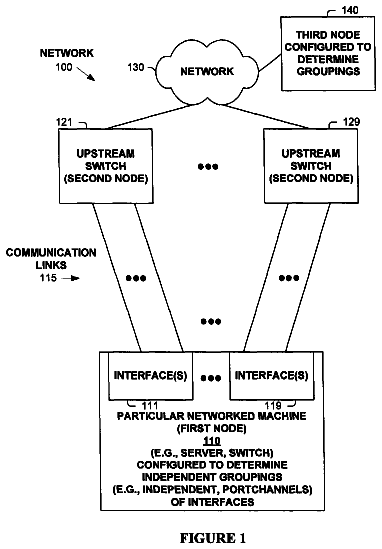
FIG. 1 is a block diagram of the architecture of a cable network for delivering services.
FIG. 2 illustrates the use of topology data to perform admission control.
FIG. 3 illustrates the use of topology data to dynamically route service requests.
FIG. 4 is a flow diagram of the topology discovery process and correlation algorithm.
FIG. 5 shows a hierarchical arrangement of policy servers.
FIG. 6 shows a policy servers in a peer-to-peer relationship with each other.
Detailed description
Architecture:
FIG. 1 is a high level diagram of a service provider's network 10. It includes an application server (AS) 12; multiple Cable Modem Termination Systems (CMTSs) 14, which function as gateways to one or more access networks 16; and a policy server (PS) 18, which manages admission control and Quality of Service on behalf of application server 12. These elements are typically connected to a network 20 (e.g. the Internet) over which they are able to communicate with each other. Customer Premises Equipment (CPE) 22, such as personal computers or set top boxes, are connected to the access networks 16 through Cable Modems (CM) 24.
The CMTS, which is a device that sits at a cable head-end, functions as a data switching system designed to route data to and from many cable modem users over a multiplexed network interface. It integrates upstream and downstream communications over the access networks (e.g. a cable data network) to which it is connected. The CMTS implements a protocol (e.g. the DOCSIS RFI MAC protocol) to connect to cable modems over the access network. DOCSIS refers to the set of Data-Over-Cable Service Interface Specifications, which defines how to transmit data over cable networks in a standard fashion (see DOCSIS 1.0, 1.1, and 2.0). RFI is the DOCSIS Radio Frequency Interface specification defining MAC and Physical Layer interfaces between CMTS and CM network elements.
The CMTS operates over a spectrum that is divided into multiple 6 MHz-wide channels. Each channel typically has a capacity of about 30-40 Mbps. Physically, the CMTS typically includes multiple blades each of which supports n channels (where n is typically equal to 4). Each blade is held in a corresponding slot in the CMTS.
Application server 12, which is managed by a content provider, is the entity that delivers the content to the applications on CPEs 22 connected to cable modems 24. On the Internet, common examples of such servers include the Yahoo web server; file upload servers; video servers; Xbox servers, etc.
There is also an application manager (AM) 26 which is a system that interfaces to policy server 18 for requesting QoS-based service on behalf of an end-user or network management system. Typically, application manager 26 is implemented as part of application server 12, as indicated.
Cable modems 24 enable other Customer Premises Equipment (CPE) 22 to connect to access network 16 and receive cable services. In the described embodiment, the cable modem is a 64/256 QAM (Quadrature Amplitude Modulation) RF receiver that is capable of delivering up to 30 to 40 Mbps of data in a 6 MHz cable channel. Data from the user is modulated using a QPSK/16 QAM transmitter with data rates from 320 kbps to 10 Mbps (where QPSK refers to Quadrature Phase Shift Keying modulation). The upstream and downstream data rates can be flexibly configured using cable modems to match subscriber needs.
Policy server 18 is a system that primarily acts as an intermediary between application manager 26 and CMTS(s) 14. It applies network policies to requests from the application managers and proxies messages between the application manager and CMTS. In the described embodiment, it implements the functionality that is specified by the Packet Cable Multimedia (PCMM) standards (e.g. see PacketCable Multimedia Architecture Framework Technical Report PKT-TR-ARCH-V01-030627) as well as the extended functionality described herein. In its capacity as an intermediary, policy server 18 grants QoS for different requesters based on policy rules established by the operator of the network or service, and affects the QoS by pushing down policy decisions to the termination devices (e.g. the CMTSs). Its extended functionality includes keeping track of and monitoring the state of the network (what is happening on the network, the state of the sessions, etc.) and making policy decisions based on the state of the network.
In general, the described embodiment enables the delivery of dynamic services over communication networks. The delivery of a service involves: a user (also referred to as an end-user) of the service; a delivery network that facilitates the delivery of the service (e.g. access network 16), and a provider of the content for the service. The delivery network (or access network 16) is owned by an entity generally referred to as a service provider. A user of the service generally includes any human operator or machine that can invoke the service. A user or subscriber could be a residential, business, or any other legitimate customer of the service provider. A provider of content for the service is referred to as a content provider. The source for the content could be owned and managed by the service provider in which case the content is referred to as local content. Alternatively, the source for the content could be owned and managed by some entity other than the service provider in which case the content is referred to as 3rd party content.
Typically, the dynamic service that is being delivered is a service that a legitimate user can invoke on-demand and that is provided by one or more content providers and delivered over one or more delivery networks owned by one or more service providers. In the case of the cable network embodiment described herein, examples of dynamic services include but are not restricted to: voice and video telephony; video-on-demand; Internet data service; and gaming, time-based and volume-based services.
For any service to be delivered to the user of the service, a path, referred to as a data pipe is provided between the content provider and the user. Typically, the service provider is the entity that is responsible for the delivery network and the provisioning of the data pipe. The data pipe is a logical conduit that traverses one or more physical network elements and provides connectivity to deliver data between two end-points that participate in a service. The delivery of content, be it either video, voice/telephony or Internet data, is provided to the broadband user either at the home or business over such a data pipe to the home or business, where the data pipe is established through static or configured means.
Provisioning of the data pipe is the process of configuring, managing, and activating an electronic service (e.g., telephone, video). Currently, terminology is mixed in that provisioning also refers to the automation of the actual provisioning process. Provisioning, as used herein, implies the process as opposed to the automation of such process. Although the process may be automated, provisioning, as it is known in the prior art, is static, which means that it is incapable of automatically adapting the data pipe to satisfy a customer requesting dynamic services.
The data pipe is used to support sessions between communicating entities. A session refers to the flow of information between two
or more end points that is participating in the request for and delivery of the service (e.g. Video-on-demand, Gaming, telephony/voice, file sharing, etc). A session thus represents a dynamic context associated with an instance of a dynamic service invocation. A session includes all data flows that are needed to provide the service and all resources used on various elements through which the data pipe traverses. For a voice call, a session would map to the connection between end users which results when a user makes a telephone call to the callee. Such a voice session includes all the network resources utilized to complete the call. For a multimedia messaging service, a session includes the video, voice and data traffic (content) along with network resources needed to provide the messaging service.
Control Plane:
In the described embodiment, the policy server operates solely in the control plane to monitor and control CMTSs and CMs. By "control plane" we mean the signaling or control aspects associated with the setting up, managing, and tearing down of the data pipe. All the entities among the network's elements that participate in the signaling aspects form the control plane of the service provider network. In contrast, there is also a data plane, which refers to the elements that participate in the transfer of data over the data pipe between two end-points that participate in a service. All the entities among the network's elements that participate in the transfer of data form the data plane of the service provider network. For instance, for a Video-on-demand Service--where a user can order a movie on-demand--any network entity that is involved in the data pipe and the actual transfer of the movie content, is considered the data plane.
In other words, the data associated with the session does not flow through the policy server. The policy server deals with only the signaling aspects of the dynamic session where signaling refers to only those messages which pertain to the session establishment, management, and teardown.
It is worth noting that any instrumentation (e.g. monitoring or control) that resides in the data plane will involve inspecting the data that flows through the data pipe and this would, of course, give rise to privacy issues. In contrast, any instrumentation that resides solely in the control plane does not involve inspecting the data that flows through the pipe thus does not give rise to privacy issues.
Monitoring Function:
To implement the extended functionality, the policy server keeps track of the state of the network by maintaining state of all sessions that are currently active and by passively monitoring certain information that is being recorded at the various relevant network devices and components. This knowledge about how the network resources are being used is then used to enforce policy. For example, the policy server uses it to limit resources that are being used by a particular application on the blade or channel level. For example, suppose a request for service comes in and the policy server knows through its monitoring function that the network is presently congested, it can implement a rule that does not admit new requests if network is congested.
As noted, the policy sever collects and maintains data on two kinds of session flows, namely, the QoS enabled sessions and the non-QoS enabled sessions. Since any QoS enabled sessions must go through the policy server, the policy server knows exactly what kind of application is involved, the subscriber that is using it, and other usage-related details for those sessions. The policy server keeps track of this information at multiple levels including per CMTS, per blade, per channel, per cable modem, per application, per subscriber, per subscriber tier. In addition, for these QoS enabled sessions, the policy server keeps track of what sessions exist; how much bandwidth is consumed by each session; and what kind of QoS parameters are being used for each session.
The non-QoS enabled sessions, on the other hand, do not go through the policy server. Those other sessions are handled by the network on a "best effort" basis, which means that they all compete for the available resources on an equal basis. So, the policy server does not know a priori any details about those sessions. To acquire information about those flows, the policy server monitors various MIBs that are maintained by the CMTSs and cable modems to ascertain measures of the network traffic associated with these best effort flows. It monitors this data by polling the relevant MIBs on a periodic basis, e.g. every 20-30 minutes. In addition, it also gathers this data for various levels including the CMTS, the blade, the port, the channel, and the cable modem.
The traffic data that is gathered in this way represents aggregate data for all packets that are being handled by the particular level. In other words, the monitored packet counts include all packets associated with best effort sessions as well as those associated with the QoS enabled sessions. Since the policy server knows the bandwidths that have been reserved or allocated for the QoS enabled sessions, it subtracts out those numbers from the aggregate counts to arrive at an estimate of the count for the best efforts sessions. Since the QoS enabled sessions are not likely to be continually operating at their allocated bandwidths, the estimates of the best effort flows will tend to understate the magnitude of those flows. In addition, since in the described embodiment the data is polled only every 20-30 minutes, the counts do not represent real time numbers. But these approximations of the state of the network provide sufficiently useful information on which to base meaningful policy decisions.
The policy servers can use techniques for improving the quality of the monitoring data. For example, to put the monitored information in a more useful form, the policy server can analyze the information over time to identify trends in usage and predict near term future network state. In addition, at certain times, the policy server is able to get more accurate data regarding usage of particular channels or sessions and when that opportunity arises the policy server can use that data to improve its view of the state of the network. For example, when a particular session is torn down, the policy server can obtain an accurate count of the total number of packets that were handled by the session in both the upstream and downstream directions. At those times, the policy server incorporates the more accurate counts into its computations to arrive at more accurate estimates of the aggregate numbers for the best effort sessions.
Of course, it is also possible to generate data that is closer to real time data by polling more frequently. However, the price paid for doing that is degradation in the service that the network delivers. Polling more frequently will consume bandwidth that could otherwise be used for delivering the service. So, selecting the polling frequency and the amount of data that is gathered requires a compromise between accuracy of the collected data and service level.
The policy server enhances the efficiency of the access network utilization by also keeping track of the following (typically by reading the information in the appropriate MIB):
a) Channel Characteristics of the CMTS: This includes information such as the QAM scheme that the channel is operating on in the upstream and downstream direction. Typical downstream QAM schemes are 64-QAM or 256-QAM. Typical upstream modulation schemes are QPSK or 16-QAM. Depending on the "noise" in a given channel, CMTSs can dynamically change the QAM scheme from a scheme that allows transmission at higher speeds to one that allows transmission at lower speeds and vice versa. This affects the "capacity" of a channel and needs to be monitored constantly to accommodate any increase or decrease in the capacity of the channel. It can be critical for ensuring efficient utilization of the access network
b) Dynamic Channel Changes: Depending on the usage of a particular channel, the CMTS can dynamically assign a different channel to a group of cable modems. It is important to monitor and, in some cases, control this process from the policy server. For example, if the CMTS suddenly assigns a "new" channel to a group of CMs that were working on an "old" channel, it leads to reduced traffic on the "old" channel while the "new" channel now has traffic flowing through it. These changes are detected in real-time and this information is taken into account when making decisions to ensure efficient network utilization.
c) Primary/Secondary Port Changes: CMTSs may have Primary and Secondary ports serving groups of CMs for enhanced reliability and redundancy. Simply explained, it could work such that: Port 1.fwdarw.Primary for CM Group 1 Secondary for CM Group 2 Port 2.fwdarw.Primary for CM Group 2 Secondary for CM Group 1 If Port 2 fails in this situation then Port 1 will take over the functions and load of Port 2. Such changes are tracked and taken into account in making admission control decisions. Policy Enforcement:
The policy server acts as a gatekeeper for dynamic services. By acting as the intermediary device between end points and multiple content providers, it authenticates for services, activates the services by ensuring the necessary resources are available, and participates in the billing aspect of the dynamic service. When a dynamic service is about to be activated, the content provider or the end point requesting the service requests for service from the policy server. In general, the policy server does two things--admission control and QoS control.
First, the policy server performs admission control of the request to ensure that the service can be provided, and then performs the necessary actions to the involved network elements in the data path to ensure that the resources are available for the service. Some of the admission control policies are controlled by the service provider and these policies are used to control such things as: which applications are allowed to request for resources, which content providers are allowed to gain and request for resources from the service provider's network, which end users are allowed to request for which types of services, and how much resources can be requested by the various entities such as the content server and the end user.
If admission control passes, the session can proceed and is given the required Quality of Service through the network for good delivery. If admission control fails, the session cannot proceed. Admission control can fail due to 1) request by unauthorized content provider or end user, 2) insufficient resources in the network to provide required Quality of Service. If admission control fails for reason 2, then the content provider may choose to deliver the content anyway, but at a degraded service level.
Once admission control passes through all rule checking, the policy server figures out what kind of QoS will be needed for that particular application. And then it communicates policy decisions to the CMTS to implement that level of QoS. That is, it tells the CMTS to set up certain QoS regarding jitter, latency, bandwidth, etc.--to provide the appropriate experience for the application. For example, it is able to create a flow that has low jitter, low latency characteristics. The DOCSIS standard with which the CMTS complies enables one to request this by instructing the CMTS to use, for example, an appropriate one of the available scheduling mechanisms.
In a local database, the policy server stores a set of policy rules, including usage-based rules that take into account what has been authorized into the network and/or taking into account the monitored state of the network. The policy server uses the policy rules to generate policy decisions in response to requests for services. Given the amount of detail that the policy server collects about the state of the network, the policy server is able to exercise rather fine-grained admission control for a particular application as well as for a particular subscriber.
Using a topology discovery process that is based on analyzing the monitored state of the network and the network elements, the policy server generates and maintains a table indicating where each particular requester is located (i.e., behind which CMTS). More specifically, the policy server uses the subscriber information in session setup request to determine which CMTS/blade/channel is involved. Then, it figures out all of the policy decisions that need to be enforced, and then sends those policy decisions to the appropriate CMTS. And the CMTS enforces the decisions for the session that is being set up. The policy decisions are defined and pushed to the CMTS at the time the session is set up and they typically remain valid for as long as the session exists.
The policy server is used to manage network resources (e.g. bandwidth) and is intended to be customized by allowing the network or service operator to add site-specific policies to define how the resources are to be managed.
Given that the described embodiment is implemented in a cable network environment, the following discussion will refer to a request for bandwidth as a "gate". When bandwidth is requested, a set of parameters that define how the bandwidth is to be used is also specified. These parameters are used when the policies are evaluated in order to determine whether the request should be approved. The "gate" exists as long as the bandwidth is being used. When the gate is terminated or deleted, the bandwidth is no longer available.
The sets of parameters referred to above are identified and defined in various publicly available specifications with which commercially available devices comply. In addition to specifying how to allocate bandwidth, the parameters also specify how to process packets flowing through the network, how much bandwidth to allocate to particular types of applications, setting up windows establishing minimum and maximum limits for traffic flows, how to set up reservations for bandwidth, rules for dropping packets, etc.
The specifications include, for example, the Packet Cable Multimedia specifications implemented by Cable Labs and to which the reader is referred for more details.
The policy server is configured with a set of policy rules. Each policy rule includes a set of conditions that are used to determine when the policy is relevant, and a set of actions that are performed when those conditions are met. The actions can be performed on one gate or a set of gates. This is determined by gate selection criteria associated with the policy actions. The policy server evaluates the policies in response to events that are external to the policy server. Those events are referred to as "policy triggers."
The following discusses each of these aspects of policy management and further defines some of the features that are supported.
Policy Conditions
Policy conditions are expressed in terms of objects that define information about the state of the network and the information associated with gate requests received by the policy server. Each of these objects has a collection of related information that is available in the polices. This includes the following types of information:
Information that is configured through the management interface
Information that is collected from external database
Information that is collected from external network devices
Information that is computed based on network resource utilization
The configured information includes manually entered configuration information. For example, the service provider may want to identify certain applications servers that connect to the policy server and associate those application servers with particular applications. With this information, if the policy server receives a request from a particular application server, it can automatically determine what application is associated with that service and thereby know what QoS will be required for the request. For example, a request that is associated with a voice application would need to receive a high priority service; whereas, a request for a temporary movie download could be given a low priority. Such associations can be based on manually configured information.
The external databases include those databases that are maintained by the Multiple Service Operators (MSOs) or the Service Providers. They might typically include subscriber information, information used to manage the network and subscriber access, and other information that would be useful in defining policies. One specific example is a mapping of subscriber IP to tier of service to which that subscriber is entitled.
The information collected from external network devices refers to the data that is maintained in and obtainable from various MIBs. This information includes: CMTS, blade, and channel packet traffic; and configuration information about the CMTSs and cable modems.
An example of a set of objects that can be used in policy conditions is: Subscriber The end user of the service provided by the service provider/MSO/operator Subscriber Tier The service plan or bundled set of services that is associated with the subscriber. Application Manager/Application Server Application The application associated with a gate (a single application can be associated with multiple App Mgrs or App Servers). Gate CMTS CMTS Blade CMTS Channel Region or Zone This represents an administrative, geographical or organizational subset of the network. It can also represent the entire network. Triggering Event This is the event that triggered the policy evaluation. Time The current time of day can be used in conditions although it is not really an "object" in the same sense as many of the others listed. Network State The state of the network as perceived by the policy server when the request for resources are being made. Other objects The policy engine is extensible and allows additional attributes to be defined on existing objects; also allows new object types to be defined for policy evaluation.
Within a single policy it is possible to have multiple conditions, based on different objects or based on the same object.
Policy Triggers
A policy evaluation is "triggered" by events that are external to the policy server. The list that follows defines some of the events that can trigger policy evaluation: Gate creation requests from an Application Manager. Gate modification requests from an Application Manager. Gate deletion requests from an Application Manager. Gate time limit reached. The time limit associated with a gate previously created by this policy server was reached. Gate volume limit reached. The volume limit associated with a gate previously created by this policy server was reached. Congestion detected. Network state is tracked by keeping usage statistics of all sessions for the objects described in the section on Policy Conditions. It is also tracked by monitoring the actual network devices (by polling SNMP MIBs for example). It is possible to define usage levels at which the network is considered to be congested and these levels can be used to trigger policies to deal with the congestion. The objects for which congestion levels can be defined include: Subscriber Application Application Manager/Application Server CMTS CMTS Blade CMTS Channel Region
Policy Actions
There are a number of actions that can be performed when the conditions associated with a policy are met. They are summarized in the following table. Note that some actions only make sense for certain types of triggering events. Reject Gate Request Authorize Gate Request; authorize the request meeting requirements specified in the request Authorize Gate Request with modified parameters, including: Reduced or elevated traffic priority Usage-based or time-based traffic limits Reduced (or increased) bandwidth allocations Enabling special features (such as electronic surveillance or the ability for the gate to survive Cable-Modem reboots). Delete Selected pre-existing Gates (based on selection criteria) in order to "make room" for new authorized request Change parameters of Selected pre-existing Gates (based on selection criteria), including: Reducing (or elevating) traffic priority Adding usage-based or time-based traffic limits Reducing bandwidth allocations Generate notification event (such as an SNMP trap, or an email to operations, or generate a logging event) Other actions (the product supports the ability to extend the predefined set of actions programmatically).
Selection Criteria:
Certain actions can be applied to multiple gates. These actions support gate selection criteria that allow the policy writer to specify the subset of pre-existing gates on which the action should be performed. The selection criteria allows the policy server to select gates based on: Subscriber Tier associated with Gate Application associated with Gate Application Manager/Application Server associated with Gate CMTS associated with Gate CMTS Blade associated with Gate CMTS Channel associated with Gate Usage statistics associated with Gate
Policy Examples
The description continues in the full USPTO document.
 Lapsed, fee not paid7 drawings