Technical field of the invention
The present invention relates in general to the field of insoluble oil recovery from aqueous slurries, and more particularly, to a microporous membrane based method for recovering oil from a growth media comprising lysed or non-lysed algal cells or other organisms capable of secreting oil or other hydrophobic compounds.
Statement of federally funded research
None.
Reference to a sequence listing
None.
Background of the invention
Without limiting the scope of the invention, its background is described in connection with recovery methods for insoluble and low solubility compounds having economic value from aqueous mixtures that may include one or more types of biological cells or cellular debris.
U.S. Pat. No. 4,439,629 issued to Ruegg
describes a process for extracting either or both beta-carotene or glycerine from algae containing these substances, especially from algae of the genera Dunaliella. According to the Ruegg patent either or both of beta-carotene or glycerine can be extracted from algae. If it is desired to extract beta-carotene, the algae are first treated with calcium hydroxide and then filtered. The residue from this filtration is treated with a beta-carotene solvent, which removes the beta-carotene from the residue and into the solvent. The beta-carotene can be recovered from the solvent by conventional means. If it is desired to extract glycerine, the filtrate from the treatment of the algae with calcium hydroxide is neutralized, concentrated and the residue from the solid is treated with a lower alkanol to remove glycerine from the residue.
U.S. Pat. No. 5,378,639 issued to Rose et al.
discloses a method for the solvent-extraction of .beta.-carotene from an aqueous algal biomass suspension, whereby a vegetable oil which is immiscible with water is mixed with an aqueous biomass suspension, the biomass containing the .beta.-carotene, to form a mixture of the organic phase and the aqueous suspension, whereby the .beta.-carotene is caused to dissolve in the organic phase. This is followed by separation of the organic phase from the aqueous phase by passing the organic phase containing the dissolved .beta.-carotene through a semi-permeable membrane to effect microfiltration or ultrafiltration of the organic phase. The membrane is of a material that is hydrophobic and the organic phase is passed through the membrane with a pressure drop across the membrane which is lower than that which causes the aqueous phase to pass through the membrane.
Summary of the invention
In one embodiment, the present invention includes a method of extracting one or more insoluble oils from a liquid source, comprising one or more organisms, using one or more non-dispersive membrane contactors, comprising the steps of: pumping the liquid source comprising the one or more oils from a reactor to the contactor; pumping a collection fluid through the one or more contactors; contacting the one or more oils in the liquid source with the collection fluid pumped in the one or more contactors; pumping a first stream from the contactor back to the reactor, wherein the first stream comprises the liquid source with the one or more organisms without extracted oils, wherein the one or more organisms remain viable; and removing a second stream from the contactor or the vessel, wherein the second stream comprises the collection fluid and extracted oils. In one aspect, the reactor is a fermenter, and the one or more organisms comprise organisms that are capable of secreting oil. In another aspect, the reactor is a photobioreactor and the one or more organisms comprise organisms are capable of performing photosynthesis.
In one aspect, the one or more organisms comprise at least one organism capable of photosynthesis, characterized in that it is capable of secreting oil or causing the accumulation or oil outside living cells. In another aspect, the one or more organisms comprise at least one organism that causes accumulation of one or more oils outside living cells. In another aspect, the method further comprises contacting the one or more organisms with chemical probes, exogenous agents, or pharmaceuticals, whereby the metabolism of the one or more organism is modified, wherein at least one organism causes accumulation of the one or more oils outside living cells. In another aspect, the organism is an algae. In another aspect, the step of contacting the one or more oils in the liquid source with the collection fluid does not inhibit cell growth or viability of the organisms. In another aspect, the coalescence is achieved in the presence of algal cells. In another aspect, the oil is defined as a hydrophobic compound that is insoluble in an aqueous liquid source.
In yet another aspect, the liquid source is selected from the group consisting of industrial water, brine, wastewater, industrial or natural effluents, water-oil mixtures, aqueous slurries, aqueous slurries comprising broken cells, live cells, biocellular mixtures, lysed cellular preparations, or combinations thereof. In another aspect, the one or more organisms comprise algae, protists, fungi, yeast, E. coli, mixed cultures of cells, organisms that are genetically modified to render them capable of secreting oil, organisms that are capable of causing accumulation of the one or more oils outside living cells, organisms that are capable of causing accumulation of the one or more oils outside living cells upon induction with one or more chemical probes, exogenous agents, or pharmaceuticals, or combinations thereof. In another aspect, 95-100% of the one or more insoluble oils in the liquid source are extracted. In another aspect, the 45%, 50%, 55%, 60%, 65%, 70%, 75%, 80%, 85%, 90%, 95%, 98%, 99% and 100% of the one or more insoluble oils in the liquid source are extracted. In another aspect, the collection fluid comprises one or more solvents, a biodiesel, an algal oil, a non-polar oil or mixtures, or combinations thereof.
In another embodiment, the present invention includes a method of extracting one or more insoluble oils or hydrophobic components from a growth media comprising organisms and the insoluble oils using one or more hydrophobic membranes or membrane modules comprising the steps of: pumping the growth media comprising the organisms and insoluble oils from a reactor into a contactor or a vessel; pumping one or more collection fluids through the one or more membranes or membrane modules, wherein the one or more collection fluids counterflow with the growth media comprising organisms in the contactor or the vessel; contacting the growth media comprising organisms and insoluble oils in the contactor or the vessel with one or more collection fluids pumped through the one or more membranes or membrane modules; removing a first stream from the contactor or the vessel, wherein the first stream comprises the growth media and organism, wherein the organisms do not exhibit reduced cell growth or reduced viability; and removing a second stream from the contactor or the vessel, wherein the second stream comprises the one or more collection fluids and the one or more insoluble oils.
In one aspect, the method further comprises feeding or pumping the first stream to the reactor. In another aspect, the hydrophobic hollow fiber membrane is selected from at least one of polyethylene, polypropylene, polyolefins, polyvinyl chloride (PVC), amorphous Polyethylene terephthalate (PET), polyolefin copolymers, poly(etheretherketone) type polymers, or surface modified polymers. In another aspect, the counterflowing collection fluid comprises non-polar solvents, alkanes such as hexane, aromatic solvents such as benzene, toluene, ethers such as diethyl ether, halogenated solvents such as chloroform, dichloromethane, and esters such as ethyl acetate. In another aspect, the counterflowing collection fluid comprises non-polar oils, algal oils, components of biodiesels, monoglycerides, diglycerides, triglycerides, or fatty acid methyl esters.
In yet another aspect, the reactor is a photobioreactor or pond, and the one or more organisms comprise organisms are capable of performing photosynthesis. In another aspect, the reactor is a fermenter, and the one or more organisms comprise at least one organism that is capable of secreting one or more insoluble oils. In another aspect, the one or more organisms comprise at least one organism that causes accumulation of one or more insoluble oils outside living cells. In another aspect, the method further comprises contacting the one or more organisms with chemical probes, exogenous agents, or pharmaceuticals, whereby the metabolism of the one or more organism is modified, wherein at least one organism causes accumulation of the one or more insoluble oils outside living cells. In another aspect, the one or more organism comprise at least one organism capable of photosynthesis, characterized in that it is capable of secreting hydrophobic components or causing the accumulation of hydrophobic components outside living cells. In another aspect, the method includes the step of contacting the growth media comprising organisms in the contactor or the vessel with one or more collection fluids pumped through the one or more membranes or membrane modules does not affect viability of the organisms. In another aspect, the coalescence is achieved in the presence of the organisms. In another aspect, the one or more organisms comprise algae, protists, fungi, yeast, E. coli, mixed cultures of cells, organisms that are genetically modified to render them capable of secreting hydrophobic components, organisms that are capable of causing accumulation of the one or more hydrophobic components outside living cells, organisms that are capable of causing accumulation of the one or more hydrophobic components outside living cells upon induction with one or more chemical probes, exogenous agents, or pharmaceuticals, or combinations thereof In another aspect, at least 45%, 50%, 55%, 60%, 65%, 70%, 75%, 80%, 85%, 90%, 95%, 98%, 99% or 100% of the one or more hydrophobic components in the growth media are extracted. In another aspect, the collection fluid comprises one or more solvents, a biodiesel, an algal oil, a non-polar oil or mixtures, the oil secreted by the organism, or combinations thereof.
The present invention also describes a method for recovering insoluble oil from aqueous slurries using a hydrophobic microporous hollow fiber membrane followed by circulation of a collection fluid through the membrane. The collection fluid as described herein comprises an appropriate solvent for the insoluble or low solubility compound to be recovered, for e.g. heptane or a biodiesel mixture or the extracted oil or combinations thereof The extracted algal oil can be used as the collection fluid for the recovery of additional algal oil, allowing the process to be conducted without a chemical solvent such as heptane. The novel process could be used in a wide variety of commercially significant applications such as: (i) recovery of released or secreted algae oil from an aqueous mixture, (ii) recovery of insoluble hydrocarbon and hydrocarbon-rich molecules from aqueous mixtures, (iii) recovery of Omega fatty acids from an aqueous mixture, (iv) recovery of Beta-carotene from an aqueous mixture, and (v) removal of oil from produced water in petroleum exploration and production.
In conventional liquid-liquid extraction and coalescing processes involving large drops of oil (greater than 1,000 microns), the mixing and separation of the oil and water phases by a dispersive process is routinely practiced with relative ease. However, when the oil drops are significantly smaller in diameter (less than 10 microns) and solids are present, the complete separation of the immiscible liquids is extremely difficult, if not impossible using dispersive methods routinely practiced for larger oil droplets. When routine methods are applied to try to recover small oil droplets from water in the presence of solids (such as cells or cell debris), a solid-liquid-liquid emulsion layer is created resulting in an incomplete and inefficient separation of the two liquids. Therefore a new process is required that will allow for a more efficient separation and elimination of the solid-liquid-liquid-emulsion problem. The process of the present invention enables the recovery of micron and submicron sized insoluble oil drops from an aqueous slurry utilizing a novel non-dispersive process.
A non-dispersive process promotes a one-way flow of specific compounds into and through a membrane to remove the compounds from the shell side feed to the tube side. A non-dispersive separation process is currently used to remove dissolved gases from liquids such as the removal of dissolved oxygen from water to produce ultra pure water for the microelectronics industry. The present invention is a first successful demonstration of the application of non-dispersive processes to recover insoluble oil from water or aqueous slurries. The non-dispersive process disclosed herein uses a microporous hollow fiber membrane composed of hydrophobic fibers. The aqueous slurry containing the insoluble oil is fed on the shell-side of the hollow fiber module and a hydrocarbon-appropriate solvent, for example, a biodiesel, or similar oil recovered in previous application of the described process is fed on the tube side of the hollow fiber module as a collection fluid. The aqueous phase passes around the outside of the large surface area of hydrophobic fibers containing the hydrophobic collection fluid as it passes through and eventually out of the module. As the aqueous liquid with the insoluble oil drops passes through the module, the insoluble oil droplets coalesce on to the walls of hydrophobic fibers and dissolve into the hydrocarbon-appropriate collection fluid on the tube side of the module and are carried out of the module with the collection fluid. In this process, the tube side collection fluid does not make prolonged contact with the aqueous phase or disperse into the aqueous phase. The absence of this mixing as hypothesized by the inventors prevents the formation of a solid-liquid-liquid emulsion, when solids were present, allowing insoluble oil to be recovered efficiently from an aqueous slurry containing solids. The above hypothesis was successfully demonstrated herein to efficiently recover insoluble oil from an aqueous mixture including cells without the formation of a solid-liquid-liquid emulsion.
In typical membrane filtration processes, small amounts of solids quickly build up on the surface of the membrane (commonly called membrane fouling) reducing the efficiency and cost effectiveness of the filtration process. In the process discovered and disclosed herein using the microporous hollow fiber membrane module, the inventors hypothesized that membrane fouling is not a concern within specific operating parameters. The inventors show that if the module was operated using hydrophilic cells that were small enough to pass through the dimensions of the module, and an appropriate pressure differential was maintained between the aqueous fluid and collection fluid, that the hydrophilic cells would flow through the module and be repelled from the surface of the membrane because the membrane is coated with a hydrophobic collection fluid. The results presented herein at the prescribed operating conditions do not indicate any evidence of membrane fouling.
The novel extraction process of the present invention utilizes a non-dispersive solvent extraction method to coalesce and recover an insoluble oil from an aqueous slurry. As an example, the recovery of non-polar algal oil from an algal concentrate is described. The technique utilizes a microporous hollow fiber membrane contactor. The inventors have tested the Liqui-Cel Extra Flow Contactor, commercially used for gas/liquid contacting, to obtain >80% extraction efficiency and process concentrates up to 10% bio-cellular solids without membrane fouling. The novel technique of the present invention utilizes the large coalescing area provided by the surface of the microporous hollow fibers when filled with a hydrophobic collection fluid and minimizes the actual contact of the solvent with the (e.g. algae) biomass and aqueous phase.
The novel extraction process described herein can be coupled with a variety of appropriate collection fluids for recovery of insoluble compounds, depending upon the types of compound or compounds to be recovered. The choice of collection fluid will impact both the sub-set of compounds recovered from the aqueous slurry as well as the downstream steps needed to economically and efficiently use compounds from the collection fluid. Differential extraction of desired molecules, for example, recovery of non-polar oils, but not polar oils, can be achieved by choice of collection fluid. Segregation of non-polar oils from polar oils, specifically polar oils containing phosphorous (e.g., phospholipids), is highly advantageous as phosphorus containing compounds complicate both the refining and transesterification processes used to create transportation fuels. Polar oils could be recovered using the process described herein using a different collection fluid, for example as a secondary recovery step once non-polar oils are already removed.
Downstream steps needed to recover desired molecules from the collection fluid are also application specific. If heptane is used as the collection fluid, compounds of interest may be recovered by distillation without the need of a steam stripper. If biodiesel (Fatty Acid Methyl Ester [FAME]) is used as the collection fluid, e.g., recovered oils may not require processing prior to transesterification to FAME. Importantly, the present invention can also use a "self" oil that has been previously extracted from an aqueous slurry as the collection fluid thereby completely eliminating the need and expense of having to separate the recovered compounds from the collection fluid. In this application, the collection fluid is a quantity of oil derived from a previously processed aqueous slurry or extracted by a different method. The microporous hollow fiber membrane contactor as described in the present invention is small, portable, economical and is capable of handling large aqueous slurry feed rates.
In one embodiment the present invention discloses a method of extracting one or more insoluble oils comprising algal lipid components, algal oils or both from an aqueous (lysed algal slurry) preparation using one or more hydrophobic membranes or membrane modules. The method of the present invention comprises the following steps: (i) feeding an aqueous slurry comprising the insoluble oil by pumping in a contactor or a vessel, (ii) pumping one or more collection fluids through the one or more membranes or membrane modules. The one or more collection fluids counterflows with the aqueous slurry in the contactor or the vessel and comprise one or more solvents, a biodiesel, a non-polar oil extracted from process (e.g. algal oil), or mixtures and combinations thereof, (iii) contacting the preparation in the contactor or the vessel with one or more collection fluids pumped through the one or more membranes or membrane modules, (iv) removing a first stream from the contactor or the vessel, wherein the first stream comprises the algal biomass, and (v) removing a second stream from the contactor or the vessel, wherein the second stream comprises the one or more collection fluids, one or more extracted (algal lipids), one or more algal oils or both.
In another embodiment, the present invention describes a method of extracting one or more hydrocarbons or hydrocarbon-rich molecules (e.g., farnesene, squalane, aldehydes, triglycerides, diglycerides, etc.) or combinations thereof, from an aqueous preparation using one or more hydrophobic membranes or membrane modules. Without limiting the scope of the invention, an example includes recovery of hydrocarbon and hydrocarbon-rich molecules produced by microbial fermentation. Microbial fermentation processes are described in which organisms including algae, yeast, E. coli, fungi, etc. are used to metabolize carbon sources (e.g., sugars, sugarcane bagasse, glycerol, etc.) into hydrocarbons and hydrocarbon-rich molecules that are secreted from (or accumulate within) the cells. Such organisms are expected, by design, to produce physically small oil droplets; the inventors hypothesized that these droplets will not readily resolve from water by gravity alone and that the process described herein will be immediately applicable to recover insoluble oils produced by microbial platforms. The companies commercializing microbial fermentation to oil technologies have implied that the recovery of the oil product is trivial, but emerging company disclosures and scientific data suggest recovering the oil from the aqueous growth media is a mission-critical problem. Technologies currently in use, for e.g. centrifugal force sufficient to pellet E. coli cells are not sufficient to break the oil/water emulsion that is created in the aqueous growth media by the hydrocarbon-producing E. coli.
In addition to the steps listed herein above the method of the present invention further involves the steps of collecting the one or more extracted algal lipid components, algal oils or both in a collection vessel, recycling the separated solvent by pumping through the one or more membranes or membrane modules to process a subsequent batch of lysed algae, converting the one or more extracted algal lipid components, algal oils or both in the collection vessel to Fatty Acid Methyl Esters (FAMEs) or a biodiesel by transesterification or alternatively, refinery-based processing such as hydrocracking or pyrolysis, and processing the first stream comprising the algal biomass by drying the algal biomass to be optionally used as animal feed, feedstock for chemical production, or for energy generation. In the event one or more solvents are used as the collection fluids, the method includes an optional step for separating the one or more extracted algal lipid components, algal oils or both from the one or more solvents. The lysed algal preparation used in the method of the present invention comprises a concentrate, a slurry, a suspension, a dispersion, an emulsion, a solution or any combinations thereof. In one aspect the hydrophobic membrane or membrane module comprises microporous hollow fiber membranes, selected from polyethylene, polypropylene, polyolefins, polyvinyl chloride (PVC), amorphous Polyethylene terephthalate (PET), polyolefin copolymers, poly(etheretherketone) type polymers, surface modified polymers, mixtures or combinations thereof. The surface modified polymers comprise polymers modified chemically at one or more halogen groups or by corona discharge or by ion embedding techniques. In another aspect of the method of the present invention the algae are selected from the group consisting of the diatoms (bacillariophytes), green algae (chlorophytes), blue-green algae (cyanophytes), golden-brown algae (chrysophytes), haptophytes, Amphipleura, Amphora, Chaetoceros, Cyclotella, Cymbella, Fragilaria, Hantzschia, Navicula, Nitzschia, Phaeodactylum, Thalassiosira Ankistrodesmus, Botryococcus, Chlorella, Chlorococcum, Dunaliella, Monoraphidium, Oocystis, Scenedesmus, Nanochlorposis, Tetraselmis, Chlorella, Dunaliella, Oscillatoria, Synechococcus, Boekelovia, Isochysis and Pleurochysis. In yet another aspect of the method of the present invention the one or more counterflowing solvents comprise non-polar solvents, alkanes such as hexane, aromatic solvents such as benzene, toluene, ethers such as diethyl ether, halogenated solvents such as chloroform, dichloromethane, and esters such as ethyl acetate. In one aspect the counterflowing non-polar oil comprises algal oils, components of biodiesels selected from monoglycerides, diglycerides, triglycerides, and fatty acid methyl esters.
The present invention also provides for a method of extracting one or more algal lipid components, algal oils or both from a lysed algal preparation using one or more hydrophobic membranes or membrane modules. In the first step the lysed algal preparation is fed to a contactor or a vessel by pumping while at the same time, pumping a solvent, biodiesel, an algal oil, a non-polar oil or mixtures thereof through the one or more membranes or membrane modules. The solvent, biodiesel, the algal oil, the non-polar oil or the mixture is pumped through the membrane such that it counterflows with the lysed algal preparation. Non-limiting examples of the non-polar oil used in the present invention includes non-polar algal oils, palm, canola, corn, etc. The one or more algal lipid components, algal oils or both coalesce on the surface of the membrane or the membrane module. The coalesced algal lipid components and the algal oils are removed from the surface of the membrane or the membrane module by contacting with the counterflowing solvent, biodiesel, the algal oil, the non-polar oil or the mixture. A first stream comprises an algal biomass is removed from the contactor or the vessel, followed by removal of a second stream comprising the counterflowing solvent, biodiesel, the algal oil, the non-polar oil or the mixture, one or more extracted algal lipid components, one or more algal oils or both. The method of extracting the algal oils or lipids without using a solvent further comprises the steps of: (i) collecting the one or more extracted algal lipid components, algal oils or both in a collection vessel, (ii) recycling the counterflowing oil by pumping a part or a whole of the contents of the collection vessel through the one or more membranes or membrane modules to process a subsequent batch of lysed algae, (iii) converting the one or more extracted algal lipid components, algal oils or both in the collection vessel to Fatty Acid Methyl Esters (FAMEs) or a biodiesel by transesterification, or delivery of oil to a refinery for processing by hydrocracking or pyrolysis, and (iv) processing the first stream comprising the algal biomass by drying the algal biomass to be optionally used as animal feed, biochemical feedstock, or for energy generation. The method further comprises the optional step of adding one or more natural fatty acids or salts thereof to the lysed algal preparation to aid in lipid transfer to the collection stream.
In one aspect of the method of the present invention the one or more natural fatty acids are designated as [X]:[Y], wherein X represents the number of carbon atoms in the one or more fatty acids ranging from 8-22 and Y represents one or more double bonds in the fatty acids ranging from 0-6. In another aspect the one or more natural fatty acids or salts thereof comprise Myristoleic acid, Palmitoleic acid, Sapienic acid, Oleic acid, Linoleic acid, .alpha.-Linolenic acid, Arachidonic acid, Eicosapentaenoic acid, Erucic acid, Docosahexaenoic acid, Lauric acid, Myristic acid, Palmitic acid, Stearic acid, Arachidic acid, and combinations thereof. In yet another aspect the lysed algal preparation comprises a concentrate, a slurry, a suspension, a dispersion, an emulsion, a solution or any combinations thereof.
The counterflowing non-polar oil used in the present invention comprises algal oils, various components of biodiesels selected from monoglycerides, diglycerides, triglycerides, and fatty acid methyl esters. In a related aspect the hydrophobic membrane or membrane module comprises microporous hollow fiber membranes, selected from polyethylene, polypropylene, polyolefins, polyvinyl chloride (PVC), amorphous Polyethylene terephthalate (PET), polyolefin copolymers, poly(etheretherketone) type polymers, surface modified polymers, mixtures or combinations thereof. The surface modified polymers comprise polymers modified chemically at one or more halogen groups or by corona discharge or ion embedding techniques. In one aspect the algae are selected from the group consisting of the diatoms (bacillariophytes), green algae (chlorophytes), blue-green algae (cyanophytes), golden-brown algae (chrysophytes), haptophytes, Amphipleura, Amphora, Chaetoceros, Cyclotella, Cymbella, Fragilaria, Hantzschia, Navicula, Nitzschia, Phaeodactylum, Thalassiosira Ankistrodesmus, Botryococcus, Chlorella, Chlorococcum, Dunaliella, Monoraphidium, Oocystis, Scenedesmus, Nanochlorposis, Tetraselmis, Chlorella, Dunaliella, Oscillatoria, Synechococcus, Boekelovia, Isochysis and Pleurochysis.
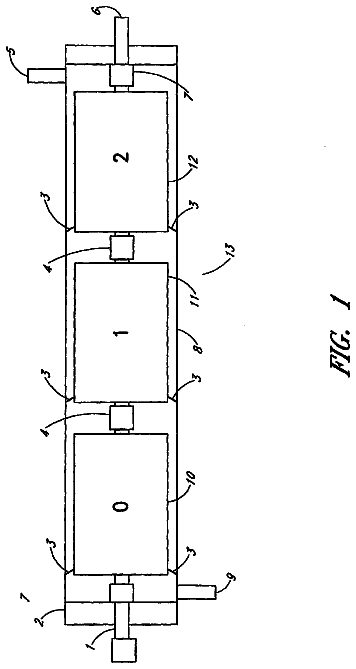
In another embodiment the instant invention describes a contactor or vessel for extracting one or more insoluble oil components from the bio-cellular aqueous slurry such as but not limited to algal oils or both from a lysed algal concentrate. The contactor or vessel as described herein comprises, an external metallic, polypropylene or other polymeric casing, one or more microporous hollow fiber membrane cartridges comprising a plurality of microporous hollow fiber membranes enclosed by the metal casing, wherein the one or more membrane cartridges divide the casing into a shell-side and a fiber side, one or more baffles on the shell-side of the metal casing, one or more distribution tubes on the fiber-side of the metal casing, two inlet ports connected to the external metal casing, wherein the lysed algal concentrate is pumped to the shell-side through the first inlet port and a strip gas or a solvent is fed to the fiber side through the second inlet port, and two outlet ports connected to the metal casing, wherein the an algal raffinate comprising the algal biomass is removed from the first outlet port and a solvent/extracted lipid or oil mixture or the strip gas is removed from the second outlet port.
In one aspect the microporous hollow fiber membrane comprises polyethylene, polypropylene, polyolefins, polyvinyl chloride (PVC), amorphous Polyethylene terephthalate (PET), polyolefin copolymers, poly(etheretherketone) type polymers, surface modified polymers, mixtures or combinations thereof The surface modified polymers comprise polymers modified chemically at one or more halogen groups or by corona discharge or ion embedding techniques. In another aspect the algae used for the extraction of the algal oil or lipids are selected from the group consisting of the diatoms (bacillariophytes), green algae (chlorophytes), blue-green algae (cyanophytes), golden-brown algae (chrysophytes), haptophytes, Amphipleura, Amphora, Chaetoceros, Cyclotella, Cymbella, Fragilaria, Hantzschia, Navicula, Nitzschia, Phaeodactylum, Thalassiosira Ankistrodesmus, Botryococcus, Chlorella, Chlorococcum, Dunaliella, Monoraphidium, Oocystis, Scenedesmus, Nanochlorposis, Tetraselmis, Chlorella, Dunaliella, Oscillatoria, Synechococcus, Boekelovia, Isochysis and Pleurochysis.
In yet another embodiment the present invention discloses a method of extracting one or more algal oils from a lysed algal concentrate in a contactor using one or more hydrophobic microporous hollow fiber membrane modules comprising a plurality of microporous hollow fiber membranes comprising the steps of: (i) pumping the lysed algal concentrate through a first inlet port of the contactor to a shell-side of the contactor, (ii) pumping one or more collection fluids through a second inlet port of the contactor to the one or more hollow fiber membranes on a fiber side of the contactor; wherein the one or more collection fluids counterflows with the lysed algal preparation on the shell-side of the contactor. The one or more collection fluids comprise one or more solvents, a biodiesel, an algal oil, a non-polar oil or mixtures thereof, (iii) contacting the lysed algal concentrate on the shell-side with the one or more non-polar solvents on the fiber side, (iv) removing a first stream from a first outlet port in the contactor, wherein the first stream comprises an algal biomass, and (v) removing a second stream from a second outlet port in the contactor, wherein the second stream comprises the collection fluid and the one or more extracted algal oils. The extraction method described in the embodiment of the present invention further comprises the steps of: (i) collecting the one or more extracted algal oils in a collection vessel, (ii) recycling the separated solvent by pumping through the one or more microporous hollow fiber membranes to process a subsequent batch of lysed algae, (iii) converting the one or more extracted algal oils in the collection vessel to Fatty Acid Methyl Esters (FAMEs) or a biodiesel by transesterification or conversion to fuels by refinery-based methods such as hydrocracking and pyrolysis, and (iv) processing the first stream comprising the algal biomass by drying the algal biomass to be optionally used as animal feed or for energy generation. In one aspect the extraction method as described herein comprises the optional step of separating the one or more extracted algal oils from the one or more solvents.
In another aspect the counterflowing solvents comprise non-polar solvents, alkanes such as hexane, and aromatic solvents such as benzene, toluene, and ethers such as diethyl ether, halogenated solvents such as chloroform, dichloromethane, and esters such as ethyl acetate. In yet another aspect 45-80% of the one or more algal oils in the lysed algal concentrate are extracted by the method of the present invention. As per the method described in the present invention 45%, 55%, 60%, 65%, 70%, 75%, and 80% of the one or more algal oils in the lysed algal concentrate are extracted.
The present invention further describes a method of extracting one or more algal oils from a lysed algal concentrate in a contactor using one or more hydrophobic microporous hollow fiber membrane modules comprising a plurality of microporous hollow fiber membranes. The first step of the method involves pumping a lysed algal concentrate through a first inlet port of the contactor to a shell-side of the contactor followed by pumping a solvent, biodiesel, an algal oil, a non-polar oil or mixtures thereof through a second inlet port of the contactor through the one or more membranes or membrane modules on a fiber side of the contactor. The biodiesel, the algal oil, the non-polar oil or the mixture is pumped through the membrane such that it counterflows with the lysed algal preparation on the shell-side of the contactor. The algal oils coalesce on the microporous hollow fiber membrane and are removed from the surface of the membrane by contacting with the counterflowing solvent, biodiesel, the algal oil, the non-polar oil or the mixture. A first stream comprising an algal biomass is removed from a first outlet port in the contactor followed by the removal of a second stream from a second outlet port in the contactor. The second stream comprises the counterflowing biodiesel, the algal oil, the non-polar oil or the mixture and the one or more extracted algal oils.
The algal oil extraction method as described in an embodiment of the present invention further comprises the steps of: collecting the one or more extracted algal oils in a collection vessel, recycling the counterflowing oil by pumping a part or a whole of the contents of the collection vessel through the one or more microporous hollow fiber membranes to process a subsequent batch of lysed algae, converting the one or more extracted algal oils in the collection vessel to Fatty Acid Methyl Esters (FAMEs) or a biodiesel by transesterification or conversion to fuels by refinery-based methods such as hydrocracking and pyrolysis, and processing the first stream comprising the algal biomass by drying the algal biomass to be optionally used as animal feed, biochemical feedstock, or for energy generation. In one aspect the method comprises the optional step of adding one or more natural fatty acids or salts thereof, hydrocarbon and hydrocarbon rich molecules, including aldehydes (flavors and fragrances), terpenes (chemical feedstocks), etc. to the lysed algal preparation. In another aspect the one or more natural fatty acids are designated as [X]:[Y], wherein X represents the number of carbon atoms in the one or more fatty acids ranging from 8-22 and Y represents one or more double bonds in the fatty acids ranging from 0-6. The one or more natural fatty acids (saturated or unsaturated) or salts thereof comprise Myristoleic acid, Palmitoleic acid, Sapienic acid, Oleic acid, Linoleic acid, .alpha.-Linolenic acid, Arachidonic acid, Eicosapentaenoic acid, Erucic acid, Docosahexaenoic acid, Lauric acid, Myristic acid, Palmitic acid, Stearic acid, Arachidic acid, and combinations thereof. In another aspect the counterflowing oil comprises non-polar oils, components of biodiesels selected from monoglycerides, diglycerides, triglycerides, and fatty acid methyl esters. In yet another aspect the hydrophobic hollow fiber membrane comprises polyethylene, polypropylene, polyolefins, polyvinyl chloride (PVC), amorphous Polyethylene terephthalate (PET), polyolefin copolymers, poly(etheretherketone) type polymers, surface modified polymers, mixtures or combinations thereof, wherein the polymers are modified chemically at one or more halogen groups or by corona discharge or ion embedding techniques.
Another embodiment of the present invention discloses a method of extracting one or more insoluble oils from a liquid source using one or more hydrophobic membranes or membrane modules comprising the steps of: (i) feeding the liquid source comprising the one or more insoluble oils by pumping in a contactor or a vessel, (ii) pumping one or more collection fluids through the one or more membranes or membrane modules, wherein the one or more collection fluids counterflows with the liquid source in the contactor or the vessel, wherein the one or more collection fluids comprise one or more solvents, a biodiesel, an algal oil, a non-polar oil or mixtures and combinations thereof, (iii) contacting the one or more insoluble oils in the liquid source in the contactor or the vessel with one or more collection fluids pumped through the one or more membranes or membrane modules, (iv) removing a first stream from the contactor or the vessel, wherein the first stream comprises the liquid source without the one or more insoluble oils, and (v) removing a second stream from the contactor or the vessel, wherein the second stream comprises the one or more collection fluids and the one or more extracted insoluble oils.
The extraction method as described above further comprises the steps of: collecting the one or more extracted insoluble oils in a collection vessel, recycling the separated solvent by pumping through the one or more membranes or membrane modules to process a subsequent batch of the liquid slurry, and converting the one or more extracted insoluble oils comprising algal lipid components, algal oils or both in the collection vessel to Fatty Acid Methyl Esters (FAMEs) or a biodiesel by transesterification or a refinery-based process such as hydrocracking or pyrolysis. The liquid source used in the method of the present invention is selected from the group consisting of industrial water, brine, wastewater, industrial or natural effluents, water-oil mixtures, aqueous slurries, aqueous slurries comprising broken cells, live cells or combinations thereof, bio-cellular mixtures, lysed cellular preparations, and combinations thereof. In one aspect of the method discloses hereinabove the biocellualr mixture comprises algae, protists, fungi, yeast, E. coli, mixed cultures of cells, and combinations thereof. In another easpect the method extracts 45-100% of the one or more insoluble oils in the liquid source. In yet another aspect 45%, 50%, 55%, 60%, 65%, 70%, 75%, 80%, 85%, 90%, 95%, 98%, 99% and 100% of the one or more insoluble oils in the liquid source are extracted.
Brief description of the drawings
The description continues in the full USPTO document.