Technical field
The present invention relates to a resin substrate provided with a hard coating film, and its production process.
Background art
In recent years, as a window glass for a vehicle such as an automobile and a window glass for a building material to be attached to a building construction such as a house or a building, demands for a transparent resin plate are increasing instead of a conventional inorganic glass plate. Particularly, for a vehicle such as an automobile, for weight saving, use a transparent resin plate as a window material has been proposed, and especially, an aromatic polycarbonate transparent resin plate is excellent in fracture resistance, transparency, light weight properties, easy processability, etc., and its use has been studied as a promising window material for a vehicle. However, such a transparent resin plate has had problems with respect to the abrasion resistance or weather resistance when it is used in place of a glass plate. Therefore, it has been proposed to form a coating film on the surface of a transparent resin plate by means of various hard coating agents, particularly silicone type hard coating agents, for the purpose of improving the abrasion resistance and weather resistance of the transparent resin plate. Further, when a coating film (hard coating layer) is formed on the transparent resin plate by means of a silicone type hard coating agent, it has been proposed to employ a primer layer so as to improve the adhesion between the hard coating layer and the transparent resin plate.
However, in a case where a primer layer is employed, there are a problem of the impact resistance of the primer layer, a problem of the adhesion between the primer layer and the hard coating layer, and a problem of weather resistance such as formation of cracks or a decrease in the adhesion after long term use of the coating film as a whole. Accordingly, Patent Document 1 proposes a technique to use a polysiloxane type crosslinked rubber for the primer layer for the purpose improving the impact resistance of the primer layer and the adhesion to the silicone type hard coating layer.
Prior art documents
Patent Documents
Patent Document 1:
Jp-a-6-3504
Disclosure of invention
Technical Problem
The present invention has been made to solve the above problems of prior art, and its object is to provide a resin substrate provided with a hard coating film having a silicone type hard coating layer provided on the resin substrate via a primer layer, which has excellent abrasion resistance and also has excellent weather resistance such as weather-resistant adhesion and weather-cracking resistance of the hard coating layer, and its production process.
Solution to Problem
The resin substrate provided with a hard coating film of the present invention is a resin substrate provided with a hard coating film, comprising a resin substrate and on at least one side of the resin substrate, a primer layer, a middle layer and a hard coating layer in this order from the resin substrate side, wherein the primer layer contains an acrylic polymer as the main component, the hard coating layer contains a cured product of an organopolysiloxane as the main component, the middle layer contains the above acrylic polymer and a cured product of the above organopolysiloxane as the main components, and when the thickness of the middle layer is Mt and the thickness of the hard coating layer is Ht, the ratio in thickness of the middle layer to the hard coating layer represented by Mt/Ht is from 0.05 to 1.0.
Further, the process for producing a resin substrate provided with a hard coating film of the present invention is a process for producing the resin substrate provided with a hard coating film of the present invention, which comprises a step of applying a primer composition containing the above acrylic polymer as the main component to at least one side of the resin substrate and drying it to form the primer layer, and a step of applying a hard coating composition containing the above organopolysiloxane having the pH adjusted so that the ratio in thickness of the middle layer to the hard coating layer represented by Mt/Ht is from 0.05 to 1.0, on the primer layer, followed by curing to form the middle layer and the hard coating layer.
Advantageous Effects of Invention
The resin substrate provided with a hard coating film of the present invention is excellent in the abrasion resistance and is also excellent in the weather resistance such as weather-resistant adhesion and the weather-cracking resistance of the hard coat layer. Further, according to the production process of the present invention, a resin substrate provided with a hard coating film excellent in the abrasion resistance and also excellent in the weather resistance of the hard coat layer, can be obtained.
Brief description of drawing
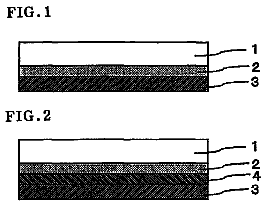
FIG. 1 is a cross-sectional view schematically illustrating a resin substrate provided with a silicone type hard coating film of the present invention.
Description of embodiments
Now, embodiment of the present invention will be described below.
[Resin Substrate Provided with Hard Coating Film of the Present Invention]
The resin substrate provided with a hard coating film of the present invention is a resin substrate provided with a hard coating film, comprising a resin substrate and on at least one side of the resin substrate, a primer layer containing an acrylic polymer as the main component (hereinafter sometimes referred to as "acrylic primer layer"), a middle layer and a hard coating layer containing a cured product of an organopolysiloxane as the main component (hereinafter sometimes referred to as "silicone type hard coating layer"), wherein the middle layer contains the acrylic polymer which the primer layer contains and a cured product of the organopolysiloxane which the hard coating layer contains, as the main components, and has the following characteristics.
With reference to a cross-sectional view schematically illustrating a resin substrate provided with a hard coating film of the present invention as shown in FIG. 1, a resin substrate 1 provided with a hard coating film of the present invention has a structure such that on a resin substrate 2, an acrylic primer layer 3, a middle layer 4 and a silicone type hard coating layer 5 are laminated in this order, and the relation Mt/Ht between the thickness Mt of the middle layer 4 and the silicone type hard coating layer 5 is from 0.05 to 1.0.
Middle Layer
The middle layer which the resin substrate provided with a hard coating film of the present invention has is a middle layer comprising components of the acrylic primer layer and the silicone type hard coating layer, formed between these layers. More specifically, the middle layer is a layer having the component constituting the primer layer containing an acrylic polymer as the main component and the component constituting the hard coating layer containing a cured product of an organopolysiloxane as the main component, mixed. This middle layer does not necessarily has a uniform composition in the thickness direction in this layer, however, it is distinctly different in the composition from the adjacent acrylic primer layer and silicone type hard coating layer even in the vicinity of each interface, and accordingly the interfaces with these adjacent layers are substantially distinguishable. Specifically, the middle layer is distinguished as a layer having a distinctly different composition from the acrylic primer layer and the silicone type hard coating layer, e.g. by a compositional image in BE mode (COMP image) of a cross section of the hard coating film by a scanning electron microscope, SiK.alpha. ray intensity measurement analysis of the cross section of the hard coating film by a field emission electron probe microanalyzer (FE-EPMA), or a compositional analysis in a depth direction of the hard coating film by a scanning X-ray photoelectron spectrometer (.mu.-ESCA).
In this specification, the "hard coating film" means a coating film consisting of a single layer or multiple layers including the hard coating layer formed on the resin substrate. That is, in the resin substrate provided with a hard coating film of the present invention, the entire coating film including the acrylic primer layer, the middle layer and the silicone type hard coating layer is referred to as a "hard coating film".
In the present invention, by the presence of the middle layer, the weather-resistant adhesion between the silicone type hard coating layer and the acrylic primer layer is imparted. The mixing state of the respective constituting components in the middle layer is not clearly understood, and it is considered that, for example, when polymethyl methacrylate is used as the acrylic polymer, this is partially hydrolyzed, and the methyl carboxylate groups at its side chains are converted to carboxylic acid, whereby the compatibility between the silicone type hard coating layer and the acrylic primer layer is improved to form a middle layer comprising components in both layers and as a result, the weather-resistant adhesion is improved.
In the resin substrate provided with a hard coating film of the present invention, when the thickness of the middle layer is Mt and the thickness of the silicone type hard coating layer is Ht, the ratio in thickness of the middle layer to the hard coating layer represented by Mt/Ht is from 0.05 to 1.0, preferably from 0.1 to 0.95.
In the present invention, as described above, by the presence of the middle layer between the silicone type hard coating layer and the acrylic primer layer, weather-resistant adhesion between these layers is imparted, however, if the thickness of the middle layer is thicker than necessary relative to the thickness of the silicone type hard coating layer, the weather-cracking resistance may be impaired. The thickness ratio Mt/Ht thus selected is at most 1.0 as mentioned above. Mt/Ht is preferably at most 0.95 as mentioned above.
Further, in order to improve the weather-resistant adhesion, the middle layer should be present with such a thickness that the Mt/Ht value becomes at least 0.05, and in the present invention, preferably, the thicknesses of the silicone type hard coating layer and the middle layer are controlled so that the Mt/Ht value is at least 0.1 as mentioned above, whereby in the resin substrate provided with a hard coating film of the present invention, a sufficient weather-resistant adhesion between the silicone type hard coating layer and the acrylic primer layer can be imparted.
Here, in the resin substrate provided with a hard coating film of the present invention, usually the middle layer is not formed by itself. For example, it is formed on the acrylic primer layer preliminarily formed on the resin substrate, at the same time as formation of the silicone type hard coating layer while conditions are adjusted so that the thicknesses of the silicone type hard coating layer and the middle layer satisfy the above range. Accordingly, the method of forming the middle layer is described in the after-mentioned description for the hard coating layer.
Now, the respective constituting elements other than the middle layer, constituting the resin substrate provided with a hard coating film of the present invention having such a middle layer, will be described in detail below.
Resin Substrate
The resin as a material of the resin substrate used in the present invention may, for example, be a polycarbonate resin, a polystyrene resin, an aromatic polyester resin, an acrylic resin, a polyester resin, a polyarylate resin, a polycondensation product of halogenated bisphenol A and ethylene glycol, an acrylic urethane resin, or a halogenated aryl group-containing acrylic resin.
Among them, a polycarbonate resin such as an aromatic polycarbonate resin or an acrylic resin such as a polymethyl methacrylate type acrylic resin is preferred, and a polycarbonate resin is more preferred. Further, among polycarbonate resins, particularly a bisphenol A type polycarbonate resin is preferred. The resin substrate may contain two or more types of the above thermoplastic resins, or may be a laminated substrate having two or more layers laminated by using such resins. Further, the shape of the resin substrate is not particularly limited, and it may be a flat plate or curved. Further, the color of the resin substrate is preferably colorless transparent or colored transparent.
Primer Layer
The resin substrate provided with a hard coating film of the present invention has a primer layer containing an acrylic polymer as the main component on at least one side of the resin substrate. The primer layer is a layer provided to improve the adhesion between the resin substrate and the after-mentioned silicone type hard coating layer, and the adhesion of the primer layer in the resin substrate provided with a hard coating film of the present invention to the resin substrate is secured by direct contact, and the adhesion to the silicone type hard coating layer is secured via the middle layer.
As the acrylic polymer mainly constituting the primer layer, usually an acrylic polymer to be used for forming a primer layer to make the resin substrate and the silicon type hard coating layer adhere to each other, which makes formation of the middle layer possible, may be used without any particular restriction. From such a viewpoint, the acrylic polymer used in the present invention is preferably a homopolymer or copolymer comprising a monomer selected from monomers having an acryloyl group or a methacryloyl group, as the main monomer units. Further, the monomer may, for example, be specifically a (meth)acrylate, and in the present invention, a monomer having a methacryloyl group is preferred.
In this specification, "(meth)acrylic" or "(meth)acrylate", such as a (meth)acrylate, means both of "acrylic" and "methacrylic", or both of "acrylate" and "methacrylate".
Further, the monomer having a methacryloyl group is preferably at least one member selected from alkyl methacrylates having an alkyl group having at most 6 carbon atoms. That is, the acrylic polymer is preferably a homopolymer made of at least one member selected from alkyl methacrylates (the alkyl group having at most 6 carbon atoms) as "the main monomer" (specifically, from 90 to 100 mol % based on the entire raw material monomers, the same applies hereinafter), or a copolymer of such monomers. Further, also preferred is a copolymer of the above main monomer with at least one member of other acrylates and methacrylates. Such other monomers may, for example, be acrylates or methacrylates having an alkyl group having at least 7 carbon atoms or a cycloalkyl group having at most 12 carbon atoms. Further, a copolymer obtainable by copolymerizing, together with such a monomer, an acrylate or a methacrylate (for example, 2-hydroxyethyl (meth)acrylate) having a functional group-containing alkyl group (for example, a hydroxyalkyl group), or (meth)acrylic acid, may also be used. The cycloalkyl group may, for example, be a cyclohexyl group, a 4-methylcyclohexyl group, a 4-t-butylcyclohexyl group, an isobornyl group, a dicyclopentanyl group or a dicyclopentenyloxyethyl group.
Further, among the methacrylates having an alkyl group having at most 6 carbon atoms, particularly preferred as the acrylic polymer to be used in the present invention is a homopolymer obtainable by polymerizing one or more members selected from methyl methacrylate, n-butyl methacrylate, tert-butyl methacrylate, ethyl methacrylate, isobutyl methacrylate and the like, or a copolymer of such monomers. More preferred is a homopolymer of methyl methacrylate, tert-butyl methacrylate, ethyl methacrylate or the like, or a copolymer of methyl methacrylate with one or more types selected from n-butyl methacrylate, ethyl methacrylate and isobutyl methacrylate.
Further, it is also possible to employ an acrylic polymer obtained by polymerizing or copolymerizing at least one member selected from acrylic monomers having a hydrolyzable silyl group and/or a SiOH group bonded via a C--Si bond.
Such acrylic monomers may, for example, be 3-methacryloyloxypropyltrimethoxysilane, 3-methacryloyloxypropylmethyldimethoxysilane, 3-methacryloyloxypropyldimethylmethoxysilane, 3-methacryloyloxypropyltriethoxysilane, 3-methacryloyloxypropylmethyldiethoxysilane, 3-acryloyloxypropyltrimethoxysilane, 3-acryloyloxypropylmethyldimethoxysilane, etc.
Further, such acrylic polymers to be used for forming a primer layer preferably have a mass average molecular weight of at least 20,000, more preferably at least 50,000 and preferably at most 1,000,000. An acrylic polymer having a mass average molecular weight within this range is preferred since the performance such as the adhesion or strength as a primer layer can be sufficiently provided, and excellent hydrolysis properties and solubility in formation of the middle layer are obtained. In this specification, the mass average molecular weight is a value measured by a gel permeation chromatography method by using polystyrene as a standard substance.
Such an acrylic polymer is also commercially available, and in the present invention, commercially available products thereof, for example, commercially available products as solutions having the acrylic polymer preliminarily dissolved in a proper solvent, such as acrylic primer SHP470 (tradename, manufactured by Momentive Performance Materials, Inc., polymethyl methacrylate (PMMA), mass average molecular weight: 270,000) and DIANAL LR269 (tradename, manufactured by MITSUBISHI RAYON CO., LTD., polymethyl methacrylate (PMMA), mass average molecular weight: 100,000) may be used. Further, it is possible to use an acrylic polymer such as DIANAL BR80 (tradename, manufactured by MITSUBISHI RAYON CO., LTD., polymethyl methacrylate (PMMA), mass average molecular weight: 90,000), DIANAL BR88 (tradename, manufactured by MITSUBISHI RAYON CO., LTD., polymethyl methacrylate (PMMA), mass average molecular weight: 430,000) or M-4003 (tradename, manufactured by Negami Chemical industrial Co., Ltd., polymethyl methacrylate (PMMA), mass average molecular weight: 700,000 to 1,300,000) after dissolved in a solvent. Further, it is also possible to mix at least two of such acrylic polymers.
The primer layer may contain an ultraviolet absorber in order to prevent yellowing of the resin substrate. As the ultraviolet absorber, the same one as the above described ultraviolet absorber contained in the hard coating composition of the present invention may be employed. One of such ultraviolet absorbers may be used alone, or two or more of them may be used in combination. The content of the ultraviolet absorber in the primer layer is preferably from 1 to 50 parts by mass, particularly preferably from 1 to 30 parts by mass, per 100 parts by mass of the resin component such as the acrylic polymer, etc.
The primer layer may further contain a photostabilizer or the like. The photostabilizer may, for example, be a hindered amine; or a nickel complex such as nickel bis(octylphenyl)sulfide, nickel complex-3,5-di-tert-butyl-4-hydroxybenzyl phosphoric acid monoethylate or nickel dibutyl dithiocarbonate. Two or more of them may be used in combination. The content of the photostabilizer in the primer layer is preferably from 0.1 to 50 parts by mass, particularly preferably from 0.5 to 10 parts by mass, per 100 parts by mass of the resin component such as the acrylic polymer, etc.
For the resin substrate provided with a hard coating film of the present invention, a method of forming the primer layer on at least one side of the resin substrate is not particularly limited, and preferred is a method of applying a primer composition containing the acrylic polymer, the ultraviolet absorber and a solvent to the resin substrate and drying it.
A solvent is usually contained in the primer composition to be used for forming the primer layer. The solvent is not particularly limited so long as it is a solvent capable of stably dissolving the acrylic polymer. Specifically, it may, for example, be a ketone such as acetone, methyl ethyl ketone, methyl isobutyl ketone or cyclohexanone; an ether such as tetrahydrofuran, 1,4-dioxane or 1,2-dimethoxyethane; an ester such as ethyl acetate, butyl acetate or methoxyethyl acetate; an alcohol such as methanol, ethanol, 1-propanol, 2-propanol, 1-butanol, 2-butanol, 2-methyl-1-propanol, 2-methoxyethanol, 4-methyl-2-penanol, 2-buthoxyethanol, 1-methoxy-2-propanol or diacetone alcohol; a hydrocarbon such as n-hexane, n-heptane, isooctane, benzene, toluene, xylene, gasoline, light oil or kerosene; acetonitrile, nitromethane or water. Two or more of them may be used in combination.
The amount of the solvent is preferably from 50 to 10,000 pars by mass, particularly preferably from 100 to 10,000 parts by mass, per 100 parts by mass of the resin component such as the acrylic polymer, etc. Further, the content of the non-volatile component (solid content) in the primer composition is preferably from 0.5 to 75 mass %, particularly preferably from 1 to 40 mass %, based on the total amount of the composition.
The above primer composition may further contain additives such as a leveling agent, a defoaming agent, a viscosity-adjusting agent, etc.
The method for applying the primer composition on the resin substrate is not particularly limited, but a spray coating method, a dip coating method or a flow coating method may, for example, be mentioned. Further, the heating conditions for drying are not particularly limited, but they are preferably from 50 to 140.degree. C. for from 5 minutes to 3 hours.
The thickness of the primer layer formed on the resin substrate by using the primer composition (the thickness in a state before the middle layer and the silicone type hard coating layer are formed on the primer layer) is not particularly limited so long as it satisfies requirements required as the primer layer in the resin substrate provided with a hard coating film finally obtainable. However, it is properly adjusted considering the thicknesses of the silicone type hard coating layer and the middle layer to be formed on the primer layer as described hereinafter.
In the resin substrate provided with a hard coating film finally obtainable, if the thickness of the acrylic primer layer is too thin, yellowing by deterioration in the weather resistance of the resin substrate itself cannot sufficiently be prevented, and yellowing, the weather-cracking resistance and the weather-resistant adhesion of the resin substrate provided with a hard coating film tend to be deteriorated and as a result, the weather resistance of the resin substrate provided with a hard coating film will be lowered. The thickness of the acrylic primer layer in the resin substrate provided with a hard coating film finally obtainable may be thinner than the thickness in a state before the middle layer and the silicone type hard coating layer are formed on the primer layer, by formation of the middle layer and the silicone type hard coating layer on the primer layer. Accordingly, the thickness of the primer layer in a state before the middle layer and the silicone type hard coating layer are formed on the primer layer should be a thickness required to sufficiently bond the resin substrate and the hard coating layer and to maintain required amounts of the above additives, and should be a thickness sufficient to form the middle layer.
Here, with respect to the thickness of the acrylic primer layer formed on the resin substrate is a thickness after the primer layer is formed, and with respect to the thickness before the middle layer and the silicone type hard coating layer are formed, it is necessary to consider the thickness of the middle layer formed at the same time as formation of the hard coating layer by using a part of the primer layer. The thickness of the acrylic primer layer before such a middle layer and a silicone type hard coating layer are formed, is specifically preferably at least 1 .mu.m and at most 20 .mu.m, particularly preferably at least 3 .mu.m and at most 10 .mu.m.
Further, the thickness of the acrylic primer layer in the final resin substrate provided with a hard coating film of the present invention after formation of the silicone type hard coating layer and the middle layer is completed, is preferably at least 0.1 .mu.m and at most 10 .mu.m, particularly preferably at least 2 .mu.m and at most 8 .mu.m.
Hard Coating Layer
The resin substrate provided with a hard coating film of the present invention comprises the above middle layer on the primer layer containing the acrylic polymer as the main component formed on at least one side of the resin substrate, and on the middle layer, a hard coating layer containing a cured product of an organopolysiloxane as the main component.
As described above, the middle layer is not formed by itself, but is formed at the same time as formation of the hard coating layer described below.
(4-1) Organopolysiloxane
The hard coating layer in the present invention contains a cured product of an organopolysiloxane as the main component, and as the organopolysiloxane forming the cured product, any curable organopolysiloxane may be used without any particular restriction.
Organopolysiloxanes are composed of silicon-containing bond units so-called M units, D units, T units or Q units. Among them, a curable organopolysiloxane is an oligomer-form polymer composed mainly of T units or Q units, and it may be a polymer composed solely of T units, a polymer composed solely of Q units, or a polymer composed of T units and Q units.
Further, such polymers may contain a small amount of M units or D units.
In a curable organopolysiloxane, a T unit is a unit having one silicon atom, one hydrogen atom or monovalent organic group bonded to the silicon atom, and three oxygen atoms bonded to other silicon atoms or functional groups which can be bonded to other silicon atoms. The monovalent organic group bonded to the silicon atom is a monovalent organic group wherein the atom bonded to the silicon atom is a carbon atom. The functional groups which can be bonded to other silicon atoms are hydroxy groups or groups which can be converted to hydroxy groups by hydrolysis (hereinafter referred to as hydrolyzable groups). The sum of the oxygen atoms bonded to other silicon atoms and the functional groups which can be bonded to other silicon atoms, is 3, and T units are classified into three types of units so-called T1, T2 and T3, depending upon the difference in number of the oxygen atoms bonded to other silicone atoms and the functional groups which can be bonded to other silicon atoms. In T1, the number of oxygen atoms bonded to other silicon atoms is 1, in T2, the number of such oxygen atoms is 2, and in T3, the number of such oxygen atoms is 3. In this specification, etc., an oxygen atom bonded to another silicon atom is represented by O*, and a monovalent functional group which can be bonded to another silicon atom is represented by Z.
Here, O* representing an oxygen atom bonded to another silicon atom, is an oxygen atom linking two silicon atoms and is an oxygen atom in a bond represented by Si--O--Si. Accordingly, O* is one present between silicon atoms of two silicon-containing bond units. In other words, O* represents an oxygen atom shared between two silicon atoms of two silicon-containing bond units. In the after-mentioned chemical formulae of the silicon-containing bond units, O* is represented as bonded to one silicon atom, but this O* is an oxygen atom shared by a silicon atom of another silicon-containing bond unit and does not mean that two silicon-containing bond units are bonded by a bond represented by Si--O*--O*--Si.
The above-mentioned M unit is a unit having three such organic groups and one O*; the D unit is a unit having two such organic groups and two O* (or one O*1 and one Z group); and the Q unit is a unit having no such an organic group and 4 O* (or a total of 4 i.e. from 1 to 3 O* and from 3 to 1 Z group). Each silicon-containing bond unit is formed from a compound having no oxygen atom (O*) bonded to another silicon atom (having only Z groups) (hereinafter sometimes referred to as a monomer). A monomer to form a T unit will be referred to as a T monomer. A monomer to form a M unit, a D unit or a Q unit may likewise be referred to as a M monomer, a D monomer or a Q monomer.
The monomer is represented by (R'--).sub.aSi(--Z).sub.4-a, wherein a is an integer of from 0 to 3, R' is a hydrogen atom or a monovalent organic group, and Z is a hydroxy group or a monovalent functional group which can be bonded to another silicon atom. In this chemical formula, a compound wherein a=3 is the M monomer; a compound wherein a=2 is the D monomer; and a compound wherein a=1 is the T monomer; and a compound wherein a=0, is the Q monomer. In such monomers, the Z group is usually a hydrolyzable group. Further, in a case where 2 or 3 R' were present (in a case where a is 2 or 3), a plurality of R' may be different. R' is preferably one within the same scope as the after-mentioned preferred R.
A curable organopolysiloxane can be obtained by a reaction to convert some of Z groups in a monomer to O*. In a case where the organopolysiloxane is a copolymer comprising two or more silicon-containing bond units, such a copolymer is usually obtainable from a mixture of the respectively corresponding monomers. In a case where Z groups in a monomer are hydrolyzable groups, the Z groups are converted to hydroxy groups by a hydrolysis reaction, and then, by a dehydration condensation reaction between two hydroxy groups bonded to separate silicon atoms, the two silicon atoms will be linked via an oxygen atom (O*). In the curable organopolysiloxane, hydroxy groups (or non-hydrolyzed Z groups) remain, and at the time of curing of such a curable organopolysiloxane, such hydroxy groups or Z groups are reacted in the same manner as described above, for curing. The cured product of the curable organopolysiloxane is a three dimensionally crosslinked polymer, and a cured product of a curable organopolysiloxane having many T units or Q units will be a cured product having a high crosslink density. At the time of curing, Z groups of a curable organopolysiloxane are converted to O*, but it is considered that some of Z groups (particularly hydroxy groups) will remain, so that the cured product will have hydroxy groups. In a case where a curable organopolysiloxane is cured at a high temperature, there may be a case where no substantial hydroxy groups will remain in the cured product.
In a case where Z groups in a monomer are hydrolyzable groups, such Z groups may, for example, be alkoxy groups, chlorine atoms, acyloxy groups or isocyanate groups. In many cases, as a monomer, a monomer wherein Z groups are alkoxy groups, is used. Alkoxy groups are hydrolyzable groups having a relatively low reactivity as compared with e.g. chlorine atoms, and in a curable organopolysiloxane obtainable by using a monomer wherein Z groups are alkoxy groups, unreacted alkoxy groups are present together with hydroxy groups, as Z groups, in many cases. In a case where Z groups in a monomer are hydrolyzable groups having a relatively high reactivity (such as chlorine atoms), most of Z groups in a curable organopolysiloxane obtainable by using such a monomer will be hydroxy groups. Therefore, in a usual curable organopolysiloxane, Z groups in the respective units constituting it are hydroxy groups, or hydroxy groups and alkoxy groups, in many cases.
In the present invention, among such curable organopolysiloxanes, a curable organopolysiloxane composed of T units as the main silicon-containing bond units is preferably used. Hereinafter, a curable organopolysiloxane will be referred to simply as an organopolysiloxane unless otherwise specified. Here, in this specification, the organopolysiloxane composed of T units as the main constituting units (hereinafter referred to as "organopolysiloxane (T)" as the case requires) is an organopolysiloxane wherein the proportion in number of T units is from 50 to 100% to the total number of M units, D units, T units and Q units, and in the present invention, more preferably an organopolysiloxane wherein the proportion of T units is from 70 to 100%, particularly preferably an organopolysiloxane wherein the proportion of T units is from 90 to 100% is used. Further, as other units contained in a small amount in addition to T units, D units and Q units are preferred, and Q units are particularly preferred.
That is, in the present invention, among such curable organopolysiloxanes, an organopolysiloxane composed solely of T units and Q units, their proportion in number T:Q being 90 to 100:10 to 0, is particularly preferably used.
The proportions in number of M units, D units, T units and Q units in the organopolysiloxane can be calculated from values of peak area ratios by .sup.29Si-NMR.
The organopolysiloxane (T) preferably used in the present invention is an organopolysiloxane having T units represented by the following T1 to T3. R--Si(--OX).sub.2(--O*--) T1: R--Si(--OX)(--O*--).sub.2 T2: R--Si(--O*--).sub.3 T3: (wherein R is a hydrogen atom or a C.sub.1-10 substituted or unsubstituted monovalent organic group, X is a hydrogen atom or a C.sub.1-6 alkyl group, and O* is an oxygen atom linking two silicon atoms.)
In the above chemical formulae, R is not limited to one type, and each of T1, T2 and T3 may contain plural types of R. Further, in the above chemical formulae, --OX is a hydroxy group or an alkoxy group. Between T1 and T2, --OX may be the same or different. Two --OX in T2 may be different, and for example, one of them may be a hydroxy group and the other may be an alkoxy group. Further, when the two --OX are alkoxy groups, such alkoxy groups may be different alkoxy groups. However, as described hereinafter, the two alkoxy groups are usually the same alkoxy groups.
Further, a T unit having three --OX only without having an oxygen atom (O*) linking two silicon atoms, will be hereinafter referred to as T0. Actually, T0 corresponds to an unreacted T monomer contained in the organopolysiloxane and is not a silicon-containing bond unit. Such a T0 is measured in the same manner as T1 to T3 in the analysis of T1 to T3 units.
T0 to T3 in the organopolysiloxane can be analyzed by measuring the bonding states of silicon atoms in the organopolysiloxane by a nuclear magnetic resonance analysis (.sup.29Si-NMR). The ratios in number of T0 to T3 are obtained from the peak area ratios in .sup.29Si-NMR. --OX in the organopolysiloxane molecule can be analyzed by an infrared absorption analysis. The ratios in number of hydroxy groups and alkoxy groups bonded to silicon atoms can be obtained from the peak area ratios of the infrared absorption peaks of the two. The mass average molecular weight Mw, the number average molecular weight Mn and the dispersion degree Mw/Mn of the organopolysiloxane are values measured by using polystyrene as a standard substance by a gel permeation chromatography method. Such properties of an organopolysiloxane are not meant for the properties of a single molecular, but are obtained as average properties of the respective molecules.
A plurality of T1, T2 or T3 present in one molecule of the organopolysiloxane (T) may be two or more different types. For example, there may be two or more T2 different in R. Such an organopolysiloxane is obtainable from a mixture of two or more T monomers. For example, it is considered that in an organopolysiloxane obtainable from a mixture of two or more T monomers different in R, two or more T1, T2 and T3, respectively, different in R are present. The ratio in number of different R in an organopolysiloxane obtained from a mixture of a plurality of T monomers different in R, reflects the compositional ratio in the mixture of the T monomers different in R. However, the ratio in number of units different in R in each of T1, T2 and T3 does not necessarily reflect the compositional ratio in the mixture of the T monomers different in R, because, for example, even if three --OX in the T monomers are the same, the reactivities of the T monomers, T1 and T2 may be different due to the difference in R.
The organopolysiloxane (T) is preferably produced from at least one type of T monomers represented by R--Si(--OY).sub.3. In this formula, R is the same as the above-described R, and Y is a C.sub.1-6 alkyl group. Y may be not only an unsubstituted alkyl group but also a substituted alkyl group such as an alkoxy-substituted alkyl group. Three Y in one molecule may be different. However, the three Y are usually the same alkyl group. Y is preferably an alkyl group having from 1 to 4 carbon atoms, more preferably 1 or 2 carbon atoms. Specifically, Y may, for example, be a methyl group, an ethyl group, a n-propyl group, a n-butyl group, a t-butyl group or a 2-methoxyethyl group.
R is a hydrogen atom or a C.sub.1-10 substituted or unsubstituted monovalent organic group. The organic group is meant for an organic group wherein, as mentioned above, atoms bonded to silicon atoms are carbon atoms.
The unsubstituted monovalent organic group may be a hydrocarbon group such as an alkyl group, an alkenyl group, an alkynyl group, a cycloalkyl group, an aryl group or an aralkyl group. Such a hydrocarbon group is preferably a C.sub.1-10 alkyl group, a C.sub.2-10 alkenyl or alkynyl group, a C.sub.5 or C.sub.6 cycloalkyl group, a C.sub.6-10 aryl group or a C.sub.7-10 aralkyl group. Specifically, a methyl group, an ethyl group, a n-propyl group, a n-butyl group, an i-butyl group, a t-butyl group, a hexyl group, an octyl group, a decyl group, a vinyl group, an allyl group, a cyclohexyl group, a phenyl group, a benzyl group or a phenethyl group, may, for example, be mentioned.
The substituted monovalent organic group may, for example, be a hydrocarbon group having a hydrogen atom of a ring of e.g. a cycloalkyl group, an aryl group or an aralkyl group substituted by an alkyl group, or a substituted organic group having a hydrogen atom of the above mentioned hydrocarbon group substituted by e.g. a halogen atom, a functional group or a functional group-containing organic group. As the functional group, a hydroxy group, a mercapto group, a carboxy group, an epoxy group, an amino group or an cyano group may, for example, be preferred. As a halogen atom-substituted organic group, an alkyl group having a chlorine atom or a fluorine atom, such as a chloroalkyl group or a polyfluoroalkyl group, is preferred. As the functional group-containing organic group, an alkoxy group, an acyl group, an acyloxy group, an alkoxycarbonyl group, a glycidyl group, an epoxycyclohexyl group, an alkylamino group, a dialkylamino group, an arylamino group or an N-aminoalkyl-substituted aminoalkyl group is, for example, preferred. Particularly preferred is a chlorine atom, a mercapto group, an epoxy group, an amino group, an acryloyloxy group, a methacryloyloxy group, a glycidyl group, an alkylamino group or an N-aminoalkyl-substituted aminoalkyl group. A T monomer having a substituted organic group which is substituted by e.g. a functional group or a functional group-containing organic group, includes a compound in a category so-called a silane coupling agent.
As specific examples of the substituted organic group, the following organic groups may be mentioned: a 3-chloropropyl group, a 3,3,3-trifluoropropyl group, a 3-mercaptopropyl group, a p-mercaptomethylphenylethyl group, a 3-acryloyloxypropyl group, a 3-methacryloyloxypropyl group, a 3-glycidoxypropyl group, a 2-(3,4-epoxycyclohexyl)ethyl group, a 3-aminopropyl group, an N-phenyl-3-aminopropyl group, an N-(2-aminoethyl)-3-aminopropyl group, and a 2-cyanoethyl group.
The description continues in the full USPTO document.
 Lapsed, fee not paid6 drawings