Priority
The present application claims priority to and incorporates by reference the entire contents of Chinese patent application, No. 200810215914.4, filed in China on Sep. 9, 2008.
Field of the invention
The present invention relates to the wireless communication field, particularly to a kind of resource allocation technique for any service in which packets arrive periodically, such as a VoIP (Voice over Internet Protocol) service and a real-time service, and more particularly to a method for resource allocation, a base station and a mobile communication terminal.
Background of the invention
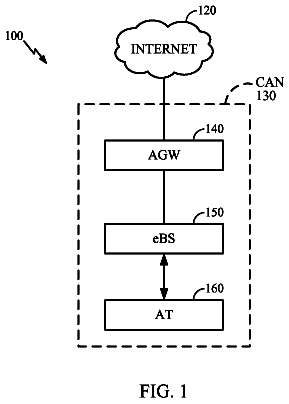
FIG. 1 is a schematic diagram showing the architecture of a wireless communication network. As shown in FIG. 1, a typical wireless communication network generally includes one or more terminals, base stations and a core network, wherein different base stations may connect with each other by requirements, and a network composed of the base stations, which is usually named as a RAN (radio access network), is responsible for access layer transactions such as radio resource management. The radio resources including uplink and downlink resources are scheduled by the base stations according to the manner of sharing resources. Base stations are all connected to the core network, and specifically each of the base stations can be connected to one or more core network nodes (CN). The core network is responsible for non-access layer transactions, such as billing and location management. The terminal may be a device communicating with the network, such as a mobile phone or a laptop computer.
In the wireless communication system which adopts packet transmission mode, such as LTE or LTE-A system, uplink and downlink data are generally transmitted with dynamic scheduling.
The following will make descriptions with a VoIP service as an example.
Currently, the VoIP service is a very important service and basic principles of the VoIP service include: at a transmitter, compressing voice data codes using a voice compressing algorithm, packing the compressed voice data according to the TCP/IP protocol, and then transmitting the packed voice data to a receiver through an IP network; and at a receiver, concatenating the packed voice data and de-compressing to restore them into the original voice data, in order to transmit the voice data over the Internet.
Such VoIP service characterizes in constant rate and relatively small size VoIP packet. As shown in FIG. 2, the VoIP service includes two parts: talkspurt and silent period. During the talkspurt, a voice encoder generates a VoIP packet every 20 ms; whereas during the silent period, the voice encoder generates a SID (silence indicator) packet every 160 ms.
Since the size of a VoIP packet is very small and a large amount of signaling is needed to notify the VoIP user when the base station performs resource allocation and scheduling, it will severely limit the number of VoIP users in the system. Therefore, a more effective scheduling scheme is needed for the VoIP service.
In related art, as shown in FIG. 3, since the size of the VoIP packet and arriving intervals of the VoIP packets are well regulated, a persistent scheduling scheme is adopted to pre-allocate a fixed location and fix-sized radio resources for the VoIP service in order to reduce overhead of control signaling, and a modulation coding scheme (MCS) is specified for transmitting the VoIP packets. However, since HARQ and silence suppression techniques are adopted, the original regulation of VoIP data transmission may be influenced, so dynamic scheduling of control signaling is needed as compensation for the persistent scheduling scheme, which is referred to as a semi-persistent scheduling scheme in the LTE or LTE-A system.
The semi-persistent scheduling scheme is a semi-dynamic scheduling algorithm based on the talkspurt, i.e. the VoIP user occupies resources during the talkspurt and releases the occupied resources during the silent period. Characteristics of the semi-persistent scheduling are as follows.
The initial transmission of the VoIP packets conforms to the persistent scheduling scheme; for retransmission of the VoIP packets, the downlink adopts the dynamic resource allocation scheme, while the uplink adopts the dynamic or persistent scheduling scheme; if dynamic signaling for the dynamic resource allocation exists during the initial transmission of the VoIP packets, the dynamic resource allocation scheme is adopted.
Herein, the initial transmission of the VoIP packets conforms to the persistent scheduling scheme, i.e. the resources adopted by the VoIP packets conform to a certain regulation, while this regulation is notified by the base station to the VoIP user when a VoIP connection is established and the base station per-allocates resources for the VoIP packets. In this case, the VoIP user will exactly know his/her own resource units every 20 ms, without the signaling notification. The resources within an interval (19 ms) between two VoIP packets are managed uniformly by the base station and can be allocated to any service or user.
In addition, the VoIP packet which is transported from the application layer is complementary with a RTP/UDP/IP packet header after passing the network layer. The size of the packet header is generally 40/60 bytes. Since the size of the VoIP packet is comparatively small and smaller than the packet header, the VoIP header needs to be compressed. In related art, the RoHC (Robust Header Compression) technique is adopted to compress the header of the VoIP packet in the PDCP (Packet Data Convergence Protocol) layer. According to the RoHC technique, the header with the size of 40/60 bytes can be compressed to 3.about.15 bytes. Thus, the size of the VoIP packet arriving at the MAC/PHY layer is variable and therefore the resource requirements of different size VoIP packets are different, as shown in Table 1.
TABLE-US-00001 TABLE 1 AMR codec Compressed TDD DL TDD UL FDD DL FDD UL mode (bytes) (PRBs) (PRBs) (PRBs) (PRBs) AMR 17~29 2~3 2~3 1~2 1~2 4.75 kbps AMR 18~30 2~3 2~3 1~2 1~2 5.15 kbps AMR 19~31 2~3 2~3 1~2 1~2 5.90 kbps AMR 21~33 2~3 2~3 2 2 6.70 kbps AMR 23~35 2~3 2~3 2 2 7.40 kbps AMR 25~37 2~3 2~3 2 2 7.95 kbps AMR 30~42 3~4 3~4 2~3 2~3 10.2 kbps AMR 35~47 3~4 3~4 2~3 2~3 12.2 kbps AMR SID 10~22 1~2 1~2 1~2 1~2
As shown in Table 1, the MCS adopts QPSK2/3, and when the AMR (Adaptive Multi Rate) coding algorithm adopts 12.2 kbps, the size of the compressed VoIP packet is 35.about.47 bytes. In this case, the TDD DL (downlink) and UL (uplink) occupies 3.about.4 RBs (resource blocks) in one subframe, and the FDD DL and UL occupies 2.about.3 RBs in one subframe.
FIG. 4 is a schematic diagram showing the division of a comparatively large VoIP packet into continuous packets. As shown in FIG. 4, when a packet X with normal size is transmitted, pre-allocated resource Y can meet the requirement of the VoIP packet transmission. However, when a larger packet X+1 is transmitted, the pre-allocated resource Y cannot meet the requirement of the larger VoIP packet transmission, and thus only a part of the VoIP packet (the part without a shade) can be transmitted while the other part A (the part with shade) cannot be transmitted. Thus, the part A of the packet needs to occupy part of resources Y1 of packet X+2 and the part B of the packet X+2 needs to occupy part of resources Y2 of packet X+3. Therefore, when a comparatively large VoIP packet is transmitted, this packet will be divided and this kind of dividing will produce a knock-on effect and subsequent VoIP packets will all need to be divided. Therefore, the transmission of the VoIP packet will have delay and a new header is produced.
Currently there are several solutions to solve the problem that occurs when transmitting variable size VoIP packets, and the solutions are described as follows.
Solution one: the pre-allocated resource is set according to the size of the largest VoIP packet; the problems with this solution are that a large amount of resource is wasted and the number of accommodated users is small.
Solution two: the pre-allocated resource is set according to the size of the smallest VoIP packet and when a larger VoIP packet is to be transmitted, the dynamic resource allocation scheme is adopted; the problem with this solution is that more physical layer control signaling (PDCCH) is needed.
Solution three: the pre-allocated resource is set according to the size of the smallest VoIP packet and when a larger VoIP packet is to be transmitted, the comparatively high MCS is adopted; the problem with this solution is that a comparatively large PER (packet error rate) is induced, the retransmission times are increased and the delay is increased.
Solution four: the pre-allocated resource is set according to the size of the largest VoIP packet and when a smaller VoIP packet is to be transmitted, the dynamic resource allocation scheme is adopted and the remaining part of the pre-allocated resource for this VoIP user is allocated to other services or users; the problem with this solution is that the number of accommodated users is comparatively small.
Chinese patent application No. 200710151704.9, with publication No. CN 101127806A, discloses a downlink voice IP service scheduling method, the entirety of which is incorporated herein by reference. According to this method, scheduling overhead can be reduced to some extent, but the problem occurs when transmitting variable size VoIP packets still exists.
US patent publication No. US2008/0062944 A1, entitled "Apparatus and Method for Automatic Repeat Request Signaling with Reduced Retransmission Indications in a Wireless VoIP Communication System", is incorporated herein by reference in its entirety.
US patent publication No. US2008/0062178 A1, entitled "VOIP GROUP RESOURCE MANAGEMENT", is incorporated herein by reference in its entirety.
US patent publication No. US2008/0025337 A1, entitled "Apparatus and Method for Handling Control Channel Reception/Decoding Failure in a Wireless VoIP Communication System", is incorporated herein by reference in its entirety.
Although the above U.S. patent applications disclose scheduling schemes for VoIP, they adopt BITMAP and packet scheduling schemes, but not the persistent scheduling scheme, and they fail to solve the problem occurs when transmitting variable size VoIP packets yet.
Summary of the invention
A method for resource allocation, base station and mobile communication terminal is described. In one embodiment, the method comprises setting a persistent radio resource set and an complementary resource set to be allocated to a terminal; and determining a radio resource to be used according to the size of a packet to be transmitted by the terminal or by a base station.
Brief description of the drawings
The accompanied drawings constitute a part of the present application, are for further understanding of the present invention and do not intend to limit the present invention.
FIG. 1 is a schematic diagram showing an architecture of a wireless communication network according to the prior art;
FIG. 2 is a schematic diagram showing a constitution of a VoIP service according to the prior art;
FIG. 3 is a schematic diagram showing a persistent scheduling scheme according to the prior art;
FIG. 4 is a schematic diagram showing dividing a comparatively large VoIP packet into continuous packets;
FIG. 5 is a schematic diagram showing of a wireless communication system according to one embodiment of the present invention;
FIG. 6 is a schematic diagram showing of a base station according to the third embodiment of the present invention;
FIG. 7A is a schematic diagram showing of a terminal supporting blind decoding according to the fourth embodiment of the present invention;
FIG. 7B is a schematic diagram showing of a terminal not supporting blind decoding according to the fourth embodiment of the present invention;
FIG. 7C is a schematic diagram showing of a terminal transmitting uplink data according to the fifth embodiment of the present invention;
FIG. 8 is a flow chart showing a resource allocation according to the first embodiment of the present invention;
FIG. 9 is a flow chart showing a resource allocation for the VoIP packet according to the first embodiment of the present invention;
FIG. 10 is a flow chart showing allocating an complementary resource to the terminal in FIG. 9;
FIG. 11 is a flow chart showing a resource allocation in which the complementary resource is set to be preferably used according to the first embodiment of the present invention;
FIG. 12 is a flow chart showing the blind decoding at the terminal according to the first embodiment of the present invention;
FIG. 13 is a schematic diagram showing a relation between the amount of the complementary resource and signaling overhead needed;
FIG. 14 is a schematic diagram showing a relation between the amount of the complementary resource and the signaling overhead decreasing percentage;
FIG. 15A is a schematic diagram showing setting a pre-allocated resource according to the size of the largest VoIP packet according to the prior art;
FIG. 15B is a schematic diagram showing setting a pre-allocated resource according to the size of the largest VoIP packet according to an embodiment of the present invention;
FIG. 16 is a schematic diagram showing a relation between the amount of the complementary resource and the largest number of accommodated terminals;
FIGS. 17A to 17D are schematic diagrams showing setting the complementary resource according to the second embodiment of the present invention; and
FIG. 18 is a flow chart showing transmitting the VoIP packet according to the second embodiment of the present invention.
Detailed description of the drawings
An embodiment of the present invention includes a method for resource allocation. When a packet is comparatively large and the whole packet cannot be transmitted by using a pre-allocated persistent resource, by the present method, an complementary resource can be allocated to a terminal so that the packet doesn't need to be divided, time delay is reduced, physical layer control information is decreased and the number of accommodated terminal users is increased. The present method is applicable to any service in which packets arrive periodically, such as a VoIP service and real-time service.
Another embodiment of the present invention includes a base station for allocating resources. The base station pre-sets a persistent radio resource and complementary resource for a terminal and when a packet is comparatively large and the whole packet cannot be transmitted by using the pre-allocated persistent resource, the complementary resource is allocated to a terminal so that the packet doesn't need to be divided, time delay is reduced, physical layer control information is decreased and the number of accommodated terminal users is increased.
Still another embodiment of the present invention includes a mobile communication terminal. when a packet at the terminal is comparatively large and the whole packet cannot be transmitted by using a pre-allocated persistent radio resource, the terminal transmits the packet by using the persistent radio resource and an complementary resource allocated by a base station so that the packet doesn't need to be divided, time delay is reduced, physical layer control information is decreased and the number of accommodated terminal users is increased.
In order to achieve the above, the present invention provides a method for resource allocation, which comprises: setting a persistent radio resource set and an complementary resource set pre-allocated to a terminal; determining radio resource to be used according to a size of a packet to be transmitted by the terminal or a base station.
In order to achieve the above embodiments, the present invention provides a base station, which comprises: a first setting unit, for setting a persistent radio resource set allocated to a terminal; a second setting unit, for setting an complementary resource set allocated to the terminal; and a scheduling unit, for determining a radio resource to be used according to a size of a packet to be transmitted.
In order to achieve the above, the present invention provides a mobile communication terminal, which comprises: a detecting unit, for detecting whether there is a control signaling belonging to the terminal; a decoding unit, for decoding a resource indicated by the control signaling if a detecting result is YES; otherwise for decoding a persistent radio resource pre-allocated to the terminal according to a pre-stored resource information if the detecting result is NO.
Advantages of the present invention include that when the whole packet cannot be transmitted by using the pre-allocated persistent resource, the complementary resource is further allocated to the terminal so that the packet doesn't need to be divided, the time delay is reduced, the physical layer control information is decreased and the number of accommodated terminal users is increased. The present invention is applicable to any service in which packets arrive periodically, such as the VoIP service and the real-time service.
The present invention will be further described in detail with reference to embodiments and drawings in order to make the objectives, technical solutions and beneficial effects of the present invention more apparent. The exemplary embodiments and their description are only for illustration but not intended to limit the present invention.
The embodiments of the present invention will be described in detail with reference to the accompanied drawings.
Embodiment One
The present invention provides a method for resource allocation, which comprises: setting a persistent radio resource and a complementary resource set pre-allocated to a terminal; and determining by a base station a radio resource to be used according to the size of a packet to be transmitted.
The above shows that when the base station cannot transmit the whole packet by using the pre-allocated persistent resource, it also allocates the complementary resource to the terminal so that the packet doesn't need to be divided, time delay is reduced, physical layer control information is decreased and the number of accommodated terminal users is increased. This method is applicable to any service in which packets arrive periodically, such as a VoIP service and a real-time service.
As shown in FIG. 8, when the base station determines radio resources to be used according to the size of a packet to be transmitted, it can use the following steps.
The base station allocates the persistent radio resource pre-allocated to the terminal to the packet to be transmitted (step 801); determines whether the pre-allocated persistent radio resource is sufficient for transmitting the whole packet (step 802); allocates the preset complementary resource to the packet if a judging result is NO (step 803) and finishes the resource allocation if the judging result is YES (step 804).
The above shows that when the base station cannot transmit the whole packet by using the pre-allocated persistent resource, it allocates the complementary resource to the terminal also so that the packet doesn't need to be divided, the time delay is reduced, the physical layer control information is decreased and the number of accommodated terminal users is increased.
In this embodiment, the base station transmits the packet to the corresponding terminal by using the pre-allocated persistent radio resource and the complementary resource.
In this embodiment, when establishing a service connection the method further comprises notifying the pre-allocated persistent radio resource and the complementary resource to the terminal.
In this embodiment, the pre-allocated persistent radio resource is set according to the size of the smallest packet or according to a distribution of the size of the packets. Here, the size of a RoHC compressed packet may vary in a certain range, and thus when the persistent radio resource in pre-allocated, it can be set according to the size of the smallest packet.
In addition, since the variance of packet size corresponds to a certain distribution, the pre-allocated persistent radio resource can be set according to the distribution of the size of the packets, i.e. the pre-allocated persistent radio resource can be set according to any value within the range of the sizes of packets. Therefore, the setting of the pre-allocated persistent radio resource according to the distribution of sizes of packets is a compromise of the pre-allocated resource amount and the physical layer signaling.
In addition, when allocating resources for downlink data, the following method can be used to notify the terminal of the complementary resource: notifying the whole set or a subset of the complementary resource to the terminal.
In this case, the base station allocates the complementary resource to the packet by taking the following method: the base station searches for the complementary resource set to be notified to the terminal; the base station determines whether there is available idle complementary resource in the complementary resource set; if yes, the base station allocates the available complementary resource to the packet. Herein, the base station can search for the complementary resource according to a preset resource index sequence. Thus, by adding the complementary resource to the terminal, the packet doesn't need to be divided, time delay is reduced, physical layer control information is decreased and the number of accommodated terminal users is increased.
In addition, in another embodiment of the present invention, after the complementary resource set is set, the complementary resource in the complementary resource set which is preferably used by the terminal is set, and the complementary resource in the complementary resource set which is preferably used by the terminal is notified to the terminal.
In this case, the base station allocates the complementary resource to the packet by taking the following method: the base station first determines whether the complementary resource which is preferably used by the terminal is available, i.e. determines whether the complementary resource which is preferably used by the terminal has been allocated to other terminals or services; and when the result of the determination is available, the base station allocates the complementary resource, which is preferably used, to the packet. Thus, the base station may allocate the complementary resource according to a preset highest priority. Thus, searching times when the base station is allocating the complementary resource are further reduced, complexity of the base station is reduced, times of blind decoding by the terminal are reduced and complexity of the terminal is reduced.
When the complementary resource which is preferably used by the terminal is not available, the base station searches for the complementary resource other than the complementary resource which is preferably used by the terminal in the complementary resource set notified to the terminal, determines whether there is available idle complementary resource in the complementary resource other than the complementary resource which is preferably used by the terminal, and if yes, the base station allocates the available complementary resource other than the complementary resource, which is preferably used by the terminal, to the packet.
Herein, the base station may search for the complementary resource other than the complementary resource, which is preferably used by the terminal, according to a preset resource index sequence.
In the above embodiment, if the base station determines that there is no available idle complementary resource, the base station may allocate the radio resource to the packet with a dynamic allocation scheme.
In the above embodiment, the amount of complementary resource in the complementary resource set is determined by AMR and/or MCS and/or the number of terminals, i.e. the amount of complementary resource in the complementary resource set is set according to one of the AMR, MCS or the number of terminals or the combination thereof.
Alternatively, the amount of complementary resource in the complementary resource set is set according to a requirement of reducing control signaling. For example, when the system needs less control signaling, it can increase the amount of complementary resource appropriately; if the system allows using more control signaling, it can reduce the amount of complementary resource appropriately.
In the present embodiment, the subset or universal set of the complementary resource may be empty. When the subset or universal set of the complementary resource is empty, the complementary resource may not be allocated to some terminals according to the practical requirement. The advantages of the above scheme are that there is no negative influence when the present invention is used together with the allocation techniques of prior art and the terminals both using and not using the complementary resource can use the same network at the same time.
For different terminals, the respective subsets of the complementary resource notified to the terminals can be the same, different or overlapped and can be notified to the terminals according to the practical requirement.
For example, for terminals UE1, UE2, UE3 and UE4, the preset complementary resource set may be shown as S=(R1, R2, R3, R4, R5).
Herein, the universal set (R1, R2, R3, R4, R5) of the complementary resource may be set for each terminal, i.e. the complementary resource for each terminal is the same. When the complementary resource is allocated to each terminal, the allocation is performed according to the index sequence of the complementary resource, i.e. according to the sequence of R1, R2, R3, R4, R5. However, the allocation scheme is not thus limited but that the complementary resource may be allocated according to any preset scheme.
In addition, the subsets of the complementary resource set can be allocated to different terminals according to the practical requirement. For example, subset S1=(R1,R2,R3) can be set for terminal UE1, subset S2=(R1, R2, R3) can be set for terminal UE2, subset S3=(R3, R4, R5) can be set for terminal UE3 and subset S4=(R2, R3, R4) can be set for terminal UE4. Herein, S1 is the same with S2, S1 and S2 are different from S3 but overlapped with S3 with a same resource R3. Similarly, S1 and S2 are different from S4 but overlapped with S4 with the same resource R2 and R3. In this way, the subset of the complementary resource set may be set according to the capability of the terminal. The larger subset is set for the terminal with a higher capability and the smaller subset is set for the terminal with a lower capability. There is no necessary relation between different subsets and therefore the subsets notified to different terminals may be different.
In the present embodiment, not all of the terminals need to perform blind decoding, and that it will be determined according to the capability of the terminal. For example, in the LTE (long term evolution) network, terminals may be classified into several levels according to their registration capabilities. In the LTE downlink, the blind decoding is supported, but terminals at different levels have different blind decoding capabilities. Some terminals may not perform the blink decoding because of their capability limitations. Therefore the method for resource allocation of the present invention may be applicable to different terminals, i.e. those both can perform the blind decoding and those cannot, and it may be applicable to a scenario in which different terminals co-exist.
When the terminal supports the blind decoding, the base station may decide whether the blind decoding is needed and notifies the terminal, i.e. the base station may decide whether a terminal in the network needs to perform the blind decoding. The objective of doing so is that in some cases (for example when the number of the terminals is relatively small or when the system can support relatively more control signaling), the terminals don't need to perform the blind decoding and the base station will notify the terminals about this so that the complexity in decoding by the terminals may be reduced.
In the present embodiment, if the terminal needs to perform the blind decoding, the procedures include: the terminal detects whether there is its own control signaling, wherein the control signaling may include a terminal ID and resource information, if yes, decodes based on the resource indicated in the resource information in the control signaling and if no, performs decoding on the persistent radio resource pre-allocated to the terminal; determines whether the decoding is successful, if no, the terminal decodes the persistent radio resource and the complementary resource pre-allocated to the terminal. Herein, the decoding of the complementary resource begins from the complementary resource preferably used by the terminal and the decoding is performed according to the resource index sequence. This sequence is only a preferred scheme of the present invention and the present invention is not thus limited but can adopt other sequences to perform decoding.
In the above embodiment, the largest blind decoding times needed for different terminals may be the same or different. The largest blind decoding times may be selected according to the capability of the terminal or may be notified to the terminal by the base station.
In the present embodiment, if the terminal does not need to perform the blind decoding, the method further includes: the terminal detects whether there is its own control signaling, wherein the control signaling may include a terminal ID and resource information; if yes, decodes based on the resource indicated in the resource information in the control signaling and if no, performs decoding on the persistent radio resource pre-allocated to the terminal.
The downlink resource allocation method of the present invention will be described in detail with reference to FIG. 9 and FIG. 10 by taking the VoIP service as an example.
Preparation Period
In step 901, the persistent radio resource pre-allocated to the terminal is set, wherein the pre-allocated persistent radio resource is set according to the size of the smallest VoIP packet or according to the distribution of the size of the packet.
In step 902, the complementary resource set is determined, wherein the amount of the complementary resource in the complementary resource set is determined according to any one or more of the group consists of the AMR, MCS and the number of terminals; or the amount of the complementary resource in the complementary resource set is set according to the requirement of reducing the control signaling.
In step 903, the pre-allocated persistent radio resource and the complementary resource set are notified to the terminal when establishing the VoIP service connection, wherein the complementary resource set may be the universal set or a subset of the complementary resource, and the universal set or the subset of the complementary resource may be empty.
Allocating Downlink Resource by Base Station
In step 904, the base station allocates the persistent radio resource pre-allocated to the terminal to the VoIP packet.
In step 905, the base station determines whether the persistent radio resource is enough for transmitting the whole VoIP packet.
In step 906, if the result in step 905 is NO, the base station allocates the available preset complementary resource corresponding to the terminal to the VoIP packet.
If the result in step 905 is YES, the resource allocation finishes.
In step 906, the base station may allocate the complementary resource to the VoIP packet according to the method shown in FIG. 10.
In step 1001, the base station searches for sets of the complementary resource to be notified to the terminal and the base station may search for the complementary resource according to the preset resource index sequence.
In step 1002, the base station determines in turn whether there is an available complementary resource in the complementary resource set, wherein if the complementary resource set is S=(R1, R2, . . . Ri, . . . Rn), the base station determines in turn whether there is available idle complementary resource in the complementary resource set and the judging may adopt the following method.
Firstly the base station determines whether the complementary resource R1 in the complementary resource set is available; if yes, the base station allocates the complementary resource R1 to the VoIP packet and if the complementary resource R1 has been allocated, the base station subsequently determines whether the complementary resource R2 in the complementary resource set is available, following by analogy, the base station may allocate the available complementary resource to the VoIP packet.
In step 1003, the base station further allocates the available complementary resource to the VoIP packet.
In step 1002, if all the complementary resource R1, R2, . . . Ri, . . . Rn in the complementary resource set has been allocated, the base station adopts the dynamic resource allocation scheme to allocate the resource and the dynamic resource allocation scheme can be realized by techniques of prior art which will not be illustrated in detail here.
The present invention will be described in detail with reference to FIG. 11 by taking an example of setting the preferably used complementary resource.
Preparation Period
In step 1101, the persistent radio resource pre-allocated to the terminal is set.
In step 1102, the complementary resource set is determined.
In step 1103, the complementary resource preferably used by the terminal in the complementary resource set is set.
In step 1104, the pre-allocated persistent radio resource, the complementary resource set and the preferably used complementary resource are notified to the terminal when establishing the VoIP service connection, wherein the complementary resource set may be the universal set or a subset of the complementary resource, and the universal set or the subset of the complementary resource may be empty.
Allocating Downlink Resource by Base Station
In step 1105, the base station allocates the persistent radio resource pre-allocated to the terminal to the VoIP packet.
In step 1106, the base station determines whether the persistent radio resource is enough for transmitting the whole VoIP packet.
In step 1107, if the result in step 1106 is NO, the base station determines whether the complementary resource preferably used by the terminal is available;
In step 1108, if the result in step 1107 is YES, the base station allocates the preferably used complementary resource to the VoIP packet.
If the result in step 1106 is YES, the resource allocation finishes.
In step 1109, if the result in step 1107 is NO, i.e. the preferably used complementary resource has been allocated, the base station subsequently determines whether other complementary resource is available, wherein the base station may subsequently determines whether there is an available complementary resource in the complementary resource set according to the resource index sequence.
Herein, if the complementary resource set is S=(R1, R2, . . . Ri, . . . Rn), the preferably used complementary resource corresponding to the terminal is Rj,k. The scheme by which the base station subsequently determines whether there is available complementary resource in the complementary resource set is described above which will not be illustrated in detail here.
In step 1110, the base station allocates the available complementary resource to the VoIP packet.
In step 1109, if all the complementary resource other than the preferably used complementary resource in the complementary resource set has been allocated, the base station adopts the dynamic resource allocation scheme to allocate the resource and the dynamic resource allocation scheme can be realized by techniques of prior art which will not be illustrated in detail here.
When the base station determines the VoIP terminal in the network needs to perform the blind decoding, the base station will notify the VoIP terminal about this. The procedure of the blind decoding of the terminal will be illustrated with reference to FIG. 12.
As shown in FIG. 12, the blind decoding procedure includes the following steps.
In step 1201, the terminal performs detection.
In step 1202, the terminal determines whether the control signaling belonging to the terminal is detected, wherein in this embodiment the control signaling may be the physical layer control signaling PDCCH.
In step 1203, if the result in step 1202 is YES, the resource indicated by the control signaling is decoded.
In step 1204, if the result in step 1202 is NO, the persistent radio resource pre-allocated to the terminal is decoded.
In step 1205, the terminal determines whether the decoding is successful.
In step 1206, if the result in step 1205 is NO, the base station decodes the persistent radio resource and the complementary resource pre-allocated to the terminal. Herein, the decoding of the complementary resource begins from the complementary resource preferably used by the terminal and the decoding is performed according to the resource index sequence. This sequence is only a preferred scheme of the present invention and the present invention is not thus limited but can adopt other sequences to perform decoding.
If the determination in step 1205 is that the decoding is successful, the procedure finishes.
Beneficial effects of the present invention will be illustrated by taking examples.
FIG. 13 is a schematic diagram showing a relation between the amount of the complementary resource and needed signaling overhead according to one embodiment of the present invention and the prior art respectively.
For example, in one embodiment of the present invention and the prior art, the AMR is 12.2 kbps, the MCS is QPSK2/3 and the pre-allocated resource is set according to the size of the smallest VoIP packet.
In one embodiment of the present invention, the complementary resource is set according to the number of terminals and the signaling overhead.
When the number of the terminals in the system is 200, the signaling overhead needed in the prior art is 100 kbps while when there are 2 resource blocks the needed signaling overhead is 20 kbps. FIG. 13 shows a large amount of signaling overhead is reduced according to the method for resource allocation of the present invention. When there are 8 resource blocks and 400 VoIP users, the needed signaling is almost zero.
FIG. 14 is a schematic diagram showing a relation between the amount of the complementary resource and the signaling overhead decreasing percentage according to one embodiment of the present invention and the prior art respectively. For example, in the present invention, the AMR is 12.2 kbps, the MCS is QPSK2/3 and the pre-allocated resource is set according to the size of the smallest VoIP packet.
According to one embodiment of the present invention, the complementary resource is set according to the number of terminals and the signaling overhead.
When the number of the terminals in the system is 200 and there are 2 pre-allocated resource blocks, the signaling decreases about 70%. When the number of the terminals in the system is 300 and there are 2 pre-allocated resource blocks, the signaling decreases about 54%. When the number of the terminals in the system is 400 and there are 2 pre-allocated resource blocks, the signaling decreases about 42%.
When the number of the terminals in the system is 200, 300 or 400 and there are 8 pre-allocated resource blocks, the signaling decreases about 100%.
The description continues in the full USPTO document.
 Lapsed, fee not paid12 drawings