Technical field
This patent application relates to computer-implemented simulation systems, according to one embodiment, and more specifically to using a computer system for designing and simulating a fireworks show.
Copyright
A portion of the disclosure of this patent document contains material that is subject to copyright protection. The copyright owner has no objection to the facsimile reproduction of the patent document or the patent disclosure, as it appears in the Patent and Trademark Office patent files or records, but otherwise reserves all copyright rights whatsoever. The following notice applies to the software and data as described below and in the drawings that form a part of this document: Copyright 2009-2010 Finale Fireworks, All Rights Reserved.
Background
Fireworks shows have become very popular at holiday events, entertainment venues, or other outdoor gatherings. These fireworks shows involve the launching of a sequence of fireworks in various patterns, angles, heights, and timings to produce an optimal visual experience for an audience. Sometimes, the fireworks show is synchronized to a sound track. In some cases, manual launch boards are used to launch and detonate a series of fireworks in a desired sequence at a desired pace. In more sophisticated systems, computerized launching systems are used to enable computer control of the launch sequence. In either case, it is beneficial to be able to generate and simulate a fireworks show in a software system prior to the launch of any actual fireworks. The software fireworks simulator allows a designer to choreograph a fireworks show in various ways. However, currently available fireworks show simulators are difficult to operate because the user interface and editing operations are decoupled from the visual simulation.
Brief description of the drawings
The various embodiments is illustrated by way of example, and not by way of limitation, in the figures of the accompanying drawings in which:
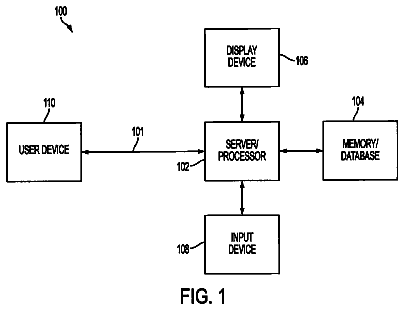
FIG. 1 illustrates an example embodiment of a system for enabling computer users to design and simulate a fireworks show in an example embodiment;
FIG. 2 illustrates a detail of the databases used in an example embodiment;
FIG. 3 illustrates a detail of the fireworks data importer of an example embodiment;
FIG. 4 illustrates a detail of the fireworks show development system of an example embodiment from a user perspective;
FIGS. 5-9, 9A, 9B, and 9C illustrate example user interface screen snapshots of example embodiments;
FIG. 10 illustrates one embodiment of a "Scruncher Bar" or timeline expander bar;
FIG. 11 illustrates an example user interface screen shot wherein a user has used the pointing device to move the playhead to a position to the left of the launch time for the firework;
FIG. 12 illustrates an image of the launch of a firework;
FIGS. 13 and 14 illustrate an image of the break of the firework;
FIG. 15 illustrates the dissipation point when the effect of the firework has ended;
FIG. 16 illustrates the sample user interface screen after a user has selected a second firework from the inventory of individual drag/drop firework types and dragged an icon of the selected firework to a location in the sky field UI element;
FIG. 17 illustrates an example user interface screen shot wherein a user has used the pointing device to move the playhead to a position to the left of the launch time for the second firework;
FIG. 18 illustrates as the playhead continues to move forward in time, the playhead intersects with the break time for the second firework;
FIG. 19 illustrates that the second firework drawn in the sky field and the timeline blip retfr to the same firework;
FIGS. 20 and 21 illustrate the operation of the wind setting indicator of an example embodiment;
FIG. 22 illustrates the capability for a user to dynamically change the attributes of a articular firework previously selected and dropped into the sky field;
FIG. 23 illustrates the operation of the Edit feature of an example embodiment;
FIGS. 24 through 29 illustrate the user interface features of an example embodiment supporting the configuration of launch positions;
FIG. 30 illustrates the addition of a firework from the inventory of `comet` type fireworks:
FIG. 31 illustrates the addition of a firework from the inventory of `mine` type fireworks;
FIG. 32 illustrates the addition of a firework from the inventory of `fountain` type fireworks;
FIG. 33 illustrates the addition of a firework from the inventory of `candle` type fireworks;
FIG. 34 illustrates the addition of a firework from the inventory of `cake` type fireworks;
FIG. 35 illustrates the option to view the firing data corresponding to the fireworks added to the sample firework show;
FIG. 36 illustrates the firework firing data set corresponding to the fireworks added to the sample firework show;
FIG. 37 illustrates a command option to `Set Voice Cues On While Editing`;
FIG. 38 illustrates an "Export script" menu item with further specification of various script formats for firing system hardware made by various manufacturers;
FIG. 39 illustrates an additional set of command options available to a user under an Edit tab on the user interface screen;
FIG. 40 illustrates an additional set of command options available to a user under a Show tab on the user interface screen;
FIG. 41 illustrates an additional set of command options available to a user under an Inventory tab on the user interface screen;
FIG. 42 illustrates a feature and process in an example embodiment wherein a user can import new firework inventory into the database;
FIG. 43 illustrates an additional set of command options available to a user under an Inventory drop down item on the user interface screen;
FIG. 44 illustrates an additional set of command options available to a user under a Color drop down item on the user interface screen;
FIG. 45 illustrates an additional set of command options available to a user under a Caliber drop down item on the user interface screen;
FIG. 46 illustrates an example embodiment of a portion of a firework show data set or spreadsheet;
FIG. 47 illustrates another example embodiment of a networked system in which various embodiments may operate;
FIG. 48 illustrates an example embodiment of a standalone system in which various embodiments may operate;
FIG. 49 is a processing flow chart illustrating an example embodiment of a fireworks show development system as described herein; and
FIG. 50 shows a diagrammatic representation of machine in the example form of a computer system within which a set of instructions when executed may cause the machine to perform any one or more of the methodologies discussed herein.
Detailed description
In the following description, for purposes of explanation, numerous specific details are set forth in order to provide a thorough understanding of the various embodiments. It will be evident, however, to one of ordinary skill in the art that the various embodiments may be practiced without these specific details.
In the various embodiments described herein, a system and method for enabling computer users to design and simulate a fireworks show is disclosed. In various embodiments, a software application program is used to enable the development of a fireworks show and to simulate the effects of the fireworks show on the display screen of a computer system.
Referring now to FIG. 1, in an example embodiment, a system for enabling computer users to design and simulate a fireworks show is disclosed. In various example embodiments, an application or service, typically provided by or operating on a host site (e.g., a website) 110, is provided to simplify and facilitate the downloading or hosted use of the fireworks show development system 200 of an example embodiment. In a particular embodiment, the fireworks show development system 200 can be downloaded from the host site 110 by a user at a user platform 140. Alternatively, the fireworks show development system 200 can be hosted by the host site 110 for a networked user at a user platform 140.
Referring again to FIG. 1, the fireworks show development system 200 can be in network communication with a plurality of fireworks data sources 130. The fireworks data sources 130 can include firework simulation data sources, such as a firework manufacturer that creates firework simulations and uploads the data corresponding to these firework simulations (firework simulation data set) to the host site 110. In an example embodiment, the following command selections can be used to upload and save a selected firework simulation data set: ("Inventory>Save selected firework to My Fireworks"). The fireworks data sources 130 can also include sources of firework inventory data sets, which include firework specifications for particular brands or types of specific fireworks. The firework inventory data sets might be provided by a firework manufacturer or display operator who uploads a spreadsheet of firework inventory data to the host site 110. The spreadsheet of firework inventory data can include a set of parameters associated with various attributes of each specific type of firework. In a particular embodiment, uploading a spreadsheet of firework inventory data can cause the fireworks show development system 200 on the host site 110 to automatically construct simulations for the uploaded firework specifications based on all the information the fireworks show development system 200 has in its database 105. The data of database 105 is detailed below. If the fireworks show development system 200 is able to find a previously developed specially-made simulation created by, for example, the firework manufacturer by matching the firework product identifier (ID) in the inventory spreadsheet to a product ID uploaded along with the simulation by the manufacturer, then the manufacturer simulation can be associated with the particular firework product and used by the fireworks show development system 200 to simulate the firework product. If the fireworks show development system 200 cannot find any such matches of previously developed firework simulations, the fireworks show development system 200 can automatically construct a firework simulation based on the firework specifications, which can include the name of the firework, and perhaps a set of parameters associated with various attributes of the specific type of firework. The fireworks show development system 200 can use this information to create a decent simulation for the particular type of firework, e.g., "Gold Palm to White Strobe" or "Gold Willow with Glitter". In some cases, the automatically constructed simulations can be good enough to enable a user to design a fireworks show. Additionally, the user can modify a previously developed simulation or an automatically constructed simulation to improve the accuracy of the simulation. Once the user uploads modified simulations to host site 110, then the next time the user uploads a firework inventory that contains that particular firework, such as the user might do for another show that uses a different set of fireworks that includes some but not all previously used fireworks, then the fireworks show development system 200 can subsequently use the modified simulation and thereby provide better results for the firework inventory upload as time goes on.
One or more of the fireworks data sources 130 can be provided by one or more third party providers operating at various locations in a network ecosystem. It will be apparent to those of ordinary skill in the art that fireworks data sources 130 can be any of a variety of networked third party providers as described in more detail below. In a particular embodiment, a source list maintained at the host site 110 can be used as a summary or list of all fireworks data sources 130 which users or the host site 110 may visit/access and from which users or the host site 110 can obtain fireworks data. The host site 110, fireworks data sources 130, and user platforms 140 may communicate and transfer data and information in the data network ecosystem shown in FIG. 1 via a wide area data network (e.g., the Internet) 120. Various components of the host site 110 can also communicate internally via a conventional intranet or local area network (LAN) 114.
Networks 120 and 114 are configured to couple one computing device with another computing device. Networks 120 and 114 may be enabled to employ any form of computer readable media for communicating information from one electronic device to another. Network 120 can include the Internet in addition to LAN 114, wide area networks (WANs), direct connections, such as through a universal serial bus (USB) port, other forms of computer-readable media, or any combination thereof. On an interconnected set of LANs, including those based on differing architectures and protocols, a router and/or gateway device acts as a link between LANs, enabling messages to be sent between computing devices. Also, communication links within LANs typically include twisted wire pair or coaxial cable, while communication links between networks may utilize analog telephone lines, full or fractional dedicated digital lines including T1, T2, T3, and T4, Integrated Services Digital Networks (ISDNs), Digital Subscriber Lines (DSLs), wireless links including satellite links, or other communication links known to those of ordinary skill in the art. Furthermore, remote computers and other related electronic devices can be remotely connected to either LANs or WANs via a modem and temporary telephone link.
Networks 120 and 114 may further include any of a variety of wireless sub-networks that may further overlay stand-alone ad-hoc networks, and the like, to provide an infrastructure-oriented connection. Such sub-networks may include mesh networks, Wireless LAN (WLAN) networks, cellular networks, and the like. Networks 120 and 114 may also include an autonomous system of terminals, gateways, routers, and the like connected by wireless radio links or wireless transceivers. These connectors may be configured to move freely and randomly and organize themselves arbitrarily, such that the topology of networks 120 and 114 may change rapidly and arbitrarily.
Networks 120 and 114 may further employ a plurality of access technologies including 2nd (2G), 2.5, 3rd (3G), 4th (4G) generation radio access for cellular systems, WLAN, Wireless Router (WR) mesh, and the like. Access technologies such as 2G, 3G, 4G, and future access networks may enable wide area coverage for mobile devices, such as one or more of client devices 141, with various degrees of mobility. For example, networks 120 and 114 may enable a radio connection through a radio network access such as Global System for Mobile communication (GSM), General Packet Radio Services (GPRS), Enhanced Data GSM Environment (EDGE), Wideband Code Division Multiple Access (WCDMA), CDMA2000, and the like. Networks 120 and 114 may also be constructed for use with various other wired and wireless communication protocols, including TCP/IP, UDP, SIP, SMS, RTP, WAP, CDMA, TDMA, EDGE, UMTS, GPRS, GSM, UWB, WiMax, IEEE 802.11x, and the like. In essence, networks 120 and 114 may include virtually any wired and/or wireless communication mechanisms by which information may travel between one computing device and another computing device, network, and the like. In one embodiment, network 114 may represent a LAN that is configured behind a firewall (not shown), within a business data center, for example.
The fireworks data sources 130 may include any of a variety of providers of network transportable digital data. The network transportable digital data can be transported in any of a family of file formats and associated mechanisms usable to enable a host site 110 and a user platform 140 to receive data from a fireworks data source 130 over a network 120. In one embodiment, the file format can be a MICROSOFT Excel spreadsheet format or a CSV (Comma Separated Values) format; however, the various embodiments are not so limited, and other file formats and transport protocols may be used. For example, data formats other than Excel or CSV or formats other than open/standard formats can be supported by various embodiments. Any electronic file format, such as Microsoft Access Database Format (MDB), Portable Document Format (PDF), audio (e.g., Motion Picture Experts Group Audio Layer 3--MP3, and the like), video (e.g., MP4, and the like), and any proprietary interchange format defined by specific sites can be supported by the various embodiments described herein. Moreover, a fireworks data source 130 may provide more than one fireworks data set.
In a particular embodiment, a user platform 140 with one or more client devices 141 enables a user to access data and simulations from the fireworks show development system 200 via the host 110 and network 120. Client devices 141 may include virtually any computing device that is configured to send and receive information over a network, such as network 120. Such client devices 141 may include portable devices 144, such as, cellular telephones, smart phones, display pagers, radio frequency (RF) devices, infrared (IR) devices, global positioning devices (GPS), Personal Digital Assistants (PDAs), handheld computers, wearable computers, tablet computers, integrated devices combining one or more of the preceding devices, and the like. Client devices 141 may also include other computing devices, such as personal computers 142, multiprocessor systems, microprocessor-based or programmable consumer electronics, network PC's, and the like. Client devices 141 may also include other processing devices, such as consumer electronic (CE) devices 146 and/or computerized firework launching systems 148, which are known to those of ordinary skill in the art. As such, client devices 141 may range widely in terms of capabilities and features. For example, a client device configured as a cell phone may have a numeric keypad and a few lines of monochrome LCD display on which only text may be displayed. In another example, a web-enabled client device may have a touch sensitive screen, a stylus, and several lines of color LCD display in which both text and graphics may be displayed. Moreover, the web-enabled client device may include a browser application enabled to receive and to send wireless application protocol messages (WAP), and/or wired application messages, and the like. In one embodiment, the browser application is enabled to employ HyperText Markup Language (HTML), Dynamic HTML, Handheld Device Markup Language (HDML), Wireless Markup Language (WML), WMLScript, JavaScript, EXtensible HTML (xHTML), Compact HTML (CHTML), and the like, to display and/or send digital information.
Client devices 141 may also include at least one client application that is configured to receive simulation data or/or control data from another computing device via a wired or wireless network transmission. The client application may include a capability to provide and receive textual data, graphical data, video data, audio data, and the like. Moreover, client devices 141 may be further configured to communicate and/or receive a message, such as through a Short Message Service (SMS), direct messaging (e.g., Twitter), email, Multimedia Message Service (MMS), instant messaging (IM), internet relay chat (IRC), mIRC, Jabber, Enhanced Messaging Service (EMS), text messaging, Smart Messaging, Over the Air (OTA) messaging, or the like, between another computing device, and the like.
Referring still to FIG. 1, host site 110 of an example embodiment is shown to include a fireworks show development system 200, intranet 114, and fireworks show system database 105. Fireworks show development system 200 includes fireworks data importer 210, user account management module 220, user download management module 230, hosted application management module 240, user interface management module 250, fireworks show data exporter module 260, and fireworks feedback collection module 270. Each of these modules can be implemented as software components executing within an executable environment of fireworks show development system 200 operating on host site 110. Each of these modules of an example embodiment is described in more detail below in connection with the figures provided herein.
Referring now to FIG. 2, the components of database 105 are illustrated for an example embodiment. Each of these database 105 components is described in detail below.
Fireworks Simulation Database 150--A user can save a simulation of an individual firework to the host site 110, so other users can browse and download the saved firework simulation. In an example embodiment, the following command sequence can be used to save a firework simulation: (menu items: "Inventory>Save selected firework to My Fireworks" and "Inventory>Browse/Add fireworks"). These firework simulations, which are collections of simulation parameters and simulation programs, can be automatically created by the fireworks show development system 200 from firework specification data, or they can be created by the user by editing simulation parameters through a graphical user interface. For example, the simulation parameters might include the color of the stars or the length of the trails of sparks that result from a firework's detonation in the sky. The firework simulations can be stored in Fireworks Simulation Database 150. Additionally, firework manufacturers, like DOMINATOR FIREWORKS, have already spent a lot of time creating simulations of their real-world fireworks. These already-created firework simulations can be uploaded to the fireworks show development system 200 from the firework data sources 130. These uploaded simulations and the simulations automatically created by the fireworks show development system 200 can be stored in Fireworks Simulation Database 150.
Fireworks Specification Database 151--Making simulations one by one for all of an inventory of thousands of firework varieties can be tedious work for display operators, who may use fireworks from a variety of manufactures and may even use some custom fireworks that they make themselves. Many users prefer to upload a spreadsheet of fireworks specification data for their inventory of fireworks, and to have the fireworks show development system 200 automatically create simulations according to the fireworks specification data in the database 151. Firework display operators like accurate visual simulations, but often don't have the time to create the simulations; so, uploading their firework inventory spreadsheet data is good enough if the fireworks show development system 200 can construct simulations that match the critical firework specifications (e.g., pre-fire time for shells, the number of shots (tubes) in a cake, the overall time duration of the firework, and the like). For example, a 36 shot, 25 second cake shoots 36 small shells in 25 seconds total. The overall time duration for this type of cake is a critical firework specification parameter. When a display operator uploads a firework inventory spreadsheet to host site 110, the fireworks show development system 200 can store the firework inventory data into database 151. The fireworks show development system 200 can then use the uploaded firework inventory data to automatically construct a related firework simulation. The data for the constructed simulation can be stored in the database 150. If an operator doesn't like the constructed simulation, the operator can modify the simulation and upload the modified simulation to the fireworks show development system 200. The uploaded modified simulation is stored in the database 150. The fireworks show development system 200 can then use this uploaded modified simulation to do a better job of constructing a simulation for a firework with the same firework specification in the future, for this operator, who might upload a firework inventory spreadsheet again for another show, or an entirely different operator.
Fireworks Metadata Database 152--This database can be used for storage of reviews, comments, digital rights information, etc., for the firework simulations stored in database 150.
Fireworks Show Database 153--This database can be used for storage of firework show data and portions of firework shows that users have created and saved to the host site 110, which other users can access, subject to access privileges. In a particular embodiment, users in a workgroup are able to share firework shows over the network privately within the workgroup, for example.
Fireworks Show Metadata Database 154--This database can be used for storage of reviews, comments, digital rights information, etc., for the firework shows stored in database 153.
User Database 155--This database can be used for storage of user account information, user profiles, user privileges, etc.
Asset Database 156--This database can be used for storage of uploaded music, sound effects, and images that can be used in fireworks and fireworks shows, subject to rights management.
Fireworks Video Database 157--This database can be used for storage of videos of fireworks simulations, which are hosted by host site 110 for people to see on the web.
Fireworks Show Video Database 158--This database can be used for storage of videos of shows, which are hosted by host site 110 for people to see. There is already a large library of shows at, www.finalefireworks.com/shows.
In addition to the databases (150 through 158) described above, a particular embodiment includes three additional databases of virtual information that can be used for a game version of the fireworks simulation system. These additional databases include the following: Fireworks Virtual Properties Database 159, Fireworks Show Virtual Properties Database 160, and User Virtual Properties Database 161. These additional databases are described in more detail below.
Fireworks Virtual Properties Database 159--This database can be used for storage of virtual firework information, such as the virtual price or availability of a firework for a game.
Fireworks Show Virtual Properties Database 160--This database can be used for storage of virtual firework show information, such as the virtual popularity of a firework show for the game.
User Virtual Properties Database 161--This database can be used for storage of virtual user information, such as the user's virtual money, user reputation, score, etc.
Referring again to FIG. 1, the fireworks show development system 200 can include a fireworks data importer 210. The fireworks data importer 210 receives uploaded fireworks specification data sets and fireworks inventory data sets from the data sources 130 and stores the received data in the appropriate portion of database 105, such as Fireworks Simulation Database 150 and Fireworks Specification Database 151.
Referring now to FIG. 3, a detail of the fireworks data importer 210 in an example embodiment is illustrated. As shown, fireworks data importer 210 is in data communication via network 120 with a plurality of fireworks data sources 130, one or more portions of database 105, and the other processing modules of the fireworks show development system 200 (not shown in FIG. 3). In general, the fireworks data importer 210 is responsible for collecting and processing fireworks data items (e.g., fireworks simulations and fireworks inventory specifications) received from a variety of fireworks data sources 130. In a particular embodiment, these fireworks data sources 130 can include individual or aggregated data sources as described above. Aggregated data sources can represent any of a variety of conventional sites or services that pull or receive fireworks data items from various sources and collect the fireworks data items in a local collector. The local collector of a fireworks data source 130 may then provide these fireworks data items to host site 110 via the wide area data network 120.
Fireworks data importer 210 can be configured to interface with any of the fireworks data sources 130 via wide area data network 120. Because of the variety of fireworks data sources 130 providing data to fireworks data importer 210, the fireworks data importer 210 needs to manage the interface to the various fireworks data sources 130. This data source interface or data management process performed by fireworks data importer 210 can include retaining meta information on each data item, document, or object received from a fireworks data source 130. This retained meta information can include an identifier or address of the corresponding data item, document, or object received from a fireworks data source 130, an identifier or address of the corresponding fireworks data source 130, the timing or versioning associated with the data item, document, or object, including the time when the latest update of an item was received, and the like. This meta information related to the data items, documents, or objects received from fireworks data sources 130 can be stored in database 152.
The data management process performed by fireworks data importer 210 can also include performing any transcoding, decompression, decryption, formatting, and/or the like that may be necessary to process and/or simulate a particular data item received from a fireworks data source 130 via host site 110. The data management process performed by fireworks data importer 210 can also include the fetching, staging, and processing of particular fireworks data items as users of fireworks data sources 130 use the fireworks data importer 210 as described herein.
In one embodiment, a fireworks show data exporter module 260 and a fireworks feedback collection module 270 is provided. The fireworks show data exporter module 260 handles the exporting of fireworks data and firework show data to external systems, including networked systems. The fireworks show data exporter module 260 can also control the export of scripts, spreadsheets, and other data sets created or modified by the fireworks show development system 200 of an example embodiment. The fireworks feedback collection module 270 can collect information from 3.sup.rd party users, the collected information including rating information, comments, customer feedback, and the like that indicate the extent to which particular viewers liked or disliked a particular fireworks show. The collected feedback can be correlated to the particular fireworks show to which the feedback relates.
Referring now to FIG. 4, a detail of the fireworks show development system 200 of an example embodiment from a user perspective is illustrated. As described above, the fireworks show development system 200 can be downloaded to a user device 141 of user platform 140 or executed on host system 110. The fireworks show development system 200 may communicate and transfer data and information in the network ecosystem via a wide area data network (e.g., the Internet) 120. In this manner, the fireworks show development system 200 may communicate and transfer data and information with a user of a user device 141 of user platform 140. In general, the user can interact with the fireworks show development system 200 via a graphical user interface (GUI) implemented in an example embodiment as a set of webpages described in more detail below.
The fireworks show development system 200 of an example embodiment provides a user account management module 220. The user account management module 220 provides the functionality and interfaces for a user to register with the host site 110 and create, modify, and manage a user account and related user information data sets. As part of the creation of a user information data set, a user can assign a unique identifier (also denoted a user identifier or user ID) to the user information data set. Alternatively, the user account management module 220 can automatically create and assign the user ID to the user information data set. In one embodiment, the user ID can be a unique eight digit number. In an alternative embodiment, the user ID can be an alphanumeric string of arbitrary length, which can be used to uniquely identify a particular user information data set and corresponding user. The user information data sets can be stored in user database 155.
Once the user ID is created using any of the embodiments described above, the user ID can be used by a user to access and configure user-specific information in a user information data set retained on host site 110 in a conventional manner. In a particular embodiment, a user profile can be created and maintained in user database 155. Additionally, other user data for particular users can be maintained by user account management module 220. This other user data can include a user history, a user rating, and the like. It will be apparent to those of ordinary skill in the art that other user information may similarly be configured and retained in user data 155 by the user account management module 220. Thus, for various embodiments, a user can register with the host site 110 and use host site 110, and the user account management module 220 therein, to create and maintain a user information data set and a corresponding unique user ID.
Referring again to FIG. 4, the fireworks show development system 200 of an example embodiment is shown to include a user download management module 230 and a hosted application management module 240. As one option, the fireworks show development system 200, or a portion thereof, can be downloaded to a user device 141 of user platform 140 and executed locally on a user device 141. The downloading of the fireworks show development system 200 application can be accomplished using conventional software downloading functionality. As a second option, the fireworks show development system 200 can be hosted by the host site 110 and executed remotely, from the user's perspective, on host system 110. In one embodiment, the fireworks show development system 200 can be implemented as a service in a service oriented architecture. In any case, the functionality performed by the fireworks show development system 200 is as described herein, whether the application is executed locally or remotely.
Referring again to FIG. 4, the fireworks show development system 200 of an example embodiment is shown to include a user interface management module 250. The user interface management module 250 handles the presentation of various user interface displays, display screen, windows, frames, or the like. In an alternative embodiment, the user interface can be implemented as a series of web pages. These various user interface displays are provided to present information and firework simulation images to a user of the fireworks show development system 200 of an example embodiment. The user interface management module 250 also receives user inputs and configures the various user interface displays in conformity with the user inputs, command selections, and the like.
Although the various user interface displays provided by the user interface management module 250 are nearly infinitely varied, several sample user interface sequences are provided herein and in the corresponding figures to describe various features of the disclosed embodiments.
User Interface in an Example Embodiment for Editing Fireworks on a Timeline--
Referring now to FIGS. 5-45, several sample user interface screen snapshots and sequences are illustrated. These sample user interface sequences illustrate various features, structures, and operations of various example embodiments. Referring to FIG. 5, for each these sample user interface sequences, a user interface screen 500 or display image is presented. The user interface 500 includes a set of command options 502, a selection of firework category tabs 504, a selection or graphical inventory of individual drag/drop firework types 506 within a particular firework category, and a set of selectable firework attribute filters to constrain the selection of individual drag/drop firework types 506 to a desired subset having the selected attributes (e.g., particular inventory or firework manufacturer, firework color, firework shell caliber, and the like).
Additionally, as shown in the example of FIG. 5, the sample user interface screen 500 includes a selectable background image 510, a timeline 520, a playhead or current timeline marker (CTM) 522, and a play/pause button 524. Because fireworks shows can go on for a period of time, sometimes thirty minutes or even an hour, the designer of a fireworks show, who is using visual simulation software, needs to be able to navigate backward and forward in time to see what the show looks like at different times. For this reason, the visual simulation software of an example embodiment provides a timeline 520 and a playhead or CTM 522 that indicates the specific time on the timeline that is being displayed visually over the background image 510 portion of the user interface screen 500. As shown in FIG. 6, timeline 520 can also display a waveform 530 of a sound track extending from the beginning of the show to the end of the show, so the designer can align the playhead 522 with points in the music that are recognizable in the waveform 530. Sometimes, the designer may want to align fireworks with beats of the music, for example.
Conventional software programs for designing and simulating fireworks shows have drawn "cue markers" on a timeline at specific times and allowed users to associate with each cue marker the fireworks that are to be ignited or viewed at that point in time. With this conventional feature, a designer can see a visual representation of the ignition points (launch times) or break points (times of visual impact, such as the detonation of a shell in the sky) in the show as a series of cue markers, typically drawn as vertical lines overlaying the waveform on a horizontal, scrolling panel that covers the duration of the show. The user can see a textual list of fireworks attached to each cue marker in a spreadsheet-like table in a separate user interface panel. However, there are serious problems with this conventional representation. For example:
the designer cannot see at a glance how many fireworks are ignited at each cue marker and thus has no idea what the density of effects in the show is;
the designer cannot see the durations of individual fireworks on the timeline, and thus cannot tell when a firework is ignited or how long it lasts (typically the cue marker indicates the firework's point of visual impact (the "break"), rather than the point of ignition or launch time);
if the firework has multiple breaks, such as cakes or candles that emit multiple shells in a sequence, the designer cannot tell when those breaks occur;
the designer cannot select fireworks individually based on their position in the timeline, nor can the designer see at a glance the time positions of the selected fireworks; and
the designer cannot directly manipulate the timing of fireworks in the visual representation of the show's time based information. The various embodiments described herein solve these problems by providing a visual representation or image of the individual fireworks' durations and break points on the timeline 520, thereby enabling the user to select and manipulate these visual representations directly on the timeline 520.
The description continues in the full USPTO document.
 Lapsed, fee not paid5 drawings

