Lapsed, fee not paid16 drawings
Materials & Chemistry · US 8,575,591 B2
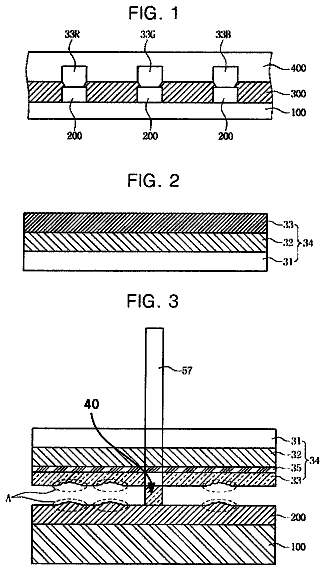
Apparatus for forming a nanoscale semiconductor structure on a substrate by applying a carrier fluid
An apparatus applies a carrier fluid to a semiconductor substrate.
US 8,575,768 B2 · Assignee: Seiko Epson Corporation · Inventors: Nakane; Hiroki et al.
Claude can sketch it from the patent text.
A radiation-curable ink jet ink composition contains a polymerizable compound, an photopolymerization initiator and polysiloxane, in which the ink composition is used for recording on a package substrate as a recording medium; the polymerizable compound contains one or more kinds of compound having a pentaerythritol skeleton; an HLB value of the polysiloxane is 5 to 12; and the polysiloxane content is 0.1 to 2% by mass with respect to the total amount of the ink composition.
In the related art, various methods have been used as a recording method for forming an image on a recording medium based on an image data signal. Of these, since the ink jet type recording method includes ejecting an ink composition only into a required image portion using an inexpensive apparatus and directly forming an image on a recording medium, the ink composition can be efficiently used and running cost are low. In recent years, since an image having good water resistance, solvent resistance and scratch resistance is formed on the surface of a recording medium, a radiation-curable ink jet ink composition has been used in an ink jet type recording method, which is cured when radiation is applied. On the other hand, an electronic component (integrated circuit (IC) package) which packages semiconductor chip (IC chip) has been used in various apparatuses recently, and marking where ch
Ask Claude for concept sketches based only on the patent's text. They are not part of the patent.
What the patent claimed, word for word. All of it is now free to use.
The present invention relates to a radiation-curable ink jet ink composition, a recording matter, and an ink jet recording method.
In the related art, various methods have been used as a recording method for forming an image on a recording medium based on an image data signal. Of these, since the ink jet type recording method includes ejecting an ink composition only into a required image portion using an inexpensive apparatus and directly forming an image on a recording medium, the ink composition can be efficiently used and running cost are low.
In recent years, since an image having good water resistance, solvent resistance and scratch resistance is formed on the surface of a recording medium, a radiation-curable ink jet ink composition has been used in an ink jet type recording method, which is cured when radiation is applied.
On the other hand, an electronic component (integrated circuit (IC) package) which packages semiconductor chip (IC chip) has been used in various apparatuses recently, and marking where characters, signals, or logo marks are printed is generally performed on such electronic components. Therefore, a printing technique where the marking suitable for electronic components is performed is required.
For example, JP-A-11-274335 discloses a marking method where an ink composition is attached by the ink jet type with respect to electronic components such as IC chip and is fixed to the electronic components by irradiation with ultraviolet radiations. JP-A-2000-332376 discloses a marking method where a lot number or the like is printed by the ink jet type on a substrate portion which removes the edge portion of a substrate where a plurality of bare chips is displaced.
For example, JP-A-2006-21479 discloses an ink jet recording method of production of a printed wiring board where the integrated light amount and luminance of irradiated ultraviolet radiations is in a specific range such that the ink containing titanium dioxide is cured in the maximum thickness of an ink film of 10 to 30 .mu.m. JP-T-2007-527459 discloses an ink jet printing method where a process ejecting and marking an ultraviolet curable ink containing a coloring agent, an photopolymerization initiator, and an epoxy reagent from an ink jet print on a printed circuit board, and a process of exposing the marking with ultraviolet radiations after at least 2 seconds.
For example, Japanese Utility Model No. 2539839 discloses a mold IC package where coating is performed on IC package, and the marking is performed thereon. JP-A-2003-273172 discloses a method where marking is performed only on the location of a defective IC chip on a wafer having plural IC chips.
However, techniques described in JP-A-11-274335, JP-A-2000-332376, JP-A-2006-21479, JP-T-2007-527459, Japanese Utility Model No. 2539839, and JP-A-2003-273172 all deteriorate in at least one of visibility, ejection stability, and scratch resistance and have room for improvement. Therefore, there is a problem in that the related marking method is difficult to be applied to precision electronic components.
An advantage of some aspects of the invention is to provide a radiation-curable ink jet ink composition having excellent visibility, ejection stability, and scratch resistance, and a recording matter using the same and an ink jet recording method.
Techniques described in JP-A-11-274335, JP-A-2000-332376, JP-A-2006-21479, JP-T-2007-527459, Japanese Utility Model No. 2539839, and JP-A-2003-273172 all deteriorates at least one of curability of the ink, adhesiveness of curing material to a substrate, and the scratch resistance of a curing material, and have room for improvement. Therefore, there is a problem where it is difficult that the related marking method is applied to precise electronic components.
An advantage of some aspects of the invention is ultraviolet curable ink jet ink composition having excellent curability, adhesiveness, and scratch resistance, and a recording matter using the same and ink jet recording method.
The inventors found that a radiation-curable ink jet ink composition (hereinafter, simply referred to as "ink composition") contains a specific polymerizable compound, an photopolymerization initiator and a specific and predetermined amount of polysiloxane, in which recording (marking) can be performed on a package substrate or a semiconductor substrate such as electronic components, and an ink composition having excellent visibility of a recorded image, ejection stability of ink, and scratch resistance of cured ink can be obtained. The invention was achieved.
In other words, a first present invention is as follows.
According to an aspect of the invention, there is provided a radiation-curable ink jet ink composition containing a polymerizable compound, an photopolymerization initiator and polysiloxane, in which the ink composition is used for recording on a package substrate or a semiconductor substrate as a recording medium; the polymerizable compound contains one or more kinds of compound having a pentaerythritol skeleton; an HLB value of the polysiloxane is 5 to 12; and the polysiloxane content is 0.1 to 2% by mass with respect to the total amount of the ink composition.
It is preferable that an HLB value of the polysiloxane be in a range of 9 to 12.
It is more preferable that the compound having a pentaerythritol skeleton be a polyfunctional acrylate having a pentaerythritol skeleton.
It is still more preferable that the compound having a pentaerythritol skeleton has a content of 7 to 25% by mass with respect to the total amount of the ink composition.
According to another aspect of the invention, there is provided a recording matter including the package substrate or semiconductor substrate, and a curing material of the radiation-curable ink jet ink composition recorded on the package substrate or the semiconductor substrate.
According to still another aspect of the invention, there is provided an ink jet recording method including processes of ejecting the radiation-curable ink jet ink composition on a recording medium and of curing the ejected ink composition by the irradiation with active radiation rays having an emission peak wavelength in a range of equal to or longer than 350 nm and equal to shorter than 400 nm.
The inventors found that an ultraviolet curable ink jet ink composition (hereinafter, simply referred to as "ink composition") contains a polymerizable compound, an photopolymerization initiator containing an acylphosphine oxide compound, and a coloring material, which are irradiated with ultraviolet radiation and heated under the predetermined conditions, in which marking (recording) can be preferably performed on a package substrate or a semiconductor substrate of electronic components, wherein an ink composition having excellent curability of ink, adhesiveness of a curing material to a substrate, and scratch resistance of a curing material can be obtained. The invention was achieved.
In other words, a second present invention is as follows.
According to an aspect of the invention, there is provided an ultraviolet curable ink jet ink composition containing a polymerizable compound, an photopolymerization initiator containing an acylphosphine oxide compound, and a coloring material, in which the ink composition is used for recording the ink composition on a package substrate or semiconductor substrate as a recording medium, the ink composition is attached to the package substrate or semiconductor substrate, wherein ultraviolet radiation is radiated from an ultraviolet light emitting diode having an emission peak wavelength in a range of 360 to 420 nm, and then heated at a temperature of 150 to 200.degree. C.
It is preferable that the content of the photopolymerization initiator be in a range of 7 to 12 parts by mass with respect to 100 parts by mass of the ink composition.
It is more preferable that the coloring material is titanium oxide, wherein the content of titanium dioxide is 12 to 18 parts by mass with respect to 100 parts by mass of the ink composition.
It is still more preferable that the polymerizable compound contains N-vinylcaprolactam, in which the content of N-vinylcaprolactam be 5 to 20 parts by mass with respect to 100 parts by mass of the ink composition.
According to another aspect of the invention, there is provided a recording matter including a package substrate or semiconductor substrate as a recording medium, and a curing material of the ultraviolet curable ink jet ink composition recorded on the package substrate or the semiconductor substrate.
According to still another aspect of the invention, there is provided an ink jet recording method including processes of ejecting the ultraviolet curable ink jet ink composition on a recording medium and of curing the ejected ink composition by the irradiation with ultraviolet radiation from an ultraviolet light emitting diode having an emission peak wavelength in a range of 360 to 420 nm; and heating the curing material at a temperature of 150 to 200.degree. C.
The present invention will be described in detail below with respect to a first embodiment. The present invention is not limited to the following embodiment, and can be changed and performed in a range of the gist of the invention.
In the specification, the term "package substrate" means a protective substrate which seals a semiconductor chip. The term "semiconductor substrate" is a semiconductor chip and has a wafer as a direct substrate. A package substrate or semiconductor substrate is also referred to as "package substrate or the like". The term "recording matter" means that the ink composition is recorded on a package substrate or a semiconductor substrate to form a curing material. The curing material of the specification means a cured material including a curing film or coating film.
In the specification, the term "curability" means a property of reacting to and being cured by light. The term "scratch resistance" means a property removing curing material from package substrate during scratch of curing material. The term "visibility" is a property of any image (including characters) being recognizable to the human eye. The term "ejection stability" is a property in which stable ink droplets are ejected from a nozzle without clogging of the nozzle.
In the specification, the term "HLB" (value of hydrophilic and lipophilic balance) numerically shows the balance of hydrophilicity and hydrophobicity of polysiloxane. The HLB is a value calculated by the Griffin method.
In the specification, the term "(meth)acrylate" means at least one of acrylate and methacrylate corresponding to acrylate. The term "(meth)acryl" means at least one of acryl and methacryl corresponding to acryl.
Radiation Curing Type Ink Jet Ink Composition
The embodiment of the present invention relates to a radiation curing type ink jet ink composition. The ink composition contains a polymerizable compound having one or more compounds having a pentaerythritol skeleton; an photopolymerization initiator; and the predetermined amount of polysiloxane having an HLB value in the predetermined range. Moreover, the ink composition is used for recording on a package substrate or semiconductor substrate as a recording medium.
Additives (components) which are contained or which can be contained in the ink composition of the embodiment will be described.
Polymerizable Compound
A polymerizable compound contained in the ink composition of the embodiment can be polymerized during optical irradiation by an effect of the following photopolymerization initiator, and printed to cure the ink composition.
Compound Having a Pentaerythritol Skeleton
The ink composition of the embodiment contains one kind of compound having a pentaerythritol skeleton, (C(CH.sub.2O--).sub.4) as a polymerizable compound.
The ink composition contains a compound having a pentaerythritol skeleton, and thereby scratch resistance of the cured ink is improved.
Examples of the compound having a pentaerythritol skeleton include (meth)acrylate compounds such as pentaerythritol tri(meth)acrylate, pentaerythritol tetra(meth)acrylate, pentaerythritolethoxy tetra(meth)acrylate, dipentaerythritol penta(meth)acrylate, dipentaerythritol hexa(meth)acrylate, and polypentaerythritol poly(meth)acrylate; oxetane compounds such as pentaerythritoltris(3-ethyl-3-ocetanylmethyl)ether and pentaerythritoltetrakis(3-ethyl-3-ocetanylmethyl)ether; and at least one of an ethylene oxide (EO) adduct and a propylene oxide (PO) adduct thereof.
Of these, a polyfunctional (meth)acrylate having a pentaerythritol skeleton is preferable, and a polyfunctional acrylate having a pentaerythritol skeleton is more preferable. Of polyfunctional (meth)acrylates having a pentaerythritol skeleton, at least one of pentaerythritol tri(meth)acrylate and pentaerythritol tetra(meth)acrylate is preferable, at least one of pentaerythritol triacrylate and pentaerythritol tetraacrylate is more preferable, and pentaerythritol triacrylate is most preferable. In this case, the viscosity of an ink is reduced, and a crosslinking density of the ink is increased.
The compound having a pentaerythritol skeleton is preferably 7 to 25% by mass, more preferably 10 to 20% by mass, with respect to the total amount (100% by mass) of the ink composition. When the content of compound having a pentaerythritol skeleton is within the aforementioned range, visibility of the recorded image, ejection stability of ink, and scratch resistance of a cured ink are excellent.
Compound Having Vinyl Group and (Meth)Acryl Group in Molecule
The ink composition of the embodiment may contain a compound (referred to as "monomer A") represented by formula (I). CH.sub.2.dbd.CR.sup.1--COOR.sup.2--O--CH.dbd.CH--R.sup.3 (I) In the formula, R.sup.1 is a hydrogen atom or a methyl group, R.sup.2 is a divalent organic residue having 2 to 20 carbon atoms, and R.sup.3 is a hydrogen atom or monovalent organic residue having 1 to 11 carbon atoms.
The monomer A is a compound which has a vinyl group and (meth)acryl group in a molecule, that is to say (meth)acrylic ester containing a vinyl ether group.
The ink composition contains monomer A, and therefore ink curability can be made satisfactory.
In the formula (I), a divalent organic group represented by R.sup.2 is preferably a linear, branched or cyclic alkylene group having 2 to 20 carbon atoms, an alkylene group having 2 to 20 carbon atoms which has an oxygen atom by any of an ether bond and ester bond in a structure, and a divalent aromatic group which may substituted with 6 to 11 carbon atoms. Of these, an alkylene group having 2 to 6 carbon atoms such as an ethylene group, an n-propylene group, an isopropylene group, and a butylene group; an alkylene group having 2 to 9 carbon atoms and having an oxygen atom by an ether bond in a structure of an oxyethylene group, an oxy-n-propylene group, an oxyisopropylene group, an oxybutylene group, or the like.
In the formula (I), a monovalent organic residue having 1 to 11 carbon atoms represented by R.sup.3 linear, branched or cyclic alkyl group having 1 to 10 carbon atoms, or an aromatic group which may be substituted with 6 to 11 carbon atoms. Of these, an alkyl group having 1 to 2 carbon atoms such as a methyl group, or an ethyl group, an aromatic group having 6 to 8 carbon atoms such as a phenyl group and a benzyl group are preferably used.
In a case where the organic residue may be substituted, the substituent is divided into a group having a carbon atom and a group having no carbon atom. First, when the substituent is a group having a carbon atom, the carbon atoms which are present in an organic residue is counted. The group containing the carbon atom is not limited to the following, and for example includes a carboxyl group, and an alkoxy group. The group having no carbon atom is not limited to the following, and for example includes a hydroxyl group and a halo group.
Specific examples of monomer A represented by formula (I) is not limited to the following, and includes monofunctional hydroxyl group-containing (meth)acrylates, such as 2-vinyloxyethyl (meth)acrylate, 3-vinyloxypropyl (meth)acrylate, 1-methyl-2-vinyloxypropyl (meth)acrylate, 2-vinyloxypropyl (meth)acrylate, 4-vinyloxybutyl (meth)acrylate, 1-methyl-3-vinyloxyethyl (meth)acrylate, 1-vinyloxymethylpropyl (meth)acrylate, 2-methyl-3-vinyloxypropyl (meth)acrylate, 1,1-dimethyl-2-vinyloxyethyl (meth)acrylate, 3-vinyloxybutyl (meth)acrylate, 1-methyl-2-vinyloxypropyl (meth)acrylate, 2-vinyloxybutyl (meth)acrylate, 4-vinyloxycyclohexyl (meth)acrylate, 6-vinyloxyhexyl (meth)acrylate, 4-vinyloxymethyl cyclohexylmethyl (meth)acrylate, 3-vinyloxymethyl cyclohexylmethyl (meth)acrylate, 2-vinyloxymethyl cyclohexylmethyl (meth)acrylate, p-vinyloxymethyl phenylmethyl (meth)acrylate, m-vinyloxymethyl phenylmethyl (meth)acrylate, o-vinyloxymethyl phenylmethyl (meth)acrylate, 2-(vinyloxyethoxy)ethyl (meth)acrylate, 2-(vinyloxyisopropoxy)ethyl (meth)acrylate, 2-(vinyloxyethoxy)propyl (meth)acrylate, 2-(vinyloxyethoxy)isopropyl (meth)acrylate, 2-(vinyloxyisopropoxy)propyl (meth)acrylate, 2-(vinyloxyisopropoxy)isopropyl (meth)acrylate, 2-(vinyloxyethoxyethoxy)ethyl (meth)acrylate, 2-(vinyloxyethoxyisopropoxy)ethyl (meth)acrylate, 2-(vinyloxyisopropoxyethoxy)ethyl (meth)acrylate, 2-(vinyloxyisopropoxyisopropoxy)ethyl (meth)acrylate, 2-(vinyloxyethoxyethoxy)propyl (meth)acrylate, 2-(vinyloxyethoxyisopropoxy)propyl (meth)acrylate, 2-(vinyloxyisopropoxyethoxy)propyl (meth)acrylate, 2-(vinyloxyisopropoxyisopropoxy)propyl (meth)acrylate, 2-(vinyloxyethoxyethoxy)isopropyl (meth)acrylate, 2-(vinyloxyethoxyisopropoxy)isopropyl (meth)acrylate, 2-(vinyloxyisopropoxyethoxy)isopropyl (meth)acrylate, 2-(vinyloxyisopropoxyisopropoxy)isopropyl (meth)acrylate, 2-(vinyloxyethoxyethoxyethoxy)ethyl (meth)acrylate, 2-(vinyloxyethoxyethoxyethoxyethoxy)ethyl (meth)acrylate, 2-(isopropenoxyethoxy)ethyl (meth)acrylate, 2-(isopropenoxyethoxyethoxy)ethyl (meth)acrylate, 2-(isopropenoxyethoxyethoxyethoxy)ethyl (meth)acrylate, 2-(isopropenoxyethoxyethoxyethoxyethoxy)ethyl (meth)acrylate, polyethyleneglycolmonovinylether (meth)acrylate, and polypropyleneglycolmonovinylether (meth)acrylate.
Among these, 2-vinyloxyethyl (meth)acrylate; 3-vinyloxypropyl (meth)acrylate; 1-methyl-2-vinyloxyethyl (meth)acrylate, 2-vinyloxypropyl (meth)acrylate; 4-vinyloxybutyl (meth)acrylate; 4-vinyloxycyclohexyl (meth)acrylate; 5-vinyloxypentyl (meth)acrylate; 6-vinyloxyhexyl (meth)acrylate; 4-vinyloxymethylcyclohexylmethyl (meth)acrylate; p-vinyloxymethylphenylmethyl (meth)acrylate; 2-(vinyloxyethoxy)ethyl (meth)acrylate; 2-(vinyloxyethoxyethoxy)ethyl (meth)acrylate and 2-(vinyloxyethoxyethoxyethoxy)ethyl (meth)acrylate are particularly preferred.
Of these, 2-(vinyloxyethoxy)ethyl (meth)acrylate is preferable because of low viscosity, high ignition point and excellent curability. 2-(vinyloxyethoxy)ethyl acrylate is more preferable because of less odor, and low stimulation on skin, and excellent reactivity and adhesiveness.
Examples of 2-(vinyloxyethoxy)ethyl (meth)acrylate include 2-(2-vinyloxyethoxy)ethyl (meth)acrylate and 2-(1-vinyloxyethoxy)ethyl (meth)acrylate. Examples of 2-(vinyloxyethoxy)ethyl acrylate include 2-(2-vinyloxyethoxy)ethyl acrylate and 2-(1-vinyloxyethoxy)ethyl acrylate.
The monomer A may be used independently or in a combination of two or more kinds.
The monomer A is preferably 20 to 50% by mass with respect to the total amount (100% by mass) of ink composition. When the content of monomer A is within the aforementioned range, it can provide good scratch resistance to a cured ink.
The method for the production of the monomer A represented by formula (I) is not limited to the following, and includes a method which comprises esterifying (meth)acrylic acid with a hydroxyl group-containing vinyl ether (Process B), a method which comprises subjecting a (meth)acrylic acid halide and a hydroxyl group-containing vinyl ether to esterification reaction (Process C), a method which comprises subjecting (meth)acrylic anhydride and a hydroxyl group-containing vinyl ether to esterification reaction (Process D), a method which comprises subjecting a (meth)acrylic ester and a hydroxyl group-containing vinyl ether to transesterification reaction (Process E), a method which comprises esterifying (meth)acrylic acid with a halogen-containing vinyl ether (Process F), a method which comprises subjecting an alkali (or alkaline earth) metal salt of (meth)acrylic acid and a halogen-containing vinyl ether to esterification reaction (Process G), a method which comprises subjecting a hydroxyl group-containing (meth)acrylic ester and vinyl carboxylate to vinyl-translation reaction (Process H), and a method which comprises subjecting a hydroxyl group-containing (meth)acrylic ester and alkyl vinylether to esterification reaction (Process I).
Of these, Process E is preferable because of further exhibiting desirable effects of the present embodiment.
Other Polymerizable Compound
Other polymerizable compound (hereinafter, referred to as "other polymerizable compound") may use conventional, monomer and oligomer of mono-, di-, tri- and higher functional compounds. Examples of the monomer include unsaturated carboxylic acid such as (meth)acrylic acid, itaconic acid, crotonic acid, isocrotonic acid, and maleic acid, or a salt or ester thereof, urethane, amide and anhydride thereof, acrylonitrile, styrene, various unsaturated polyester, unsaturated polyether, unsaturated polyamide, and unsaturated urethane. Examples of the oligomer include oligomer formed from the aforementioned monomer such as linear acrylic oligomer, epoxy(meth)acrylate, oxetane (meth)acrylate, aliphatic urethane (meth)acrylate, aromatic urethane (meth)acrylate and polyester (meth)acrylate.
Other monofunctional or polyfunctional monomers may contain N-vinyl compound. Examples of the N-vinyl compound include N-vinylcaprolactam, N-vinylformamide, N-vinylcarbazole, N-vinylacetamide, N-vinylpyrrolidone, and acryloylmorpholine, and a derivative thereof.
Of these, N-vinylcaprolactam is preferable because it has good scratch resistance in cured ink.
Of other polymerizable compounds, (meth)acrylic ester, that is to say a (meth)acrylate is preferable, a difunctional or higher (meth)acrylate is more preferable, and a polyfunctional acrylate is still more preferable.
Examples of monofunctional (meth)acrylate of the (meth)acrylate, include isoamyl (meth)acrylate, stearyl (meth)acrylate, lauryl (meth)acrylate, octyl (meth)acrylate, decyl (meth)acrylate, isomyristyl (meth)acrylate, isostearyl (meth)acrylate, 2-ethylhexyl-diglycol (meth)acrylate, 2-hydroxybutyl (meth)acrylate, butoxyethyl (meth)acrylate, ethoxydiethyleneglycol (meth)acrylate, methoxydiethyleneglycol (meth)acrylate, methoxypolyethyleneglycol (meth)acrylate, methoxypropyleneglycol (meth)acrylate, phenoxyethyl (meth)acrylate, tetrahydrofurfuryl (meth)acrylate, isobornyl (meth)acrylate, 2-hydroxyethyl (meth)acrylate, 2-hydroxypropyl (meth)acrylate, 2-hydroxy-3-phenoxypropyl (meth)acrylate, lactone modified flexible (meth)acrylate, t-butylcyclohexyl (meth)acrylate, dicyclopentanyl (meth)acrylate, and dicyclopentenyloxylethyl (meth)acrylate.
Of these, any one of phenoxyethyl (meth)acrylate and isobornyl (meth)acrylate is preferable, phenoxyethyl (meth)acrylate is more preferable, and phenoxyethyl acrylate is even more preferable, because of reduction of viscosity and odor.
Examples of polyfunctional (meth)acrylate of the (meth)acrylate include difunctional (meth)acrylates such as triethylene glycol di(meth)acrylate, tetraethylene glycol di(meth)acrylate, polyethylene glycol di(meth)acrylate, tripropylene glycol di(meth)acrylate, polypropylene glycol di(meth)acrylate, 1,4-butanediol di(meth)acrylate, 1,6-hexanediol di(meth)acrylate, 1,9-nonanediol di(meth)acrylate, neopentyl glycol di(meth)acrylate, dimethylol tricyclodecane di(meth)acrylate, bisphenol A of di(meth)acrylate, hydroxypivalicneopentyl glycol di(meth)acrylate, and polytetramethylene glycol di(meth)acrylate; trifunctional (meth)acrylates such as (meth)acrylates with a dipentaerythritol skeleton such as trimethylolpropane tri(meth)acrylate, glycerinepropoxy tri(meth)acrylate, caprolactone modified trimethylolpropane tri(meth)acrylate, ditrimethylolpropane tetra(meth)acrylate, sorbitol penta(meth)acrylate, dipentaerythritol hexa(meth)acrylate, caprolactam modified dipentaerythritol hexa(meth)acrylate, dipentaerythritol penta(meth)acrylate, and caprolactone modified dipentaerythritol hexa(meth)acrylate, (meth)acrylates with a tripentaerythritol skeleton such as propionic modified tripentaerythritol penta(meth)acrylate, tripentaerythritol hexa(meth)acrylate, tripentaerythritol hepta(meth)acrylate, and tripentaerythritol octa(meth)acrylate, a (meth)acrylate with a tetrapentaerythritol skeleton such as tetrapentaerythritol penta(meth)acrylate, tetrapentaerythritol hexa(meth)acrylate, tetrapentaerythritol hepta(meth)acrylate, tetrapentaerythritol octa(meth)acrylate, tetrapentaerythritol nona(meth)acrylate, tetrapentaerythritol nona(meth)acrylate, and tetrapentaerythritol deca(meth)acrylate, a (meth)acrylate with a pentapentaerythritol skeleton such as pentapentaerythritol undeca(meth)acrylate and pentapentaerythritol dodeca(meth)acrylate; and at least one of an ethylene oxide (EO)adduct and propylene oxide (PO) adduct thereof.
Of these, one or more kinds from a group consisting of a (meth)acrylate with a dipentaerythritol skeleton, a (meth)acrylate with a tripentaerythritol skeleton, a (meth)acrylate with a tetrapentaerythritol skeleton, a (meth)acrylate with a pentapentaerythritol skeleton, and a polypentaerythritol poly(meth)acrylate is preferable because it can have good scratch resistance in a cured ink.
The other polymerizable compound may be used independently or in a combination of two kinds.
Leveling Agent
The ink composition of the embodiment essentially contains polysiloxane as a leveling agent which is a kind of surfactant. The ink composition contains polysiloxane and thereby it has excellent visibility of a recorded image, an ejection stability of ink and a scratch resistance of cured ink.
An HLB value of polysiloxane is in a range of 5 to 12. When the HLB value is in a range of 5 to 12, visibility of a recorded image, an ejection stability of ink and a scratch resistance of cured ink become excellent, in particular visibility and ejection stability can become excellent. The HLB value is preferably in a range of 9 to 12, because visibility and ejection stability improve.
The polysiloxane content is 0.1 to 2% by mass, preferably 0.12 to 1.6% by mass, with respect to the total amount (100% by mass) of the ink composition. When the content of polysiloxane is in the aforementioned range, visibility of a recorded image, an ejection stability of ink and a scratch resistance of cured ink all become excellent.
Photopolymerization Initiator
The ink composition of the embodiment contains an photopolymerization initiator. The photopolymerization initiator is used where the ink composition is subjected to photopolymerization by the irradiation with radiation rays, and thereby the ink composition on the surface of a recording medium is cured to form an image. Examples of the radiation rays include .gamma.-ray, .beta.-ray, electron beam, ultraviolet light (UV), visible light and infrared light. Of these, ultraviolet light is preferable because it has an excellent stability, and a can suppress the expense of the light source. The photopolymerization initiator is not specifically limited as long as light energy results in the generation of active species such as radical or cation and initiates polymerization of the polymerizable compound, but an optical radical or optical cation polymerization initiator can be used. Of these, an optical radical polymerization initiator is preferable.
Examples of the optical radical polymerization initiators include an aromatic ketone compound, an acylphosphine oxide compound, an aromatic onium salt compound, an organic peroxide, a thio compound (thioxanthone compound, an organic compound having a thiophenyl group, or the like), a hexaarylbiimidazole compound, a ketoxime ester compound, a borate compound, an azinium compound, a metallocene compound, an active ester compound, a compound having a carbon-halogen bond and an alkylamine compound.
Of these, in particular, at least one of an acylphosphine compound and a thioxanthone compound is preferable; an acylphosphine oxide compound is more preferable, because it has good curability of ink.
Specific examples of the optical radical polymerization initiator include acetone, acetophenonebenzylketal, 1-hydroxycyclohexyl phenyl ketone, 2,2-dimethoxy-2-phenylacetophenone, xanthone, fluorenone, benzaldehyde, fluorene, anthraquinone, triphenylamine, carbazole, 3-methylacetophenone, 4-chlorobenzophenone, 4,4'-dimethoxybenzophenone, 4,4'-diamino-benzophenone, Michler's ketone, benzoin isopropyl ether, benzoin ethyl ether, benzyl methyl ketal, 1-(4-isopropylphenyl)-2-hydroxy-2-methylpropan-1-one, 2-hydroxy-2-methyl-1-phenylpropan-1-one, thioxanthone, diethylthioxanthone, 2-isopropylthioxanthone, 2-chlorothioxanthone, 2-methyl-1-[4-(methylthio)phenyl]-2-morpholino-propan-1-one, bis-(2,4,6-trimethylbenzoyl)-phenylphosphine oxide, 2,4,6-trimethylbenzoyl-diphenyl-phosphineoxide, 2,4-diethylthioxanthone, and bis-(2,6-dimethoxybenzoyl)-2,4,4-trimethylpentyl phosphine oxide.
Examples of commercially available optical radical polymerization initiators include IRGACURE 651 (2,2-dimethoxy-1,2-diphenylethan-1-one), IRGACURE 184 (1-hydroxy-cyclohexyl-phenyl-ketone), DAROCUR 1173 (2-hydroxy-2-methyl-1-phenyl-propan-1-one), IRGACURE 2959 (1-[4-(2-hydroxyethoxy)-phenyl]-2-hydroxy-2-methyl-1-propan-1-one), IRGACURE 127 (2-hydroxy-1-{4-[4-(2-hydroxy-2-methyl-propionyl)-benzyl]phenyl]-2-methyl- -propan-1-one}, IRGACURE 907 (2-methyl-1-(4-methylthiophenyl)-2-morpholinopropan-1-one), IRGACURE 369 (2-benzyl-2-dimethylamino-1-(4-morpholinophenyl)-butanone-1), IRGACURE 379 (2-(dimethylamino)-2-[(4-methylphenyl)methyl]-1-[4-(4-morpholinyl)phe- nyl]-1-butanone), DAROCUR TPO (2,4,6-trimethylbenzoyl-diphenyl-phosphine oxide), IRGACURE 819 (bis(2,4,6-trimethylbenzoyl)-phenylphosphine oxide), IRGACURE 784 (bis(.eta.5-2,4-cyclopentadien-1-yl)-bis(2,6-difluoro-3-(1H-pyrrole-1-yl)- -phenyl)titanium), IRGACURE OXE 01 (1,2-octanedione, 1-[4-(phenylthio)-, 2-(O-benzoyloxime)]), IRGACURE OXE 02 (ethanone, 1-[9-ethyl-6-(2-methylbenzoyl)-9H-carbazol-3-yl]-, 1-(O-acetyloxime)), IRGACURE 754 (mixture of oxyphenyl acetate, 2-[2-oxo-2-phenylacetoxyethoxy]ethyl ester and oxyphenyl acetate, 2-(2-hydroxyethoxy)ethyl ester) (manufactured by BASF), Speed cure TPO (manufactured by Lambson), KAYACURE DETX-S (2,4-diethylthioxanthone) (manufactured by Nippon Kayaku Co., Ltd.), Lucirin TPO, LR8893, LR8970 (manufactured by BASF), and Ubecryl P36 (manufactured by UCB).
The photopolymerization inhibitor may be used independently or in a combination of two or more kinds.
The photopolymerization initiator is preferably in a range of 5 to 20% by mass with respect to the total amount (100% by mass) of the ink composition, because radiation curing rate is increased and solvent residue of the photopolymerization initiator or coloration originated from the photopolymerization initiator is avoided.
An optical polymerizable compound is used as the aforementioned polymerizable compound, and thereby addition of an photopolymerization initiator can be omitted. However, when the photopolymerization initiator is added, initiation of polymerization can be readily adjusted, which is preferable.
Polymerization Inhibitor
An ink composition of the embodiment may contain a polymerization inhibitor in order to suppress a polymerization reaction of a polymerizable compound in a curing agent. Examples of the polymerization inhibitor are not limited to the following, and for example include a phenol compound such as p-methoxyphenol, cresol, t-butylcatechol, di-t-butylparacresol, hydroquinonemonomethyl ether, .alpha.-naphthol, 3,5-di-t-butyl-4-hydroxytoluene, 2,2''-methylenebis(4-methyl-6-t-butylphenol), 2,2''-methylenebis(4-ethyl-6-butylphenol), and 4,4''-thiobis(3-methyl-6-t-butylphenol); a quinone compound such as p-benzoquinone, anthraquinone, naphthoquinone, phenanthraquinone, p-xyloquinone, p-toluquinone, 2,6-dichloroquinone, 2,5-diphenyl-p-benzoquinone, 2,5-diacetoxy-p-benzoquinone, 2,5-dicaproxy-p-benzoquinone, 2,5-diacyloxy-p-benzoquinone, hydroquinone, 2,5-dibutylhydroquinone, mono-t-butylhydroquinone, monomethyl hydroquinone, and 2,5-di-t-amyl hydroquinone; an amine compound such as phenyl-.beta.-naphthylamine, p-benzylaminophenol, di-.beta.-naphthylparaphenylenediamine, dibenzylhydroxylamine, phenylhydroxylamine, and diethylhydroxylamine; a nitro compound such as dinitrobenzene, trinitrotoluene, and picric acid; an oxime compound such as quinonedioxime and cyclohexanoneoxime; a sulfur compound such as phenothiazine.
Coloring Material
The ink composition of the embodiment preferably contains a color material. The color material can use at least one of a pigment and a dye.
Pigment
In the embodiment, a pigment is used as color materials, and thereby a light resistance of the ink composition can be made satisfactory. The pigment can use all of inorganic and organic pigments.
Examples of the inorganic pigment which can be used include carbon blacks (C.I. pigment black 7) such as furnace black, lamp black, acetylene black, channel black, iron oxide, or titanium oxide.
Examples of the organic pigment include an azo pigment such as an insoluble azo pigment, a fused azo pigment, azo lake, a chelate azo pigment, polycyclic pigment such as a phthalocyanine pigment, a perylene and a perinone pigment, anthraquinone pigment, and a quinacridone pigment, a dioxane pigment, thioindigo pigment, an isoindolinone pigment, a quinophthalone pigment, a dye chelate (for example, basic dye type chelate, acidic dye type chelate, or the like), a dye lake (basic dye type lake, acid dye lake), a nitro pigment, a nitroso pigment, an aniline black, and daylight fluorescent pigment.
Examples of the carbon black used as a black ink include No. 2300, No. 900, MCF88, No. 33, No. 40, No. 45, No. 52, MA7, MA8, MA100, No. 2200B, or the like (all manufactured by Mitsubishi Chemical Corporation), Raven 5750, Raven 5250, Raven 5000, Raven 3500, Raven 1255, Raven 700, or the like (all manufactured by Carbon Columbia), Regal 400R, Regal 330R, Regal 660R, Mogul L, Monarch 700, Monarch 800, Monarch 880, Monarch 900, Monarch 1000, Monarch 1100, Monarch 1300, Monarch 1400, or the like (manufactured by CABOT JAPAN K.K.), Color Black FW1, Color Black FW2, Color Black FW2V, Color Black FW18, Color Black FW200, Color Black S150, Color Black S160, Color Black S170, Printex 35, Printex U, Printex V, Printex 140U, Special Black 6, Special Black 5, Special Black 4A, Special Black 4 (all manufactured by Degussa).
Examples of pigment as white ink include C.I. pigment white 6, 18, and 21.
Examples of pigments used as the yellow ink include C.I. pigment yellow 1, 2, 3, 4, 5, 6, 7, 10, 11, 12, 13, 14, 16, 17, 24, 34, 35, 37, 53, 55, 65, 73, 74, 75, 81, 83, 93, 94, 95, 97, 98, 99, 108, 109, 110, 113, 114, 117, 120, 124, 128, 129, 133, 138, 139, 147, 151, 153, 154, 167, 172, 180.
Examples of pigments used as the magenta ink include 1, 2, 3, 4, 5, 6, 7, 8, 9, 10, 11, 12, 14, 15, 16, 17, 18, 19, 21, 22, 23, 30, 31, 32, 37, 38, 40, 41, 42, 48 (Ca), 48 (Mn), 57 (Ca), 57:1, 88, 112, 114, 122, 123, 144, 146, 149, 150, 166, 168, 170, 171, 175, 176, 177, 178, 179, 184, 185, 187, 202, 209, 219, 224, 245, or C.I. pigment violet 19, 23, 32, 33, 36, 38, 43, 50.
Examples of pigments used as the cyan ink include C.I. pigment blue 1, 2, 3, 15, 15:1, 15:2, 15:3, 15:34, 15:4, 16, 18, 22, 25, 60, 65, 66, C.I. vat blue 4, 60.
Examples of pigments used other than the magenta, cyan, and yellow ink include C.I. pigment green 7, 10, C.I. pigment brown 3, 5, 25, 26, C.I. pigment orange 1, 2, 5, 7, 13, 14, 15, 16, 24, 34, 36, 38, 40, 43, 63.
The pigment may be used independently, or in a combination of two or more kinds.
When the pigment is used, an average particle size thereof is preferably 300 nm or lower, and more preferably 50 to 250 nm. When the average particle size is in the aforementioned range, reliability such as an ejection stability or dispersion stability of the ink composition becomes further excellent, and therefore an image having an excellent image quality can be formed. In the specification, the average particle size is measured by a dynamic light scattering method.
Dye
In the embodiment, dyes can be used as color material. The dyes are not specifically limited, acidic dyes, direct dyes, reactive dyes, and basic dyes can be used. Examples of the dyes include C.I. acid yellow 17, 23, 42, 44, 79, 142, C.I. acid red 52, 80, 82, 249, 254, 289, C.I. acid blue 9, 45, 249, C.I. acid black 1, 2, 24, 94, C.I. hood black 1, 2, C.I. direct yellow 1, 12, 24, 33, 50, 55, 58, 86, 132, 142, 144, 173, C.I. direct red 1, 4, 9, 80, 81, 225, 227, C.I. direct blue 1, 2, 15, 71, 86, 87, 98, 165, 199, 202, C.I. direct black 19, 38, 51, 71, 154, 168, 171, 195, C.I. reactive red 14, 32, 55, 79, 249, C.I. reactive black 3, 4, 35.
The dyes may be used independently or in a combination of two or more kinds.
The content of the color materials is preferably in the range of 1 to 20% by mass with respect to the total amount (100% by mass) of the ink composition, because excellent shielding and color reproducibility are obtained.
Dispersing Agent
When the ink composition of the embodiment contains a pigment, a pigment dispersibility improves and therefore may have further a dispersing agent. The dispersing agent is not specifically limited, for example a dispersing agent which is generally used for producing a pigment dispersion of a polymer dispersing agent or the like. Specific examples of the dispersing agent include, as the main component, any one of polyoxyalkylenepolyalkylenepolyamine, vinyl-based polymer and copolymer, acryl-based polymer and copolymer, polyester, polyamide, polyimide, polyurethane, amino-based polymer, silicon-containing polymer, sulfur-containing polymer, fluorine-containing polymer, and epoxy resin. Examples of the commercially available polymer dispersing agent include Aji Super Series manufactured by Ajinomoto Fine-Techno Co., Inc., Solsperse 36000 manufactured by Avecia Co., Disperbyk series manufactured by BYK, and Disperlon series manufactured by KUSUMOTO Chemicals, Ltd.
Slipping Agent
The ink composition of the embodiment may contain a slipping agent as a kind of surfactant, in order to give excellent scratch resistance to cured ink. The slipping agent is not specifically limited, and for example includes polyester modified silicone or polyether modified silicone as a silicone-based surfactant. The polyether modified polydimethyl siloxane or polyester modified polydimethyl siloxane is preferably used. Specifically, BYK-347, BYK-348, BYK-UV3500, 3510, 3530, 3570 (all manufactured by BYK).
Other Additives
The ink composition of the embodiment may contain additives (components) other than the aforementioned additive. The component is not specifically limited, and for example includes a polymerization enhancer, a penetration enhancer, and a wetting agent (humectant) of the related art, and other additives. The other additives include a fixing agent, an anti-mold agent, a preservative agent, an antioxidant, a radiation absorbent, a chelating agent, pH modulator, and a thickening agent, which has been known.
Recording Medium
The description continues in the full USPTO document.
About 5,319 words. The USPTO PDF has it with every drawing.
Fees are due 3.5, 7.5 and 11.5 years after grant. This patent expired on November 5, 2025, so the fee marked "not paid" was the one that went unpaid.
RADIATION-CURABLE INK JET COMPOSITION, RECORDING MATTER, AND INK JET RECORDING METHOD
Filed Nov 2011 · published May 2012Radiation-curable ink jet composition and ink jet recording method
Filed Nov 2011 · granted Nov 2013Earlier publications, parents and continuations. None of them can still be enforced, or this patent would not be listed.
Prior art cited by the examiner or applicant. Useful when you check your own idea for novelty.
Everything on this page comes from the documents linked above.