 Lapsed, fee not paid20 drawings
Consumer Products · US 8,574,022 B2
Toy vehicle
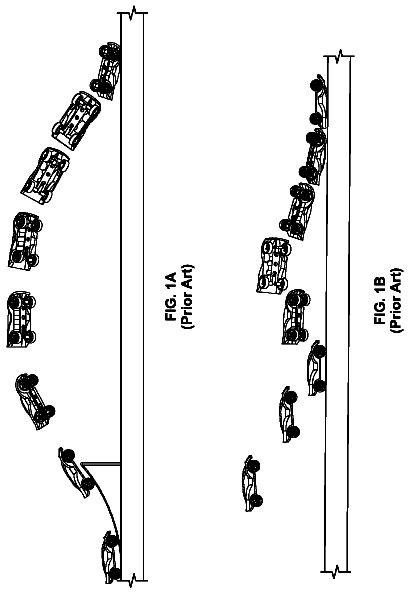
In one embodiment there is provided a toy car that includes four wheels which have a weight that is at least 40%, 50%, 70% or 80% of the total weight of the car.
US 8,574,072 B2 · Assignee: WMS Gaming, Inc. · Inventors: Motyl; James E. et al.
Sheet 1 of 10 from the published document. All sheets in the USPTO PDF
In some embodiments, a wagering game server includes an options visualization controller configured to receive search criteria and filter information for searching wagering titles, wherein the search is based on the search criteria and filter information. The server may include a game content unit configured to store the wagering game titles. The wagering game system can also include a wagering game machine configured to present the one or more wagering games in a visual map, the visual map comprising nodes that contain summary information associated with the wagering game titles, wherein the nodes are arranged in node groups, and wherein the node groups are graphically connected by graphical connectors. The wagering game machine can present a movable filter object configured to visually depict a filter criteria, wherein the movable filter object is movable onto one or more of the nodes to provide the filtering information to the wagering game server.
Wagering game machines, such as slot machines, video poker machines and the like, have been a cornerstone of the gaming industry for several years. Generally, the popularity of such machines depends on the likelihood (or perceived likelihood) of winning money at the machine and the intrinsic entertainment value of the machine relative to other available gaming options. Where the available gaming options include a number of competing wagering game machines and the expectation of winning at each machine is roughly the same (or believed to be the same), players are likely to be attracted to the most entertaining and exciting machines. Shrewd operators consequently strive to employ the most entertaining and exciting machines, features, and enhancements available because such machines attract frequent play and hence increase profitability to the operator. Therefore, there is a continuing need
8 of 10 drawing sheets so far from the published document, cropped to the drawing. Every sheet is in the USPTO PDF.
What the patent claimed, word for word. All of it is now free to use.
Embodiments of the inventive subject matter relate generally to wagering game systems, and more particularly to devices and processes that determine and present wagering game options of wagering game systems and networks.
Wagering game machines, such as slot machines, video poker machines and the like, have been a cornerstone of the gaming industry for several years. Generally, the popularity of such machines depends on the likelihood (or perceived likelihood) of winning money at the machine and the intrinsic entertainment value of the machine relative to other available gaming options. Where the available gaming options include a number of competing wagering game machines and the expectation of winning at each machine is roughly the same (or believed to be the same), players are likely to be attracted to the most entertaining and exciting machines. Shrewd operators consequently strive to employ the most entertaining and exciting machines, features, and enhancements available because such machines attract frequent play and hence increase profitability to the operator. Therefore, there is a continuing need for wagering game machine manufacturers to continuously develop new games and gaming enhancements that will attract frequent play.
In some embodiments, a method comprises receiving one or more search criteria to search for wagering games on a wagering game network; determining one or more wagering games to present by processing the one or more search criteria; and presenting the one or more wagering games in a visual map, the visual map comprising one or more nodes that contain summary information about the wagering games, wherein the one or more nodes are arranged within the visual map as interconnecting, hierarchical groupings.
In some embodiments, the one or more nodes comprise one or more sub-nodes that extend radially from a root node, and the method further comprises displaying the summary information on any one or more of the one or more sub-nodes and the root node.
In some embodiments, the one or more nodes are movable within the visual map via player input.
In some embodiments, the one or more nodes are arranged in one or more hierarchical category levels, and the method further comprises presenting the one or more hierarchical category levels such that multiple levels of the category hierarchy are viewable on the visual map at the same time.
In some embodiments, the method further comprises detecting a selection of one of the one or more nodes from the visual map that relates to a selected wagering game; determining a location where the selected wagering game can be accessed; and presenting a map displaying the location of the selected wagering game.
In some embodiments, determining the one or more wagering games comprises accessing one or more preferences in a user account and using the one or more preferences to determine the wagering games to present in the visual map.
In some embodiments, the method further comprises presenting one or more questions regarding preferences; and determining the one or more wagering games using responses to the one or more questions.
In some embodiments, one or more machine-readable media having instructions stored thereon, which when executed by a set of one or more processors causes the set of one or more processors to perform operations that comprise presenting one or more preference questions regarding interests of a wagering game player; receiving responses to the one or more preference questions; determining one or more wagering games to play by processing the responses to the questions; and presenting summary information, in a virtual universe environment, for the one or more wagering games.
In some embodiments, the operations comprise accessing a user account to determine user account preferences; and determining the one or more wagering games using the user account preferences.
In some embodiments, the virtual universe comprises one or more hierarchical information levels representing categories of wagering game information.
In some embodiments, the operations further comprise presenting the summary information on one or more objects within the virtual universe, the objects representing the one or more hierarchical information levels.
In some embodiments, the operations further comprise presenting interactive guidance within the virtual universe environment to guide the wagering game player to the summary information, wherein presenting the interactive guidance further comprises presenting an avatar host to guide the wagering game player through the virtual universe environment.
In some embodiments, the operations further comprise presenting a visual map within the virtual universe environment, the visual map comprising one or more nodes to present the summary information.
In some embodiments, a system comprises a wagering game server comprising an options visualization controller configured to receive one or more search criteria to search for wagering games on a wagering game network, and a game content unit configured to determine one or more wagering games to present by processing the one or more search criteria; and a machine configured to present the one or more wagering games in a visual map, the visual map comprising one or more nodes that contain summary information about the wagering games, wherein the one or more nodes are arranged within the visual map as interconnecting, hierarchical groupings.
In some embodiments, the one or more nodes comprise one or more sub-nodes that extend radially from a root node, wherein the system further comprises an options visualization presenter configured to display the summary information on any one or more of the one or more sub-nodes and the root node.
In some embodiments, the one or more nodes are movable within the visual map.
In some embodiments, the one or more nodes are arranged in one or more hierarchical category levels, and the system further comprises an options visualization presenter configured to present the one or more hierarchical category levels such that multiple levels of the category hierarchy are viewable on the visual map at the same time.
In some embodiments, the system further comprises a wagering game machine configured to detect a selection of one of the one or more nodes from the visual map that relates to a selected wagering game; an options visualization processor configured to determine a location where the selected wagering game can be accessed; and a floor overlay template store configured to present a map displaying the location of the selected wagering game.
In some embodiments, the system further comprises an account server configured to access one or more preferences in an user account; and an account manager configured to use the one or more preferences to determine the one or more wagering games to present in the visual map.
In some embodiments, the system further comprises a query manager configured to present one or more questions regarding preferences; and an options visualization processor configured to determine the one or more wagering games using responses to the plurality of questions.
Embodiments are illustrated in the Figures of the accompanying drawings in which:
FIG. 1 is an illustration of visually presenting wagering game options, according to some embodiments;
FIG. 2 is an illustration of a game options visualization system architecture 200, according to some embodiments;
FIG. 3 is an illustration of a wagering game network 300, according to some embodiments;
FIG. 4 is a flow diagram 400 illustrating visually presenting wagering game options in a visual map selection environment, according to some embodiments;
FIG. 5 is an illustration of a wagering game system 500, according to some embodiments;
FIG. 6 is a flow diagram 600 illustrating visually presenting wagering game options on a visual map representing a casino floor layout, according to some embodiments;
FIG. 7 is a flow diagram 700 illustrating visually presenting wagering game options in a virtual universe selection environment, according to some embodiments;
FIG. 8 is an illustration of a wagering game system 800, according to some embodiments;
FIG. 9 is an illustration of a wagering game machine architecture 900, according to some embodiments; and
FIG. 10 is an illustration of a mobile wagering game machine 1000, according to some embodiments.
This description of the embodiments is divided into six sections. The first section provides an introduction to embodiments. The second section describes example operating environments while the third section describes example operations performed by some embodiments. The fourth section describes additional example embodiments while the fifth section describes additional example operating environments. The sixth section presents some general comments.
Introduction
This section provides an introduction to some embodiments.
Wagering game players enjoy playing new and exciting wagering games. However, because of the ever growing selection of wagering game options from which to choose, wagering game players may become discouraged trying to choose new games to play. Wagering game options may be so numerous that wagering game players feel lost, and therefore may not try new games. FIG. 1 shows how some devices can work with a wagering game system 100 to present wagering game options in one or more visual selection environments, according to some embodiments.
FIG. 1 is a conceptual diagram that illustrates an example of visually presenting wagering game options, according to some embodiments. In FIG. 1, one or more wagering game machines 160, 162 are connected to a communications network 122. The wagering game machines 160, 162 are configured to process and present wagering games. The wagering game machines 160, 162 present visual wagering game option selection environments ("visual selection environments") 101 and 103, respectively. The visual selection environments 101, 103 utilize visualization techniques that present information, such as summary information about wagering games (e.g., categories, titles, demos, etc.), in a spatially non-linear, dynamic (e.g., interactive, real-time, etc.), and organized (e.g., hierarchical, topical, etc.) manner using visual tools and techniques (diagrams, graphs, flowcharts, cognitive maps, mind maps, semantic networks, virtual worlds, interactive multimedia, animation, etc.) to orient and guide players through potentially numerous and/or complex wagering game options.
The visual selection environment 101 represents a "visual map". A visual map represents ideas, concepts, etc. in a non-linear, hierarchical manner with clusters. The visual map concept can present voluminous information in an asymmetrical, but organized, manner which uses information nodes and connectors to orient a user's mind to complex or large information sets. The visual map may present as much information in the user's view as possible to keep the user oriented to upper and lower level nodes. Further, the visual map can present information in visual groupings or clusters of related information that surround a node in multiple directions (e.g., radially) and/or dimensions (e.g., stacked, three-dimensional, etc.). For example, the visual map in the visual selection environment 101 is configured to display multiple levels of nodes 107, 109, 111. The nodes 107, 109, 111 are hierarchical, such that a first level of nodes 107 represent a first topical level. The first level nodes 107 can be connected by a connector 113, or other mechanism (e.g., node shape, node color, node luminosity, etc.), that conveys the same level. A root node 105 of the first topical level can present a lower level of nodes 109 connected to the root node 105 by connectors. The lower level of nodes 109 present information related to the topic of the root node 105. For example, the lower level nodes 109 all relate to the category of "user information", which defines the topic of the primary root node 105. Similarly, a node 106 from the lower level of nodes 109 connects to another lower level of nodes 111. The lower level nodes 111 relate to the topic of "recent games", which is the topic of the node 106.
The wagering game machine 162 presents a visual selection environment 103. The visual selection environment 103 is a virtual universe, or a three-dimensional (3D) perspective computer environment where characters, like avatar 108, can navigate the virtual universe topology and interact with virtual universe objects 114 (e.g., buildings, items, other avatars, animals, etc.). In FIG. 1, the virtual universe objects 114 are represented as buildings. The building objects 114 accommodate the avatar 108. The building objects 114 present topics belonging to a primary, or root, information level 116. The information level 116 is hierarchical such that the objects 114 of the information level 116 presents a broad category of information (e.g., "user information" or "friend's information"). The avatar 108 can enter a building (e.g., the building that says "user information"), for example, by following an arrow 115 within the visual selection environment 103. When the avatar 108 enters one of the building objects 114, the avatar 108 sees a secondary information level 118, which has sub-topics 120 related to the selected topic (e.g., "user information") of the primary information level 116. The secondary information level 118 can also include sub-topics 121 related to the sub-topics 120. The secondary information level 118, however, could introduce other information levels (not shown), or could introduce other configurations, not shown, that present a hierarchy of information. The other configurations can show information in a visually non-linear, but organized, manner that also orients the user to levels, or groupings of information, much like the visual map presented in the visual selection environment 101. For example, the sub-topics 120, 121 are displayed against a wall of the information level 118. The sub-topics are not organized in a strictly horizontal or vertical manner, but can be positioned using multiple directions and dimensions. The positioning of the sub-topics 120, 121 follows an interesting and easily recognizable pattern or scheme (e.g., first level information 116 follow an outdoors topology scheme, second level information 118 follows a wall decoration scheme, etc.) in the virtual universe, thus allowing a wagering game player to visually process information quickly. Further, the secondary information level 118 also contains a visual presentation of an upper level of information (e.g., button 123), which helps to visually orient a gaming player to where the player currently is within the visual selection environment 103.
According to some embodiments, the wagering game system 100 can include numerous different wagering game options or wagering game related information. The following non-exhaustive list enumerates some of the possible game options that the wagering game system 100 can present via the visual selection environments 101, 103, via nodes, information levels, etc. User Ratings. Age of a Game (e.g., date created, date first played). Most played games. Branding attributes (e.g., incorporate third party products). Game volatility (i.e., what does a player win and when). Related game themes. Related game features. Cascading games. Can't lose feature (e.g., if player gets a "Can't Lose" symbol, the player is guaranteed to win). Research (e.g., which games did well in market research, what demographics liked the game, etc.) Demographics. Social contacts/friends who liked the game. A visual picture/graphic of a character of a game, key scene, key graphic, short sample of a bonus round so a player could look at it and experience the best part of the game (e.g., can show title, links, pictures, demos, samples of a game for free.) Progressive jackpots (e.g., could display games that are contributing to the progressive jackpot, so that if a player wants to switch from one game to another, then the player may want to see which games are related to the wide area progressive (WAP) network; could show a live feed of the progressive meter on a game for the jurisdiction (e.g., geographic area/zip code that a player is in if accessing the game online), etc. Historical information about a game a player has played or that other's have played. Trends for players based on game history, demographics, etc. Promotions or eligibility for promotions. Promotion points (e.g., link into a social community service that uses promotion points.)
Although FIG. 1 describes some embodiments, the following sections describe many other features and embodiments.
Example Operating Environments
This section describes example operating environments and networks and presents structural aspects of some embodiments. More specifically, this section includes discussion about game options visualization system architectures and wagering game networks.
Example Game Options Visualization System Architecture
FIG. 2 is a conceptual diagram that illustrates an example of a game options visualization system architecture 200, according to some embodiments. The game options visualization system architecture 200 can include an account server 270 configured to control user related accounts accessible via wagering game networks and social networks. The account server 270 can store and track player information, such as identifying information (e.g., avatars, screen name, account id numbers, etc.) or other information like financial account information, social contact information, etc. The account server 270 can contain accounts for social contacts referenced by the player account. The account server 270 can include an account settings store 272 configured to store information about settings for a player's account. The account server 270 also can include a player identity store 274 configured to store identifying information about a player's account. The account server 270 also can include a player preferences store 276 configured to store preferences information about a player's account. The account server 270 also can include a player location unit 278 configured to determine the geographic location of a device that a wagering game player has logged-in to.
The game options visualization system architecture 200 also includes a game options visualization server 280 configured to process and control information to visually present wagering game options. The game options visualization server 280 can include a guidance unit 282 configured to detect when a player requires guided assistance with wagering game options and to provide interactive, online guidance, such as via an avatar host. The game options visualization server 280 also can include a query manager 284 configured to prompt and process queries directed to a player to determine a player's preferences regarding wagering games. The game options visualization server 280 also can include an options visualization processor 286 configured to determine wagering game options for a player and to process information to present the wagering game options on a device in a wagering game network. The game options visualization server 280 also can include a floor overlay template store 288 configured to store one or more casino floor layout templates.
The game options visualization system architecture 200 also includes a wagering game server 250 configured to control wagering game content and communicate wagering game information, account information, and game options visualization information to and from a wagering game machine 260. The wagering game server 250 can include a game content unit 252 configured to contain content related to wagering games, and to present on the wagering game machine 260. The wagering game server 250 also can include an options visualization controller 254 configured to determine wagering game options for a player and to process information to visually present the wagering game options on the wagering game machine 260. The wagering game server 250 also can include a random number generation service 256 configured to generate random numbers for use with wagering games. The wagering game server 250 also can include an account manager 258 configured to control information related to player accounts.
The game options visualization system architecture 200 also includes a wagering game machine 260 configured to present wagering games and receive and transmit information to visually present wagering game options. The wagering game machine 260 can include an options visualization presenter 262 configured to present wagering game options within a visual selection environment on the wagering game machine 260. The wagering game machine 260 also can include a content controller 264 configured to manage and control content and presentation of content on the wagering game machine 260. The wagering game machine 260 also can include a player location unit 266 configured to determine the geographic location of a device that a wagering game player has logged-in to. The wagering game machine 260 also can include a search module 268 configured to process key words and search the wagering game network, including the account server 270, the game options visualization server 280, the wagering game server 250 and/or the wagering game machine 260 to obtain information related to wagering game options.
Each component shown in the game options visualization system architecture 200 is shown as a separate and distinct element. However, some functions performed by one component could be performed by other components (e.g., in some embodiments, the wagering game server 250 can perform the functions of the game options visualization server 280). Furthermore, the components shown may all be contained in one device, but some, or all, may be included in, or performed by multiple devices on systems and networks, as in the configurations shown in FIG. 2 or other configurations not shown. Furthermore, the game options visualization system architecture 200 can be implemented as software, hardware, any combination thereof, or other forms of embodiments not listed. For example, any of the network components (e.g., the wagering game machines, servers, etc.) can include hardware and machine-readable media including instructions for performing the operations described herein. Machine-readable media includes any mechanism that provides (i.e., stores and/or transmits) information in a form readable by a machine (e.g., a wagering game machine, computer, etc.). For example, tangible machine-readable media includes read only memory (ROM), random access memory (RAM), magnetic disk storage media, optical storage media, flash memory machines, etc. Machine-readable media also includes any media suitable for transmitting software over a network.
Example Wagering Game Network
FIG. 3 is a conceptual diagram that illustrates an example of a wagering game network 300, according to some embodiments. The wagering game network 300 includes example embodiments of the components described vis-a-vis FIG. 2. In FIG. 3, the wagering game network 300 includes a plurality of casinos 320 connected to a communications network 322. Each casino 320 includes a local area network 316, which includes an access point 304, one or more servers 350, 370, 380 and wagering game machines 360, 361, 362. In one embodiment, the local area network 316 may also include specific types of servers, such as wagering game servers, promotions servers, player information servers, management servers, social networking servers, progressive game servers, player tracking servers, file servers, web servers, application servers, database servers, and casino and player account servers. There are many other devices, in other embodiments, that are not shown but that may exist in a wagering game network (e.g., routers, switches, monitoring equipment, etc.). The access point 304 provides wireless communication links 310 with wagering game machines 360, 361, 362. The local area network 316 may also include wired communication links 315 to connect to servers 350, 370, 380, wireless access point 304, wagering game machines 360, 361, 362, one or more docking stations 308 and one or more kiosks 313 for storing mobile wagering game machines ("mobile machines"). The wired and wireless communication links can employ any suitable connection technology, such as Bluetooth, 801.11, Ethernet, public switched telephone networks, SONET, etc. In some embodiments, the servers 350, 370, 380, can serve wagering games and distribute content to devices located in other casinos 320 or at other locations on the communications network 322.
The wagering game machines 360, 361, 362 described herein can take any suitable form, such as floor standing models (e.g., 362), handheld mobile units (e.g., 360), bar-top models, workstation-type console models, surface computing machines (e.g., 361), etc. Further, the wagering game machines 360, 361, 362 can be primarily dedicated for use in conducting wagering games, or can include non-dedicated devices, such as mobile phones, personal digital assistants, personal computers, etc.
In some embodiments, the wagering game machines 360, 361, 362 and the wagering game server 350 work together such that wagering game machines 360, 361, 362 can be operated as a thin, thick, or intermediate client. For example, one or more elements of game play may be controlled by the wagering game machines 360, 361, 362 (client) or the wagering game server 350. Game play elements can include executable game code, lookup tables, configuration files, game outcome, audio or visual representations of the game, game assets or the like. In a thin-client example, the wagering game server 350 can perform functions such as determining game outcome or managing assets, while the wagering game machines 360, 361, 362 can present a graphical representation of such outcome or asset modification to the user (e.g., player). In a thick-client example, the wagering game machines 360, 361, 362 can determine game outcomes and communicate the outcomes to the wagering game server 350 for recording or managing a player's account.
In some embodiments, either the wagering game machines 360, 361, 362 (client) or the wagering game server 350 can provide functionality that is not directly related to game play. For example, account transactions and account rules may be managed centrally (e.g., by the wagering game server 350) or locally (e.g., by the wagering game machines 360, 361, 362). Other functionality not directly related to game play may include power management, presentation of advertising, software or firmware updates, system quality or security checks, community management, real-time messaging, etc.
The wagering game network 300 also includes a game options visualization server 380. The game options visualization server 380 can process and control information used to visually present wagering game options on the wagering game machines 360, 361, 362, on a personal computer 336, on a mobile device 338, or any other machine connected to the wagering game network 300 that is configured to present wagering game options. The game options visualization server 380 may be internal or external to a casino 320 and may interact with any suitable wagering game network component to visually present wagering game options. In some embodiments, some components of the game options visualization server 380 can reside inside any of the network components (e.g., wagering game server 350, account server 370, wagering game machines 360, 361, 362, etc.).
Example Operations
This section describes operations associated with some embodiments. In the discussion below, some flow diagrams are described with reference to block diagrams presented herein. However, in some embodiments, the operations can be performed by logic not described in the block diagrams.
In certain embodiments, the operations can be performed by executing instructions residing on machine-readable media (e.g., software), while in other embodiments, the operations can be performed by hardware and/or other logic (e.g., firmware). In some embodiments, the operations can be performed in series, while in other embodiments, one or more of the operations can be performed in parallel. Moreover, some embodiments can perform more or less than all the operations shown in any flow diagram.
FIG. 4 is a flow diagram illustrating visually presenting wagering game options in a visual map selection environment, according to some embodiments. FIG. 5 is a conceptual diagram that illustrates an example wagering game system 500, according to some embodiments. This description will present FIG. 4 in concert with FIG. 5. In FIG. 4, the flow 400 begins at processing block 402, where a wagering game options visualization system ("wagering game system") presents a visual selection environment 501 that includes a keyword search field 503 in which a player can enter one or more keywords (e.g., "new games"), or search terms, related to the player's preferences regarding wagering game options. Keywords can relate to potential wagering games that the player may have interest in playing. The search field 503 can accept multi-term queries, such as Boolean searches.
The flow 400 continues at processing block 404, where the game options visualization system prompts a player to enter search terms in the keyword search field 503.
The flow 400 continues at processing block 406, where the wagering game system identifies keyword(s) by inspecting a player's player history, related game options, other sources of wagering game information, etc. The keywords may appear in the player's history, for example, in the title of previous games that the player has played. The wagering game system can cross reference the keywords and extract additional search terms from the titles of recently played games. The wagering game system can then use the keywords and additional terms to search a new games database for games matching some of the keywords and terms (see discussion of block 408). In FIG. 5, the wagering game system 500 can identify the keywords and terms by searching one or more of the wagering game server 550, the account server 570, the game options visualization server 580, the wagering game machine 560, or other devices not shown (e.g. a database which may be part of or separate from any of the shown network devices.).
The flow 400 continues at processing block 408, where the wagering game system determines game options and player information to present in a visual selection environment. For example, the wagering game system searches a database of new games and finds a new game that matches some of the keywords and terms. The wagering game system can also search an account server and find information about friends, information about player preferences (e.g., likes, dislikes, etc.), and gather additional information that can be presented to help the player decide if a new game is worthy of the player's time and attention. For example, the wagering game system may search an account server and determine a list of the player's friends who also have wagering game accounts. The friends also have player histories, and one of those friends may have already played a new game and rated it highly. Consequently, the wagering game system may obtain player history information and ratings from friend accounts and decide to present that information to the player, along with the new game titles.
The flow 400 continues at processing block 410, where the game options visualization system consults system settings and player preferred display settings for how to display information. The wagering game system determines whether the player has listed any preferences for how to present game option information. The player has a player profile, perhaps stored in conjunction with the account server 570 in FIG. 5, that indicates what the visual selection environment should look like (e.g., like a visual map selection environment 501 shown in FIG. 5, a virtual universe selection environment 801 shown in FIG. 8, or other such environments). If the player has no preferences, then the wagering game system uses system default settings.
The flow 400 continues at processing block 412, where the game options visualization system presents game related information in the visual selection environment according to system defaults and player preferences. In FIG. 5, the wagering game system 500 presents game related information in the visual map selection environment 501 as one or more "nodes" and "clusters". The environment 501 includes a "root" node 504 that presents information related to the keywords and terms. The root node 504 can be a variety of shapes, colors, textures, etc. For example, in FIG. 5, the root node 504 is presented as a cube. Each side of the cube can have information on it related to the keywords and terms or other relevant information. The root node 504 is the originating node of the visual map selection environment 501 because it is the root of the keyword search.
The flow 400 continues at processing block 414, where the game options visualization system detects selection of a selection environment node. In FIG. 5, wagering game system 500 presents the root node 504 as a cube. The cube shape corresponds to a legend 514 that describes shapes, colors, textures, etc. of a node. In some embodiments, nodes become cube-shaped when selected by a player. Once selected, in some embodiments, the root node 504 may expand into additional nodes and clusters (e.g., nodes 505 and 508). A player may select a different node, like node 505. The newly selected node 505 can take on the shape of the cube according to the legend 514 and the root node 504 may take a rectangle shape, according to the legend 514, because it is no longer selected and is an upper level node.
The flow 400 continues at processing block 416, where the game options visualization system presents node information in an information grouping or cluster, while also presenting some upper level information. For example, in FIG. 5, when a player selects the root node 504, and the wagering game system 500 presents the additional nodes 505, 508. The additional nodes 505, 508 are sub-topics of the root node 504. In other words, the additional nodes 505, 508 contain information related to sub-topics of the root topic (e.g. sub-topics of "new games", such as new game "demos" or new "episodic" games). The additional nodes 505, 508, therefore, hold a subordinate relationship to the root node 504. The additional nodes 505, 508 will be referred to herein as "sub-topic" or "child" nodes. The sub-topic nodes form an information grouping, or cluster, associated with the root node 504. The clusters are displayed as nodes 505, 508 that extend from, and visually connect to, the root node 504. The sub-topic nodes 505, 508 are non-linear, or specifically, they extend from the root node 504 in more than one direction or dimension, such as radially, from the root node 504. The sub-topic nodes 505, 508 are illustrated as being to the right of the root node 504, but other configurations permit the sub-topics nodes to be to the right, the left, above, below, etc. The relationship between the root node 504 and the sub-topic nodes 505, 508 are visually presented using connectors 521. The sub-topic nodes 505, 508, are interactive in that the player can move the sub-topic nodes 505, 508, as well as the root node 504, around in the visual map selection environment 501. When the player moves the root node 504, the connectors 521 can also move, extend, bend, or in any other way change shape or position to maintain a connection to the sub-topic nodes 505, 508. Additionally, additional sub-topic nodes 509, 511, 513 can appear and extend from the sub-topic nodes 505, 508 as clusters similar to how the sub-topic nodes 505, 508 extend from the root node 504. For instance, the sub-topic nodes 509 can appear when a player selects the sub-topic node 505. Additionally, the wagering game system 500 can also present the root node 504, or upper level of information, at the same time that the wagering game system 500 presents the sub-topic nodes 505, 508, or lower level information. In FIG. 5, the wagering game system 500 presents multiple levels of information at the same time, such as an upper level of information, (i.e., the root node 504), a selected level of information (i.e., the node 505 and a same level node item 508), and a lower level of information (nodes 509 and 511). The wagering game system 500 can minimize the size of upper level information to make room on the wagering game machine 560 to present the selected level of information. Depending on the need, the wagering game system 500 can remove, hide, or dramatically minimize one or more levels of information while presenting other levels of information. In some embodiments, when a node is de-selected, the sub-topic nodes that extend from the selected node may disappear, or they may remain appearing until manually minimized or closed. The wagering game system 500 can have logic that determines configurations for presenting information nodes, connectors, clusters, levels, etc. in an arrangement that makes best use of display space. The wagering game system 500 can zoom in and out to reveal an entire visual map or only a portion of the visual map. The wagering game system 500 can scroll in all directions to enable the player to move the map as a whole. The wagering game system 500 can also permit a player to move, reposition, minimize, etc., every individual node or cluster.
The description continues in the full USPTO document.
About 5,929 words. The USPTO PDF has it with every drawing.
Fees are due 3.5, 7.5 and 11.5 years after grant. This patent expired on November 5, 2025, so the fee marked "not paid" was the one that went unpaid.
VISUALLY PRESENTING WAGERING GAME OPTIONS
Filed Jan 2009 · published Dec 2010Visually presenting wagering game options
Filed Jan 2009 · granted Nov 2013Earlier publications, parents and continuations. None of them can still be enforced, or this patent would not be listed.
Prior art cited by the examiner or applicant. Useful when you check your own idea for novelty.
Everything on this page comes from the documents linked above.


