 Lapsed, fee not paid13 drawings
Agriculture & Food Tech · US 8,572,853 B2
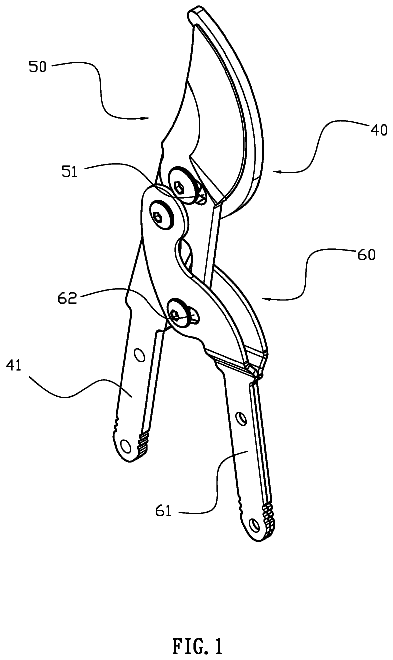
Garden shears
A garden shears has a first shear, a second shear and two joined pressing arms.
US 8,572,933 B2 · Assignee: Sankyo Co., Ltd. · Inventors: Ishikawa; Nobuyuki et al.
Sheet 1 of 8 from the published document. All sheets in the USPTO PDF
An apparatus for manufacturing a soft capsule containing a filling coated with a shell portion formed of a shell-sheet, having a sheet molding section forming a shell-sheet having an almost uniform thickness from a molten shell material, a capsule molding section feeding shell-sheets between a pair of die rolls and joining the shell sheets, and a filling supply section supplying a filling to the shell-sheets in time for joining the shell-sheets, in which the sheet molding section has a dryer equipped with a medium wavelength infrared heater; the shell-sheet is irradiated with a medium wavelength infrared ray from the heater to thereby obtain an almost uniform thickness, an appropriate viscosity, and moisture content; and the sheet of this state is fed to the capsule molding section.
Soft capsules, which contains gelatin produced from bone and skin of cows and pigs, as a main component, and which are produced by a rotary die system automatic soft capsule manufacturing machine, have conventionally been widely used in the fields of "medical products" and "so-called health foods". However, since occurrence of BSE (Bovine Spondiform Encepralopany) was recently reported, attention has been focused on development of soft-capsule shell using a non-animal derived material instead of using animal-derived gelatin. In the circumstance, Patent Documents 1 and 2 disclose an encapsulation technique using a combination of carrageenan gum and mannan gum as a gelatinizer without using gelatin. Also, Patent Document 3 discloses an encapsulation technique using .kappa. carrageenan. Furthermore, Patent Document 4 discloses a technique on capsules using .tau. carrageenan and .kappa. carr
All 8 drawing sheets from the published document, cropped to the drawing.
What the patent claimed, word for word. All of it is now free to use.
The present invention relates to a process for manufacturing a soft capsule generally and widely used for "medical products", "specially designated health foods", "so-called health foods", and foods, and particularly relates to a method for manufacturing a soft capsule having a shell portion mainly using a vegetable material, i.e., starch, instead of using an animal material, i.e., gelatin, and an apparatus for manufacturing the same.
Soft capsules, which contains gelatin produced from bone and skin of cows and pigs, as a main component, and which are produced by a rotary die system automatic soft capsule manufacturing machine, have conventionally been widely used in the fields of "medical products" and "so-called health foods".
However, since occurrence of BSE (Bovine Spondiform Encepralopany) was recently reported, attention has been focused on development of soft-capsule shell using a non-animal derived material instead of using animal-derived gelatin.
In the circumstance, Patent Documents 1 and 2 disclose an encapsulation technique using a combination of carrageenan gum and mannan gum as a gelatinizer without using gelatin. Also, Patent Document 3 discloses an encapsulation technique using .kappa. carrageenan. Furthermore, Patent Document 4 discloses a technique on capsules using .tau. carrageenan and .kappa. carrageenan. Moreover, Non-Patent Document 3 discloses that .lamda. carrageenan provides high viscosity but does not turn into a gel.
As the properties of .tau. carrageenan and .kappa. carrageenan, Non-Patent Document 1 describes "when .kappa.- or .tau.-carrageenan is dispersed in water and heated to about 60.degree. C. or more, a carrageenan molecule is dissolved in the form of a random coil. The solution is continuously cooled to form a double helix. This serves as a junction zone and then gelatinization starts". Due to such a property, when an encapsulation film is formed using .tau. carrageenan and .kappa. carrageenan, the encapsulation film sheet must be heated at a temperature higher by about at least 20 to 30.degree. C. than the temperature of the case where gelatin is used as an encapsulation film. Because of this, a large heat load is applied to a capsule filling. This causes a problem in quality and lowers the efficiency of heat energy.
Under the circumstances, the present inventors noticed that if an encapsulation film can be formed by using .lamda. carrageenan (see Non-Patent Document 2 and Non-Patent Document 3) which does not turn to a gel unlike .kappa. carrageenan and .tau. carrageenan, encapsulation can be made without applying heat load to a capsule filling just by applying the same level of temperature as in a conventional gelatin sheet (temperature of a segment section: usually 35 to 50.degree. C.) to an encapsulation film sheet, and advantageously improves heat energy efficiency. Then, the present inventors conducted inventive studies by themselves and successfully developed a soft capsule having a non-animal derived shell portion (capsule shell) using starch, .lamda. carrageenan, a metal salt, dextrin, plasticizer, and water, and filed a patent application (Japanese Patent Application No. 2007-082542) in advance. Note that, since the prior patent application "Japanese Patent Application No. 2007-082542" was not published at the time this patent application was filed, this was not conventional art.
However, in a method for manufacturing a soft capsule having a non-animal derived capsule shell using starch, .lamda. carrageenan, a metal salt, dextrin, a plasticizer, and water by means of a conventional rotary die system automatic soft capsule manufacturing machine (for example, Patent Documents 5 and 6), since drying capacity in a step of manufacturing a non-animal derived capsule shell-sheet is insufficient, dry load must be reduced by reducing a moisture content of a capsule shell solution.
However, if the moisture content is reduced, it becomes difficult to remove air incorporated in the capsule shell solution in a defoaming step. Visible air foams remain in the capsule shell-sheet. In short, a capsule having a defoaming defect is formed. This is a problem.
Furthermore, even if a conventional rotary die system automatic soft capsule manufacturing machine is used and dry load is reduced by reducing a blending ratio of moisture content, it must take time to supply a highly viscose capsule shell solution. When a rate of filling a soft capsule is increased, neither drying capacity in the capsule shell-sheet manufacturing step nor supply of the capsule shell solution fails to follow, preventing improvement of productivity. Patent Document 1: U.S. Pat. No. 5,342,626 Patent Document 2: Japanese Patent Laid-Open No. 6-329833 Patent Document 3: U.S. Pat. No. 6,214,376 Patent Document 4: National Publication of International Patent Application No. 2003-504326 Patent Document 5: Japanese Patent Publication No. 5-88143 (cooling drum) Patent Document 6: Japanese Patent Laid-Open No. 2003-40768 (servo) Non-Patent Document 1: "New development of natural biopolymer material" edited by Takeaki Miyamoto et al., CMC publishing Co., Ltd, popular edition first copy issued on Nov. 28, 2003, pages 64 to 65. Non-Patent Document 2: Chuo Foods Material Co., Ltd., "Home Page of Chuo Foods Material Co., Ltd.", [onlion], "contents of a corporation (2002)".fwdarw."carrageenan".fwdarw."properties of carrageenan".fwdarw.section of "gelatinization properties" [searched on Jan. 30, 2007], Internet <URL http://www.chuofoods.co.jp/jgc03.html> Non-Patent Document 3: FMC biopolymer department, "outline of carrageenan" pages 6 to 7
Problems to be Solved by the Invention
The present invention was attained in consideration of the aforementioned background.
More specifically, an object of the present invention is to develop a novel method for producing a capsule, which is capable of freely controlling the moisture content of the capsule shell-sheet by incorporating a process for drying a capsule shell-sheet with medium wavelength infrared irradiation into a conventional rotary die system automatic soft capsule manufacturing process to augment drying capacity. By virtue of this, there are provided
a novel manufacturing method and apparatus, which is not only capable of drying a capsule shell-sheet adhesion surface uniformly to an appropriate moisture content in a conventional production of a soft capsule containing gelatin, a plasticizer, and water as a main component,
but also, capable of drying a capsule shell-sheet adhesion surface uniformly without irregularity to an appropriate moisture content, in production of a soft capsule having a non-animal derived capsule shell using starch, .lamda. carrageenan, a metal salt, dextrin, a plasticizer, and water,
even if a capsule shell solution whose viscosity is reduced by increasing the moisture content (90 to 160 parts by weight relative to starch (100 parts by weight)) in order to improve a defoaming property and flowability of the capsule shell solution is supplied,
thereby improving productivity, such as prevention of a defoaming defect of a capsule and an increase of a capsule fill rate, cost performance, and quality.
Means for Solving the Problems
First, the method for manufacturing a soft capsule according to aspect of the invention is a method for manufacturing a soft capsule containing a filling within a shell portion formed of a shell-sheet by supplying shell-sheets between a pair of die rolls so as to face each other, joining the shell-sheets by butt joint function of the die rolls, supplying the filling between the shell-sheets in time for joining, in which the shell-sheets are dried by irradiation of a medium wavelength infrared ray before they are joined by the pair of die rolls, thereby turning into a sheet-form having an almost uniform thickness, an appropriate viscosity, and moisture content.
Furthermore, the method for manufacturing a soft capsule according to another aspect of the invention is characterized in that, in addition to the features previously described, the shell portion is formed by blending starch, .lamda. carrageenan, metal salt, dextrin, a plasticizer, and water as components for a raw material composition.
Furthermore, the method for manufacturing a soft capsule according to another aspect of the invention is characterized in that, in addition to the features previously described, the wavelength of the medium wavelength infrared ray to be applied for drying the shell-sheet is 0.8 to 4.0 .mu.m.
Furthermore, the method for manufacturing a soft capsule according to another aspect of the invention is characterized in that, in addition to the features according to the features previously described, the shell-sheet is dried by medium wavelength infrared irradiation up to a moisture content of preferably 19 to 29% and more preferably 21 to 27% at a stage of feeding between the pair of die rolls.
Furthermore, the method for manufacturing a soft capsule according to another aspect of the invention is characterized in that, in addition to the features previously described, the shell-sheet is dried by medium wavelength infrared irradiation in at least two stages, and both surfaces of the shell-sheet are dried by irradiating one of the surfaces of the shell-sheet separately in each stage.
Furthermore, the method for manufacturing a soft capsule according to another aspect of the invention is characterized in that, in addition to the features previously described, the shell portion in a liquid state before drying is set to have a moisture content of 90 to 160 parts by weight relative to 100 parts by weight of starch.
Furthermore, the method for manufacturing a soft capsule according to another aspect of the invention is characterized in that, in addition to the features previously described, the shell portion in a liquid state before drying contains 5 to 25 parts by weight of .lamda. carrageenan, 0.5 to 10 parts by weight of a metal salt, 3 to 100 parts by weight of dextrin, 20 to 80 parts by weight of a plasticizer, and 90 to 160 parts by weight of water relative to 100 parts by weight of starch.
Furthermore, the method for manufacturing a soft capsule according to another aspect of the invention is characterized in that, in addition to the features previously described, further contains .kappa. carrageenan and .tau. carrageenan so as to satisfy a ratio of .lamda. carrageenan: .kappa. carrageenan: .tau. carrageenan=1:0.1:0.1 to 1:0.8:0.2.
More specifically, the invention of Claim 8 is characterized in that if .kappa. carrageenan and .tau. carrageenan are contained, the working effect of a metal salt added to .lamda. carrageenan is not inhibited.
The apparatus for manufacturing a soft capsule according to another aspect of the invention is an apparatus for manufacturing a soft capsule containing a filling coated with a shell portion formed of a shell-sheet, configured to have a sheet molding section forming the shell-sheet having an almost uniform thickness from a molten shell material, a capsule molding section joining shell-sheets supplied between a pair of die rolls so as to face each other by butt joint function of the pair of die rolls having a molding projection, and a filling supply section supplying a filling to the shell-sheets in time for joining the shell-sheets, in which the sheet molding section has a dryer equipped with a medium wavelength infrared heater; the shell-sheets are irradiated with a medium wavelength infrared ray from the heater to thereby obtain an almost uniform thickness, an appropriate viscosity, and moisture content; and the sheets of this state are fed to the capsule molding section.
Furthermore, the apparatus for manufacturing a soft capsule according to another aspect of the invention is characterized in that, in addition to features of the apparatus previously described, the wavelength of the medium wavelength infrared ray applied from the medium wavelength infrared heater of the dryer to the shell-sheet is 0.8 to 4.0 .mu.m.
Furthermore, the apparatus for manufacturing a soft capsule according to another aspect of the invention is characterized in that, in addition to the features of the apparatus previously described, the sheet molding section is configured to have a spreader box, in which a molten shell material is ejected in a sheet form having an almost uniform thickness, and a casting drum, in which the shell-sheet ejected from the spreader box is cooled, and drying of the shell-sheet by the dryer includes single-sided drying, in which one of the surfaces of the shell-sheet positioned on the casting drum is irradiated with a medium wavelength infrared ray to thereby dry mainly the one surface of the shell-sheet, and double-sided drying, in which the shell-sheet is removed from the casting drum and taken out in a transport path, in which a medium wavelength infrared ray is separately applied to each of the surfaces to thereby dry both surfaces of the shell-sheet, and each one or both of the single-sided drying and the double-sided drying are employed.
Furthermore, the apparatus for manufacturing a soft capsule according to another aspect of the invention is characterized in that, in addition to the features of the apparatus previously described, when double-sided drying is performed by taking out the shell-sheet separately from the casting drum to the transport path and supplying air toward the irradiation surface of the shell-sheet from the upstream side to the downstream side in the sheet transport direction and a support is provided so as to support the shell-sheet from below.
The present inventors previously found that when a predetermined amount of metal salt is added to .lamda. carrageenan, which does not turn to a gel, to obtain a weak acidic condition, .lamda. carrageenan acquires an appropriate viscosity and elasticity to obtain a preferable composition for forming a soft capsule. Based on the finding, the inventors accomplished a non-animal derived capsule shell using a vegetable material that has not been developed in the art and a soft capsule having the shell.
Furthermore, a process for drying a capsule shell-sheet with medium wavelength infrared irradiation is incorporated in a general rotary die system automatic soft capsule manufacturing process to augment drying capacity, thereby freely controlling the moisture content of a capsule shell-sheet. In this manner, the inventors have developed a novel capsule manufacturing process and attained the present invention.
According to a process for manufacturing a soft capsule of the present invention,
not only, in producing a conventional soft capsule containing gelatin, a plasticizer, and water as main components, a capsule shell-sheet adhesion surface can be uniformly dried up to an appropriate moisture content,
but also, in producing a soft capsule having a non-animal derived capsule shell using starch, .lamda. carrageenan, a metal salt, dextrin, a plasticizer, and water,
even if a capsule shell solution whose viscosity is reduced by increasing the moisture content (90 to 160 parts by weight relative to starch (100 parts by weight)) in order to improve a defoaming property and flowability of the capsule shell solution is supplied,
the adhesion surface of the capsule shell-sheet can be uniformly dried without irregularity to an appropriate moisture content, thereby improving productivity such as prevention of a defoaming defect of a capsule and an increase of a capsule fill rate, cost performance, and quality.
The shell portion of the non-animal derived soft capsule manufactured by the soft capsule manufacturing apparatus of the present invention is formed of a composition containing starch, .lamda. carrageenan, a metal salt, dextrin, a plasticizer, and water as components, the moisture content of a shell in the state of liquid before drying (in the state of a solution before the shell portion is dried) is preferably 90 to 160 parts by weight, more preferably 95 to 150 parts by weight, and particularly preferably 100 to 140 parts by weight relative to 100 parts by weight of starch. The moisture content of 90 parts by weight or less is not preferable because air incorporated in a highly viscous capsule shell solution is hardly removed, meaning that air is not sufficiently defoamed in the defoaming step. As a result, a defoaming-defective capsule having foams in the capsule shell-sheet tends to be formed. In addition, flowability of the capsule shell solution deteriorates, preventing an increase of a capsule fill rate. On the other hand, the moisture content of 160 parts by weight or more is not preferable because the capsule shell-sheet becomes too soft to remove it from the casting drum.
The viscosity of a solution containing a moisture content of 90 to 160 parts by weight relative to 100 parts by weight of starch (not containing .lamda. carrageenan, a metal salt, dextrin, and a plasticizer) is 3000 to 13000 cps (low viscosity) as measured in a 10% concentration of the solution at 75.degree. C. after the solution is dissolved at a temperature of 85 to 95.degree. C. for 6 hours.
On the other hand, the viscosity of a solution containing a moisture content of 60 to 90 parts by weight relative to 100 parts by weight of starch (not containing .lamda. carrageenan, a metal salt, dextrin, and a plasticizer) is 13000 to 35000 cps (high viscosity) as measured in a 10% concentration of the solution at 75.degree. C. after the solution is dissolved at a temperature of 85 to 95.degree. C. for 6 hours. Note that, viscosity was measured by a Type B viscometer manufactured by Tokimec.
The metal salt, which is a component constituting the shell portion of the non-animal derived soft capsule manufactured by the soft capsule manufacturing apparatus of the present invention, is an organic acid metal salt such as sodium succinate, potassium citrate, and sodium gluconate, and a combination of one or two or more inorganic metal salts selected from the group consisting of disodium hydrogen-phosphate, sodium dihydrogen phosphate, potassium chloride, and magnesium chloride. Of them, a combination of sodium dihydrogen phosphate and potassium chloride is preferably used.
As the blending ratio of a metal salt, 1 to 3 parts by weight of sodium dihydrogen phosphate and 0.05 to 0.2 parts by weight of chloride potassium are preferably used relative to 100 parts by weight of starch in a shell solution state (in the state of a solution before the shell portion is dried) before drying. Further preferably, sodium dihydrogen phosphate is 1.5 to 2.5 parts by weight and chloride potassium is 0.08 to 0.12 parts by weight. If sodium dihydrogen phosphate is 1 part by weight or less, .lamda. carrageenan fails to provide an appropriate viscosity and elasticity, with the result that a preferable soft capsule cannot be formed. On the other hand, sodium dihydrogen phosphate of 3 parts by weight or more is not preferable since .lamda. carrageenan may possibly be hydrolyzed.
[Working Effect of Metal Salt Addition]
The present inventors found that addition of a predetermined amount of metal salt to .lamda. carrageenan which does not turn to a gel imparts an appropriate viscosity and elasticity to the .lamda. carrageenan. The working effect of the metal salt addition is not completely elucidated; however, herein, the working effect of a case where sodium dihydrogen phosphate and potassium chloride are added will be described as an example. Note that, the non-animal derived soft capsule manufactured by the soft capsule manufacturing apparatus of the present invention is not limited to this example. Even if .kappa. carrageenan and .tau. carrageenan are contained, the working effect of the metal salt addition to .lamda. carrageenan is not inhibited.
Function of a Weak Acidic Metal Salt such as Sodium Dihydrogen Phosphate
.lamda. carrageenan is an anionic polymer. Thus if it is dissolved in the presence of a cationic ion (H.sup.+, Na.sup.+), .lamda. carrageenan becomes transparent. When a weak acidic metal salt such as sodium dihydrogen phosphate is added to the anionic polymer, i.e., .lamda. carrageenan, an appropriate viscosity (adhesiveness) is obtained without causing hydrolysis.
Function of a Metal Salt such as Chloride Potassium and Potassium Citrate
By supplying K.sup.+ (potassium ion), for example, by chloride potassium, to an anionic polymer, .lamda. carrageenan, under weak acidic conditions, an anionic polymer, .lamda. carrageenan, forms a complex or the like around K.sup.+, enhancing elasticity.
Function of Starch
Since a sheet is in a molten state having an appropriate viscosity (adhesiveness) and elasticity and gelatinized starch has a sealing property by gelatinization, a soft capsule is formed by (i) pressure-molding using a mold (die roll described later) and (ii) welding by starch glue.
The property of .kappa. carrageenan and .tau. carrageenan is described in Non-Patent Document 1 mentioned above, as follows: "when .kappa.- or .tau.-carrageenan is dispersed in water and heated to about 60.degree. C. or more, the carrageenan molecule is dissolved in the form of a random coil. The solution is continuously cooled to form a double helix. This serves as a junction zone and then gelatinization starts". Due to such a property, when an encapsulation film is formed from .tau. carrageenan and .kappa. carrageenan, the encapsulation film sheet must be heated at a temperature higher by about at least 20 to 30.degree. C. than the temperature (segment section temperature: usually 35 to 50.degree. C.) of the case where an encapsulation film is formed from gelatin. Because of this, a large heat load is applied to a capsule filling. This causes a problem in quality and poor heat energy efficiency.
However, the present inventors found that addition of a predetermined amount of metal salt to .lamda. carrageenan which does not turn to a gel imparts an appropriate viscosity and elasticity to the .lamda. carrageenan, and accomplished a non-animal derived soft capsule. Therefore, unlike .kappa. carrageenan and .tau. carrageenan, when an encapsulation film is formed of .lamda. carrageenan, encapsulation can be performed at about the same segment section temperature as that (segment section temperature: usually 35 to 50.degree. C.) of the case where gelatin is used, without applying excessive heat load to a capsule filling. Good heat energy efficiency is advantageously obtained.
As starch, which is a component of the shell portion of the non-animal derived soft capsule manufactured by the soft capsule manufacturing apparatus of the present invention, one or two or more elements selected from raw starch, HP treated starch, acid treated starch, and gelatinized starch (.alpha.-starch) are used singly or in combination of two or more types.
A starch derivative, i.e., HP treated starch, used herein is starch treated with hydroxypropyl ether. Any HP treated starch can be used as long as it is commercially available. For example, TR-3 (trade name) manufactured by Tokai Denpun Co., Ltd., Mastutani Yuri (trade name), Finex 600 (trade name) manufactured by Matsutani Chemical Industry Co., Ltd., and Delica KH (trade name) manufactured by Nippon Starch Chemical Co., Ltd. can be used. Another starch derivative, .alpha.-starch, is a starch soluble in cold water and capable of being gelatinized (soluble) at normal temperature. For example, tapioca .alpha.-TP-2 (trade name) manufactured by Sanwa Cornstarch Co., Ltd. can be used.
The plasticizer, which is a component of the shell portion of the non-animal derived soft capsule manufactured by the soft capsule manufacturing apparatus of the present invention, includes glycerin, sugar alcohol, propylene glycol, polyethylene glycol, a monosaccharide, a disaccharide, an oligosaccharide, and isomaltooligosaccharide. The blending ratio of a plasticizer in a shell solution state before drying is 20 to 80 parts by weight and more preferably 40 to 70 parts by weight relative to 100 parts by weight of starch.
Advantages of the Invention
The present inventors previously found that when a predetermined amount of metal salt is added to .lamda. carrageenan which does not turn to a gel to obtain a weak acidic condition, .lamda. carrageenan acquires an appropriate viscosity and elasticity to obtain a preferable composition for forming a soft capsule. Based on the finding, the inventors accomplished a non-animal derived capsule shell using a vegetable material that has not been developed and a soft capsule having the shell.
Furthermore, the inventors have developed a novel method for producing a soft capsule, which is capable of freely controlling the moisture content of a capsule shell-sheet by incorporating a process for drying a capsule shell-sheet with medium wavelength infrared irradiation into a rotary die system automatic soft capsule manufacturing process to augment drying capacity, and have attained the present invention.
According to the process for manufacturing a soft capsule of the present invention,
not only, in producing a conventional soft capsule containing gelatin, a plasticizer, and water as main components, a capsule shell-sheet adhesion surface can be uniformly dried up to an appropriate moisture content,
but also, in producing a soft capsule having a non-animal derived soft capsule shell using starch, .lamda. carrageenan, a metal salt, dextrin, a plasticizer, and water,
even if a capsule shell solution whose viscosity is reduced by increasing the moisture content (90 to 160 parts by weight relative to starch (100 parts by weight)) thereof to improve a defoaming property and flowability of the capsule shell solution is supplied,
the adhesion surface of the capsule shell-sheet can be uniformly dried without irregularity to appropriate moisture content, thereby improving productivity such as prevention of a defoaming defect of a capsule and an increase of a capsule fill rate, cost performance and quality.
FIG. 1 is a perspective view of an apparatus (filling machine) for manufacturing a soft capsule of the present invention together with an explanatory view of a dryer having a medium wavelength infrared irradiation mechanism, as viewed from the front;
FIG. 2 is a front view of the manufacturing apparatus (filling machine) of the present invention;
FIG. 3 is an enlarged perspective view of the dryer having a medium wavelength infrared irradiation mechanism;
FIG. 4 is a front view of a pair of die rolls by which a soft capsule is manufactured;
FIG. 5 is a plan view of a pair of die rolls;
FIG. 6 is a front view of the filling machine having the dryer having a medium wavelength infrared irradiation mechanism provided at a side of a casting drum (without particularly providing a transport path) for drying a shell-sheet (showing single-sided drying), together with a side view of the dryer as viewed from the right side thereof;
FIG. 7 is a front view of the filling machine having four-stage transport path for drying with medium wavelength infrared irradiation such that the front surface and back surface of a shell-sheet each can be dried (irradiated) twice (showing double-sided drying); and
FIG. 8 is a front view showing an embodiment in which a shell-sheet under drying is supported from below by a conveyer.
1 Soft capsule 2 Shell portion 2A Shell material 10 Soft capsule manufacturing apparatus (filling machine) 11 Sheet molding section 12 Capsule molding section 13 Filling supply section 14 Capsule take-out section 15 Dryer 15A Dryer main body 21 Spreader box 22 Casting drum 23 Feed role 24 Transport path 24A Transport path (front surface side) 24B Transport path (back surface side) 25 Medium wavelength infrared heater 25A Medium wavelength infrared heater (front surface side) 25B Medium wavelength infrared heater (back surface side) 29 Reflecting plate 26A Reflecting plate (front surface side) 26B Reflecting plate (back surface side) 27 Support 28 Air spray member 29 Air suction member 30 Thermometer 31 Cover 32 Slit 33 Wing bolt 34 Cover 37 Feed role 38 Die roll 39 Molding recess 40 Molding projection 41 Suction hole 44 Segment 45 Raw-material solution hopper 46 Pump unit 47 Delivery pipe 50 Scraping brush 51 Forward conveyer 52 Free roller 53 Conveyer N Filling P Pocket portion S Shell-sheet S' Blank sheet
The best mode for carrying out the present invention is one of the Embodiments described below, and further includes various processes that can be improved within the technical idea thereof.
Note that, in the beginning of the explanation, a basic structure of a soft capsule 1 according to the present invention will be described and then, an apparatus (the apparatus of the present invention) for manufacturing the soft capsule 1 will be described. Subsequently, while describing how to operate the apparatus, a method of manufacturing a soft capsule according to the present invention will be described. Furthermore, the method of the present invention will be more specifically explained by showing a component composition of a capsule shell actually used.
[Basic Structure of Soft Capsule]
A basic structure of the soft capsule 1 is, for example, as shown, in FIG. 4, formed by coating a filling N such as a medicinal solution with a shell portion 2.
The filling N herein, other than a medical product, desired materials such as food, a seasoning (seasoning oil), a cosmetic, a bath article, and a miscellaneous good (e.g., a toy/adhesive) can be appropriately used. Furthermore, the state of the filling encapsulated (accommodation state) can be a liquid as well as a gel, a particulate matter, or an appropriate mixture of these, for example, a powder-containing suspension solution having a powder mixed in a liquid. Note that, in the following explanation, the case of containing a liquid-state filling N will be principally described.
On the other hand, the shell portion 2 can be formed of animal-derived gelatin as a base like a conventional case; however, herein, formed of a plant-derived starch as a main component, as described above, more specifically formed of starch, .lamda. carrageenan, a metal salt, dextrin, a plasticizer, and water. Note that specific compositions of these components will be described later.
[Manufacturing Apparatus]
Next, a soft capsule manufacturing apparatus 10 (hereinafter simply referred to as a filling machine 10) for manufacturing the soft capsule 1 will be described. As the filling machine 10, a conventional rotary die system automatic soft capsule manufacturing machine can be used as it is. The filling machine 10, for example, as shown in FIG. 1, is configured to have a sheet molding section 11 forming a molten shell material (designated as reference numeral 2A since this is a raw material for forming a shell portion 2) while drying into a sheet-form having an appropriate thickness, a capsule molding section 12 joining molded shell-sheets S so as to face each other, thereby encapsulating the filling N within the shell-sheets 8, a filling supply section 13 feeding the filling N in time for joining of the shell-sheets S, and a capsule taking out section 14 taking out the soft capsule 1 formed, from the filling machine 10. Note that, the present invention has a great feature in that a dryer 15 having a medium wavelength infrared irradiation mechanism, which is provided in the sheet molding section 11, thereby drastically improving drying capacity compared to a conventional manufacturing method. Hereinafter, individual sections will be described.
In the first place, the sheet molding section 11 will be described. This is a section at which the molten shell material 2A is solidified into a sheet form. To supply the two shell-sheets S molded to a junction (a pair of die rolls) so as to face each other, for example, a pair of sheet molding sections 11 are provided on the right and left side of the capsule molding section 12 such that the section 12 is sandwiched.
The sheet molding section 11 is configured to have a spreader box 21, in which the molten shell material 2A is ejected in the form of sheet having an almost uniform thickness and a casting drum 22 for cooling the shell-sheet S ejected from the spreader box 21. The shell-sheet S is formed into a sheet form having an appropriate thickness while being cooled to an appropriate temperature. Note that, a process for dissolving the shell material 2A will be described later.
The dryer 15 above will be described. The dryer 15 is used for drying the shell-sheet S, which is formed by solidifying the shell material 2A into a sheet form, is dried and adjusted to a desired moisture content. Note that, the reason why such a drying process is applied to the shell-sheet S to adjust the moisture content is because mutual adhesiveness (joint property) of the sheets in a later stage of joining is enhanced. Furthermore, in Embodiment shown in FIG. 1, in the dryer main body 15R formed above the casting drum 22, a medium wavelength infrared ray is applied to the two surfaces of the shell-sheet S to dry the shell-sheet S (this is double-sided drying). Note that, the surface which is not in direct contact with the casting drum 22 is first dried (this is referred to as a front-surface drying for convenience sake) and thereafter, the surface in direct contact with the casting drum 22 is dried (this is referred to as back surface drying for convenience sake). Note that, looking front surface drying/back surface drying from another standpoint, drying the surface corresponding to the outer side of the soft capsule 1 finally obtained is front surface drying, whereas drying the surface corresponding to the inside of the capsule, i.e., the surface in direct contact with the filling N is back surface drying.
Furthermore, in the Embodiment, the shell-sheet S is removed from the casting drum 22 and dried separately while it is transported by feed roles 23. The transport path used herein is designated by reference numeral 24. More specifically, the transport paths 24 for front surface drying and back surface drying are formed by inverting the front and back surfaces of the shell-sheet S by the feed roles 23, a medium wavelength infrared ray is applied to the sheet (front/back) from the above while keeping a predetermined distance. For this, in each of the transport paths 24, a medium wavelength infrared heater 25 for emitting a medium wavelength infrared ray is provided. Furthermore, below the heater, a reflecting plate 26 is provided with the shell-sheet S interposed between them in order to dry a non-irradiation surface to some extent with the intention to improve heat efficiency.
Note that, four medium wavelength infrared heaters 25 are provided for each of the front surface and back surface; however, it is not necessary to use all of them, and a requisite number of heaters may be used depending upon e.g., the original blending ratio of the shell material 2A and the desired moisture content value to be obtained by drying to apply an appropriate amount of energy to the shell-sheet S.
Furthermore, the shell-sheet S is heated simultaneously with drying by medium wavelength infrared irradiation and thus the shell-sheet S tends to be deformed by heat during drying (heater temperature is, e.g., about 900.degree. C.). More specifically, since shell-sheet S is transported, tensile force is always applied to the shell-sheet S in a feed direction (transport direction). Therefore, the shell-sheet S is easily deformed by heating so as to extend in the feed direction (longitudinal direction) and easily shrinks in the width direction (depth direction) in perpendicular to this. The extension in the longitudinal direction likely appears as slack due to the self-weight of the shell-sheet S. To prevent the slack, a support 27 such as a roller etc. is provided underneath the shell-sheet S.
Note that, in the figure, reference symbols (trailing reference symbols) "A" and "B" added to e.g., the transport path 24 and the medium wavelength infrared heater 25 mean the surfaces upon which they function. More specifically, to the member which functions upon the front surface of the shell-sheet S, reference symbol "A" is added, whereas to the member which functions upon the back surface, reference symbol "B" is added.
Furthermore, to prevent excessive heating of the shell-sheet S during drying, air is supplied along the surface of the shell-sheet S (i.e., irradiation surface with a medium wavelength infrared ray). The air is supplied in the same direction as the sheet feed direction, i.e., supplied from the upstream side to the downstream side of the feed direction. By virtue of this, the shell-sheet S is appropriately cooled, and air flow in the transport path 24 becomes stable (a kind of rectification), and a deformation such as slack can be prevented.
Note that, in Embodiment, an air spray member 28 provided on the upstream side is a slit nozzle type member having a long thin slit along the width direction of the shell-sheet S and formed so as to spray air uniformly from the opening along a sheet surface. On the other hand, an air suction member 29, which is provided on the downstream side, has a larger opening portion than that of the air spray member 28 so as to suction air by a large area.
Furthermore, as mentioned above, since the temperatures of the transport path 24 and the shell-sheet S tend to increase during drying, a thermometer 30 is provided below the medium wavelength infrared heater 25 (immediately under the shell-sheet S) so as to control temperature.
Note that, since an operator who operates the filling machine 10 or monitors operation of the filling machine 10 preferably avoids straightly looking light (a medium wavelength infrared ray) emitted from the medium wavelength infrared heater 25, a vertically movable cover 31 is preferably provided to a side surface portion of the dryer 15, for example, as shown in the enlarged view of FIG. 1, to actively interrupt irradiation light from the medium wavelength infrared heater 25. Note that, in moving the cover 31 up and down, two vertical slits 32 are formed in the cover 31 in advance, as also shown in FIG. 1. At the same time, a wing bolt 33 is attached to an apparatus frame (dryer main body 15A) through the slit 32 so as to move the cover 31 up and down or fix it by fastening (screwing)/releasing (unscrewing) the wing bolt 33.
Furthermore, also at the site where the transport path 24 is inverted, that is, where the air spray member 28 and the air suction member 29 are provided, a cover 34, for example, as shown in FIG. 3 is preferably provided. This is because the space of a dryer main body 15A is separated from the external space (manufacturing room) to make a compartment, by the covers 31 and 34. More specifically, by separating the inner space of the dryer main body 15A by the covers 31 and 34, air is more accurately supplied along the sheet surface from the air spray member 28 to the air suction member 29 (it is possible to prevent airflow from dispersing) and deposition of e.g., dust on the shell-sheet S during drying can be prevented. Note that, the cover 34 shown in FIG. 3 is formed of a transparent material through which an operator can observe what is going on inside during manufacturing and formed so as to compactly fold (fold in the middle) and rotatory and horizontally move.
The site mentioned in the foregoing is the sheet molding section 11. Thereafter the shell-sheet S is supplied to a site in which the capsule molding section 12 is provided. A feed role 37 is provided so as to relay both molding sections. More specifically, the shell-sheet S whose moisture content is appropriately controlled by the sheet molding section 11 (dryer 15) is fed through a plurality of feed roles 37 in a zigzag fashion to the capsule molding section 12.
The description continues in the full USPTO document.
About 6,403 words. The USPTO PDF has it with every drawing.
Fees are due 3.5, 7.5 and 11.5 years after grant. This patent expired on November 5, 2025, so the fee marked "not paid" was the one that went unpaid.
METHOD FOR MANUFACTURING SOFT CAPSULE AND APPARATUS FOR MANUFACTURING THE SAME
Filed Sep 2008 · published Jul 2011Method for manufacturing soft capsule and apparatus for manufacturing the same
Filed Sep 2008 · granted Nov 2013Earlier publications, parents and continuations. None of them can still be enforced, or this patent would not be listed.
Prior art cited by the examiner or applicant. Useful when you check your own idea for novelty.
Everything on this page comes from the documents linked above.


