 Lapsed, fee not paid6 drawings
Materials & Chemistry · US 8,562,741 B2
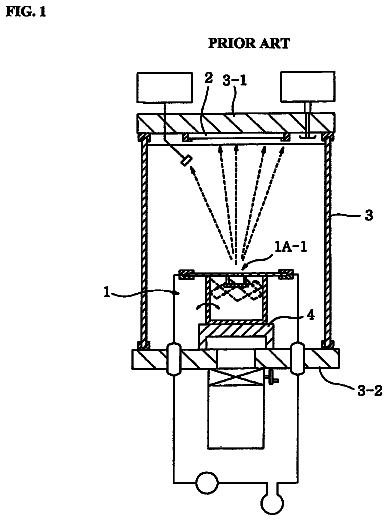
Evaporation source for evaporating an organic electroluminescent layer
The present invention relates to an evaporation source for evaporating an organic electroluminescent layer.
US 8,562,758 B2 · Assignee: JFE Steel Corporation · Inventors: Fujisawa; Mitsuyuki et al.
Sheet 1 of 10 from the published document. All sheets in the USPTO PDF
A low Ni and high N austenitic-ferritic stainless steel is disclosed. It includes an austenitic-ferritic stainless steel having high formability and punch stretchability, crevice corrosion resistance, corrosion resistance at welded part, or excellent intergranular corrosion resistance, from a stainless steel structured by mainly austenite phase and ferrite phase, and consisting essentially of 0.2% or less C, 4% or less Si, 12% or less Mn, 0.1% or less P, 0.03% or less S, 15 to 35% Cr, 3% or less Ni, and 0.05 to 0.6% N, by mass, by adjusting the percentage of the austenite phase in a range from 10 to 85%, by volume. Furthermore, it includes an austenitic-ferritic stainless steel having higher formability by adjusting the amount of (C+N) in the austenite phase to a range from 0.16 to 2% by mass.
Stainless steels are used in wide fields including automobile members, construction members, and kitchenware as high corrosion resistance materials. As of these applications, wheel cap of automobile, and the like, request a material having both high punch stretchability and high crevice corrosion resistance. Stainless steels are generally grouped, based on the structure of the steel, into four categories: austenitic stainless steels, ferritic stainless steels, austenitic-ferritic stainless steels, and martensitic stainless steels. As of these stainless steels, the austenitic stainless steels represented by SUS304 and SUS301 (specified by Japanese Industrial Standard (JIS)) are most widely used owing to their excellent corrosion resistance and workability. Accordingly, the austenitic stainless steel sheets are generally adopted by the wheel cap of automobile. Compared with other types of
1 of 10 drawing sheets so far from the published document, cropped to the drawing. Every sheet is in the USPTO PDF.
What the patent claimed, word for word. All of it is now free to use.
This is a .sctn.371 of International Application No. PCT/JP2005/001555, with an international filing date of Jan. 27, 2005 (WO 2005/073422 A1, published Aug. 11, 2005), which is based on Japanese Patent Application Nos. 2004-021283, filed Jan. 29, 2004, 2004-074033, filed Mar. 16, 2004 and 2004-073862, filed Mar. 16, 2004.
The invention relates to a low Ni and high N stainless steel having an austenite and ferrite (two-phase) structure.
Stainless steels are used in wide fields including automobile members, construction members, and kitchenware as high corrosion resistance materials. As of these applications, wheel cap of automobile, and the like, request a material having both high punch stretchability and high crevice corrosion resistance. Stainless steels are generally grouped, based on the structure of the steel, into four categories: austenitic stainless steels, ferritic stainless steels, austenitic-ferritic stainless steels, and martensitic stainless steels. As of these stainless steels, the austenitic stainless steels represented by SUS304 and SUS301 (specified by Japanese Industrial Standard (JIS)) are most widely used owing to their excellent corrosion resistance and workability. Accordingly, the austenitic stainless steel sheets are generally adopted by the wheel cap of automobile.
Compared with other types of stainless steels, however, the austenitic stainless steels have a drawback of high cost because of large content of expensive Ni, though the steels have high workability.
Furthermore, the austenitic stainless steels likely induce seasoned cracks on working to near the forming limit and have high sensitization to stress corrosion cracking (SCC). As a result, the austenitic stainless steels have a problem in application to portions such as fuel tanks where the requirement for safety is extremely severe. Regarding the martensitic stainless steels, they are inferior in ductility, punch stretchability, and corrosion resistance, though the strength is high, thereby failing to apply them to press-forming.
The austenitic stainless steels represented by SUS301 face a criticism of occurrence of problems, in some cases, such as insufficient corrosion resistance, inducing, in particular, corrosion at gaps between wheel and cap of automobile in coastal zones owing to the salt scattered in wind, and in snow zones owing to the snow-melting salt. In addition, as described above, since seasoned cracks appear on working to near the forming limit, there is a problem of difficulty in application of the austenitic stainless steels to a member having complex shape. Furthermore, the austenitic stainless steels have a problem of high cost because of the Ni content at 6% or more in general grades.
On the other hand, ferritic stainless steels have excellent characteristics. That is, they can increase the corrosion resistance and the crevice corrosion resistance by increasing the Cr content, and they induce very little seasoned cracks and stress corrosion cracking. The ferritic stainless steels, however, have a drawback of inferior workability, particularly inferior balance of strength and ductility, to the austenitic stainless steels. In addition, compared with austenitic stainless steels, the ferritic stainless steels have a problem of very poor punch stretchability and difficulty in forming. The martensitic stainless steels are insufficient in both the punch stretchability and the crevice corrosion resistance.
To this point, there have been proposed technologies for improving the workability of ferritic stainless steels. For example, JP-A-08-020843, (the term "JP-A" referred to herein signifies the "Unexamined Japanese Patent Publication"), discloses a Cr steel sheet, or a ferritic stainless steel sheet containing 5 to 60% by weight of Cr, having excellent deep drawability, by decreasing the content of C and N, while adding appropriate amount of Ti and Nb, and a method for manufacturing the Cr steel sheet. Since, however, the steel sheet of JP-A-08-020843 decreases the content of C and N to 0.03% by weight or less and 0.02% by weight or less, respectively to improve the deep drawability, the steel sheet is poor in the strength and is insufficient in the improvement of ductility. That is, the steel sheet has a problem of poor balance of strength and ductility. As a result, when the steel sheet according to JP-A-08-020843 is applied to an automobile member, the necessary sheet thickness to attain the required strength of the member increases, which fails to contribute to weight saving. In addition, the steel sheet has a problem of inapplicability to severe working uses such as punch stretching, deep drawing, and hydraulic forming.
In this regard, the austenitic-ferritic stainless steels which are positioned between the austenitic stainless steels and the ferritic stainless steels have drawn attention in recent years. The austenitic-ferritic stainless steels have excellent corrosion resistance. Owing to the excellent strength and corrosion resistance, the austenitic-ferritic stainless steels are used as the anti-corrosive materials in high-chloride environment such as seawater and in severe corrosive environment such as oil wells. The SUS329 group austenitic-ferritic stainless steels specified by JIS, however, are expensive owing to the content of expensive Ni by 4% or more, by mass (the same is applied in the following), and have a problem of consuming large amount of valuable Ni resource.
Responding to the problem, JP-A-11-071643 discloses an austenitic-ferritic stainless steel sheet having high tensile elongation, by limiting the Ni content to a range above 0.1% and below 1%, and by controlling the austenite stability index (IM index: 551-805(C+N) %-8.52Si %-8.57Mn %-12.51Cr %-36.02Ni %-34.52Cu %-13.96Mo %) to a range from 40 to 115.
There are other trials of decreasing the Ni content in austenitic stainless steels and austenitic-ferritic stainless steels by the addition of large amount of N instead of Ni. An example of these trials is introduced by Yasuyuki Katada, "Manufacture of high N steel by pressurized electro-slag remelting (ESR) process", Ferrum, vol. 7, p. 848, (2002), describing the method for manufacturing austenitic stainless steel and austenitic-ferritic stainless steel containing substantially no Ni, by the addition of large amount of N.
Alternatively, J. Wang et al. discloses an austenitic-ferritic stainless steel with inexpensive alloying cost, containing substantially no Ni, in "NICKEL-FREE DUPLEX STAINLESS STEELS", Scripta Materialia, vol. 40, No. 1, pp. 123-129, (1999).
However, the austenitic-ferritic stainless steel sheet disclosed in JP-A-11-071643 does not attain satisfactory ductility, though it does improve the ductility to some extent, and has no satisfactory deep drawability. Consequently, the austenitic-ferritic stainless steel of JP-A-11-071643 has problems of difficulty in application to the uses subjected to an extreme degree of punch stretching and hydraulic forming, and of difficulty also in application to the uses subjected to an extreme degree of deep drawing.
Furthermore, the austenitic-ferritic stainless steel disclosed in JP-A-11-071643 is insufficient in the crevice corrosion resistance because of the large amount of Mn, though it shows high tensile elongation, and the steel has a problem that the punch stretchability is not known. The steel has another problem of poor corrosion resistance at welded part. That is, since the austenitic-ferritic stainless steels are subjected to welding before use depending on their uses, they have to have excellent corrosion resistance at welded part. Since, however, the austenitic-ferritic stainless steel according to JP-A-11-071643 contains 0.1 to 0.3% N which is an austenite-forming element to decrease the Ni amount, the N becomes solid solution at high temperatures at the welded part and surrounding heat-affecting zone, which N solid solution then likely precipitates as a chromium nitride, thereby generating a chromium-depleted zone to deteriorate the corrosion resistance.
According to JP-A-11-071643, furthermore, N is added by the amounts from 0.1 to 0.3% by weight as an austenite-forming element instead of decreasing the Ni content. Consequently, when the cooling rate after the solution annealing is slow, the N precipitates as a chromium nitride to deteriorate the corrosion resistance. The phenomenon is what is called the problem of sensibility, or the deterioration of corrosion resistance owing to the formation of chromium carbide and chromium nitride at grain boundaries, (hereinafter referred to as the sensitization).
Specifically, when finish-annealed sheets having 1.5 mm or larger thickness were air-cooled, the slow cooling rate of the material induced sensitization during the cooling step, thus the corrosion resistance became insufficient in some cases.
Even the materials having less than 1.5 mm in the final sheet thickness raised a problem caused by the sensitization occurred during the annealing of hot-rolled sheet as an intermediate step. That is, the finish-annealed sheets having less than 1.5 mm of thickness are manufactured by, after steel-making and casting, the successive steps of hot rolling, annealing, descaling by pickling, cold rolling, and finish-annealing. In the course of these manufacturing steps, since the material becomes sensible during the air cooling after the annealing of hot-rolled sheet (1.5 to 7 mm in sheet thickness during the annealing), the grain boundaries are preferentially corroded during the succeeding pickling step, and the preferentially-corroded grooves do not vanish even in the cold rolling step, which raises a problem of significantly deteriorating the surface property of the final finish-annealed sheet. To improve the surface property, it is effective to grind the surface after the annealing of hot-rolled sheet using a grinder. The grinding, however, significantly increases the cost.
With the background described above, there is wanted a material that is sensitized very little during cooling step after the solid solution heat treatment.
The means which is disclosed by Yasuyuki Katada, "Manufacture of high N steel by pressurized electro-slag remelting (ESR) process", Ferrum, vol. 7, p. 848, (2002), contains many cost-increasing causes on operation, even as a simple Ni-decreasing means, such as the necessity of large apparatus for performing pressure melting, and the necessity of electrode for preliminarily melting material. Furthermore, the means has to attain both the punch stretchability and the crevice corrosion resistance even when simply the Ni is replaced by N.
Also for a means disclosed by J. Wang et al. in "NICKEL-FREE DUPLEX STAINLESS STEELS", Scripta Materialia, vol. 40, No. 1, pp. 123-129, (1999), since the simultaneous addition of large amount of Mn (as large as 10% by mass) and N (0.35 to 0.45% by mass) to decrease the amount of Ni is done, the hot workability is not sufficient and the cracks and flaws likely occur during hot working. The disclosed means has many cost-increasing causes such as necessity of surface grinding and of steel cut-off, through the alloy cost is low.
An object of the present invention is to provide an austenitic-ferritic stainless steel which has high formability with excellent ductility and deep drawability.
Another object of the present invention is to solve the above-described problems in the related art, and to provide a austenitic-ferritic stainless steel which has both the high punch stretchability and the high crevice corrosion resistance while decreasing the amount of Ni.
A further object of the present invention is to solve the above-described problems in the related art, and to provide a austenitic-ferritic stainless steel which has excellent corrosion resistance at welded part at a relatively low cost while saving the Ni resources.
A still another object of the present invention is to solve the above-described problems, and to provide an austenitic-ferritic stainless steel sheet which has excellent intergranular corrosion resistance.
We evaluated the formability on stainless steels having various ingredients and steel structures to improve the formability of stainless steels other than austenitic stainless steels containing expensive Ni.
The evaluation derived a finding that austenitic-ferritic stainless steels show particularly high ductility in some cases. We studied the causes of the phenomenon in detail, and found that the percentage of austenite phase and the content of C and N in the austenite phase significantly affect the ductility, and that, in particular, further high ductility can be attained by adjusting the strain stability of the austenite phase to an appropriate range, which strain stability of austenite phase is defined by the content of C, N, Si, Mn, Cr, Ni, Cu, and Mo in the austenite phase. Furthermore, we found that the austenitic-ferritic stainless steel which gives high ductility is also superior in deep drawability.
We also conducted detail study of various kinds of austenitic-ferritic stainless steels containing 1% by mass or less Ni and 0.05% by mass or more N.
The study derived the finding that austenitic-ferritic stainless steels containing 2% by mass or less Mn improve the punch stretchability and the crevice corrosion resistance.
In addition, the study found that the corrosion resistance at welded part improves in the austenitic-ferritic stainless steels containing 4 to 12% Mn by mass.
Furthermore, the study found that the Si content of the steel affects the precipitation behavior of chromium nitride, and derived the finding that the intergranular corrosion resistance improves when the Si content of steel is 0.4% by mass or less.
That is, the austenitic-ferritic stainless steels include at least the following:
1. The austenitic-ferritic stainless steel has a metal structure which contains ferrite phase and austenite phase. The amount of (C+N) in the austenite phase is in a range from about 0.16 to about 2% by mass, and the volume percentage of the austenite phase is in a range from about 10 to about 85%.
2. The austenitic-ferritic stainless steel according to 1 has about 48% or larger total elongation determined by tensile test.
3. The austenitic-ferritic stainless steel according to 1 or 2 contains about 0.2% or less C, about 4% or less Si, about 12% or less Mn, about 0.1% or less P, about 0.03% or less S, about 15 to about 35% Cr, about 3% or less Ni, about 0.05 to about 0.6% N, by mass, and balance of Fe and inevitable impurities.
4. The austenitic-ferritic stainless steel according to 3 contains about 10% or less Mn, about 1 to about 3% Ni, by mass, and balance of Fe and inevitable impurities.
5. The austenitic-ferritic stainless steel according to 3 contains about 1.2% or less Si, about 2% or less Mn, about 1% or less Ni, by mass, and balance of Fe and inevitable impurities.
6. The austenitic-ferritic stainless steel according to 3 contains about 1.2% or less Si, about 4 to about 12% Mn, about 1% or less Ni, by mass, and balance of Fe and inevitable impurities.
7. The austenitic-ferritic stainless steel according to 3 contains about 0.4% or less Si, about 2 to about 4% Mn, about 1% or less Ni, by mass, and balance of Fe and inevitable impurities.
8. An austenitic-ferritic stainless steel showing excellent deep drawability is a stainless steel having an austenite and ferrite two-phase structure, containing about 0.2% or less C, about 4% or less Si, about 10% or less Mn, about 0.1% or less P, about 0.03% or less S, about 15 to about 35% Cr, about 1 to about 3% Ni, about 0.05 to about 0.6% N, by mass, and balance of Fe and inevitable impurities. The amount of (C+N) in the austenite phase is in a range from about 0.16 to about 2% by mass, and the volume percentage of the austenite phase is in a range from about 10 to about 85%.
9. An austenitic-ferritic stainless steel showing excellent punch-stretchability and crevice corrosion resistance contains about 0.2% or less C, about 1.2% or less Si, about 2% or less Mn, about 0.1% or less P, about 0.03% or less S, about 15 to about 35% Cr, about 1% or less Ni, about 0.05 to about 0.6% N, by mass, and balance of Fe and inevitable impurities. The percentage of the austenite phase in the metal structure is in a range from about 10 to about 85% by volume.
10. An austenitic-ferritic stainless steel showing excellent corrosion resistance at welded part contains about 0.2% or less C, about 1.2% or less Si, about 4 to about 12% Mn, about 0.1% or less P, about 0.03% or less S, about 15 to 35% Cr, about 1% or less Ni, about 0.05 to about 0.6% N, by mass, and balance of Fe and inevitable impurities. The percentage of the austenite phase is in a range from about 10 to about 85% by volume.
11. An austenitic-ferritic stainless steel showing excellent intergranular corrosion resistance contains about 0.2% or less C, about 0.4% or less Si, about 2 to about 4% Mn, about 0.1% or less P, about 0.03% or less S, about 15 to about 35% Cr, about 1% or less Ni, about 0.05 to about 0.6% N, by mass, and balance of Fe and inevitable impurities. The percentage of the austenite phase is in a range from about 10 to about 85% by volume.
12. The austenitic-ferritic stainless steel according to any of 3 to 11, wherein the stainless steel further contains one or more of about 4% or less Mo and about 4% or less Cu, by mass.
13. The austenitic-ferritic stainless steel according to any of 3 to 12, wherein the stainless steel further contains about 0.5% or less V, by mass.
14. The austenitic-ferritic stainless steel according to any of 3 to 13, wherein the stainless steel further contains about 0.1% or less Al, by mass.
15. The austenitic-ferritic stainless steel according to any of 3 to 14, wherein the stainless steel further contains one or more of about 0.01% or less B, about 0.01% or less Ca, about 0.01% or less Mg, about 0.1% or less REM, and about 0.1% or less Ti, by mass.
16. The austenitic-ferritic stainless steel according to any of 9 to 15 has the amount of (C+N) in the austenite phase in a range from about 0.16 to about 2% by mass.
There is provided an austenitic-ferritic stainless steel which has high formability giving excellent ductility and deep drawability at low cost without containing large amount of expensive Ni. Since the austenitic-ferritic stainless steel gives excellent formability, the stainless steel is suitable for the uses subjected to severe punch stretching and deep drawing, and to hydraulic forming such as hydroforming, in such fields of automobile members, building members, and kitchenware.
Owing to the low Ni content, the austenitic-ferritic stainless steel has excellent punch stretchability and crevice corrosion resistance in spite of its relatively low cost. Consequently, the austenitic-ferritic stainless steel allows fabricating complex shape works such as automobile wheel cap economically without fear of seasoned cracks.
In addition, we provide an austenitic-ferritic stainless steel which has excellent corrosion resistance at welded part while saving the Ni resource. With the characteristic, the corrosion resistant materials become available economically in high-chloride environment such as seawater, in severe corrosive environment such as oil wells, and the like.
Furthermore, we provide an austenitic-ferritic stainless steel sheet having excellent corrosion resistance even with low Ni content and high N content owing to the sensitization to prevent deterioration in the corrosion resistance. Since, furthermore, the stainless steel sheet has low Ni content, the steel sheet is preferable in view of environmental protection and of economy.
FIG. 1 is a graph showing the effect of the amount of (C+N) in the austenite phase and the percentage of austenite phase on the total elongation of the austenitic-ferritic stainless steels.
FIG. 2 is a graph showing the relation between the total elongation and the strain-induced martensite index (Md(.gamma.)) of austenite phase of the austenitic-ferritic stainless steels.
FIG. 3 is a graph showing the relation between the total elongation and the limited drawing ratio (LDR) of the austenitic-ferritic stainless steels.
FIG. 4 is a graph showing the relation between the Ni content, the percentage of austenite phase, the amount of (C+N) in the austenite phase, and the limited drawing ratio (LDR) of the steel sheets.
FIG. 5 is a graph showing the effect of Mn content on the punch stretchability of austenitic-ferritic stainless steel sheets which contain 1% or less Ni and 40 to 50% by volume of austenite phase.
FIG. 6 is a graph showing the effect of Mn content on the outdoor exposure test of austenitic-ferritic stainless steel sheets which contain 1% or less Ni and 40 to 50% by volume of austenite phase.
FIG. 7 is a graph showing the relation between the percentage of austenite phase and the punch stretchability (Erichsen value) of austenitic-ferritic stainless steel sheets which contain 2% or less Mn and 1% or less Ni.
FIG. 8 illustrates a test piece for crevice corrosion test.
FIG. 9 is a graph showing the relation between the occurrence of corrosion and the Mn content of welded test pieces containing welded part, heat affecting zone, and mother material part, held in a 0.035% by mass of sodium chloride aqueous solution at 100 to 300 mV vs SCE potential for 30 minutes.
FIG. 10 is a graph showing the effect of the percentage of austenite phase on the corrosion of welded test piece containing mother material part.
The description of selected, representative stainless steels is given below.
Austenitic-Ferritic Stainless Steel Having High Formability with Excellent Ductility and Deep Drawability
The stainless steel is an austenitic-ferritic stainless steel composed mainly of austenite phase and ferrite phase. We found that the volume percentage of the austenite phase and the content of C and N in the austenite phase significantly affect the formability of the austenitic-ferritic stainless steel composed mainly of the above two phases, and on the defining of their optimum values. The steel structure other than the austenite phase and the ferrite phase is occupied mainly by martensite phase.
The austenitic-ferritic stainless steel has 10 to 85% by volume of the austenite phase to the total steel structure. If the percentage of austenite phase is smaller than 10%, the amount of austenite phase excellent in ductility becomes small so that high formability cannot be attained. If the percentage of austenite phase exceeds 85%, stress corrosion cracking (SCC) appears. Therefore, a preferred range of the percentage of austenite phase is from 15 to 80% by volume.
The percentage of austenite phase is the volume percentage of austenite in the structure, and can be determined typically by observing the steel structure using a microscope, and by determining the percentage of austenite phase in the structure using linear analysis or areal analysis. Specifically, when a sample is polished, and then is etched in a red prussiate solution (potassium ferricyanide (K.sub.3[Fe(CN).sub.6]) 30 g+potassium hydroxide (KOH) 30 g+water (H.sub.2O) 60 ml), observation using a light microscope identifies the ferrite phase in gray, and the austenite phase and the martensite phase in white. Thus, the percentage of gray zone and of white zone, respectively, is determined by image analysis to adopt the percentage of white zone as the percentage of austenite phase. In strict meaning, however, the method cannot separately identify between the austenite phase and the martensite phase, thus the white zone may include the martensite phase other than the austenite phase. Nevertheless, even in the case of inclusion of martensite phase in the white zone, the target effect is attained if only the percentage of austenite phase determined by the method and other conditions are satisfied.
The above-described volume percentage of the austenite phase can be controlled by adjusting the steel composition and the annealing condition (temperature and time) in the final annealing step. Specifically, the percentage of austenite phase increases with the decrease in Cr, Si, and Mo contents and with the increase in C, N, Ni, and Cu contents. Excessively high annealing temperature decreases the percentage of austenite phase. On the other hand, excessively low annealing temperature induces precipitation of C and N as carbide and nitride to decrease the solid solution amount, which deteriorates the contribution to the formation of austenite phase, thereby also decreasing the percentage of austenite phase. That is, depending on the steel composition, there is a temperature range to attain the maximum percentage of austenite phase, and the temperature range with the composition is from 700.degree. C. to 1300.degree. C. Although longer annealing time is more preferable because the percentage of austenite phase comes close to that in equilibrium state which is determined by the steel composition and the temperature, the time about 30 seconds or more is sufficient.
The austenitic-ferritic stainless steel contains 0.16 to 2% by mass of the amount of (C+N) in the austenite phase. If the amount of (C+N) in the austenite phase is smaller than 0.16% by mass, the strength of strain-induced martensite phase becomes small, which fails to attain sufficient formability. If the amount of (C+N) exceeds 2% by mass, large amount of carbide and nitride precipitates during cooling stage after the annealing, which rather inversely affects the ductility. A preferable range of the amount of (C+N) is from 0.2 to 2% by mass.
Control of the amount of (C+N) in the austenite phase can be done by adjusting the composition and the annealing condition (temperature and time) of steel. Since the relation between the composition and the annealing condition of steel is affected by many steel ingredients such as C, Si, Mn, Cr, Ni, Cu, and Mo, there is no definite defining correlation. However, increased amount of C, N, and Cr in the steel tends to increase the amount of C and N in the austenite phase. When the composition of steel is the same, smaller percentage of austenite phase after annealing for solid-solution forming likely more enriches C and N in the austenite phase. Determination of C and N concentration in the austenite phase can be done by EPMA, for example.
Although there is no detail analysis of the causes of the effect of volume percentage of austenite phase and of the amount of (C+N) in the austenite phase on the formability, we speculate the mechanism of the phenomenon as follows.
When a steel is subjected to tensile deformation, the steel generally induces uniform deformation, followed by generating local necking (constriction), then results in fracture. Since, however, the stainless steels herein have austenite phase, once a fine necking occurs, the austenite phase at the necking part begins strain-induced transformation to martensite phase to become harder than other parts. As a result, the necking at the part stops its progression. Instead of the progress of necking at the part, deformation on other parts proceeds to give uniform deformation over the steel, thereby providing high ductility. In particular, the stainless steels herein having large amount of (C+N) in the austenite phase has high hardness of martensite phase generated at necking part, compared with other stainless steels containing smaller amount of (C+N) in the austenite phase even with the same percentage of austenite phase, thus the effect of improving ductility by the strain-induced martensite phase is present. In particular, C and N in the austenite phase significantly vary their degree of enriching into the austenite phase depending on their content in the steel and on the heat treatment condition. Since the austenite phase relates to the formability, higher percentage of austenite phase improves more the formability. Accordingly, if the steel composition and the heat treatment condition are adjusted to increase the percentage of austenite phase, and if the amount of (C+N) in the austenite phase is increased, the austenite phase can be stabilized, and appropriate degree of stain-induced transformation is obtained during working, thereby attaining excellent workability. To do this, it is required to establish 10% or more of the percentage of austenite phase, and 0.16% by mass or more of the amount of (C+N) in the austenite phase. If the amount of (C+N) in the austenite phase is smaller than 0.16% by mass, the austenite phase becomes unstable, and a large part of the austenite phase transforms to martensite phase during working to deteriorate the ductility, thus the increased percentage of austenite phase cannot improve the press-formability. The limitation of the percentage of austenite phase to 85% or smaller is given because higher than 85% thereof increases the SCC sensitization, which is unfavorable.
The stainless steel sheet may be an austenitic-ferritic stainless steel sheet containing particularly 3% by mass or less Ni, composed mainly of austenite phase and ferrite phase. That is, we found significant effect of the percentage of austenite phase and the amount of (C+N) in the austenite phase in the austenitic-ferritic stainless steel sheet containing 3% by mass or less Ni on the press formability.
Furthermore, we found that, in the austenitic-ferritic stainless steels herein, further high ductile characteristic can be attained, or 48% or larger total elongation can be attained even at 0.8 mm in sheet thickness, by controlling the strain-induced martensite index (Md(.gamma.)) of austenite phase to a range from -30 to 90. The strain-induced martensite index (Md(.gamma.)) of austenite phase is defined by the formula (I) as the function of content of C, N, Si, Mn, Cr, Ni, Cu, and Mo in the austenite phase: Md(.gamma.)=551-462(C(.gamma.)+N(.gamma.))-9.2Si(.gamma.)-8.1Mn(.gamma.)-- 13.7Cr(.gamma.)-29Ni(.gamma.)-29Cu(.gamma.)-18.5Mo(.gamma.)
where, C(.gamma.), N(.gamma.), Si(.gamma.), Mn(.gamma.), Ce(.gamma.), Ni(.gamma.), Cu(.gamma.), and Mo(.gamma.) are respectively C content (% by mass), N content (% by mass), Si content (% by mass), Mn content (% by mass), Mo content (% by mass), Ni content (% by mass), Cu content (% by mass), and Cr content (% by mass) in the austenite phase.
Above Md(.gamma.) is an index giving the easiness of strain-induced martensite transformation for the austenite phase undergoing working. Higher index suggests easier occurrence of martensite transformation during working. The range from -30 to 90 for the Md(.gamma.) is preferred because of the reasons given below. If the Md(.gamma.) is smaller than -30, the strain-induced martensite transformation is difficult to begin. Therefore, at the beginning of fine necking, the amount of strain-induced martensite generated at the fine necking part is small. If the Md(.gamma.) exceeds 90, the austenite phase almost completed the martensite transformation over the whole steel before the fine necking begins. As a result, when the fine necking begins, the amount of austenite phase as the source of strain-induced martensite transformation is left small. Consequently, it is presumed that only when the Md(.gamma.) is controlled to the range from -30 to 90, the amount of martensite generated at the necking part on beginning the fine necking is optimized to give very high ductility.
As described above, the austenitic-ferritic stainless steels herein have not only excellent ductility, but also high deep drawability. The reason of the superior characteristics is presumably as follows. During the deep drawing, particularly at a corner where the strain concentrates to readily induce cracks, the hardening caused by the strain-induced martensite transformation occurs to an appropriate degree by the same reason with the above-described improvement effect of the percentage of austenite phase and the amount of (C+N) in the austenite phase on the ductility, thus improving the ductility, thereby suppressing the local deformation.
The following is the description of reasons to limit the composition of austenitic-ferritic stainless steel sheet according to the present invention. C: 0.2% by mass or less
Carbon is an important element to increase the percentage of austenite phase and to increase the stability of austenite phase by enriching itself in the austenite phase. To attain the effect, 0.003% by mass or more of the C content is preferred. If, however, the C content exceeds 0.2% by mass, the heat treatment temperature to form C solid solution significantly increases, which deteriorates the productivity. Accordingly, the C content is limited to 0.2% by mass or less. Preferably the C content is less than 0.15% by mass. In view of improvement in the stress corrosion cracking resistance, the C content is more preferably less than 0.10% by mass, and most preferably 0.05% by mass or less. If the C content is 0.2% by mass or less, the corrosion resistance at welded part becomes excellent at any of weld bead, heat affecting zone, and mother material. The excellent corrosion resistance at these parts can be confirmed in Example 4 described later. If, however, the C content is 0.10% by mass or more, the stress corrosion cracking resistance is significantly deteriorated. Therefore, the C content is specified to 0.2% by mass or less, and when the stress corrosion cracking resistance is emphasized, the C content is limited to less than 0.10% by mass, preferably 0.05% by mass or less. The reason of the specified range can be confirmed in Table 10 and Table 11 in Example 5 described later. Si: 4% by mass or less
Silicon is an element added as a deoxidizer. To attain the deoxidization effect, 0.01% by mass or more of the Si content is preferred. If, however, the Si content exceeds 4% by mass, the steel strength increases to deteriorate the cold-workability. Therefore, the Si content is specified to 4% by mass or less. From the point of hot-workability, the Si content is preferably 1.2% by mass or less. From the point to prevent the deterioration of corrosion resistance caused by the sensitization (deterioration of corrosion resistance by the formation of chromium carbide and chromium nitride at grain boundaries), the Si content is limited more preferably to 0.4% by mass or less. Mn: 12% by mass or less
Manganese is effective as an element of deoxidizer and for adjusting Md(.gamma.) of austenite phase, and can be added at need. To obtain the effect, 0.01% by mass or more of the Mn content is preferred. If, however, the Mn content exceeds 12% by mass, the hot-workability deteriorates, thus the Mn content is preferably limited to 12% by mass or less, more preferably 10% by mass or less, further preferably 8% by mass or less, and most preferably 7% by mass or less. P: 0.1% by mass or less
Phosphorus is an element harmful to hot-workability and crevice corrosion resistance. In particular, when the P content exceeds 0.1% by mass, the inverse effect of P becomes significant. Therefore, the P content is preferably limited to 0.1% by mass or less, and more preferably 0.05% by mass or less. S: 0.03% by mass or less
Sulfur is an element harmful to hot-workability. Particularly when the S content exceeds 0.03% by mass, the inverse effect of S becomes significant. Consequently, the S content is preferably limited to 0.03% by mass or less, and more preferably 0.02% by mass or less. Cr: 15 to 35% by mass
Chromium is the most important element for providing stainless steel with corrosion resistance, and less than 15% by mass of Cr cannot attain sufficient corrosion resistance and crevice corrosion resistance. Since Cr is also an element of increasing ferrite phase, larger than 35% by mass of Cr makes the steel difficult to form austenite phase in the steel. Accordingly, the Cr content is preferably limited to a range from 15 to 35% by mass, more preferably from 17 to 30% by mass, and most preferably from 18 to 28% by mass. Ni: 3% by mass or less
Nickel is an austenite-forming element and is an element effective in improving the crevice corrosion resistance. If, however, the Ni content exceeds 3% by mass, the amount of Ni in the ferrite phase increases to deteriorate the ductility of ferrite phase, and increases the cost. Therefore, the Ni content is preferably limited to 3% by mass or less, and more preferably 2% by mass or less. In view of improving the low temperature toughness, the Ni content is preferably limited to 0.1% by mass or more. For the improvement o crevice corrosion resistance, the Ni content is preferably limited to 1% by mass or more. N: 0.05 to 0.6% by mass
Similar to C, N is an element which increases the percentage of austenite phase and enriches itself in austenite phase, thus stabilizing the austenite phase. If, however, the N content exceeds 0.6% by mass, blow-holes appear during casting, and the stable manufacturing becomes difficult. Furthermore, uneconomical means such as pressure-melting becomes necessary. On the other hand, if the N content is less than 0.05% by mass, the enrichment of N in the austenite phase becomes insufficient. Therefore, the N content is preferably limited to a range from 0.05 to 0.6% by mass, and more preferably from 0.1 to 0.4% by mass.
From the point of austenite-phase formation, the N content is further preferably limited to 0.18% by mass or more. From the point of hot-workability, the N content is further preferably limited to 0.34% by mass or less.
The austenitic-ferritic stainless steel can contain Cu and Mo by the amounts given below, other than the above-ingredients. Cu: 4% by mass or less
Copper can be added to increase the corrosion resistance, at need. To attain the effect, 0.1% by mass or more of the Cu content is preferred. If, however, the Cu content exceeds 4% by mass, the hot-workability deteriorates. Accordingly, the Cu content is preferably limited to 4% by mass or less, and more preferably 2% by mass or less. Mo: 4% by mass or less
Molybdenum can be added to increase the corrosion resistance, at need. To attain the effect, 0.1% by mass or more of the Mo content is preferred. If, however, the Mo content exceeds 4% by mass, the effect saturates. Accordingly, the Mo content is preferably limited to 4% by mass or less, and more preferably 2% by mass or less.
Furthermore, the stainless steel may contain, other than the above-ingredients, V, Al, B, Ca, Mg, REM, and Ti by the amounts given below. V: 0.5% by mass or less
Since V is an element to refine the steel structure and to increase the strength, it can be added to the steel, at need. To attain the effect, V is preferably added by 0.005% by mass or more. If, however, the V content exceeds 0.5% by mass, the heat treatment temperature to make C and N solid solution becomes significantly high, and the productivity deteriorates. If the V content exceeds 0.5% by mass, the reduction of precipitation of V compounds becomes difficult even when the annealing temperature is increased, thus the punch stretchability deteriorates. Accordingly, the V content is preferably limited to 0.5% by mass or less, and more preferably 0.2% by mass or less. Al: 0.1% by mass or less
Aluminum is a strong deoxidizer, and can be added at need. To attain the effect, 0.003% by mass or more of the Al content is preferred. If, however, the Al content exceeds 0.1% by mass, the Al forms nitride to induce occurrence of surface flaw. Accordingly, the Al content is preferably limited to 0.1% by mass or less, and more preferably 0.02% by mass or less. One or more of 0.01% by mass or less B, 0.01% by mass or less Ca, 0.01% by mass or less Mg, 0.1% by mass or less REM, and 0.1% by mass or less Ti
The description continues in the full USPTO document.
About 6,367 words. The USPTO PDF has it with every drawing.
Fees are due 3.5, 7.5 and 11.5 years after grant. This patent expired on October 22, 2025, so the fee marked "not paid" was the one that went unpaid.
Austenitic-ferritic stainless steel
Filed Jan 2005 · published Jul 2007Austenitic-ferritic stainless steel
Filed Jan 2005 · granted Oct 2013Earlier publications, parents and continuations. None of them can still be enforced, or this patent would not be listed.
Prior art cited by the examiner or applicant. Useful when you check your own idea for novelty.
Everything on this page comes from the documents linked above.

