 Lapsed, fee not paid45 drawings
Biotech & Lab · US 8,557,823 B2
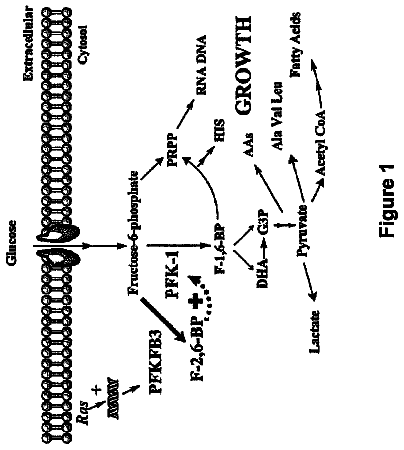
Family of PFKFB3 inhibitors with anti-neoplastic activities
A methods and compounds for inhibiting 6-phosphofructo-2-kinase/fructose-2,6-bisphosphatase 3 (PFKFB3) are described.
US 8,557,841 B2 · Assignee: Bristol-Myers Squibb Company · Inventors: Yu; Guixue et al.
Claude can sketch it from the patent text.
Novel heterocyclic aromatic compounds are provided that are useful in stimulating endogenous production or release of growth hormone, said compounds having the general structure of formula I ##STR00001## wherein R.sub.1, R.sub.1', R.sub.2, R.sub.3, R.sub.4, Xa, Y, Z and n are as described herein. The compounds provided herein are useful in treating obesity, osteoporosis (improving bone density) and in improving muscle mass and muscle strength.
Growth hormone is important not only for linear body growth, but is also important for the maintenance of body composition, metabolism and heart function in adult life. In fact, treatment with growth hormone is employed in both adults and children suffering from growth hormone deficiency. Treatment with growth hormone has been shown to reduce body fat, increase fat-free mass, increase muscle strength, improve bone mass and well-being. These beneficial effects associated with growth hormone treatment suggest that growth hormone treatment may further be useful for the treatment of osteoporosis, frailty in the elderly, complicated fracture, cardiomyopathy, obesity and some nitrogen-wasting conditions resulting from, for example, AIDS, chronic dialysis, catabolic disease and glucocorticoid treatment. Johan Svensson, Exp. Opin. Ther. Patents, 2000 10 1071-1080; Ankersen et al., DDT, 1999, 4 4
Ask Claude for concept sketches based only on the patent's text. They are not part of the patent.
What the patent claimed, word for word. All of it is now free to use.
Independent claims stand on their own. The others add detail to the claim they name.
The present invention relates to novel heterocyclic aromatic compounds which stimulate endogenous production and/or release of growth hormone. Further, the present invention relates to methods for using such compounds and to pharmaceutical compositions containing such compounds.
Growth hormone is important not only for linear body growth, but is also important for the maintenance of body composition, metabolism and heart function in adult life. In fact, treatment with growth hormone is employed in both adults and children suffering from growth hormone deficiency. Treatment with growth hormone has been shown to reduce body fat, increase fat-free mass, increase muscle strength, improve bone mass and well-being. These beneficial effects associated with growth hormone treatment suggest that growth hormone treatment may further be useful for the treatment of osteoporosis, frailty in the elderly, complicated fracture, cardiomyopathy, obesity and some nitrogen-wasting conditions resulting from, for example, AIDS, chronic dialysis, catabolic disease and glucocorticoid treatment. Johan Svensson, Exp. Opin. Ther. Patents, 2000 10
1071-1080; Ankersen et al., DDT, 1999, 4
497-506. Moreover, growth hormone therapy is also been explored with a view towards reversing changes associated with aging.
Current methods for administering growth hormone are invasive in that synthetic growth hormone must be administered by daily injection. Therefore, if an orally administered secretagogue could be introduced that is safe, efficacious, well tolerated, it would provide an attractive treatment alternative to current growth hormone treatment.
Growth hormone secretagogues are synthetically produced peptides and non-peptides that stimulate the endogenous production and/or release of growth hormone by acting on one or more specific receptors at both pituitary and hypothalamic levels. Accordingly, orally active growth hormone secretagogues could offer attractive alternatives to traditional growth hormone therapy, thus providing a more convenient means to treat a wider array of diseases or disorders associated with growth hormone levels in patient circulation.
In accordance with the present invention, novel heterocyclic aromatic compounds are provided that have the general structure of formula I
##STR00002## wherein
Xa is 2 to 4 fused or spiro cycloalkyl, heterocycle, aryl or heteroaryl rings, wherein one or more of said rings may optionally be substituted with one to five substituents selected from the group consisting of Ra and Rb;
R.sub.1 is a substituted or unsubstituted functional group selected from the group consisting of alkyl, aryl, alkenyl, alkynyl, arylalkyl, cycloalkyl, heterocycle, alkoxyalkyl, arylalkyloxyalkyl, aryloxyalkyl, heteroaryl, cycloalkylalkoxyalkyl, heteroarylalkoxy, heteroarylalkyl, heterocycloalkyl and heterocycloalkyl;
R.sub.2, R.sub.3 and R.sub.4 are each independently a substituted or unsubstituted functional group selected from the group consisting of hydrogen, alkyl, alkenyl, alkynyl, aryl, arylalkyl, cycloalkyl, heterocycle, alkoxyalkyl, arylalkyloxyalkyl, aryloxyalkyl, heteroaryl, cycloalkylalkoxyalkyl, heteroarylalkyl and heterocycloalkyl, or R.sub.3 and R.sub.4 taken together can form a 3 to 8 membered cycloalkyl or heterocyclic ring, or one or more of R.sub.3 and R.sub.4 can be taken together with one or more of Y and Z to form a mono- or bicyclic cycloalkyl or heterocyclic ring;
R.sub.1' is a substituted or unsubstituted functional group selected from the group consisting of hydrogen, alkyl, cycloalkyl, heterocycle, aryl and heteroaryl;
Y is a linking group selected from the group consisting of alkylene, alkenylene, alkynylene, arylene and heteroarylene, said linking group may optionally be substituted with one or more functional groups selected from the group consisting of alkyl, aryl, cycloalkyl, heterocycle, alkoxyalkyl, heteroaryl, arylalkyl, arylalkyloxyalkyl, aryloxyalkyl, cycloalkylalkoxyalkyl, heteroarylalkyl and heterocycloalkyl, halogen, --OR.sub.5, --OC(O)R.sub.5, --CF.sub.3, --OCF.sub.3, --N(R.sub.5)C(O)R.sub.5' and --NR.sub.5R.sub.5';
R.sub.5 and R.sub.5' for each occurrence are each independently selected from the group consisting of hydrogen, alkyl, cycloalkyl, heterocycle and aryl, wherein R.sub.5 and R.sub.5' for each occurrence may optionally be substituted with one or more Rb;
Ra and Rb for each occurrence are each independently selected from the group consisting of alkyl, alkenyl, alkynyl, halogen, cyano, carbonyl, --CN, aryl, arylalkyl, arylalkenyl, arylalkynyl, cycloalkyl, alkoxy, alkoxyalkyl, aryloxy, aryloxyalkyl, heterocycle, heteroaryl, heteroarylalkyl, --OR.sub.2, --NR.sub.5R.sub.5', --CF.sub.3, --SO.sub.2R.sub.6, --SO.sub.2NR.sub.6R.sub.6', --(CH.sub.2).sub.mR.sub.8 and R.sub.9;
R.sub.6 and R.sub.6' for each occurrence are each independently selected from the group consisting of hydrogen, alkyl, alkenyl, alkynyl, alkylthioalkyl, alkoxyalkyl, aryl, arylalkyl, heterocycle, heteroaryl, heteroarylalkyl, heterocycloalkyl and cycloalkyl, wherein R.sub.6 and R.sub.6' for each occurrence may optionally be substituted with 1 to 3 substituents selected from the group consisting of halogen, --OR.sub.2, alkoxy, heterocycloalkyl, --NR.sub.5C(O)NR.sub.5R.sub.5', --C(O)NR.sub.5R.sub.5', --NR.sub.5C(O)R.sub.5', --CN, --NR.sub.5SO.sub.2R.sub.5', --OC(O)R.sub.5, --SO.sub.2NR.sub.5R.sub.5', --SOR.sub.7, --COOH and --C(O)OR.sub.7, or R.sub.6 and R.sub.6' taken together can be cyclized to form --(CH.sub.2).sub.qX(CH.sub.2).sub.s--;
R.sub.7 for each occurrence is independently selected from the group consisting of C.sub.1 to C.sub.6 alkyl, aryl and heteroaryl, wherein R.sub.7 may optionally be substituted with --(CH.sub.2).sub.wOH;
R.sub.8 is selected from the group consisting of alkoxy, alkoxycarbonyl, --C(O)NR.sub.6R.sub.6', --NR.sub.5R.sub.5', --C(O)R.sub.6, --NR.sub.5C(O)NR.sub.5R.sub.5' and --N-heteroaryl;
R.sub.9 is selected from the group consisting of heterocycloalkyl, heteroaryl, --CN, --(CH.sub.2).sub.pN(R.sub.6)C(O)R.sub.6', --(CH.sub.2).sub.pCN, --(CH.sub.2).sub.pN(R.sub.6)C(O)OR.sub.6', --(CH.sub.2).sub.pN(R.sub.6)C(O)NR.sub.6R.sub.6', --(CH.sub.2).sub.pN(R.sub.6)SO.sub.2R.sub.6, --(CH.sub.2).sub.pC(O)NR.sub.6R.sub.6', --(CH.sub.2).sub.pC(O)OR.sub.6, --(CH.sub.2).sub.pOC(O)OR.sub.6, --(CH.sub.2).sub.pOC(O)R.sub.6, --(CH.sub.2).sub.pOC(O)NR.sub.6R.sub.6', --(CH.sub.2).sub.pN(R.sub.6)SO.sub.2NR.sub.6R.sub.6', --(CH.sub.2).sub.pOR.sub.6, --(CH.sub.2).sub.pOC(O)N(R.sub.6)(CH.sub.2).sub.mOH--(CH.sub.2).sub.pSOR.- sub.6 and --(CH.sub.2).sub.pOCH.sub.2C(O)N(R.sub.6)(CH.sub.2).sub.mOH;
X is selected from the group consisting of --CR.sub.5R.sub.5'--, --O--, --S--, --SO--, --SO.sub.2--, --NC(O)OR.sub.7--, --NC(O)NR.sub.5-- and --NR.sub.5--;
Z is nitrogen;
m is an integer between 1 and 6;
n is an integer from 1 to 6;
p is an integer from 0 to 5;
w is an integer between 0 and 5; and
q and s are each independently an integer between 1 and 3, with the proviso that R.sub.5, R.sub.5', R.sub.6 or R.sub.6' cannot be hydrogen when either is connected to a carbonyl group (e.g., --C(O)R.sub.6) or sulfone group (e.g., --SO.sub.2R.sub.6).
The definition of formula I above is inclusive of all prodrugs, prodrug esters, stereoisomers and pharmaceutically acceptable salts of formula I.
Compounds of formula I demonstrate activity as growth hormone secretagogues, that is they stimulate endogenous production and/or release of growth hormone and are useful in the treatment of diseases or disorders associated with growth hormone levels, such as those diseases or disorders disclosed herein.
The present invention provides for compounds of formula I, pharmaceutical compositions employing such compounds and for methods of using such compounds. In particular, the present invention provides a pharmaceutical composition comprising a therapeutically effective amount of a compound of formula I, alone or in combination with a pharmaceutically acceptable carrier.
Moreover, in accordance with the present invention, a method is provided for increasing levels of endogenous growth hormone or increasing the endogenous production or release of growth hormone, wherein a therapeutically effective amount of a compound of formula I is administered to a mammalian, e.g., human, patient in need of treatment.
Furthermore, in accordance with the present invention, a method is provided for preventing or treating diseases or disorders associated with mammalian growth hormone levels, such as described herein, wherein a therapeutically effective amount of a compound of formula I is administered to a mammalian, i.e., human, patient in need of treatment.
The compounds of the invention can be used alone, in combination with other compounds of the present invention, or in combination with one or more other agent(s) active in the therapeutic areas described herein.
Further, the present invention provides a method for preventing, inhibiting or treating the diseases as defined above and hereinafter, wherein a therapeutically effective amount of a combination of a compound of formula I and another compound of formula I and/or at least one other type of therapeutic agent, is administered to a mammalian, i.e., human patient in need of treatment.
Preferred are compounds of formula I wherein Xa has the structure
##STR00003## wherein
Q.sub.1 and Q.sub.2 are each independently a cycloalkyl, heterocyclic, aryl or heteroaryl ring, wherein Q.sub.1 may be substituted with 1 to four substituents selected from the group consisting of Ra and Rb, and Q.sub.2 may be substituted with 1 to four substituents selected from the group consisting of Ra, Rb and Q.sub.3;
Q.sub.3 is a 3 to 8 membered fused or spiral cycloalkyl, heterocyclic, aryl or heteroaryl ring, wherein Q.sub.3 may optionally be substituted with 1 to 5 substituents selected from the group consisting of Ra, Rb and Q.sub.4; and
Q.sub.4 is a 3 to 8 membered fused or spiral cycloalkyl, heterocyclic, aryl or heteroaryl ring, wherein Q.sub.4 may optionally be substituted with 1 to 5 substituents selected from the group consisting of Ra and Rb;
A is N or CR.sub.11;
B is N or CR.sub.11; and
R.sub.11 is H or a bond.
Further embodiments include compounds of formula I wherein Xa has the structure
Although the preferred Xa structures disclosed above illustrate one or more Ra and/or Rb substituents on any particular cycloalkyl, aryl, heteroaryl or heterocycle ring, the preferred Xa structures are not limited to the specific Ra/Rb substitution illustrated above, nor is an Ra and/or Rb group needed. Rather, the presence of the Rb and/or Ra substituents in the preferred Xa structures, the subsequent Schemes and the claims hereafter, indicate that one or more Ra/Rb group(s) may optionally be attached at any available position of attachment upon the ring to which an Rb/Rb group is associated. Therefore, even though the preferred Xa structures, Schemes and claims hereinafter may reference a particular embodiment, it should be understood that various other modifications, such as the substitution of one or more Rb and/or Ra groups, or other modifications and therapeutically equivalent compounds known to those skilled in the art, may be employed within the scope and spirit of the compounds claimed herein.
Preferred are compounds of formula I wherein when Ra or Rb are R.sub.9, R.sub.6 is heterocycle or alkyl, optionally substituted with hydroxyl or halogen.
Preferred are compounds of formula I wherein when Ra or Rb are R.sub.9, R.sub.6 and R.sub.6' are independently hydrogen, alkyl, or cycloalkyl, where the alkyl or cycloalkyl is optionally substituted with --C(O)OR.sub.7 or --C(O)NR.sub.5R.sub.5', or R.sub.6 and R.sub.6' taken together can be cyclized to form --(CH.sub.2).sub.qX(CH.sub.2).sub.s--.
Also preferred are compounds of formula I wherein when Ra or Rb are R.sub.9, R.sub.9 is (CH.sub.2).sub.pC(O)OR.sub.6, (CH.sub.2).sub.pOC(O)R.sub.6, or (CH.sub.2).sub.pOC(O)N(R.sub.6)(CH.sub.2).sub.mOH.
Also preferred are compounds of formula I wherein R.sub.9 is --(CH.sub.2).sub.pN(R.sub.6)C(O)OR.sub.6', --(CH.sub.2).sub.pN(R.sub.6)C(O)NR.sub.6R.sub.6', or (CH.sub.2).sub.pOC(O)NR.sub.6R.sub.6', where R.sub.6 and R.sub.6' are independently hydrogen or alkyl, where the alkyl is optionally substituted with --C(O)NR.sub.5R.sub.5', where R.sub.5 and R.sub.5' are independently hydrogen or alkyl.
Further preferred embodiments include compounds of formula I having the structure:
##STR00010## ##STR00011## ##STR00012## ##STR00013## ##STR00014## ##STR00015## ##STR00016## ##STR00017## ##STR00018##
Additional preferred embodiments include compounds of formula I having the structure:
The compounds of this invention all have at least one asymmetric center as noted by the asterisk in structural formula I. Additional asymmetric centers may be present on the molecule depending upon the nature of the various substituents on the molecule. Each such asymmetric center will produce two optical isomers and it is intended that all such optical isomers, as separated, pure or partially purified optical isomers or racemic mixtures thereof, be included within spirit and scope of the present invention. In the case of the asymmetric center represented by the asterisk in formula I, the more active and thus more preferred configuration is R as determined by the R/S rules. Isomers may be separated by conventional methods, for example, chromatographic or fractional crystallization.
The following abbreviations are employed herein:
TABLE-US-00001 Boc = tert-butoxycarbonyl CBZ = benzyloxycarbonyl (or carbobenzoxy) DIBAL = diisobutylaluminum hydride DMAP = 4-(dimethylamino)pyridine DMF = N,N-dimethylformamide EDAC = 1-(3-dimethylaminopropyl)-3-ethylcarbodiimide hydrochloride EtOAc = ethyl acetate HOBT = hydroxybenztriazole HPLC = high performance liquid chromatography LC/MS = high performance liquid chromatography/mass spectrometry MS or Mass Spec = mass spectrometry Pd/C = palladium on activated charcoal TFA = trifluoroacetic acid YMC = trademark of YMC Co, Ltd., Kyoto, Japan g = gram(s) h or hr = hour(s) min = minute(s) ml = milliliter mg = milligram(s) mol = moles mmol = millimole(s) nM = nanomolar r.t. = room temperature Et = ethyl i-Pr = isopropyl Me = methyl
The following definitions apply to the terms as used throughout this specification, unless otherwise limited in specific instances.
Unless otherwise indicated, the term "alkyl" as employed herein alone or as part of another group includes both straight and branched chain hydrocarbons, containing 1 to 40 carbons, preferably 1 to 20 carbons, more preferably 1 to 6 carbons, in the normal chain, such as methyl, ethyl, propyl, isopropyl, butyl, t-butyl, isobutyl, pentyl, hexyl, isohexyl, heptyl, 4,4-dimethylpentyl, octyl, 2,2,4-trimethylpentyl, nonyl, decyl, undecyl, dodecyl, the various branched chain isomers thereof, and the like. Further, alkyl groups, as defined herein, may optionally be substituted on any available carbon atom with one or more functional groups commonly attached to such chains, such as, but not limited to alkyl, aryl, alkenyl, alkynyl, hydroxy, arylalkyl, cycloalkyl, cycloalkylalkyl, alkoxy, arylalkyloxy, alkanoyl, amino, halo, thio, cyano, carboxyl, carbonyl
##STR00025## amino, amido, haloaryl, CF.sub.3, OCF.sub.3, aryloxy, heteroaryl, cycloalkylalkoxyalkyl, cycloheteroalkyl and the like to form alkyl groups such as trifluoro methyl, 3-hydroxyhexyl, 2-carboxypropyl, 2-fluoroethyl, carboxymethyl, cyanobutyl and the like.
Unless otherwise indicated, the term "cycloalkyl" as employed herein alone or as part of another group includes saturated or partially unsaturated (containing 1 or 2 double bonds) cyclic hydrocarbon groups containing 1 to 3 rings, including monocyclic alkyl, bicyclic alkyl and tricyclic alkyl, containing a total of 3 to 20 carbons forming the rings, preferably 4 to 10 carbons, forming the ring and which may be fused to 1 aromatic ring as described for aryl, which include cyclopropyl, cyclobutyl, cyclopentyl, cyclohexyl, cycloheptyl, cyclooctyl, cyclodecyl, cyclododecyl, cyclohexenyl,
##STR00026## any of which groups may be optionally substituted with 1 to 3 substituents as defined above for alkyl.
The term "aryl" as employed herein alone or as part of another group refers to monocyclic and bicyclic aromatic groups containing 6 to 10 carbons in the ring portion (such as phenyl or naphthyl) and may optionally include one to three additional rings fused to "aryl" (such as aryl, cycloalkyl, heteroaryl or cycloheteroalkyl rings) and may be optionally substituted through any available carbon atoms with 1 or more groups selected from hydrogen, halo, alkyl, haloalkyl, alkoxy, haloalkoxy, alkenyl, trifluoromethyl, trifluoromethoxy, alkynyl, cycloalkylalkyl, fluorenyl, cycloheteroalkyl, cycloheteroalkylalkyl, aryl, heteroaryl, arylalkyl, aryloxy, aryloxyalkyl, arylalkoxy, arylthio, arylazo, heteroarylalkyl, heteroarylalkenyl, heteroarylheteroaryl, heteroaryloxy, hydroxy, nitro, oxo, cyano, amino, substituted amino wherein the amino includes 1 or 2 substituents (which are alkyl, aryl or any of the other aryl compounds mentioned in the definitions), thiol, alkylthio, arylthio, heteroarylthio, arylthioalkyl, alkoxyarylthio, alkylcarbonyl, arylcarbonyl, alkylaminocarbonyl, arylaminocarbonyl, alkoxycarbonyl, aminocarbonyl, alkylcarbonyloxy, arylcarbonyloxy, alkylcarbonylamino, arylcarbonylamino, arylsulfinyl, arylsulfinylalkyl, arylsulfonylamino or arylsulfonaminocarbonyl, or any of alkyl substituents as set out above.
The term "arylalkyl" as used herein alone or as part of another group refers to alkyl groups as defined above having an aryl substituent, such as benzyl, phenethyl or naphthylpropyl, wherein said aryl and/or alkyl groups may optionally be substituted as defined above.
The term "alkoxy" or "aryloxy" as employed herein alone or as part of another group includes an alkyl or aryl group as defined above linked through an oxygen atom.
Unless otherwise indicated, the term "alkenyl" as used herein by itself or as part of another group refers to straight or branched chain radicals of 2 to 20 carbons, preferably 3 to 12 carbons, and more preferably 2 to 6 carbons in the normal chain, which include one or more double bonds in the normal chain, such as vinyl, 2-propenyl, 3-butenyl, 2-butenyl, 4-pentenyl, 3-pentenyl, 2-hexenyl, 3-hexenyl, 2-heptenyl, 3-heptenyl, 4-heptenyl, 3-octenyl, 3-nonenyl, 4-decenyl, 3-undecenyl, 4-dodecenyl, 4,8,12-tetradecatrienyl, and the like, and which may be optionally substituted with one or more functional groups as defined above for alkyl.
Unless otherwise indicated, the term "alkynyl" as used herein by itself or as part of another group refers to straight or branched chain radicals of 2 to 20 carbons, preferably 2 to 12 carbons and more preferably 2 to 8 carbons in the normal chain, which include one or more triple bonds in the normal chain, such as 2-propynyl, 3-butynyl, 2-butynyl, 4-pentynyl, 3-pentynyl, 2-hexynyl, 3-hexynyl, 2-heptynyl, 3-heptynyl, 4-heptynyl, 3-octynyl, 3-nonynyl, 4-decynyl, 3-undecynyl, 4-dodecynyl and the like, and which may be optionally substituted with one or more functional groups as defined above for alkyl.
The term "alkylene" as employed herein alone or as part of another group refers to alkyl linking groups above having single bonds for attachment to other groups at two different carbon atoms and may optionally be substituted as defined above for "alkyl".
The terms "alkenylene" and "alkynylene" as employed herein alone or as part of another group refer to alkenyl and alkynyl linking groups, having single bonds for attachment at two different carbon atoms and may optionally be substituted as defined above for "alkyl". The term "halogen" or "halo" as used herein alone or as part of another group refers to chlorine, bromine, fluorine and iodine.
The term "heteroaryl" as used herein refers to a 5-, 6- or 7-membered aromatic heterocyclic ring which contains one or more heteroatoms selected from nitrogen, sulfur, oxygen and/or a SO or SO.sub.2 group. Such rings may be fused to another cycloalkyl, cycloheteroalkyl, aryl or heteroaryl ring and include possible N-oxides. Optionally a heteroaryl group may be substituted with one or more functional groups commonly attached to such chains, such as those described for alkyl.
The term "heterocyclo", "heterocycle" or "heterocyclic", as used herein, represents an unsubstituted or substituted stable 4-, 5-, 6- or 7-membered monocyclic ring system which may be saturated or unsaturated, and which consists of carbon atoms and from one to four heteroatoms selected from N, O, S and or a SO or SO.sub.2 group, wherein the nitrogen and sulfur heteroatoms may optionally be oxidized, and the nitrogen heteroatom may optionally be quaternized. The heterocyclic ring may be attached at any heteroatom or carbon atom which results in the creation of a stable structure. Examples of such heterocyclic groups include, but is not limited to, piperidinyl, piperazinyl, oxopiperazinyl, oxopiperidinyl and oxadiazolyl. Optionally a heterocyclo group may be substituted with one or more functional groups, such as those described for alkyl.
The term "heterocycloalkyl" or "heteroarylalkyl" as used herein alone or as part of another group refers to a heterocyclo or heteroaryl group respectively, linked through an alkyl group.
The term "alkoxyalkyl" or "aryloxyalkyl" as used herein alone or as part of another group refers to a alkoxy or aryloxy group respectively, linked through an alkyl group.
The term "heteroarylalkoxy" as used herein alone or as part of another group refers to a heteroaryl group linked through an alkoxy group.
As used herein alone or as part of another group, the term "cycloalkylalkoxyalkyl" and "arylalkyloxyalkyl" refers to a cycloalkyl group and an aryl group respectively, linked through an alkoxy group, that is in turn linked through an alkyl group.
The term "arylene" or "heteroarylene" as used herein alone or as part of another group, refers to a alkylene, alkenylene or alkynylene linking group as defined above, wherein said alkylene, alkenylene or alkynylene linking group contains an aryl (Ar) or heteroaryl (Het) group in the carbon chain. Examples include, but are not limited to --(CH.sub.2).sub.2--Ar--(CH.sub.2).sub.2-- or --(CH.sub.2).sub.2-Het-(CH.sub.2).sub.2--.
The term "carbonyl," as used herein, refers to a --C(O)-- group or when referred to as a possible substitutent, refers to a (.dbd.O) group attached to any available carbon atom with in the functional group or linking group being substituted.
The term "phenoxy" as used herein, refers to a phenyl substituent linked through and oxygen atom. Optionally the phenyl ring portion a phenoxy group may be substituted with one or more functional groups, such as described for aryl.
An administration of a therapeutic agent of the invention includes administration of a therapeutically effective amount of the agent of the invention. The term "therapeutically effective amount" as used herein refers to an amount of a therapeutic agent to treat or prevent a condition treatable by administration of a composition of the invention. That amount is the amount sufficient to exhibit a detectable therapeutic or preventative or ameliorative effect. The effect may include, for example, treatment or prevention of the conditions listed herein. The precise effective amount for a subject will depend upon the subject's size and health, the nature and extent of the condition being treated, recommendations of the treating physician, and the therapeutics or combination of therapeutics selected for administration. Thus, it is not useful to specify an exact effective amount in advance.
Any compound that can be converted in vivo to provide the bioactive agent (i.e., the compound of formula I) is a prodrug within the scope and spirit of the invention.
The term "prodrug esters" as employed herein includes esters and carbonates formed by reacting one or more hydroxyls of compounds of formula I with alkyl, alkoxy, or aryl substituted acylating agents employing procedures known to those skilled in the art to generate acetates, pivalates, methylcarbonates, benzoates and the like.
Various forms of prodrugs are well known in the art and are described in:
a) The Practice of Medicinal Chemistry, Camille G. Wermuth et al., Ch. 31, (Academic Press, 1996);
b) Design of Prodrugs, edited by H. Bundgaard, (Elsevier, 1985); and
c) A Textbook of Drug Design and Development, P. Krogsgaard-Larson and H. Bundgaard, eds. Ch 5, pgs 113-191 (Harwood Academic Publishers, 1991). Said references are incorporated herein by reference.
All stereoisomers of the compounds of the instant invention are contemplated, either in admixture or in pure or substantially pure form. The compounds of the present invention can have asymmetric centers at any of the carbon atoms including any one of the R substituents. Consequently, compounds of formula I can exist in enantiomeric or diastereomeric forms or in mixtures thereof. The processes for preparation can utilize racemates, enantiomers or diastereomers as starting materials. When diastereomeric or enantiomeric products are prepared, they can be separated by conventional methods for example, chromatographic techniques or fractional crystallization.
The pharmaceutically acceptable salts of the compounds of formula I of the invention include alkali metal salts such as lithium, sodium or potassium, alkaline earth metal salts such as calcium or magnesium, as well as zinc or aluminum and other cations such as ammonium, choline, diethanolamine, ethylenediamine, t-butylamine, t-octylamine, dehydroabietylamine, as well as pharmaceutically acceptable anions such as chloride, bromide, iodide, tartrate, acetate, methanesulfonate, maleate, succinate, glutarate, stearate and salts of naturally occurring amino acids such as arginine, lysine, alanine and the like, and prodrug esters thereof.
General Synthetic Schemes
The compounds of the present invention may be prepared according to the following general synthetic reaction schemes as well as relevant published literature procedures that may be used by one skilled in the art. Exemplary reagents, procedures and conditions for these reactions appear hereinafter and in the working examples. Starting materials are commercially available or can be readily prepared by one of ordinary skill in the art using known methods. Unless otherwise specified the various substituents of the compounds are defined in the same manner as the formula I.
High Speed Analoging (HSA) may be employed in the preparation of compounds, for example, where the intermediates possess an amine position or activated aromatic position, such as the halogenated Q1 and Q2.
Scheme I describes a general synthetic sequence for the preparation of the compounds of formula I. During the preparation of compounds of formula I, one or more protecting groups might be used, reaction conditions for protection and deprotection may be found in the `Protective Groups in Organic Synthesis" Greene et al., John Wiley and Sons Inc, 1991, or other methods used by one of ordinary skill in the art.
Compounds of formula I can be prepared from a compound of formula II and amine XXXII using an appropriate carboxylic acid activating reagent in an inert solvent. Exemplary carboxylic acid activating agents include isobutylchloroformate, carbonyldiimidazole, dicyclohexylcarbodiimide, pentofluorophenol trifluoroacetate, or 1-(3-dimethylaminopropyl)-3-ethylcarbodiimide. Exemplary inert solvents include ethers, dioxane, tetrahydrofuran, N,N-dimethylformamide, acetonitrile, or methylene chloride. If R.sub.3 and/or R.sub.4 are an amine protecting group, such as Boc-, CBZ or Trityl, they will be deprotected to afford the final products. Reaction conditions for deprotection may be founds in the `Protective Groups in Organic Synthesis" Greene et al., John Wiley and Sons Inc, 1991, or other methods used by one of ordinary skill in the art.
Compound XXXII can be prepared by the deprotection of compound IV where PG is an appropriate amino protecting group such as Boc-, CBZ or Trityl, etc. Exemplary deprotection reagents for Boc- are hydrogen chloride in dioxane, TFA in dichloromethane, etc.; exemplary deprotection for CBZ is catalytic hydrogenation, exemplary deprotection for Trityl is hydrogen chloride in acetone or tetrahydrofuran.
Compound XXXIII can be prepared from compound XXXIV. When C--O is a hydroxyl group in compound XXXIV, it can be converted to an azide group followed by reduction to give the amino group in compound XXXIII. (for an example, see Lautens et al, J. Org. Chem.
62, 5246-5247). When C--O is a carbonyl group, it can be reduced to a hydroxyl group then converted to the amino group in compound XXXIII. Alternatively, it can be converted to an O-methyl oxime, then followed by reduction to give the amino group in compound XXXIII. Reduction of O-methyl oxime to amine can be carried out with borane tetrahydrofuran complex or other methods used by one of ordinary skill in the art.
Compound XXXIV can be prepared from reaction of compound XXXVI and compound XXXV. Compounds XXXV [Y=H, SPh, Cl, NMe(OMe)] can be prepared by one of the ordinary skill in the art. Compounds XXXVI (M=Li, MgBr, MgCl, ZnBr, ZnI) is an organometalic intermediate, which can be prepared from an appropriate precursor (X=B, I, Cl). or other methods used by one of ordinary skill in the art. Organic zinc reagents can be prepared via treatment of arylbromide or aryliodide with Rieke.RTM. zinc metal as described in J. Org. Chem. (1991), 56, 1445 or Tetrahedron (1997), 53, 1925. Alternatively, it can also be prepared via treatment of arylbromide or aryliodide with n-BuLi or tert-BuLi followed by addition of zinc bromide or zinc iodide.
Compounds of the formula Ia can be prepared via the aminolysis of a compound of formula II using an appropriate carboxylic acid activating reagent and amine III in an inert solvent. Exemplary carboxylic acid activating agents include isobutylchloroformate, carbonyldiimidazole, dicyclohexylcarbodiimide, pentofluorophenol trifluoroacetate, or 1-(3-dimethylaminopropyl)-3-ethylcarbodiimide. Exemplary inert solvents include ethers, including tetrahydrofuran and dioxane, N,N-dimethylformamide, acetonitrile, or methylene chloride. If R.sub.3 and/or R.sub.4 are an amine-protecting group, such as Boc-, or CBZ, they will be deprotected to afford the final products. Deprotections are done by one of ordinary skill in the art as described in the following.
Compound III can be prepared by the deprotection of compound IV where G is an appropriate amino protecting group such as Boc-, CBZ, etc., as commonly used by one of ordinary skill in the art. Exemplary deprotection reagents for Boc- are hydrogen chloride in dioxane, TFA, etc; exemplary deprotection for CBZ is catalytic hydrogenation.
Compound IV can be prepared from compound V via a dehydrating process. Exemplary dehydrating agents include POCl.sub.3, SOCl.sub.2, HCl, HOAc and Mitsunobu reactions.
Compound V can be prepared from compounds VII via aminolysis using an appropriate carboxylic acid activating reagent and amine VI in an inert solvent. Exemplary carboxylic acid activating agents include isobutylchloroformate, carbonyldiimidazole, dicyclohexylcarbodiimide, pentofluorophenol trifluoroacetate, or 1-(3-dimethylaminopropyl)-3-ethylcarbodiimide. Exemplary inert solvents include ethers, including tetrahydrofuran and dioxane, N,N-dimethylformamide, acetonitrile, or methylene chloride.
Although compound VI discloses two Rb substituents on the pyridine ring, the schemes are not limited to a single Rb group, nor is an Rb group needed. Rather, the presence of the Rb substituents in Scheme Ha and the subsequent Schemes hereafter, indicate that one or more Rb groups may optionally be attached at any available position of attachment upon the ring to which the Rb group is associated. Therefore, even though Scheme IIa and the Schemes hereinafter may reference a particular embodiment, it should be understood that various other modifications, such as the substitution of one or more Rb groups, or other modifications known to those skilled in the art, may be employed within the scope and spirit of the general synthetic schemes herein.
Alternately, compound V can be prepared by the condensation of IX and VIII (where X is a leaving group such as a halogen) in an inert solvent at elevated temperatures. Exemplary inert solvents include DMF, THF, dioxane, acetonitrile, pyridine, and inert alcohol such as ethanol. Exemplary temperatures can range from 40 to 150.degree. C.
Compound IX can be prepared by the hydrazinolysis of X via procedures used by one of ordinary skill in the art.
Alternately, compound IV can be prepared by the hydrazinolysis of compound XI in an inert solvent at elevated temperature. Exemplary inert solvents include hydrazine, HOAc, THF, dioxane, pyridine and inert alcohol such as ethanol. Exemplary temperatures can range from 40 to 150.degree. C.
Compound XI can be prepared by the condensation of XII and VII via an appropriate carboxylic acid activating agent in an inert solvent. Exemplary carboxylic acid activating agents include isobutylchloroformate, carbonyldiimidazole, dicyclohexylcarbodiimide, pentofluorophenol trifluoroacetate, or 1-(3-dimethylaminopropyl)-3-ethylcarbodiimide. Exemplary inert solvents include ethers, including tetrahydrofuran and dioxane, N,N-dimethylformamide, acetonitrile, or methylene chloride.
Scheme IIIa describes a general synthetic sequence for the preparation of the compounds of formula XIII (where E can be CH.sub.2, CRaRb, NRa, O, S, SO.sub.2, SO, CO, C(O)O, C(O)NRa, and m and n can independently be an integer from 0 to 6, with the caveat that m and n together form a 5-12 membered ring structure.
Compounds of formula XIII can be prepared via the aminolysis of a compound of formula II using an appropriate carboxylic acid activating reagent and amine XIV in an inert solvent. Exemplary carboxylic acid activating agents include isobutylchloroformate, carbonyldiimidazole, dicyclohexylcarbodiimide, pentofluorophenol trifluoroacetate, or 1-(3-dimethylaminopropyl)-3-ethylcarbodiimide. Exemplary inert solvents include ethers, including tetrahydrofuran and dioxane, N,N-dimethylformamide, acetonitrile, or methylene chloride. If R.sub.3 and/or R.sub.4 are an amine-protecting group, such as Boc-, or CBZ, they will be deprotected to afford the final products. Deprotections are done by one of ordinary skill in the art as described in the following.
Compound XIV can be prepared by the deprotection of compound XV where PG is an appropriate amino protecting group such as Boc-, CBZ, etc. used by one of ordinary skill in the art. Exemplary deprotection reagents for Boc- are hydrogen chloride in dioxane, TFA, etc; exemplary deprotection for CBZ is catalytic hydrogenation.
Compound XVI can be prepared from compound X via a dehydrating conditions in protonic and aprotic solvents. Dehydrating conditions can be exemplified by using protonic solvent along or by using combinations with dehydrating agents include HOAc, PPTS or by using Mitsunobu reactions in the inert solvents.
Compound XVI can be prepared from coupling compounds IX and compound XVII in inert solvent.
Schemes IVa-IVc can be carried out using similar general procedures as described for Scheme Ma, where intermediates XVIIIa, XVIIIb and XVIIIc are utilized in place of intermediate XVIII. m and n can independently be an integer from 0 to 5, with the caveat that m and n together form a 6-12 membered ring structure.
Compounds of formula XIX can be prepared from a compound of formula II and amine XX using an appropriate carboxylic acid activating reagent in an inert solvent. Exemplary carboxylic acid activating agents include isobutylchloroformate, carbonyldiimidazole, dicyclohexylcarbodiimide, pentofluorophenol trifluoroacetate or 1-(3-dimethylaminopropyl)-3-ethylcarbodiimide. Exemplary inert solvents include ethers, dioxane, tetrahydrofuran, N,N-dimethylformamide, acetonitrile or methylene chloride. If R.sub.3 and/or R.sub.4 are an amine-protecting group, such as Boc-, CBZ or Trityl, they will be deprotected to afford the final products. Reaction conditions for deprotection may be founds in the `Protective Groups in Organic Synthesis" Greene et al., John Wiley and Sons Inc, 1991, or other methods used by one of ordinary skill in the art.
Compound XX can be prepared by the deprotection of compound XXI where PG is an appropriate amino protecting group such as Boc-, CBZ or Trityl, etc. Reaction conditions for deprotection may be founds in the `Protective Groups in Organic Synthesis" Greene et al., John Wiley and Sons Inc, 1991, or other methods used by one of ordinary skill in the art. Exemplary deprotection reagents for Boc- are hydrogen chloride in dioxane, TFA in dichloromethane, etc.; exemplary deprotection for CBZ is catalytic hydrogenation, exemplary deprotection for Trityl is hydrogen chloride in acetone or tetrahydrofuran.
Compound XXI can be prepared from compound XXII (X=Cl or F). Compound XXII first react with hydroxyamine to give an oxime intermediate, then followed by cyclization under basic condition or other methods used by one of ordinary skill in the art.
Compound XXII can be prepared from compound XXIII via treatment of appropriate organic zinc reagents in an inert solvent such as ethers, tetrahydrofuran or toluene. Organic zinc reagents can be prepared via treatment of arylbromide or aryliodide with Riekezinc metal as described in J. Org. Chem. (1991), 56, 1445 or Tetrahedron (1997), 53, 1925. Alternatively, it can also be prepared via treatment of arylbromide or aryliodide with n-BuLi or tert-BuLi followed by addition of zinc bromide or zinc iodide.
Compounds XXIII can be prepared from a compound of formula VII and a mercapto compound such as thiophenol using an appropriate carboxylic acid activating reagent in an inert solvent. Exemplary carboxylic acid activating agents include isobutylchloroformate, carbonyldiimidazole, dicyclohexylcarbodiimide, pentofluorophenol trifluoroacetate, or 1-(3-dimethylaminopropyl)-3-ethylcarbodiimide. Exemplary inert solvents include ethers, dioxane, tetrahydrofuran, N,N-dimethylformamide, acetonitrile, or methylene chloride.
XXIV can be prepared from a compound of formula II and amine XX using an appropriate carboxylic acid activating reagent in an inert solvent. Exemplary carboxylic acid activating agents include isobutylchloroformate, carbonyldiimidazole, dicyclohexylcarbodiimide, pentofluorophenol trifluoroacetate, or 1-(3-dimethylaminopropyl)-3-ethylcarbodiimide. Exemplary inert solvents include ethers, dioxane, tetrahydrofuran, N,N-dimethylformamide, acetonitrile, or methylene chloride. If R3 and/or R4 are an amine-protecting group, such as Boc-, CBZ or Trityl, they will be deprotected to afford the final products. Reaction conditions for deprotection may be founds in the `Protective Groups in Organic Synthesis" Greene et al., John Wiley and Sons Inc, 1991, or other known methods used by one of ordinary skill in the art.
The description continues in the full USPTO document.
About 5,581 words. The USPTO PDF has it with every drawing.
Fees are due 3.5, 7.5 and 11.5 years after grant. This patent expired on October 15, 2025, so the fee marked "not paid" was the one that went unpaid.
Heterocyclic aromatic compounds useful as growth hormone secretagogues
Filed Sep 2003 · published Jul 2004Heterocyclic aromatic compounds useful as growth hormone secretagogues
Filed Sep 2003 · granted Jan 2007Heterocyclic aromatic compounds useful as growth hormone secretagogues
Filed Nov 2005 · published Mar 2006Heterocyclic aromatic compounds useful as growth hormone secretagogues
Filed Nov 2005 · published Apr 2006Heterocyclic aromatic compounds useful as growth hormone secretagogues
Filed Nov 2005 · granted Sep 2009Heterocyclic aromatic compounds useful as growth hormone secretagogues
Filed Nov 2005 · granted Sep 2009Heterocyclic Aromatic Compounds Useful As Growth Hormone Secretagogues
Filed Jul 2009 · published Jan 2010Heterocyclic aromatic compounds useful as growth hormone secretagogues
Filed Jul 2009 · granted Sep 2010Heterocyclic aromatic compounds useful as growth hormone secretagogues
Filed Jul 2009 · granted Mar 2011Heterocyclic Aromatic Compounds Useful As Growth Hormone Secretagogues
Filed Sep 2009 · published Dec 2009Heterocyclic Aromatic Compounds Useful As Growth Hormone Secretagogues
Filed Aug 2010 · published Dec 2010Heterocyclic aromatic compounds useful as growth hormone secretagogues
Filed Aug 2010 · granted Jul 2011Heterocyclic Aromatic Compounds Useful As Growth Hormone Secretagogues
Filed May 2011 · published Sep 2011Heterocyclic aromatic compounds useful as growth hormone secretagogues
Filed May 2011 · granted Jul 2012HETEROCYCLIC AROMATIC COMPOUNDS USEFUL AS GROWTH HORMONE SECRETAGOGUES
Filed Jun 2012 · published Oct 2012Heterocyclic aromatic compounds useful as growth hormone secretagogues
Filed Jun 2012 · granted Oct 2013Earlier publications, parents and continuations. None of them can still be enforced, or this patent would not be listed.
Prior art cited by the examiner or applicant. Useful when you check your own idea for novelty.
Everything on this page comes from the documents linked above.
