 Lapsed, fee not paid8 drawings
Software & Apps · US 8,548,790 B2
Rapidly determining fragmentation in computing environments
A mechanism is provided for determining fragmentation in a computing environment.
US 8,548,836 B2 · Assignee: Accenture Global Services Limited · Inventors: Draper; William Christopher et al.
Sheet 1 of 7 from the published document. All sheets in the USPTO PDF
Disclosed is a business driven learning solution and related methods for managing the learning and training needs of a sales-oriented organization in a manner that is in responsive to dynamic business needs. The invention employs modules of interrelated and interdependent business processes for the identification and prioritization of learning needs, the selection of learning approaches, the development of learning content, the coordination and delivery of learning instruction, and the overall management and administration learning efforts. Embodiments of the inventions disclosed include sales training objects to provide a template for sales training that is focused on a solution, and how to position and sell the solution, rather than on the products that make up the solution. As a result, the sales force is educated, understands the customers' business requirements, and is able to craft specific value propositions to a given customer with respect to that solution. Thus, the training is customer-centric as opposed to product-centric.
Employee training and education is becoming increasingly critical to the success of organizations within today's modern global economy. As a minimum requirement to remaining competitive, companies that operate in today's complex industries need employees who remain knowledgeable and current in areas of expertise that serve the companies' ever-evolving strategic objectives. Executives of such companies feel this need for improved learning solutions as it is brought to the forefront of their strategic objectives by various business imperatives of the competitive market. There are a number of forces driving the need for organizations to improve their training organizations. Organization executives are facing urgent business imperatives that demand changes in their training organizations. For example, one such business imperative felt by the executives of many companies is the need to accele
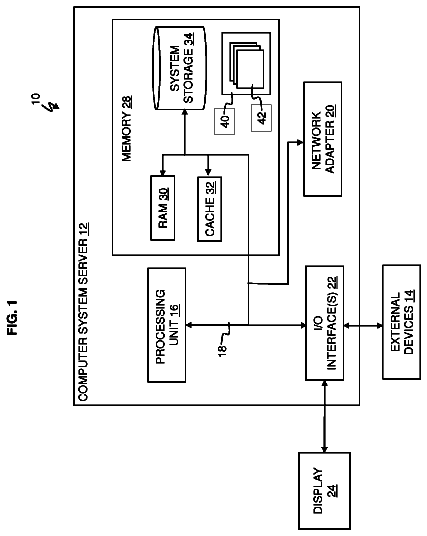
1 of 7 drawing sheets so far from the published document, cropped to the drawing. Every sheet is in the USPTO PDF.
What the patent claimed, word for word. All of it is now free to use.
The invention disclosed relates to a business driven learning solution and related methods for managing the learning and training needs of a sales-oriented organization in a manner that is responsive to dynamic business needs. Among other things, the learning solution disclosed is responsive to an organization's business timelines and goals so as to enable a given organization to manage its learning needs as effectively as it would manage a traditional business. In an implementation of the present invention, the business driven learning solution and related methods may be used for managing the learning and training needs of the sales force of an organization.
Employee training and education is becoming increasingly critical to the success of organizations within today's modern global economy. As a minimum requirement to remaining competitive, companies that operate in today's complex industries need employees who remain knowledgeable and current in areas of expertise that serve the companies' ever-evolving strategic objectives. Executives of such companies feel this need for improved learning solutions as it is brought to the forefront of their strategic objectives by various business imperatives of the competitive market.
There are a number of forces driving the need for organizations to improve their training organizations. Organization executives are facing urgent business imperatives that demand changes in their training organizations. For example, one such business imperative felt by the executives of many companies is the need to accelerate their "clock speed" when introducing new or repositioning existing product offerings. A difficulty faced by learning systems in supporting this rapid change in business positioning is that many different individuals in a given company perform many different functions and therefore require different types of training to implement a single change in business position. Sales forces in particular must be effectively trained regarding new product features and value propositions before the best sales results can be obtained. Similarly, new positioning of existing products (e.g., pitching groups of products together as providing improved solutions to clients) requires sales forces to understand not just products individually, but their interplay in forming solutions for target clients in order to effectively implement this strategic business objective. The longer such training takes, the more the implementation of strategic business objectives is delayed.
Likewise, learning capabilities of a company must be able to support organization growth and expansion. Leaders of companies may be forced to forgo undertaking bold yet lucrative business growth plans, because bold growth plans require that the company has the ability to rapidly attract, train, and/or deploy a skilled workforce. Thus, improved learning capabilities are needed that accelerate the training speed and speed to competency of an entire workforce.
Similarly, company executives may have a business imperative requiring the initiation of a culture change within the company that will enable a pre-existing workforce to more easily adapt to the company's changing business focus. Learning solutions must therefore also serve as a tool to drive culture change within an organization as an executive's desire to drive a new corporate mindset often has a strong learning component. Common culture change themes that require significant learning efforts include quality control changes, initiatives to increase shareholder value, and steps for adopting a customer-centric business focus.
Furthermore, corporate mergers and reorganizations are commonplace occurrences in many of today's markets and industries. Such mergers and reorganizations often necessitate massive post-merger/reorganization integration efforts by the remaining companies. This not only requires reconciling pre-existing business goals and strategies, but also integrating and upgrading educational and training efforts within the remaining corporate entities. Improved learning solutions are therefore needed to deal with such occurrences by being able to easily modify existing training efforts to match the changing business environment.
Finally, the managements of contemporary companies often view their companies' internal training organizations or efforts as bloated cost centers with very little visibility into cost allocation and virtually no accountability when it comes to returning adequate value on learning investments. Since companies are always looking across their organization to identify ways to manage costs, it would be beneficial if learning solutions were able to be used to allocate learning and training costs accurately across different business units and ventures so as to facilitate cost management. It would be further beneficial if such learning solutions could be used to generate strategic cost reductions or even spur or generate profits. With a proper learning solution, it is possible that training can be leveraged outside the organization for revenue growth and cost savings opportunities. Some examples of this include leveraging corporate knowledge in a new way to create a new source of revenue, using training to align value chain partners, or reducing support costs by placing information with the customer.
Increasingly, business organizations are recognizing the need for training organizations that are responsive to the foregoing business imperatives, and that can deliver results that align with business strategies. The learning solutions currently applied in contemporary organizations fail to satisfy these imperatives.
For example, contemporary sales-oriented learning efforts focus on the features and architecture of the product being sold. Product-focused training of sales forces therefore may be inconsistent across product lines, e.g., in terms of objectives and format. This may result in unnecessary and redundant training content, and an ineffectiveness in meeting the business objectives of the organization. This product-focused approach emphasizes the unique or improved product features without incorporating an employer's business goals. Product-focused training is especially detrimental to sales in so-called "high tech," financial, or computer software industries where a product line may consist of numerous components that can be integrated separately or in various combinations to provide customized "solutions" to clients. The selling employee under a product focused approach is not trained to understand the strategic markets, the customers' business requirements, the overall value potential of a given solution, and the market factors driving the need for the solution. By focusing learning efforts only on a particular product or series of products, the selling employee is not equipped to sell complete solutions that meet customers' and employers' overall corporate objectives.
As another example, contemporary organizations often use their human resource departments or other administrative departments to offer instructor-led training courses for employees at a central location. While this approach may appear attractive from a purely financial perspective because it limits personnel and infrastructure costs, this solution becomes less suitable when the employee students are located in various remote areas (thus requiring travel) and/or have independent, conflicting schedules of availability for instruction. Furthermore, recruiting and training qualified instructors requires significant effort and specialized skills from a learning organization's coordinators. Thus, this approach is less suitable as the number of necessary instructors grows (such as where many courses are needed or where the same is course is needed in various languages).
Computers have been increasingly employed to address many of the logistical issues linked with coordinating the delivery of learning content and/or instruction that needs to be taught multiple times, that needs to be taught to large numbers of students who are remotely located, and/or that needs to be taught to a student body that has conflicting schedules of availability. For example, computer-delivered instruction systems are available wherein students can receive instruction via a computer over a network by accessing a central repository of previously prepared electronic learning ("e-learning") content courses and/or materials stored on a remote server. This approach can be used to provide independent, self-paced instruction on a student by student basis whereby each student can log on to the remote server and access desired e-learning instructional content at any time. Unfortunately, the compiling and maintenance of self-paced computer delivered training requires both subject matter and technical expertise and much development effort to approach the level of effectiveness of classroom training with an instructor. Additionally, such computer-delivered instruction systems are unfortunately not ideal for all types of learning needs, such as where group activities, student-to-student interactions, or student-to-instructor interactions are essential for optimum learning.
Computer networks have likewise been used to provide virtual classrooms where a single instructor teaches a large number of remotely located students simultaneously using web conferencing, remote presentation or like technologies. While the virtual classroom approach can reduce personnel, travel and physical infrastructure needs and still retains the flexibility of relatively easy course content updating, it does not allow self-paced instruction for students having independent and conflicting schedules of availability. Students of a virtual classroom still have to "attend" class at a pre-scheduled time as opposed to reviewing computer delivered content whenever they have available time or wish to work on a given course. Furthermore, virtual classroom technologies can require that access for every remote student be made via a highly robust computer network capable of handling high bandwidth communications applications. Many organizations simply will not have the technical infrastructure to be able to utilize virtual classrooms for all of their learning needs.
Another disadvantage of contemporary learning solutions is that they fail to provide the ability for executives to monitor performance of learning solution efforts in achieving their underlying purpose of furthering business strategies. It would be helpful if executives had access to various performance or success metrics that measure the performance of a given learning solution similar in manner to how performance is measured in traditional performance driven areas of their core business. Useful metrics relating to a learning solution could include, for example, output-related metrics that indicate course hours produced or student days delivered, and metrics which attempt to quantify the success training is having in serving its intended purpose. The inability to accurately monitor performance metrics leaves organizations and their learning services with an inability to ensure service quality, allow for accurate resource forecasts, allocate costs and provide a means to measure the learning solution's success helping the organizations meet goals and commitments. This aspect makes it difficult for executives and learning administrators to make certain that ongoing and future learning efforts are continuously aligned with business strategies, priorities and goals.
The identification and prioritization of learning needs, the selection of learning approaches, the development of learning content, the delivery of learning instruction, and the overall management and administration learning efforts and content require learning solutions that are responsive to business strategies, imperatives, and logistical factors. Contemporary learning solutions employed in the business world have failed to integrate the many complicated processes and systems that must be implemented to ensure that a given company's learning efforts meet their learning needs as dictated by prioritized business strategies.
Thus, there remains a need in the art for an improved learning solution and related methods that overcome the above-described and other problems associated with current learning solutions for sales-oriented organizations. Such a solution preferably utilizes a customizable blend of computerized on-line instructional systems and instructor based services that allow for the efficient distribution of course content and materials as well as enhance the system response time to instructor, student, and/or resource concerns and issues. The aforementioned learning solutions and related methods should provide the ability to respond quickly and efficiently to logistical and resource concerns in order to minimize the time to achieve sales force competency.
In light of the above-described and other deficiencies inherent in contemporary learning solutions, it is an object of the present invention to provide a learning solution and related methods that ensure that a sales oriented organization's instructional content and delivery mechanisms are aligned with the business and learning objectives of that organization. Such learning solutions and related methods are capable of dramatically improving an organization's efficiency by identifying, prioritizing, developing and delivering employee training efforts and by providing dynamic system monitoring capabilities that ensure the effectiveness of the critical employee training efforts.
Concurrently, it is an object of the present invention to provide a learning solution and related methods that are driven by sales strategies and business priorities in all aspects of learning. Such aspects of learning include the identification and prioritization of learning needs, the selection of learning approaches, the development of learning content, the coordination and delivery of learning instruction, and the overall management and administration of learning efforts.
Further, it is an object of the present invention to provide a learning solution and related methods that adapt the delivery of desired instruction to the most suitable mechanisms, including instructor led training, virtual classroom training, computer delivered instruction, printed reading materials, and appropriate combinations thereof.
Additionally, it is also an object of the present invention to provide a learning solution that allocates learning costs and bills appropriate business units or projects for learning effort expenditures such that the solution can be implemented by a business partner or sub-unit organization operating independently like a separate business entity from the organization requesting/needing the learning services. In this manner, learning services needs of an organization can either be outsourced to a separate business entity or still managed internally as an independent business unit with the same built-in imperatives to reduce costs and drive profit centers as those business units and/or external organizations that will ultimately pay for the learning services.
Furthermore, it is an object of the present invention to provide a learning solution and related methods that are embodied in a network of learning systems which facilitate the monitoring, organization, and reporting of learning solution performance metrics that enable efficient coordination of learning efforts with business strategies and priorities.
Additionally, it is an object of the present invention to provide a learning solution and related methods that offer standardized sales training modules implemented flexibly across an organization's product lines, resulting in a standardized training format that consistently meets the organization's business objectives.
Finally, it is an object of the present invention to provide a learning solution and related methods that enable a sales force to identify the needs and goals of customers and to provide customers with a solutions-based sales approach that reaches across traditional product delineations.
To achieve these and other objects, the disclosed learning solutions and related methods according to the present invention manage the learning and training needs of a sales-oriented organization in a manner that is highly responsive to dynamic business needs. Among other things, the learning solutions and related methods disclosed are responsive to an organization's business timelines, sales strategies, goals and strategic objectives so as to enable the organization to have its learning needs managed effectively in a manner similar to the management of a traditional client services business.
Learning solutions according to embodiments of the present invention comprise four basic modules of interrelated and interdependent business processes for the identification and prioritization of learning needs, the selection of learning approaches, the development of learning content, the coordination and delivery of learning instruction, and the overall management and administration learning efforts. The interaction of the various modules of business processes with one another helps to define the services, performance metrics and application capabilities, among other things, required to support an optimized outsourced solution to meet a given organization's business learning objectives.
One of the four basic modules of the learning solution comprises a business strategy alignment module to accept business strategy input from the learner organization, prioritize learning requests/needs and assist in developing and delivering appropriate learning efforts by communicating relevant information to processes in the various other modules of the learning solution.
Learning solutions according to the present invention also include a content management module that manages the processes for learning content that is developed internally, or alternatively licensed from external sources, and that is necessary to implement the learning efforts identified and prioritized by the business strategy alignment module in light of logistical concerns. Content management modules according to embodiments of the invention can also tag and catalog learning content, such as in the form of a database of reusable knowledge objects, appropriately such that it can be reused in future learning efforts as appropriate and also that it may be easily accessed for delivery to the learner as required.
Learning solutions according to embodiments of the present invention also comprise a delivery module that implements the business processes used in the learning solutions for coordinating the delivery of high quality training across a plurality of media in a cost efficient manner. Learning efforts provided by the learning solutions according to the present invention in response to learning requests are therefore able to utilize combinations of instructor led training ("ILT"), virtual classroom training (such as with a live instructor connected to students through videoconferencing or over a computer network like the Internet), printed instructional materials and interactive computer software-based training mechanisms. Further, the delivery module coordinates the processes of allocating and scheduling of the use of facilities where training takes place and other resources with appropriate instructor and learner commitments.
Additionally, learning solutions according to embodiments of the present invention comprise a learning administration module that facilitates centralized learning management and administrative services across the entire learning solution. Such learning administration modules enable, among other things, the solution to provide registrar functions including tracking the training records of students and the availability of course offerings. Specific learning administration processes can include curriculum management, course registration, course fulfillment support, and record keeping of training results.
Preferred embodiments of the learning solution also include a learning business management module. This module impacts and interacts with the previously discussed modules that make up the learning solution. The learning business module establishes goals for effectiveness and efficiency of the learning solution and monitors quantitative and qualitative measures of success.
In an implementation of the present invention, the business driven learning solution and related methods may be used for managing the learning and training needs of the sales force of an organization. According to the present invention, necessary standardized sales training objects are identified by the business strategy alignment module, which are then developed and implemented flexibly across all product lines via the remaining modules of the invention. The result is a standardized training format that consistently meets the organization's business objectives.
Specifically, in developing sales training objects within the content management module, it is advantageous to focus on the organization's business strategy, e.g., the target customers, competition, customer needs, etc., rather than focusing on the details of the specific product being sold. Examples of sales training objects may include a solutions overview object, a customer business needs object, a value proposition object, a solutions components object, a competition object, a cost justification tools and techniques object, and an executive selling and solutions object. The sales training objects serve to provide a template for sales training that is focused on a solution, and how to position and sell the solution, rather than on the products that make up the solution. While the other sales training objects are individually tailored to each new product, the executive selling and solutions object includes a series of one-time courses that provide generally applicable sales training and complement the other sales training objects. As a result, the sales force is educated, understands the customers' business requirements, and is able to craft specific value propositions to a given customer with respect to that solution. These value propositions are customized based on a particular customer's circumstances, what is important to the customer, and what the sales personnel have gathered as far as the customer's needs. Thus, the training is customer-centric as opposed to product-centric.
Once the training content is developed, in the form of multiple objects, it serves as a reusable template, which may be catalogued via the content management module used over again for different types of products. This reusable template ensures that there is a consistent set of objectives, which are adhered to for any given product or solution as it rolls out in the training. Delivery methods for the training content are managed via the invention's delivery module and may include self-paced web, interactive web, and a blending of e-learning and live instructor-lead classroom training. The use of skilled instructors enables the sales force to receive specific feedback and participate in discussions focused on their customer's business needs and the value proposition of the training solution.
In preferred embodiments of the present invention the learning solution is implemented by an independent business entity that is acting according to a service level agreement with an organization in need of learning services outsourcing. A service level agreement is a contract between the learning solution services provider and the licensing (i.e., outsourcing) organization that establishes the requisite quality and effectiveness levels of the learning solution services as measured by one or more pre-selected performance metrics. Suitable metrics can relate to measurements of the output of a learning solution (e.g., instructional course-hours developed or delivered), measurements of performance level of learning efforts provided by the learning solution (e.g., student satisfaction, test and/or certification results), and measurements of the business impact of learning efforts (e.g., improvements in employee productivity, such as an increase in sales following training). The terms of a service level agreement may require (as compared with the levels measured before the implementation of a given learning effort), for example, minimum learning-output metrics values relating to increases in student enrollment and course hours, minimum learning-performance metrics relating to employee certifications, and minimum learning-impact metric increases regarding gross sales generated by each trained salesperson. Such an outsourced learning solution tracks and reports pre-selected performance metrics to the outsourcing organization on a continuous basis to facilitate cost allocation among appropriate business units or to specific learning efforts (equivalently, "training efforts"), and uses them according to business management processes within the learning solution to gauge the level of effectiveness of particular learning efforts in helping the organization reach desired business objectives and thus refine future learning efforts.
The invention having been thus described, preferred embodiments thereof will now be described in detail with reference to the following figure.
FIG. 1 is a schematic diagram depicting the interaction of the basic modules of a learning solution according to embodiments of the present invention.
FIG. 2a is a flow diagram depicting a preferred process utilized in embodiments of the present invention to enable alignment of learning efforts with prioritized business strategies.
FIG. 2b is a diagram depicting an exemplary learning blueprint that could be utilized in preferred embodiments of the invention to prioritize and fund learning efforts implemented by learning solutions of the invention.
FIG. 3 is a flow diagram depicting the interface between business strategy alignment and content management for a solutions oriented approach to selling products according to embodiments of the present invention.
FIG. 4 is a flow diagram depicting an iterative process for developing learning content according to embodiments of the present invention.
FIG. 5a is a chart depicting redundancy and inconsistencies inherent in a typical contemporary learning solution.
FIG. 5b is a chart depicting how training objectives are aligned and standardized in an embodiment of the present invention.
As used hereafter, the term "organization" is used broadly to identify the business entity that is in need of a solution to provide learning services. The learning solutions according to the present invention can either be outsourced by such organizations (whereby the processes of the learning solution are implemented by a third party learning services provider under contract to an organization) or can be implemented internally within the organization (as, for example, an independent business unit within the "outsourcing" organization). In embodiments of the invention wherein a learning services business unit within an organization provides learning services to other business units within the organization, the learning services business unit would still feel the need to satisfy customers as it would be responsible for generating a "profit" by meeting predefined performance metrics set by "client" business units (i.e., the other more traditional business units of the organization) and allocating learning effort charges as expenses to the client business units as appropriate. In this manner, the learning solutions according to the present invention can be said to be "outsourceable" by an organization.
A learning solution 100 is conceptually depicted in the schematic diagram of FIG. 1. Solution 100 comprises modules of interrelated and interdependent business processes, along with appropriate tools for efficiently implementing these processes according to the business desires of the organization. The interaction of the various modules of business processes with one another helps to define the services, performance metrics and application capabilities, among other things, required to support an optimized outsourced solution to meet a given organization's business learning objectives.
As depicted in FIG. 1, business strategy alignment module 110 utilizes processes and tools (as described below) to accept business strategies from the organization. It then aligns the organization's learning goals and training efforts with the organization's current strategy, business objectives and organizational structure. The business strategy alignment processes identify the learning objectives of the organization, and assist in developing and delivering a particular curriculum by providing relevant information to processes in the various other modules of solution 100. This alignment ensures that learning curricula is designed to meet the organization's most current needs.
Once solution 100 identifies what types of learning or curriculum are desired and/or required by the organization, the solution is also able to deliver suitable learning materials to fill those needs. Content management module 120 includes processes and associated tools required to build and/or buy appropriate learning content based upon learning objectives and delivery requirements. As will be readily appreciated by one of ordinary skill in the art, it will not always be the best approach for the learning solution 100 to internally develop deliverable learning content in response to a learning effort requested by the organization. On one hand, time constraints, subject matter constraints, and other logistical issues may make it more cost effective for the learning solution to purchase or license previously developed learning content as opposed to developing or compiling new content. Alternatively, the specialized needs of the organization may make it difficult to utilize outsourced or precompiled content. Content management module 120 facilitates solution 100 taking factors such as these appropriately into consideration when assembling suitable learning content.
Once learning content has either been obtained from a third party or developed internally, business processes and associated tools of content management module 120 create, manage and operate a central repository of learning content and knowledge objects. Content management business processes contained in module 120 tag and catalog learning content and knowledge objects appropriately such that they can be reused as appropriate and may be easily accessed for delivery to the learner when necessary.
Delivery module 130 in turn contains business processes and related tools for providing the delivery of high quality training across a plurality of media in a cost efficient manner. Suitable mechanisms and media by which learning content may be delivered to students according to embodiments of the present invention can include combinations of computer-delivered or web-based courses available over electronic networks (such as the Internet) for self-paced instruction, interactive virtual classroom instruction and related media (both video and animation) available over electronic networks which utilize instructors to lead classrooms of remotely located students, in person instructor-led training, and paper-based products used in conjunction with by self-paced or instructor training. Further, the delivery business processes in module 130 manage coordinating the scheduling of the facilities where training takes place with appropriate instructor and learner commitments.
Learning Administration module 140 contains business processes and associated tools necessary to provide learning management and administrative services across the entire business driven learning solution 100. Exemplary learning administration business processes include individual curriculum management, course registration, record keeping of training results, and related financial settlement information (such as where metrics are used by the organization to gauge the performance of the solution 100).
Learning solution 100 also may include a learning business management module and an operations module. The learning business management module presents the capability to manage the overall lifecycle of a learning initiative and to provide continuous improvement to currently ongoing and future learning initiatives. The operations module interacts with all other modules of solution 100 to provide service control, service integration and continuous improvement to existing business processes.
The processes of the business strategy alignment module 110 are central in ensuring that the learning efforts produced by the learning solution entities are completely aligned with the strategic objectives of the organization. The business strategy alignment module 110 passes the requests from the organization (or business units thereof) for new learning efforts or for modified learning efforts through a formal process whereby the requested learning effort becomes cast in a consistent direction with organizational strategic objectives and priorities, funded from appropriate budget allocations, and transformed into a work in progress by the learning solution 100. Referring now to FIG. 2a, a business strategy alignment process 200 utilized in preferred embodiments of the present invention is depicted and comprises various steps that enable newly requested and ongoing learning efforts to be aligned with prioritized business strategies and goals.
As depicted in FIG. 2a, business strategy alignment process 200 first prepares 210 a customized learning blueprint for the organization. A learning blueprint provides a grouping and organization of various business strategies and goals across the entire organization and identifies potential areas of learning. Each organization's learning blueprint is therefore unique and is used by the business strategy alignment process 200 and therefore module 110 to determine which potential learning efforts (from the many requested by various entities within the organization) introductions or modifications are funded (including from which budget allocation and to what amount) and pursued (i.e., if the requested learning effort consistent with one or more stated learning strategies or objectives reflected in the blueprint) and exactly how the request is fulfilled (i.e., requested learning efforts that map to higher organizational priorities may be entitled to different funding or resources). An organization's learning blueprint is typically reviewed and revised periodically by business strategy alignment module 110 for the organization, such as once or twice a fiscal year to reflect changing business strategies and learning services budgets. Of course, an organization's learning blueprint can be reviewed and revised at any time whenever significant changes in the learning focus and business strategies or priorities of the learner organization occur.
FIG. 2b depicts an exemplary learning blueprint 211 that could be utilized to prioritize and allocate funding to learning efforts implemented by learning solutions of the invention for a particular hypothetical organization that is outsourcing its learning needs. As shown in FIG. 2b, a learning blueprint 211 itemizes different strategic objectives of the organization into various tracts 212 which can represent, for example, organizational areas of focus, product groups, business units, or departments within the organization. For a given organization, as depicted in learning blueprint 211, a tract can be assigned, for example, for product segments, sales skills, general employee development and organization culture transformation. For each such tract, the learning blueprint itemizes initiatives 213 that reflect particular areas in which the organization expects to focus a significant portion of its attention and expenditures on learning efforts. Thus, an employee development tract can contain separate initiatives for new employee orientation, and training regarding an upcoming organization-wide computer system change. Similarly, the product segment tracts can include separate initiatives for major product lines (e.g., custom database solutions) or even individual products of high priority (e.g., new products introducing new product lines). For each tract 212 and/or each initiative 213 itemized within the learning blueprint 211, overall budget caps can be assigned to assist the learning solution in obtaining, managing and delivering learning content that serves the strategies and priorities of the organization.
Referring again to FIG. 2a, the business strategy alignment process 200 initially receives a request 215 for learning services (a "learning effort request") from an individual or business unit of the organization. The learning effort request details what the individual or business unit submitting the request believes is an important learning need that requires a new or modified learning effort. According to embodiments of the invention, a learning effort request can be made in any form, including a verbal communication, a voicemail message, a letter, or an email message directed to a contact for the business strategy alignment module. Preferably, the request is provided on a standardized form (which, even more preferably, can be electronically submitted) that is completed by the requesting entity, and where the form contains queries designed to elicit sufficiently detailed information that allows the business strategy alignment module contact to understand the request sufficiently. After receiving a learning effort request, an initial determination 220 is made regarding whether the request is addressable through training efforts or whether it would alternatively be best addressed through more simple measures like documentation or a newsletter produced by the resources of the requesting business unit of the organization. In the event that the learning effort request is not deemed suitable for the learning solution, at step 225 a rejection is sent to the requester. Alternatively, at 225, a query for a more detailed learning effort request is sent to the requester.
Whenever a learning effort request is deemed to present a learning need that is addressable by the learning solution, process 200 prepares 230 an initial action proposal for the requested learning effort in the form of a preliminary learning effort plan ("preliminary LEP"). The preliminary LEP makes a pre-production judgment as to the type of delivery that will be most advantageous (Web-based course for self-paced instruction, a course involving live or virtual classroom time with an instructor, etc.) given the learning effort request and likely logistical/budget constraints, and whether the request should be addressed by creating wholly new learning content or by modifying the content of an existing learning effort.
The description continues in the full USPTO document.
About 5,599 words. The USPTO PDF has it with every drawing.
Fees are due 3.5, 7.5 and 11.5 years after grant. This patent expired on October 1, 2025, so the fee marked "not paid" was the one that went unpaid.
Business driven learning solution particularly suitable for sales-oriented organizations
Filed Dec 2002 · published Jan 2004Business driven learning solution particularly suitable for sales-oriented organizations
Filed Dec 2002 · granted Apr 2010Business Driven Learning Solution Particularly Suitable for Sales-Oriented Organizations
Filed Feb 2010 · published Aug 2010Business driven learning solution particularly suitable for sales-oriented organizations
Filed Feb 2010 · granted Jul 2011BUSINESS DRIVEN LEARNING SOLUTION PARTICULARLY SUITABLE FOR SALES-ORIENTED ORGANIZATIONS
Filed Jul 2011 · published Oct 2011Business driven learning solution particularly suitable for sales-oriented organizations
Filed Jul 2011 · granted Oct 2013Earlier publications, parents and continuations. None of them can still be enforced, or this patent would not be listed.
Prior art cited by the examiner or applicant. Useful when you check your own idea for novelty.
Everything on this page comes from the documents linked above.


