 Lapsed, fee not paid20 drawings
Software & Apps · US 8,543,620 B2
System and method for independent verification and validation
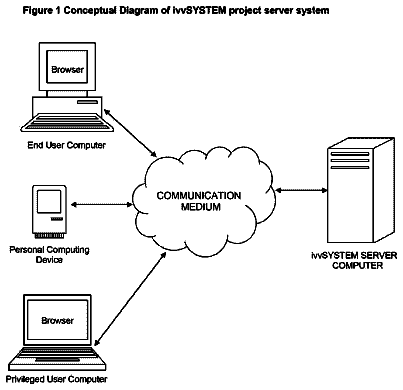
This invention is to solve the high cost of IV&V by simplifying the complex logistics of project management.
US 8,543,683 B2 · Assignee: Microsoft Corporation · Inventors: Kiciman; Emre Mehmet et al.
Sheet 1 of 10 from the published document. All sheets in the USPTO PDF
Computer-executable instructions comprising some or all of a program can be delivered to a client for execution on a real-time basis such that the client receives anew the computer-executable instructions for each new execution of the program. Such an environment enables instrumentation instructions to be inserted into the computer-executable instructions after a request and prior to the delivery of the computer-executable instructions. The inserted instrumentation instructions can be spread across multiple deliveries of the same computer-executable instructions, and they can be modified to account for information received from previously inserted instrumentation instructions. The instrumentation instructions can be inserted as part of the server process, the client process, or as part of a proxy server that can be used at the discretion of the program developer.
Traditionally, software, in the form of computer-executable instructions embodied on a computer-readable medium, has been distributed by providing users with a single version of such software through a compact disk (CD) or other computer-readable medium that simultaneously comprises all of the software's computer-executable instructions. Such distribution mechanisms required specific update cycles, where new versions of software were released by announcing their availability and requiring existing users to obtain new CDs or other computer-readable media. An increasingly popular method of software distribution, however, eschews computer-readable media that simultaneously comprise all of the software's computer-executable instructions in favor of computer-readable media, such as computer networking hardware and connections that deliver the software's computer-executable instructions to a u
1 of 10 drawing sheets so far from the published document, cropped to the drawing. Every sheet is in the USPTO PDF.
What the patent claimed, word for word. All of it is now free to use.
Traditionally, software, in the form of computer-executable instructions embodied on a computer-readable medium, has been distributed by providing users with a single version of such software through a compact disk (CD) or other computer-readable medium that simultaneously comprises all of the software's computer-executable instructions. Such distribution mechanisms required specific update cycles, where new versions of software were released by announcing their availability and requiring existing users to obtain new CDs or other computer-readable media.
An increasingly popular method of software distribution, however, eschews computer-readable media that simultaneously comprise all of the software's computer-executable instructions in favor of computer-readable media, such as computer networking hardware and connections that deliver the software's computer-executable instructions to a user on an as-needed basis. Such real-time delivery of computer software enables developers to continuously update their software, and allows users to continuously obtain the most up-to-date version. In particular, the software, and distribution environment can be such that the user must obtain the computer-executable instructions from a centralized location each time the user executes the software. In addition, the nature of the software's delivery encourages the use of distributed computing techniques, whereby one or more components of the software would be executing on the user's computing device, while one or more other components of the software would be executing on a centralized server computing device remote from the user's computing device.
Often, software that is delivered using real-time distribution mechanisms seeks to provide platform-independent functionality. For example, one environment in which real-time distribution of software is prevalent is the World-Wide Web (WWW), where software comprises both computer-executable instructions executing on a server computing device and, operating in concert, scripts that are downloaded by and executed by a web browser. Because web browsers exist for a variety of hardware and software platforms, including computing devices based on differing microprocessor architectures and computing devices executing differing operating systems, software that is incompatible with one or more of these platforms risks losing popularity by immediately excluding some percentage of users. Consequently, web-based software delivered in a real-time manner generally seeks to provide functionality for users of multiple computing platforms. Unfortunately, because of the heterogeneity of client computing devices, the developers of software delivered in a real-time manner can be handicapped when attempting to test their software in a manner approximating an expected range of usage once deployed.
As software delivered in a real-time manner increases in complexity, it is not just the heterogeneity of client computing devices that can cause difficulties for the developers of such software. Other factors, such as the workload generated by the software, or its dependence on third-party services and networks, can likewise render the creation and maintenance of such software more difficult.
To observe and monitor the behavior of computer-executable instructions provided to, and executed on, a client computing device, additional monitoring instructions can be added to the computer-executable instructions to record specific events or other information and then return such information. In one embodiment, a modifying component can intercept instructions being delivered from a server computing device to a client computing device, and can add additional monitoring instructions to the intercepted instructions. Information collected by such monitoring instructions can be returned to the modifying component, or associated elements, and can be used to inform future modifications of the same intercepted instructions when requested again by a client. In an alternative embodiment, the modifying component can add monitoring instructions in such a manner that each client receives only a portion of the overall monitoring being performed with respect to the intercepted instructions.
The modifying component can, in one embodiment, comprise a parser that can identify elements within the intercepted instructions that could be monitored, a filter that selects certain of the elements based on an implemented monitoring policy, and a modifier that modifies the selected elements in accordance with the implemented monitoring policy. Monitoring policies can be directed towards performing runtime analysis and debugging of the intercepted instructions, towards improving the performance, on the client, of the intercepted instructions, or towards performing usability evaluations of the overall software which includes the intercepted instructions. In one embodiment, a monitoring policy can time one or more elements of the intercepted instructions so as to determine if any elements are taking too long to execute on the client computing device. In another embodiment, a monitoring policy can mark all of the elements of the intercepted instructions that either create objects or close objects on the client computing device and the monitoring policy can then search for memory leaks. In a further embodiment, a monitoring policy can mark some or all of the elements of the intercepted instructions that present choices to a user so as to monitor the user's selections and behavior.
The modifying component can be implemented on a separate server computing device from the server hosting the computer-executable instructions being provided to the client computing device, or it can be implemented on the hosting server or even the client computing device. If implemented on a separate server computing device, the hosting server can redirect communications to the server implementing the modifying component, thereby enabling the modifying component to act as a proxy for the hosting of the instructions. Alternatively, if implemented on the hosting server computing device, the modifying component can interface with the hosting software enabling communications with the client computing device. If implemented on the client computing device, the modifying component can act as a plug-in to the software hosting the instructions being downloaded, or it can act as a local proxy.
In a still further embodiment, the modifications can be done in advance such that multiple, differently modified versions of an application can be stored at the modifying component. The modifying component can then dynamically choose which version to provide to a client computing device. Alternatively, rather than performing the modifications in advance, the modifying component can, as it modifies an application, cache the modified application so as to respond more efficiently to subsequent requests. When subsequent requests are received, the modifying component can then choose to respond with a cached version, or it can generate, and, optionally, add to the cache, a new, differently modified version of the application.
This Summary is provided to introduce a selection of concepts in a simplified form that are further described below in the Detailed Description. This Summary is not intended to identify key features or essential features of the claimed subject matter, nor is it intended to be used to limit the scope of the claimed subject matter.
Additional features and advantages will be made apparent from the following detailed description that proceeds with reference to the accompanying drawings.
The following detailed description may be best understood when taken in conjunction with the accompanying drawings, of which:
FIG. 1 is a block diagram of an exemplary system that provides context for the described functionality;
FIG. 2 is a block diagram of an exemplary computing device;
FIG. 3 is a block diagram of an exemplary system illustrating modification of software provided in real-time;
FIG. 4 comprises two block diagrams of alternative exemplary systems, both illustrating modification of software provided in real-time;
FIG. 5 is a block diagram of an exemplary instruction modification component;
FIG. 6 is a communicational flow diagram of exemplary modifications of software provided in real-time to multiple recipients;
FIG. 7 is a communicational flow diagram of another form of exemplary modifications of software provided in real-time to multiple recipients;
FIG. 8 is an exemplary instruction modification flow diagram;
FIG. 9 is an exemplary iterative instruction modification flow diagram; and
FIG. 10 is an exemplary instruction modification in parallel flow diagram.
The following description relates to the modification of computer-executable instructions representing some or all of a program that is delivered to a user over a network connection each time the user initiates the program. An instruction modification component can reside on the user's computing device, the server computing device hosting the program, or on an intermediate proxy device. A request for the computer-executable instructions from the user's computing device can be directed to the modification component, which, upon receiving such a request, can intercept the delivery of the instructions from the server and can modify the instructions in accordance with one or more instrumentation policies. An instrumentation policy can comprise instruction modifications directed to runtime analysis and debugging, modifications directed to improvements in performance, and modifications directed to user monitoring and improvement of the user experience. The instruction modifications of an instrument policy need not be directed to a single intercepted set of computer-executable instructions, and can, instead, be spread out across multiple instances of the computer-executable instructions being delivered to multiple users, or can even be adaptive in nature, such that the results of an initial set of modifications are used to tailor subsequent modifications of the same computer-executable instructions.
The techniques described herein focus on, but are not limited to, the modification of script-based computer-executable instructions delivered within the context of an environment based on the World Wide Web. In particular, modern web browsers are capable of acting as a host for the execution of scripts received from a server computing device in conjunction with one or more web pages being hosted by the server, or an associated server. The scripts are often designed to interact with one or more collections of computer-executable instructions executing on the server computing device and, in such a manner, perform useful tasks on behalf of the user. Because they work together in concert, the combination of the script-based executable instructions delivered to, and hosted by the web browser, and the computer-executable instructions executing on the server computing device is thought of as a single application, and is commonly known as a web-based application. However, while the descriptions below make reference to web-based environment, and illustrate exemplary instruction modifications with reference to script-based instructions within the context of a web application, the teachings below are not intended to be so limited. Indeed, as will be known to those skilled in the art, the mechanisms described below do not depend on, or require, any element unique to web applications, or the WWW in general, and, as such, are equally applicable to any computer-executable instructions delivered from one computing device to another on an as-needed basis. Such environments can include cluster computing, grid, data center or enterprise computing environments with the appropriate software deployment or software update systems in place.
Turning to FIG. 1, an exemplary network system 99 is illustrated comprising the network 90 itself, personal computing devices 10 and 20, server computing devices 30 and 40, and a storage device 50 associated with the server computing device 30. Each of the personal computing devices 10 and 20 can be executing a web browser 11 and 21, respectively. In addition, the server computing device 30 can be hosting a website 31. As will be known by those skilled in the art, the website 31 can comprise, not only the communicational software necessary to receive, and respond to, requests from web browsers, such as web browsers 11 and 21, but also comprises the one or more related individual web pages, and their associated content, such as embedded images and the like.
The website 31 can comprise one or more web pages that reference scripts, such as those contained in the script file 63 that is stored on the storage device 50. As will also be known by those skilled in the art, the scripts of the script file 63 can be provided to a requesting web browser as part of the web page that referenced those scripts. Thus, as shown in FIG. 1, the web browser 21 can have requested a web page of the web site 31 that incorporated the script file 63 and, as a result, the script file 63 can be provided to the web browser 21. Upon receipt of the script file 63, the web browser 21 can interpret and execute the scripts contained therein, and the execution of those scripts can generate a client application 62. The client application 62, representing the running form of the scripts of the script file 63, can interact with a server application 61 and, together, the combination of the client application 62 and the server application 61 can be considered a single network application, or program, that provides utility to the user of the personal computing device 20.
Although not required, the descriptions below will be in the general context of computer-executable instructions, such as program modules, being executed by one or more computing devices. More specifically, the descriptions will reference acts and symbolic representations of operations that are performed by one or more computing devices or peripherals, unless indicated otherwise. As such, it will be understood that such acts and operations, which are at times referred to as being computer-executed, include the manipulation by a processing unit of electrical signals representing data in a structured form. This manipulation transforms the data or maintains it at locations in memory, which reconfigures or otherwise alters the operation of the computing device or peripherals in a manner well understood by those skilled in the art. The data structures where data is maintained are physical locations that have particular properties defined by the format of the data.
Generally, program modules include routines, programs, objects, components, data structures, and the like that perform particular tasks or implement particular abstract data types. Moreover, those skilled in the art will appreciate that the computing devices need not be limited to conventional personal computers, and include other computing configurations, including hand-held devices, multi-processor systems, microprocessor based or programmable consumer electronics, network PCs, minicomputers, mainframe computers, and the like. Similarly, the computing devices need not be limited to a stand-alone computing device, as the mechanisms may also be practiced in distributed computing environments where tasks are performed by remote processing devices that are linked through a communications network. In a distributed computing environment, program modules may be located in both local and remote memory storage devices.
With reference to FIG. 2, an exemplary computing device 100 is illustrated. The computing device 100 can represent any of the computing devices 10, 20, 30 or 40 of FIG. 1. The exemplary computing device 100 can include, but is not limited to, one or more central processing units (CPUs) 120, a system memory 130, and a system bus 121 that couples various system components including the system memory to the processing unit 120. The system bus 121 may be any of several types of bus structures including a memory bus or memory controller, a peripheral bus, and a local bus using any of a variety of bus architectures.
The computing device 100 also typically includes computer readable media, which can include any available media that can be accessed by computing device 100 and includes both volatile and nonvolatile media and removable and non-removable media. By way of example, and not limitation, computer readable media may comprise computer storage media and communication media. Computer storage media includes media implemented in any method or technology for storage of information such as computer readable instructions, data structures, program modules or other data. Computer storage media includes, but is not limited to, RAM, ROM, EEPROM, flash memory or other memory technology, CD-ROM, digital versatile disks (DVD) or other optical disk storage, magnetic cassettes, magnetic tape, magnetic disk storage or other magnetic storage devices, or any other medium which can be used to store the desired information and which can be accessed by the computing device 100. Communication media typically embodies computer readable instructions, data structures, program modules or other data in a modulated data signal such as a carrier wave or other transport mechanism and includes any information delivery media. By way of example, and not limitation, communication media includes wired media such as a wired network or direct-wired connection, and wireless media such as acoustic, RF, infrared and other wireless media. Combinations of any of the above should also be included within the scope of computer readable media.
The system memory 130 includes computer storage media in the form of volatile and/or nonvolatile memory such as read only memory (ROM) 131 and random access memory (RAM) 132. A basic input/output system 133 (BIOS), containing the basic routines that help to transfer information between elements within computing device 100, such as during start-up, is typically stored in ROM 131. RAM 132 typically contains data and/or program modules that are immediately accessible to and/or presently being operated on by processing unit 120. By way of example, and not limitation, FIG. 2 illustrates an operating system 134, other program modules 135, and program data 136.
The computing device 100 may also include other removable/non-removable, volatile/nonvolatile computer storage media. By way of example only, FIG. 2 illustrates a hard disk drive 141 that reads from or writes to non-removable, nonvolatile magnetic media. Other removable/non-removable, volatile/nonvolatile computer storage media that can be used with the exemplary computing device include, but are not limited to, magnetic tape cassettes, flash memory cards, digital versatile disks, digital video tape, solid state RAM, solid state ROM, and the like. The hard disk drive 141 is typically connected to the system bus 121 through a non-removable memory interface such as interface 140.
The drives and their associated computer storage media discussed above and illustrated in FIG. 2, provide storage of computer readable instructions, data structures, program modules and other data for the computing device 100. In FIG. 2, for example, hard disk drive 141 is illustrated as storing an operating system 144, other program modules 145, and program data 146. Note that these components can either be the same as or different from operating system 134, other program modules 135 and program data 136. Operating system 144, other program modules 145 and program data 146 are given different numbers here to illustrate that, at a minimum, they are different copies.
Of relevance to the descriptions below, the computing device 100 may operate in a networked environment using logical connections to one or more remote computers. For simplicity of illustration, the computing device 100 is shown in FIG. 2 to be connected to a network 90 that is not limited to any particular network or networking protocols. The logical connection depicted in FIG. 2 is a general network connection 171 that can be a local area network (LAN), a wide area network (WAN) or other network. The computing device 100 is connected to the general network connection 171 through a network interface or adapter 170 which is, in turn, connected to the system bus 121. In a networked environment, program modules depicted relative to the computing device 100, or portions or peripherals thereof, may be stored in the memory of one or more other computing devices that are communicatively coupled to the computing device 100 through the general network connection 171. It will be appreciated that the network connections shown are exemplary and other means of establishing a communications link between computing devices may be used.
As shown in FIG. 2, the network connection 171 can enable the computing device 100 to obtain program modules from one or more other computing devices in a real-time manner. Thus, for example, each time the program modules are to be executed and loaded into RAM 132, they can be obtained anew from a remote computing device via network connection 171. Alternatively, the program modules, after being obtained from a remote computing device via network connection 171, can be retained in a local cache on the hard disk drive 141 for a short, predetermined amount of time, and can subsequently be loaded into RAM 132 from the local cache. Returning to FIG. 1, if the user of the computing device 20 were to quit the client application 62 and browse, with the web browser 21, to another website, and then subsequently return to the website 31 and seek to use the program comprising the client application 62 and the server application 61, the website 31 could again transmit the script file 63 to the web browser 21 so as to enable the web browser 21 to generate the client application 62. This real-time distribution of the program comprising the client application 62 and the server application 61 enables the developers of such a program to be able to provide immediate updates, as the user receives the latest version of the script file 63 each time they seek to use the program anew.
This real-time distribution can be leveraged to modify the scripts of the script file 63 in a continuous manner, and thereby monitor, debug, make more efficient and otherwise improve the user's experience. Turning to FIG. 3, an exemplary network system 200 is shown comprising the personal computing devices 10 and 20, the server computing devices 30 and 40, and the storage device 50 from FIG. 1. However, the exemplary network system 200 further includes a script modifier 210 executing on a server computing device 40. The script modifier 210 can intercept the delivery of the script file 63 from the server computing device 30 to the web browser 21 executing on the client computing device 20, and can modify the scripts of the script file 63 before itself sending the modified scripts to the web browser 21.
In one embodiment, illustrated by the exemplary network system 200 of FIG. 3, the script modifier 210 can be hosted by, and can execute on, a server computing device 40 that is separate and apart from the server computing device 30 hosting the script file 63. For example, the computing devices 30 and 40 can be configured such that server computing device 40 acts as a proxy server for the server computing device 30, thereby causing the personal computing device 20, and specifically the web browser 21, to communicate with the server computing device 40 when attempting to communicate with the server computing device 30. The establishment of the server computing device 40 as a proxy server can be tailored to the development of the program comprising the client application 62 and the server application 61. For example, when a new version of the script file 63 is made available to clients, the server computing device 40 can be used as a proxy for the server computing device 30, enabling developers of the script file 63 the ability to troubleshoot the scripts by using the script modifier 210 in the manner described in detail below. Once the developers become comfortable with the performance of the script file 63, they can modify the proxy settings, and thereby enable the server computing device 30 to communicate directly with the personal computing device 20.
Utilizing the script modifier 210 through an independent server computing device 40 that can be used as a proxy server can enable third parties, independent of the developers of the script file 63, to provide debugging, optimization and monitoring services to a wide range of script authors. However, such an arrangement does add additional communicational complexity between the server computing device 30 and the end user on the personal computing device 20. Turning to FIG. 4, two additional exemplary network systems 300 and 350 are shown, illustrating alternative hosting of the script modifier 210. As illustrated by the exemplary network system 300, the script modifier 210 can reside on the same server computing device as the hosting website 21 and the script file 63 which will be modified. In such a case, the script modifier can be a module of the web server software that is part of the website 21. In the case where the web server software is distributed across many server computing devices, the script modifier modules may coordinate their modifications with each other. Alternatively, as illustrated by the exemplary network system 350, the script modifier 210 can reside on the same personal computing device as the web browser 21 hosting the scripts of the script file 63 which will be modified. While the script modifier 210 can act as a local proxy on the personal computing device 20, it can also be configured as a plug-in, or other extension, to the web browser 21.
The existence of the script modifier 210 need not require any changes to the web browser 21 or the website 31, as the script modifier 210 can operate such that the website 31 is unaware of any interception of the script file 63, and the web browser 21 is unaware that the scripts received are not the original scripts of the script file 63. To further provide for transparent operation, the script modifier 210 can pass through remote procedure calls, responses and other data that may be communicated between the client application 62 and the server application 61. However, additional downloads, by the web browser 21, of scripts, such as those contained within the script file 63, can likewise be intercepted by the script modifier 210.
Turning to FIG. 5, the operational flow 400 illustrates the components of the script modifier 210 with reference to the script file 63. As shown, the script file 63 can be received by a parser 410, which can, initially, identify the script file 63 as comprising scripts which can be modified by the script modifier 210. Subsequently, the parser 410 can identify instrumentation points within the scripts of the script file 63. In one embodiment, an "instrumentation point" can be any instance of a language element, such as a function declaration, statement, variable reference or the program as a whole. The identification of instrumentation points enables the parser 410 to generate an abstract syntax tree representation of the scripts contained within the script file 63 received by the script modifier 210. However, as indicated previously, while the descriptions are directed to script files, nothing in the descriptions relies on any aspect of any scripting language and, as such, the disclosures are equally applicable to binary files or other files not coded in a high-level language. In such cases, the parser can, instead of generating an abstract syntax tree representation, instead generate some other intermediate representation.
Returning to FIG. 5, the parser 410 provides the identified instrumentation points to the instrumentation point filter 420, which can identify the relevant instrumentation points depending on the one or more particular instrumentation policies being applied to the script file 63. For example, if the instrumentation policy being applied to the script file 63 was directed towards collecting information when an error occurred as part of the running of the client application 62, then the instrumentation point filter 420 could filter out instrumentation points such as conditional branches and loops and instead retain only those instrumentation points, such as the instrumentation points that register error handlers, that are relevant to the instrumentation policy. Alternatively, if the instrumentation policy being applied to the script file 63 was directed towards the detection of infinite loops, then the instrumentation point filter 420 would filter out instrumentation points that registered error handlers, and would instead retain those instrumentation points that dealt with loops, such as "for" loops and "while" loops.
The script modifier 210 is not limited to implementing only a single instrumentation policy at any given time or with respect to any given script or script file. Instead, the script modifier 210 can apply multiple instrumentation policies simultaneously. Thus, returning to the above examples, if the script modifier 210 was simultaneously applying both the instrumentation policy that collected error information and the instrumentation policy that detected infinite loops, then the instrumentation point filter 420 would retain for subsequent modification by the rewriter 430, both the instrumentation points directed to error handlers and the instrumentation points directed to loops.
Once the instrumentation point filter 420 has filtered out the instrumentation points identified by the parser 410 that are not relevant to the one or more instrumentation policies being applied by the script modifier 210 to the script file 63, the remaining instrumentation points can be provided to the rewriter 430 as shown in FIG. 5. The rewriter 430 can add additional instructions, or modify existing instructions, in accordance with the one or more instrumentation policies being applied by the script modifier 210. For example, if the script modifier 210 was implementing the instrumentation policy directed towards collecting further information regarding errors, then the instrumentation points which registered error handlers that were provided to the rewriter 430 by the instrumentation point filter 420 could be rewritten to include additional instructions that could collect relevant information, such as the value of the stack at the time of the error, and the particular instruction that caused the error, and store such information in a log. Thus, a modified script file 463 being output by the rewriter 430 could comprise instructions that registered an error handler and additional instructions that logged error-related information, such as stack values and faulting instructions. The modified script file 463 could then be provided to the browser 21 instead of the original script file 63, thereby implementing the instrumentation policy.
Information collected by instructions added by the rewriter can be periodically returned through standard communication mechanisms supported by the web browser 21 or other hosting software on the personal computing device 20. Such information can be received by a log collector 440, as shown in FIG. 5. Thus, returning again to the above example of an instrumentation policy directed to collecting additional information when an error occurs, the additional information collected by the instructions added by the rewriter 430 can be periodically provided to the log collector 440 by the web browser 21. In one embodiment, the rewriter 430 can, in addition to the inserted instructions described above, also insert appropriate instructions to provide for the uploading of logged information to the log collector 440 by the web browser 21.
The instrumentation policy implemented by the script modifier 210 can be distributed across multiple downloads of the script file 63, thereby dividing the overhead consumed by the added instructions across multiple users, and minimizing the impact on any one user. Turning to FIG. 6, an exemplary communicational flow 500 is shown, illustrating the division of an instrumentation policy across multiple downloads of the script file 63. Initially, a web browser 11, executing on the personal computing device 10 can make a request 510 for a web page, comprising references to the script file 63, from the website 31. Analogously, another web browser 21, executing on the personal computing device 20, can make an equivalent request 520. If the script modifier 210 is being implemented on an independent server computing device 40, as shown in FIG. 6, then the website 31 can redirect the requests 510 and 520 to the server computing device 40. As will be known by those skilled in the art, the redirection 530 can comprise multiple communications between the server computing devices 30 and 40. However, for clarity, those communications are not shown in FIG. 6.
In responding to the requests 510 and 520, the script modifier 210 can intercept the communication 540 of the script file 63 and can insert additional instructions in accordance with the instrumentation policy. The first request 510 can be responded to with a modified script file 550 comprising additional instructions for some of the relevant instrumentation points, as would have been determined by the instrumentation point filter 420. The second request 520 can be responded to with a different modified script file 560 comprising additional instructions for others of the relevant instrumentation points. Thus, as shown in FIG. 6, the modified script file 550 can be provided to the web browser 11 via communications 570, while the modified script files 560 can be provided to the web browser 21 via communications 580. Each of the web browsers 11 and 21 will, therefore, be taxed to host only a portion of the additional instructions called for by the instrumentation policy, since each of the modified script files 550 and 560 only comprised a portion of those instructions.
For example, an instrumentation policy that searches for circular references between memory objects created by scripts and browser-generated web page objects can insert code at each instrumentation point that includes an instruction to which a web page object identifier is returned and can also insert code at each instrumentation point that represents a closure by the script. The inserted code need not do anything more than mark each web page object and each closure and can, therefore, add very little overhead to the modified scripts. However, to search for circular references, the instrumentation policy can also specify the insertion of code that checks all field stores of script objects to determine if they attempt to close an object referencing a web page object. Such code can noticeably impact the execution efficiency of the scripts if it were all inserted into a single modified script file.
Instead, however, the instruction point filter 420 can filter out all but some of the instruction points to which such code is to be added with each successive processing of the script file 63. Thus, the rewriter 430 would only be adding the searching code to a fraction of the relevant instruction points each time script file 63 was modified. If there were 10 instruction points that involved field stores, and therefore called for the addition of the checking code, the instruction point filter 420 could, when processing the script file 63 an initial time, pass along only five of those instruction points to the rewriter 430 to add in the checking code. Such modifications could result in the modified script file 550 of FIG. 6. When the script file 63 was processed a subsequent time by the script modifier 210, the instruction point filter 420 could filter out the five instruction points previously provided to the rewriter 430 and instead provide, to the rewriter, the instructions points involving field stores that were not previously passed along. The rewriter 430 would, then, add the checking code to these instruction points, generating a different modified script file 560 that can be provided to a different web browser 21. Thus, each of the modified script files 550 and 560 comprise only half of the checking code called for by the instrumentation policy, thereby spreading the execution of such code across multiple computing devices, or multiple instances of running the web application on a single computing device.
The selection of which instrumentation points to filter out, when the added code is being spread across multiple modified script files, can be performed by the instrumentation point filter 420 based on a random selection such that, statistically each instrumentation point will be passed by the filter 420 through to the rewriter 430 an equal amount of times across a sufficiently large number of downloads of the script file 63. In addition, specific instrumentation points can be marked such that they are no longer in the pool of available instrumentation points for the filter 420 to choose from and can, therefore, be filtered out each time. For example, the log collector 440 can receive information from the logs obtained from the execution of earlier modified script files that indicates that a particular instrumentation point has been adequately checked. Such an instrumentation can be marked so that, with each subsequent download of the script file 63, the instruction point filter 420 filters that instruction point out each time, and only passes a selection of the remaining instruction points on to the rewriter 430.
The feedback received from previously supplied modified scripts can be used to inform the modification of the same script when downloaded in the future. Turning to FIG. 7, an exemplary communicational flow diagram 600 is shown, illustrating the incorporation of previously collected results into the subsequent modification of the same script file 63. In particular, a web browser 11 can request a web page from the website 31 that references the script file 63, causing the script file to be modified by the script modifier 210, generating modified script file 610. Modified script file 610 can then be sent to the web browser 11 via communication 620, as shown in FIG. 7. Subsequently, based on the instructions inserted by the script modifier 210 into the modified script file 610, the web browser 11 can be instruction to provide log entries from the added instructions to the log collector 440 via communication 630. Such log entries can comprise information which can be communicated to the script modifier via communication 640 and can be used by the script modifier to adjust the instrumentation policy accordingly.
The description continues in the full USPTO document.
About 6,099 words. The USPTO PDF has it with every drawing.
Fees are due 3.5, 7.5 and 11.5 years after grant. This patent expired on September 24, 2025, so the fee marked "not paid" was the one that went unpaid.
REMOTE MONITORING OF LOCAL BEHAVIOR OF NETWORK APPLICATIONS
Filed Sep 2007 · published Mar 2009Remote monitoring of local behavior of network applications
Filed Sep 2007 · granted Sep 2013Earlier publications, parents and continuations. None of them can still be enforced, or this patent would not be listed.
Prior art cited by the examiner or applicant. Useful when you check your own idea for novelty.
Everything on this page comes from the documents linked above.


