 Lapsed, fee not paid11 drawings
Agriculture & Food Tech · US 8,540,167 B2
Rotary tool for spreading particulate materials and method of using the same
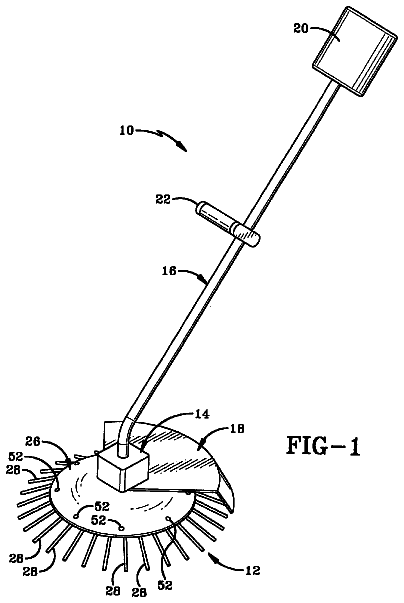
A rotary tool and method for spreading mulch outwardly from a mound of the same.
US 8,541,046 B2 · Assignee: Burcon NutraScience (MB) Corp. · Inventors: Schweizer; Martin et al.
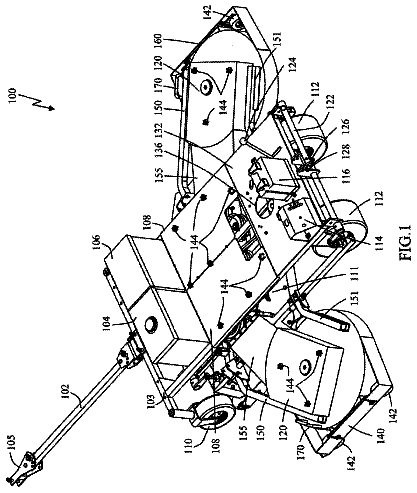
Sheet 1 of 1 from the published document. All sheets in the USPTO PDF
A novel canola protein isolate of predominantly 2S canola protein and having improved solubility properties, has an increased proportion of 2S canola protein and a decreased proportion of 7S canola protein. The novel canola protein isolate is formed by heat treatment of aqueous supernatant from canola protein micelle formation and precipitation, to effect precipitation of 7S protein which is sedimented and removed.
Canola oil seed protein isolates having protein contents of at least 100 wt % (N.times.6.25) can be formed from oil seed meal by a process as described in copending U.S. patent application Ser. No. 10/137,391 filed May 3, 2002 (WO 02/089597), assigned to the assignee hereof and the disclosures of which are incorporated herein by reference. The procedure involves a multiple step process comprising extracting canola oil seed meal using a salt solution, separating the resulting aqueous protein solution from residual oil seed meal, increasing the protein concentration of the aqueous solution to at least about 200 g/L while maintaining the ionic strength substantially constant by using a selective membrane technique, diluting the resulting concentrated protein solution into chilled water to cause the formation of protein micelles, settling the protein micelles to form an amorphous, sticky, ge
All 1 drawing sheet from the published document, cropped to the drawing.
What the patent claimed, word for word. All of it is now free to use.
This application is a divisional application of U.S. patent application Ser. No. 13/064,124 filed Mar. 8, 2011, now abandoned, which itself is a continuation of U.S. patent application Ser. No. 11/038,086 filed Jan. 21, 2005 (now U.S. Pat. No. 7,959,968) which, in turn, claims priority under 35 USC 119(e) from U.S. Provisional Patent Application No. 60/537,031 filed Jan. 20, 2004.
The present invention relates to the production of canola protein isolates.
Canola oil seed protein isolates having protein contents of at least 100 wt % (N.times.6.25) can be formed from oil seed meal by a process as described in copending U.S. patent application Ser. No. 10/137,391 filed May 3, 2002 (WO 02/089597), assigned to the assignee hereof and the disclosures of which are incorporated herein by reference. The procedure involves a multiple step process comprising extracting canola oil seed meal using a salt solution, separating the resulting aqueous protein solution from residual oil seed meal, increasing the protein concentration of the aqueous solution to at least about 200 g/L while maintaining the ionic strength substantially constant by using a selective membrane technique, diluting the resulting concentrated protein solution into chilled water to cause the formation of protein micelles, settling the protein micelles to form an amorphous, sticky, gelatinous, gluten-like protein micellar mass (PMM), and recovering the protein micellar mass from supernatant having a protein content of at least about 100 wt % (N.times.6.25). As used herein, protein content is determined on a dry weight basis. The recovered PMM may be dried.
In one embodiment of the process, the supernatant from the PMM settling step is processed to recover canola protein isolate from the supernatant. This procedure may be effected by initially concentrating the supernatant using an ultrafiltration membrane and drying the concentrate. The resulting canola protein isolate has a protein content of at least about 90 wt %, preferably at least about 100 wt % (N.times.6.25).
The procedures described in U.S. patent application Ser. No. 10/137,391 are essentially batch procedures. In copending U.S. patent application Ser. No. 10/298,678 filed Nov. 19, 2002 (WO 03/043439), assigned to the assignee hereof and the disclosures of which are incorporated herein by reference, there is described a continuous process for making canola protein isolates. In accordance therewith, canola oil seed meal is continuously mixed with a salt solution, the mixture is conveyed through a pipe while extracting protein from the canola oil seed meal to form an aqueous protein solution, the aqueous protein solution is continuously conveyed through a selective membrane operation to increase the protein content of the aqueous protein solution to at least about 50 g/L, while maintaining the ionic strength substantially constant, the resulting concentrated protein solution is continuously mixed with chilled water to cause the formation of protein micelles, and the protein micelles are continuously permitted to settle while the supernatant is continuously overflowed until the desired amount of PMM has accumulated in the settling vessel. The PMM is recovered from the settling vessel and may be dried. The PMM has a protein content of at least about 90 wt % (N.times.6.25), preferably at least about 100 wt %. The overflowed supernatant may be processed to recover canola protein isolate therefrom, as described above.
Canola seed is known to contain about 10 to about 30 wt % proteins and several different protein components have been identified. These proteins include a 12S globulin, known as cruciferin, a 7S protein and a 2S storage protein, known as napin. As described in copending U.S. patent application Ser. No. 10/413,371 filed Apr. 15, 2003 (WO 03/088760), assigned to the assignee hereof and the disclosures of which are incorporated herein by reference, the procedures described above, involving dilution of concentrated aqueous protein solution to form PMM and processing of supernatant to recover additional protein, lead to the recovery of isolates of different protein profiles.
In this regard, the PMM-derived canola protein isolate has a protein component content of about 60 to about 98 wt % of 7S protein, about 1 to about 15 wt % of 12S protein and 0 to about 25 wt % of 2S protein. The supernatant-derived canola protein isolate has a protein component content of about 60 to about 95 wt % of 2S protein, about 5 to about 40 wt % of 7S protein and 0 to about 5 wt % of 12S protein. Thus, the PMM-derived canola protein isolate is predominantly 7S protein and the supernatant-derived canola protein isolate is predominantly 2S protein. As described in the aforementioned U.S. patent application Ser. No. 10/413,371, the 2S protein has a molecular size of about 14,000 daltons, the 7S protein has a molecular mass of about 145,000 daltons and the 12S protein has a molecular size of about 290,000 daltons.
Canola is also known as rapeseed or oil seed rape.
It has now surprisingly been found that a novel canola protein isolate having an increased proportion of 2S protein, preferably containing at least about 85 wt % of 2S protein, and having a reduced proportion of 7S protein exhibits superior properties in aqueous solution to the supernatant-derived canola protein isolate prepared following the procedure of the aforementioned U.S. patent application Ser. No. 10/137,391.
In addition to improved solubility at a variety of pH values, the novel canola protein isolate provided herein is able to provide improved clarity in solution with soft drinks, providing clear protein fortified soft drinks.
Accordingly, in one aspect of the present invention, there is provided a canola protein isolate consisting predominantly of 2S canola protein having a protein content of at least about 90 wt % of (N.times.6.25) on a dry weight basis (d.b.) and having an increased proportion of 2S canola protein and a decreased proportion of 7S canola protein when compared to canola protein isolates consisting predominantly of 2S canola protein and derived from aqueous supernatant from canola protein micelle formation and precipitation.
In a further aspect of the present invention, there is provided a canola protein isolate having a protein content of at least about 90 wt % (N.times.6.25) on a dry weight basis (d.b.) and containing at least about 85 wt % of 2S canola protein and less than about 15 wt % of 7S canola protein of the canola proteins present in the isolate.
The novel canola protein isolate may be prepared by thermal treatment of the concentrated supernatant from the procedure of U.S. patent application Ser. No. 10/137,391 in order to reduce the proportion of 7S protein in the concentrated supernatant and hence to increase the proportion of 2S protein. Accordingly, in another aspect of the present invention, there is provided a process for the preparation of a canola protein isolate having an increased proportion of 2S canola protein, which comprises (a) providing an aqueous solution of 2S and 7S proteins consisting predominantly of 2S protein, (b) heat treating the aqueous solution to cause precipitation of 7S canola protein, (c) removing degraded 7S protein from the aqueous solution, and (d) recovering a canola protein isolate having a protein content of at least about 90 wt % (N.times.6.25) d.b. and having an increased proportion of 2S canola protein.
Alternatively, the novel canola protein isolate may be prepared by a procedure in which, following extraction of protein from the canola oil seed meal, the protein solution is subjected to a first selective membrane step with a membrane having a molecular weight cut-off which permits the 2S protein to pass through the membrane in a permeate while the 7S and 12S proteins are retained in a retentate. The retentate then is dried to provide a first canola protein isolate which is predominantly 7S protein. The permeate from the first selective membrane process step is then subjected to a second selective membrane step with a membrane having a molecular weight cut-off which retains the 2S protein and permits low molecular weight contaminants, including salt, phenolics and anti-nutritional materials, to pass through. The retentate from the latter selective membrane step then is dried to provide a second canola protein isolate which is predominantly 2S protein and which is the novel protein isolate.
Accordingly, in an additional aspect of the present invention, there is provided a process for the preparation of a canola protein isolate, which comprises (a) providing an aqueous canola protein solution derived from canola oil seed meal and containing 12S, 7S and 2S canola proteins, (b) increasing the protein concentration of the aqueous solution using a selective membrane technique which is effective to retain 7S and 12S canola proteins in a retentate and to permit 2S protein to pass through the membrane as a permeate to provide a concentrated protein solution, (c) drying the retentate from step (b) to provide a canola protein isolate consisting predominantly of 7S canola protein and having a protein content of at least about 90 wt % (N.times.6.25) on a dry weight basis (d.b.), (d) increasing the concentration of the permeate from step (a) using a selective membrane technique which is effective to retain 2S canola protein in a retentate and to permit low molecular weight contaminants to pass through the membrane in a permeate, and (e) drying the retentate from step (d) to provide a canola protein isolate consisting predominantly of 2S protein and having a protein content of at least about 90 wt % (N.times.6.25) d.b.
FIG. 1 is a schematic representation of a protein solution recovery process according to one embodiment of the invention superimposed on the protein micelle process.
The novel canola protein isolate provided herein has a protein content of at least about 90 wt % (N.times.6.25), preferably at least about 100 wt %, and may be isolated from canola oil seed meal by a batch process, or a continuous process, or a semi-continuous process.
The novel canola protein isolate provided herein consists predominantly of 2S protein and has an increased proportion of 2S canola protein and a decreased proportion of 7S canola protein when compared to canola protein isolates consisting predominantly of 2S protein and derived from supernatant from canola protein micelle formation and precipitation and prepared under the same experimental conditions of preparation.
The novel canola protein isolates contain at least about 85 wt % of 2S canola protein and less than about 15 wt % of 7S canola protein, preferably at least about 90 wt % of 2S canola protein and less than about 10 wt % of 7S canola protein and more preferably as great a proportion of 2S protein as is possible. As noted above, such canola protein isolate may be obtained by heat treatment of concentrated supernatant, as described in more detail below. The heat treatment of the concentrated supernatant causes precipitation of the 7S protein, which can be removed from the heat-treated supernatant by any convenient means, such as centrifugation. The 2S protein is not affected by the heat treatment and hence the heat treatment increases the proportion of 2S protein present by decreasing the proportion of 7S protein.
The novel canola protein isolate is soluble in aqueous solution over a wide range of pH values, generally having greater solubility than canola protein isolate consisting predominantly of 2S protein and derived from supernatant from canola protein micelle formation and precipitation under the same experimental conditions of preparation. In addition, aqueous solutions of the novel canola protein isolate in soft drinks, including carbonated soft drinks, such as those commercially-available, have a greater clarity than such aqueous solutions produced from canola protein isolate consisting predominantly of 2S protein and derived from supernatant from canola protein micelle formation and precipitation under the same conditions of preparation.
The concentration of canola protein isolate in the aqueous solution, including solution in soft drinks, may vary depending on the intended use of the solution. In general, the protein concentration may vary from about 0.1 to about 30 wt %, preferably about 1 to about 5 wt %.
The initial step of the process of providing canola protein isolates involves solubilizing proteinaceous material from canola oil seed meal. The proteinaceous material recovered from canola seed meal may be the protein naturally occurring in canola seed or the proteinaceous material may be a protein modified by genetic manipulation but possessing characteristic hydrophobic and polar properties of the natural protein. The canola meal may be any canola meal resulting from the removal of canola oil from canola oil seed with varying levels of non-denatured protein, resulting, for example, from hot hexane extraction or cold oil extrusion methods. The removal of canola oil from canola oil seed usually is effected as a separate operation from the protein isolate recovery procedure described herein.
Protein solubilization is effected most efficiently by using a food grade salt solution since the presence of the salt enhances the removal of soluble protein from the oil seed meal. Where the canola protein isolate is intended for non-food uses, non-food-grade chemicals may be used. The salt usually is sodium chloride, although other salts, such as, potassium chloride, may be used. The salt solution has an ionic strength of at least about 0.05, preferably at least about 0.10, to enable solubilization of significant quantities of protein to be effected. As the ionic strength of the salt solution increases, the degree of solubilization of protein in the oil seed meal initially increases until a maximum value is achieved. Any subsequent increase in ionic strength does not increase the total protein solubilized. The ionic strength of the food grade salt solution which causes maximum protein solubilization varies depending on the salt concerned and the oil seed meal chosen.
In view of the greater degree of dilution required for protein precipitation with increasing ionic strengths, it is usually preferred to utilize an ionic strength value less than about 0.8, and more preferably a value of about 0.1 to about 0.15.
In a batch process, the salt solubilization of the protein is effected at a temperature of at least about 5.degree. C. and preferably up to about 35.degree. C., preferably accompanied by agitation to decrease the solubilization time, which is usually about 10 to about 60 minutes. It is preferred to effect the solubilization to extract substantially as much protein from the oil seed meal as is practicable, so as to provide an overall high product yield.
The lower temperature limit of about 5.degree. C. is chosen since solubilization is impractically slow below this temperature while the upper preferred temperature limit of about 35.degree. C. is chosen since the process becomes uneconomic at higher temperature levels in a batch mode.
In a continuous process, the extraction of the protein from the canola oil seed meal is carried out in any manner consistent with effecting a continuous extraction of protein from the canola oil seed meal. In one embodiment, the canola oil seed meal is continuously mixed with a food grade salt solution and the mixture is conveyed through a pipe or conduit having a length and at a flow rate for a residence time sufficient to effect the desired extraction in accordance with the parameters described herein. In such continuous procedure, the salt solubilization step is effected rapidly, in a time of up to about 10 minutes, preferably to effect solubilization to extract substantially as much protein from the canola oil seed meal as is practicable. The solubilization in the continuous procedure preferably is effected at elevated temperatures, preferably at least about 35.degree. C., generally up to about 65.degree. C. or more.
The aqueous food grade salt solution generally has a pH of about 5 to about 6.8, preferably about 5.3 to about 6.2, the pH of the salt solution may be adjusted to any desired value within the range of about 5 to about 6.8 for use in the extraction step by the use of any convenient acid, usually hydrochloric acid, or alkali, usually sodium hydroxide, as required.
The concentration of oil seed meal in the food grade salt solution during the solubilization step may vary widely. Typical concentration values are about 5 to about 15% w/v.
The protein extraction step with the aqueous salt solution has the additional effect of solubilizing fats which may be present in the canola meal, which then results in the fats being present in the aqueous phase.
The protein solution resulting from the extraction step generally has a protein concentration of about 5 to about 40 g/L, preferably about 10 to about 30 g/L.
The aqueous salt solution may contain an antioxidant. The antioxidant may be any convenient antioxidant, such as sodium sulfate or ascorbic acid. The quantity of antioxidant employed may vary from about 0.01 to about 1 wt % of the solution, preferably about 0.05 wt %. The antioxidant serves to inhibit oxidation of phenolics in the protein solution.
The aqueous phase resulting from the extraction step then may be separated from the residual canola meal, in any convenient manner, such as by employing a decanter centrifuge, followed by disc centrifugation and/or filtration to remove residual meal. The separated residual meal may be dried for disposal.
The colour of the final canola protein isolate can be improved in terms of light colour and less intense yellow by the mixing of powdered activated carbon or other pigment adsorbing agent with the separated aqueous protein solution and subsequently removing the adsorbent, conveniently by filtration, to provide a protein solution. Diafiltration also may be used for pigment removal.
Such pigment removal step may be carried out under any convenient conditions, generally at the ambient temperature of the separated aqueous protein solution, employing any suitable pigment adsorbing agent. For powdered activated carbon, an amount of about 0.025% to about 5% w/v, preferably about 0.05% to about 2% w/v, is employed.
Where the canola seed meal contains significant quantities of fat, as described in U.S. Pat. Nos. 5,844,086 and 6,005,076, assigned to the assignee hereof and the disclosures of which are incorporated herein by reference, then the defatting steps described therein may be effected on the separated aqueous protein solution and on the concentrated aqueous protein solution discussed below. When the colour improvement step is carried out, such step may be effected after the first defatting step.
As an alternative to extracting the oil seed meal with an aqueous salt solution, such extraction may be made using water alone, although the utilization of water alone tends to extract less protein from the oil seed meal than the aqueous salt solution. Where such alternative is employed, then the salt, in the concentrations discussed above, may be added to the protein solution after separation from the residual oil seed meal in order to maintain the protein in solution during the concentration step described below. When a first fat removal step is carried out, the salt generally is added after completion of such operations.
Another alternative procedure is to extract the oil seed meal with the food grade salt solution at a relatively high pH value above about 6.8, generally up to about 9.9. The pH of the food grade salt solution, may be adjusted in pH to the desired alkaline value by the use of any convenient food-grade alkali, such as aqueous sodium hydroxide solution. Alternatively, the oil seed meal may be extracted with the salt solution at a relatively low pH below about pH 5, generally down to about pH 3. Where such alternative is employed, the aqueous phase resulting from the oil seed meal extraction step then is separated from the residual canola meal, in any convenient manner, such as by employing decanter centrifugation, followed by disc centrifugation and/or filtration to remove residual meal. The separated residual meal may be dried for disposal.
The aqueous protein solution resulting from the high or low pH extraction step then is pH adjusted to the range of about 5 to about 6.8, preferably about 5.3 to about 6.2, as discussed above, prior to further processing as discussed below. Such pH adjustment may be effected using any convenient acid, such as hydrochloric acid, or alkali, such as sodium hydroxide, as appropriate.
The aqueous protein solution may be processed in two alternative procedures, depending on whether 7S-rich protein micellar mass is to be precipitated to leave a supernatant for processing to form the novel canola protein isolate, or the aqueous protein solution is to be processed by a two-membrane operation without precipitation of protein micellar mass to obtain the novel canola protein isolate.
In the first alternative procedure, the aqueous protein solution is concentrated to increase the protein concentration thereof while maintaining the ionic strength thereof substantially constant. Such concentration generally is effected to provide a concentrated protein solution having a protein concentration of at least about 50 g/L, preferably at least about 200 g/L, more preferably at least about 250 g/L.
The concentration step may be effected in any convenient manner consistent with batch or continuous operation, such as by employing any convenient selective membrane technique, such as ultrafiltration or diafiltration, using membranes, such as hollow-fibre membranes or spiral-wound membranes, with a suitable molecular weight cut-off, such as about 3,000 to about 100,000 daltons, preferably about 5,000 to about 10,000 daltons, having regard to differing membrane materials and configurations, and, for continuous operation, dimensioned to permit the desired degree of concentration as the aqueous protein solution passes through the membranes.
The concentrated protein solution then may be subjected to a diafiltration step using an aqueous salt solution of the same molarity and pH as the extraction solution. Such diafiltration may be effected using from about 2 to about 20 volumes of diafiltration solution, preferably about 5 to about 10 volumes of diafiltration solution. In the diafiltration operation, further quantities of contaminants are removed from the aqueous protein solution by passage through the membrane with the permeate. The diafiltration operation may be effected until no significant further quantities of phenolics and visible colour are present in the permeate. Such diafiltration may be effected using the same membrane as for the concentration step. However, if desired, the diafiltration step may be effected using a separate membrane with a different molecular weight cut-off, such as a membrane having a molecular weight cut-off in the range of about 3,000 to about 100,000 daltons, preferably about 5,000 to about 10,000 daltons, having regard to different membrane materials and configuration.
An antioxidant may be present in the diafiltration medium during at least part of the diafiltration step. The antioxidant may be any convenient antioxidant, such as sodium sulfite or ascorbic acid. The quantity of antioxidant employed in the diafiltration medium depends on the materials employed and may vary from about 0.01 to about 1 wt %, preferably about 0.05 wt %. The antioxidant serves to inhibit oxidation of phenolics present in the concentrated canola protein isolate solution.
The concentration step and the diafiltration step may be effected at any convenient temperature, generally about 20.degree. to about 60.degree. C., preferably about 20 to about 30.degree. C., and for the period of time to effect the desired degree of concentration. The temperature and other conditions used to some degree depend upon the membrane equipment used to effect the concentration and the desired protein concentration of the solution.
The concentrating of the protein solution to the preferred concentration above about 200 g/L in this step not only increases the process yield to levels above about 40% in terms of the proportion of extracted protein which is recovered as dried protein isolate, preferably above about 80%, but also decreases the salt concentration of the final protein isolate after drying. The ability to control the salt concentration of the isolate is important in applications of the isolate where variations in salt concentrations affect the functional and sensory properties in a specific food application.
As is well known, ultrafiltration and similar selective membrane techniques permit low molecular weight species to pass therethrough while preventing higher molecular weight species from so doing. The low molecular weight species include not only the ionic species of the food grade salt but also low molecular weight materials extracted from the source material, such as, carbohydrates, pigments and anti-nutritional factors, as well as any low molecular weight forms of the protein. The molecular weight cut-off of the membrane is usually chosen to ensure retention of a significant proportion of the protein in the solution, while permitting contaminants to pass through having regard to the different membrane materials and configurations.
The concentrated and optionally diafiltered protein solution may be subject to a further defatting operation, if required, as described in U.S. Pat. Nos. 5,844,086 and 6,005,076.
The concentrated and optionally diafiltered protein solution may be subject to a colour removal operation as an alternative to the colour removal operation described above. Powdered activated carbon may be used herein as well as granulated activated carbon (GAC). Another material which may be used as a colour absorbing agent is polyvinyl pyrrolidone.
The colour absorbing agent treatment step may be carried out under any convenient conditions, generally at the ambient temperature of the canola protein solution. For powdered activated carbon, an amount of about 0.025% to about 5% w/v, preferably about 0.05% to about 2% w/v, may be used. Where polyvinylpyrrolidone is used as the colour absorbing agent, an amount of about 0.5% to about 5% w/v, preferably about 2% to about 3% w/v, may be used. The colour absorbing agent may be removed from the canola protein solution by any convenient means, such as by filtration.
The concentrated and optionally diafiltered protein solution resulting from the optional colour removal step may be subjected to pasteurization to kill any bacteria which may have been present in the original meal as a result of storage or otherwise and extracted from the meal into the canola protein isolate solution in the extraction step. Such pasteurization may be effected under any desired pasteurization conditions. Generally, the concentrated and optionally diafiltered protein solution is heated to a temperature of about 55.degree. to about 70.degree. C., preferably about 60.degree. to about 65.degree. C., for about 10 to about 15 minutes, preferably about 10 minutes. The pasteurized concentrated protein solution then may be cooled for further processing as described below, preferably to a temperature of about 25.degree. to about 40.degree. C.
Depending on the temperature employed in the concentration step and optional diafiltration step and whether or not a pasteurization step is effected, the concentrated protein solution may be warmed to a temperature of at least about 20.degree., and up to about 60.degree. C., preferably about 25.degree. to about 40.degree. C., to decrease the viscosity of the concentrated protein solution to facilitate performance of the subsequent dilution step and micelle formation. The concentrated protein solution should not be heated beyond a temperature above which micelle formation does not occur on dilution by chilled water.
The concentrated protein solution resulting from the concentration step, and optional diafiltration step, optional colour removal step, optional pasteurization step and optional defatting step, then is diluted to effect micelle formation by mixing the concentrated protein solution with chilled water having the volume required to achieve the degree of dilution desired. Depending on the proportion of canola protein desired to be obtained by the micelle route and the proportion from the supernatant, the degree of dilution of the concentrated protein solution may be varied. With higher dilution levels, in general, a greater proportion of the canola protein remains in the aqueous phase.
When it is desired to provide the greatest proportion of the protein by the micelle route, the concentrated protein solution is diluted by about 15 fold or less, preferably about 10 fold or less.
The chilled water with which the concentrated protein solution is mixed has a temperature of less than about 15.degree. C., generally about 3.degree. to about 15.degree. C., preferably less than about 10.degree. C., since improved yields of protein isolate in the form of protein micellar mass are attained with these colder temperatures at the dilution factors used.
In a batch operation, the batch of concentrated protein solution is added to a static body of chilled water having the desired volume, as discussed above. The dilution of the concentrated protein solution and consequential decrease in ionic strength causes the formation of a cloud-like mass of highly associated protein molecules in the form of discrete protein droplets in micellar form. In the batch procedure, the protein micelles are allowed to settle in the body of chilled water to form an aggregated, coalesced, dense, amorphous sticky gluten-like protein micellar mass (PMM). The settling may be assisted, such as by centrifugation. Such induced settling decreases the liquid content of the protein micellar mass, thereby decreasing the moisture content generally from about 70% by weight to about 95% by weight to a value of generally about 50% by weight to about 80% by weight of the total micellar mass. Decreasing the moisture content of the micellar mass in this way also decreases the occluded salt content of the micellar mass, and hence the salt content of dried isolate.
Alternatively, the dilution operation may be carried out continuously by continuously passing the concentrated protein solution to one inlet of a T-shaped pipe, while the diluting water is fed to the other inlet of the T-shaped pipe, permitting mixing in the pipe. The diluting water is fed into the T-shaped pipe at a rate sufficient to achieve the desired degree of dilution of the concentrated protein solution.
The mixing of the concentrated protein solution and the diluting water in the pipe initiates the formation of protein micelles and the mixture is continuously fed from the outlet from the T-shaped pipe into a settling vessel, from which, when full, supernatant is permitted to overflow. The mixture preferably is fed into the body of liquid in the settling vessel in a manner which minimizes turbulence within the body of liquid.
In the continuous procedure, the protein micelles are allowed to settle in the settling vessel to form an aggregated, coalesced, dense, amorphous, sticky, gluten-like protein micellar mass (PMM) and the procedure is continued until a desired quantity of the PMM has accumulated in the bottom of the settling vessel, whereupon the accumulated PMM is removed from the settling vessel. In lieu of settling by sedimentation, the PMM may be separated continuously by centrifugation.
The combination of process parameters of concentrating of the protein solution to a preferred protein content of at least about 200 g/L and the use of a dilution factor less than about 15, result in higher yields, often significantly higher yields, in terms of recovery of protein in the form of protein micellar mass from the original meal extract, and much purer isolates in terms of protein content than achieved using any of the known prior art protein isolate forming procedures discussed in the aforementioned US patents.
By the utilization of a continuous process for the recovery of canola protein isolate as compared to the batch process, the initial protein extraction step can be significantly reduced in time for the same level of protein extraction and significantly higher temperatures can be employed in the extraction step. In addition, in a continuous operation, there is less chance of contamination than in a batch procedure, leading to higher product quality and the process can be carried out in more compact equipment.
The settled isolate is separated from the residual aqueous phase or supernatant, such as by decantation of the residual aqueous phase from the settled mass or by centrifugation. The PMM may be used in the wet form or may be dried, by any convenient technique, such as spray drying or freeze drying, to a dry form. The dry PMM has a high protein content, in excess of about 90 wt % protein, preferably at least about 100 wt % protein (calculated as Kjeldahl N.times.6.25), and is substantially undenatured (as determined by differential scanning calorimetry). The dry PMM isolated from fatty oil seed meal also has a low residual fat content, when the procedures of U.S. Pat. Nos. 5,844,086 and 6,005,076 are employed as necessary, which may be below about 1 wt %.
As described in the aforementioned U.S. patent application Ser. No. 10/413,371, the PMM consists predominantly of a 7S canola protein having a protein component content of about 60 to 98 wt % of 7S protein, about 1 to about 15 wt % of 125 protein and 0 to about 25 wt % of 2S protein.
The supernatant from the PMM formation and settling step contains significant amounts of canola protein, not precipitated in the dilution step, and is processed to recover canola protein isolate therefrom. As described in the aforementioned U.S. patent application Ser. No. 10/413,371, the canola protein isolate derived from the supernatant consists predominantly of 2S canola protein having a protein component content of about 60 to about 95 wt % of 2S protein, about 5 to about 40 wt % of a 7S protein and 0 to about 5 wt % of 12S protein.
The supernatant from the dilution step, following removal of the PMM, is concentrated to increase the protein concentration thereof. Such concentration is effected using any convenient selective membrane technique, such as ultrafiltration, using membranes with a suitable molecular weight cut-off permitting low molecular weight species, including the salt and other non-proteinaceous low molecular weight materials extracted from the protein source material, to pass through the membrane, while retaining canola protein in the solution. Ultrafiltration membranes having a molecular weight cut-off of about 3,000 to 100,000 daltons, preferably about 5,000 to about 10,000 daltons, having regard to differing membrane materials and configuration, may be used. Concentration of the supernatant in this way also reduces the volume of liquid required to be dried to recover the protein. The supernatant generally is concentrated to a protein concentration of at least about 50 g/L, preferably about 100 to about 400 g/L, more preferably about 200 to about 300 g/L, prior to drying. Such concentration operation may be carried out in a batch mode or in a continuous operation, as described above for the protein solution concentration step.
The concentrated supernatant then may be subjected to a diafiltration step using water. Such diafiltration may be effected using from about 2 to about 20 volumes of diafiltration solution, preferably about 5 to about 10 volumes of diafiltration solution. In the diafiltration operation, further quantities of contaminants are removed from the aqueous supernatant by passage through the membrane with the permeate. The diafiltration operation may be effected until no significant further quantities of phenolics and visible colour are present in the permeate. Such diafiltration may be effected using the same membrane as for the concentration step. However, if desired, the diafiltration may be effected using a separate membrane, such as a membrane having a molecular weight cut-off in the range of about 3,000 to about 100,000 daltons, preferably about 5,000 to about 10,000 daltons, having regard to different membrane materials and configuration.
An antioxidant may be present in the diafiltration medium during at least part of the diafiltration step. The antioxidant may be any convenient antioxidant, such as sodium sulfite or ascorbic acid. The quantity of antioxidant employed in the diafiltration medium depends on the materials employed and may vary from about 0.01 to about 1 wt %, preferably about 0.05 wt %. The antioxidant serves to inhibit oxidation of phenolics present in the concentrated canola protein isolate solution.
In accordance with the present invention, the concentrated and optionally diafiltered supernatant is heat treated to decrease the quantity of the 7S protein present in the solution by precipitation and removal of the 7S protein and thereby increasing the proportion of 2S protein in the canola protein present in the concentrated supernatant.
Such heat treatment may be effected using a temperature and time profile sufficient to decrease the proportion of 7S present in the concentrated supernatant, preferably to reduce the proportion of 7S protein by a significant extent. In general, the 7S protein content of the supernatant is reduced by at least about 50 wt %, preferably at least about 75 wt % by the heat treatment. In general, the heat treatment may be effected at a temperature of about 70.degree. to about 100.degree. C., preferably about 75 to about 95.degree. C., for about 2 to about 30 minutes, preferably about 5 to about 15 minutes. The precipitated 7S protein may be removed in any convenient manner, such as centrifugation or filtration.
The concentrated heat-treated supernatant, after removal of the degraded 7S protein, such as by centrifugation, may be dried by any convenient technique, such as spray drying or freeze drying, to a dry form to provide a canola protein isolate in accordance with the present invention. Such novel canola protein isolate has a high protein content, in excess of about 90 wt %, preferably at least about 100 wt % protein (calculated as Kjeldahl N.times.6.25) and is substantially undenatured (as determined by differential scanning calorimetry).
Such novel canola protein isolate contains a high proportion of 2S protein, preferably at least 90 wt % and most preferably at least about 95 wt %, of the canola protein in the isolate.
In an alternative procedure to produce the novel canola protein isolate, the aqueous protein solution produced by extraction of the canola oil seed protein meal is concentrated to increase the protein concentration thereof while maintaining the ionic strength thereof substantially constant by a first ultrafiltration step using membranes, such as hollow-fibre membranes or spiral wound membranes, having a molecular weight cut-off sufficient to retain the 7S and 12S proteins in a retentate and to permit 2S protein to pass through the membrane. A suitable molecular weight cut-off range for the membrane is from about 30,000 to about 150,000 daltons, preferably about 50,000 to about 100,000 daltons. For continuous operation, the membranes are dimensioned to permit the desired degree of concentration as the aqueous protein solution passes through the membranes.
The description continues in the full USPTO document.
About 6,309 words. The USPTO PDF has it with every drawing.
Fees are due 3.5, 7.5 and 11.5 years after grant. This patent expired on September 24, 2025, so the fee marked "not paid" was the one that went unpaid.
Novel Canola Protein Isolate
Filed Jan 2005 · published Oct 2007Canola protein isolate
Filed Jan 2005 · granted Nov 2009Novel canola protein isolate
Filed Jan 2005 · published Aug 2005Canola protein isolate with improved solubility
Filed Jan 2005 · granted Jun 2011Novel canola protein isolate
Filed Nov 2005 · published Jun 2006Process for preparation of canola protein isolates
Filed Nov 2005 · granted Mar 2010Novel canola protein isolate
Filed Mar 2011 · published Jun 2011NOVEL CANOLA PROTEIN ISOLATE
Filed Nov 2011 · published May 2012Process for the preparation of a canola protein isolate
Filed Nov 2011 · granted Sep 2013Earlier publications, parents and continuations. None of them can still be enforced, or this patent would not be listed.
Prior art cited by the examiner or applicant. Useful when you check your own idea for novelty.
Everything on this page comes from the documents linked above.