Patent Yard Sign in
Lapsed, fee not paid

Mobile communications terminal and method

US 8,537,995 B2 · Assignee: Nokia Corporation · Inventors: Koskela; Antti A

USPTO PDF

Overview

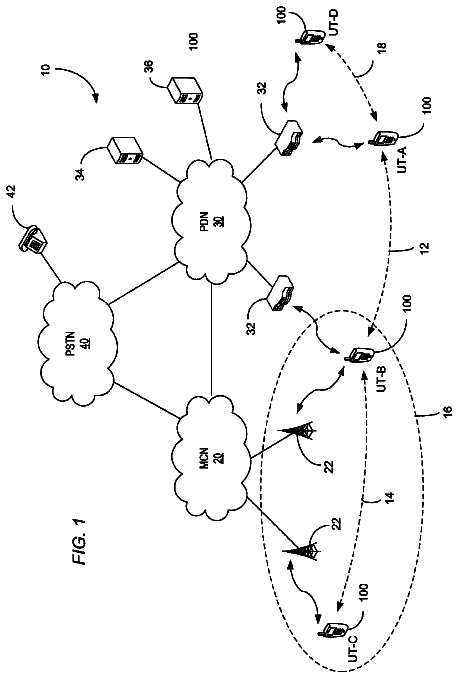
Sheet 1 of 3 from the published document. All sheets in the USPTO PDF

Abstract From the patent

An incoming call is detected from a calling entity. If the incoming call is associated with a subscription to presence information media data associated with the subscription can be output through an output unit in the telephone terminal. If the incoming call is determined to be associated with a subscription to presence information, it is determined whether the media data is present in the terminal, and if the media data is present in the terminal, the media data is output through an output unit in the telephone terminal.

Why it's free to use

  • The USPTO Official Gazette of November 11, 2025 lists it as expired on September 17, 2025 for an unpaid maintenance fee.
  • It isn't on any reinstatement notice published since.
  • Its 3 US relatives have also lapsed, expired or never issued.
  • We check US rights only. Check foreign counterparts before selling abroad.
FiledJuly 8, 2008
GrantedSeptember 17, 2013
Expired (fee)September 17, 2025
Application number12/169247
Classification (CPC)H04M3/04 +6 more
Length22 claims · 9 pages

Background From the patent

Mobile telephones, and the use of mobile telephones, have evolved into something more than a tool for the specific purpose of providing a simple channel of voice communication between two communicating entities. The mobile phones of today are almost as much tools for personal expression as they are communication tools. One, widely used and popular, specific way of personalizing a telephone is to enable it to reproduce ring tones that vary depending on the identity of the caller. Typically, this is achieved by way of downloading data from a provider of ring tones and then using, e.g., phone book functionality, to associate a caller identity with the ring tone. Similarly, an association between a caller identity and other media data, such as a picture, to be presented upon call reception is also widely used. However, present day telephone functionality does not provide, in a flexible manne

Drawings 3

1 of 3 drawing sheets so far from the published document, cropped to the drawing. Every sheet is in the USPTO PDF.

Figures as described

  • FIG. 1 shows schematically a block diagram of a mobile telephone according to the disclosed embodiments
  • FIG. 2 shows schematically interconnected communication networks where a method according to the disclosed embodiments is realized
  • FIG. 3 is a signaling diagram illustrating a method according to the disclosed embodiments
  • FIG. 4 is a flow chart illustrating a method according to the disclosed embodiments

Claims 22 total, 5 independent

What the patent claimed, word for word. All of it is now free to use.

  1. 1
    Independent claimAn apparatus comprising: a processor; and a memory including a computer program, the memory and the computer program configured to, with the processor, cause the apparatus to: detect an incoming call from a calling entity; determine if a subscription by a called party to presence information stored in a presence server is to presence information provided to the presence server by the calling entity; in an instance in which the subscription by the called party to presence information stored in the presence server is to presence information provided to the presence server by the calling entity, determining whether media data corresponding to the presence information provided by the calling entity is present on a receiving device of the incoming call; in response to a determination that the media data is not present, causing the media data to be downloaded in advance of a notification of the incoming call; and cause media data, obtained from the presence server corresponding to the presence information provided by the calling entity, to be output.
  2. 2
    The apparatus of claim 1 wherein the processor is further configured to determine, after determining that the incoming call is associated with a subscription to presence information, whether media data corresponding to the subscription is stored in a presence server, and downloading the media data to the presence server if the media data is not stored.
  3. 3
    The apparatus of claim 1 wherein the memory and the computer program are further configured to, with the processor, cause the apparatus to communicate with a presence server to determine whether the incoming call is associated with a subscription and to download any media item associated with the subscription not already stored.
  4. 4
    The apparatus of claim 1 wherein the apparatus comprises a mobile communication terminal, and wherein causing media data corresponding to the presence information provided by the calling entity to be downloaded comprises receiving the media data corresponding to the presence information provided by the calling entity via an air interface of the mobile communication terminal.
  5. 5
    The apparatus of claim 1 wherein the media data is a ring-tone, a media presentation or a video clip.
  6. 6
    The apparatus of claim 1 wherein the media data comprises a media presentation.
  7. 7
    The apparatus of claim 1 wherein the media data comprises a video clip.
  8. 8
    Independent claimA computer program product comprising computer readable program code stored in a memory, the computer program product comprising: computer readable program code for causing a computer to detect an incoming call from a calling entity; computer readable program code for causing a computer to determine whether a subscription by a called party to presence information is to presence information provided by the calling entity; computer readable program code for causing media data corresponding to the presence information provided by the calling entity to be downloaded in advance of an incoming call in an instance in which the subscription by the called party to presence information stored in the presence server is to presence information provided to the presence server by the calling entity; computer readable program code for detecting an incoming call from the calling entity after the media data corresponding to the presence information provided by the calling entity has been downloaded; and computer readable program code for causing a computer to output media data associated with the subscription to the presence information provided by the calling entity.
  9. 9
    The computer program product of claim 8 further comprising computer readable program code for causing a computer to download media data associated with the subscription, if not previously downloaded.
  10. 10
    The computer program product of claim 8 further comprising computer readable program code for causing a computer to communicate with a presence server to determine whether a caller identity associated with the incoming call is associated with a subscription and to download any new media data from the presence sever.
  11. 11
    The computer program product of claim 8 further comprising computer readable program code for causing a computer to identify media data associated with the subscription and store the media data.
  12. 12
    The computer program product of claim 8 wherein the media data comprises a ring tone.
  13. 13
    The computer program product of claim 8 wherein the media data comprises a media presentation.
  14. 14
    The computer program product of claim 8 wherein the media data comprises a video clip.
  15. 15
    Independent claimA method comprising: detecting an incoming call from a calling entity; determining, with a processor, whether a subscription by a called party to presence information stored in a presence server is to presence information provided to the presence server by the calling entity; in an instance in which the subscription by the called party to presence information stored in the presence server is to presence information provided to the presence server by the calling entity, determining whether media data corresponding to the presence information provided by the calling entity is present on a receiving device of the incoming call; in response to a determination that the media data is not present, causing the media data to be downloaded in advance of a notification of the incoming call; and causing media data, obtained from the presence server corresponding to the presence information provided by the calling entity, to be output.
  16. 16
    The method of claim 15 further comprising determining, after determining that the incoming call is associated with a subscription to presence information, whether media data corresponding to the subscription is stored in a presence server, and downloading the media data to the presence server module if the media data is not stored.
  17. 17
    The method of claim 15 further comprising communicating with a presence server to determine whether the incoming call is associated with a subscription and to download any media item associated with the subscription not already stored.
  18. 18
    The method of claim 15 wherein the media data is a ring-tone, a media presentation or a video clip.
  19. 19
    The method of claim 15 wherein the media data comprises a media presentation.
  20. 20
    The method of claim 15 wherein the media data comprises a video clip.
  21. 21
    Independent claimAn apparatus comprising: a processor; and a memory including a computer program, the memory and the computer program configured to, with the processor, cause the apparatus to: in response to detecting an incoming call from a calling entity associated with a caller identity, determine whether media data that is provided by a subscription to a presence service corresponding to presence information provided by the calling entity is present on the apparatus, said media data comprising at least a portion of presence information provided by a plurality of entities including the calling entity and held by a presence server that provides the presence service to the apparatus; in response to a determination that the media data is not present, receive the media data; and associate said media data with the caller identity, said media data comprising at least part of the presence information provided by the calling entity and held by the presence server, wherein the media data is configured to be output through an output unit of a communication terminal in an instance in which the incoming call from the calling entity is detected.
  22. 22
    Independent claimA method comprising: in response to detecting an incoming call from a calling entity associated with a caller identity, determining whether media data that is provided by a subscription to a presence service corresponding to presence information provided by the calling entity is present on the apparatus, said media data comprising at least a portion of presence information provided by a plurality of entities including the calling entity and held by a presence server that provides the presence service to the apparatus; in response to a determination that the media data is not present, receiving the media data; and associating, with a processor, said media data with the caller identity, said media data comprising at least part of the presence information provided by the calling entity and held by the presence server, wherein the media data is configured to be output through an output unit of a communication terminal in an instance in which the incoming call from the calling entity is detected.

Claim map

Independent claims stand on their own. The others add detail to the claim they name.

Claim 16 claims build on it
Claim 86 claims build on it
Claim 155 claims build on it
Claim 21No claims build on it
Claim 22No claims build on it

Description

Field

The aspects of the disclosed embodiments relate to a telephone terminal, a method and a computer program in a telephone terminal involving output of media data to announce an incoming call.

Background

Mobile telephones, and the use of mobile telephones, have evolved into something more than a tool for the specific purpose of providing a simple channel of voice communication between two communicating entities. The mobile phones of today are almost as much tools for personal expression as they are communication tools. One, widely used and popular, specific way of personalizing a telephone is to enable it to reproduce ring tones that vary depending on the identity of the caller. Typically, this is achieved by way of downloading data from a provider of ring tones and then using, e.g., phone book functionality, to associate a caller identity with the ring tone. Similarly, an association between a caller identity and other media data, such as a picture, to be presented upon call reception is also widely used.

However, present day telephone functionality does not provide, in a flexible manner, a way in which any caller can express personality by having the telephone of a called party play a personal ring tone associated with the caller, irrespective of whether or not the receiving party has downloaded a specific ring tone or not.

Summary

The aspects of the disclosed embodiments address drawbacks relating to lacking flexibility of prior art telephone terminals.

A method, which preferably is realized by way of a computer program, in a telephone terminal comprises detecting an incoming call from a calling entity followed by determining a caller identity of the calling entity. Then it is determined whether the caller identity is associated with a subscription to presence information associated with the calling entity, where the presence information comprises media data for output through an output unit in the telephone terminal. If the caller identity was determined to be associated with a subscription to presence information, it is determined whether the media data is present in the terminal, and if the media data is present in the terminal, the media data is output through an output unit in the telephone terminal.

That is, the telephone of a called party will play a personal media presentation associated with the caller, which has the advantage that it provides increased flexibility for telephone users wishing to express personality when making and receiving calls.

If the caller identity was determined to be associated with a subscription to the presence information and if the media data is not present in the terminal, the media data is fetched from the presence information associated with the caller identity.

Preferably, the determining whether the caller identity is associated with a subscription to presence information comprises communication with a presence server. Also, if necessary, the fetching of media data comprises fetching data from the presence server. This is advantageous in that it is easy, and hence non-expensive, to realize, for example by way of modifying already existing presence service servers.

In a preferred embodiment, the media data comprises a ring-tone.

Other aspects of the disclosed embodiments include a telephone terminal comprising means for performing the method discussed above as well as a computer program that is loadable into memory means of the terminal and, when executed, performs the method discussed above.

Brief description of the drawings

FIG. 1 shows schematically a block diagram of a mobile telephone according to the disclosed embodiments.

FIG. 2 shows schematically interconnected communication networks where a method according to the disclosed embodiments is realized.

FIG. 3 is a signaling diagram illustrating a method according to the disclosed embodiments.

FIG. 4 is a flow chart illustrating a method according to the disclosed embodiments.

Preferred embodiments

FIG. 1 illustrates schematically a communication terminal 101 in which the aspects of the disclosed embodiments can be implemented. The telephone 101 is capable of communication via an air interface 103 with a mobile (radio) communication system 105 such as the well known systems GSM/GPRS, UMTS, CDMA 2000 etc. The terminal comprises a processor 107, memory 109 as well as input/output units in the form of a microphone 111, a speaker 113, a display 115 and a keyboard 117. Radio communication is realized by radio circuitry 119 and an antenna 121. The details regarding how these units communicate are known to the skilled person and is therefore not discussed further. The communication terminal 101 may for example be a mobile telephone terminal or a PDA equipped with radio communication means.

The methods according to the preferred embodiments will in general reside in the form of software instructions of a computer program 110, together with other software components necessary for the operation of the terminal 101, in the memory 109 of the terminal 101. The computer program 110, which may be loaded into the memory 109 from a software provider 123 by way of methods known to the skilled person, will be executed by the processor 107, which will receive and process input data from all other units in the terminal 101.

Turning now to FIGS. 2, 3 and 4, a method according to the aspects of the disclosed embodiments will be described in some detail.

A communication system 200 in which the aspects of the disclosed embodiments are realized is schematically illustrated in FIG. 2. A mobile communication system 210, e.g. the system 105 mentioned above, an IP communication system 212 and a telephone network 220 are interconnected via respective gateways 214 and 218. A first mobile communication terminal 202 as well as a second 204, a third 206 and a fourth mobile communication terminal 208 communicate via respective air interfaces 203, 205, 207 and 209 in the communication system 200. The mobile communication terminals 202, 204, 206 and 208 are preferably telephone terminals such as the terminal 101 described above in connection with FIG. 1.

In a similar manner to the mobile communication network 210, the telephone network 220, which typically is a fixed network such as a PSTN, enables a first subscriber unit 222 and a second subscriber unit 224 to communicate in the communication system 200.

Needless to say, the mobile communication system 210, telephone network 220 and the IP network typically comprises a very large number of connected terminals and other communicating entities, many more than the few illustrated in FIG. 2, as the skilled person realizes.

Connected to the IP network 212 is a presence server 216, which provides a presence service as specified by, e.g., the Open Mobile Alliance (OMA) IMPS and SIP/SIMPLE. The presence server 216 holds presence information associated with any number of entities, e.g. users and user communication terminals, and includes such media information as ring tones to be reproduced by loud speakers in telephone terminals when receiving incoming calls. The presence information in the form of a ring tone is typically provided to the presence server 216 by the users through uploading already existing ring tones from their terminal. However, other ways of providing ring tone data to the presence server may involve communication with providers of ring tones via, e.g., web service interfaces such as a web portal.

Turning now to FIGS. 3 and 4, a method involving ring tones will be described. The method involves a first calling entity, in the form of a first user who is in control of the first mobile communication terminal 202, calling the fourth mobile communication terminal 208 which, when detecting the call, plays a personal ring tone associated with the first user (entity). The personal ring tone is a piece of media data that forms part of presence information associated with the first entity 202 and which has been provided to the presence server 216, e.g. as discussed above, during a first signaling sequence 302.

The fourth user has, by performing a second signaling sequence 304, subscribed to at least part of the presence information associated with the first entity. During the second signaling sequence 304 information in the form of media data is loaded into the fourth terminal 208 including a personal ring tone, which is associated with the first entity. For example, using terminology of presence services, the fourth user have created or edited a "buddy list" comprising a list of users or user terminals from whom the fourth user wishes to receive a personalized ring tone. Alternatively, it is not necessary to load all media data making up the ring tone. However, at least an indication that the fourth user subscribes to the personal ring tone is loaded.

Following the two signaling sequences 302 and 304, a sequence of steps are performed which involves the first entity placing a call to the fourth entity 208. It is to be noted that the above described sequence relating to subscription to presence information may be performed at any time prior to the sequence to be described, as indicated by a gap 305 in the signaling diagram of FIG. 3.

The first mobile communication terminal 202 calls the fourth communication terminal 208 by utilizing a third signaling sequence 306. The fourth communication terminal 208 detects the call, in a call detection step 402, and continues in a subscriber determining step 404 to determine the identity of the calling entity and to determine whether the caller identity is associated with a subscription, belonging to the entity in control of the fourth communication terminal 208, to presence information associated with the calling entity. The determination of the identity and subscription status is preferably performed by way of a fourth signaling sequence 308 between the fourth communication terminal 208 and the presence server 216.

Upon determining that the entity in control of the fourth communication terminal 208 subscribes to presence information associated with the calling entity, the fourth communication terminal 208 decides in a determination step 406 whether or not to fetch media information in the form of data comprising a personal ring tone associated with the calling entity. If it is determined that the subscription includes a ring tone and that the ring tone is already present in the terminal 208, i.e. if the ring tone has already been fetched (e.g. during step 304 as described above), the ring tone is output through the speaker in the fourth communication terminal 208 in a play step 407.

A benefit gained from having down loaded the ring tone with the presence information is that as a call arrives the ring tone is already accessible and need not be downloaded as the call is being connected. Otherwise, the download might actually in some cases take too long and the calling party might give up and hang up before the ring tone has been down loaded and played at the called party's terminal.

If it is determined that the subscription includes a ring tone and that the ring tone is not present in the terminal 208, the data of the ring tone is fetched from the presence server 216 and reproduced via a speaker in the fourth communication terminal 208 in a fetch and play step 408.

If it is determined that there is no subscription or if no ring tone is present in the presence information, no data is fetched and a default ring tone is reproduced via a speaker in the fourth communication terminal 208 in a default ring tone play step 412.

After reproducing the ring tone, the caller and the called entity establishes a connection in a connection establishing step 410.

It should be clear that the media data could also be for example a video clip that is to be played to announce an incoming call.

As the skilled person will realize, the method described above may in alternative embodiments involve other communication terminals, such as the terminals 222 and 224 connected to the telephone network 220. Similarly, other embodiments may involve a first communication terminal connected to the mobile communication system 210 and a second communication terminal connected to the telephone network 220.

In this description

About 1,993 words. The USPTO PDF has it with every drawing.

Timeline & family

Timeline From USPTO dates

2005200820112014201720202023Earliest priority dateAug 5, 2004Application filedJuly 8, 2008Application publishedOct 30, 2008Patent grantedSep 17, 20133.5-year fee paidMarch 17, 20177.5-year fee paidMarch 17, 202111.5-year fee not paidMarch 17, 2025Patent expiredSep 17, 2025

Maintenance fees

Fees are due 3.5, 7.5 and 11.5 years after grant. This patent expired on September 17, 2025, so the fee marked "not paid" was the one that went unpaid.

3.5-year feeDue March 17, 2017Paid
7.5-year feeDue March 17, 2021Paid
11.5-year feeDue March 17, 2025Not paid

US family 4 documents, by filing date

Published applicationUS 2006/0029202 A1

Mobile communications terminal and method

Filed Aug 2004 · published Feb 2006
Published application
PatentUS 7,412,041 B2

Mobile communications terminal and method

Filed Aug 2004 · granted Aug 2008
Patent, expired (term ended)
Published applicationUS 2008/0268821 A1

MOBILE COMMUNICATIONS TERMINAL AND METHOD

Filed Jul 2008 · published Oct 2008
Published application
This documentUS 8,537,995 B2

Mobile communications terminal and method

Filed Jul 2008 · granted Sep 2013
Lapsed, fee not paid

Earlier publications, parents and continuations. None of them can still be enforced, or this patent would not be listed.

Sources & verification

Verification

  • The USPTO Official Gazette of November 11, 2025 lists it as expired on September 17, 2025 for an unpaid maintenance fee.
  • It isn't on any reinstatement notice published since.
  • Its 3 US relatives have also lapsed, expired or never issued.
  • Rechecked against USPTO records every day.
  • We check US rights only. Check foreign counterparts before selling abroad.

Confirm it yourself

  1. Open the file history on Patent Center.
  2. The status should read "Patent Expired Due to NonPayment of Maintenance Fees Under 37 CFR 1.362".
  3. Check the documents for any later petition to revive or reinstate.

Everything on this page comes from the documents linked above.

More in Hardware & Electronics

All Hardware & Electronics
Drawing from US 8,537,988 B2Lapsed, fee not paid19 drawings
Hardware & Electronics · US 8,537,988 B2

Message relay system with message relay server

A message relay server includes a call state control section that acquires call state data containing data identifying telephones from a line switching server which controls speech communication calls; a call state…

Filed2008
LapsedSep 2025
OwnerNEC Corporation
Drawing from US 8,538,003 B2Lapsed, fee not paid5 drawings
Hardware & Electronics · US 8,538,003 B2

Method and apparatus for integrating call center and existing telephony infrastructure

A system, method, apparatus, means, and computer program code is provided for routing a call which includes receiving a call request at a first server, the call request including header data identifying a requesting…

Filed2008
LapsedSep 2025
OwnerHartford Fire Insurance Company
Drawing from US 8,538,004 B2Lapsed, fee not paid4 drawings
Hardware & Electronics · US 8,538,004 B2

Method and apparatus for relaying calls

A dual mode user terminal for a calling party can make calls over both a conventional cellular network and a packet data network using VoIP protocols.

Filed2008
LapsedSep 2025
OwnerSony Corporation Sony Mobile Communications AB