 Lapsed, fee not paid10 drawings
Software & Apps · US 8,533,193 B2
Managing log entries
Example methods, apparatus, and articles of manufacture to manage log entries are disclosed.
US 8,533,207 B2 · Assignee: Fujitsu Limited · Inventors: Togahara; Nobuo
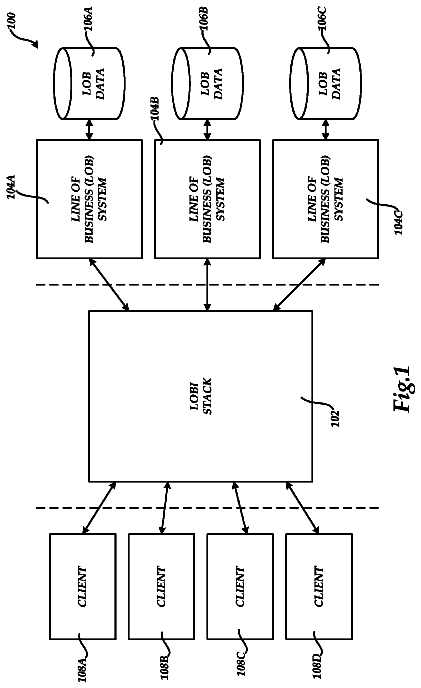
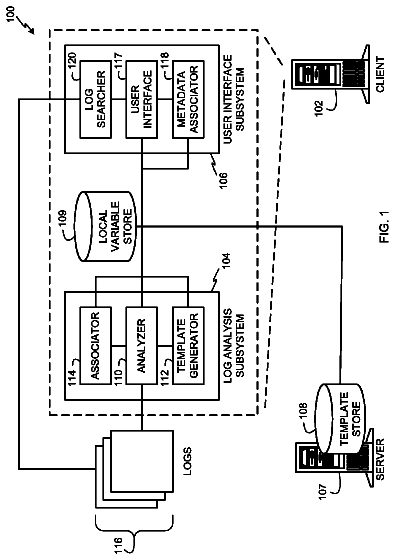
Sheet 1 of 14 from the published document. All sheets in the USPTO PDF
This invention relates to the development of a business program in an XML driven architecture. First, XML data corresponding to a form screen is analyzed and a business class corresponding to a tag included in the XML data is specified. Then, by referring to a business class manager in which the business classes to be created are registered, it is judged whether or not the specified business class has not been registered in the business class manager, and if the specified business class has not been registered in the business class manager, the specified business class is registered in the business class manager. After this, each of the business classes has to be specifically programmed. On the other hand, at the execution time of the programmed business classes, XML data including tags corresponding to data inputted or selected for the form screen is obtained, and the business classes that correspond to the tags included in the XML data and are programs to carry out a processing relating to the tags. Then, the specified business classes are called among the business classes that are defined in advance and loaded in a memory.
Conventionally, the development of a business program has been performed based on unified consideration given to screens and input/output data, function division of the program, the structure of the program, data items of a database, and the like. Thus, simultaneous and parallel design of one business program has been impossible, and when the scale of the business program becomes large, a development period has often become long. Besides, when the change and addition of the specifications are performed, an overall review becomes necessary, and an increase in examination time and an increase in correction time have occurred. In order to solve the problems as stated above, U.S. Pat. No. 5,933,634 discloses a technique to reduce an amount of feedback after a program is manufactured, by displaying a screen in a similar manner as in actual program execution, and verifying the program, in a pr
1 of 14 drawing sheets so far from the published document, cropped to the drawing. Every sheet is in the USPTO PDF.
What the patent claimed, word for word. All of it is now free to use.
This application is a Divisional of application Ser. No. 10/800,122, filed Mar. 12, 2004.
The present invention relates to a program development technique based on XML (eXtensible Markup Language) and an information processing technique based on the XML.
Conventionally, the development of a business program has been performed based on unified consideration given to screens and input/output data, function division of the program, the structure of the program, data items of a database, and the like. Thus, simultaneous and parallel design of one business program has been impossible, and when the scale of the business program becomes large, a development period has often become long. Besides, when the change and addition of the specifications are performed, an overall review becomes necessary, and an increase in examination time and an increase in correction time have occurred.
In order to solve the problems as stated above, U.S. Pat. No. 5,933,634 discloses a technique to reduce an amount of feedback after a program is manufactured, by displaying a screen in a similar manner as in actual program execution, and verifying the program, in a program design process prior to a program manufacturing process of a transaction routine, and to also make program generation efficient, by inheriting design data from the design process to the program manufacturing process.
However, in the technique disclosed in the aforementioned U.S. patent, the individual business routines must be created on the basis of the automatically inherited design data, and when the program is created simultaneously in parallel, omission in program creation may occur. Besides, because the transfer of input data at the execution of the program is performed through an ID decided at the time of design, when a correction is performed later, a person other than the designer cannot easily understand it.
An object of the present invention is therefore to provide a technique, which can shorten a development period and enables development of a business program with higher quality.
Another object of the invention is to provide a basic technique for executing the business program created by the program development technique of this invention.
An information processing method according to a first aspect of the invention comprises: analyzing XML data stored in an XML data storage and corresponding to a form screen, and specifying a business class corresponding to a tag included in the XML data; referring to a business class manager in which items of business classes to be created are registered, and judging whether an item of the specified business class has not been registered in the business class manager; and if the item of the specified business class has not been registered in the business class manager, registering the item of the specified business class in the business class manager.
When the business class is created on the basis of the tag of the XML data corresponding to the form screen, because the items of the business classes to be created are managed in the business class manager, the program development can be performed without creating duplicate business classes and without causing insufficiency. Incidentally, because the business class corresponding to the tag of the XML data has only to be prepared, the business class can be created even if the entire system is not grasped, the improvement of quality of the business program is easy, and the development period can also be reduced.
Besides, the information processing method may further comprises, if the item of the specified business class has not been registered in the business class manager, generating template source program data (for example, a file) for the specified business class, and storing it into a source program storage. A programmer has only to create a program to realize a predetermined function by using the created template source program data, and can prepare the business class without any excess and deficiency.
Further, a template source file for an object to store data concerning a form item may also be generated by a similar processing to the business class.
An information processing method according to a second aspect of the invention is an information processing method relating to an execution method of business classes created using, for example, the aforementioned method and comprises: storing XML data including a tag corresponding to data input or selected for a form screen into a memory, and specifying a business class that corresponds to the tag included in the XML data and is a program for carrying out a processing relating to the tag; and calling the specified business class among business classes which are defined in advance and are loaded in the memory.
Because a business class is originally created so as to correspond to a tag included in the XML data, when the XML data including the specific selected or input data is inputted, the specific selected or input data is processed by calling the business class corresponding to the tag included in the XML data.
Besides, a processing sequence for the whole of the form may not be defined so as to correspond to the form for the form screen, and each of business classes may be configured so that a processing for the form is completed by processing the called business classes. As stated above, when the necessary business logic is implemented as the class corresponding to the tag of the XML data, the efficiency of system development is improved.
Incidentally, if there is no business class corresponding to the tag, an error may be notified, because the XML data is unsuitable.
Besides, the information processing method according to the second aspect of the invention may further comprises receiving the data input or selected for the form screen from a device that displayed the form screen, and generating the XML data including the tag corresponding to the data input or selected for the form screen.
Moreover, the information processing method according to the second aspect of the invention may further comprise: outputting the data input or selected for the form screen to a form item storing object, which is defined in advance and is loaded in a memory; storing the data input or selected for the form screen into the memory by the form item storing object; and executing a processing by exchanging data between the called business class and the form item storing object.
Further, the information processing method according to the second aspect of the invention may further comprise: if an output request is received from the called business class, generating XML data for output by using data held in the form item storing object, and storing it into the memory; and outputting the XML data for output, stored in the memory to the device that displayed the form screen.
Besides, it is also possible to create a program for causing a computer to execute the aforementioned information processing method of the invention, and the program is stored in a storage medium or a storage apparatus such as, for example, a flexible disk, a CD-ROM, a magneto-optical disk, a semiconductor memory, or a hard disk. There is also a case where the program is transmitted as digital signals through a network. Besides, intermediate processing result is temporarily stored in a storage device such as a main memory of a computer.
FIG. 1 is a functional block diagram at the time of creation of business classes;
FIG. 2 is a diagram showing an example of data stored in a business class management file;
FIG. 3 is a diagram showing a processing flow at the time of creation of the business classes;
FIG. 4 is a schematic diagram showing an object;
FIGS. 5A to 5H are diagrams showing examples of codes to use the object;
FIGS. 6A and 6B are functional block diagrams at the time of execution of the business classes;
FIG. 7 is a diagram showing a first processing flow at the time of execution of the business classes;
FIG. 8 is a diagram showing an example of an input screen;
FIG. 9 is a diagram showing an example of XML data for the input screen;
FIG. 10A is a diagram showing a first example of a processing using an object pool;
FIG. 10B is a diagram showing a second example of the processing using the object pool;
FIG. 10C is a diagram showing a third example of the processing using the object pool;
FIG. 10D is a diagram showing a fourth example of the processing using the object pool;
FIG. 11 is a diagram showing a second processing flow at the time of execution of the business classes;
FIG. 12 is a diagram showing an example of XML data for an output screen; and
FIG. 13 is a diagram showing an example of the output screen.
1. Creation of Business Classes (i.e. Programs)
FIG. 1 is a functional block diagram of a computer system in an embodiment of the invention at the time of creation of business classes. A computer system 100 includes a screen generator 1 for forming a screen to be displayed in a system under development, and generating an HTML (hyper Text Markup Language) file and the like for the screen; HTML file storage 3 for storing the HTML files generated by the screen generator 1; XML converter 5 for analyzing the HTML file stored in the HTML file storage 3 and converting it into XML data in accordance with a predetermined rule; XML data storage 7 for storing the XML data and the like generated by the XML converter 5; interface manager 9 for analyzing the XML data stored in the XML data storage 7, and generating at least a part of a common interface file group 11, and template business source file group 13; and business class management file 15 referred to and updated by the interface manager 9.
The screen generator 1 is a generally sold homepage editor or the like, and generates an HTML file and the like when a user forms a screen without describing tags of the HTML. For example, as shown in FIG. 1, it is assumed that a deposit transaction screen 1a including input columns of a bank name, branch name, account type, account number and transaction amount is configured, and a corresponding HTML file and the like are generated. The generated HTML file is stored in the HTML file storage 3.
The XML converter 5 is a generally sold XML document generation support tool such as XML SPY (trademark of ICON Information-Systems), and reads out the HTML file stored in the HTML file storage 3, generates XML data, a style sheet (XSL (extensible Style Language) data) and schema, and stores them in the XML data storage 7. Incidentally, in the following, in order to facilitate the grasp of the point of this embodiment, an explanation on the XML data will be mainly given, however, XSL data includes data (format, etc.) to display the XML data on the screen. Besides, the schema includes data (tag structure, etc.) to perform adequacy check of the XML data. As shown in FIG. 1, XML data 5a including tags (including a start tag and end tag.) for the deposit transaction input, a bank name tag, branch name tag, account type tag, account number tag, and transaction amount tag is generated from the HTML file for the screen 1a. In addition, the XSL data and the schema corresponding to the XML data 5a are generated.
The template business source file group 13 includes files of template source programs, which correspond to the tags included in the XML data and are generated by the interface manager 9. As shown in FIG. 1, when the interface manager 9 processes the XML data 5a, it generates a business class 131 of "deposit transaction input pre-processing" to perform a pre-processing for a slip of the deposit transaction input, business class 132 of "bank name" corresponding to the bank name tag, business class 133 of "branch name" corresponding to the branch name tag, business class 134 of "account type" corresponding to the account type tag, business class 135 of "account number" corresponding to the account number tag, business class 136 of "transaction amount" corresponding to the transaction amount tag, business class 137 of "deposit transaction input" corresponding to a slip processing of the deposit transaction input, and business class 138 of "deposit transaction input post-processing" to perform a post-processing for the slip of the deposit transaction input as template source files. The template source files merely include basic source codes as the business classes, and the business logic is required later to be programmed as, for example, a method. Incidentally, the template source file may be empty.
An example of the template source file of the business class for the account number will be set forth in the following. Incidentally, because the contents are written in the well-known Java (trademark of Sun Microsystems, Inc.) language, the detailed description will be omitted.
TABLE-US-00001 TABLE 1 package com.fff.xxxx.usr; import com.fff.xxxx.common.*; import com.fff.xxxx.util.*; import com.fff.xxxx.processor.*; //Class:USR_ACCOUNT NUMBER public class USR_ACCOUNT_NUMBER implements XxxxUserProcessLibrary { //Constructor public USR_ACCOUNT_NUMBER( ) { //Please describe processing contents for the constructor here. } //Process execution function public void process (XxxxInterface rinterface) throws Exception { //Obtain own region from the object pool String ACCOUNT_NUMBER = (String)rinterface.getValue_XML ("ACCOUNT_NUMBER"); //Please describe codes for each processing unit here. } }
Besides, the common interface file group 11 includes a slip item region 111, processor reserved region 112, interclass interface region 113, application constant region 115, database (DB) information region 117, and initial setting file 119 created by the user using an editor or the like. These regions except for the initial setting file 119 are regions to store template source programs (hereinafter referred to as a common interface template source file) of objects used in common by plural business classes. The common interface template source file merely includes basic source codes similarly to the template source files of the business classes described above, and the logic is required later to be programmed as, for example, a method. Besides, the common interface template source file may be empty.
The slip item region 111 stores common interface template source files of objects to store data of the slip items. The common interface template source file stored in the slip item region 111 is generated by the interface manager 9 on the basis of the XML data. For example, the common interface template source file is generated so as to correspond to each of slip items included in the XML data.
An example of the common interface template source file relating to the slip item of the account number will be set forth in the following. However, because the contents are described in the well-known Java language, the detailed description will be omitted.
TABLE-US-00002 TABLE 2 package com.fff.xxxx.pool; import com.fff.xxxx.*; import com.fff.xxxx.common.*; import java.util.*; ////for LOG output /*LOG*/import com.fff.OPERAPARTS.com.SSCLG00C; /** Class:com_ACCOUNT_NUMBER */ public class com_ACCOUNT_NUMBER implements XxxxCommonInLibrary{ /** Flag to indicate a storing order in a hash */ public int flagGet = 0; /** Flag to indicate a reading order in the hash */ public int flagSet = 0; /** Flag to indicate a storing order in an error hash */ public int errflagGet = 0; /** Flag to indicate a reading order in the error hash */ public int errflagSet = 0; /** Hash table to store child tag class */ private Hashtable childtags = new Hashtable( ); /** Hash table to store values */ private Hashtable values = new Hashtable( ); /** Hash table to store error codes */ private Hashtable errors = new Hashtable( ); /** Hash table to manage an attribute hash */ private Hashtable attributes = new Hashtable( ); /** Hash table to store attribute values */ ////for LOGoutput /*LOG*/ private SSCLG00C ewkoSsclg00c; /** Constructor */ public com_ACCOUNT_NUMBER( ){ //Please describe processing contents in the constructor here ////for LOG output /*LOG*/ ewkoSsclg00c = new SSCLG00C(this.getClass( ).getName( )); } /** Process execution function */ public void process(XxxxInterface rinterface){ ewkoSsclg00c.mvLogWrite(3,"Process calling class name : com_ACCOUNT_NUMBER.process( )"); } /** set method */ public void set(Object val){ String numstr = String.valueOf(flagGet); values.put(numstr, val); flagGet += 1; } /** get method */ public Object get(int key){ String numstr = String.valueOf(key); return values.get(numstr); } /** Obtain the first item of get method */ public Object get( ){ String numstr = String.valueOf(flagGet - 1); return values.get(numstr); } /** Clear contents of value table */ public void clearValue( ){ attributes,clear( ); values,clear( ); clearStatus( ); flagGet = 0; } // Store error codes public void setStatus(int value){ String numstr = String.valueOf(errflagGet); errors.put(numstr, new Integer(value)); errflagGet += 1; } //obtain error codes public int getStatus( String key){ return ((Integer)errors.get(key)).intValue( ); } //Obtain error codes public int getStatus( ){ String numstr = String.valueOf(errflagGet - 1); return ((Integer)errors.get(numstr)).intValue( ); } /** clear contents in an error code storage table */ public void clearStatus( ){ errors.clear( ); errflagGet = 0; setStatus(0); } //obtain repeat number public int getNumber( ){ return values.size( ); } //obtain attribute values public Object getAttr(int num, String attsname){ String numstr = String.valueOf(num); Hashtable attshash = (Hashtable)attributes.get(attsname); return attshash.get(numstr); } //Set an attribute value public void setAttr(int num, String attsname, Object attsVal){ String numstr = String.valueOf(num); Hashtable attshash = (Hashtable)attributes.get(attsname); attshash.put(numstr, attsVal); } //return an attribute name public Enumeration getAttrNames( ){ return attributes.keys( ); } //Return a hash value storing the attribute value from the attribute name public Hashtable getAttrs(String attsname){ return (Hashtable)attributes.get(attsname); } }
The processor reserved region 112 stores common interface template source files of objects to store data used for the control of a processor (processor 2071 in FIGS. 6A and 6B) relating to the execution processing of the business classes. The common interface template source files to be stored in the processor reserved region 112 are generated by the interface manager 9 in accordance with data items, which are set through a screen input function (i.e. user interface) included in the interface manager 9, and are stored in the processor reserved region 112. The screen input function is a function to cause a screen for receiving data input from a user to be displayed and to set items on the basis of the inputted data.
The interclass interface region 113 stores common interface template source files of objects to store data relating to interface items between business classes. Incidentally, the interface item between the business classes is, for example, an item used to perform the transfer of data between plural business classes. The common interface template source files to be stored in the interclass interface region 113 are generated by the interface manager 9 in accordance with data items, which are set through the screen input function included in the interface manager 9 similarly to the common interface template source file stored in the processor reserved region 112, and are stored in the interclass interface region 113.
The application constant region 115 stores common interface template source files of objects to store data of constant items referenced by the business classes. Incidentally, the constant item referenced by the business class is an item, which is set on the basis of data defined in the initial setting file 119, and is an item relating to a business rule such as a program executable time zone. The common interface template source files to be stored in the application constant region 115 are generated by the interface manager 9 in accordance with data items, which are set through the screen input function included in the interface manager 9, similarly to the common interface template source files stored in the processor reserved region 112 or the interclass interface region 113, and are stored in the application constant region 115.
The DB information region 117 stores common interface template source files of objects to store data of table definition items in a database. The common interface template source files to be stored in the DB information region 117 are generated by the interface manager 9 on the basis of the XML data similarly to the common interface template source files stored in the slip item region 111. For example, the common interface template source file is generated so as to correspond to each of the slip items included in the XML data.
The initial setting file 119 is a file including data of the aforementioned constant items, in the XML format, for example. In the execution processing of the business class, this file is read when the processing is executed by the business classes, and data of the constant items is held in the corresponding object.
The business class management file 15 includes, for example, data as shown in FIG. 2. FIG. 2 shows a screen example in a case where the XML data (i.e. business class management file 15) not specifying an XSL file is displayed by an XML-compliant browser. In FIG. 2, it is indicated by resource management tags, that the resource management required in a program to be developed is performed by the business class management file 15. Besides, in this embodiment, not only the business classes, but also the common interface file group 11 are managed, and object pool tags are provided. Here, the object pool is a memory area in which in a case where executable classes are created on the basis of the common interface template source files, the classes are loaded at the time of execution of the processing. A processor reserved region tag corresponding to the processor reserved region 112, slip item region tag corresponding to the slip item region 111, DB information region tag corresponding to the DB information region 117, application constant item region tag corresponding to the application constant region 115, and interclass interface item region tag corresponding to the interclass interface region 113 are provided under the object pool tag. In FIG. 2, a "+" mark indicates that items, which have already been defined, exist under the processor reserved region tag and interclass interface item region tag. On the other hand, an item, which has been defined, does not yet exist under the DB information region tag and application constant item region tag. Here, "that an item has been defined" means that common interface template source files corresponding to the items are generated and are stored in one of the regions of the common interface file group 11.
The common interface template source files corresponding to any of the regions are also stored in the respective regions by the interface manager 9. Then, when the interface manager 9 stores the common interface template source file in any one region, an item corresponding to the common interface template source file is registered under the tag corresponding to the region.
In FIG. 2, already defined items exist under the slip item region tag and are specifically shown. There are provided a "deposit transaction input" tag, "transaction amount" tag, "account number" tag, "account type" tag, "branch name" tag, and "bank name" tag corresponding to the screen 1a in FIG. 1. In the "deposit transaction input" tag, an attribute of "route judgment" is defined, because the "deposit transaction input" corresponds to the slip. Besides, an attribute of the "registered date and time" is defined in each tag.
Besides, in FIG. 2, the business classes to be created (that is, the generated template business source files) are defined under the template business class tag. Here, there are included a transaction amount tag, account number tag, account type tag, branch name tag, bank name tag, deposit transaction input pre-processing tag, deposit transaction input post-processing tag, and deposit transaction input tag. Incidentally, an attribute of the "registered date and time" is defined in each tag. Besides, USR in front of the tag name indicates that it is a class to be prepared by a user.
Next, a processing flow of the computer system 100 shown in FIG. 1 will be described with reference to FIG. 3. First, the user of the computer system 100 examines the present slip, form and screen configuration, grasps functions to be added or modified for a new computer system to be developed, and performs screen configuration for the new computer system by the screen generator 1. By this work, the screen generator 1 generates HTML files and the like and stores them in the HTML file storage 3 (step S1). Incidentally, because the HTML file can be created without using any tool or the like, this step is indicated by a dotted line block. Besides, the tool to perform the processing of this step can also be prepared by the user, separately from the interface manager 9.
Next, the XML converter 5 reads out the HTML file stored in the HTML file storage 3, generates XML data, and stores it into the XML data storage 7 (step S3). At this time, XSL data and schema corresponding to the XML data are also generated and are stored in the XML data storage 7. Incidentally, the tool to perform the processing of this step can also be prepared by the user, separately from the interface manager 9, and this step is indicated by a dotted line block. Next, the interface manager 9 generates template source programs for a process initial processing class and process end processing class, and stores them into, for example, a storage device to store the template business source file group 13 (step S5). The source programs for the process initial processing class and process end processing class are also templates, and programs to realize specific functions for the process initial processing and process end processing are later programmed.
Then, the interface manager 9 refers to the XML data storage 7, and selects one unprocessed tag in the XML data (step S7). Then, it refers to a portion under the template business class tag of the business class management file 15 and confirms whether the tag selected at the step S7 is not registered (steps S9 and S11). That the tag is already registered under the template business class tag of the business class management file 15 means that the template business source file is also already generated, and when it is again generated, duplication occurs. Therefore, this confirmation is carried out. In a case where it is judged that the tag is already registered, the processing proceeds to step S23. On the other hand, in a case where it is confirmed that the tag has not been registered, it judges whether the tag is the start tag (step S13). That is, it judges whether the tag is a tag to specify the slip in the XML data. In a case where the tag is judged to be the start tag, the template source programs for the pre-processing class of the slip, post-processing class thereof and slip class are generated, and are stored n, for exampler the storage device to store the template business source file group 13 (step S15). Then, the processing proceeds to step S21. On the other hand, in a case where the tag is judged not to be the start tag, it judges whether the tag is the end tag (step S17). For example, it judges whether the tag is an end tag of the tag to specify the slip. In a case where the tag is judged to be the end tag, the processing proceeds to step S23. On the other hand, in a case where the tag is judged not to be the end tag, because it is a normal tag, the template source program of the business class corresponding to the tag is generated, and is stored in, for example, the storage device to store the template business source file group 13 (step S19). Although described above, the template source program merely includes basic source codes, and the business class is not completed only by that template source program.
After the step S15 or the step S19, the tag name is registered under the template business class tag of the business class management file 15 (step S21). By this registration, a duplicate business class is not created, which enhances the business efficiency in the program development and improves the quality of the program. Then, it judges whether all tags are processed (step S23). In a case where there is an unprocessed tag, the processing returns to the step S7.
Incidentally, in the above processing, although the template source programs for the pre-processing class of the slip, post-processing class thereof, and slip processing are generated so as to correspond to the start tag, the above template source programs may be generated so as to correspond to the end tag.
Then, the interface manager 9 generates the common interface template source programs corresponding to the respective regions in the common interface file group 11, and stores them in the respective regions of the common interface file group 11 (step S25). Because the common interface template source files stored in the slip item region 111 and the DB information region 117 correspond to the respective slip items, they are generated in the same processing flow as the aforementioned processing to generate the template source programs of the business classes. That is, one unprocessed tag corresponding to the slip item is selected from among the tags included in the XML data, and it is judged whether the tag has not been registered by referring to portions under the slip item region tag and DB information region tag, which are set under the object pool tag in the business class management file 15. When the tag has not been registered, the common interface file template source file corresponding to the tag is generated for each of the slip item region 111 and DB information region 117, and a tag is registered under the object pool tag in the business class management file 15. However, the processing may be such that after it is confirmed that the tag has not been registered in the business class management file 15, it is confirmed whether the tag is a tag corresponding to the slip item.
Besides, the common interface template source files stored in the processor reserved region 112, interclass interface region 113 and application constant region 115 are generated on the basis of the input data from the user, which is received through the screen input function included in the interface manager 9. When generating the common interface template source files, the interface manager 9 registers corresponding tags under the tags corresponding to the respective regions in the business class management file 15.
Incidentally, in the above explanation, although the processing flow of generating the template source program (basically, files for those programs) has been described, it is not always necessary to generate the template source programs and the common interface template source files. There is also a case where it is sufficient if the business classes and/or common interface files to be created are registered in the business class management file 15. In such a case, the source programs may be programmed so as to correspond to the items in the business class management file 15. Then, at the point of time when the programming is completed, matching the created programs with each item of the business class management file 15 has only to be performed again.
As for the template source programs and common interface template source file generated by the aforementioned processing, the programming is carried out so as to adapt them for the business logic. That is, as for the template source program, only items common to the template source programs have been inputted, and functions to be realized in each class are separately programmed by programmers. Besides, also with respect to the common interface template source files, similarly, only items common to the common interface template source files have been inputted, and functions to be realized in each file are separately programmed by the programmers. The programmed source program is compiled to generate an executable program module.
At this time, the programming is carried out so that the XML data corresponding to a specific slip can be processed by only business classes determined to be generated at the step S15 and step S19 and objects in the object pool, which are required by the business classes. Although described below, this is because when the XML data corresponding to the specific slip is processed, only the business classes determined to be generated at the step S15 and step S19 are called on the basis of the tags included in the XML data. Incidentally, although the objects in the object pool are called by the business classes, they support the processing by the business classes, and the main entities of the processing are the business classes. Differently from the background art, it is not necessary to prepare the main control logic to sequentially process the XML data in previously defined order, and respective objects defined by the tags in the XML data are executed by the business classes.
Incidentally, with respect to the common interface template source files stored in each region of the common interface file group 11, the programming is carried out to realize an object as shown in FIG. 4. Incidentally, the configuration of the object shown in FIG. 4 is the same in the object pool, and for example, a specific template object 500 includes a data part 510 and method part 520. The data part 510 includes an area 511 for the data storage number, one or plural data areas 512, one or plural data state value areas 513, one or plural first attribute data areas 514, . . . , one or plural n-th (n is, for example, a natural number) attribute data areas 515, one or plural first attribute state value areas 516, . . . , and one or plural n-th attribute state value areas 517. Besides, the method part 520 includes an item reference part 521, item update part 522, data state value reference part 523, data state value update part 524, item initialization part 525, attribute reference part 526, attribute update part 527, and data storage number obtaining part 528.
In order to use each object in the object pool as stated above, for example, codes as shown in FIGS. 5A to 5H are added to the template source programs of the business classes. FIG. 5A shows examples of codes to call the item reference part 521 shown in FIG. 4 for the respective regions of the common interface file group 11. First, at the first line, the code of "object pool instance variable.getValue (slip item name, array number)" is indicated as the example of the code to call the item reference part 521 of the object corresponding to the slip item region 111. For example, the programmer can define the processing with the suitable object by setting values to specify item data, in the "object pool instance variable" portion, "slip item name" portion and "array number" portion. Incidentally, in this embodiment, in a case where the array number is 0, this indicates a start record, and the same applies to the following description. The item reference part 521 of the object corresponding to the slip item region 111 obeys the code as stated above, and refers to the item data to return a value.
At the second line and the following, with respect to each of the DB information region 117, interclass interface region 113, application constant region 115, and processor reserved region 112, the example of the code to call the item reference part 521 of the object corresponding to that region is indicated in sequence. For example, the programmer can define the processing to refer to the item data held in the object pool by adding such codes to the template source program of the business class.
FIG. 5B shows examples of codes to call the item update part 522 shown in FIG. 4 for the respective regions of the common interface file group 11. First, at the first line, the code of "object pool instance variable.setValue (slip item name, data)" is indicated as the example of the code to call the item update part 522 of the object corresponding to the slip item region 111. For example, the programmer can define the processing with the suitable object by setting values to specify the item data in the "object pool instance variable" portion and "slip item name" portion and by setting data (or its variable) to be stored, in the "data" portion. The item update part 522 of the object corresponding to the slip item region 111 obeys the code as stated above and updates the item data. At the second line and the following, with respect to each of the DB information region 117, interclass interface region 113, application constant region 115, and processor reserved region 112, the example of the code to call the item update part 522 of the object corresponding to that region is indicated in sequence. For example, the programmer can define the processing of updating the item data stored in the object pool by adding such codes to the template source program of the business class.
FIG. 5C shows examples of codes to call the data state value reference part 523 shown in FIG. 4 for the respective regions of the common interface file group 11. First, at the first line, the code of "object pool instance variable. getError (slip item name, array number)" is indicated as the example of the code to call the data state value reference part 523 of the object corresponding to the slip item region 111. For example, the programmer can define the processing with the suitable object by setting the values to specify the item data in the "object pool instance variable" portion, "slip item name" portion and "array number" portion. The data state value reference part 523 of the object corresponding to the slip item region 111 obeys the code as stated above, and refers to the state value of the item data to return the value. At the second line and the following, with respect to each of the DB information region 117, the interclass interface region 113, application constant region 115, and processor reserved region 112, the example of the code to call the data state value reference part 523 of the object corresponding to that region is indicated in sequence. For example, the programmer can define the processing to refer to the state value of the item data stored in the object pool by adding such codes to the template source program of the business class.
The description continues in the full USPTO document.
About 6,443 words. The USPTO PDF has it with every drawing.
Fees are due 3.5, 7.5 and 11.5 years after grant. This patent expired on September 10, 2025, so the fee marked "not paid" was the one that went unpaid.
Information processing method, apparatus and program in XML driven architecture
Filed Mar 2004 · published Feb 2005Information processing method, apparatus and program in XML driven architecture
Filed Mar 2004 · granted Dec 2008INFORMATION PROCESSING METHOD, APPARATUS AND PROGRAM IN XML DRIVEN ARCHITECTURE
Filed Nov 2008 · published Mar 2009Information processing method, apparatus and program in XML driven architecture
Filed Nov 2008 · granted Sep 2013Earlier publications, parents and continuations. None of them can still be enforced, or this patent would not be listed.
Prior art cited by the examiner or applicant. Useful when you check your own idea for novelty.
Everything on this page comes from the documents linked above.