Cross-reference to related application
This application claims priority under 35 USC 119 from Japanese Patent Application No. 2009-204658, filed on Sep. 4, 2009, the disclosure of which is incorporated by reference herein.
Background of the invention
1. Field of invention
The invention relates to an ink composition, an ink set and an image formation method.
2. Description of the related art
In view of recent demand for high-speed printing, an ink jet recording apparatus equipped with a line head, which includes a large number of nozzles formed in lines such that the width of the line head is the same as the width of a sheet of a certain size, has been proposed.
In a liquid jetting apparatus including a line head, the head does not perform scanning. Therefore, if some of the large number of nozzles arranged in lines are clogged, it is not possible to perform supplemental printing with other nozzles that are not clogged. Accordingly, in such a liquid jetting device having a line head, there is demand for ink that causes less nozzle clogging, as well as need for new countermeasures for preventing nozzle clogging.
In this regard, a water-based ink which provides excellent image clarity and excellent print density, which contains a water-insoluble polymer containing a pigment, and in which the content of free polymer derived from the water-insoluble polymer is 0.40% by weight or less, has been disclosed (see, for example, Japanese Patent Application Laid-Open (JP-A) No. 2009-084501).
Furthermore, an aqueous dispersion for inkjet recording which contains a water-insoluble organic compound and crosslinked water-insoluble polymer particles containing a colorant has been disclosed as a water-based ink having excellent glossiness and excellent storage stability (see, for example, JP-A No. 2007-314784). In the water dispersion, the crosslinked water-insoluble polymer particles are obtained by crosslinking a water-insoluble polymer using a crosslinking agent.
Summary of the invention
However, there remain problems in terms of the ink disclosed in JP-A No. 2009-084501 tending to easily adhere onto a nozzle member because the polymer included in the ink is insoluble in water, and the ink tending to be foamy owing to the polymer structure.
In particular, when the ink is used in a line-head inkjet recording apparatus, there is significant clogging of nozzles, and it is difficult to remove the clogging by standard maintenance because of the adherence of the ink.
The ink disclosed in JP-A No. 2007-314784 tends to easily adhere onto a nozzle member because the polymer included in the ink is insoluble in water. The presence of a free polymer further increases the tendency for the ink to adhere onto a nozzle member, and also increases the tendency for the ink to foam.
In recent line-head inkjet recording, in particular, the problem of nozzle clogging has arisen, and the difficulty of removing the clogging during maintenance has also been problematic. Even when the inks disclosed in JP-A No. 2009-084501 and 2007-314784 are used, jetting stability and ink removal during maintenance were not sufficient.
The present invention has been made in view of the above circumstances and provides an ink composition, an ink set and an image formation method.
According to a first aspect of the invention, there is provided an ink composition, including:
water-insoluble polymer particles comprising a colorant and a water-insoluble polymer; and
a compound represented by the following Formula (A),
wherein the content of free polymer derived from the water-insoluble polymer is 1.0% by mass or less with respect to the total mass of the ink composition:
##str00002##
wherein, R.sup.1 and R.sup.2 each independently represent a hydrogen atom or a hydrocarbon group having 1 to 22 carbon atoms; R.sup.3 represents a divalent hydrocarbon group having 1 to 18 carbon atoms; R.sup.1 and R.sup.2 may be the same as or different from each other, but R.sup.1 and R.sup.2 do not both represent a hydrogen atom at the same time; R.sup.1 to R.sup.3 may each have a substituent; m and n each independently represent an average addition mole number of AO of from 0 to 30; and AO represents an alkylene oxy group.
According to a second aspect of the invention, there is provided an ink set comprising the ink composition according to the first aspect of the invention.
According to a third aspect of the invention, there is provided an image formation method comprising forming an image by jetting the ink composition according to the first aspect of the invention from plural jetting ports that are arranged in a two-dimensional matrix.
Brief description of the drawings
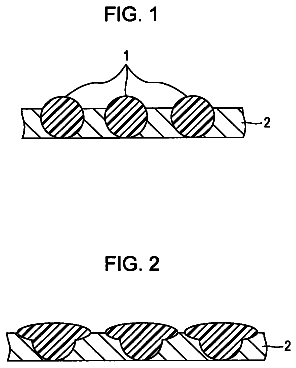
FIG. 1 is a cross-sectional view schematically showing an example of the internal configuration of an inkjet head; and
FIG. 2 is a view schematically showing an example of jetting port alignment of a nozzle plate.
Detailed description of the invention
Ink Composition
According to an embodiment of the invention, the ink composition includes: water-insoluble polymer particles including a colorant and a water-insoluble polymer; and a compound represented by the below-described formula (A), in which the content of free polymer derived from the water-insoluble polymer is 1.0% by mass or less with respect to the total mass of the ink composition.
Since the ink composition of the invention has the above configuration in which, especially, the compound represented by formula (A) shown below is contained and the content of free polymer is 1.0% by mass or less, excellent jetting stability and excellent ink removability are achieved.
In the invention, the term "free polymer" is a generic term of which the scope includes a polymer that is not adsorbed to the colorant, a polymer particle not containing the colorant, an easily detachable polymer such as a polymer which is adsorbed to the colorant so weakly as to be easily liberated therefrom by other components of the ink, and the like.
Meanwhile, a polymer that directly contributes to the dispersion of the colorant in the ink composition is called "polymer adsorbed to the colorant" or "adsorbed polymer".
When an ink composition is prepared using a pigment dispersion, a water-soluble organic solvent and the like as described below are added. Since the solvent of the ink composition is different in solvent composition of medium from the solvent of the pigment dispersion, which mainly contains water, the ink composition tends to be hydrophobic as compared with a case where water is used as the only solvent. As a result, the polymer adsorbed onto a colorant tends to liberate therefrom. The inventors of the present invention have found that the free polymer present in an ink composition is a factor that affects the jetting stability, ink removability, long-term storage stability, jetting stability after long-term storage, and the like. Thus, the calculation of the amount of free polymer present in the ink composition of the invention should be based on the measurement using the ink composition itself.
The content of free polymer present in the ink composition of the invention is set to be 1.0% by mass or less from the viewpoint of improving jetting stability and ink removability.
When the content of free polymer present in the ink composition exceeds 1.0% by mass, the amount of the ink composition that adheres to an inkjet nozzle member increases and the ink composition may clog the nozzle, leading to difficulty in jetting the ink composition. Moreover, since the ink composition adheres to the nozzle member, the ink composition is hardly removed even by washing.
The content of free polymer in the ink composition of the invention is preferably 0.75% by mass or less, more preferably 0.40% by mass or less, and furthermore preferably 0.30% by mass or less, and it is most preferable that no free polymer is present (i.e., the content of free polymer is 0% by mass). A content of free polymer of 0.40% by mass or less is preferable because the jetting stability and ink removability is further improved, and stable jetting of the ink can be achieved even after long-term storage. The content of free polymer may be measured by the method described in the Examples section of the present specification.
As for the content of free polymer in the ink composition, a value obtained as described below is used.
The ink composition is centrifuged using a high-speed ultracentrifuge (trade name: OPTIMA XL100K, manufactured by Beckman Coulter, Inc.) at 80,000 rpm for 1 hour to precipitate colorant-containing polymer particles, and the resultant supernatant is collected. Then, the amount of water-insoluble polymer contained in the collected supernatant is determined using a nuclear magnetic resonance analyzer (trade name: INOVA 400 (.sup.13C-NMR), manufactured by Varian Technologies Japan Limited). A standard curve is made based on measurement results at three different concentrations, using a standard sample of colorant-containing polymer particles.
The mass ratio of the amount of free polymer to the amount of adsorbed polymer (i.e., free polymer/adsorbed polymer) is preferably 0.23 or less, more preferably 0.20 or less, and furthermore preferably 0.15 or less, from the viewpoints of improving jetting stability and ink removability, and from the viewpoint that the ink is stably jetted even after long-term storage.
The total content (i.e., total amount of solid contents) of the colorant, adsorbed polymer, and free polymer in the ink composition is preferably from 1.5 to 10.0% by mass, more preferably from 2.5 to 8.0% by mass, and furthermore preferably from 3.0 to 7.5% by mass, from the viewpoints of improving jetting stability and ink removability.
The amount of solid contents may be determined by the method described in the Examples section of the present specification.
Colorant
The colorant in the ink composition according to the invention is included in the water-insoluble polymer particles.
The colorant used in the invention is not particularly limited, and examples thereof include pigments, hydrophobic dyes (such as oil-soluble dyes or disperse dyes), and water-soluble dyes (such as acid dyes, reactive dyes or direct dyes). From the viewpoint of water resistance, storage stability and abrasion resistance, a pigment and a hydrophobic dye are preferred. In particular, in view of achieving high weather resistance, which is an increasingly desired property in these days, a pigment is preferably used.
When used in the ink composition, the pigment or the hydrophobic dye needs to be formed into particles that are stable in the ink, with the use of a surfactant or a polymer. In particular, from the viewpoint of dispersibility or the like, it is preferred to include the pigment and/or the hydrophobic dye in polymer particles.
The pigment may be either an inorganic pigment or an organic pigment. If necessary, these pigments may be used in combination with an extender pigment.
Pigment
In the ink composition according to the invention, the pigment is preferably included in the water-insoluble polymer particles from the viewpoint of dispersion stability, jetting stability or the like.
The pigment may be either an inorganic pigment or an organic pigment. If necessary, these pigments may be used in combination with an extender pigment.
Examples of the inorganic pigment include carbon black, metal oxides, metal sulfides and metal chlorides. Among these, particularly in black aqueous inks, carbon black is preferred. Examples of the carbon black include furnace black, thermal lamp black, acetylene black and channel black.
Examples of the organic pigment include azo pigments, disazo pigments, phthalocyanine pigments, quinacridone pigments, isoindolinone pigments, dioxazine pigments, perylene pigments, perinone pigments, thioindigo pigments, anthraquinone pigments and quinophthalone pigments.
The color hue of the organic pigment is not particularly limited, and those having a chromatic color such as red organic pigments, yellow organic pigments, blue organic pigments, orange organic pigments or green organic pigments.
Specific examples of preferred organic pigments include products with the following product numbers: C. I. Pigment Yellow 13, 17, 74, 83, 97, 109, 110, 120, 128, 139, 151, 154, 155, 174 and 180; C. I. Pigment Red 48, 57:1, 122, 146, 176, 184, 185, 188 and 202; C. I. Pigment Violet 19 and 23; C. I. Pigment Blue 15, 15:1, 15:2, 15:3, 15:4, 16 and 60; and C. I. Pigment Green 7 and 36.
Examples of the extender pigments include silica, calcium carbonate and talc.
The hydrophobic dye is not particularly limited as long as it can be included in cross-linked polymer particles. The oil-soluble dye that dissolves in an organic solvent used for the production of polymer (preferably methyl ethyl ketone) in an amount of 2 g/L or more, and preferably from 20 to 500 g/L (25.degree. C.) with respect to the organic solvent, is preferably used from the viewpoint of efficiently including the dye in the polymer.
Examples of the hydrophobic dyes include oil-soluble dyes and disperse dyes, among which oil-soluble dyes are preferred.
Examples of the oil-soluble dyes include products with the following product numbers: C. I. Solvent Black, C. I. Solvent Yellow, C. I. Solvent Red, C. I. Solvent Violet, C. I. Solvent Blue, C. I. Solvent Green and C. I. Solvent Orange. These products are available from Orient Chemical Industries, Co., Ltd., BASF Japan Ltd., and the like.
Examples of the disperse dyes include products with the following product numbers: C. I. Disperse Yellow, C. I. Disperse Orange, C. I. Disperse Red, C. I. Disperse Violet, C. I. Disperse Blue and C. I. Disperse Green. Among these, preferred yellow dyes are C. I. Solvent Yellow 29 and 30, preferred cyan dye is C. I. Solvent Blue 70, preferred magenta dyes are C. I. Solvent Red 18 and 49, and preferred black dyes are C. I. Solvent Black 3 and 7, and nigrosine black dyes.
These colorants may be used alone or in combination of two or more kinds thereof.
The mass ratio of the colorant and the water-insoluble polymer (water-insoluble polymer/colorant) is preferably from 10/90 to 90/10, more preferably from 20/80 to 80/20, and particularly preferably from 20/80 to 50/50, from the viewpoint of glossiness and storage stability.
In the ink composition according to the invention, from the viewpoint of improving print density and dispersion stability, the mass ratio of the colorant (in particular, a pigment) to the water-insoluble polymer (colorant/water-insoluble polymer) is preferably from 50/50 to 90/10, and more preferably from 50/50 to 80/20, in terms of calculated values based on the addition amounts thereof.
Further, from the viewpoint of reducing the amount of solid content as much as possible, as well as improving print density and dispersion stability, the mass ratio of the polymer that directly contributes to dispersion of the colorant in the ink composition by adsorbing to the colorant (hereinafter, also referred to as "polymer adsorbed to the colorant" or simply referred to as "adsorbed polymer") with respect to the colorant (adsorbed polymer/colorant) is preferably from 0.1 to 0.75, more preferably from 0.1 to 0.55, further preferably from 0.15 to 0.55, and particularly preferably from 0.15 to 0.45. The amount of adsorbed polymer is, as described in the examples, a value of subtracting the amount of free polymer from the amount of water-insoluble polymer in the ink composition.
The content of colorant in the ink composition according to the invention is 2% by mass or more, preferably from 2 to 4.8% by mass, more preferably from 2 to 4.5% by mass, further preferably from 2.5 to 4.5% by mass, from the viewpoint of improving print density.
Water-Insoluble Polymer Particles
The water-insoluble polymer particles used in the invention include at least one colorant and a water-insoluble polymer.
Examples of the water-insoluble polymer include a water-insoluble vinyl polymer, a water-insoluble ester polymer and a water-insoluble urethane polymer. Among these, from the viewpoint of stability of an aqueous dispersion, a water-insoluble vinyl polymer is preferred. In the present specification, the term "water-insoluble polymer" refers to a polymer of which solubility (dissolution amount) in 100 g of water at 25.degree. C. is 10 g or less, preferably 5 g or less, and further preferably 1 g or less, after being dried at 105.degree. C. for 2 hours.
When the water-insoluble polymer has a salt-forming group, the dissolution amount of water-insoluble polymer refers to the dissolution amount of the water-insoluble polymer of which salt-forming group has been neutralized to 100% with acetic acid or sodium hydroxide depending on the type of the salt-forming group.
When the colorant is a pigment, the colorant in the ink composition according to the invention is preferably contained in the water-insoluble polymer particles, in view of dispersion stability, water resistance, jettability, print density or the like.
In order to provide jetting stability and removability, the water-insoluble polymer is preferably a polymer that includes at least a structural unit derived from a monomer having a salt-forming group (a), and a structural unit derived from a styrenic macromer (b) and/or a structural unit derived from a hydrophobic monomer (c). More preferably, the water-insoluble polymer is a water-insoluble graft polymer that includes a structural unit derived from a monomer having a salt-forming group (a) and a structural unit derived from a styrenic macromer (b).
The water-insoluble graft polymer preferably has a polymer including a structural unit derived from a monomer having a salt-forming group (a) and a structural unit derived from a hydrophobic monomer (c) in its main chain, and a structural unit derived from a styrenic macromer (b) in its side chain.
The water-insoluble polymer as described above is preferably a water-insoluble vinyl polymer formed by copolymerizing a mixture of monomers that include a monomer having a salt-forming group (a) (hereinafter, also referred to as "component (a)"), a styrenic macromer (b) (hereinafter, also referred to as "component (b)") and/or a hydrophobic monomer (c) (hereinafter, also referred to as "component (c)"). Hereinafter, this mixture of monomers is also referred to as "monomer mixture".
Monomer Having Salt-Forming Group (a)
The monomer having a salt-forming group (a) is used from the viewpoint of enhancing dispersion stability of the obtained dispersion, or the like. Examples of the salt-forming group include a carboxyl group, a sulfonic acid group, a phosphoric acid group, an amino group and an ammonium group.
Examples of the component (a) include cationic monomers and anionic monomers. Examples of the cationic monomers and anionic monomers include a compound such as those described in page 5, column 7, line 24 to column 8, line 29 of JP-A No. 9-286939.
Representative examples of the cationic monomers include unsaturated amino group-containing monomers and unsaturated ammonium salt-containing monomers. Among these, N,N-dimethylaminoethyl (meth)acrylate and N--(N',N'-dimethylaminopropyl) (meth)acrylamide are preferred.
Representative examples of the anionic monomers include unsaturated carboxylic acid monomers, unsaturated sulfonic acid monomers and unsaturated phosphoric acid monomers.
Examples of the unsaturated carboxylic acid monomers include acrylic acid, methacrylic acid, crotonic acid, itaconic acid, maleic acid, fumaric acid, citraconic acid and 2-methacryloyloxymethyl succinic acid.
Examples of the unsaturated sulfonic acid monomers include styrene sulfonic acid, 2-acrylamide-2-methylpropane sulfonic acid, 3-sulfopropyl (meth)acrylate and bis-(3-sulfopropyl)itaconate.
Examples of the unsaturated phosphoric acid monomers include vinyl phosphonic acid, vinyl phosphate, bis(methacryloyloxyethyl)phosphate, diphenyl-2-acryloyloxyethyl phosphate, diphenyl-2-methacryloyloxyethyl phosphate and dibutyl-2-acryloyloxyethyl phosphate.
Among the above anionic monomers, unsaturated carboxylic acid monomers are preferred, and acrylic acid or methacrylic acid is more preferred, in view of dispersion stability, jettability or the like.
Styrenic Macromer (b)
A styrenic macromer (b) (hereinafter, simply referred to as "macromer" or "component (b)" in some cases) is used from the viewpoint of, for example, enhancing dispersion stability of the water-insoluble polymer particles including a pigment by increasing its compatibility with the colorant (in particular, a pigment). Examples of the styrenic macromers (b) include a macromer that is a monomer having a number average molecular weight of from 500 to 100,000, preferably from 1,000 to 10,000, and having a polymerizable functional group, such as an unsaturated group, at one terminal thereof.
The number average molecular weight of the component (b) is measured by gel permeation chromatography using polystyrene as a standard substance, and tetrahydrofuran including 50 mmol/L acetic acid as a solvent.
The macromer as the component (b) preferably has a hydrophobic graft chain in view of enhancing the compatibility with the pigment.
"Styrenic macromer" as used herein refers to a macromer having a structural unit derived from a styrenic monomer such as styrene, .alpha.-methylstyrene, or vinyl toluene. Among these styrenic monomers, styrene is preferable.
Examples of the styrenic macromer include a styrene homopolymer having a polymerizable functional group at one terminal thereof, and a copolymer of a styrene monomer and another type of monomer, the copolymer having a polymerizable functional group at one terminal thereof. The polymerizable functional group present at one terminal of the homopolymer or copolymer is preferably an acryloyloxy group or a methacryloyloxy group. When copolymerization is carried out utilizing the functional group, water-insoluble graft polymers having a structural unit derived from the styrenic macromer can be obtained.
Examples of the another type of monomer that may be copolymerized with the styrenic monomer include
acrylonitrile,
(meth)acrylate esters described below (b-2 Monomer), and
(meth)acrylate monomers containing an aromatic ring other than styrene (b-3 Monomer).
In a side chain or in the styrenic macromer, the content of structural unit derived from the styrenic monomer is preferably 60% by mass or more, more preferably 70% by mass or more, and particularly preferably 90% by mass or more, from the viewpoint of pigment dispersibility.
Examples of commercially-available styrenic macromer include AS-6, AS-6S, AN-6, AN-6S, HS-6, and HS-6S (all trade names, manufactured by Toagosei Co., Ltd.).
Hydrophobic Monomer (c)
A hydrophobic monomer (c) is used from the viewpoint of improving dispersion stability of a water-resistant colorant, reducing the amount of free polymer, or the like, and examples thereof include alkyl (meth)acrylate, alkyl (meth)acrylamide, an aromatic ring-containing monomer, and a monomer capable of forming a repeating unit represented by the following Formula
or the following Formula (2).
Examples of the alkyl (meth)acrylate include (meth)acrylic acid esters having an alkyl group having 1 to 22 carbon atoms, such as methyl (meth)acrylate, ethyl (meth)acrylate, (iso)propyl (meth)acrylate, (iso or tertiary)butyl (meth)acrylate, (iso)amyl (meth)acrylate, cyclohexyl (meth)acrylate, 2-ethylhexyl (meth)acrylate, (iso)octyl (meth)acrylate, (iso)decyl (meth)acrylate, (iso)dodecyl (meth)acrylate or (iso)stearyl (meth)acrylate.
Examples of the alkyl (meth)acrylamide include (meth)acrylamides having an alkyl group having 1 to 22 carbon atoms, such as methyl (meth)acrylamide, dimethyl (meth)acrylamide, diethyl (meth)acrylamide, dibutyl (meth)acrylamide, t-butyl (meth)acrylamide, octyl (meth)acrylamide or dodecyl (meth)acrylamide.
Examples of the aromatic ring-containing monomers include styrenic monomers such as styrene, 2-methyl styrene or vinyl toluene, aryl esters of (meth)acrylic acid such as benzyl (meth)acrylate or phenoxyethyl (meth)acrylate, and vinyl monomers having an aromatic hydrocarbon group having 6 to 22 carbon atoms such as ethylvinylbenzene, 4-vinylbiphenyl, 1,1-diphenylethylene, vinylnaphthalene or chlorostyrene.
In the present specification, the expression "(iso or tertiary)" refers to iso or tertiary or normal, and "(iso)" refers to iso or normal. The expression "(meth)acrylate" encompasses both acrylate and methacrylate.
##str00003##
In Formula
and Formula (2), R.sup.1 represents a hydrogen atom or a substituent. One of R.sup.2 to R.sup.5 represents a single bond to W, and the others each independently represent a hydrogen atom or a substituent. J represents *--CO--, *--COO--, *--CONR.sup.10--, *--OCO--, a methylene group, a phenylene group or *--C.sub.6H.sub.4CO--. R.sup.10 represents a hydrogen atom, an alkyl group, an aryl group or an aralkyl group. W represents a single bond or a divalent linking group. A.sup.1 represents a hetero ring group. Q.sup.1 represents a group of atoms that is necessary for forming a ring together with the carbon atoms. *-- represents a bonding to the main chain.
Examples of the substituent represented by any of R.sup.1 to R.sup.5 include a monovalent substituent (hereinafter, referred to as Z). Examples of the monovalent substituent include an alkyl group (an alkyl group having preferably 1 to 30 carbon atoms, more preferably 1 to 20 carbon atoms, particularly preferably 1 to 10 carbon atoms, such as a methyl group, an ethyl group, an iso-propyl group, a tert-butyl group, an n-octyl group, an n-decyl group or an n-hexadecyl group), a cycloalkyl group (a cycloalkyl group having preferably 3 to 30 carbon atoms, more preferably 1 to 20 carbon atoms, particularly preferably 3 to 10 carbon atoms, such as a cyclopropyl group, a cyclopentyl group or a cyclohexyl group), an alkenyl group (an alkenyl group having preferably 2 to 30 carbon atoms, more preferably 2 to 20 carbon atoms, particularly preferably 2 to 10 carbon atoms, such as a vinyl group, an allyl group, a 2-butenyl group or a 3-pentenyl group), an alkynyl group (an alkynyl group having preferably 2 to 30 carbon atoms, more preferably 2 to 20 carbon atoms, particularly preferably 2 to 10 carbon atoms, such as a propargyl group or a 3-pentynyl group), an aryl group (an aryl group having preferably 6 to 30 carbon atoms, more preferably 6 to 20 carbon atoms, particularly preferably 6 to 12 carbon atoms, such as a phenyl group, a p-methylphenyl group, a naphthyl group or an anthranil group),
an amino group (an amino group having preferably 0 to 30 carbon atoms, more preferably 0 to 20 carbon atoms, particularly preferably 0 to 10 carbon atoms, such as an amino group, a methylamino group, a dimethylamino group, a diethylamino group, a dibenzylamino group, a diphenylamino group or a ditolylamino group), an alkoxy group (an alkoxy group having preferably 1 to 30 carbon atoms, more preferably 1 to 20 carbon atoms, particularly preferably 1 to 10 carbon atoms, such as a methoxy group, an ethoxy group, a butoxy group or a 2-ethylhexyloxy group), an aryloxy group (an aryloxy group having preferably 6 to 30 carbon atoms, more preferably 6 to 20 carbon atoms, particularly preferably 6 to 12 carbon atoms, such as a phenyloxy group, a 1-naphthyloxy group or a 2-naphthyloxy group), a heterocyclic oxy group (a heterocyclic oxy group having preferably 1 to 30 carbon atoms, more preferably 1 to 20 carbon atoms, particularly preferably 1 to 12 carbon atoms, such as a pyridyloxy group, a pyrazyloxy group, a pyrimidyloxy group or a quinolyloxy group),
an acyl group (an acyl group having preferably 1 to 30 carbon atoms, more preferably 1 to 20 carbon atoms, particularly preferably 1 to 12 carbon atoms, such as an acetyl group, a benzoyl group, a formyl group or a pivaloyl group), an alkoxycarbonyl group (an alkoxycarbonyl group having preferably 2 to 30 carbon atoms, more preferably 2 to 20 carbon atoms, particularly preferably 2 to 12 carbon atoms, such as a methoxycarbonyl group or an ethoxycarbonyl group), an aryloxycarbonyl group (an aryloxycarbonyl group having preferably 7 to 30 carbon atoms, more preferably 7 to 20 carbon atoms, particularly preferably 7 to 12 carbon atoms, such as a phenyloxycarbonyl group), an acyloxy group (an acyloxy group having preferably 1 to 30 carbon atoms, more preferably 1 to 20 carbon atoms, particularly preferably 1 to 10 carbon atoms, such as an acetoxy group or a benzoyloxy group), an acylamino group (an acylamino group having preferably 1 to 30 carbon atoms, more preferably 1 to 20 carbon atoms, particularly preferably 1 to 10 carbon atoms, such as an acetylamino group or a benzoylamino group),
an alkoxycarbonylamino group (an alkoxycarbonylamino group having preferably 2 to 30 carbon atoms, more preferably 2 to 20 carbon atoms, particularly preferably 2 to 12 carbon atoms, such as a methoxycarbonylamino group), an aryloxycarbonylamino group (an aryloxycarbonylamino group having preferably 7 to 30 carbon atoms, more preferably 7 to 20 carbon atoms, particularly preferably 7 to 12 carbon atoms, such as a phenyloxycarbonylamino group), a sulfonylamino group (a sulfonylamino group having preferably 1 to 30 carbon atoms, more preferably 1 to 20 carbon atoms, particularly preferably 1 to 12 carbon atoms, such as a methanesulfonylamino group or a benzenesulfonylamino group), a sulfamoyl group (a sulfamoyl group having preferably 0 to 30 carbon atoms, more preferably 0 to 20 carbon atoms, particularly preferably 0 to 12 carbon atoms, such as a sulfamoyl group, a methylsulfamoyl group, a dimethylsulfamoyl group or a phenylsulfamoyl group),
a carbamoyl group (a carbamoyl group having preferably 1 to 30 carbon atoms, more preferably 1 to 20 carbon atoms, particularly preferably 1 to 12 carbon atoms, such as a carbamoyl group, a methylcarbamoyl group, a diethylcarbamoyl group or a phenylcarbamoyl group), an alkylthio group (an alkylthio group having preferably 1 to 30 carbon atoms, more preferably 1 to 20 carbon atoms, particularly preferably 1 to 12 carbon atoms, such as a methylthio group or an ethylthio group), an arylthio group (an arylthio group having preferably 6 to 30 carbon atoms, more preferably 6 to 20 carbon atoms, particularly preferably 6 to 12 carbon atoms, such as a phenylthio group), a heterocyclic thio group (a heterocyclic thio group having preferably 1 to 30 carbon atoms, more preferably 1 to 20 carbon atoms, particularly preferably 1 to 12 carbon atoms, such as a pyridylthio group, a 2-benzimidazolylthio group, a 2-benzoxazolylthio group or a 2-benzthiazolylthio group),
a sulfonyl group (a sulfonyl group having preferably 1 to 30 carbon atoms, more preferably 1 to 20 carbon atoms, particularly preferably 1 to 12 carbon atoms, such as a mesyl group or a tosyl group), a sulfinyl group (a sulfinyl group having preferably 1 to 30 carbon atoms, more preferably 1 to 20 carbon atoms, particularly preferably 1 to 12 carbon atoms, such as a methanesulfinyl group or a benzenesulfinyl group), a ureido group (a ureido group having preferably 1 to 30 carbon atoms, more preferably 1 to 20 carbon atoms, particularly preferably 1 to 12 carbon atoms, such as a ureido group, a methylureido group or a phenylureido group), an amido phosphate group (an amido phosphate group having preferably 1 to 30 carbon atoms, more preferably 1 to 20 carbon atoms, particularly preferably 1 to 12 carbon atoms, such as a diethyl amido phosphate group or a phenyl amido phosphate group), a hydroxyl group, a mercapto group, a halogen atom (such as a fluorine atom, a chlorine atom, a bromine atom or an iodine atom, more preferably a fluorine atom),
a cyano group, a sulfo group, a carboxyl group, an oxo group, a nitro group, a hydroxamic group, a sulfino group, a hydrazino group, an imino group, a heterocyclic group (a heterocyclic group having preferably 1 to 30 carbon atoms, more preferably 1 to 12 carbon atoms, and preferred examples of hetero atoms include a nitrogen atom, an oxygen atom, and a sulfur atom, such as an imidazolyl group, pyridyl group, a quinolyl group, a furyl group, a thienyl group, a piperidyl group, a morpholino group, a benzoxazolyl group, a benzimidazolyl group, a benzthiazolyl group, a carbazolyl group or an azepinyl group), a silyl group (a silyl group having preferably 3 to 40 carbon atoms, more preferably 3 to 30 carbon atoms, particularly preferably 3 to 24 carbon atoms, such as a trimethylsilyl group or a triphenylsilyl group), and a silyloxy group (a silyloxy group having preferably 3 to 40 carbon atoms, more preferably 3 to 30 carbon atoms, particularly preferably 3 to 24 carbon atoms, such as a trimethylsilyloxy group or a triphenylsilyloxy group). These substituents may be further substituted by one or more substituents selected from the aforementioned substituents Z.
Among the above, R.sup.1 is preferably a hydrogen atom, an alkyl group or an aryl group, and more preferably a hydrogen atom or an alkyl group.
R.sup.2 to R.sup.5, except the one of R.sup.2 to R.sup.5 representing the single bond to W, each independently represent preferably a hydrogen atom, an alkyl group, an aryl group, an amino group, an alkoxy group, an aryloxy group, an acyl group, an alkoxycarbonyl group, an aryloxycarbonyl group, an acyloxy group, an acylamino group, an alkoxycarbonylamino group, an aryloxycarbonyl amino group, a sulfonylamino group, a carbamoyl group, a sulfonyl group, a hydroxy group, a halogen atom, a cyano group, a carboxyl group, a nitro group or a heterocyclic group; more preferably a hydrogen atom, an alkyl group, an aryl group, an amino group, an alkoxy group, an aryloxy group, an acyl group, an acylamino group, a sulfonylamino group, a carbamoyl group, a sulfonyl group, a hydroxyl group, a halogen atom or a cyano group; and further preferably a hydrogen atom, an acyl group, a hydroxyl group, a halogen atom or a cyano group.
In Formulae
and (2), J represents *--CO--, *--COO--, *--CONR.sup.10--, *--OCO--, a methylene group, a phenylene group or *--C.sub.6H.sub.4CO--. * represents the bonding position in the main chain. Among the above, J is preferably *--CO--, *--CONR.sup.10--, a phenylene group or *--C.sub.6H.sub.4CO--, and more preferably *--C.sub.6H.sub.4CO--. R.sup.10 represents a hydrogen atom, an alkyl group, an aryl group or an aralkyl group, and preferably a hydrogen atom, an alkyl group or an aryl group, and preferred definitions thereof are the same as those of the alkyl group and the aryl group described in the above section concerning substituent Z.
In Formulae
and (2), W represents a single bond or a divalent linking group.
Examples of the divalent linking group include an imino group, a straight-chain, branched or cyclic alkylene group (an alkylene group having preferably 1 to 30 carbon atoms, more preferably 1 to 12 carbon atoms, further preferably 1 to 4 carbon atoms, such as a methylene group, an ethylene group, a propylene group, a butylene group, a pentylene group, a hexylene group, an octylene group or a decylene group), an aralkylene group (an aralkylene group having preferably 7 to 30 carbon atoms, more preferably 7 to 13 carbon atoms, such as a benzylidene group or a cinnamylidene group), an arylene group (an arylene group having preferably 6 to 30 carbon atoms, more preferably 6 to 15 carbon atoms, such as a phenylene group, a cumenylene group, a mesitylene group, a tolylene group or a xylylene group), *--(CR.sup.11R.sup.12).sub.nNHCONH-- and *--(CR.sup.11R.sup.12).sub.nCONH--. * represents the bounding position in the main chain. R.sup.11 and R.sup.12 each independently represent a hydrogen atom or a substituent, and each independently represent preferably a hydrogen atom, an alkyl group, a halogen atom or a hydroxyl group, more preferably a hydrogen atom or an alkyl group, and further preferably a hydrogen atom. When there are two or more R.sup.11s, they may be the same as each other, or some or all of R.sup.11s may be different from each other. When there are two or more R.sup.12s, they may be the same as each other, or some or all of R.sup.12s may be different from each other. n represents a positive integer, preferably 1 to 10, and more preferably 2 to 5. Among these, the divalent linking group is preferably *--(CR.sup.11R.sup.12).sub.nNHCONH--, *--(CR.sup.11R.sup.12).sub.nCONH-- or an imino group, and more preferably an imino group.
W preferably represents a single bond, an alkylene group or an arylene group, more preferably a single bond or an alkylene group, and further preferably a single bond.
W may further have a substituent, and examples of the substituent include those described in the above section concerning Z. Further, W may be formed by combining two or more of the divalent linking groups. It is also preferred that W includes an ether bond therein.
In Formula (1), A.sup.1 represents a heterocyclic group. In the present invention, the term "heterocyclic group" refers to a monovalent group obtained by removing one hydrogen atom from a heterocyclic compound.
The heterocyclic group represented by A.sup.1 is preferably a heterocyclic group capable of forming a colorant (in particular, a pigment). By having a heterocyclic group that exhibits high compatibility with the pigment via van der waals interaction, favorable adsorption properties with respect to the pigment may be achieved and a stable dispersion may be obtained.
The heterocyclic compound for forming the heterocyclic group is preferably a heterocyclic compound having at least one hydrogen bonding group in its molecule, and examples thereof include thiophene, furan, xanthene, pyrrole, imidazole, isoindoline, isoindolinone, benzimidazolone, indole, quinoline, carbazole, acridine, acridone, quinacridone, anthraquinone, phthalimide, chinaldine and quinophthalone. Among these, benzimidazolone, indole, quinoline, carbazole, acridine, acridone, anthraquinone and phthalimide are particularly preferred.
The heterocyclic group is particularly preferably a heterocyclic group that is similar to the pigment to be used.
Specifically, in the invention, at least one selected from acridone, anthraquinone or the like is particularly preferably used when the pigment used is a quinacridone pigment. These compounds may strengthen the adsorption of the water-insoluble polymer and the colorant, and may reduce the amount of polymer liberated from the colorant, irrespective of the type or the amount of solvent used as the ink solvent.
In Formula (2), Q.sup.1 represents a group of atoms that are necessary to form a ring together with carbon atoms (i.e., the two carbon atoms of --C.dbd.C--). The group of atoms is preferably such that the ring formed is composed of atoms each of which is selected from carbon, nitrogen, oxygen, silicon, phosphorus or sulfur, preferably composed of atoms each of which is selected from carbon, nitrogen, oxygen or sulfur, more preferably composed of atoms each of which is selected from carbon, nitrogen or oxygen, and further preferably composed of atoms each of which is selected from carbon or nitrogen. Q.sup.1 including this group of atoms may be saturated or unsaturated, and when it is substitutable, Q.sup.1 may have a substituent. Examples of the substituent include the groups described in the above section concerning Z.
In Formula (2), examples of the ring-structure group to be bound to W (a ring-structure group including Q.sup.1 and the aryl group having R.sup.2 to R.sup.5) include a ring-structure group represented by any one of the following formulae (i) to (vi) that may have an unshown substituent (in the formulae, * represents the position of bonding to W). Among these, a ring-structure group represented by formula (i), (ii) or (iii) that may have an unshown substituent is preferred, and a ring-structure group represented by formula (i) that may have an unshown substituent is more preferred.
##str00004##
The structural unit (repeating unit) represented by Formula
The description continues in the full USPTO document.
 Lapsed, fee not paid9 drawings