 Lapsed, fee not paid7 drawings
Telecom & Networks · US 8,527,766 B2
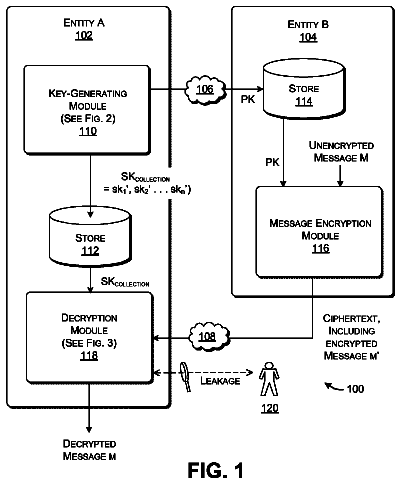
Reducing leakage of information from cryptographic systems
A system is described for reducing leakage of meaningful information from cryptographic operations.
US 8,527,877 B2 · Assignee: AT&T Intellectual Property I, L.P. · Inventors: Wohlert; Randolph
Sheet 1 of 11 from the published document. All sheets in the USPTO PDF
Systems and methods to select media content are provided. A method includes dynamically selecting content items for presentation via a media player based on user media selection settings. The user media selection settings specify a proportion of a first category of media content to be presented and a proportion of at least one second category of media content to be presented. The at least one second category includes a user defined category. First media content is associated with the first category based on an intrinsic property of the first media content and second media content is associated with the user defined category based on a property that is not intrinsic to the second media content. The method also includes generating an output stream presenting the dynamically selected content items.
Media distribution and playback systems are becoming increasingly popular. Services and systems that enable access to media content are widely used. Certain systems enable users to store purchased media in a manner that may be more convenient (e.g., ripping media from a CD or DVD). Certain other systems enable users to download media content items (e.g., songs, movies, or other audio or video content) to a media player, such as an "MP3 player". Still other systems allow users to access a predefined playlist or to specify a playlist of media content. Using any of these systems (as well as others), users may tire of the limited media selection, the limitations of static playlists, and/or the annoyance of having to create new playlists to vary the media content.
1 of 11 drawing sheets so far from the published document, cropped to the drawing. Every sheet is in the USPTO PDF.
What the patent claimed, word for word. All of it is now free to use.
The present disclosure is generally related to a systems and methods to select media content.
Media distribution and playback systems are becoming increasingly popular. Services and systems that enable access to media content are widely used. Certain systems enable users to store purchased media in a manner that may be more convenient (e.g., ripping media from a CD or DVD). Certain other systems enable users to download media content items (e.g., songs, movies, or other audio or video content) to a media player, such as an "MP3 player". Still other systems allow users to access a predefined playlist or to specify a playlist of media content. Using any of these systems (as well as others), users may tire of the limited media selection, the limitations of static playlists, and/or the annoyance of having to create new playlists to vary the media content.
FIG. 1 is a block diagram of a first embodiment of a system to select media content;
FIG. 2 is a block diagram of a second embodiment of a system to select media content;
FIG. 3 is a flow chart of a first embodiment of a method of selecting media content;
FIG. 4 is a flow chart of a second embodiment of a method of selecting media content;
FIG. 5 is a flow chart of a third embodiment of a method of selecting media content;
FIG. 6 is a flow chart of a fourth embodiment of a method of selecting media content;
FIG. 7 is an illustration of a first embodiment of a user interface display;
FIG. 8 is an illustration of a second embodiment of a user interface display;
FIG. 9 is an illustration of a third embodiment of a user interface display;
FIG. 10 is an illustration of a fourth embodiment of a user interface display;
FIG. 11 is an illustration of a fifth embodiment of a user interface display;
FIG. 12 is an illustration of a sixth embodiment of a user interface display;
FIG. 13 is an illustration of a seventh embodiment of a user interface display; and
FIG. 14 is a block diagram of a general computer system.
In a particular embodiment, a method includes generating a media playlist based on user preference data. The user preference data indicates proportions of each of a plurality of categories of media content to be present in the media playlist. The method also includes generating a user interface display. The user interface display presents the user preference data using a plurality of adjustable bars. Each adjustable bar is associated with one of the categories of media content, and a dimension of each adjustable bar is associated with the proportion of the respective category of media content included in the media playlist. The method further includes receiving user input adjusting the dimension of a first bar. The first bar is associated with a first category of the plurality of categories of media content. The method also includes adjusting the proportion of the first category of media content included in the media playlist based on the user input to generate a modified media playlist.
In another particular embodiment, a system includes a media selection module to generate a media playlist based on user preference data. The user preference data indicates proportions of each of a plurality of categories of media content to be present in the media playlist. The system also includes a graphical user interface (GUI) module to present a user interface display including a representation of the user preference data using a plurality of adjustable bars. Each adjustable bar is associated with one of the categories of media content, and a dimension of each of the adjustable bars is associated with a proportion of the respective category of media content included in the media playlist. The system further includes an input interface to receive an input to adjust the dimension of a first bar. The first bar is associated with a first category of the plurality of categories of media content. The system also includes a user settings module to adjust the user preference data based on the input.
Another particular embodiment includes a computer-readable storage medium. The computer-readable storage medium includes operational instructions that, when executed by a processor, cause the processor to generate a media playlist based on user preference data. The user preference data indicates proportions of each of a plurality of categories of media content to be present in the media playlist. The computer-readable storage medium also includes operational instructions that, when executed by the processor, cause the processor to generate a user interface display. The user interface display presents the user preference data using a plurality of adjustable bars. Each adjustable bar is associated with one of the categories of media content, and a dimension of each of the plurality of adjustable bars is associated with a proportion of the respective category of media content included in the media playlist. The computer-readable storage medium further includes operational instructions that, when executed by the processor, cause the processor to adjust the proportion of a first category of media content included in the media playlist based on received user input to adjust the dimension of a first bar. The first bar is associated with the first category of the plurality of categories of media content.
In yet another embodiment, a method includes dynamically selecting media content items for presentation by a media player based on media selection settings. The method also includes generating an output including a current media content item of the dynamically selected media content items. The method further includes accessing a selected media content item from a memory when the selected media content item becomes the current media content item. When the selected media content item is available at a first local memory, the selected media content item is accessed from the first local memory. When the selected media content item is not available at the local memory, a request is sent to a remote network device to send the selected media content item from a remote memory.
In another particular embodiment, a system includes a media selection module to dynamically select media content items for presentation based on media selection settings. The system also includes a memory device interface to access the media content items selected by the media selection module. When a particular selected media content item is available at a first local memory, the memory device interface accesses the particular selected media content item from the first local memory. When the particular selected media content item is not available at the first local memory, the memory device interface sends a request to a remote network device to send the particular selected media content item from a remote memory. The system also includes a media player coupled to the memory device interface to generate an output stream including the dynamically selected media content items accessed via the memory device interface.
Another particular embodiment includes a computer-readable storage medium. The computer-readable storage medium includes operational instructions that, when executed by a processor, cause the processor to dynamically select media content items for presentation based on media playlist selection settings. The computer-readable storage medium also includes operational instructions that, when executed by the processor, cause the processor to access the selected media content items. When a particular selected media content item is available at a local memory, the particular selected media content item is accessed from the local memory. When the particular selected media content item is not available at the local memory, a request is sent to a remote network device to send the particular selected media content item from a remote memory. The computer-readable storage medium further includes operational instructions that, when executed by the processor, cause the processor to generate an output stream including the dynamically selected media content items.
In a particular embodiment, a method includes dynamically selecting content items for presentation via a media player based on user media selection settings. The user media selection settings specify a proportion of a first category of media content to be presented and a proportion of at least one second category of media content to be presented. The at least one second category includes a user defined category. First media content is associated with the first category based on an intrinsic property of the first media content, and second media content is associated with the user defined category based on a property that is not intrinsic to the second media content. The method also includes generating an output stream presenting the dynamically selected content items.
In another particular embodiment, a system includes a media selection module to dynamically select media content items for presentation based on user media selection settings. The user media selection settings specify a proportion of a first category of media content to be presented and a proportion of at least one second category of media content to be presented. The at least one second category includes a user defined category. First media content is associated with the first category based on an intrinsic property of the first media content, and second media content is associated with the user defined category based on a property that is not intrinsic to the second media content. The system also includes a media player to generate an output stream presenting the dynamically selected media content items.
A particular embodiment includes a computer-readable storage medium. The computer-readable storage medium includes operational instructions that, when executed by a processor, cause the processor to dynamically select media content items for presentation based on user playlist settings. The user playlist settings specify a proportion of a first category of media content to be presented and a proportion of at least one second category of media content to be presented. The at least one second category includes a user defined category. First media content is associated with the first category based on an intrinsic property of the first media content, and second media content is associated with the user defined category based on a property that is not intrinsic to the second media content. The computer-readable storage medium further includes operational instructions that, when executed by the processor, cause the processor to generate an output stream to present the dynamically selected media content items.
FIG. 1 is a block diagram of a first embodiment of a system to select media content. The system includes a media player device 102 adapted to present media content to a user. The media content may include one or more of audio, video, images, speech or any combination thereof. The system may also include a remote network device 106 coupled to the media player device 102 via a network 104. The remote network device 106 may be a server or other computing device used to provide media content to the media player device 102. For example, the remote network device 106 may be coupled to a remote memory 108. A plurality of media content items (e.g., digital files embodying media content) may be stored at the remote memory 108. In a particular embodiment, the media player device 102 is coupled to the network 104 via a landline connection 105. For example, the landline connection 105 may include one or more coaxial cables, one or more optical fibers, one or more wire pairs, other physical connections, or any combination thereof. In another particular embodiment, the media player device 102 is coupled to the network 104 via a wireless connection 143 provided by a wireless service provider 142.
The media player device 102 may include a local memory 128 (e.g., a memory onboard or coupled to the media player device 102) that stores media content for presentation via the media player device 102. Additionally, the media player device 102 may communicate with one or more additional local devices 139 to access media content stored at a second local memory 140 of the one or more local devices 139. The local devices 139 may include desktop computers, notebook computers, media servers, entertainment system devices (e.g., set-top boxes, CD players, DVD players, etc.), other devices that store or access media content stored at a local memory, or any combination thereof. The local devices 139 may communicate with the media player device 102 directly, or via the network 104. The network 104 may include a local area network or a wide area network. For example, the network 104 may include or be a portion of the Internet.
In a particular embodiment, the media player device 102 includes a media selection module 112. The media selection module 112 may generate a media playlist (i.e., a selection of media content items for presentation via the media player device 102). The media selection module 112 may access user preference data 116 and generate the media playlist based on the user preference data 116. The user preference data 116 may indicate proportions of each of a plurality of categories of media content to be present in the media playlist. For example, the user preference data 116 may include information specifying one or more media mixes. Each media mix may identify one or more categories of media content to be present in a media stream and a percentage of the media stream to be selected from each of the one or more categories. The user preference data 116 may be received via a user settings module 114. In a particular embodiment, the media selection module 112 generates the media playlist dynamically by selecting one or more subsequent media content items to be presented based on the user preference data 116 while a current media content item is being presented by the media player device 102. The number of subsequent media content items selected may be determined based on a user specified parameter of the user preference data 116.
The user preference data 116 may include media selection settings. The media selection settings may specify proportions of one or more categories of media content to be presented. For example, the media selection settings may specify a proportion of a first category of media content to be presented and a proportion of at least one second category of media content to be presented. The categories may include user defined categories, predetermined categories, or both. In a particular embodiment, media content is associated with at least one of the categories based on an intrinsic property of the particular media content. For example, the media content may be associated with the category based on a tempo, a beat, a rhythm, a type of instrument used, a duration, an artist, a title, a genre, an album (or other media content compilation), a release date, a type of media (e.g., audio, video, etc.), another property that is intrinsic to the media content, or any combination thereof. In a particular embodiment, media content is associated with at least one of the categories based on a property that is not intrinsic to the media content. For example, the media content may be associated with the category based on a storage location of the media content, a universal resource identifier (URI) or universal resource locator (URL) from which the media content is accessible, another property that is not intrinsic to the media content, or any combination thereof.
In a particular embodiment, the media selection module 112 selects the media content based on a determination of what media content is available for presentation. For example, the media player device 102 may include a memory device interface 122. The memory device interface 122 may determine one or more memory devices that are available to the media player device 102. To illustrate, the memory device interface 122 may determine whether the second local memory 140, the remote memory 108, or both, are accessible by the media player device 102. The media selection module 112 may select media content to generate a media playlist 130 based on the memory devices that are accessible.
The memory device interface 122 may also be operable to access media content items selected for presentation by the media selection module 112. For example, the memory device interface 122 may access the media content items of the media playlist 130 to generate an output based on the media playlist 130. The memory device interface 122 may access the media content items that are available at the local memory 128 of the media player device 102 from the local memory 128. Additionally, when a particular media content item is not available at the local memory 128, the memory device interface 122 may access the particular media content item at the remote memory 108 via the remote network device 106. In a particular embodiment, when the particular media content item is not available at the local memory 128, the memory device interface 122 accesses the particular media content item at the second local memory 140 via the local device 139. For example, after determining that the particular media content item is stored at the second local memory 140, the memory device interface 122 may send a request via the network 104 to the remote network device 106. The request may identify the particular media content item and the storage location of the particular media content item. The remote network device 106 may send a request for the particular media content item to the local device 139. The local device 139 may respond to the request from the remote network device 106 by sending the particular media content item to the remote network device 106. The remote network device 106 may send the particular content item to the media player device 102. In an illustrative embodiment, the media player device 102 includes a mobile communications device and the local device 139 includes a computing device that is not in direct communication with the mobile communications device (such as a desktop computer). Thus, media content stored at the second local memory 140 of the local device 139 can be accessed by the media player device 102 even when the media player device 102 and the local device 139 are not in direct communication.
The media player device 102 may also include a graphical user interface (GUI) module 118. The GUI module 118 may present a user interface display at an output 126 of the media player device 102. In a particular embodiment, the user interface display includes a representation of the user preference data 116 using a plurality of adjustable display objects. For example, the adjustable display objects may include adjustable bars in a bar graph. Each of the adjustable display objects may be associated with one of the categories of media content. A dimension (e.g., length, width, area, etc.) of each of the adjustable display objects is associated with a proportion of the respective category of media content included in the media playlist.
The user interface display may also include a list identifying previously presented media content items (also called a stream list). The stream list may include the previously presented media content items, a current media content item (i.e., a media content item being presented) and one or more pending content items (e.g., media content items that have been selected by the media selection module 112 for presentation but have not yet been presented). In a particular embodiment, each of the identified previously presented media content items is presented via the user interface display in a color that identifies a category from which the media content item was selected. For example, the media content item may be presented in a color corresponding to a color of a particular one of the plurality of adjustable display objects. The particular adjustable display object may be associated with the category of media content from which the media content item was selected.
The media player device 102 may also include an input module 120 (also called an input interface). The input module 120 may receive input from a user to modify the user preference data 116. For example, the user may interact with the user interface display via the input module 120 to adjust a dimension of a first bar in the user interface display. The first bar may be associated with a first category media content. In response to the user adjusting the first bar, the user settings module 114 may determine new user preference data 116. The proportion of the first category in the media playlist 130 may be modified based on the adjustment to the first bar. For example, when the first bar is lengthened, the proportion of the first category of media content in the media playlist 130 may be increased. Conversely, when the first bar is shortened, the proportion of the first category in the media playlist 130 may be decreased. Additionally, proportions of one or more other categories of media content may also be modified to accommodate the changes to the proportion of the first category. The new user preference data 116 generated by the user settings module 114 in response to the user input may include the modified proportions.
The media player device 102 may also include a media player 124. The media player 124 may be operable to generate an output (e.g., at the output 126 of the media player device 102) including a current media content item. The media player 124 may receive media content items from the memory device interface 122. In a particular embodiment, the media player 124 may decode, buffer, or otherwise process the received media content items to generate the output 126.
In a particular embodiment, systems and methods for selecting media content may be used to provide a streaming media service. A streaming media server may enable users to personalize a dynamically variable stream of media on the basis of user defined category based percentages. The streaming media service may provide a broad range of network based content and may also mix locally available content into the stream. Additionally, the streaming media service may enable a media player (e.g., the media player 124 or the media player device 102) to include content that is stored locally, but not on the media player (e.g., media stored on a desktop computer) in the media stream. The stream of media content may be generated dynamically based on specified categories. The categories may be pre-determined, user defined, or both. Additionally, the user may specify percentages (or other proportions) of each category to be in the media stream. The media stream may be provided across a variety of user devices, including, mobile communication devices, dedicated media devices (e.g., MP3 players, portable digital video disk players, digital video recorders, etc.), portable computing devices, desktop computing devices, entertainment system devices (e.g., set-top box devices, compact disk players, digital video disk players, televisions, high-definition televisions etc.), other computing devices, or any combination thereof. Additionally, different mixes of media may be scheduled to be presented automatically based on time, day, date, location or other factors.
At start up, a default media stream may be automatically provided. In a particular embodiment, the default media stream is at least partially personalized based on the user's demographic information. The user may subsequently define personalized media mixes. A particular user may specify multiple different media mixes. The media mixes may be scheduled to automatically be applied at different times. For example, a calendar-like interface may be used to display when the user's various media mixes are to be used, to change their duration, sequencing, repetition, other scheduling-based changes to the media mix or selection of the media mix to use, or any combination thereof.
In a particular embodiment, the streaming media service may be accessed using a media player (e.g., the media player 124). The media player 124 may include controls to control the media stream, e.g., to stop, pause, rewind, fast forward, skip particular media content, replay particular media content, and so forth. The media player 124 may generate a user interface display that provides the controls as user selectable display objects. Additionally, the user interface display may include information about media selection settings used to select the media stream. For example, the user interface display may represent a media mix as a bar graph with the categories displayed on the X-axis and percentage values displayed on the Y-axis. When the representation of the media mix is displayed while the media player 124 is presenting media content, a display object (e.g., a bar) associated with the category corresponding to the media content currently playing may be highlighted and/or animated in the user interface display. For example, the display object may move to the beat of music being played by the media player 124. Categories in the user interface display may be depicted in different colors to enable a user to differentiate the categories. This may also provide the basis for associating selected songs with their corresponding categories by displaying the names of the selected songs in the same color as the associated category. In a particular embodiment, the user interface for the streaming media service may be implemented using one or more applets that may be individually opened, closed, or linked together.
The user interface display may also include display objects associated with categories of media content that are not in the media mix being presented by the media player 124. The display objects may be graphically displayed as "pseudo-albums". For example, one or more of the display objects may look like an album cover displaying a name of the category along with a graphic image (such as an artist associated with the category, imagery representative of the category, and so forth). The graphic image may be selected by the user, selected at the streaming media service, or selected automatically based on an analysis of the category.
The user interface display may enable the user to drag and drop a category from the set of categories that are not in the current media mix to the media mix display to add the category to the media mix. A category may also be added to the media mix by selecting an `Add To Mix` user selectable display option, or through usage of menus associated with the user interface display.
The user interface display may also include a stream list that provides chronological information regarding media content that has been presented. For example, where the media content includes music, the stream list may provide an artist name or other artist information and a song title. The stream list may also provide other information, such as an album, a genre, a date, a category, or any combination thereof. The stream list may color code the information according to the category from which the media content was chosen. The color coding may provide a visual indication that associates the media content being presented and the associated category.
A user may add a media content item (e.g., a song, a video clip, or another media file) to a category from the stream list. For example, the user interface display may include a user selectable display object to add a selected media content item from the stream list to a category, such as a favorites category. The user may establish more than one favorites category. For example, the user may specify different favorites categories for different types of media, for different genres of media, or based on other factors intrinsic to or not intrinsic to the media content. To illustrate, the user may specify a favorite blues category, a favorite female vocals category, and so forth. In a particular embodiment, a user may specify media content to add to a favorites category via the user interface display. For example, when a particular media content item is being presented, the user may select a user selectable display option or perform a specific key sequence to add the media content item to the favorites category. In a particular embodiment, a storage location of a media content item is not changed based on the media content item being placed in the favorites category; rather, a list is generated that includes pointers to storage locations associated with media content items in the favorites category. In another particular embodiment, the storage location of the media content item is modified, or an additional copy of the media content item is stored when the media content item is added to the favorites category.
In a particular embodiment, a user of the streaming media service may be provided with a personalized, dynamically variable stream of media content on the basis of user defined categories and user specified percentages. The media content that makes up the stream of media content may be determined based on the user's media profile, which the user may define according to his or her preferences. The media profile may include one or more user defined media mixes that specify the composition of the stream of media content. Different media mixes may specify different streams of media content. The media profile may also include a play schedule. The play schedule may determine the conditions under which different media mixes are applied to determine the stream of media content. Thus, the play schedule enables the stream of media content to automatically vary based on the conditions, such as time of day, day of week, location, date, other user specified conditions, or any combination thereof.
In a particular embodiment, a media mix includes header information describing the mix, the categories of media associated with the media mix, and proportions of each category used to generate the stream of media content. The media mix may be used to dynamically vary the media content that is presented. The media mix may also identify one or more specific media content items to be presented. For example, a user defined category may include only a single media content item.
In a particular embodiment, a media profile includes user identification information, one or more media mixes, a play schedule, and a stream list (e.g., the media playlist 130). The user identification information may include a user identifier associated with a user that is unique with respect to the streaming media service. Alternatively, a Public User Identity (PUID), as defined in the Third Generation Partnership Project (3GPP) Internet Protocol (IP) Multimedia System (IMS) could be used for this purpose. A billing number associated with a user account may be used as the user identifier. Alternatively, a billing number associated with a user account of a related service may be used. For example, a billing number of an account with an internet service provider (ISP), a mobile communication service provider, a telephone service provider, a media service provider (e.g., a radio or television provider), or another communication service provider may be used.
Media content items presented via the streaming media service are each associated with a category. During run time (i.e., as the streaming media service is operating), media content items are dynamically selected on the basis of criteria specified by the categories and the proportions of the categories specified to be present. Categories may include various mechanisms for selecting media content items. For example, a category may select media content items based on a search result. That is, the category may specify search criteria. The search criteria may specify search terms, such as an artist, a title, an album, a genre, a year, a time period (e.g., a decade), a type of media (e.g., audio, video, both), a tempo, a duration, other information associated with particular media content items, or any combination thereof. The search criteria may also specify a search location, such as a particular list to search (e.g., a Top 100 list) or a particular location to search (e.g., a network address, a memory device, a folder, etc.).
In another example, a category may specify that media content items are to be selected based on a static or dynamic list. To illustrate, the media content item may point to a web-based list, such as a "Top Hits" list, a "Best of" list, a regional list (e.g., associated with a specific geographic region), a time-based list (e.g., "Hits of the 60's", etc.), a genre-based list (e.g., Blues, Jazz, Heavy Metal, etc.). In another illustrative example, the category may search a list associated with another user, such as a friend's playlist or favorites list.
In another example, a category may specify that media content items are to be selected based on a recommendation mechanism. To illustrate, media content items may be selected that are determined to be similar to media in the user's favorites folder. For example, songs that are determined to be similar to songs in the user's favorites folder may be selected by a particular category of media content. In another illustrative example, media content items may be selected by the category based on the media content items being popular among a particular group of users (e.g., users that have similar tastes, or similar demographics to the user). In another example, a category may specify that media content items may be selected based on a user specified criteria, such as a storage location of the media content.
In a particular embodiment, a user can manually select a media mix to apply. By default, the last used media mix may be applied when the media player is launched or started. Additionally, the media mix may be selected automatically based on specified user preferences (e.g., based on time, day, date, location, etc.). A manually invoked media mix may pre-empt a scheduled media mix. Additionally, a manually invoked media mix may continue until terminated by the user or until the media player is closed. A calendar-like user interface may be provided for visually scheduling different music mixes, and showing the relationships between the scheduled playing times.
A media mix may include header information such as a name of the media mix to provide for user identification of the media mix, a name of the creator of the media mix, a date created, a last date or time the media mix was used, a description of the media mix, other media mix related data, or any combination thereof.
In a particular embodiment, a media mix may be maintained (e.g., stored) at a network element associated with the streaming media service. The media mix may also be stored at a local user device (e.g., the local device 139), such as a desktop computer, a notebook computer, a portable media player, or another computing device. When a local copy of the media mix is stored at the local user computing device, the user may update the local copy of the media mix at the local user device and synchronize the local copy of the media mix with the copy of the media mix at the remote network element.
In a particular embodiment, the media mix may be configured based on user preference information. For example, a user may be provided with samples of music and prompted to rate the samples. The samples could be representative music samples from various categories of music. For example, the songs could be rated based on a scale of 1 to 3, 1 to 5, 1 to 10, or based on some other scale. A category score may be determined based on the user preference information. The category score may be used to determine a percentage of each of a plurality of categories of media content to be included in the media mix. For example, when a scale of 1 to 5 is used, the top rated categories (e.g., those with an average rating of higher than 3) may be selected to be included in the media mix. Additionally, the percentage of each of the categories of media content in the media mix may be proportionally assigned based on the average rating of each of the categories. If none of the categories receive a rating higher than 3, another technique may be used to automatically generate the media mix (such as, generating a mix of all categories of media content available to the media player). A hierarchy of media content may be used to narrow down the user preference information. For example, when the user likes (e.g., rates highly) a sample from the song "Jumping Jack Flash" by the Rolling Stones, other similar media content, such as other 60's rock and roll, may be presented to determine whether the user likes the entire category of media content.
The user may choose to repeat the user preferences gathering process to develop different media mixes for different types of media. For example, the user may use the process to generate user preferences information for different types of music, such as meditation, high energy, and FemRock.
The user preference information may be stored at a network element associated with the media streaming service. Additionally, a copy of the user preferences information may be stored at a user device (e.g., the user preference data 116 of the media player device 102). An advantage of gathering user preference information as compared to the user identifying known categories, artists, or media content items, is that the user may not know how to accurately describe the category or categories of media content that the user prefers. Thus, gathering user preference information may enable more accurate selection of categories and may allow the user to expand his or her media horizons to encompass media content to which the user has not previously been exposed.
In a particular embodiment, an initial media mix is defined based on a variety of user information that is available to a provider of the streaming media service. For example, the user information may include demographic information provided by the user when the service is initiated. Alternatively, the user information may be based on a location from which the user accesses the streaming media service. For example, a user in a particular geographic area may receive a default media mix based on an average or other statistical evaluation of media preferences of other users in that geographic area. In another particular embodiment, the user uploads or points to a list of favorites. The user preference information is determined by analyzing the list of favorites. For example, a distribution curve may be determined based on the content specified in the list of favorites. To illustrate, the user preferences may be identified by determining a genre or other category of each media content item specified in the list of favorites. Additionally, a percentage of genre or other category may be determined.
The description continues in the full USPTO document.
About 6,417 words. The USPTO PDF has it with every drawing.
Fees are due 3.5, 7.5 and 11.5 years after grant. This patent expired on September 3, 2025, so the fee marked "not paid" was the one that went unpaid.
SYSTEMS AND METHODS TO SELECT MEDIA CONTENT
Filed Nov 2008 · published May 2010Systems and methods to select media content
Filed Nov 2008 · granted Sep 2013Earlier publications, parents and continuations. None of them can still be enforced, or this patent would not be listed.
Prior art cited by the examiner or applicant. Useful when you check your own idea for novelty.
Everything on this page comes from the documents linked above.


