Lapsed, fee not paid19 drawings
Medical Devices · US 8,521,564 B1
Collaborative healthcare information collection
Technologies relating to collaborative healthcare information collection are disclosed.
US 8,522,979 B2 · Assignee: Stericycle, Inc. · Inventors: Bennett; Gregg D. et al.
Sheet 1 of 15 from the published document. All sheets in the USPTO PDF
Reprocessable medical devices that have been disposed of in a sharps container are recovered, disinfected or sterilized, sorted, and packed for reprocessing in a generally continuous process. In one embodiment, either a sharps container or at least a portion of its contents is successively and controllably conveyed, either manually or automatically, through a plurality of processing stations that are configured to perform different operations. The operations performed by the processing stations can include, for example, detecting and identifying contents, cleaning and disinfecting, opening the sharps containers, separating and sorting their contents, and disposal of contents that are non-reprocessable. Reprocessable medical devices can be sorted by type as they move along on a conveyor.
Health care organizations are continually under pressure to find ways to lower or limit health care costs. One such opportunity for health care organizations to reduce costs is by recycling materials and supplies, in particular, by recovering single use medical devices (SUDs) that can be cleaned and sterilized for reuse, consistent with FDA regulations. Chapter 9 of the Federal Food, Drug and Cosmetic Act defines a medical device as an instrument, apparatus, implement, machine, contrivance, implant, in vitro reagent, or other similar or related article, including any component, part, or accessory, which is recognized in the official National Formulary, or the United States Pharmacopeia, or any supplement to them, intended for use in the diagnosis of disease or other conditions, or in the cure, mitigation, treatment, or prevention of disease, in man or other animals, or intended to affect
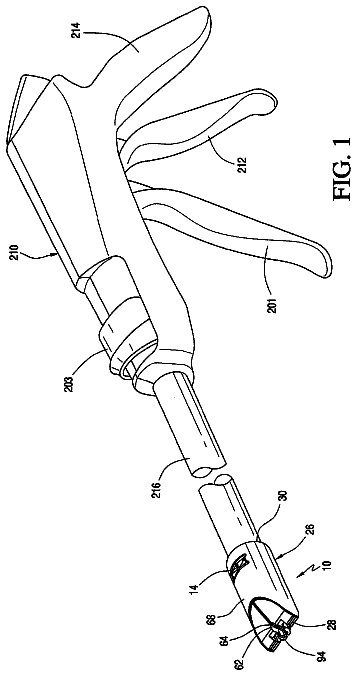
1 of 15 drawing sheets so far from the published document, cropped to the drawing. Every sheet is in the USPTO PDF.
What the patent claimed, word for word. All of it is now free to use.
Health care organizations are continually under pressure to find ways to lower or limit health care costs. One such opportunity for health care organizations to reduce costs is by recycling materials and supplies, in particular, by recovering single use medical devices (SUDs) that can be cleaned and sterilized for reuse, consistent with FDA regulations. Chapter 9 of the Federal Food, Drug and Cosmetic Act defines a medical device as an instrument, apparatus, implement, machine, contrivance, implant, in vitro reagent, or other similar or related article, including any component, part, or accessory, which is
recognized in the official National Formulary, or the United States Pharmacopeia, or any supplement to them,
intended for use in the diagnosis of disease or other conditions, or in the cure, mitigation, treatment, or prevention of disease, in man or other animals, or
intended to affect the structure or any function of the body of man or other animals, and which does not achieve its primary intended purposes through chemical action within or on the body of man or other animals and which is not dependent upon being metabolized for the achievement of its primary intended purposes.
For purposes of this patent application, medical devices fall into two categories. The first category is reusable devices, which are sold as reusable and can be cleaned and sterilized for reuse by a health care organization, such as a hospital, without regulatory approval. Reusable, manufacturer designated multiple-use medical devices are sold with the expectation the medical devices can and will be processed for reuse by hospitals or surgery centers within their own walls. Such medical devices are sold once and are typically cleaned and resterilized many times by the purchaser for use on multiple patients. These medical devices are collected after use by hospital or surgery center personnel and are cleaned, resterilized in an autoclave or by exposure to ethylene oxide or other appropriate sterilant, repackaged as necessary, and then reused in the same facility.
The second category is reprocessable devices, which are designated by the manufacturer for single use only or as disposable; these medical devices can legally be reused only if reprocessed consistent with FDA regulations. These SUDs are designated for only a single use, but many can, if properly cleaned and sterilized by a regulated process, be recycled for additional patient use. The FDA closely regulates the third party reprocessing industry that provides this service by requiring separate regulatory approvals for each device-type SUD to be reprocessed. An FDA approval (which is obtained through an FDA 510k application) for such devices is a premarket notification by the FDA that is issued in response to a party demonstrating that a medical device the party wants to sell/reprocess is as safe and effective as or substantially equivalent to an existing approved medical device that was or is currently on the United States market. Because hospitals do not have FDA 510k authorizations to reprocess SUDs, and because it does not appear that any hospital has applied for and received any FDA 510k authorizations to reprocess SUDs, a third party reprocessor industry has evolved with the engineering/regulatory infrastructure necessary to submit and receive multiple FDA 510k approvals, enabling these third parties to reprocess SUDs devices for the benefit of the medical industry.
Because medical devices are often "sharp" and used on patients in invasive procedures, strict requirements exist for their disposal after use. After use, such medical devices are unclean, often having been in contact with blood or other bodily fluids of a patient, but are still sharp. Indeed, many of these medical devices have a point or edge sharp enough to penetrate typical waste collection containers. Accordingly, hospital procedures require that a large proportion of such SUDs be disposed after use in a "sharps" container. Sharps containers are well known to those who work in medical care facilities and are intended to be used to collect potentially dangerous, used sharp medical devices that are capable of cutting or penetrating skin or penetrating a conventional waste package container. Typically, sharps containers contain a large volume of used syringes, needles, and broken glass. They also often contain used SUDs. These containers are periodically picked up from the facility by a regulated waste collector and transported to a central site for permanent destruction.
Traditionally, there are two ways medical care facilities contract for waste collection and management of sharps containers. Medical care facilities can purchase sharps containers intended for disposal in a variety of sizes, as needed, and appropriately provide the sharps containers inside patient rooms, laboratories, operating rooms, emergency rooms, etc. Medical care facilities personnel regularly monitor the status of individual sharps containers and collect them after they are full or after a predefined time period has elapsed. These containers are permanently "locked" at the point of collection, and a replacement empty sharps container is substituted for the full sharps container. Full sharps containers, which are permanently sealed and intended for disposal, are aggregated in a designated area for collection by a regulated medical waste hauler, who picks up the full sharps containers and transports them to a disposal plant. At the disposal plant, the sharps containers and their contents are then incinerated or otherwise completely destroyed without the containers ever being opened.
Alternatively, medical care facilities may choose to rent reusable sharps containers, rather than purchase sharps containers that are intended for disposal. At the disposal site, the lids of the reusable sharps containers are removed with a specially designed mechanical apparatus, and all of the contents are dumped directly into a waste disposal stream for immediate or near-immediate permanent disposal. The reusable sharps containers are then cleaned and disinfected and returned to a hospital or other medical care facility for reuse.
Although the reprocessing of SUDs is certainly more cost effective than the alternative of destruction, a study conducted in coordination with New York State environmental regulators determined that a very large number of potentially reprocessable SUDs were being disposed of in sharps containers and thus never reclaimed for reuse. In this study, sharps containers were accumulated from ten New York City hospitals for one week. Next, the sharps containers were forcibly opened, and the contents spread out on a stainless steel tray and sorted into two piles, including a pile of reprocessable SUDs, and a pile of all the other contents. Approximately twenty percent by volume of the contents of these containers were SUDs that, if properly reprocessed, could save the hospital approximately $1000 per sharps container. This figure equates to a savings of approximately $1,500 per hospital bed per year, or a $300,000 savings for a typical 200 bed hospital.
The foregoing examples of related art and limitations arising therein are intended to be illustrative and not exclusive. Other limitations of the related art will become apparent to those of ordinary skill in the art upon reviewing the disclosure that follows below.
Recognizing a need to lower or at least limit medical care treatment costs, exemplary embodiments of a system for continuous recycling and reprocessing of SUDS were thus developed. One or more of these embodiments provide for directing a sharps container to a processing station to recover reprocessable medical devices within the sharps container, as well as separating out unusable medical devices and medical waste that should be destroyed.
One method for carrying out this process includes the steps of conveying the sharps container to the processing station to enable accessing the contents of the sharps containers and performing an operation on the sharps container at the processing station to recover the reprocessable medical devices from the sharps container. Either the sharps container or a portion of its contents may also be conveyed to a successive processing station where a processing step is performed that facilitates recovery of the reprocessable medical devices. An evaluation made at a processing station can determine whether the sharps container should be opened and whether at least a portion of its contents should be sorted, and processed for reuse, or be destroyed. Exemplary operations performed at a processing station include at least one of detecting the contents of the sharps container; weighing the sharps container; sterilizing either the sharps container or at least a portion of the contents of the sharps container; cleaning the sharps container or at least the portion of the contents of the sharps container; disinfecting the sharps container or at least the portion of the contents of the sharps container; emptying the contents of the sharps container onto a sorting surface; removing a reprocessable medical device from the contents of the sharps container; sorting the sharps containers into different groups based on the contents of the sharps containers; and identifying the reprocessable medical devices that can be processed for reuse to facilitate separating the reprocessable medical devices from the unusable medical devices and medical waste.
Another embodiment is directed to a system that includes a processing station configured to perform an operation on either a sharps container or a portion of its contents, within the processing station. The operation facilitates recovery of reprocessable medical devices from the sharps container. Also included is a conveyor configured to controllably convey either a sharps container or the portion of the contents of the sharps container along a route directed either into or out of the processing station. A sensor is provided to sense when the sharps container or the portion of the contents of the sharps container are disposed at a predefined location within the processing station such that an operation can be performed or to determine that an operation performed by the processing station is completed.
A memory that stores machine instructions and a controller coupled to the sensor and the memory are also included. The controller executes the machine instructions stored in the memory such that at least one of several exemplary functions is carried out. For example, the machine instructions can stop, start or pause the conveyor, the speed of the conveyor can be increased or decreased, the sharps container or the portion of the contents of the sharps container can be transferred to a different conveyor, a route can be selected along which the sharps container or the portion of the contents of the sharps container will be directed, or the operation on the sharps container or at least a portion of its contents can be performed.
This Summary has been provided to introduce a few concepts in a simplified form that are further described in detail below in the Description. However, this Summary is not intended to identify key or essential features of the claimed subject matter, nor is it intended to be used as an aid in determining the scope of the claimed subject matter.
Various aspects and attendant advantages of one or more exemplary embodiments and modifications thereto will become more readily appreciated as the same becomes better understood by reference to the following detailed description, when taken in conjunction with the accompanying drawings, wherein:
FIG. 1 is an overall isometric view of an exemplary embodiment of the present invention that is used to separate SUDs that can be cleaned and reused from all other medical waste that should be destroyed, where SUDs are contained in a sharps container;
FIG. 2 is a block diagram showing the steps followed in the present invention to separate reprocessable medical devices from non-reprocessable medical devices that are contained in a sharps container;
FIG. 3 is a schematic plan view of a sharps container being loaded into the recovery device at the beginning of a sorting cycle that enables an operator to separate reprocessable medical devices from non-reprocessable medical devices;
FIG. 4 is a schematic plan view of an operator manipulating the sorting surface over an opening in a sharps container that has been loaded into the recovery device;
FIG. 5 is a schematic plan view showing how the operator manipulates the recovery device so that the sorting surface is rotated about an axis to be disposed atop the sharps container;
FIG. 6 is a schematic plan view showing how the operator manipulates both the sharps container and the sorting surface into a partially inverted position such that any liquid contents may be drained from the sharps container prior to emptying its contents for sorting;
FIG. 7 is a schematic plan view showing the sharps container and the sorting surface manipulated into a position to dump the contents of the sharps container onto the sorting surface to facilitate sorting;
FIG. 8 is a schematic plan view showing an operator sorting the contents of the sharps container that have been deposited onto the sorting surface;
FIG. 9 is a schematic plan view showing the operator manipulating the recovery device so that the non-reprocessable medical devices and other medical wastes that are left on the sorting surface after the sorting routine is completed are deposited into a waste bin;
FIG. 10A is an overall isometric view of an exemplary embodiment of the continuous recovery processing system that is used to separate SUDs that can be cleaned and reused from all other medical waste that should be destroyed, where SUDs are contained in a sharps container;
FIG. 10B is an overall isometric view of a different exemplary embodiment of the continuous recovery processing system;
FIG. 10C is an overall isometric view of yet another exemplary embodiment of the continuous recovery processing system;
FIG. 11 is a schematic block diagram of an exemplary embodiment recovery system configured to continuously process sharps containers in order to recover reprocessable medical devices that can be processed for reuse;
FIG. 12 is a schematic block diagram of the recovery processing system showing additional components included in a processing station; and
FIG. 13 is a block diagram showing the steps followed in the present invention to separate reprocessable medical devices from non-reprocessable medical devices and medical waste that are contained in a sharps container in the continuous recovery processing system.
Figures and Disclosed Embodiments are not Limiting
Exemplary embodiments are illustrated in referenced Figures of the drawings. It is intended that the embodiments and Figures disclosed herein are to be considered illustrative rather than restrictive.
The exemplary embodiments provide a safe and efficient method, apparatus, and continuous system whereby a sharps container whose contents would otherwise be incinerated or permanently disposed of, can be opened and sorted to separate SUDs that can be cleaned and sterilized for use from all other medical waste that should be destroyed. This processing of sharps containers can be carried out on a continuous basis by employing a convey system to convey either the sharps containers or at least portions of their contents to one or more processing stations. A sharps container is a basic container that is well known in the medical arts, for disposal of items that may have a sharp edge or point that is capable of cutting or piercing. The sharps container is typically made of a relatively hard plastic so that these used medical devices are safely contained within the sharps container and therefore not likely to penetrate the sides of the container, which could injure and/or transmit biohazard contaminants to people.
Sharps containers are generally intended to contain items such as hypodermic needles, syringes (both with and without needles attached), scalpels, pipettes, blood vials, broken glassware such as flasks, beakers, and specimen tubes, culture dishes, IV tubing, IV bags contaminated with visible blood, and dental wires. These medical devices are non-reprocessable and are properly intended to be permanently disposed of, usually by incineration. However, in addition to these properly non-reprocessable medical items, the sharps container may also include medical devices that are suitable for cleaning and reuse, such as trocars, laparoscopic and endoscopic devices, cutters, staplers, graspers, harmonic scalpels, burrs, blades, oxisensors, compression sleeves, catheters, bits, and saws. The cost of replacing these potentially reprocessable medical devices with new medical devices is substantially greater than the cost of cleaning and sterilizing the improperly discarded medical devices, so that they can be reused. It is unfortunate that through inadvertence and negligence, potentially reprocessable medical devices are placed into sharps containers to be destroyed rather than reused. In contrast, the following discussion recognizes that sharps containers may indeed include reprocessable medical devices and explains how the contents of a sharps container may safely be evaluated and efficiently sorted to recover the reprocessable medical devices, while any remaining non-reprocessable medical devices and other medical wastes are discarded, to be destroyed.
The result of this efficient sorting is that certain medical devices that have been used in a medical procedure at a medical care treatment facility and disposed of in a sharps container, may be recovered from the sharps container, cleaned, sterilized, repackaged, and reused by the medical care treatment facility. This recovery of reprocessable medical devices helps to lower or at least limit medical treatment care costs, especially considering the potential for certain medical devices to be reused multiple times.
The term "medical care treatment facility" is not intended to in anyway be limiting on the types of facilities that can be a source of the sharps containers that are processed with this invention. This term, without limitation, is intended to include hospitals, outpatient clinics, physicians' offices, nursing homes, medical clinics, dentists offices, blood banks, medical research facilities, laboratories, and any other facilities where medical devices are used that might be disposed of in a sharps container.
Recovery Processing Station
FIG. 1 is an isometric view of a exemplary embodiment of a recovery device 10 that is usable as one processing station to sort the contents 12 (none of which are shown in this Figure) of a sharps container 14, to recover reprocessable medical devices (including those designated for multiple use and those designated as being reprocessable if processed by FDA approved agencies), leaving non-reprocessable medical devices and other medical waste that can then properly be disposed of permanently. Although the recovery device is not illustrated in use as part of a larger system, it will be apparent that it can be included and that various aspects of its operation can be automated so that the processing of multiple sharps container can be efficiently carried out in a more continuous fashion, rather than simply processing a single sharps container at a time.
The recovery device includes a frame 22, brackets 24, and a sorting surface 26.
Frame 22 supports brackets 24 and sorting surface 26, both of which are movable about an axis 28 when actuated by an electrical prime mover or manually. Sharps container 14 is removably attached to brackets 24 by a latch (not shown). The brackets are mounted to rotate about axis 28 at a fixed distance such that once the left and right edges of the sharps container are aligned with the edges on the brackets, the sharps container may be slid into slots formed in the brackets and the latch then fastened. The latch ensures that the sharps container is secured to the brackets so that the sharps container can be securely rotated about axis 28.
Those skilled in the art will recognize that alternatives exist for both the brackets and latch. For example, clamps (not shown) could be used instead of the latch to hold the sharps container in place on the brackets. Also, plates (not shown) could be used to support the bottom and sides of the sharps container, which could be secured to the plates by one or more straps or other type of hold down or clamping device.
It will also be understood that either an electric motor or a hand-powered crank can alternatively be employed to drivingly rotate the sorting surface and the sharps container about axis 28, to any desired orientation. For example, the sharps container can be tipped sufficiently to enable any liquid contained in the sharps container to drain into a waste receptacle 44, and when positioned in a fully inverted orientation, the contents of the sharps container will be dumped onto the sorting surface. Although illustrated in FIG. 1 as an enclosed gear box 36 that includes a transmission for rotating sorting surface 26 about axis 28, and then rotating both sorting surface 26 and sharps container 14 about axis 28, it will be understood that in this embodiment, a hand crank 32 and a main crank 34 are used for manually applying the rotary motion conveyed through gear box 36 to rotate the sharps container and the sorting surface about axis 28. Hand crank 32 is cranked to manipulate the sorting surface to rotate about axis 28, while main crank 34 is cranked to manipulate the sharps container to rotate about axis 28.
However, those skilled in the art will recognize that manipulation of the sharps container and the sorting surface about axis 28 may be accomplished without the hand crank and the main crank. For example, as shown in FIG. 1, the enclosed gear box 36 may manipulate the sorting surface and the sharps container to rotate about axis 28 when driven by one or more electric motors that are controlled by the operator moving hand crank 32 and main crank 34, i.e., where the two cranks are simply control handles that actuate switches or even determine the speed of rotation applied by the one or more electric motors. The details of the drive system for rotating the sharps container and the sorting surface are not important in regard to practicing this invention, and those of ordinary skill will understand that the rotator motion may be applied and controlled in many different ways.
In an exemplary embodiment, sorting surface 26 includes a side 26a, a side 26b, and a side 26c, with an open fourth side 26d. This open side enables any liquid in the sharps container to be drained into waste receptacle 44 after the reprocessable medical devices have been removed from the sorting surface. Open side 26d of the sorting surface also enables the non-reprocessable medical devices and the other medical waste to be deposited into waste bin 44 after all of the reprocessable medical devices have been removed from the sorting surface. Side 26a, side 26b, and side 26c of the sorting surface should also be of a height sufficient so that when the contents of the sharps container are dumped onto the sorting surface, the contents will not spill over the sides of the sorting surface. As an alternative, the sorting surface might include small perforations, similar to a grating, such that when the sorting surface and the sharps container are inverted, any liquid contents will drain through the perforations and into waste receptacle 44. The perforations should be sized to enable any liquid contents to drain yet prevent any solid contents of the sharps container from passing through the perforations.
Those skilled in the art will realize that although the sorting surface is shown in a square-shaped configuration, the shape of the sorting surface may vary as desired, so long as the size is sufficient to cover the opening formed when the lid of the sharps container is removed.
The sorting surface must be rotatably movable about axis 28, and is preferably readily removable, such that it can be periodically cleaned, disinfected, and repaired. In addition, although not shown in FIG. 1, in an alternative embodiment, the sorting surface may include protrusions such that when it is lowered onto the sharps container, the protrusions engage the walls of the sharps container in a clasped- or detent-like manner, thereby enabling the sorting surface and the sharps container to move together as either is rotated about axis 28. In contrast, the exemplary embodiment first discussed above uses the hand crank to lock the sorting surface into position or disengage it from the sharps container, such that the main crank manipulates the combined sharps container and sorting surface about axis 28.
Frame 22 is preferably partially enclosed to ensure that the non-reprocessable medical devices and the other medical waste are directed towards waste bin 44 and do not readily escape onto the outer surface of the recovery device or onto a platform 100 surrounding the recovery device. However, at least a frame opening 46 is provided in platform 100 for enabling the remaining sorted waste materials and non-reprocessable medical devices (and any liquid in the sharps container to drop into waste bin 44. This frame opening must be sized such that the non-reprocessable medical devices and the other medical waste can fall freely through the opening under the force of gravity. Thus, waste bin 44 is positioned under the frame to receive the non-reprocessable medical devices and the other medical waste, so that these items can be permanently destroyed.
In addition, frame 22 also includes a support for receptacle bin 48 that will receive the reprocessable medical devices removed by the operator from sorting surface 26. The receptacle bin is preferably disposed adjacent to the operator such that reprocessable medical devices may be speedily, safely, and efficiently transferred from the sorting surface to the receptacle bin for subsequent cleaning and sterilization.
Optional recovery device components that will ensure human safety and thus reduce exposure to biohazards include protective clothing (not shown) that is worn by the operator (including, optionally, a face mask with a supply of clean air), a shield 50 that overhangs the sharps container when initially fitted into the recovery device and the sorting surface, a vent 52, through which air from around and above the sorting surface is drawn, and a high-efficiency particulate arresting (HEPA) filter (not shown) that filters the air before it is exhausted to the outdoor ambient environment, so that any harmful pathogens are removed from the exhaust air. The operator will likely be garbed in protective gear in order to minimize contact with the sharps container biological and chemical contaminants. In addition, shield 50 will reduce the possibility of the operator being exposed to air-borne pathogens or aerosolized bio-contaminants or chemicals, as the sorting surface and sharps container are manipulated to rotate about axis 28 or while the operator is manually removing reprocessable medical devices from the sorting surface. Vent 52 also ensures that any pathogens or aerosolized harmful liquids in the sharps container such as fumes 54 are safely drawn away from the vicinity of the operator's working space.
Although an exemplary embodiment only provides for the sorting of one sharps container at a time, those skilled in the art will recognize that the recovery device could be designed so that a plurality of sharps containers might be processed at one time to recover reprocessable medical devices for cleaning and sterilization.
Method of Use
FIG. 2 illustrates the logical steps implemented in connection with carrying out the method of the exemplary embodiment. It is very likely that operators at a recovery device center will be working with numerous sharps containers obtained from a number of medical care treatment facilities and other sources. Accordingly, the receptacle bin in which reprocessable medical devices are placed by the operator may be labeled appropriately with the name of the medical care treatment facility and/or department that is the source of the sharps container(s) from which the reprocessable medical devices placed in the recovery bin are derived. This information may be available on the label on the outside of the sharps container. Similarly, a label may be applied to the receptacle bin with the name and department of the medical care treatment facility that is the source of the sharps container being sorted.
From a start step 60, a step 64 provides for loading the sharps container into the recovery device and securing it therein with the latch. A step 66 indicates that the operator should check that the waste bin is properly disposed underneath the opening in the frame so that all non-reprocessable medical devices and the other medical waste can be disposed of properly once the contents of the sharps container have been sorted to recover any reprocessable medical devices (and to receive any liquid contents of the sharps container). A step 68 provides for removing the lid of the sharps container and disinfecting the total contents by thoroughly spraying the interior and contents with a disinfectant spray. All visible surfaces should be sprayed with the disinfectant until moist. The lid is removed by lifting one end and sliding it clear of the sharps container (or as otherwise appropriate for the design of the sharps container being processed). Removing the lid of the sharps container only after the sharps container is in the recovery device ensures that the benefits described above in connection with the operator protective clothing, the shield, the vent, and the HEPA filter are achieved.
In a step 70, the sorting surface is lowered onto the sharps container in response to the operator turning the hand crank. The sorting surface is then held in place over the open top of the sharps container by the force applied with the hand crank, while the main crank is engaged by the operator to control the rotation of the sorting surface and the sharps container as a unit. Alternatively, the sorting surface can be held in place by the protrusions (not shown) that secure it to the walls of the sharps container, as described above. However, there will be some nominal clearance between the sorting surface and the sharps container so that there is not a complete seal between the sorting surface and the sharps container in order for the liquid contents to drain from the sharps container and into the waste bin when the sharps container is rotated sufficiently to partially invert the sharps container.
At this point, in a step 72, the main crank is utilized to reorient the sorting surface and the sharps container such that at a step 74, the operator can pause the combination sufficiently long to enable any liquid contents to drain through the clearance opening between the sorting surface and the open top of the sharps container. The operator, in a step 76, then reorients the sorting surface and the sharps container such that the sharps container is substantially fully inverted relative to its original position.
A step 78 then provides for removing the sharps container from the sorting surface using the main crank. At this point, the entire contents of the sharps container, less the bulk of the liquid contents, should be deposited onto the sorting surface. If any medical waste or medical device still remains within the sharps container, the operator can pause with the sharps container still partially inverted over the sorting surface and rap the sides of the sharps container, causing the remaining medical waste or medical device to fall on the sorting surface. Or, the operator may need to reach inside the partially inverted sharps container with tongs or other suitable instrument to grasp the medical waste or medical device remaining inside and deposit it on the sorting surface.
A step 80 provides for reattaching the sharps container lid and placing the empty sharps container into a queue for cleaning and sterilization, so that the sharps container can be recycled and returned to the medical care treatment facility for future use. A step 82 indicates that the operator then removes all reprocessable medical devices from the sorting surface. The operator may remove the reprocessable medical devices using tongs or any kind of device that enables the operator to firmly grasp the reprocessable medical device and safely place it into the receptacle bin. Only those medical devices that are deemed reprocessable or federally regulated so that only licensed agencies can process them for reuse will be removed from the sorting surface and placed into the receptacle bin.
In a step 84, after all reprocessable medical devices have been removed from the contents on the sorting surface, the operator rotates the sorting surface into an inverted position using the hand crank so that the non-reprocessable medical devices and remaining medical wastes are caused to slide from the sorting surface and drop down into the waste bin. At this point, it may be necessary for the operator to remove any non-reprocessable medical devices from the sorting surfaces manually using the tongs or similar implement if the non-reprocessable medical devices and medical waste clings to the sorting surface and does not readily drop into the waste bin.
A step 86 then provides for disinfecting the receptacle bin (once it is full or once all of the sharps containers from a given medical treatment facility have been processed to place their reprocessable medical devices into the receptacle bin). This receptacle bin may then be shipped to an outside facility, as noted in a step 88, where the reprocessable medical devices will be processed for reuse, which includes cleaning, sterilizing, and repackaging, or alternatively, the receptacle bin will remain at the recovery device center for similar processing. At this point, the recovery process is completed as indicated in a step 90.
FIGS. 3-9 illustrate the various steps of the method discussed above. For example, FIG. 3 illustrates a sharps container 14 as it is about to be loaded into the recovery device by an operator 38 who stands on platform 100; another sharps container 14a is in the sorting queue and is next to be processed. This Figure also illustrates the cyclical nature of the sorting routine performed by the recovery device, since it shows sealed receptacle bins 48a and 48b that are in the queue for post sorting processing. A lid 102a and a lid 102b are secured on receptacle bin 48a and receptacle bin 48b, respectively, and thus indicate that they contain reprocessable medical devices that have already been recovered by sorting through the contents of one or more sharps container and are ready for post sorting cleaning, sterilization, and packaging, and the value will be allocated to the appropriate medical facility and department as indicated on a label 104a and a label 104b, respectively. Waste bin 44 is partially full of non-reprocessable medical devices 18 and other medical waste 20 from earlier sorting of sharps containers. Once waste bin 44 is full, it will be removed, the contents destroyed, the waste bin will be cleaned and sanitized. An empty waste bin will then be disposed beneath the recovery device.
Although platform 100 is shown in all the Figures, those skilled in the art will realize that frame 22 can be easily designed in an alternative configuration such that it completely encloses the waste bin, which is removable by opening an access panel. Therefore, operator 38 does not need to stand on the platform in this alternative embodiment in order to manipulate the recovery device and sort through the contents of the sharps container.
Prior to being loaded into recovery device 10, as described above, the label on the sharps container may have been noted and the receptacle bins may be labeled to indicate the source of the recovered reprocessable medical devices sorted from the contents of the sharps container, based upon the label of the sharps container. For example, a label 106a on a sharps container 14a might be appropriately labeled, "Caution, Biohazard, Infectious Waste, Metropolis City Hospital--Heart Surgery Department." Similarly, the label on the receptacle bin that will be used to receive the reprocessable medical devices sorted from the contents of sharps container 14a may be labeled to indicate that the source of the reprocessable medical devices contained therein is the Metropolis City Hospital--Heart Surgery Department.
Operator 38, who is garbed in protective gear (not shown), is illustrated securely mounting sharps container 14 into recovery device 10 by sliding the edges of the sharps container onto brackets 24 and securing it in place with a latch 30. A lid 108 of the sharps container is still secured to sharps container 14 that is being mounted onto the brackets. Notice that a lid 108a is still secured to sharps container 14a that will be sorted after sharps container 14 has been sorted.
In FIG. 4, sharps container 14 is shown after it has been mounted to brackets 24 and fastened upright in the recovery device. Although this step is not shown, operator 38 has removed the lid from sharps container 14 by lifting and sliding it clear of the sharps container, as is evident by fumes 54 that are wafting up from contents 12 of the sharps container. The operator has set lid off to the side and it is not shown in this Figure. At this point, operator 38 sprays the contents of sharps container 14 with a disinfectant. This disinfectant should cover and wet all surfaces of the contents and the interior of sharps container 14 that are visible, including all surfaces of reprocessable medical devices, non-reprocessable medical devices, and other medical waste until all these items are visibly moist. Vent 52 and the HEPA filter (not shown) are then used to draw any pathogens and aerosolized bio-contaminants up and out of the region under shield 50, so that operator 38 may work in as safe an environment as possible. At this point, operator 38 begins to change the orientation of the sorting surface.
In this exemplary embodiment, the two cranks are manually activated by the operator to change the orientation of sorting surface 26 and then the combined sorting surface and sharps container 14. Activation of hand crank 32 on the recovery device enables sorting surface 26 to be rotated from an initial position 26', as shown in FIG. 4, and lowered onto the open top of sharps container 14 into a position 26'', as shown in FIG. 5. As illustrated in FIG. 5, the range of rotational movement of the sorting surface is indicated by an arc 110, as sorting surface 26 is rotated about axis 28 from its initial position 26' by the operator turning hand crank 32, until sorting surface 26 rests on top of sharps container 14 in position 26''. Note that sorting surface 26 is sized such that it covers the entire open top of sharps container 14. Although it is not shown, the sorting surface may have protrusions on its surface so that when the sorting surface is lowered onto the sharps container, the protrusions engage the walls of the sharps container. Alternatively, the hand crank disengages from acting upon the sorting surface and simply holds the sorting surface into contact with the top of the sharps container, once the sorting surface rests atop the sharps container, so that main crank 34 rotates both the sharps container and the sorting surface when actuated by the operator.
The description continues in the full USPTO document.
About 6,412 words. The USPTO PDF has it with every drawing.
Fees are due 3.5, 7.5 and 11.5 years after grant. This patent expired on September 3, 2025, so the fee marked "not paid" was the one that went unpaid.
Recovery of reprocessable medical devices in a sharps container
Filed Oct 2005 · published Apr 2006Recovery of reprocessable medical devices in a sharps container
Filed Oct 2005 · granted Mar 2010RECOVERY OF REPROCESSABLE MEDICAL DEVICES IN A SHARPS CONTAINER
Filed Aug 2009 · published Dec 2009Recovery of reprocessable medical devices in a sharps container
Filed Aug 2009 · granted Nov 2011Recovery of Reprocessable Medical Devices in a Sharps Containter
Filed Nov 2011 · published May 2012Recovery of reprocessable medical devices in a sharps container
Filed Nov 2011 · granted Sep 2013Earlier publications, parents and continuations. None of them can still be enforced, or this patent would not be listed.
Prior art cited by the examiner or applicant. Useful when you check your own idea for novelty.
Everything on this page comes from the documents linked above.