 Lapsed, fee not paid5 drawings
Agriculture & Food Tech · US 11,240,972 B2
Planting container
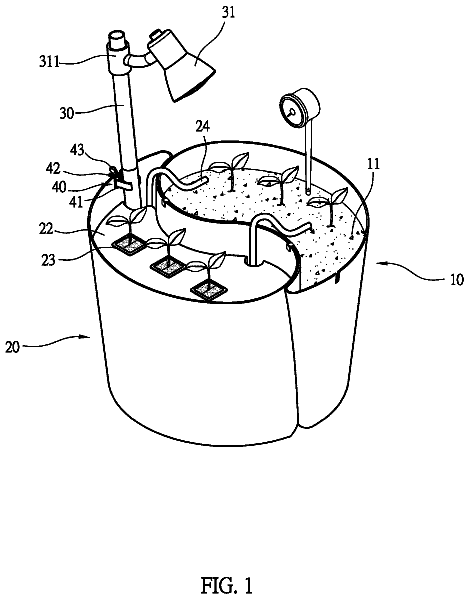
A planting container has a first basin and a second basin forming a yin-yang shape.
US 11,241,011 B2 · Assignee: SYNGENTA PARTICIPATIONS AG · Inventors: Quaranta; Laura et al.
Claude can sketch it from the patent text.
Compounds of the formula (I) wherein the substituents are as defined in claim 1. Furthermore, the present invention relates to agrochemical compositions which comprise compounds of formula (I), to preparation of these compositions, and to the use of the compounds or compositions in agriculture or horticulture for combating, preventing or controlling infestation of plants, harvested food crops, seeds or non-living materials by phytopathogenic microorganisms, in particular fungi. ##STR00001##
Ask Claude for concept sketches based only on the patent's text. They are not part of the patent.
What the patent claimed, word for word. All of it is now free to use.
This application is a 371 National Stage application of International Application No. PCT/EP2018/074516 filed Sep. 11, 2018 which claims priority to EP 17190909.6, filed Sep. 13, 2017, the entire contents of which applications are hereby incorporated by reference.
The present invention relates to microbiocidal quinoline (thio)carboxamide derivatives, e.g. as active ingredients, which have microbiocidal activity, in particular fungicidal activity. The invention also relates to preparation of these quinoline (thio)carboxamide derivatives, to intermediates useful in the preparation of these quinoline (thio)carboxamide derivatives, to the preparation of these intermediates, to agrochemical compositions which comprise at least one of the quinoline (thio)carboxamide derivatives, to preparation of these compositions and to the use of the quinoline (thio)carboxamide derivatives or compositions in agriculture or horticulture for controlling or preventing infestation of plants, harvested food crops, seeds or non-living materials by phytopathogenic microorganisms, in particular fungi.
Certain fungicidal quinoline (thio)carboxamide compounds are described in WO04039783.
It has now surprisingly been found that certain novel quinoline (thio)carboxamide derivatives have favourable fungicidal properties.
The present invention therefore provides compounds of formula (I)
wherein
X is O or S;
R.sub.1 is hydrogen, halogen, methyl or cyano;
R.sub.2 is hydrogen, methyl or halogen;
R.sub.3 and R.sub.4 are each independently selected from hydrogen, halogen and methyl;
R.sub.5 is C.sub.1-C.sub.6 alkyl, C.sub.2-C.sub.6 alkenyl, or C.sub.3-C.sub.7 cycloalkyl or C.sub.3-C.sub.4 cycloalkyl(C.sub.1-C.sub.3)alkyl, wherein the alkyl, alkenyl and cycloalkyl groups may be optionally substituted with 1 to 3 substituents independently selected from halogen, cyano, C.sub.1-C.sub.3 alkyl, C.sub.1-C.sub.3 alkoxy and C.sub.1-C.sub.3 alkylthio;
R.sub.6 is hydrogen, halogen, cyano, C.sub.1-C.sub.4 alkoxy or C.sub.1-C.sub.4 alkyl, wherein the alkoxy or alkyl may be optionally substituted with 1 to 3 substituents independently selected from halogen and C.sub.1-C.sub.3 alkoxy;
R.sub.7 is hydrogen, C.sub.1-C.sub.5 alkyl, C.sub.3-C.sub.7 cycloalkyl, (C.sub.1-C.sub.3-alkyl).sub.3silyl, phenyl or thiophenyl, wherein the alkyl and cycloalkyl may be optionally substituted with one to three substituents independently selected from halogen, cyano, C.sub.1-C.sub.3 alkyl, C.sub.1-C.sub.3 alkoxy and C.sub.1-C.sub.3 alkylthio, and wherein the phenyl and thiophenyl may be substituted by one to three substituents independently selected from halogen, C.sub.1-C.sub.3 alkyl, C.sub.1-C.sub.3 haloalkyl and C.sub.1-C.sub.3 alkoxy; and
A is C(R.sub.8)(R.sub.9), wherein R.sub.8 and R.sub.9 are independently selected from hydrogen, fluoro or methyl;
and salts, enantiomers and/or N-oxides thereof.
In a second aspect the present invention provides an agrochemical composition comprising a compound of formula (I).
Compounds of formula (I) may be used to control phytopathogenic microorganisms. Thus, in order to control a phytopathogen a compound of formula (I), or a composition comprising a compound of formula (I), according to the invention may be applied directly to the phytopathogen, or to the locus of a phytopathogen, in particular to a plant susceptible to attack by phytopathogens.
Thus, in a third aspect the present invention provides the use of a compound of formula (I), or a composition comprising a compound of formula (I), as described herein to control a phytopathogen.
In a further aspect the present invention provides a method of controlling phytopathogens, comprising applying a compound of formula (I), or a composition comprising a compound of formula (I), as described herein to said phytopathogen, or to the locus of said phytopathogen, in particular to a plant susceptible to attack by a phytopathogen.
Compounds of formula (I) are particularly effective in the control of phytopathogenic fungi.
Thus, in a yet further aspect the present invention provides the use of a compound of formula (I), or a composition comprising a compound of formula (I), as described herein to control phytopathogenic fungi.
In a further aspect the present invention provides a method of controlling phytopathogenic fungi, comprising applying a compound of formula (I), or a composition comprising a compound of formula (I), as described herein to said phytopathogenic fungi, or to the locus of said phytopathogenic fungi, in particular to a plant susceptible to attack by phytopathogenic fungi.
Where substituents are indicated as being optionally substituted, this means that they may or may not carry one or more identical or different substituents, e.g. one to four substituents. Normally not more than three such optional substituents are present at the same time. Preferably not more than two such optional substituents are present at the same time (i.e. the group may be optionally substituted by one or two of the substituents indicated as “optional”). Where the “optional substituent” group is a larger group, such as cycloalkyl or phenyl, it is most preferred that only one such optional substituent is present. Where a group is indicated as being substituted, e.g. alkyl, this includes those groups that are part of other groups, e.g. the alkyl in alkylthio.
The term “halogen” refers to fluorine, chlorine, bromine or iodine, preferably fluorine, chlorine or bromine.
Alkyl substituents (either alone or as part of a larger group, such as alkoxy-, alkylthio-) may be straight-chained or branched. Alkyl on its own or as part of another substituent is, depending upon the number of carbon atoms mentioned, for example, methyl, ethyl, n-propyl, n-butyl, n-pentyl, n-hexyl and the isomers thereof, for example, iso-propyl, iso-butyl, sec-butyl, tert-butyl or iso-amyl.
Alkenyl substituents (either alone or as part of a larger group, eg. alkenyloxy) can be in the form of straight or branched chains, and the alkenyl moieties, where appropriate, can be of either the (E)- or (Z)-configuration. Examples are vinyl and allyl. The alkenyl groups are preferably C.sub.2-C.sub.6, more preferably C.sub.2-C.sub.4 and most preferably C.sub.2-C.sub.3 alkenyl groups.
Alkynyl substituents (either alone or as part of a larger group, eg. alkynyloxy) can be in the form of straight or branched chains. Examples are ethynyl and propargyl. The alkynyl groups are preferably C.sub.2-C.sub.6, more preferably C.sub.2-C.sub.4 and most preferably C.sub.2-C.sub.3 alkynyl groups.
Cycloalkyl substituents may be saturated or partially unsaturated, preferably fully saturated, and are, for example, cyclopropyl, cyclobutyl, cyclopentyl or cyclohexyl.
Haloalkyl groups (either alone or as part of a larger group, eg. haloalkyloxy) may contain one or more identical or different halogen atoms and, for example, may stand for CH.sub.2Cl, CHCl.sub.2, CCl.sub.3, CH.sub.2F, CHF.sub.2, CF.sub.3, CF.sub.3CH.sub.2, CH.sub.3CF.sub.2, CF.sub.3CF.sub.2 or CCl.sub.3CCl.sub.2.
Haloalkenyl groups (either alone or as part of a larger group, eg. haloalkenyloxy) are alkenyl groups, respectively, which are substituted with one or more of the same or different halogen atoms and are, for example, 2,2-difluorovinyl or 1,2-dichloro-2-fluoro-vinyl.
Haloalkynyl groups (either alone or as part of a larger group, eg. haloalkynyloxy) are alkynyl groups, respectively, which are substituted with one or more of the same or different halogen atoms and are, for example, 1-chloro-prop-2-ynyl.
Alkoxy means a radical —OR, where R is alkyl, e.g. as defined above. Alkoxy groups include, but are not limited to, methoxy, ethoxy, 1-methylethoxy, propoxy, butoxy, 1-methylpropoxy and 2-methylpropoxy.
Cyano means a —CN group.
Amino means an —NH.sub.2 group.
Hydroxyl or hydroxy stands for a —OH group.
Aryl groups (either alone or as part of a larger group, such as e.g. aryloxy, aryl-alkyl) are aromatic ring systems which can be in mono-, bi- or tricyclic form. Examples of such rings include phenyl, naphthyl, anthracenyl, indenyl or phenanthrenyl. Preferred aryl groups are phenyl and naphthyl, phenyl being most preferred. Where an aryl moiety is said to be substituted, the aryl moiety is preferably substituted by one to four substituents, most preferably by one to three substituents.
Heteroaryl groups (either alone or as part of a larger group, such as e.g. heteroaryloxy, heteroaryl-alkyl) are aromatic ring systems containing at least one heteroatom and consisting either of a single ring or of two or more fused rings. Preferably, single rings will contain up to three heteroatoms and bicyclic systems up to four heteroatoms which will preferably be chosen from nitrogen, oxygen and sulfur. Examples of monocyclic groups include pyridyl, pyridazinyl, pyrimidinyl, pyrazinyl, pyrrolyl, pyrazolyl, imidazolyl, triazolyl (e.g. [1,2,4] triazolyl), furanyl, thiophenyl, oxazolyl, isoxazolyl, oxadiazolyl, thiazolyl, isothiazolyl and thiadiazolyl. Examples of bicyclic groups include purinyl, quinolinyl, cinnolinyl, quinoxalinyl, indolyl, indazolyl, benzimidazolyl, benzothiophenyl and benzothiazolyl. Monocyclic heteroaryl groups are preferred, pyridyl being most preferred. Where a heteroaryl moiety is said to be substituted, the heteroaryl moiety is preferably substituted by one to four substituents, most preferably by one to three substituents.
Heterocyclyl groups, heterocycles or heterocyclic rings (either alone or as part of a larger group, such as heterocyclyl-alkyl) are non-aromatic ring structures containing up to 10 atoms including one or more (preferably one, two or three) heteroatoms selected from O, S and N. Examples of monocyclic groups include, oxetanyl, 4,5-dihydro-isoxazolyl, thietanyl, pyrrolidinyl, tetrahydrofuranyl, [1,3]dioxolanyl, piperidinyl, piperazinyl, [1,4]dioxanyl, imidazolidinyl, [1,3,5]oxadiazinanyl, hexahydro-pyrimidinyl, [1,3,5]triazinanyl and morpholinyl or their oxidised versions such as 1-oxo-thietanyl and 1,1-dioxo-thietanyl. Examples of bicyclic groups include 2,3-dihydro-benzofuranyl, benzo[1,4]dioxolanyl, benzo[1,3]dioxolanyl, chromenyl, and 2,3-dihydro-benzo[1,4]dioxinyl. Where a heterocyclyl moiety is said to be substituted, the heterocyclyl moiety is preferably substituted by one to four substituents, most preferably by one to three substituents.
The presence of one or more possible asymmetric carbon atoms in a compound of formula (I) means that the compounds may occur in optically isomeric forms, i.e. enantiomeric or diastereomeric forms. Also atropisomers may occur as a result of restricted rotation about a single bond. Formula (I) is intended to include all those possible isomeric forms and mixtures thereof. The present invention includes all those possible isomeric forms and mixtures thereof for a compound of formula (I). Likewise, formula (I) is intended to include all possible tautomers. The present invention includes all possible tautomeric forms for a compound of formula (I).
In each case, the compounds of formula (I) according to the invention are in free form, in oxidized form as a N-oxide or in salt form, e.g. an agronomically usable salt form.
N-oxides are oxidized forms of tertiary amines or oxidized forms of nitrogen containing heteroaromatic compounds. They are described for instance in the book “Heterocyclic N-oxides” by A. Albini and S. Pietra, CRC Press, Boca Raton 1991.
Preferred values of A, X, R.sub.1, R.sub.2, R.sub.3, R.sub.4, R.sub.5, R.sub.6 and R.sub.7 are, in any combination thereof, as set out below:
Preferably A is CH.sub.2.
Preferably X is O.
Preferably R.sub.1 is hydrogen, halogen, methyl or cyano.
More preferably R.sub.1 is hydrogen, fluoro, chloro or methyl.
Most preferably R.sub.1 is fluoro, chloro or methyl.
Preferably R.sub.2 is hydrogen, methyl, chloro or fluoro.
More preferably R.sub.2 is hydrogen, chloro or fluoro.
Most preferably R.sub.2 is hydrogen or fluoro.
Preferably R.sub.3 and R.sub.4 are each independently selected from hydrogen and methyl.
More preferably R.sub.3 is methyl and R.sub.4 is hydrogen; or R.sub.3 is hydrogen and R.sub.4 is methyl; or R.sub.3 is hydrogen and R.sub.4 is hydrogen.
Most preferably R.sub.3and R.sub.4 are both hydrogen.
Preferably R.sub.5 is C.sub.1-C.sub.6 alkyl, C.sub.2-C.sub.6 alkenyl, cyclopropyl or C.sub.3-C.sub.4 cycloalkyl-CH.sub.2—, wherein the alkyl, alkenyl and cycloalkyl groups may be optionally substituted with 1 to 3 substituents independently selected from fluoro, chloro and methyl.
More preferably R.sub.5 is C.sub.1-C.sub.5 alkyl, C.sub.2-C.sub.4 alkenyl, cyclopropyl or C.sub.3-C.sub.4 cycloalkyl-CH.sub.2—, wherein the alkyl, alkenyl and cycloalkyl groups may be optionally substituted with 1 to 3 fluoro or one methyl.
Most preferably R.sub.5 is ethyl, propyl, isobutyl, neo-pentyl, C.sub.3-C.sub.4 alkenyl or cyclopropyl-CH.sub.2—, wherein the ethyl, propyl, isobutyl, neo-pentyl, C.sub.3-C.sub.4 alkenyl and cyclopropyl groups may be optionally substituted with 1 to 3 fluoros or one methyl.
Preferably R.sub.6 is hydrogen, fluoro, C.sub.1-C.sub.3 alkoxy or C.sub.1-C.sub.2 alkyl.
More preferably R.sub.6 is hydrogen, fluoro or methyl.
Most preferably R.sub.6 is hydrogen or methyl.
Preferably R.sub.7 is C.sub.1-C.sub.4 alkyl, C.sub.3-C.sub.6 cycloalkyl, trimethylsilyl, phenyl or thiophenyl, wherein the alkyl and cycloalkyl may be optionally substituted with one to three substituents independently selected from fluoro, chloro, methyl and methoxy, and wherein the phenyl and thiophenyl may be optionally substituted with one to three substituents independently selected from fluoro, chloro, trifluoromethyl, methyl and methoxy.
More preferably R.sub.7 is C.sub.1-C.sub.4 alkyl, cyclopropyl, cyclobutyl, phenyl or thiophenyl, wherein the alkyl cyclopropyl and cyclobutyl may be optionally substituted with one to three fluoro substituents or one methyl.
Most preferably R.sub.7 is methyl, ethyl, isopropyl, cyclopropyl or cyclobutyl, wherein the methyl, ethyl, isopropyl, cyclopropyl and cyclobutyl may be optionally substituted with one to three fluoro substituents or one methyl.
Embodiments according to the invention are provided as set out below.
Embodiment 1 provides compounds of formula (I), or a salt, enantiomer or N-oxide thereof, as defined above.
Embodiment 2 provides compounds according to embodiment 1, or a salt, enantiomer or N-oxide thereof, wherein R.sub.1 is hydrogen, halogen, methyl or cyano.
Embodiment 3 provides compounds according to embodiment 1 or 2, or a salt, enantiomer or N-oxide thereof, wherein R.sub.2 is hydrogen, methyl, chloro or fluoro.
Embodiment 4 provides compounds according to any one of embodiments 1, 2 or 3, or a salt, enantiomer or N-oxide thereof, wherein R.sub.3 and R.sub.4 are each independently selected from hydrogen and methyl.
Embodiment 5 provides compounds according to any one of embodiments 1, 2, 3 or 4, or a salt, enantiomer or N-oxide thereof, wherein R.sub.5 is C.sub.1-C.sub.6 alkyl, C.sub.2-C.sub.6 alkenyl, cyclopropyl or C.sub.3-C.sub.4 cycloalkyl-CH.sub.2—, wherein the alkyl, alkenyl and cycloalkyl groups may be optionally substituted with 1 to 3 substituents independently selected from fluoro, chloro and methyl.
Embodiment 6 provides compounds according to any one of embodiments 1, 2, 3, 4, or 5, or a salt, enantiomer or N-oxide thereof, wherein R.sub.6 is hydrogen, fluoro, C.sub.1-C.sub.3 alkoxy or C.sub.1-C.sub.2 alkyl.
Embodiment 7 provides compounds according to any one of embodiments 1, 2, 3, 4, 5, or 6, or a salt, enantiomer or N-oxide thereof, wherein R.sub.7 is C.sub.1-C.sub.4 alkyl, C.sub.3-C.sub.6 cycloalkyl, trimethylsilyl, phenyl or thiophenyl, wherein the alkyl and cycloalkyl may be optionally substituted with one to three substituents independently selected from fluoro, chloro, methyl and methoxy, and wherein the phenyl and thiophenyl may be optionally substituted with one to three substituents independently selected from fluoro, chloro, trifluoromethyl, methyl and methoxy.
Embodiment 8 provides compounds according to any one of embodiments 1, 2, 3, 4, 5, 6, or 7, or a salt, enantiomer or N-oxide thereof, wherein A is CH.sub.2.
Embodiment 9 provides compounds according to any one of embodiments 1, 2, 3, 4, 5, 6, 7, or 8, or a salt, enantiomer or N-oxide thereof, wherein R.sub.1 is hydrogen, fluoro, chloro or methyl.
Embodiment 10 provides compounds according to any one of embodiments 1, 2, 3, 4, 5, 6, 7, 8, or 9, or a salt, enantiomer or N-oxide thereof, wherein R.sub.2 is hydrogen, chloro or fluoro.
Embodiment 11 provides compounds according to any one of embodiments 1, 2, 3, 4, 5, 6, 7, 8, 9 or 10, or a salt, enantiomer or N-oxide thereof, wherein R.sub.3 is methyl and R.sub.4 is hydrogen; or R.sub.3 is hydrogen and R.sub.4 is methyl; or R.sub.3 is hydrogen and R.sub.4 is hydrogen.
Embodiment 12 provides compounds according to any one of embodiments 1, 2, 3, 4, 5, 6, 7, 8, 9, 10 or 11, or a salt, enantiomer or N-oxide thereof, wherein R.sub.5 is C.sub.1-C.sub.5 alkyl, C.sub.2-C.sub.4 alkenyl, cyclopropyl or C.sub.3-C.sub.4 cycloalkyl-CH.sub.2—, wherein the alkyl, alkenyl and cycloalkyl groups may be optionally substituted with 1 to 3 fluoro or one methyl.
Embodiment 13 provides compounds according to any one of embodiments 1, 2, 3, 4, 5, 6, 7, 8, 9, 10, 11 or 12, or a salt, enantiomer or N-oxide thereof, wherein R.sub.6 is hydrogen, fluoro or methyl.
Embodiment 14 provides compounds according to any one of embodiments 1, 2, 3, 4, 5, 6, 7, 8, 9, 10, 11, 12 or 13, or a salt, enantiomer or N-oxide thereof, wherein R.sub.7 is C.sub.1-C.sub.4 alkyl, cyclopropyl, cyclobutyl, phenyl or thiophenyl, wherein the alkyl cyclopropyl and cyclobutyl may be optionally substituted with one to three fluoro substituents or one methyl.
Embodiment 15 provides compounds according to any one of embodiments 1, 2, 3, 4, 5, 6, 7, 8, 9, 10, 11, 12, 13 or 14, or a salt, enantiomer or N-oxide thereof, wherein R.sub.1 is fluoro, chloro or methyl.
Embodiment 16 provides compounds according to any one of embodiments 1, 2, 3, 4, 5, 6, 7, 8, 9, 10, 11, 12, 13, 14 or 15, or a salt, enantiomer or N-oxide thereof, wherein R.sub.2 is hydrogen or fluoro.
Embodiment 17 provides compounds according to any one of embodiments 1, 2, 3, 4, 5, 6, 7, 8, 9, 10, 11, 12, 13, 14, 15 or 16, or a salt, enantiomer or N-oxide thereof, wherein R.sub.3 and R.sub.4 are both hydrogen.
Embodiment 18 provides compounds according to any one of embodiments 1, 2, 3, 4, 5, 6, 7, 8, 9, 10, 11, 12, 13, 14, 15, 16 or 17, or a salt, enantiomer or N-oxide thereof, wherein R.sub.5 is ethyl, propyl, isobutyl, neo-pentyl, C.sub.3-C.sub.4 alkenyl or cyclopropyl-CH.sub.2—, wherein the ethyl, propyl, isobutyl, neo-pentyl, C.sub.3-C.sub.4 alkenyl and cyclopropyl groups may be optionally substituted with 1 to 3 fluoros or one methyl.
Embodiment 19 provides compounds according to any one of embodiments 1, 2, 3, 4, 5, 6, 7, 8, 9, 10, 11, 12, 13, 14, 15, 16, 17 or 18, or a salt, enantiomer or N-oxide thereof, wherein R.sub.6 is hydrogen or methyl.
Embodiment 20 provides compounds according to any one of embodiments 1, 2, 3, 4, 5, 6, 7, 8, 9, 10, 11, 12, 13, 14, 15, 16, 17, 18 or 19, or a salt, enantiomer or N-oxide thereof, wherein R.sub.7 is methyl, ethyl, isopropyl, cyclopropyl or cyclobutyl, wherein the methyl, ethyl, isopropyl, cyclopropyl and cyclobutyl may be optionally substituted with one to three fluoro substituents or one methyl.
Embodiment 21 provides compounds according to any one of embodiments 1, 2, 3, 4, 5, 6, 7, 8, 9, 10, 11, 12, 13, 14, 15, 16, 17, 18, 19 or 20, or a salt, enantiomer or N-oxide thereof, wherein X is O.
Embodiment 22 provides compounds according to any one of embodiments 1, 2, 3, 4, 5, 6, 7, 8, 9, 10, 11, 12, 13, 14, 15, 16, 17, 18, 19 or 20, or a salt, enantiomer or N-oxide thereof, wherein X is S.
One group of compounds according to the invention are those of formula (I′):
##STR00003## wherein R.sub.1, R.sub.2, R.sub.3, R.sub.4, R.sub.5, R.sub.6, R.sub.7 and A are as defined for compounds of formula (I), or a salt, enantiomer or N-oxide thereof. Preferred definitions of R.sub.1, R.sub.2, R.sub.3, R.sub.4, R.sub.5, R.sub.6, R.sub.7 and A are as defined for compounds of formula (I).
One preferred group of compounds of formula (I′) are those of formula (I′A):
##STR00004## wherein R.sub.1, R.sub.2, R.sub.3, R.sub.4, R.sub.5, R.sub.6 and R.sub.7 are as defined for compounds of formula (I), or a salt, enantiomer or N-oxide thereof. Preferred definitions of R.sub.1, R.sub.2, R.sub.3, R.sub.4, R.sub.5, R.sub.6 and R.sub.7 are as defined for compounds of formula (I).
One group of compounds according to the invention are those of formula (I″):
##STR00005## wherein R.sub.1, R.sub.2, R.sub.3, R.sub.4, R.sub.5, R.sub.6, R.sub.7 and A are as defined for compounds of formula (I), or a salt, enantiomer or N-oxide thereof. Preferred definitions of R.sub.1, R.sub.2, R.sub.3, R.sub.4, R.sub.5, R.sub.6, R.sub.7 and A are as defined for compounds of formula (I).
One preferred group of compounds of formula (I″) are those of formula (I″A):
##STR00006## wherein R.sub.1, R.sub.2, R.sub.3, R.sub.4, R.sub.5, R.sub.6 and R.sub.7 are as defined for compounds of formula (I), or a salt, enantiomer or N-oxide thereof. Preferred definitions of R.sub.1, R.sub.2, R.sub.3, R.sub.4, R.sub.5, R.sub.6 and R.sub.7 are as defined for compounds of formula (I).
A preferred group of compounds according to the invention are those of formula (I-1) which are compounds of formula (I) wherein X is O or S; R.sub.1 is hydrogen, halogen, methyl or cyano; R.sub.2 is hydrogen, methyl, chloro or fluoro; R.sub.3 and R.sub.4 are each independently selected from hydrogen and methyl; R.sub.5 is C.sub.1-C.sub.6 alkyl, C.sub.2-C.sub.6 alkenyl, cyclopropyl or C.sub.3-C.sub.4 cycloalkyl-CH.sub.2—, wherein the alkyl, alkenyl and cycloalkyl groups may be optionally substituted with 1 to 3 substituents independently selected from fluoro, chloro and methyl; R.sub.6 is hydrogen, fluoro, C.sub.1-C.sub.3 alkoxy or C.sub.1-C.sub.2 alkyl; R.sub.7 is C.sub.1-C.sub.4 alkyl, C.sub.3-C.sub.6 cycloalkyl, trimethylsilyl, phenyl or thiophenyl, wherein the alkyl and cycloalkyl may be optionally substituted with one to three substituents independently selected from fluoro, chloro, methyl and methoxy, and wherein the phenyl and thiophenyl may be optionally substituted with one to three substituents independently selected from fluoro, chloro, trifluoromethyl, methyl and methoxy; and A is CH.sub.2; or a salt, enantiomer or N-oxide thereof.
One group of compounds according to this embodiment are compounds of formula (I-1a) which are compounds of formula (I-1) wherein X is O.
Another group of compounds according to this embodiment are compounds of formula (I-1b) which are compounds of formula (I-1) wherein X is S.
A further preferred group of compounds according to the invention are those of formula (I-2) which are compounds of formula (I) wherein X is O or S; R.sub.1 is hydrogen, fluoro, chloro or methyl; R.sub.2 is hydrogen, chloro or fluoro; R.sub.3 is methyl and R.sub.4 is hydrogen; or R.sub.3 is hydrogen and R.sub.4 is methyl; or R.sub.3 is hydrogen and R.sub.4 is hydrogen; R.sub.5 is C.sub.1-C.sub.5 alkyl, C.sub.2-C.sub.4 alkenyl, cyclopropyl or C.sub.3-C.sub.4 cycloalkyl-CH.sub.2—, wherein the alkyl, alkenyl and cycloalkyl groups may be optionally substituted with 1 to 3 fluoro or one methyl; R.sub.6 is hydrogen, fluoro or methyl; R.sub.7 is C.sub.1-C.sub.4 alkyl, cyclopropyl, cyclobutyl, phenyl or thiophenyl, wherein the alkyl cyclopropyl and cyclobutyl may be optionally substituted with one to three fluoro substituents or one methyl; and A is CH.sub.2; or a salt, enantiomer or N-oxide thereof.
One group of compounds according to this embodiment are compounds of formula (I-2a) which are compounds of formula (I-2) wherein X is O.
Another group of compounds according to this embodiment are compounds of formula (I-2b) which are compounds of formula (I-2) wherein X is S.
A further preferred group of compounds according to the invention are those of formula (I-3) which are compounds of formula (I) wherein X is O or S; R.sub.1 is fluoro, chloro or methyl; R.sub.2 is hydrogen or fluoro; R.sub.3 and R.sub.4 are both hydrogen; R.sub.5 is ethyl, propyl, isobutyl, neo-pentyl, C.sub.3-C.sub.4 alkenyl or cyclopropyl-CH.sub.2—, wherein the ethyl, propyl, isobutyl, neo-pentyl, C.sub.3-C.sub.4 alkenyl and cyclopropyl groups may be optionally substituted with 1 to 3 fluoros or one methyl; R.sub.6 is hydrogen or methyl; R.sub.7 is methyl, ethyl, isopropyl, cyclopropyl or cyclobutyl, wherein the methyl, ethyl, isopropyl, cyclopropyl and cyclobutyl may be optionally substituted with one to three fluoro substituents or one methyl; and A is CH.sub.2; or a salt, enantiomer or N-oxide thereof.
One group of compounds according to this embodiment are compounds of formula (I-3a) which are compounds of formula (I-3) wherein X is O.
Another group of compounds according to this embodiment are compounds of formula (I-3b) which are compounds of formula (I-3) wherein X is S.
Compounds according to the invention may possess any number of benefits including, inter alia, advantageous levels of biological activity for protecting plants against diseases that are caused by fungi or superior properties for use as agrochemical active ingredients (for example, greater biological activity, an advantageous spectrum of activity, an increased safety profile, improved physico-chemical properties, or increased biodegradability).
Specific examples of compounds of formula (I) are illustrated in the Tables A1 to A8 below:
Table A1 provides 172 compounds of formula (I-c)
##STR00007## wherein R.sub.1, R.sub.2, R.sub.3 and R.sub.4 are all H and wherein the values of R.sub.5, R.sub.6 and R.sub.7 are as defined in Table Z below:
TABLE-US-00001 TABLE Z Entry R.sub.5 R.sub.6 R.sub.7 1 CH.sub.2CH(CH.sub.3).sub.2 CH.sub.3 CH.sub.3 2 CH.sub.2C(CH.sub.3)═CH.sub.2 CH.sub.3 CH.sub.3 3 CH.sub.2C(F)═CH.sub.2 CH.sub.3 CH.sub.3 4 CH.sub.2C(CH.sub.3).sub.3 CH.sub.3 CH.sub.3 5 CH.sub.2CF.sub.3 CH.sub.3 CH.sub.3 6 CH.sub.2CH═CH.sub.2 CH.sub.3 CH.sub.3 7 CH.sub.2cyclopropyl CH.sub.3 CH.sub.3 8 CH.sub.2(1-methylcyclopropyl) CH.sub.3 CH.sub.3 9 CH.sub.2(1-fluorocyclopropyl) CH.sub.3 CH.sub.3 10 CH.sub.2(1-cyanocyclopropyl) CH.sub.3 CH.sub.3 11 CH.sub.2CF(CH.sub.3).sub.2 CH.sub.3 CH.sub.3 12 CH.sub.2CF.sub.2CH.sub.3 CH.sub.3 CH.sub.3 13 CH.sub.2CH(CH.sub.3).sub.2 CH.sub.3 CH.sub.2CH.sub.3 14 CH.sub.2C(CH.sub.3)═CH.sub.2 CH.sub.3 CH.sub.2CH.sub.3 15 CH.sub.2C(F)═CH.sub.2 CH.sub.3 CH.sub.2CH.sub.3 16 CH.sub.2C(CH.sub.3).sub.3 CH.sub.3 CH.sub.2CH.sub.3 17 CH.sub.2CF.sub.3 CH.sub.3 CH.sub.2CH.sub.3 18 CH.sub.2CH═CH.sub.2 CH.sub.3 CH.sub.2CH.sub.3 19 CH.sub.2cyclopropyl CH.sub.3 CH.sub.2CH.sub.3 20 CH.sub.2(1-methylcyclopropyl) CH.sub.3 CH.sub.2CH.sub.3 21 CH.sub.2(1-fluorocyclopropyl) CH.sub.3 CH.sub.2CH.sub.3 22 CH.sub.2(1-cyanocyclopropyl) CH.sub.3 CH.sub.2CH.sub.3 23 CH.sub.2CF(CH.sub.3).sub.2 CH.sub.3 CH.sub.2CH.sub.3 24 CH.sub.2CF.sub.2CH.sub.3 CH.sub.3 CH.sub.2CH.sub.3 25 CH.sub.2CH(CH.sub.3).sub.2 CH.sub.3 CH(CH.sub.3).sub.2 26 CH.sub.2C(CH.sub.3)═CH.sub.2 CH.sub.3 CH(CH.sub.3).sub.2 27 CH.sub.2C(F)═CH.sub.2 CH.sub.3 CH(CH.sub.3).sub.2 28 CH.sub.2C(CH.sub.3).sub.3 CH.sub.3 CH(CH.sub.3).sub.2 29 CH.sub.2CF.sub.3 CH.sub.3 CH(CH.sub.3).sub.2 30 CH.sub.2CH═CH.sub.2 CH.sub.3 CH(CH.sub.3).sub.2 31 CH.sub.2cyclopropyl CH.sub.3 CH(CH.sub.3).sub.2 32 CH.sub.2(1-methylcyclopropyl) CH.sub.3 CH(CH.sub.3).sub.2 33 CH.sub.2(1-fluorocyclopropyl) CH.sub.3 CH(CH.sub.3).sub.2 34 CH.sub.2(1-cyanocyclopropyl) CH.sub.3 CH(CH.sub.3).sub.2 35 CH.sub.2CF(CH.sub.3).sub.2 CH.sub.3 CH(CH.sub.3).sub.2 36 CH.sub.2CF.sub.2CH.sub.3 CH.sub.3 CH(CH.sub.3).sub.2 37 CH.sub.2CH(CH.sub.3).sub.2 CH.sub.3 cyclopropyl 38 CH.sub.2C(CH.sub.3)═CH.sub.2 CH.sub.3 cyclopropyl 39 CH.sub.2C(F)═CH.sub.2 CH.sub.3 cyclopropyl 40 CH.sub.2C(CH.sub.3).sub.3 CH.sub.3 cyclopropyl 41 CH.sub.2CF.sub.3 CH.sub.3 cyclopropyl 42 CH.sub.2CH═CH.sub.2 CH.sub.3 cyclopropyl 43 CH.sub.2cyclopropyl CH.sub.3 cyclopropyl 44 CH.sub.2(1-methylcyclopropyl) CH.sub.3 cyclopropyl 45 CH.sub.2(1-fluorocyclopropyl) CH.sub.3 cyclopropyl 46 CH.sub.2(1-cyanocyclopropyl) CH.sub.3 cyclopropyl 47 CH.sub.2CF(CH.sub.3).sub.2 CH.sub.3 cyclopropyl 48 CH.sub.2CF.sub.2CH.sub.3 CH.sub.3 cyclopropyl 49 CH.sub.2CH(CH.sub.3).sub.2 CH.sub.3 C(CH.sub.3).sub.3 50 CH.sub.2C(CH.sub.3)═CH.sub.2 CH.sub.3 C(CH.sub.3).sub.3 51 CH.sub.2C(F)═CH.sub.2 CH.sub.3 C(CH.sub.3).sub.3 52 CH.sub.2C(CH.sub.3).sub.3 CH.sub.3 C(CH.sub.3).sub.3 53 CH.sub.2CF.sub.3 CH.sub.3 C(CH.sub.3).sub.3 54 CH.sub.2CH═CH.sub.2 CH.sub.3 C(CH.sub.3).sub.3 55 CH.sub.2cyclopropyl CH.sub.3 C(CH.sub.3).sub.3 56 CH.sub.2(1-methylcyclopropyl) CH.sub.3 C(CH.sub.3).sub.3 57 CH.sub.2(1-fluorocyclopropyl) CH.sub.3 C(CH.sub.3).sub.3 58 CH.sub.2(1-cyanocyclopropyl) CH.sub.3 C(CH.sub.3).sub.3 59 CH.sub.2CF(CH.sub.3).sub.2 CH.sub.3 C(CH.sub.3).sub.3 60 CH.sub.2CF.sub.2CH.sub.3 CH.sub.3 C(CH.sub.3).sub.3 61 CH.sub.2CH(CH.sub.3).sub.2 CH.sub.3 phenyl 62 CH.sub.2C(CH.sub.3)═CH.sub.2 CH.sub.3 phenyl 63 CH.sub.2C(F)═CH.sub.2 CH.sub.3 phenyl 64 CH.sub.2C(CH.sub.3).sub.3 CH.sub.3 phenyl 65 CH.sub.2CF.sub.3 CH.sub.3 phenyl 66 CH.sub.2CH═CH.sub.2 CH.sub.3 phenyl 67 CH.sub.2cyclopropyl CH.sub.3 phenyl 68 CH.sub.2(1-methylcyclopropyl) CH.sub.3 phenyl 69 CH.sub.2(1-fluorocyclopropyl) CH.sub.3 phenyl 70 CH.sub.2(1-cyanocyclopropyl) CH.sub.3 phenyl 71 CH.sub.2CF(CH.sub.3).sub.2 CH.sub.3 phenyl 72 CH.sub.2CF.sub.2CH.sub.3 CH.sub.3 phenyl 73 CH.sub.2CH(CH.sub.3).sub.2 CH.sub.3 CF(CH.sub.3).sub.2 74 CH.sub.2C(CH.sub.3)═CH.sub.2 CH.sub.3 CF(CH.sub.3).sub.2 75 CH.sub.2C(F)═CH.sub.2 CH.sub.3 CF(CH.sub.3).sub.2 76 CH.sub.2C(CH.sub.3).sub.3 CH.sub.3 CF(CH.sub.3).sub.2 77 CH.sub.2CF.sub.3 CH.sub.3 CF(CH.sub.3).sub.2 78 CH.sub.2CH═CH.sub.2 CH.sub.3 CF(CH.sub.3).sub.2 79 CH.sub.2cyclopropyl CH.sub.3 CF(CH.sub.3).sub.2 80 CH.sub.2(1-methylcyclopropyl) CH.sub.3 CF(CH.sub.3).sub.2 81 CH.sub.2(1-fluorocyclopropyl) CH.sub.3 CF(CH.sub.3).sub.2 82 CH.sub.2(1-cyanocyclopropyl) CH.sub.3 CF(CH.sub.3).sub.2 83 CH.sub.2CF(CH.sub.3).sub.2 CH.sub.3 CF(CH.sub.3).sub.2 84 CH.sub.2CF.sub.2CH.sub.3 CH.sub.3 CF(CH.sub.3).sub.2 85 CH.sub.2CH(CH.sub.3).sub.2 CH.sub.3 Si(CH.sub.3).sub.3 86 CH.sub.2C(CH.sub.3)═CH.sub.2 CH.sub.3 Si(CH.sub.3).sub.3 87 CH.sub.2C(F)═CH.sub.2 CH.sub.3 Si(CH.sub.3).sub.3 88 CH.sub.2C(CH.sub.3).sub.3 CH.sub.3 Si(CH.sub.3).sub.3 89 CH.sub.2CF.sub.3 CH.sub.3 Si(CH.sub.3).sub.3 90 CH.sub.2CH═CH.sub.2 CH.sub.3 Si(CH.sub.3).sub.3 91 CH.sub.2cyclopropyl CH.sub.3 Si(CH.sub.3).sub.3 92 CH.sub.2(1-methylcyclopropyl) CH.sub.3 Si(CH.sub.3).sub.3 93 CH.sub.2(1-fluorocyclopropyl) CH.sub.3 Si(CH.sub.3).sub.3 94 CH.sub.2(1-cyanocyclopropyl) CH.sub.3 Si(CH.sub.3).sub.3 95 CH.sub.2CF(CH.sub.3).sub.2 CH.sub.3 Si(CH.sub.3).sub.3 96 CH.sub.2CF.sub.2CH.sub.3 CH.sub.3 Si(CH.sub.3).sub.3 97 CH.sub.2CH(CH.sub.3).sub.2 CH.sub.3 CF.sub.3 98 CH.sub.2C(CH.sub.3)═CH.sub.2 CH.sub.3 CF.sub.3 99 CH.sub.2C(F)═CH.sub.2 CH.sub.3 CF.sub.3 100 CH.sub.2C(CH.sub.3).sub.3 CH.sub.3 CF.sub.3 101 CH.sub.2CF.sub.3 CH.sub.3 CF.sub.3 102 CH.sub.2CH═CH.sub.2 CH.sub.3 CF.sub.3 103 CH.sub.2cyclopropyl CH.sub.3 CF.sub.3 104 CH.sub.2(1-methylcyclopropyl) CH.sub.3 CF.sub.3 105 CH.sub.2(1-fluorocyclopropyl) CH.sub.3 CF.sub.3 106 CH.sub.2(1-cyanocyclopropyl) CH.sub.3 CF.sub.3 107 CH.sub.2CF(CH.sub.3).sub.2 CH.sub.3 CF.sub.3 108 CH.sub.2CF.sub.2CH.sub.3 CH.sub.3 CF.sub.3 109 CH.sub.2CH(CH.sub.3).sub.2 CH.sub.3 CH.sub.2OCH(CH.sub.3).sub.2 110 CH.sub.2C(CH.sub.3)═CH.sub.2 CH.sub.3 CH.sub.2OCH(CH.sub.3).sub.2 111 CH.sub.2C(F)═CH.sub.2 CH.sub.3 CH.sub.2OCH(CH.sub.3).sub.2 112 CH.sub.2C(CH.sub.3).sub.3 CH.sub.3 CH.sub.2OCH(CH.sub.3).sub.2 113 CH.sub.2CF.sub.3 CH.sub.3 CH.sub.2OCH(CH.sub.3).sub.2 114 CH.sub.2CH═CH.sub.2 CH.sub.3 CH.sub.2OCH(CH.sub.3).sub.2 115 CH.sub.2cyclopropyl CH.sub.3 CH.sub.2OCH(CH.sub.3).sub.2 116 CH.sub.2(1-methylcyclopropyl) CH.sub.3 CH.sub.2OCH(CH.sub.3).sub.2 117 CH.sub.2(1-fluorocyclopropyl) CH.sub.3 CH.sub.2OCH(CH.sub.3).sub.2 118 CH.sub.2(1-cyanocyclopropyl) CH.sub.3 CH.sub.2OCH(CH.sub.3).sub.2 119 CH.sub.2CF(CH.sub.3).sub.2 CH.sub.3 CH.sub.2OCH(CH.sub.3).sub.2 120 CH.sub.2CF.sub.2CH.sub.3 CH.sub.3 CH.sub.2OCH(CH.sub.3).sub.2 121 CH.sub.2CH(CH.sub.3).sub.2 CH.sub.3 1-methylcycopropyl 122 CH.sub.2C(CH.sub.3)═CH.sub.2 CH.sub.3 1-methylcycopropyl 123 CH.sub.2C(F)═CH.sub.2 CH.sub.3 1-methylcycopropyl 124 CH.sub.2C(CH.sub.3).sub.3 CH.sub.3 1-methylcycopropyl 125 CH.sub.2CF.sub.3 CH.sub.3 1-methylcycopropyl 126 CH.sub.2CH═CH.sub.2 CH.sub.3 1-methylcycopropyl 127 CH.sub.2cyclopropyl CH.sub.3 1-methylcycopropyl 128 CH.sub.2(1-methylcyclopropyl) CH.sub.3 1-methylcycopropyl 129 CH.sub.2(1-fluorocyclopropyl) CH.sub.3 1-methylcycopropyl 130 CH.sub.2(1-cyanocyclopropyl) CH.sub.3 1-methylcycopropyl 131 CH.sub.2CF(CH.sub.3).sub.2 CH.sub.3 1-methylcycopropyl 132 CH.sub.2CF.sub.2CH.sub.3 CH.sub.3 1-methylcycopropyl 133 CH.sub.2CH(CH.sub.3).sub.2 CH.sub.2OCH.sub.3 CH.sub.3 134 CH.sub.2C(CH.sub.3)═CH.sub.2 CH.sub.2OCH.sub.3 CH.sub.3 135 CH.sub.2CF.sub.3 CH.sub.2OCH.sub.3 CH.sub.3 136 CH.sub.2(1-methylcyclopropyl) CH.sub.2OCH.sub.3 CH.sub.3 137 CH.sub.2(1-fluorocyclopropyl) CH.sub.2OCH.sub.3 CH.sub.3 138 CH.sub.2CH(CH.sub.3).sub.2 CH.sub.2OCH.sub.3 cyclopropyl 139 CH.sub.2C(CH.sub.3)═CH.sub.2 CH.sub.2OCH.sub.3 cyclopropyl 140 CH.sub.2CF.sub.3 CH.sub.2OCH.sub.3 cyclopropyl 141 CH.sub.2(1-methylcyclopropyl) CH.sub.2OCH.sub.3 cyclopropyl 142 CH.sub.2(1-fluorocyclopropyl) CH.sub.2OCH.sub.3 cyclopropyl 143 CH.sub.2CH(CH.sub.3).sub.2 CH.sub.2OCH.sub.3 CH(CH.sub.3).sub.2 144 CH.sub.2C(CH.sub.3)═CH.sub.2 CH.sub.2OCH.sub.3 CH(CH.sub.3).sub.2 145 CH.sub.2CF.sub.3 CH.sub.2OCH.sub.3 CH(CH.sub.3).sub.2 146 CH.sub.2(1-methylcyclopropyl) CH.sub.2OCH.sub.3 CH(CH.sub.3).sub.2 147 CH.sub.2(1-fluorocyclopropyl) CH.sub.2OCH.sub.3 CH(CH.sub.3).sub.2 148 CH.sub.2CH(CH.sub.3).sub.2 CH.sub.2OCH.sub.3 C(CH.sub.3).sub.3 149 CH.sub.2C(CH.sub.3)═CH.sub.2 CH.sub.2OCH.sub.3 C(CH.sub.3).sub.3 150 CH.sub.2CF.sub.3 CH.sub.2OCH.sub.3 C(CH.sub.3).sub.3 151 CH.sub.2(1-methylcyclopropyl) CH.sub.2OCH.sub.3 C(CH.sub.3).sub.3 152 CH.sub.2(1-fluorocyclopropyl) CH.sub.2OCH.sub.3 C(CH.sub.3).sub.3 153 CH.sub.2CH(CH.sub.3).sub.2 H CH.sub.3 154 CH.sub.2C(CH.sub.3)═CH.sub.2 H CH.sub.3 155 CH.sub.2CF.sub.3 H CH.sub.3 156 CH.sub.2(1-methylcyclopropyl) H CH.sub.3 157 CH.sub.2(1-fluorocyclopropyl) H CH.sub.3 158 CH.sub.2CH(CH.sub.3).sub.2 H cyclopropyl 159 CH.sub.2C(CH.sub.3)═CH.sub.2 H cyclopropyl 160 CH.sub.2CF.sub.3 H cyclopropyl 161 CH.sub.2(1-methylcyclopropyl) H cyclopropyl 162 CH.sub.2(1-fluorocyclopropyl) H cyclopropyl 163 CH.sub.2CH(CH.sub.3).sub.2 H CH(CH.sub.3).sub.2 164 CH.sub.2C(CH.sub.3)═CH.sub.2 H CH(CH.sub.3).sub.2 165 CH.sub.2CF.sub.3 H CH(CH.sub.3).sub.2 166 CH.sub.2(1-methylcyclopropyl) H CH(CH.sub.3).sub.2 167 CH.sub.2(1-fluorocyclopropyl) H CH(CH.sub.3).sub.2 168 CH.sub.2CH(CH.sub.3).sub.2 H C(CH.sub.3).sub.3 169 CH.sub.2C(CH.sub.3)═CH.sub.2 H C(CH.sub.3).sub.3 170 CH.sub.2CF.sub.3 H C(CH.sub.3).sub.3 171 CH.sub.2(1-methylcyclopropyl) H C(CH.sub.3).sub.3 172 CH.sub.2(1-fluorocyclopropyl) H C(CH.sub.3).sub.3 Table A2 provides 172 compounds of formula (I-c) wherein R.sub.1 is CH.sub.3, R.sub.2, R.sub.3 and R.sub.4 are all H and wherein the values of R.sub.5, R.sub.6 and R.sub.7 are as defined in Table Z above. Table A3 provides 172 compounds of formula (I-c) wherein R.sub.1 is F, R.sub.2, R.sub.3 and R.sub.4 are all H and wherein the values of R.sub.5, R.sub.6 and R.sub.7 are as defined in Table Z above. Table A4 provides 172 compounds of formula (I-c) wherein R.sub.1 is Cl, R.sub.2, R.sub.3 and R.sub.4 are all H and wherein the values of R.sub.5, R.sub.6 and R.sub.7 are as defined in Table Z above. Table A5 provides 172 compounds of formula (I-c) wherein R.sub.1 and R.sub.2 are F, R.sub.3 and R.sub.4 are H and wherein the values of R.sub.5, R.sub.6 and R.sub.7 are as defined in Table Z above. Table A6 172 compounds of formula (I-c) wherein R.sub.1 is F, R.sub.2 is H, R.sub.3 is CH.sub.3 and R.sub.4 is H and wherein the values of R.sub.5, R.sub.6 and R.sub.7 are as defined in Table Z above. Table A7 provides 172 compounds of formula (I-c) wherein R.sub.1 is F, R.sub.2 is H, R.sub.3 is H and R.sub.4 is CH.sub.3 and wherein the values of R.sub.5, R.sub.6 and R.sub.7 are as defined in Table Z above. Table A8 provides 172 compounds of formula (I-d)
##STR00008## wherein R.sub.1 is F, R.sub.2, R.sub.3 and R.sub.4 are all H and wherein the values of R.sub.5, R.sub.6 and R.sub.7 are as defined in Table Z above.
Compounds of the present invention can be made as shown in the following schemes, in which, unless otherwise stated, the definition of each variable is as defined above for a compound of formula (I).
Among the various reported methods for preparing compounds of formula (I-a), wherein X is O and wherein R.sub.1, R.sub.2, R.sub.3, R.sub.4, R.sub.5, R.sub.6, R.sub.7 and A are as defined for compounds of formula (I), can be prepared by the reaction of compounds of aniline of formula (II) with carboxylic acid of formula (III). The most widely applied involve treatment of carboxylic acid (III), wherein R.sub.5, R.sub.6, R.sub.7 and A are as defined for compounds of formula (I), with an activating agent like phosgene, thionyl chloride or oxalyl chloride or an amide coupling reagent like dicyclohexylcarbodiimide in an inert organic solvent like tetrahydrofuran (THF) or dimethylformamide (DMF) and reaction with an amine of formula (II), wherein R.sub.1, R.sub.2, R.sub.3 and R.sub.4 are as defined for compounds of formula (I), in the presence of a catalyst like dimethylaminopyridine as described in Chem. Soc. Rev., 2009, 606-631 or Tetrahedron 2005, 10827-10852. This is shown in Scheme 1.
Alternatively, compounds of formula (I-a), wherein X is O and wherein R.sub.1, R.sub.2, R.sub.3, R.sub.4, R.sub.5, R.sub.6, R.sub.7 and A are as defined for compounds of formula (I), can be prepared by the reaction of compounds of formula (II), wherein R.sub.1, R.sub.2, R.sub.3 and R.sub.4 are as defined for compounds of formula (I), and an ester of formula (IV) wherein R.sub.5, R.sub.6, R.sub.7 and A are as defined for compounds of formula (I) and R.sub.20 is C.sub.1-C.sub.6 alkyl, with a Lewis acid such as trimethyl aluminum in an inert organic solvent like tetrahydrofuran (THF) or dimethylformamide (DMF) under heating. This is shown in Scheme 2.
Alternatively, compounds of formula (I-a), wherein X is O and wherein R.sub.1, R.sub.2, R.sub.3, R.sub.4, R.sub.5, R.sub.6, R.sub.7 and A are as defined for compounds of formula (I), can be prepared by the reaction of compounds of formula (V), wherein R.sub.1, R.sub.2, R.sub.3 and R.sub.4 are as defined for compounds of formula (I) and Hal is halogen, preferably chloro, bromo or iodo, and an amide of formula (VI) wherein R.sub.5, R.sub.6, R.sub.7 and A are as defined for compounds of formula (I) in the presence of a base such as cesium carbonate or sodium tertiary-butoxide and in the presence of a transition metal catalyst such as a copper-based catalyst such as copper oxide, copper (I) acetylacetonate or copper (I) bromide-1,10-phenanthroline complex, a nickel catalyst such as Dichloro(1,3-bis(diphenylphosphino)propane)nickel or a palladium-based catalyst such as Chloro(2-dicyclohexylphosphino-2′,4′,6′-triisopropyl-1,1′-biphenyl)[2-(2′-amino-1,1′-biphenyl)]palladium(II), X-Phos aminobiphenyl palladium chloride precatalyst or [1,3-Bis(2,6-Diisopropylphenyl)imidazol-2-ylidene](3-chloropyridyl)palladium(II) dichloride, in an aprotic solvent such as toluene or N,N-dimethylformamide at room temperature or while heating. This is shown in Scheme 3.
The description continues in the full USPTO document.
About 5,241 words. The USPTO PDF has it with every drawing.
Fees are due 3.5, 7.5 and 11.5 years after grant. This patent expired on February 8, 2026, so the fee marked "not paid" was the one that went unpaid.
MICROBIOCIDAL QUINOLINE (THIO)CARBOXAMIDE DERIVATIVES
Filed Sep 2018 · published Aug 2020Microbiocidal quinoline (thio)carboxamide derivatives
Filed Sep 2018 · granted Feb 2022Earlier publications, parents and continuations. None of them can still be enforced, or this patent would not be listed.
Prior art cited by the examiner or applicant. Useful when you check your own idea for novelty.
Everything on this page comes from the documents linked above.

