 Lapsed, fee not paid3 drawings
Agriculture & Food Tech · US 8,677,845 B2
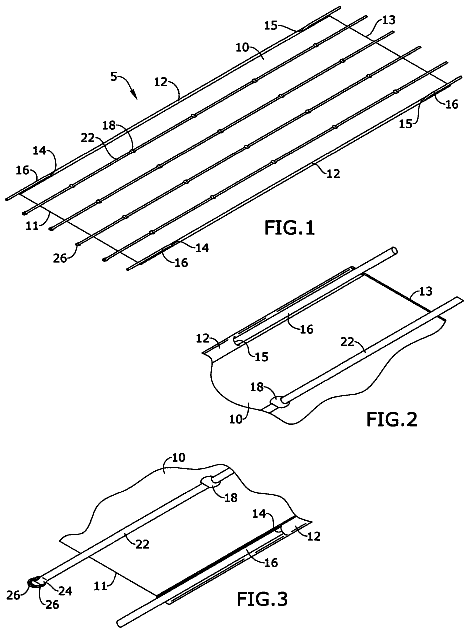
Grain bin sensor pendulum
A protected pendulum of sensors hung in stored grain that measures temperature and moisture from inside the pile.
US 11,160,419 B2 · Title as filed: Grinders, analyzers, and related technologies · Assignee: Sorry Robots LLC · Inventors: Rose; Samantha et al.
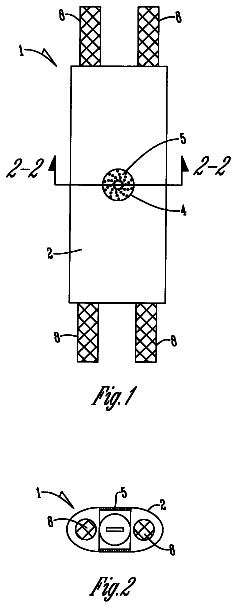
Sheet 1 of 13 from the published document. All sheets in the USPTO PDF
A grinder that holds food or coffee, grinds it periodically, and analyzes it to report its state.
Grinders, analyzers, and related technologies are described herein. The grinders can hold foodstuff that is periodically ground. The analyzers can analyze the foodstuff to determine information about the state of the foodstuff. Algorithms can be used to determine how to process the foodstuff, how to use the foodstuff, and/or when to discard the foodstuff. The grinder can be a portable, rechargeable electric coffee grinder configured to monitor the freshness of the coffee beans. When coffee beans become stale, they can be discarded and the coffee grinder can be refilled with fresh coffee beans.
Over the past 10 to 20 years, consumers have developed sophisticated preferences for coffee drinks. Although many factors contribute to producing an excellent cup of coffee, one significant factor is the freshness of the coffee beans themselves. When coffee beans are roasted, they undergo a myriad of chemical transformations to produce the complex flavors and aromas that are extracted to produce coffee drinks. Over time, however, those flavors and aromas fade. Unfortunately, it is difficult to determine the freshness of beans in order to maximize the quality of coffee grounds for producing desired coffee drinks.
The first 3 of 13 drawing sheets from the published document, cropped to the drawing. Every sheet is in the USPTO PDF.
Independent claims and the claims that build on them, read from each claim's text.
What the patent claimed, word for word. All of it is now free to use.
The present disclosure relates to grinders, analyzers, and related technologies. In particular, several embodiments are directed to grinders, substance analyzers, and connected devices and services.
Over the past 10 to 20 years, consumers have developed sophisticated preferences for coffee drinks. Although many factors contribute to producing an excellent cup of coffee, one significant factor is the freshness of the coffee beans themselves. When coffee beans are roasted, they undergo a myriad of chemical transformations to produce the complex flavors and aromas that are extracted to produce coffee drinks. Over time, however, those flavors and aromas fade. Unfortunately, it is difficult to determine the freshness of beans in order to maximize the quality of coffee grounds for producing desired coffee drinks.
At least some embodiments are foodstuff sensing apparatuses. Although the passage of time is often closely correlated with a decline in freshness, many other factors can contribute as well. The factors can include, for example, storage temperature, oxygen or air exposure, characteristics of the foodstuff, and process of the foodstuff. The factors can be analyzed to determine information for reporting to a user. The user can use the information to determine, for example, whether and how to use the foodstuff. The sensing apparatus can be part of a grinder, a storage container, food processing equipment, cooking apparatus, or the like.
In some embodiments, a portable, rechargeable electric coffee grinder has an integral storage container. The storage container can hold coffee grounds that are analyzed by a sensing apparatus. The factors of coffee bean staling can include, for example, storage temperature, oxygen exposure, whether the beans are kept whole or pre-ground, characteristics of the beans, and the roasting process. The factors can be analyzed to determine information for reporting to a user. The user can use the information to determine, for example, whether and how to use the coffee beans. In other embodiments, the portable, rechargeable electric grinder is configured to grind other items, such as spices (e.g., peppers), seeds, dried vegetables/fruit, or the like.
The grinder can be connectable to a base with the sensing apparatus. The sensing apparatus can include one or more charging devices (e.g., devices for wirelessly charging the coffee grinder), an analyzer, and other components for evaluating operation of the grinder, coffee beans/grounds, foodstuff, or the like. In some embodiments for coffee beans, the sensing apparatus can include one or more sensors configured to detect one or more compounds released by the beans to evaluate, for example, flavor characteristics, aromatic characteristics, bean freshness, roast characteristics, and/or other coffee bean/ground information. For example, a sensor can detect (VOCs) released by the coffee beans, grounds, foodstuff, or other items. A processor can analyze signals from the sensor to monitor changes in the beans to determine grind settings for producing grounds (e.g., high-quality grounds). The sensing apparatus can monitor degradation of the coffee beans that will lead to undesired flavors and reduced aroma. Operation of the electric coffee grinder can be automatically controlled based on, for example, user-specific flavor characteristics, aromatic characteristics, grind characteristics, and/or threshold freshness. In other embodiments, the sensing apparatus is integrated into the coffee grinder.
In some embodiments, a grinding system includes a grinder and a sensing base. The grinder can include a chamber and a grinding element. The chamber can hold coffee beans that are ready to be ground. The grinding element can be configured to grind the beans to produce coffee grounds suitable for producing a coffee drink. The sensing base is coupleable to the grinder to establish fluid communication with the chamber. In one embodiment, the grinder can be set on a platform of the sensing base to establish such fluid communication. The sensing base can be configured to analyze one or more gases from the chamber. For example, air from the chamber can be drawn into the sensing base, which can evaluate compounds in the air, concentration of gases in the air, or other information indicative of the state of the beans. The coffee beans can be evaluated with or without obtaining temperature information.
The grinding element can be configured to deliver coffee grounds directly into a removable container. The removable container can be removed to access fresh grounds. In some embodiments, the grinding element is positioned directly above the removable container when the coffee grinder is supported on a horizontal surface. This allows grounds to fall directly into the container. The direct drop interface ensures that substantially all of the grounds are removed from the grinder when the container is removed. This avoids, limits, or substantially prevents grounds from accumulating within the grinder while minimizing heat buildup to maintain flavor profiles. Accumulated grounds could later mix with fresh grounds, thereby producing a mixture of stale and fresh grounds. Accordingly, the direct drop interface can consistently produce fresh grounds.
The sensing base can be configured to charge an internal power supply of the grinder. Charging can be performed via a wireless or wired connection. In one embodiment, the grinder is charged inductively. In another embodiment, a contact or connector (e.g., a plug) of the sensing base electronically contacts a contact or connector of the grinder. The user can remove the grinder from the sensing base to grind coffee at any location. The grinder or a storage container can weigh less than about 10 lbs, 7.5 lbs, or 5 lbs for convenient transport and can be reinstalled on the sensing base when desired to recharge the internal power supply.
The sensing base can include one or more compound sensors, temperature sensors, mass sensors, or the like. The compound sensors can be VOC sensors or other sensors capable of analyzing gases. In other embodiments, the sensors can be incorporated into the grinder, such that the grinder can analyze the coffee beans independent of whether it is coupled to the sensing base. In one embodiment, the grinder and sensing base are both capable of analyzing the coffee beans. When the grinder is separated from the sensing base, the grinder can analyze coffee beans or grounds. When the grinder is coupled to the sensing base, the sensing base can analyze coffee beans or grounds, perform calibration routines, program the grinder, or the like. The grinding system can also be configured to hold other foodstuff, including spices, seeds, dried vegetables/fruit, fresh vegetables/fruit, liquids (e.g., fruit juice), or the like.
In another embodiment, a system comprises a sensor and a controller. The controller is configured to receive data from the sensor and is programmed to determine information about foodstuff held in the system. The information can include, without limitation, freshness information, forecasted freshness information, consumption rates, temperature information, user inputs (e.g., user preferences), combinations thereof, or the like. In certain embodiments, the system is a container for holding foodstuff, a coffee bean grinding system, a portable coffee grinder, a lid for a container, or another suitable container. Additional sensors can be coupled to the controller.
In yet another embodiment, a computer implemented method for analyzing foodstuff comprises determining information about the foodstuff. Freshness information can be determined for food based on gases associated with the food. In one embodiment, gases from a holding chamber containing coffee beans, or other foodstuff, can be analyzed to evaluate freshness of the coffee beans. The gases can include emissions from the coffee beans. In one embodiment, a computing device can automatically provide information to a user by transmitting the information via a network. The computing device can be part of a coffee grinder capable of sending information to the user's computer, smart phone, tablet, wearable device (e.g., smart watch) or another computing device. In some embodiments, the computing device can include a computer, controller, or another device capable of receiving and analyzing signals from sensors.
In further embodiments, a system can include one or more analyzers each configured to analyze a characteristic of foodstuff. One analyzer can include sensors that detect VOCs released by foodstuff. In one embodiment, the analyzer can monitor changes in the food and can provide such information to users. The system can be a coffee bean grinder, an espresso machine, a coffee maker, a food storage container, food processing equipment, a cooking device (e.g., a crock pot, an oven, etc.), or the like. The analyzers can include VOC sensors, gas sensors (e.g., oxygen sensors, nitrogen sensors, etc.), light sensors (e.g., UV sensors), temperature sensors, optical sensors, or the like. The system can further include an input device, such as a dial, push button, keypad, touch screen, switch, or another device suitable for accepting user input. A user can control the analyzers via the input device. The system can also include an output device, such as a display screen, an indicator, an audio device, or another device suitable for providing user feedback. A display screen can display bean or grind information, recommended grind settings, status information, alerts, and other information. An indicator can be used to notify a user of an event.
In further embodiments, a grinder can be a portable, rechargeable electric coffee grinder configured to monitor the freshness of the coffee beans. When coffee beans become stale, they can be discarded and the coffee grinder can be refilled with fresh coffee beans. Algorithms can be used to determine how to process the foodstuff, how to use the foodstuff, and/or when to discard the foodstuff. The foodstuff can be spices, seeds, fruit, cinnamon sticks, vegetables, or the like.
In some embodiments, a coffee grinder includes a holding chamber configured to hold coffee beans, a grinding element operable to grind the coffee beans, and emission sensors. Each emission sensor can be configured to detect emissions from the coffee beans held in the holding chamber. The coffee grinder can further include a controller communicatively coupled to the emission sensors and programmed to determine information about the coffee beans based on output from the emission sensors. In one embodiment, the coffee grinder can include a main housing containing the holding chamber and grinding element. A sensing base can be detachably coupled to the main housing so as to establish fluid communication with the holding chamber. The sensing base can include the emission sensors. Additionally, the sensing base can recharge the coffee grinder.
In certain embodiments, a grinding system includes a grinder including a chamber and a grinding element and a sensing base coupleable to the grinder to establish fluid communication with the chamber. The sensing base is configured to analyze gases from the chamber to evaluate coffee beans in the chamber. The grinding system can be configured to hold and grind different types of items, such as coffee beans, pepper, or the like.
In some embodiments, the coffee bean grinding system includes a sensor and a controller. The controller is communicatively coupled to the sensor and is programmed to determine information about coffee beans held in the coffee bean grinding system based, at least in part, on output from the sensor. The information can include coffee bean freshness information, forecasted coffee bean freshness information, and/or environmental information. The environmental information can include humidity information, exposure to light information, and/or temperature information (e.g., bean temperature, hopper temperature, etc.).
A method for analyzing coffee beans includes receiving bean-specific data related to characteristics of the coffee beans. The bean-specific data can include a temperature correction factor, a bean quantity correction factor, a bean correction factor, a roast date correction factor, and/or bean age factor. Emissions information (e.g., concentrations of emissions in air exposed to the beans) related to emissions from the beans is received. Information about the beans is determined based on the bean-specific data and the emissions information.
In another embodiment, a method includes receiving signals from a sensor of a coffee grinder and identifying a signal that satisfies a predetermined condition. An event associated with the satisfied predetermined condition is then determined. At least one action can be performed based on the event.
In further embodiments, a system includes a holding chamber configured to hold foodstuff, means for grinding the foodstuff, means for detecting one or more emissions from the foodstuff held in the holding chamber, and means for determining information about the foodstuff based on output from the at least one emission sensor. The means for detecting one or more emissions can include one or more emission sensors, environmental sensors, or the like. The means for grinding the foodstuff can include a grinding element. The means for determining the information can include one or more controllers, processors, and/or computing device. The means for detecting can include one or more sensors configured to detect one or more compounds released by the foodstuff to evaluate, for example, flavor characteristics, aromatic characteristics, freshness, and/or other foodstuff information. For example, a sensor can detect (VOCs) released by the foodstuff, such as coffee beans, grounds, spices, or other items. In one embodiment, the means for grinding can be eliminated. For example, the system can be a sealable storage container or coffee machine.
FIG. 1 is an isometric view of a coffee bean grinder system in accordance with an embodiment of the technology.
FIG. 2 is an exploded isometric view of the coffee bean grinder system of FIG. 1 .
FIG. 3 is a cross-sectional view of a coffee bean grinder in accordance with an embodiment of the technology.
FIG. 4 is a bottom, front, and left-side view of the coffee bean grinder of FIG. 3 .
FIG. 5 is an isometric view of a sensing base in accordance with an embodiment of the technology.
FIG. 6 is a cutaway view of the sensing base of FIG. 5 .
FIG. 7A is a plot of output from sensors versus time.
FIG. 7B is a plot of freshness values versus time based on sensor data.
FIG. 8 is a diagram illustrating an environment in which a grinding system may operate.
FIG. 9 is an isometric view of a grinding system in accordance with another embodiment of the technology.
FIG. 10 is a side elevational view of an analyzer in accordance with another embodiment of the technology.
FIG. 11 is a cutaway bottom view of the analyzer of FIG. 10 .
FIG. 12 is an isometric exploded view of a storage system in accordance with an embodiment of the technology.
FIG. 13 is a diagram illustrating a grinding system and an environment in which the grinding system may operate.
FIG. 14 is a flowchart of a method of operation in accordance with an embodiment of the technology.
FIG. 1 is an isometric view of a grinding system 90 in accordance with an embodiment of the technology. The grinding system 90 can include a portable grinder 100 (“grinder 100 ”) and a sensing base 101 . The grinder 100 can store intact coffee beans and can grind the coffee beans. As coffee beans age, they emit emissions of various substances into the surrounding air to which they are exposed. These emissions can include VOCs or other detectable substances. The grinding system 90 can analyze the air exposed to the coffee beans to determine information about those beans without damaging or otherwise altering the be ans. A hopper holding the beans can be isolated from the surrounding environment to ensure that coffee bean emissions can be accurately detected and analyzed. The sensing base 101 can collect values that are used in a freshness algorithm for generating freshness information for the beans.
The grinder 100 can include a dosing timer knob 104 and a grind adjustment element 102 . The dosing timer knob 104 can be rotated to set a grinding time. Indicators 105 (one identified) can be dosing timer indicator elements positioned about the dosing timer knob 104 . The grind adjustment element 102 can be used to adjust grinding settings. To start the grinding process, the user can push the dosing timer knob 104 to activate a grinding mechanism. When a set time on the timer has expired, the grinder 100 stops the grinding mechanism to complete the grinding cycle. A cup 103 can be removed from the grinder 100 to access the fresh grounds.
A display 107 can indicate when to discard unused beans, when to replenish beans, and/or how to operate the grinding system 90 . The displayed information can include, without limitation, freshness information, bean usage history, grind settings, and/or information (e.g., brewing instructions, drink recipes, etc.) for using the grounds. For example, the displayed information about the beans can include, but is not limited to, UV exposure, moisture content, acidity characteristics, or other information. A user can use the grind adjustment element 102 to select the grind settings based on the displayed information. In other embodiments, the grinding system 90 can automatically adjust grind settings based upon the collected values.
The sensing base 101 can contain one or more sensors that measure the chemical concentrations of substances, such as volatile compounds, in the air exposed to the coffee beans and can include a set of components that enable the analysis of sensor readings and/or network communication. In single sensor embodiments, the sensing base 101 includes a single VOC gas sensor that responds to molecules belonging to the aldehyde family of compounds, as well as toluene. In multi-sensor embodiments, the sensing base 101 can include sensors configured to detect relevant gases, such as carbon dioxide, ethanol, benzene, ketones, or other gases identified as indicators of bean deterioration, such as 2-butanone, 2-methylfuran, and similar compounds. The readings of the sensors can be sampled continually or periodically (e.g., between once per second and once per minute) and are used as inputs into the freshness algorithm, a roast algorithm, a brew algorithm, or the like. The grinder 100 can be aligned with and placed on sensing base 101 to establish both electrical and fluid communication internal components of the sensing base 101 . The sensing base 101 can analyze the coffee beans and recharge an internal power supply of the grinder 100 . The grinder 100 can rest of the sensing base 101 for any desire period of time. The charged grinder 100 can be lifted off of the sensing base 101 to grind coffee beans at any desired location.
FIG. 2 is an exploded isometric view of the grinding system 90 . The grinder 100 can include a removable lid 108 and a hopper 202 . The removable lid 108 can be removed to access the inside of the hopper 202 . The cup 103 can be a catch cup, grounds container, bin, or another suitable container for storing and carrying grounds. In other embodiments, grounds can fall directly into a portafilter. The portafilter can extract the grounds under pressure in an espresso machine. Temperature changes can affect the compounds released by the beans and thereby affect the bean monitoring. Accordingly, thermally isolating the portafilter or heat-generating components can increase the accuracy of analyses performed on the beans. The thermal isolation can also prolong the freshness of the stored beans because heat can accelerate the staling process, as well as minimizing or limiting thermal effects to temperature-sensitive sensors.
The display 107 can be a semi-transparent or transparent window for viewing the contents of the bean hopper 202 to allow a user to visually inspect the level of beans. In some embodiments, the display window 107 can include a screen (e.g., a digital screen) capable of displaying information, including one or more of the following statuses: bean quantity, bean freshness, grind fineness setting, battery charge or charging state, error conditions, maintenance notifications, or device status information.
FIG. 3 is a cross-sectional view of the grinder 100 in accordance with an embodiment of the technology. The hopper 202 is generally positioned above the grinding mechanism or element 201 (“grinding element 201 ”) and can be straight walled or tapered. The grinding element 201 can include two complementary cones in a “conical burr grinder” configuration. The cones can have features that cooperate to smash, crush, and/or grind coffee beans. For example, each of the cones can have ridges, grooves, or additional features for interacting with beans. The distance between these cones is determined by the grind adjustment element 102 . The grinding element 201 can provide non-discrete settings for precise control of the grind setting. By gradually changing the distance between the cones, precise grind control can be achieved. As very minute changes to the grind fineness may have a measurable impact on the extraction or brewing of the coffee, the stepless grind adjustment may be advantageous. In other embodiments, the grinding element 201 can be configured for providing discrete settings and can include a stepper motor, stops, or other features for moving the cones to preset configurations. This allows for repeatable grind settings. In one embodiment, the grinding element 201 can have both non-discrete and discrete modes.
The fineness adjustment wheel 102 can be rotated to select a course grind, a medium grind, or a fine grind. Course grinds are suitable for use with a French press, a percolator, etc. Medium grinds are suitable to produce drip coffee. Fine grinds (including super fine grinds) are suitable for use with espresso machines and for producing Turkish coffee. The display window 107 can display the grind setting, recommend coffee recipes, recommend brew settings, or other information. In manual embodiments, a user can manually rotate the grind fineness adjustment wheel 102 while viewing the fineness setting detected by the detector 206 . In automated embodiments, the grinder 100 may include a device that moves the adjustment wheel 102 . The device can include, without limitation, a motor, a servo, an actuator, or another device suitable for controllably moving the adjustment wheel 102 . In some embodiments, the grind fineness adjustment wheel 102 can include markings 106 in the form of printed or embossed features capable of serving as reference points for specific grind fineness.
A grind fineness setting detector 206 (“detector 206 ”) can monitor the grind setting and can be a digital encoder, an optical encoder, a variable potentiometer, an electromechanical detector, or the like. The setting of the grind fineness adjustment wheel 102 is used to enhance the accuracy of the dosing functionality—the finer the grind setting, the longer it will take to grind an equal mass of beans. The grind time can be selected based on the grind setting to produce the desired amount of grounds. A long grind time can be selected for a fine grind setting whereas a short grind time can be selected for a coarse grind setting. The grinder 100 can automatically select an appropriate grind time based on a desired amount of grinds. A user can manually set the grind settings using the grind fineness adjustment wheel 102 , and the detector 206 can determine the grind setting based on the position of the adjustment wheel 101 . The detector 206 can then communicate the setting to a controller, which determines an appropriate grind time based on the setting. Although the grinder 100 may be operated independently of the sensing base 101 for the purpose of storing and grinding coffee beans, the grinding system has enhanced capabilities when the grinder 100 and sensing base 101 are used in conjunction. The sensing base 101 can collect values from sensors and can feed the values through a “freshness algorithm,” along with other information provided by the user, to determine and display information about the beans' freshness, provide recommendations for the best coffee experience, and so forth.
A driver 208 can be mechanically coupled to the grinding element 201 via, for example, a connection assembly 203 . The driver 208 can be a drive motor, an electric motor, a stepper motor, or another drive device powered by an internal power supply 207 . The connection assembly 203 can include a motor shaft 213 , a grinder shaft 211 , and a drive belt 210 coupled to the motor shaft 213 and grinder shaft 211 . The motor shaft 213 can be directly or indirectly coupled to an output shaft of the driver 208 . The grinder shaft 211 can be connected to an inner grind element 204 (e.g., a ridged cone) of the grinding element 201 . The drive belt 210 can translate the driver's 208 action to the grinder shaft 211 to operate the grinding element 201 . This allows the driver 208 to be spaced apart from the hopper 202 and grinding element 201 so that generated heat by the driver 208 is thermally insulated from the stored beans. One or more insulators can be positioned to limit or inhibit heat transfer between the driver 208 and the hopper 202 , thereby further limiting thermal effects to the beans. The grinder shaft 211 can be generally parallel to the motor shaft 213 . For example, a longitude axis 215 of the grinder shaft 211 can be generally parallel to an axis 217 of the motor shaft 213 . The belt 210 can extend in a direction generally transverse to one or both axis 215 , 217 . The shafts 211 , 217 can be at other positions to provide for different configurations.
The driver 208 may be directly coupled to the grinding element 201 . For example, a driver can be located in the hopper 202 , and a shaft of the driver can be directly coupled to a rotatable cone of the grinding element 201 . In other embodiments, the grinding element 201 may be driven by a hand crank or other drive mechanism. The configuration of the connecting assembly 203 can be selected based on the position and location of the driver 208 . In various embodiments, the connection assembly 203 can include, without limitation, one or more axles, shafts, gears, reducers, belts, chains, couplers, bearings, and/or connectors. The configuration of the connection assembly 203 can be selected based on the configuration of the grinding element 201 . For example, a connection assembly 203 for driving a flat burr element can be different from one for driving a blade grinding element.
The grinding element 201 can be oriented vertically, such that gravity feeds whole beans in from the above hopper 202 and causes the ground beans to fall into the catch cup container 103 below. An axis of rotation (e.g., axis 215 ) about which the grinder shaft 211 rotates can be in a generally vertical orientation (e.g., ±5 degrees, ±3 degrees, ±2 degrees from vertical). Because ground beans fall directly into the container 103 , old grounds do not accumulate within the grinder 100 . This direct-drop interface can prevent or reduce old rancid or sub-prime coffee grounds from combining with fresh grounds. In some embodiments, both cones of the grinding element 201 are positioned directly above the container 103 such that the exit of the grinding element 201 is directly above an opening of the container 103 . The exit can be a gap between the complementary cones or another suitable exit feature. Other types of grinding elements can discharge grounds at other locations.
The internal power supply 207 can be positioned within a housing 217 and can be in electrical communication with the driver 208 . The internal power supply 207 can be a rechargeable battery capable of providing sufficient power to operate the driver 208 . In some embodiments, the driver 208 includes an electric motor and, in one embodiment, is powered by a set of batteries 207 (e.g., disposable Alkaline batteries or rechargeable Alkaline, Ni2N, NiCD, NiMH, or Lithium ion batteries) that enable the grinder to function, even when disconnected from a continuous power supply. In rechargeable embodiments, the batteries 207 can be charged by a power supply and a power conditioning circuit. In an alternate embodiment, the grinder 100 may not contain batteries and may be powered by a power supply directly.
As the action of brewing coffee depends not only on grind fineness but also on the quantity of the grounds, it is often advantageous for the grinder 100 to produce a repeatable, consistent amount of ground coffee. This is accomplished by the dosing timer 205 . The user sets a grinding time—in typical usage between 5 seconds and 60 seconds—that corresponds to the desired volume of beans to grind. The user enters this setting by turning the dosing timer knob 104 . The setting is registered and displayed to the user on the dosing timer indicator lights 105 . The user may then start the dosing process by pushing or pulling the dosing timer knob 104 . The dosing timer can activate the motor 208 via communication through a controller 209 . When the set time on the timer has expired, the controller 209 stops the motor 208 and the grinding is complete.
The dosing functionality can also be accomplished by sensing the quantity of the beans, rather than by setting a timer. In such an embodiment, a feedback loop can exist between the controller 209 and a sensor that detects the quantity of grinds. The sensor may, in some embodiments, measure the mass of the grinds as they accumulate in the catch cup 103 . In other embodiments, the sensor may sense the volumetric quantity of the grounds by using a contactless distance sensor, such as an infrared or ultrasonic rangefinder, or by using a resistive or conductive contact-based sensor, to measure the height of the beans in the hopper 202 . The number and types of sensors can be selected based on the desired monitoring. Contact based sensors can be positioned along the wall of the hopper 202 or the lid 108 . Sensors for measuring the mass of accumulated grinds in the catch cup can be located along a surface of the grinder that supports the catch cup.
The grinder 100 may contain components for drawing gases away from the hopper 202 and toward the sensor(s) in the sensing base 101 (not shown in FIG. 3 ). To measure chemical components in the gas headspace surrounding the beans in the hopper 202 , headspace gases can be removed from the hopper chamber 223 via a headspace connection conduit 301 . The headspace connection conduit 301 may be a single tube (a portion of the tube is illustrated in phantom line). In other embodiments, the headspace connection conduit 301 can be two tubes connected to a pump to circulate the gases of the hopper headspace down toward the sensing base 101 and back again along a closed loop. Other types of fluid connections can be used to provide fluid communication between the hopper 202 and the sensing base 101 . Valves, such as one-way valves, can be used to ensure one-directional flow from the headspace to the sensors. Pumps, including vacuum devices, can be part of the grinder 100 or the sensing base 101 . The pumps can operate periodically to draw head space gases through the grinder 100 and into the sensing base. The pumps can be powered by the internal power supply 207 or another suitable power supply, such as a power supply within the sensing base or an external power supply. Additionally or alternatively, the catch cup 103 can also be in fluid communication with the sensing base directly or indirectly. In some embodiments, gases exposed to the ground beans in the catch cup are drawn by the grinder 100 and delivered into the sensing base. The fluid components and configuration of the grinding system can be selected based on the number of gases to be analyzed and the location of the substances to be analyzed.
The cover 108 can form a suitable seal (e.g., a fluid-tight seal, an air-tight seal, or the like) to limit or substantially prevent surrounding fresh air from entering into the hopper chamber 223 . In other embodiments, the sensing base can compensate for air leaks associated with continuous fresh air entering the hopper 223 . When the hopper 223 is opened to discard or refill the grinding system, the grinding system can recognize that fresh air has been introduced, so the headspace coffee bean emissions will be at relatively low levels for a period of time. As the emissions gradually accumulate in the headspace chamber 223 , the headspace gases can be analyzed to accurately determine characteristics of the coffee beans.
FIG. 4 shows the bottom of the grinder 100 with an electronic interface in the form of electronic contacts 299 for interfacing with the sensing base. The electronic contacts 299 can include a power supply connection 302 (illustrated as two contacts) and a controller connection 303 (e.g., a microcontroller communication connection) for enabling communication and coordination between the functions of the grinder and the functions of the sensing base. In other embodiments, the power supplied to the grinder 100 may be transferred through a contactless, inductive charging mechanism. Similarly, in alternate embodiments, the controller communication across devices may be accomplished through wireless connections.
FIG. 5 is an isometric view of a sensing base 101 suitable for grinding systems. The sensing base 101 can include electronic contacts 407 , a display 410 , and an airflow device in the form of a fan 402 (“fan 402 ”). The electronic contacts 407 can include a grinder power supply connection 408 (illustrated as two contacts) and a controller connection 409 for enabling communication and coordination between the functions of the grinder and the functions of the sensing base. When the grinder is positioned on the sensing base 101 , the connections 408 , 409 ( FIG. 5 ) can contact the corresponding connections 302 , 303 ( FIG. 4 ). The sensing base 101 can then recharge the power supply of the grinder.
The display 410 can provide information, including, without limitation, the power state of the grinder network status (e.g., network connection, Bluetooth state, Wi-Fi connection state, etc.), bean information (e.g., freshness of the beans in the hopper, inferred mass of the beans in the hopper, etc.), error conditions or maintenance notifications, changed state of grinder, usage history, calibration information, or other status information. The display 410 and the grinder's display (e.g., display 107 of FIG. 1 ) can display the same or different information, and the user can program the grinding system to display desired information. For example, the display 410 can display grind system information whereas the display 107 ( FIG. 1 ) can display coffee bean information.
FIG. 6 is a cutaway view of the sensing base 101 . The fan 402 can be positioned to cause gas to be delivered from the grinder to a sensor 401 . When the sensing base 101 is coupled to the grinder, the fan 402 can be fluid communication with the headspace chamber 223 ( FIG. 3 ) and the sensor 401 . In some embodiments, the fan 402 can be positioned generally above the sensor 401 and below a headspace connection tube 301 ( FIG. 4 ) of the grinder 100 . When the fan 402 is turned on, it can draw air from the headspace into and through the connection tube 301 and then pushes the air through the sensing base 101 and to the sensor 401 . In this manner, the fan 402 can draw the air exposed to the coffee beans through the grinder and to appropriate components in the sensing base 101 . In open loop embodiments, the analyzed air can be exhausted out of the sensing base 101 via vents. In closed loop embodiments, the fan 402 or another pump may be used to circulate air between the hopper and a sensing chamber that contains one or more sensors along a closed loop. The sensing chamber can be located within the sensing base 101 . In yet other embodiments, the fan 402 may be absent. For example, an airflow device (e.g., a fan or blower) can be positioned within the hopper and can be operated to cause headspace air to flow to the sensing base 101 . In another embodiment, there may be no forced air movement. Concentration gradients of the headspace gases can allow natural equilibration throughout a sensing or connection tube or other fluid connectors.
With continued reference to FIG. 6 , the sensing base 101 can include a power input 411 that is configured to receive power from a power source, such as a household outlet. In some embodiments, the sensing base 101 can include an integral DC transformer, circuitry, and/or additional optical components. In other embodiments, a transformer is external to the sensing base 101 (e.g., “wall wart” transformer). A housing 412 of the sensing base 101 can protect a set of components or analyzer 415 configured to measure, analyze, and/or communicate (e.g., via a network) data or information. A single VOC gas sensor (e.g., sensor 401 ) can detect molecules belonging to the aldehyde family of compounds, as well as toluene. Additional sensors may detect relevant gases, such as carbon dioxide, ethanol, benzene, ketones, or other gases identified as indicators of bean deterioration, such as 2-butanone, 2-methylfuran, or the like. The readings of the sensors can be continuously or periodically sampled (typically between once per second and once per minute) and can be used as inputs into one or more algorithms (e.g., freshness algorithms). In some embodiments, the sensors may be replaced by an “electronic nose” sensor, which can sense and discriminate a number of VOCs, airborne chemicals, or the like.
A temperature sensor 403 can detect the ambient temperature, temperature of the sensing base 101 , or the like. Data collected from the temperature sensor 403 can be used as an input into the freshness algorithm, because it can contribute to the calculation. Gas sensors are often subject to fluctuations in their readings based on temperature, the temperature readings can be used to compensate for such fluctuations. Analytical or theoretical techniques can be used to determine and compensate for temperature effects. Temperature sensors in the hopper can monitor temperatures of the headspace air to analyze the relationship between ambient temperatures and bean staling because high temperatures can accelerate bean staling. Compensation or calibration programs can be performed on freshness algorithms based upon the measured temperatures of the beans as well. The sensing base 101 and grinder may also include other environmental sensors for monitoring relative humidity, light exposure, and other environmental conditions, which would also be used as inputs into the freshness algorithm.
The sensing base 101 can include a mass sensor 404 of the analyzer 415 to measure the mass of the grinder. In one embodiment, the mass sensor 404 is a load cell that supports a platform 405 (e.g., a movable platform, a deformable platform, a floating platform, etc.) above the mass sensor 404 . The platform 405 can have a generally horizontal surface for supporting the grinder 100 such that when the grinder is placed on top of the platform 405 , the force of its mass is transferred to the mass sensor 404 . In an alternate embodiment, the grinder 100 sits directly on top of one or more mass sensors. The sensing base 101 can detect mass of the grinder (including coffee beans therein) without the use of the platform 405 .
The description continues in the full USPTO document.
Fees are due 3.5, 7.5 and 11.5 years after grant. This patent expired on November 2, 2025, so the fee marked "not paid" was the one that went unpaid.
GRINDERS, ANALYZERS, AND RELATED TECHNOLOGIES
Filed Apr 2017 · published Mar 2018Grinders, analyzers, and related technologies
Filed Apr 2017 · granted Nov 2021Earlier publications, parents and continuations. None of them can still be enforced, or this patent would not be listed.
Prior art cited by the examiner or applicant. Useful when you check your own idea for novelty.
Names, summaries, modern angles and build ratings are Patent Yard's editorial notes. Everything else on this page comes from the documents linked above.