 Lapsed, fee not paid3 drawings
Agriculture & Food Tech · US 8,677,845 B2
Grain bin sensor pendulum
A protected pendulum of sensors hung in stored grain that measures temperature and moisture from inside the pile.
US 11,279,505 B1 · Title as filed: System for re-securing bales with broken or defective wrapping · Inventors: Hinojosa; Jesse
Sheet 1 of 3 from the published document. All sheets in the USPTO PDF
A waterproof sheet with sealed rope loops that re-secures a bale whose wrap or twine has failed.
A system for re-securing a bale with defective or broken wrapping. The system has a waterproof material; at least one rope loop wherein the at least one rope loop is hermetically attached to the waterproof material and maintains waterproofing of the waterproof material; at least one rope wherein the at least one rope passes through an aperture defined by the at least one rope loop; and at least one O-ring wherein the at least one of O-ring is attached to a first end of rope of the at least one rope.
The embodiments herein relate generally to agricultural product transportation, and more particularly, to a system for re-securing of bales of previously wrapped plant material designated for transport or storage. This plant-based material comprising the bales may consist of hay or a mixture of grasses such as ryegrass, timothy, brome, fescue, Bermuda grass, orchard grass or cotton. The transportation of bales is a common practice in the agricultural community. The plant-based materials that make up these bales are used by multiple industries, including, but not limited, to animal feed and textiles. These bales are typically formed into geometric shapes to make transport easier, square bales or round bales. Bale sizes may vary but industry standard for hay and cotton bales are typically 8 feet wide by 8 feet in diameter. The bales may then be wrapped in a protective material to make ship
All 3 drawing sheets from the published document, cropped to the drawing.
Independent claims and the claims that build on them, read from each claim's text.
What the patent claimed, word for word. All of it is now free to use.
The embodiments herein relate generally to agricultural product transportation, and more particularly, to a system for re-securing of bales of previously wrapped plant material designated for transport or storage. This plant-based material comprising the bales may consist of hay or a mixture of grasses such as ryegrass, timothy, brome, fescue, Bermuda grass, orchard grass or cotton.
The transportation of bales is a common practice in the agricultural community. The plant-based materials that make up these bales are used by multiple industries, including, but not limited, to animal feed and textiles. These bales are typically formed into geometric shapes to make transport easier, square bales or round bales. Bale sizes may vary but industry standard for hay and cotton bales are typically 8 feet wide by 8 feet in diameter. The bales may then be wrapped in a protective material to make shipping easier and reducing waste in the transportation process. This protective material is usually a plastic film that can be tightly wrapped around the bale to help it retain its shape. This film is placed around the bale at the time that the plant-based material is formed into the bale by sophisticated machinery.
The inherent problem with the plastic wrap is that it can be defective having the potential of tearing or dry rotting. This causes the structural integrity of the bale to become compromised resulting in a loss of shape and a waste of bale material either during storage or transport. It is a difficult process to reseal the plastic film wrapping without the proper and expensive baling equipment. Many bale users purchase the bales already covered and do not have the appropriate bailing equipment.
Therefore, what is needed is a system that can be rapidly deployed to re-secure the bale with defective or broken wrapping for transportation or storage.
A system for re-securing a bale with defective or broken wrapping, the system comprising: a waterproof material; at least one rope loop wherein the at least one rope loop is hermetically attached to the waterproof material and maintains waterproofing of the waterproof material; at least one rope wherein the at least one rope passes through an aperture defined by the at least one rope loop; and at least one O-ring wherein the at least one of O-ring is attached to a first end of rope of the at least one rope.
The detailed description of some embodiments of the invention is made below with reference to the accompanying figures, wherein like numerals represent corresponding parts of the figures.
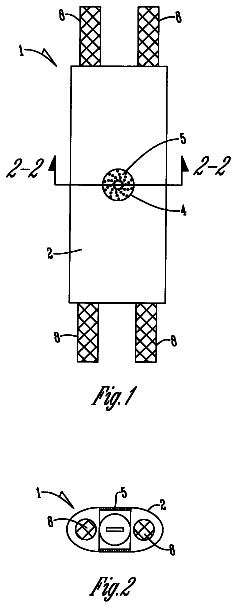
FIG. 1 is a perspective view of one embodiment of the present disclosure;
FIG. 2 is a detail exploded perspective view of one embodiment of the present disclosure;
FIG. 3 is a detail exploded perspective view of one embodiment of the present disclosure;
FIG. 4 is a detail exploded perspective view of one embodiment of the present disclosure;
FIG. 5 is a perspective view of one embodiment of the present disclosure in use;
FIG. 6 is a perspective view of one embodiment of the present disclosure in use;
FIG. 7 is a perspective view of one embodiment of the present disclosure in use.
In the following detailed description of the invention, numerous details, examples, and embodiments of the invention are described. However, it will be clear and apparent to one skilled in the art that the invention is not limited to the embodiments set forth and that the invention can be adapted for any of several applications.
The device of the present disclosure may be used as a system for re-securing a bale with defective or broken wrapping and may comprise the following elements. This list of possible constituent elements is intended to be exemplary only, and it is not intended that this list be used to limit the device of the present application to just these elements. Persons having ordinary skill in the art relevant to the present disclosure may understand there to be equivalent elements that may be substituted within the present disclosure without changing the essential function or operation of the device.
a. a water proof material
b. rope
c. rope loops
d. O-rings
The various elements of the device of the present disclosure may be related in the following exemplary fashion. It is not intended to limit the scope or nature of the relationships between the various elements and the following examples are presented as illustrative examples only.
By way of example, and referring to FIGS. 1-7 , some embodiments of the present disclosure include a system for re-securing a bale with defective or broken wrapping 5 , comprising a waterproof material 10 , at least one rope loop 18 , at least one rope 22 that may pass through an aperture 20 , FIG. 4 , defined by the at least one rope loop 18 , a looped rope end 24 attached to the at least one rope and at least one O-ring 26 attached to the at least one rope 22 . Referencing FIG. 2 , the at least one O-ring 26 may be attached to the at least one rope 22 by the looped rope end 24 by way of the looped rope end 24 . In alternative embodiments, the at least one rope 18 may be a webbing strip. The at least one rope 18 may be a belt. In some embodiments, the waterproof material 10 may be any non-permeable material. The waterproof material 10 may be a non-permeable tri-laminate material. In alternative embodiments, the waterproof material 10 may be a plastic. In some embodiments, the waterproof material 10 may be a waterproof tarp. In alternative embodiments, the waterproof material 10 may be in the shape of a sheet.
In alternative embodiments and referencing FIGS. 2-3 , the waterproof material 10 , may have a side rope channel 12 and in some embodiments have a first side rope channel and a second side rope channel. A side rope 16 may pass through the side rope channel 12 , by way of the side rope 16 entering a side rope channel entrance slot 14 and the side rope 16 exiting a side rope channel 12 through a side rope channel exit 15 .
Some embodiments and referencing FIGS. 5-7 may show the system in use. Referencing FIG. 5 , a bale 28 may be placed on an underside of the system 5 . Referring to FIG. 6 , a first short end 11 of the system 5 may be rolled over the bale. Referring to FIG. 6-7 , a second short end 13 of system 5 may be rolled over the bale to meet the first short end of the system 5 , showing one potential configuration of the system in use. In alternative embodiments, bale 28 may be round. In some embodiments, bale 28 may be square.
Persons of ordinary skill in the art may appreciate that numerous design configurations may be possible to enjoy the functional benefits of the inventive systems. Thus, given the wide variety of configurations and arrangements of embodiments of the present invention the scope of the invention is reflected by the breadth of the claims below rather than narrowed by the embodiments described above.
Fees are due 3.5, 7.5 and 11.5 years after grant. This patent expired on March 22, 2026, so the fee marked "not paid" was the one that went unpaid.
System for re-securing bales with broken or defective wrapping
Filed Apr 2019 · granted Mar 2022Earlier publications, parents and continuations. None of them can still be enforced, or this patent would not be listed.
Prior art cited by the examiner or applicant. Useful when you check your own idea for novelty.
Names, summaries, modern angles and build ratings are Patent Yard's editorial notes. Everything else on this page comes from the documents linked above.