 Lapsed, fee not paid3 drawings
Materials & Chemistry · US 8,658,902 B2
Nanotube-aluminum power line
A transmission line made of aluminum reinforced with carbon nanotubes for strength and conductivity.
US 2019/0382590 A1 · Title as filed: ARTICLES SUBJECT TO ICE FORMATION COMPRISING A REPELLENT SURFACE COMPRISING A FLUOROCHEMICAL MATERIAL · Inventors: Meuler; Adam J. et al.
Sheet 1 of 1 from the published document. All sheets in the USPTO PDF
A water-repellent surface treatment for things that ice up, tuned so ice lets go easily.
In one embodiment, articles subject to ice formation during normal use are described comprising a repellent surface such that the receding contact angle of the surface with water ranges from 90 degrees to 135 degrees wherein the repellent surface comprises a fluorochemical material having a Mn of at least 1500 g/mole. The fluorochemical material typically has a molecular weight of no greater than 50,000 g/mole. In one embodiment, the repellent surface further comprises a non-fluorinated organic polymeric binder. In another embodiment, the repellent surface comprises a thermally processable polymer and a fluorochemical material melt additive. Also described are methods of making an article comprising providing an article subject to ice formation during normal use; and providing a liquid repellent surface, as described herein, on the article.
All 1 drawing sheet from the published document, cropped to the drawing.
Independent claims and the claims that build on them, read from each claim's text.
What the application claimed, word for word. All of it is now free to use.
In one embodiment, articles subject to ice formation during normal use are described comprising a repellent surface such that the receding contact angle of the surface with water ranges from 90 degrees to 135 degrees wherein the repellent surface comprises a fluorochemical material having a Mn of at least 1500 g/mole. The fluorochemical material typically has a molecular weight of no greater than 50,000 g/mole.
In one embodiment, the repellent surface further comprises a non-fluorinated organic polymeric binder. In another embodiment, the repellent surface comprises a thermally processable polymer and a fluorochemical material melt additive.
Also described are methods of making an article comprising providing an article subject to ice formation during normal use; and providing a liquid repellent surface, as described herein, on the article.
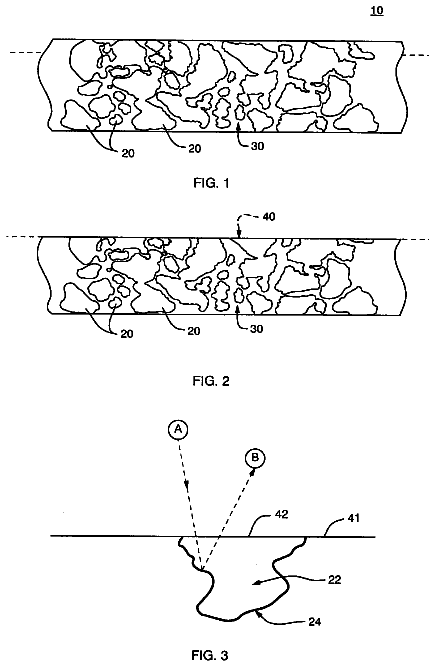
FIG. 1 is cross-sectional view of an embodied substrate comprising a repellent surface layer.
FIG. 2 is cross-sectional view of another embodiment of an article comprising a repellent surface;
Presently described are articles or components thereof that are subject to ice formation during their normal use. The term “ice” includes any form of frozen water including frost, freezing rain, sleet and snow.
Representative articles include sign faces, signal transmission lines (e.g., telephone and electrical cables), satellite dishes, antennas, wind turbine blades, automobiles, railroad cars, aircraft, watercraft, navigation equipment, heat pumps and exchangers or components thereof, ice manufacturing facilities and articles including ice-cube trays and other “ice maker” components; commercial and residential refrigerators and freezers; cryogenic and supercomputer storage facilities; buildings, transportation signs, roofing, dams (especially near a lock), oil drilling platforms, outdoor sporting equipment; recreational vehicles such as snowmobiles, and snow removal equipment.
A heat exchanger is an article used to transfer heat between one or more fluids. The fluids may be separated by a solid wall to prevent mixing or they may be in direct contact. They are widely used in space heating, refrigeration, air conditioning, power stations, chemical plants, petrochemical plants, petroleum refineries, natural-gas processing, and sewage treatment. The classic example of a heat exchanger is found in an internal combustion engine in which a circulating fluid known as engine coolant flows through radiator coils and air flows past the coils, which cools the coolant and heats the incoming air.
Types of heat exchangers include: shell and tube heat exchanger, plate heat exchangers, plate and shell heat exchanger, adiabatic wheel heat exchanger, plate fin heat exchanger, pillow plate heat exchanger, fluid heat exchanger, waste heat recovery units, dynamic scraped surface heat exchanger, phase-change heat exchangers, direct contact heat exchangers, microchannel heat exchangers.
One of the widest uses of heat exchangers is for air conditioning of buildings and vehicles. This class of heat exchangers is commonly called air coils, or just coils due to their often-serpentine internal tubing. Liquid-to-air, or air-to-liquid HVAC (i.e. heating, ventilation and air conditioning) coils are typically of modified crossflow arrangement. In vehicles, heat coils are often called heater cores.
On the liquid side of these heat exchangers, the common fluids are water, a water-glycol solution, steam, or a refrigerant. For heating coils, hot water and steam are the most common, and this heated fluid is supplied by boilers, for example. For cooling coils, chilled water and refrigerant are most common. Chilled water is supplied from a chiller that is potentially located very far away, but refrigerant must come from a nearby condensing unit. When a refrigerant is used, the cooling coil is the evaporator in the vapor-compression refrigeration cycle. HVAC coils that use this direct-expansion of refrigerants are commonly called DX coils. Some DX coils are “microchannel” type.
On the air side of HVAC coils a significant difference exists between those used for heating, and those for cooling. Air that is cooled often has moisture condensing out of it, except with extremely dry air flows. Heating some air increases that airflow's capacity to hold water. Thus, heating coils need not consider moisture condensation on their air-side. However, cooling coils are designed and selected to handle latent (moisture) as well as the adequate (cooling) loads. The water that is removed is called condensate.
With reference to FIG. 1 , article 200 comprises substrate 210 comprising a (e.g. liquid) repellent surface layer (e.g. layer) 251 that comprises a (e.g. non-fluorinated) organic polymeric binder and a fluorochemical material. The concentration of fluorochemical material at the outer exposed surface 253 is typically higher than the concentration of fluorochemical material within the (e.g. non-fluorinated) organic polymeric binder layer 251 proximate substrate 210 . The (e.g. liquid) repellent surface layer can be provided by coating substrate 210 with a coating composition comprising an organic solvent, a (e.g. non-fluorinated) organic polymeric binder, and a fluorochemical material; as will subsequently be described.
With reference to FIG. 2 , article 300 comprises substrate 310 comprising a (e.g. liquid) repellent surface (e.g. layer) 353 that comprises a fluorochemical material. The concentration of fluorochemical material at the outer exposed surface (e.g. layer) 353 is typically higher than the concentration of fluorochemical material proximate the center of the substrate 310 . In one embodiment, the (e.g. liquid) repellent surface 353 can be provided by including a fluorochemical material, such as a fluorochemical compound, as a melt additive in a polymeric material that is thermally processed to form substrate 310 into a component or a surface layer thereof.
The repellent surface repels ice and typically also repels liquids such as water, aqueous solutions and mixtures including paint. The repellent surface also typically repels hydrophobic liquids such as hexadecane.
In some embodiments, the inclusion of the repellent surface can aid in the removal of ice accumulation from the repellent surface. For example, the inclusion of the repellent surface may reduce the force required to remove the ice from the repellent surface. Further, the article may be capable of repeatedly releasing ice from the repellent surface.
In other embodiments, the inclusion of the repellent coating may reduce or prevent ice build-up on the repellent surface. The repellent coating or surface may also reduce the time required to remove ice which has formed on a substrate when the substrate is thawed/defrosted.
The outer exposed surface 253 is preferably (e.g. ice, liquid) repellent such that the advancing and/or receding contact angle of the surface with water is least 90, 95, 100, 105, 110, or 115 degrees. The advancing and/or receding contact angle is typically no greater than 135, 134, 133, 132, 131 or 130 degrees and in some embodiments, no greater than 129, 128, 127, 126, 125, 124, 123, 122, 121, or 120 degrees. The difference between the advancing and/or receding contact angle with water of the (e.g. ice, liquid) repellent surface layer can be at least 5, 10, 15, 20, 25, 30, 35, 40, 45, or 50 degrees. In some embodiments, the difference between the advancing and receding contact angle with water of the surface layer is no greater than 15, 14, 13, 12, 11, 10, 9, 8, 7, 6, 5, 4, 3, 2, or 1 degree. As the difference between the advancing and receding contact angle with water increases, the tilt angle needed to slide or roll off a (e.g. water) droplet from a planar surface increases. One of ordinary skill appreciates that deionized water is utilized when determining contact angles with water.
In some embodiments, the outer exposed surface 253 exhibits a contact angle in the ranges just described after soaking in water for 24 hours at room temperature (25° C.). The contact angle of the (e.g. ice, liquid) repellent surface can also be evaluated with other liquids instead of water such as hexadecane or a solution of 10% by weight 2-n-butoxyethanol and 90% by weight deionized water. In some embodiments, the advancing contact angle with such 2-n-butoxyethanol solution is at least 60, 61, 62, 63, 64, 65, 66, 67, 68, 69, 70 degrees and in some embodiments at least 75 or 80 degrees. In some embodiments, the receding contact angle with such 2-n-butoxyethanol solution is at least 40, 45, 50, 55, 60, 65, or 70 degrees. In some embodiments, the advancing and/or receding contact angle of the (e.g. ice, liquid) repellent surface with such 2-n-butoxyethanol solution is no greater than 100, 95, 90, 85, 80, or 75 degrees.
In another embodiment, the outer exposed surface 253 is preferably (e.g. ice, liquid) repellent such that the receding contact angle of the surface with hexadecane is at least 45, 46, 47, 48, 49, 50, 55, 60, 65, 70, or 75 degrees. The advancing contact angle with hexadecane is typically at least 45, 50, 55, 60, 65, 70, 75, 80, or 84 degrees. In typical embodiments, the receding or advancing contact angle with hexadecane is no greater than 85 or 80 degrees.
The surface layer is not a lubricant impregnated surface. Rather the outer exposed surface is predominantly a solid (e.g. ice, liquid) repellent material. In this embodiment, less than 50, 45, 40, 35, 30, 25, 20, 15, 10, 5, 4, 3, 2, 1, 0.5, 0.1, 0.005, 0.001% of the surface area is a liquid lubricant. Rather, at least 50, 55, 60, 65, 70, 75, 80, 85, 90, 95, 96, 97, 98, 99, 99.5%, or greater of the outer exposed surface is a solid repellent material, as described herein. Thus, a liquid (e.g. water, oil, paint) or solid (e.g. ice) that is being repelled comes in contact with and is repelled by the solid repellent material.
The repellent material is generally a solid at the use temperature of the coated substrate or article, which can be as low as −60° F. or −80° F., yet more typically ranges from −40° F. to 120° F. For outdoor usage in moderate climates, the typical use temperature may be at least −20° F., −10° F., 0° F., or 10° F. In typical embodiments, the repellent material is a solid at room temperature (e.g. 25° C.) and temperatures ranging from 40° F. (4.44° C.) to 130° F. (54.4° C.). In typical embodiments the repellent material has a melting temperature (peak endotherm as measured by DSC) of greater than 25° C. and also typically greater than 130° F. (54.4° C.). In some embodiments, the repellent material has a melting temperature no greater than 200° C. In typical embodiments, a single solid repellent material is utilized. However, the coating composition may contain a mixture of solid repellent materials.
The repellent material has no solubility or only trace solubility with water, e.g., a solubility of 0.01 g/l or 0.001 g/l or less.
The (e.g. liquid, ice) repellent surface layer comprises a fluorochemical material and a (e.g. non-fluorinated) organic polymeric binder. In typical embodiments, a major amount of non-fluorinated polymeric binder is combined with a sufficient amount of fluorochemical material that provides the desired ice and liquid repellency properties, as previously described.
In typical embodiments, the amount of fluorochemical material is at least about 0.005, 0.10, 0.25, 0.5, 1.5, 2.0, or 2.5 wt.-% and in some embodiments, at least about 3.0, 3.5, 4.0, 4.5, or 5 wt.-%. The amount of fluorochemical material is typically no greater than 50, 45, 40, 35, 30, 25, 20, or 15 wt.-% of the sum of the fluorochemical material and (e.g., non-fluorinated) polymeric binder. Thus, the fluorine content of such fluorochemical material-containing polymeric (e.g. binder) materials is significantly less than the fluorine content of fluoropolymers, such as Teflon™ PTFE. The Teflon™ PTFE materials are polytetrafluoroethylene polymers prepared by the polymerization of the monomer tetrafluoroethylene (“TFE” having the structure CF.sub.2═CF.sub.2). It has been found that Teflon™ PTFE does not provide a highly repellent surface such that the receding contact angle with water is at least 90 degrees and/or difference between the advancing contact angle and the receding contact angle of water is less than 10. It is therefore a surprising result that materials containing such low fluorine content can provide comparable or better repellency than fluoropolymers such as Teflon™ PTFE having a substantially higher fluorine content. In some typical embodiments, the fluorochemical material comprises less than 2% of fluorinated groups having greater than 6 carbon atoms. Further, the fluorochemical material typically comprises less than 25% of fluorinated groups having greater than 4 carbon atoms. In favored embodiments, the fluorochemical material is free of fluorinated (e.g. fluoroalkyl) groups, R.sub.f, having at least 8 carbon atoms. In some embodiments, the fluorochemical is free of fluorinated (e.g. fluoroalkyl) groups, R.sub.f, having at least 5, 6, or 7 carbon atoms. In some embodiments, the repellent surface or repellent coating is free of fluorinated (e.g. fluoroalkyl) groups, R.sub.f, having at least 8 carbon atoms. In some embodiments, the repellent surface or repellent coating is free of fluorinated (e.g. fluoroalkyl) groups, R.sub.f, having at least 5, 6, or 7 carbon atoms.
In some embodiments, the fluorochemical material comprises an ester compound or oligomer as described in U.S. Pat. No. 6,753,380; incorporated herein by reference. The ester compounds and oligomers may be represented by the following formulas: R.sub.fQO—[C(O)R.sup.1C(O)OR.sup.2O].sub.n[C(O)R.sup.1C(O)] m -OQRf (I) when RfQO— is derived from a fluorinated alcohol, —OR.sup.2O— is derived from a fluorinated polyol, and —C(O)R.sup.1C(O)— is derived from a dicarboxylic acid; R.sub.fQC(O)—[OR.sup.2OC(O)R.sup.1C(O)].sub.n[OR.sup.2O].sub.m—(O)CQR.sub.f (II) when RfQC(O)— is derived from a fluorinated acid, —C(O)R.sup.1C(O)— is derived from a dicarboxylic acid, and —OR.sup.2O— is derived from a fluorinated polyol; or wherein in each of Formulas I-II; n is a number or a range selected from the numbers 1, 2, 3, 4, 5, 6, 7, 8, 9, or 10; m is 1; R.sub.f is a fluorinated group; Q is a divalent linking group; R.sup.1 is a polyvalent (e.g. divalent) hydrocarbon moiety; R.sup.2 is a divalent organic group having a pendent fluorinated group, R.sub.f, such as a perfluoroalkyl group, perfluoroheteroalkyl group, or a mixture thereof;
R.sup.1, can be a straight chain, branched chain, or cyclic hydrocarbon, or a combination thereof. Typical R.sup.1 moieties include alkylene, alkene, arylene, and aralkylene having 4-50 carbon atoms. In some embodiments, R.sup.1 is preferably a saturated hydrocarbon moiety or in other words an alkylene group (i.e. when n is 2 or 3) or alkyl group (i.e. when n is 1) averaging at least 4, 6, 8, 10, 12, 14, 16, or 18 carbon atoms. In some embodiments, the alkylene or alkyl group averages no greater than 45, 40, 35, 30, 25, or 20 carbon atoms. In typical embodiments, R.sup.1 is a hydrocarbon portion of a dicarboxylic acid or diol. In another embodiment, the hydrocarbon moiety may further comprise one or more heteroatoms or other substituents.
It will be understood that mixtures of compounds and oligomers corresponding to the general formula may be represented, in addition to single compounds. In the case of mixtures, m and n may average a non-integral value. The mixture of compounds and oligomers may comprise a small concentration (e.g. less than 5, 4, 3, 2, or 1 wt.-% of the compound or oligomer) of other compounds and oligomers. For example, the mixture may comprise species wherein m is 0 and the terminal oxygen atom of unit n is bonded to a hydrogen such that the unit terminates with a hydroxyl group or acid group.
The fluorinated group, R.sub.f, is typically a fluoroalkyl group that contains at least 3 or 4 carbon atoms and typically no greater than 12, 8, or 6 carbon atoms. The fluoroalkyl group can be straight chain, branched chain, cyclic or combinations thereof. In typical embodiments, the fluoroalkyl group is preferably free of olefinic unsaturation. In some embodiments, each terminal fluorinated group contains at least 50, 55, 60, 65, or 70% to 78% fluorine by weight. Such terminal groups are typically perfluorinated. In some embodiments, R.sub.f is CF.sub.3(CF.sub.2).sub.3— or in other words C.sub.4F.sub.9— for at least 50%, 55%, 60%, 65%, 70%, 75%, 80%, 85%, 90%, or 95% by weight or greater of the mixture of compounds. In other embodiments, the fluorinated material can be a single compound wherein R.sub.f is CF.sub.3(CF.sub.2).sub.3— or in otherwords a C4 perfluoroalkyl group. In another embodiment, the fluorinated group, R.sub.f, is a perfluoroheteroalkyl group, such as a perfluoroether or perfluoropolyether.
Q is typically the organic divalent linking group, L. L can be a covalent bond, a heteroatom (e.g., O or S), or an organic moiety. The organic divalent linking group typically contains no greater than 20 carbon atoms, and optionally contains oxygen-, nitrogen-, or sulfur-containing groups or a combination thereof. L is typically free of active hydrogen atoms. Examples of L moieties include straight chain, branched chain, or cyclic alkylene, arylene, aralkylene, oxy, thio, sulfonyl, amide, and combinations thereof such as sulfonamidoalkylene. Below is a representative list of suitable organic divalent linking groups. —SO.sub.2N(R.sup.1)(CH.sub.2).sub.k— —CON(R.sup.1)(CH.sub.2).sub.k— —(CH.sub.2).sub.k— —(CH.sub.2).sub.kO(CH.sub.2).sub.k— —(CH.sub.2).sub.kS(CH.sub.2).sub.k— —(CH.sub.2).sub.kSO.sub.2(CH.sub.2).sub.k— —(CH.sub.2).sub.kOC(O)NH— —(CH.sub.2)SO.sub.2N(R.sup.1)(CH.sub.2).sub.k— —(CH.sub.2).sub.kNR.sup.1— —(CH.sub.2).sub.kNR.sup.1C(O)NH—
For the purpose of this list, each k is independently an integer from 1 to 12. R.sup.1 is hydrogen, phenyl, or an alkyl of 1 to about 4 carbon atoms (and is preferably methyl). In some embodiments, k is no greater than 6, 5, 4, 3, or 2. In some embodiments, the linking group has a molecular weight of at least 14 g/mole, in the case of —CH.sub.2—, or at least 20, 25, 30, 40, 50, 60, 70, 80, 90, 100, or 110 g/mole. The molecular weight of the linking group is typically no greater than 350 g/mole and in some embodiments no greater than 300, 250, 200, or 150 g/mole.
As depicted in Formula I, R.sup.1 is typically a residue of a polyacyl compound; whereas R.sup.2 is typically a residue of a polyol. In this embodiment, the fluorochemical ester oligomer typically comprises the condensation reaction products of one or more fluorinated polyols (such as FBSEE—C.sub.4F.sub.9SO.sub.2N(C.sub.2H.sub.4OH).sub.2), one or more polyacyl compounds (e.g. dicarboxylic acid) and one or more monofunctional fluorine-containing compounds (such as MeFBSE—C.sub.4F.sub.9SO.sub.2N(CH.sub.3)CH.sub.2CH.sub.2OH).
One representative compound according to Formula I is depicted as follows: ##STR00001## wherein n ranges from 1 to 10.
Other representative compounds are described in U.S. Pat. No. 6,753,380.
Polyols, suitable for use in preparing the fluorochemical ester compositions include polyols that have an average hydroxyl functionality of greater than 1 (preferably about 2 to 3; most preferably, about 2, as diols are most preferred). The hydroxyl groups can be primary or secondary, with primary hydroxyl groups being preferred for their greater reactivity.
Representative examples of suitable fluorinated polyols include R.sub.fSO.sub.2N(CH.sub.2CH.sub.2OH).sub.2 such as N-bis(2-hydroxyethyl)perfluorobutylsulfonamide; R.sub.fOC.sub.6H.sub.4SO.sub.2N(CH.sub.2CH.sub.2OH).sub.2; R.sub.fSO.sub.2N(R.sup.1)CH.sub.2CH(OH)CH.sub.2OH such as C.sub.6F.sub.13SO.sub.2N(C.sub.3H.sub.7)CH.sub.2CH(OH)CH.sub.2OH; R.sub.fCH.sub.2CON(CH.sub.2CH.sub.2OH).sub.2; R.sub.fCON(CH.sub.2CH.sub.2OH).sub.2; CF.sub.3CF.sub.2(OCF.sub.2CF.sub.2).sub.3OCF.sub.2CON(CH.sub.3)CH.sub.2CH(OH)CH.sub.2OH; R.sub.fOCH.sub.2CH(OH)CH.sub.2OH such as C.sub.4F.sub.9OCH.sub.2CH(OH)CH.sub.2OH; R.sub.fCH.sub.2CH.sub.2SC.sub.3H.sub.6OCH.sub.2CH(OH)CH.sub.2OH; R.sub.fCH.sub.2CH.sub.2SC.sub.3H.sub.6CH(CH.sub.2OH).sub.2; R.sub.fCH.sub.2CH.sub.2SCH.sub.2CH(OH)CH.sub.2OH; R.sub.fCH.sub.2CH.sub.2SCH(CH.sub.2OH)CH.sub.2CH.sub.2OH; R.sub.fCH.sub.2CH.sub.2CH.sub.2SCH.sub.2CH(OH)CH.sub.2OH such as C.sub.5F.sub.11(CH.sub.2).sub.3SCH.sub.2CH(OH)CH.sub.2OH; R.sub.fCH.sub.2CH.sub.2CH.sub.2OCH.sub.2CH(OH)CH.sub.2OH such as C.sub.5F.sub.11(CH.sub.2).sub.3OCH.sub.2CH(OH)CH.sub.2OH; R.sub.fCH.sub.2CH.sub.2CH.sub.2OC.sub.2H.sub.4OCH.sub.2CH(OH)CH.sub.2OH; R.sub.fCH.sub.2CH.sub.2(CH.sub.3)OCH.sub.2CH(OH)CH.sub.2OH; R.sub.f(CH.sub.2).sub.4SC.sub.3H.sub.6CH(CH.sub.2OH)CH.sub.2OH; R.sub.f(CH.sub.2).sub.4SCH.sub.2CH(CH.sub.2OH).sub.2; R.sub.f(CH.sub.2).sub.4SC.sub.3H.sub.6OCH.sub.2CH(OH)CH.sub.2OH; R.sub.fCH.sub.2CH(C.sub.4H.sub.9)SCH.sub.2CH(OH)CH.sub.2OH; R.sub.fCH.sub.2OCH.sub.2CH(OH)CH.sub.2OH; R.sub.fCH.sub.2CH(OH)CH.sub.2SCH.sub.2CH.sub.2OH; R.sub.fCH.sub.2CH(OH)CH.sub.2SCH.sub.2CH.sub.2OH; R.sub.fCH.sub.2CH(OH)CH.sub.2OCH.sub.2CH.sub.2OH; R.sub.fCH.sub.2CH(OH)CH.sub.2OH; ((CF.sub.3).sub.2CFO(CF.sub.2).sub.2(CH.sub.2).sub.2SCH.sub.2).sub.2C(CH.sub.2OH).sub.2; 1,4-bis(1-hydroxy-1,1-dihydroperfluoroethoxyethoxy)perfluoro-n-butane (HOCH.sub.2CF.sub.2OC.sub.2F.sub.4O(CF.sub.2).sub.4OC.sub.2F.sub.4OCF.sub.2CH.sub.2OH); 1,4-bis(1-hydroxy-1,1-dihydroperfluoropropoxy)perfluoro-n-butane (HOCH.sub.2CF.sub.2CF.sub.2O(CF.sub.2).sub.4OCF.sub.2CF.sub.2CH.sub.2OH); fluorinated oxetane polyols made by the ring-opening polymerization of fluorinated oxetane such as Poly-3-Fox™ (available from Omnova Solutions, Inc., Akron Ohio); polyetheralcohols prepared by ring opening addition polymerization of a fluorinated organic group substituted epoxide with a compound containing at least two hydroxyl groups as described in U.S. Pat. No. 4,508,916 (Newell et al); and perfluoropolyether diols such as Fomblin™ ZDOL (HOCH.sub.2CF.sub.2O(CF.sub.2O).sub.8-12 (CF.sub.2CF.sub.2O).sub.8-12 CF.sub.2CH.sub.2OH, available from Ausimont); wherein R.sub.f is a fluorinated group such as a perfluoroalkyl group as previously described.
Preferred fluorinated polyols include N-bis(2-hydroxyethyl) perfluorobutylsulfonamide; fluorinated oxetane polyols made by the ring-opening polymerization of fluorinated oxetane such as Poly-3-Fox™ (available from Omnova Solutions, Inc., Akron Ohio); polyetheralcohols prepared by ring opening addition polymerization of a fluorinated organic group substituted epoxide with a compound containing at least two hydroxyl groups as described in U.S. Pat. No. 4,508,916 (Newell et al); perfluoropolyether diols such as Fomblin™ ZDOL (HOCH.sub.2CF.sub.2O(CF.sub.2O).sub.8-12 (CF.sub.2CF.sub.2O).sub.8-12CF.sub.2CH.sub.2OH, available from Ausimont); 1,4-bis(1-hydroxy-1,1-dihydroperfluoroethoxyethoxy)perfluoro-n-butane (HOCH.sub.2CF.sub.2OC.sub.2F.sub.4O(CF.sub.2).sub.4OC.sub.2F.sub.4OCF.sub.2CH.sub.2OH); and 1,4-bis(1-hydroxy-1,1-dihydroperfluoropropoxy)perfluoro-n-butane (HOCH.sub.2CF.sub.2CF.sub.2O(CF.sub.2).sub.4OCF.sub.2CF.sub.2CH.sub.2OH).
More preferred polyols comprised of at least one fluorine-containing group include N-bis(2-hydroxyethyl)perfluorobutylsulfonamide; 1,4-bis(1-hydroxy-1,1-dihydroperfluoropropoxy)perfluoro-n-butane (HOCH.sub.2CF.sub.2CF.sub.2O(CF.sub.2).sub.4OCF.sub.2CF.sub.2CH.sub.2OH).
Suitable non-fluorinated polyols include those that comprise at least one aliphatic, heteroaliphatic, alicyclic, heteroalicyclic, aromatic, heteroaromatic, or polymeric moiety.
Non-fluorinated polyols include for example alkylene glycols such as 1,2-ethanediol; 1,2-propanediol; 3-chloro-1,2-propanediol; 1,3-propanediol; 1,3-butanediol; 1,4-butanediol; 2-methyl-1,3-propanediol; 2,2-dimethyl-1,3-propanediol (neopentylglycol); 2-ethyl-1,3-propanediol; 2,2-diethyl-1,3-propanediol; 1,5-pentanediol; 2-ethyl-1,3-pentanediol; 2,2,4-trimethyl-1,3-pentanediol; 3-methyl-1,5-pentanediol; 1,2-, 1,5-, and 1,6-hexanediol; 2-ethyl-1,6-hexanediol; bis(hydroxymethyl)cyclohexane; 1,8-octanediol; bicyclo-octanediol; 1,10-decanediol; tricyclo-decanediol; norbornanediol; and 1,18-dihydroxyoctadecane.
R.sup.1 is typically a residue of a polyacyl compound(s). The polyacryl compound is typically a carboxylic acid, or a derivative thereof. Suitable dicarboxylic acids include adipic acid, suberic acid, azelaic acid, dodecanedioic acid, octadecanedioic acid, eicosanedioic acid, and the like that provide the R.sup.1 group as previously described.
Useful fluorine-containing monofunctional compounds include compounds of the following formula: R.sub.f-Q′ (III) wherein: R.sub.f is a fluorinated group, preferably a fluoroalkyl or (e.g. C4) perfluoroalkyl group as previously described; and Q′ is a moiety comprising a functional group that is reactive toward the terminal acyl (of the polyacyl compound) or hydroxyl groups (of the polyol).
It will be understood that the compound RfQ′ reacts with the polyol or acyl compounds to provide the terminal moiety R.sub.fQ-
R.sub.fQ′ typically comprises fluorine-containing monoalcohols. Representative examples of useful fluorine-containing monoalcohols include the following wherein R.sub.f is a fluorinated group as previously described. TABLE-US-00001 R.sub.fSO.sub.2N(CH.sub.3)CH.sub.2CH.sub.2OH, CF.sub.3(CF.sub.2).sub.3SO.sub.2N(CH.sub.3)CH.sub.2CH.sub.2OH, CF.sub.3(CF.sub.2).sub.3SO.sub.2N(CH.sub.3)CH(CH.sub.3)CH.sub.2OH, CF.sub.3(CF.sub.2).sub.3SO.sub.2N(CH.sub.3)CH.sub.2CH(CH.sub.3)OH, C.sub.3F.sub.7CH.sub.2OH, R.sub.fSO.sub.2N(H)(CH.sub.2).sub.2OH, R.sub.fSO.sub.2N(CH.sub.3)(CH.sub.2).sub.4OH, C.sub.4F.sub.9SO.sub.2N(CH.sub.3)(CH.sub.2).sub.4OH C.sub.6F.sub.13SO.sub.2N(CH.sub.3)(CH.sub.2).sub.4OH, R.sub.fSO.sub.2N(CH.sub.3)(CH.sub.2).sub.11OH, R.sub.fSO.sub.2N(C.sub.2H.sub.5)CH.sub.2CH.sub.2OH, CF.sub.3(CF.sub.2).sub.3SO.sub.2N(C.sub.2H.sub.5)CH.sub.2CH.sub.2OH, C.sub.6F.sub.13SO.sub.2N(C.sub.2H.sub.5)CH.sub.2CH.sub.2OH R.sub.fSO.sub.2N(C.sub.2H.sub.5)(CH.sub.2).sub.6OH, C.sub.3F.sub.7CONHCH.sub.2CH.sub.2OH, R.sub.fSO.sub.2N(C.sub.3H.sub.7)CH.sub.2OCH.sub.2CH.sub.2CH.sub.2OH, R.sub.fSO.sub.2N(CH.sub.2CH.sub.2CH.sub.3)CH.sub.2CH.sub.2OH, R.sub.fSO.sub.2N(C.sub.4H.sub.9)(CH.sub.2).sub.4OH, R.sub.fSO.sub.2N(C.sub.4H.sub.9)CH.sub.2CH.sub.2OH,
Various fluorine-containing monoalcohols are also described in previously cited U.S. Pat. No. 6,753,380.
The fluorochemical monofunctional compound RfQ′ may comprise a fluorine-containing monocarboxylic acids, or derivative thereof. Various fluorine-containing monocarboxylic acids are described in previously cited U.S. Pat. No. 6,753,380.
If desired, (e.g. a small concentration of) non-fluorinated monofunctional compounds, such as monoalcohol(s) or monocarboxylic acid(s) can be utilized.
In another embodiment, the fluorochemical material comprises a urethane compound or oligomer as described in U.S. Pat. No. 6,803,109. The urethane compounds and oligomers may be represented by the following formula: R.sub.fQO—C(O)NHR.sup.1NHC(O)—OQRf (IV) when R.sub.fQO— is derived from a fluorinated alcohol and —C(O)NHR.sup.1NHC(O)— is derived from a diisocyanate; or R.sub.fQO—[C(O)NHR.sup.1NHC(O)OR.sup.2O].sub.n[C(O)NHR.sup.1NHC(O)] m -OQRf (V) when R.sub.fQO— is derived from a fluorinated alcohol, —OR.sup.2O— is derived from a fluorinated polyol, and —C(O)NHR.sup.1NHC(O)— is derived from a diisocyanate; wherein in Formulas IV and V: n is a number or a range selected from the numbers 1, 2, 3, 4, 5, 6, 7, 8, 9, or 10; m is 1; R.sub.f is a fluorinated group, as previously described; Q is a divalent linking group, as previously described; and R.sup.1 and R.sup.2 are as previously described.
It will be understood that mixtures of compounds and oligomers corresponding to the general formula may be represented, in addition to single compounds. In the case of mixtures, m and n may average a non-integral value. The mixture of compounds and oligomers may comprise a small concentration (e.g. less than 5, 4, 3, 2, or 1 wt.-% of the compound or oligomer) of other compounds and oligomers. For example, the mixture may comprise species wherein m is 0 and the terminal oxygen atom of unit n is bonded to a hydrogen such that the unit terminates with a hydroxyl group.
Representative compounds are described in U.S. Pat. No. 6,803,109; incorporated herein by reference.
As depicted in Formula V, the fluorochemical urethane oligomer typically comprises the condensation reaction products of one or more fluorinated polyols (such as FBSEE—C.sub.4F.sub.9SO.sub.2N(C.sub.2H.sub.4OH).sub.2, one or more polyisocyanate compounds, and one or more monofunctional fluorine-containing compounds (such as MeFBSE—C.sub.4F.sub.9SO.sub.2N(CH.sub.3)CH.sub.2CH.sub.2OH)).
In another embodiment, a fluorine-containing polyol can be chain extended with a diisocyanate which is then reacted with a polyol comprising R.sup.1. In this embodiment, the oligomer would have the following formula: R.sub.fQO—[C(O)NHZR.sup.2ZNHC(O)OR.sup.1O].sub.n[C(O)NHZR.sup.2ZNHC(O)] m -OQRf (VI) wherein Rf, R.sup.1, and R.sup.2 are the same as previously described; —C(O)NHZR.sup.2ZNHC(O)— is a residue of the chain extended fluorine-containing polyol and Z is a residue of a diisocyanate, such as a C4-C6 hydrocarbon (e.g. alkylene).
Useful fluorinated polyols for the preparation of the urethane compounds and oligomers are the same as previously described.
Various polyisocyanate compounds are useful in preparing the urethane compounds and oligomers. The polyisocyanate compounds generally comprise isocyanate radicals attached to a multivalent organic group that can comprise a multivalent aliphatic, alicyclic, or aromatic moiety (R.sup.1); or a multivalent aliphatic, alicyclic or aromatic moiety attached to a biuret, an isocyanurate, or a uretdione, or mixtures thereof. Preferred polyfunctional isocyanate compounds contain an average of two isocyanate (—NCO) radicals. Compounds containing two —NCO radicals are preferably comprised of divalent aliphatic, alicyclic, araliphatic, or aromatic groups to which the —NCO radicals are attached. Linear aliphatic divalent groups are preferred.
Representative examples of suitable polyisocyanate compounds include isocyanate functional derivatives. Examples of derivatives include, for example, ureas, biurets, allophanates, dimers and trimers (such as uretdiones and isocyanurates) of isocyanate compounds, and mixtures thereof. Any suitable organic polyisocyanate, such as an aliphatic, alicyclic, araliphatic, or aromatic polyisocyanate, may be used either singly or in mixtures of two or more. The aliphatic polyisocyanate compounds generally provide better light stability than the aromatic compounds. Aromatic polyisocyanate compounds, on the other hand, are generally more economical and reactive toward polyols than are aliphatic polyisocyanate compounds.
Suitable aromatic polyisocyanate compounds include, for example, 2,4-toluene diisocyanate (TDI), 2,6-toluene diisocyanate, an adduct of TDI with trimethylolpropane (available as Desmodur™ CB from Bayer Corporation, Pittsburgh, Pa.), the isocyanurate trimer of TDI (available as Desmodur™ IL from Bayer Corporation, Pittsburgh, Pa.), diphenylmethane 4,4′-diisocyanate (MDI), diphenylmethane 2,4′-diisocyanate, 1,5-diisocyanato-naphthalene, 1,4-phenylene diisocyanate, 1,3-phenylene diisocyanate, 1-methyoxy-2,4-phenylene diisocyanate, 1-chlorophenyl-2,4-diisocyanate, and mixtures thereof.
Examples of useful alicyclic polyisocyanate compounds include, for example, dicyclohexylmethane diisocyanate (H.sub.12MDI, commercially available as DesmodurTMW, available from Bayer Corporation, Pittsburgh, Pa.), 4,4′-isopropyl-bis(cyclohexylisocyanate), isophorone diisocyanate (IPDI), cyclobutane-1,3-diisocyanate, cyclohexane 1,3-diisocyanate, cyclohexane 1,4-diisocyanate (CHDI), 1,4-cyclohexanebis(methylene isocyanate) (BDI), dimmer acid diisocyanate (available from Bayer),1,3-bis(isocyanatomethyl)cyclohexane (H.sub.6XDI), 3-isocyanatomethyl-3,5,5-trimethylcyclohexyl isocyanate, and mixtures thereof.
Examples of useful aliphatic polyfunctional isocyanate compounds include, for example, tetramethylene 1,4-diisocyanate, hexamethylene 1,4-diisocyanate, hexamethylene 1,6-diisocyanate (HDI), octamethylene 1,8-diisocyanate, 1,12-diisocyanatododecane, 2,2,4-trimethyl-hexamethylene diisocyanate (TMDI), 2-methyl-1,5-pentamethylene diisocyanate, dimer diisocyanate, the urea of hexamethylene diisocyanate, the biuret of hexamethylene 1,6-diisocyanate (HDI) (Desmodur N-100 and N-3200 from Bayer Corporation, Pittsburgh, Pa.), the isocyanurate of HDI (available as Desmodur™ N-3300 and Desmodur™ N-3600 from Bayer Corporation, Pittsburgh, Pa.), a blend of the isocyanurate of HDI and the uretdione of HDI (available as Desmodure™ N-3400 available from Bayer Corporation, Pittsburgh, Pa.), and mixtures thereof.
Examples of useful araliphatic polyisocyanates include, for example. m-tetramethyl xylylene diisocyanate (m-TMXDI), p-tetramethyl xylylene diisocyanate (p-TMXDI), 1,4-xylylene diisocyanate (XDI), 1,3-xylylene diisocyanate, p-(1-isocyanatoethyl)phenyl isocyanate, m-(3-isocyanatobutyl)phenyl isocyanate, 4-(2-isocyanatocyclohexyl-methyl)phenyl isocyanate, and mixtures thereof.
Preferred polyisocyanates, in general, include alkylene diisocyanates such as tetramethylene 1,4-diisocyanate, hexamethylene 1,4-diisocyanate, hexamethylene 1,6-diisocyanate (HDI), octamethylene 1,8-diisocyanate, 1,12-diisocyanatododecane, and the like, and mixtures thereof.
Useful fluorochemical monofunctional compounds include those of the following formula: R.sub.f-Q″ (VII) wherein: R.sub.f is a fluorinated group, preferably a fluoroalkyl of (e.g. C4) perfluoroalkyl group, as previously described; and Q″ is a moiety comprising a functional group that is reactive toward the terminal isocyanate or hydroxy groups.
It will be understood that the compound RfQ″ reacts to provide the terminal moiety RfQ-. Examples of useful reactive functional group Q″ are described in previously cited U.S. Pat. No. 6,803,109.
R.sub.fQ″ typically comprises a fluorine-containing monoalcohol as previously described. Various fluorine-containing monoalcohols are also described in previously cited U.S. Pat. No. 6,803,109.
If desired, (e.g. a small concentration of) non-fluorinated monofunctional compounds, such as monoalcohol(s) can be utilized.
The fluorochemical materials of Formulas I, II, and V can be characterized as fluorinated oligomers or polymers comprising terminal fluorinated (e.g. C4 perfluoroalkyl) groups and pendent fluorinated (e.g. C4 perfluoroalkyl) groups. The fluorochemical materials of Formulas I, II, IV, and V can be characterized as comprising a hydrocarbon (e.g. alkylene) group(s) averaging at least 8, 10, 12, 14, 16, 18, or 20 carbon atoms.
The fluorinated oligomers may have a molecular weight (Mn) of at least 1500 or 2000 g/mole. The fluorinated oligomer typically has a molecular weight (Mn) no greater than 10,000, 9000, 8000, or 7000 g/mole. The fluorinated polymer typically has a molecular weight (Mn) greater than 10,000; 15,000; or 20,000 g/mole. In some embodiments, the molecular weight of the fluorinated polymer is no greater than 50,000; 40,000 or 30,000 g/mole. The molecular weight can be determined by Gel Permeation Chromatography using polystyrene standards.
In some embodiments, the fluorochemical material further comprises a compound or a mixture of compounds represented by the formula: (R.sub.f-L-P).sub.nA (VIII) R.sub.f is a fluorinated group as previously described; L is independently an organic divalent linking group as previously described; P is independently a catenary, divalent heteroatom-containing a carbonyl moiety; A is hydrocarbon moiety; and n typically ranges from 1 to 3.
In some embodiments, n is preferably 2. When the fluorochemical material comprises a mixture of compounds, the concentration by weight of the fluorochemical compound wherein n is 2 is typically greater than each of the fractions wherein n is not 2 (e.g. n=1 or n=3). Further, the concentration wherein n is 2 is typically at least 50%, 55%, 60%, 65%, 70%, 75%, 80%, 85%, 90%, or 95% by weight or greater of the mixture of compounds.
The aforementioned moiety, A, can be a straight chain, branched chain, or cyclic hydrocarbon, or a combination thereof. Typical A moieties include alkylene, alkene, arylene, and aralkylene having 4-50 carbon atoms. In some embodiments, A is preferably a saturated hydrocarbon moiety or in other words an alkylene group (i.e. when n is 2 or 3) or alkyl group (i.e. when n is 1) averaging at least 4, 6, 8, 10, 12, 14, 16, or 18 carbon atoms. In some embodiments, the alkylene or alkyl group averages no greater than 45, 40, 35, 30, 25, or 20 carbon atoms. In typical embodiments, A is a hydrocarbon portion of a dicarboxylic acid or fatty acid.
The divalent carbonyl moiety, P, is typically a residue of a dicarboxylic or fatty acid and thus carbonyloxy (—C(O)O—) or in other words an ester group.
The fluorochemical compound can be prepared by various methods known in the art such as described in U.S. Pat. No. 6,171,983. The fluorochemical is most typically prepared by esterifying a fluorinated alcohol with a dicarboxylic acid or a fatty acid. Particularly when a fatty acid is utilized as a starting material the resulting fluorochemical material typically contains a mixture of compounds.
Suitable dicarboxylic acids include adipic acid, suberic acid, azelaic acid, dodecanedioic acid, octadecanedioic acid, eicosanedioic acid, and the like that provide the A group as previously described. Derivatives of dicarboxylic acid can also be employed such as halides and anhydrides.
Suitable unsaturated fatty acids include for example-palmitoleic acid, linoleic acid, linolenic acid, oleic acid, rinoleic acid, gadoleic acid, eracic acid or mixtures thereof. Polymerized fatty acids can contain a higher number of carbon atoms such that the fluorochemical compound averages 30, 35, 40, 45 or 50 carbon atoms.
Suitable saturated fatty acids include caprylic acid, CH.sub.3(CH.sub.2).sub.6COOH; capric acid, CH.sub.3(CH.sub.2).sub.8COOH; lauric acid, CH.sub.3(CH.sub.2).sub.10COOH; myristic acid, CH.sub.3(CH.sub.2).sub.12COOH; palmitic CH.sub.3(CH.sub.2).sub.14COOH; stearic acid CH.sub.3(CH.sub.2).sub.16COOH; arachidic acid, CH.sub.3(CH.sub.2).sub.18COOH; behenic acid CH.sub.3(CH.sub.2).sub.20COOH; lignoceric acid, CH.sub.3(CH.sub.2).sub.22COOH; and cerotic acid CH.sub.3(CH.sub.2).sub.24.COOH.
Representative examples of useful fluorine-containing monoalcohols are the same as previously described.
Other fluorine-containing monoalcohols are described in U.S. Pat. No. 6,586,522; incorporated herein by reference.
In some embodiments, the monofunctional fluoroaliphatic alcohols useful in preparing the fluorochemical compounds include the N-alkanol perfluoroalkylsulfonamides described in U.S. Pat. No. 2,803,656 (Ahlbrecht et al.), which have the general formula R.sub.f SO.sub.2N(R)R.sub.1CH.sub.2OH wherein R.sub.f is a perfluoroalkyl group having 3 to 6 and preferably 4 carbon atoms, R.sub.1 is an alkylene radical having 1 to 12 carbon atoms, and R is a hydrogen atom or an alkyl group containing 1 to 4 carbon atoms and is preferably methyl. In some embodiments, R.sub.1 is an alkylene radical having no greater than 8, 7, 6, 5, 4, 3, or 2 carbon atoms. These monofunctional alcohols can be prepared by reactions of an acetate ester of halohydrin with a sodium or potassium salt of the corresponding perfluoroalkylsulfonamide.
In some embodiments, the fluorochemical compound has the following formulas C.sub.4F.sub.9SO.sub.2N(CH.sub.3)(CH.sub.2).sub.kOC(O)-A-C(O)O(CH.sub.2).sub.kN(CH.sub.3)SO.sub.2C.sub.4F.sub.9 (IX) or C.sub.4F.sub.9SO.sub.2N(CH.sub.3)(CH.sub.2).sub.kOC(O)-A (X) wherein k and A are the same as previously described.
The description continues in the full USPTO document.
ARTICLES SUBJECT TO ICE FORMATION COMPRISING A REPELLENT SURFACE COMPRISING A FLUOROCHEMICAL MATERIAL
Filed Apr 2017 · published Dec 2019Earlier publications, parents and continuations. None of them can still be enforced, or this patent would not be listed.
No US citations on record.
Names, summaries, modern angles and build ratings are Patent Yard's editorial notes. Everything else on this page comes from the documents linked above.